Join The Collection to save, track, and explore works like this.

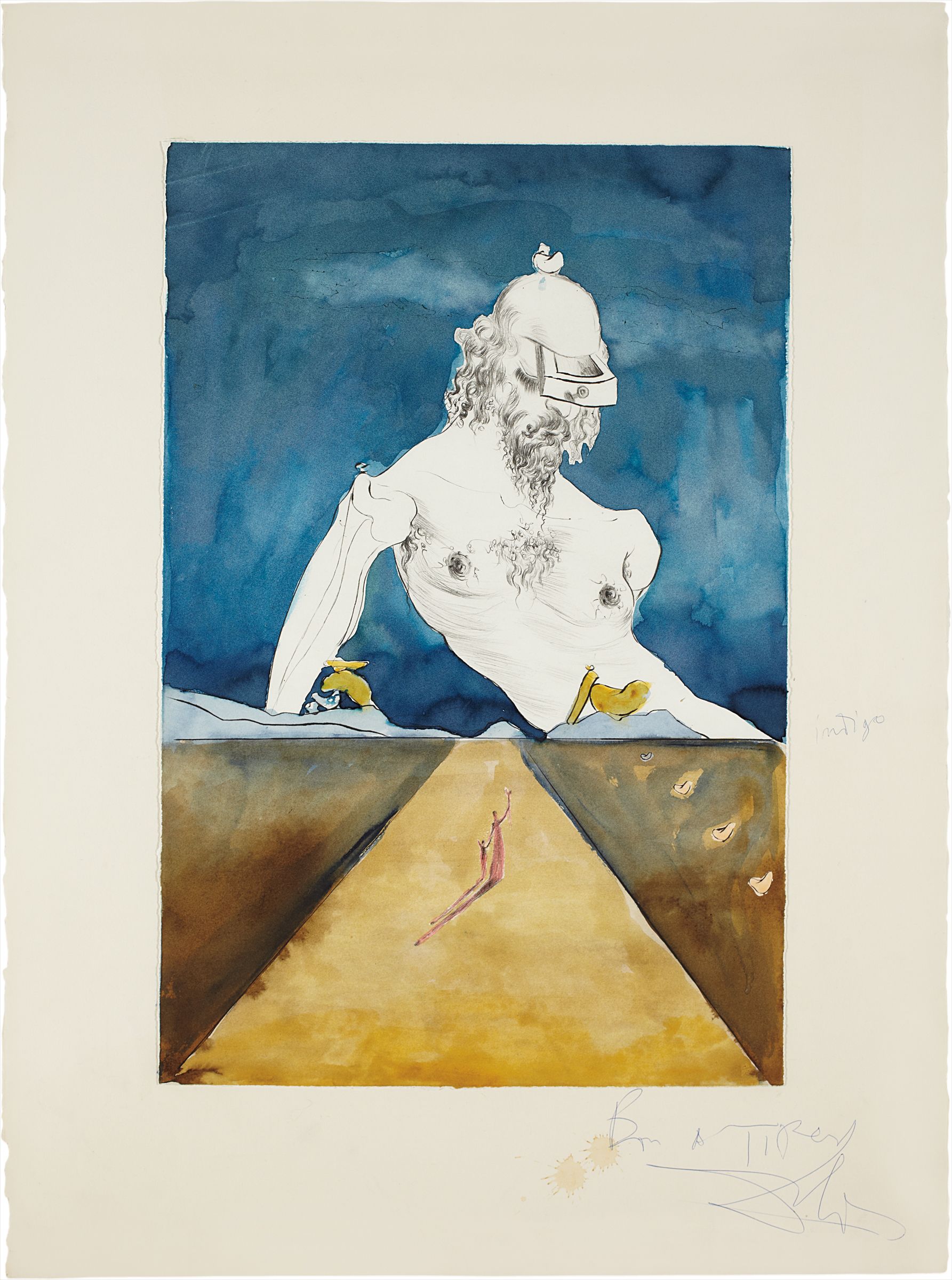
Salvador Dalí — Le colosse, for Aurélia
Salvador Dalí

Le colosse, for Aurélia

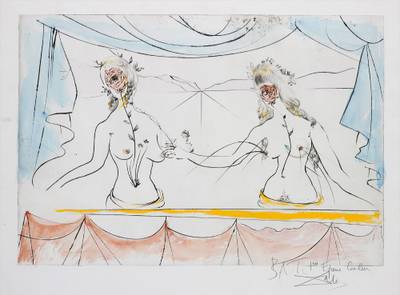
A dreamlike figure of monumental scale dominates this extensively hand-colored drypoint by Salvador Dalí, rendered with the surrealist master's signature blend of meticulous precision and fantastical imagination. Rich, jewel-like hues applied by hand breathe vivid life into the etched lines, transforming the composition into a luminous vision that bridges the boundary between reality and the subconscious. Created in response to Gérard de Nerval's visionary poem *Aurélia*, the work reflects Dalí's enduring fascination with myth, obsession, and the boundless landscapes of the dreaming mind.

Medium
Extensively hand-colored drypoint, on wove paper attatched to Arches paper,

🔨 Auction Lot

Evening & Day Editions

October 28, 2013

Start the Discussion

Request access to join the discussion

About this work

Salvador Dalí, Le colosse, for Aurélia

A dreamlike figure of monumental scale dominates this extensively hand-colored drypoint by Salvador Dalí, rendered with the surrealist master's signature blend of meticulous precision and fantastical imagination. Rich, jewel-like hues applied by hand breathe vivid life into the etched lines, transforming the composition into a luminous vision that bridges the boundary between reality and the subconscious. Created in response to Gérard de Nerval's visionary poem *Aurélia*, the work reflects Dalí's enduring fascination with myth, obsession, and the boundless landscapes of the dreaming mind.

Medium
Extensively hand-colored drypoint, on wove paper attatched to Arches paper,
Seen at
Phillips, New York, London, Hong Kong

Related themes

Surrealism, Twentieth Century, Muted Earth Tones, Dreamlike Mood, Mythological Subject, Male Artist, Printmaking, Modern Art, Figurative Art, Hand-colored print, Drypoint Etching, Spanish Artist

More works by Salvador Dalí

Collected by

Hamilton Selway Gallery, Art Institute of Chicago, Alex Capecelatro, Saul Beceiro Novo