Join The Collection to save, track, and explore works like this.

Kārlis Zāle — Freedom Monument (Brīvības piemineklis)
Kārlis Zāle

Freedom Monument (Brīvības piemineklis)

1935

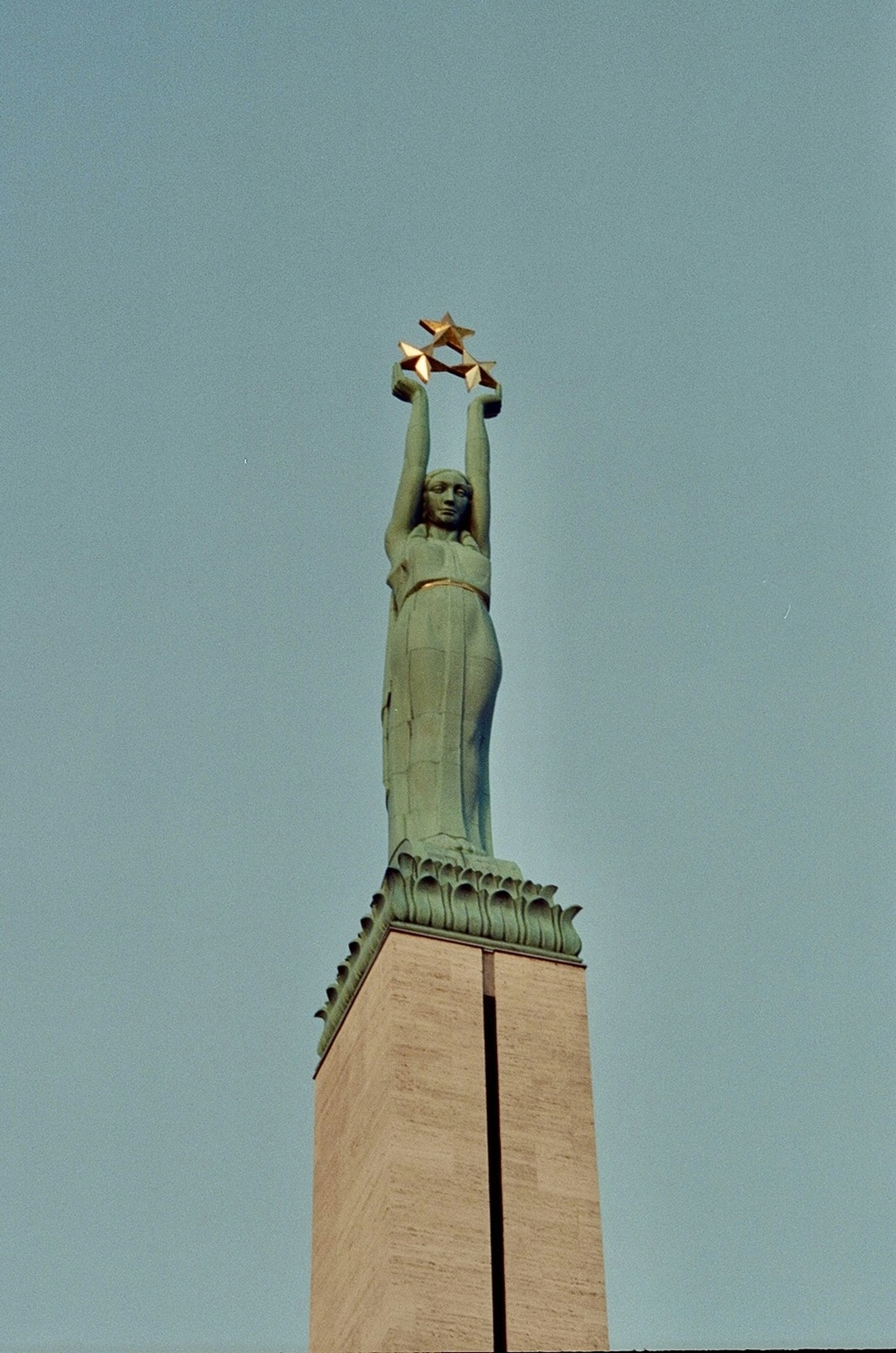
This monumental copper and granite sculpture, designed by Kārlis Zāle and completed in 1935, rises majestically from a travertine base in central Riga. A graceful female figure in classical drapery extends her arms skyward, holding three gilded stars that gleam against the sky, embodying the aspirations of Latvian independence and national identity. Standing approximately 42 meters tall, the work represents a pivotal moment in twentieth-century European public sculpture, blending Art Deco sensibilities with allegorical symbolism. The oxidized copper patina has deepened to a distinctive verdigris green, while the architectural base provides monumental grounding to this beacon of freedom. Now recognized as one of Europe's most iconic independence monuments, it has endured as a symbol of cultural resilience and national pride across decades of political transformation. Photo by Krišjānis Kazaks on Unsplash

Medium
Granite, travertine and copper monument

Start the Discussion

Request access to join the discussion

About this work

Kārlis Zāle, Freedom Monument (Brīvības piemineklis), 1935

This monumental copper and granite sculpture, designed by Kārlis Zāle and completed in 1935, rises majestically from a travertine base in central Riga. A graceful female figure in classical drapery extends her arms skyward, holding three gilded stars that gleam against the sky, embodying the aspirations of Latvian independence and national identity. Standing approximately 42 meters tall, the work represents a pivotal moment in twentieth-century European public sculpture, blending Art Deco sensibilities with allegorical symbolism. The oxidized copper patina has deepened to a distinctive verdigris green, while the architectural base provides monumental grounding to this beacon of freedom. Now recognized as one of Europe's most iconic independence monuments, it has endured as a symbol of cultural resilience and national pride across decades of political transformation. Photo by Krišjānis Kazaks on Unsplash

Medium
Granite, travertine and copper monument
Year
1935
Seen at
Brīvības bulvāris

Related themes

Twentieth Century, Architecture Sculpture, Heroic Monument, Outdoor Art, Art Deco, Patriotic Art, Latvia, Gilded Details, European Sculpture, Granite, Copper, Allegory, Public Sculpture, Figurative Art, Independence Monument, National Symbol, Riga, Neoclassical, Iconic Landmark, Monumental Art