L'Essence de la rhétorique...
1998
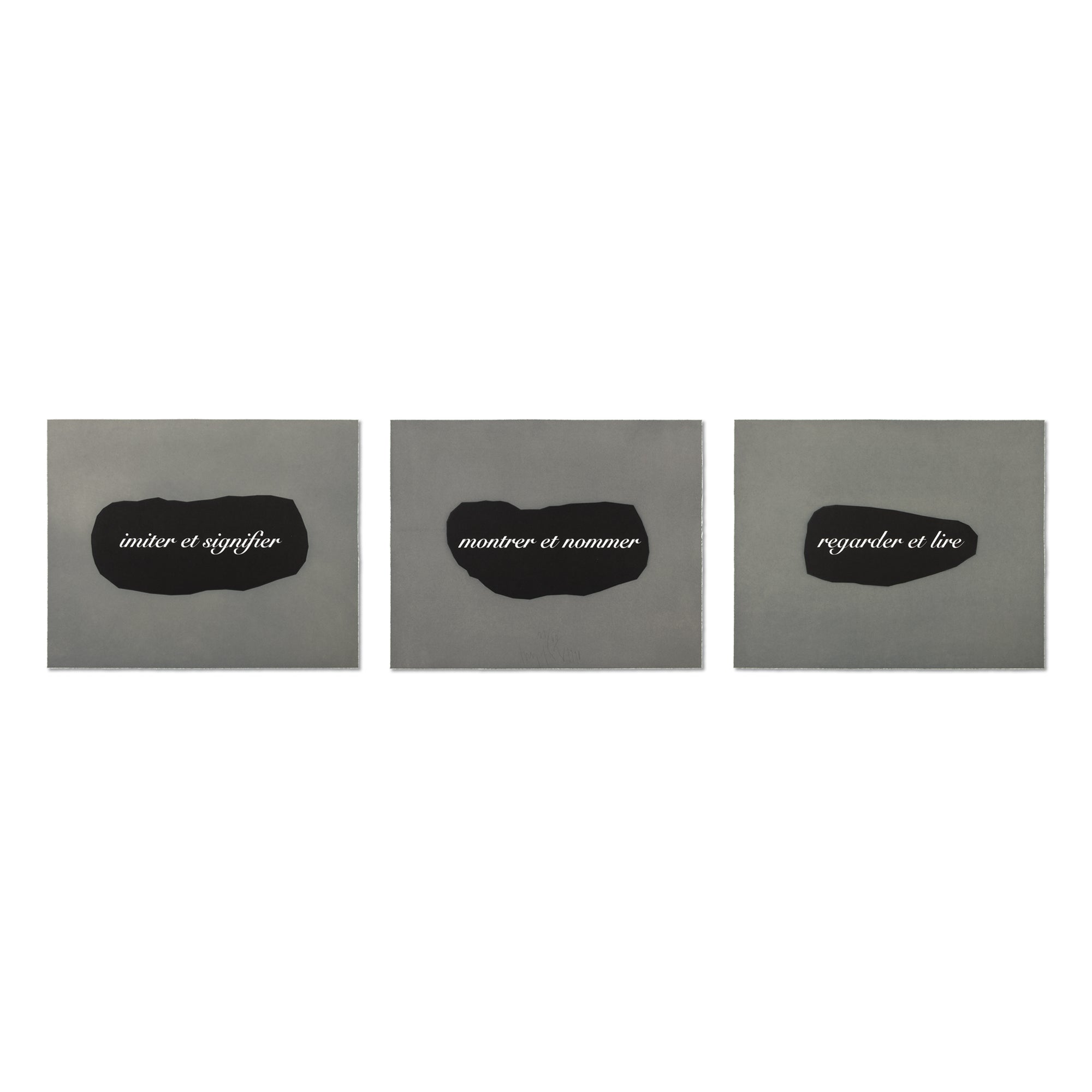
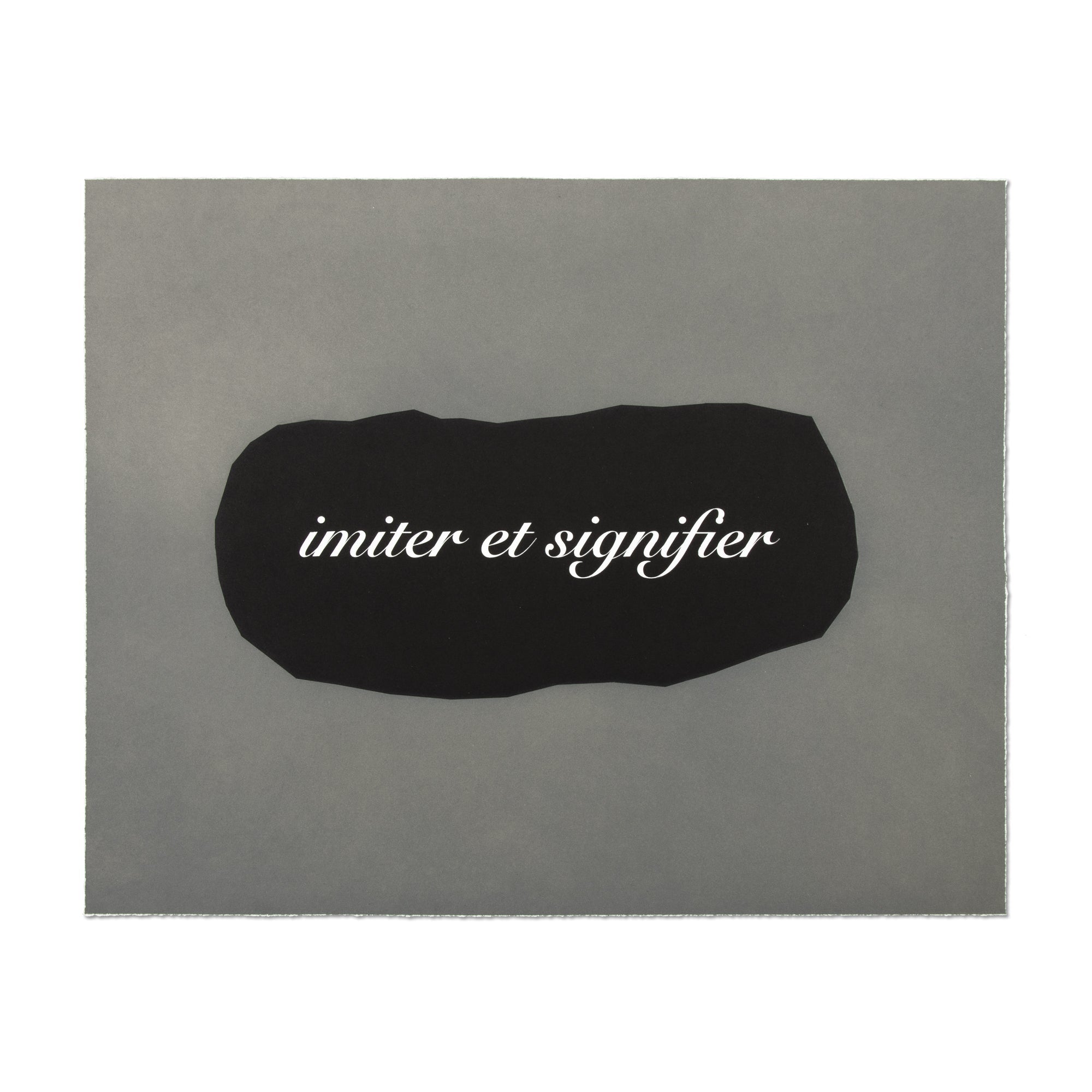
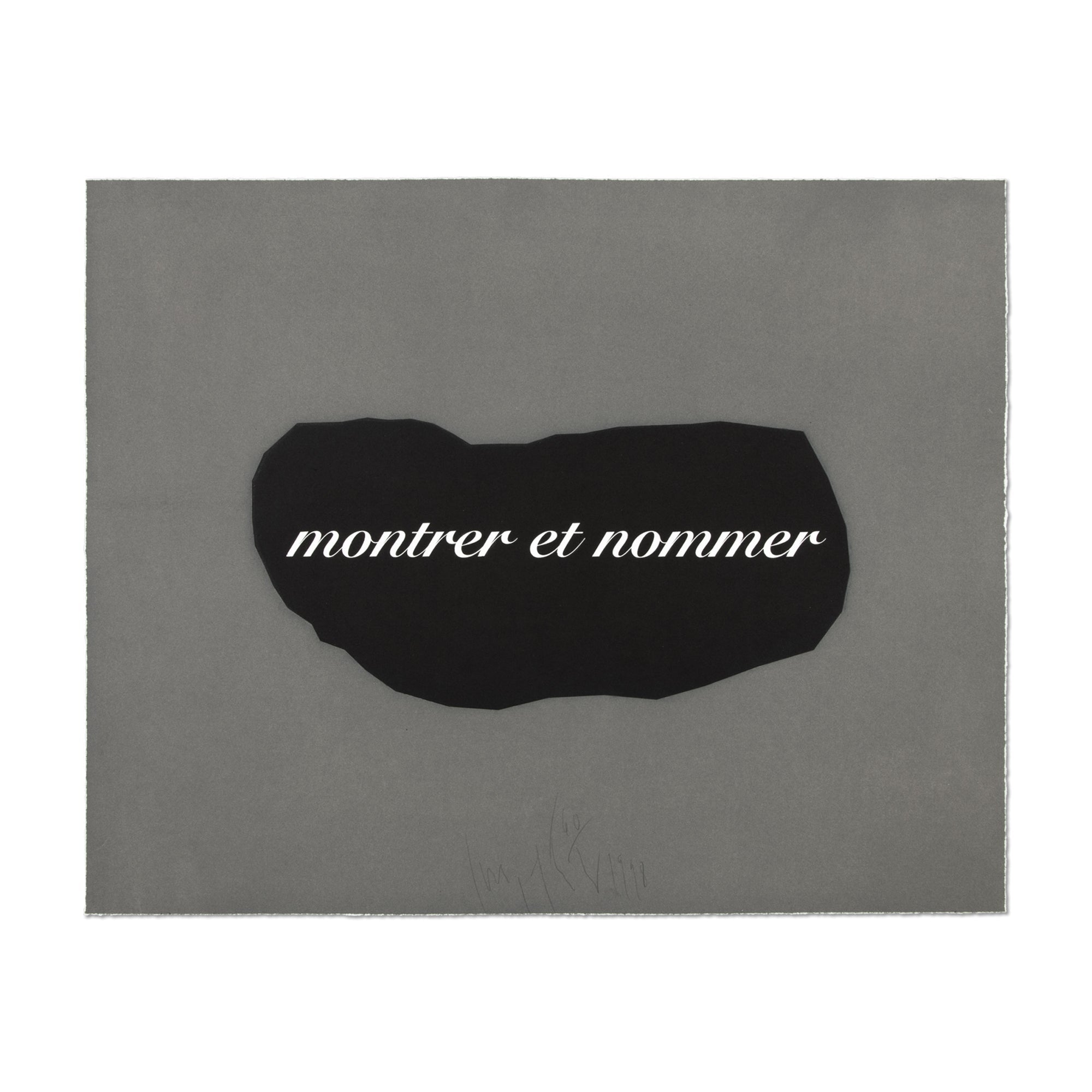
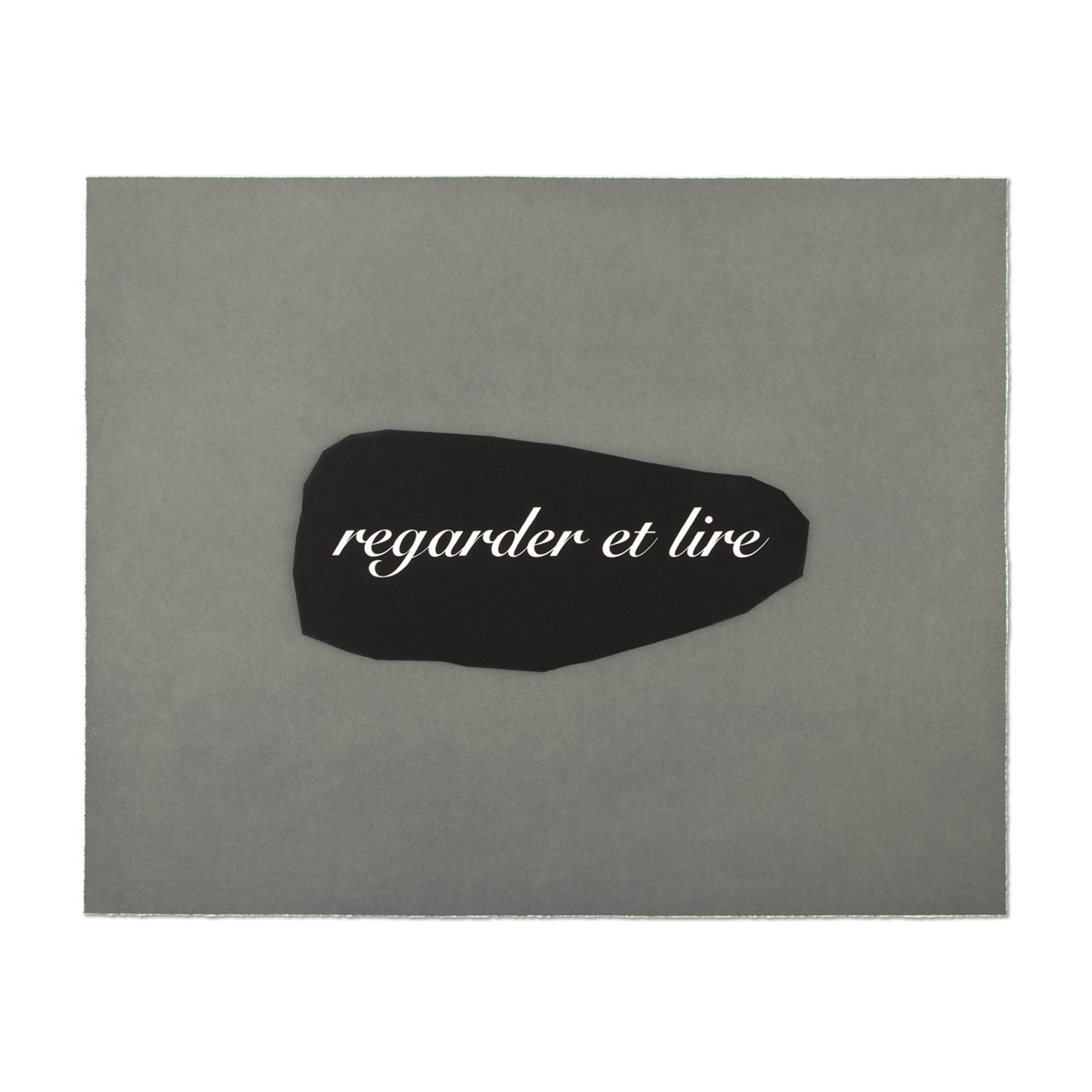
In Joseph Kosuth 's L'Essence de la rhétorique est dans l'allégorie IV (1998), the artist presents three decisive quotations from Michel Foucault's essay Ceci n'est pas une pipe , isolating the paired terms imiter et signifier , montrer et nommer , and regarder et lire . These phrases articulate Foucault's distinction between rhetoric and the calligram, a distinction that is central to both René Magritte's Surrealist practice and Kosuth's own conceptual investigations. Foucault describes the calligram as fundamentally tautological: it seeks to collapse the opposition between word and image by allowing language to function simultaneously as sign and form. Unlike rhetoric, which thrives on excess, substitution, and allegory, the calligram attempts to show and name, imitate and signify, look and read, all at once. Kosuth's triptych visually enacts this theoretical tension. By extracting Foucault's formulations and rendering them as autonomous visual elements, he foregrounds language not as explanation but as structure. The amorphous black shapes that contain the text recall the cloud-like word forms in Magritte's L'Apparition (1928), establishing a direct lineage from Surrealism's disruption of representation to conceptual art's privileging of meaning over image. Where Magritte exposed the instability of resemblance, Kosuth advances this inquiry by presenting philosophy itself as material. Published in 1998 in a limited edition of 50 screenprints , L'Essence de la rhétorique est dans l'allégorie IV is hand-signed and numbered by the artist. Positioned at the intersection of Surrealism, Dada, and conceptual text-based art , the artwork demonstrates how early avant-garde strategies of linguistic and visual destabilization evolved into the analytic rigor of post-1960s conceptual practice, affirming Kosuth's central proposition that art is not defined by form or image, but by the conditions through which meaning is produced.
- Medium
- Prints
- Signed
- Yes
- Spotted At
- Gallery · MLTPL
Notes
From MLTPL New Art Editions collection. Handle: joseph-kosuth-lessence-de-la-rhetorique.
For Sale — $1800
![‘W.F.T. #1E’ [Ruby Red], 2008](https://rtwaymdozgnhgluydsys.supabase.co/storage/v1/object/public/artwork-images/auction-lots/UK010323-132023-lot1774342784289_thumb.jpg)
Start the Discussion
Request access to join the discussion