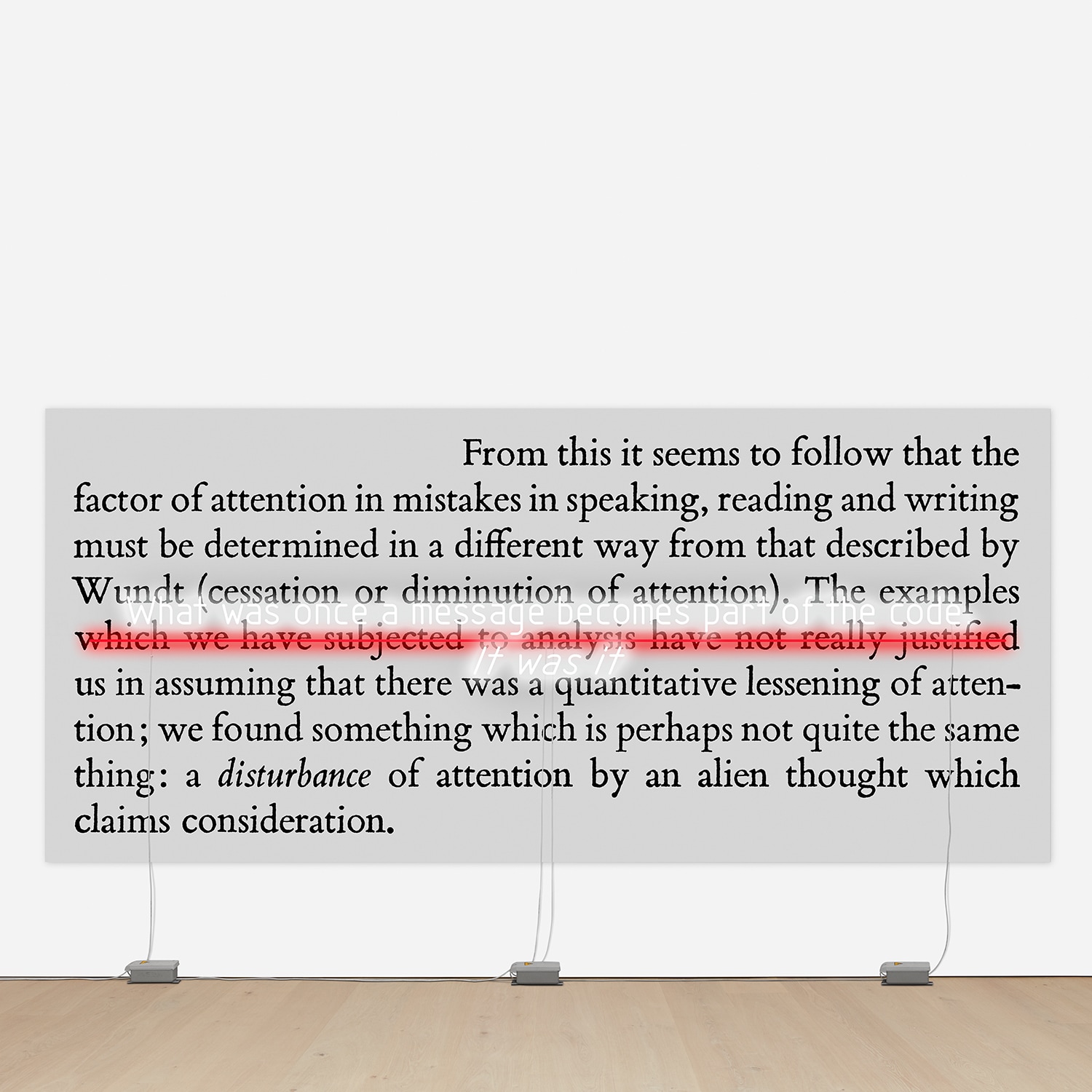
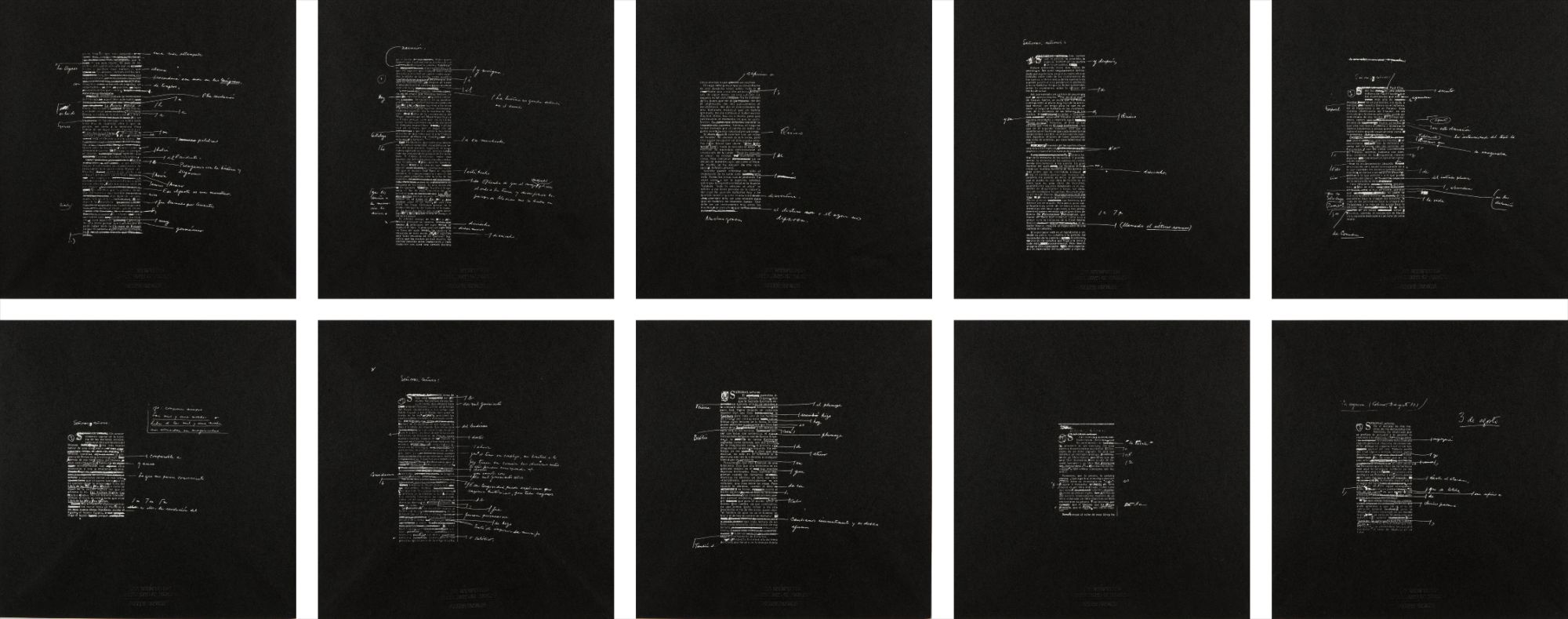
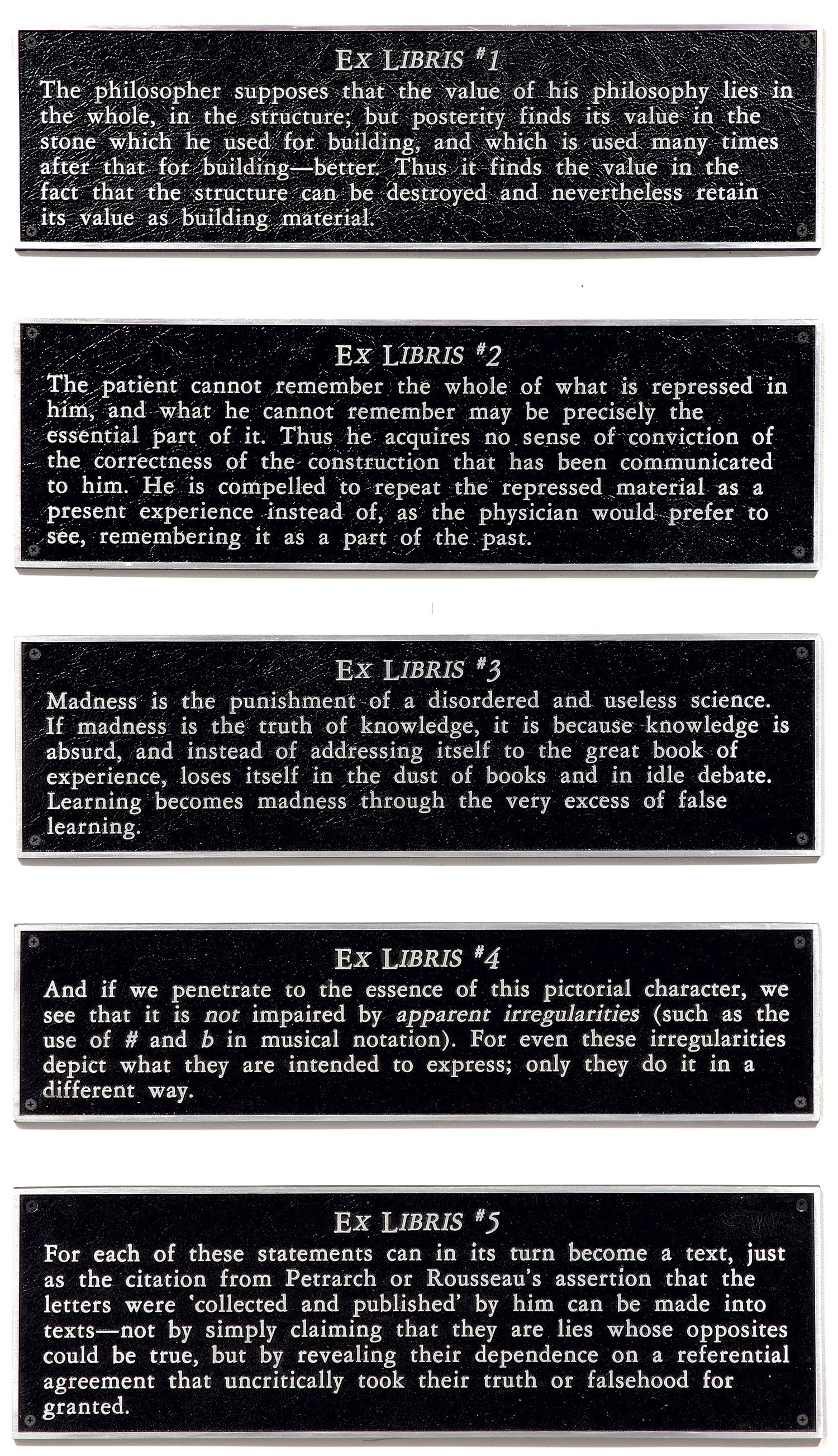
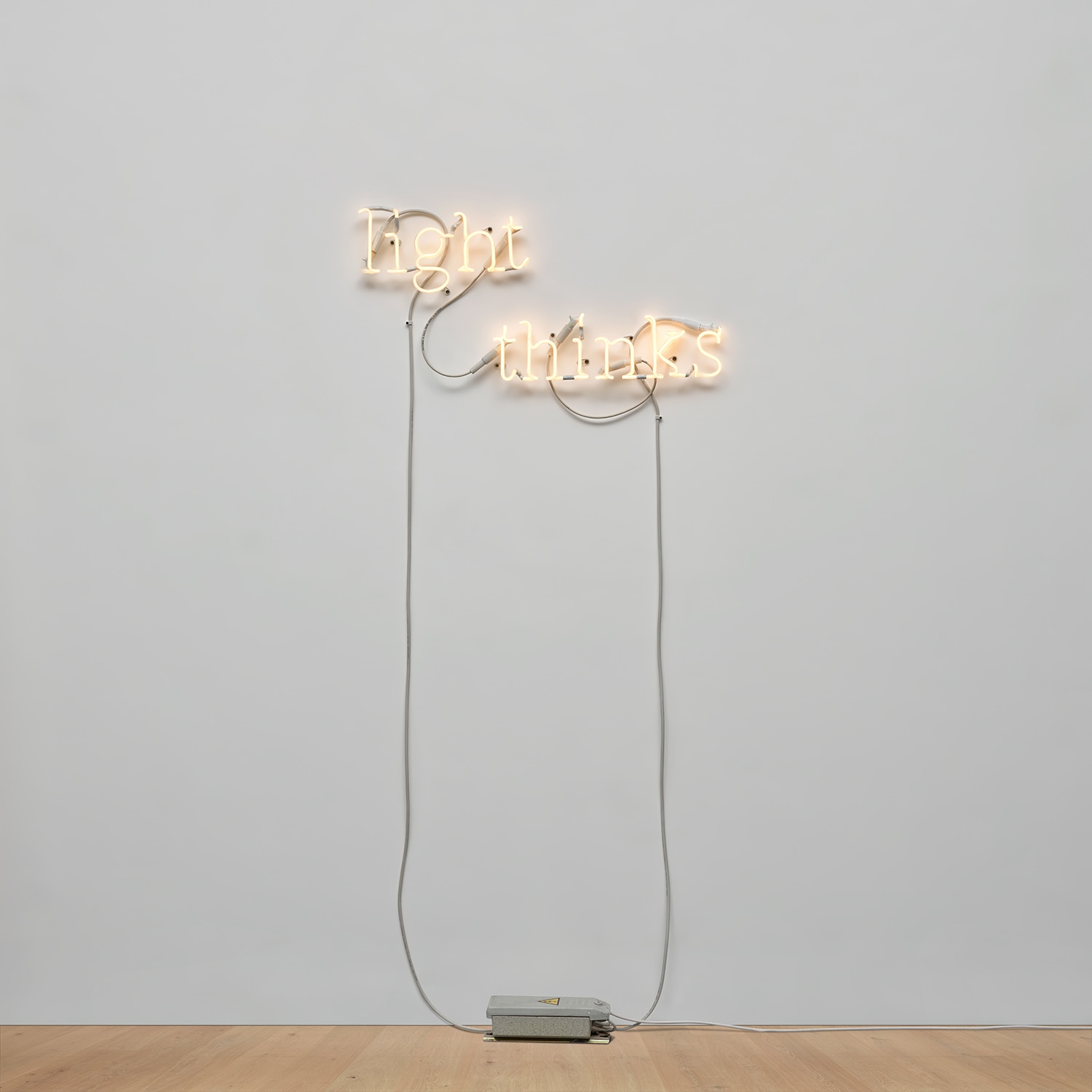
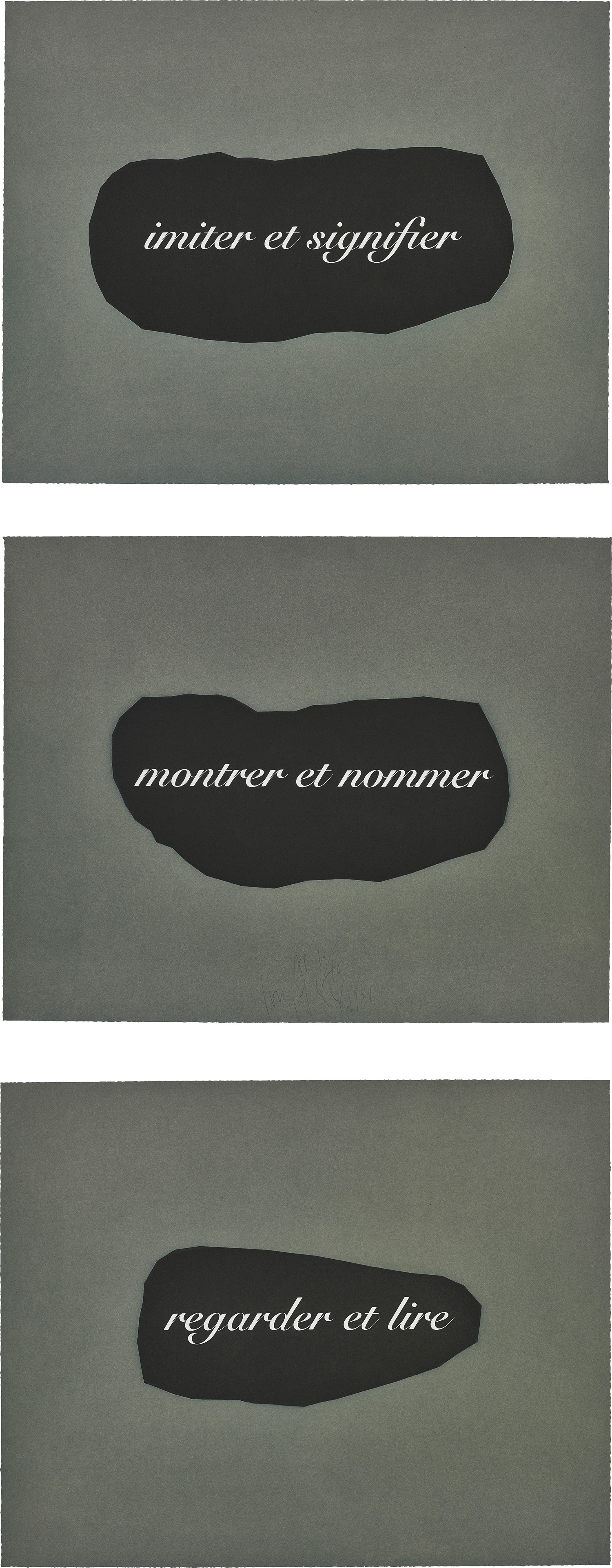
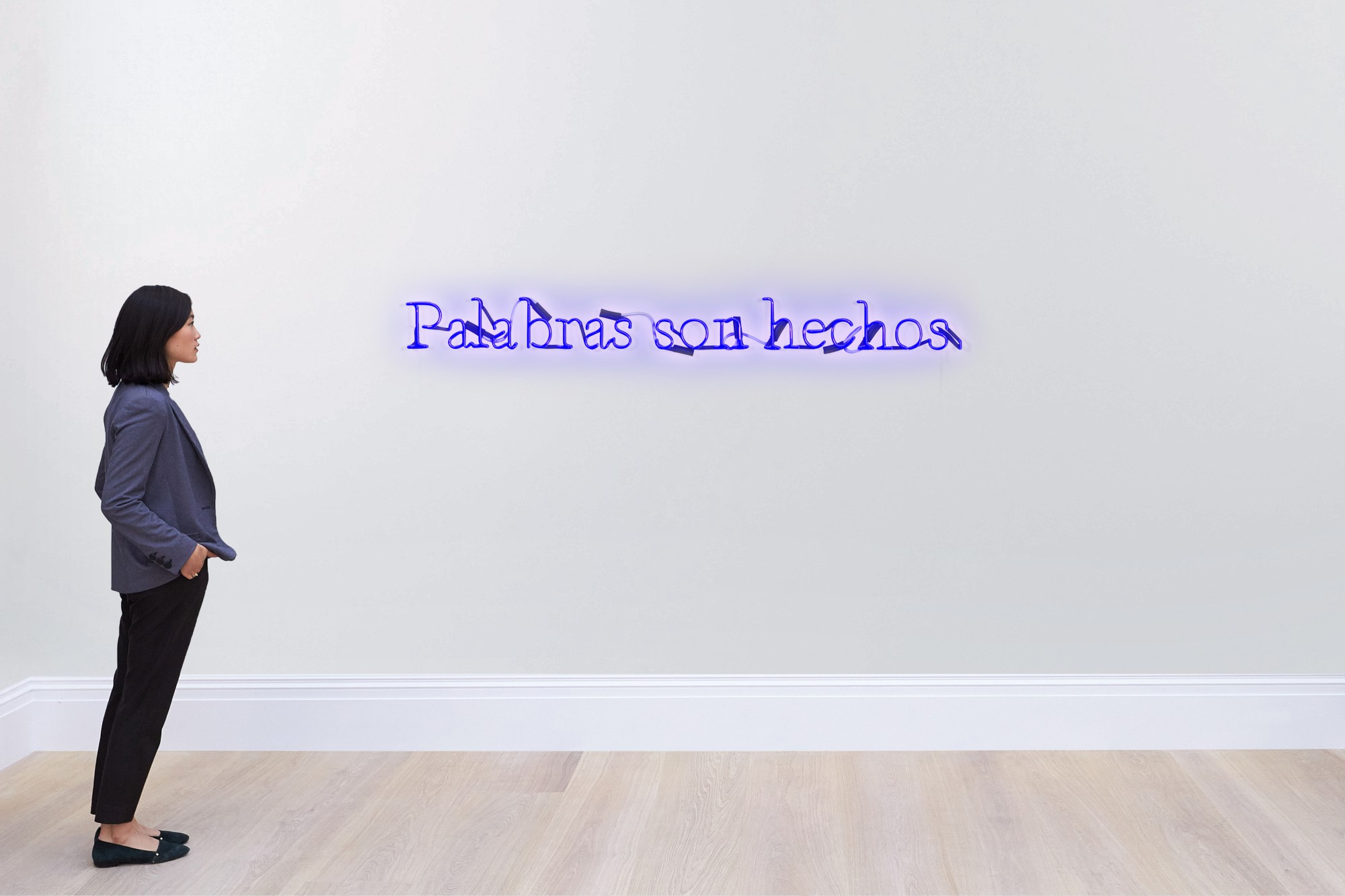
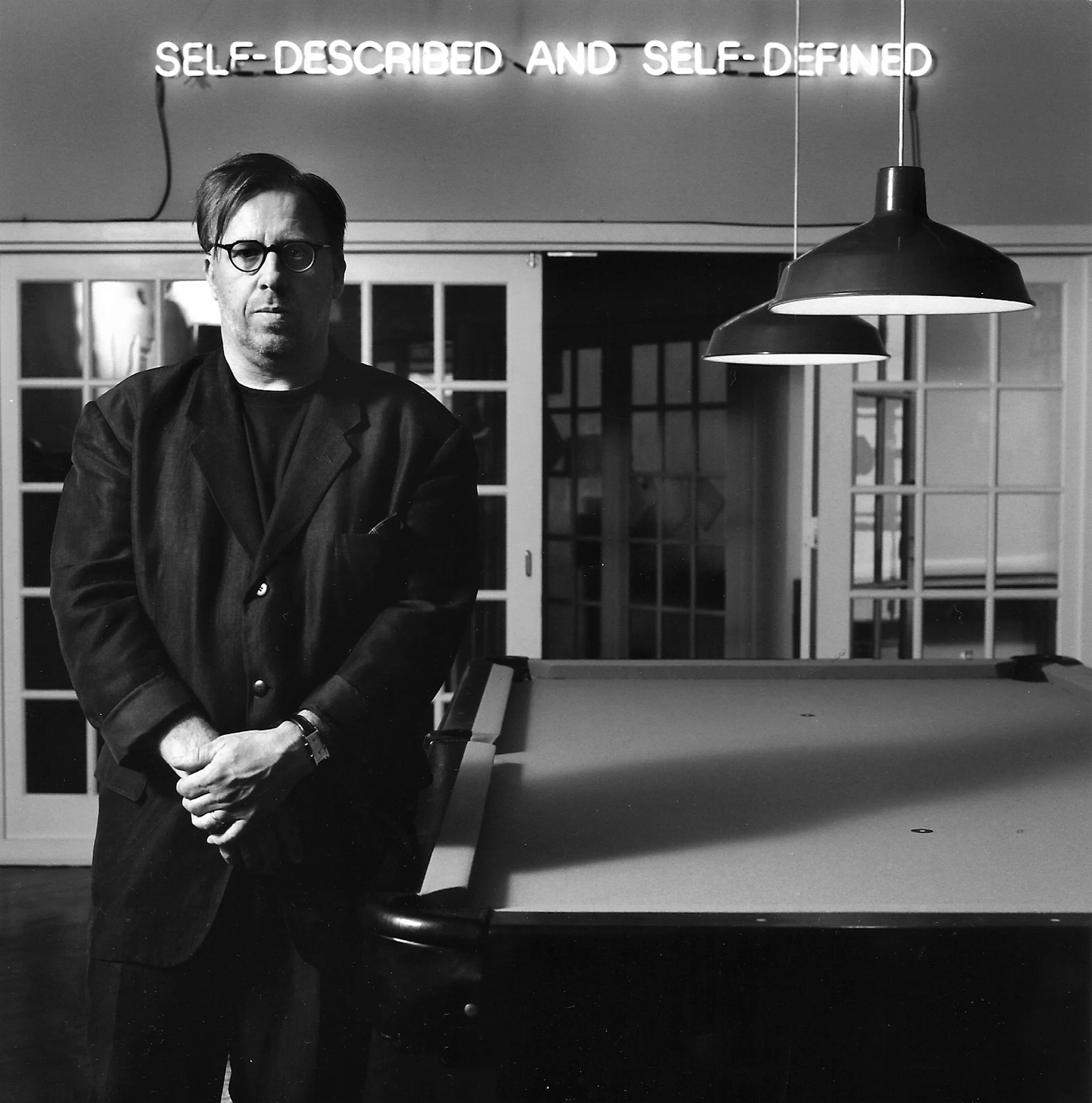
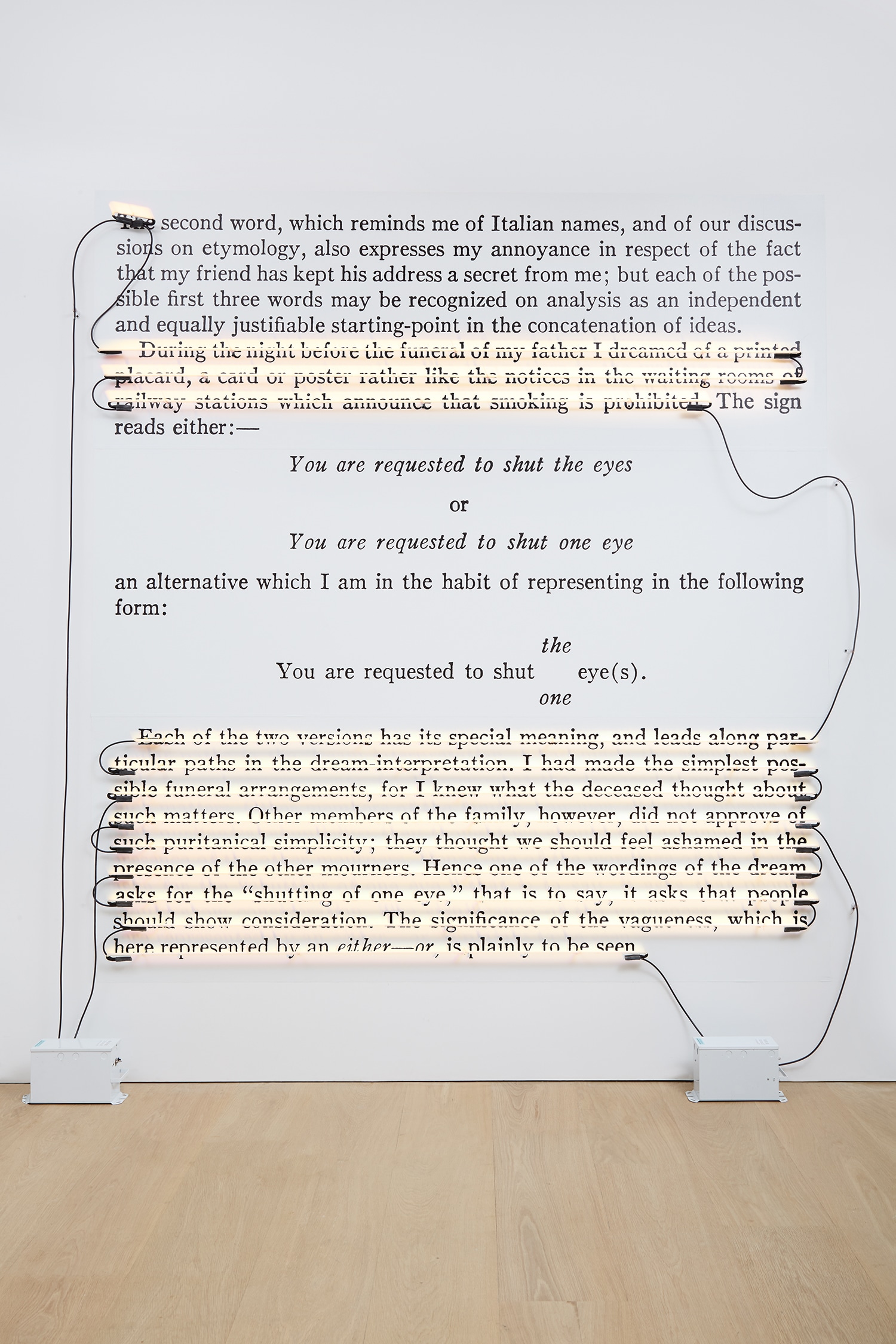
When the Museum of Modern Art in New York dedicated sustained attention to the legacy of Conceptual Art and its founding gestures, one name returned again and again to the center of the conversation: Joseph Kosuth. Now in his eighth decade and still producing work of formidable intellectual ambition, Kosuth remains the rare artist whose earliest breakthroughs feel not like historical curiosities but like living provocations. His neon installations continue to appear in major institutional surveys across Europe and North America, and his text based works command serious attention at auction houses including Christie's and Sotheby's, where his neon and photographic pieces regularly attract sophisticated collectors who understand that owning a Kosuth is owning a piece of philosophy made luminous. Kosuth was born in 1945 in Toledo, Ohio, a midwestern city not typically associated with avant garde ferment. From an early age he demonstrated an unusual appetite for ideas, one that led him away from conventional studio training and toward the kind of sustained philosophical inquiry that would come to define his practice. He studied at the Cleveland Institute of Art before moving to New York, where enrollment at the School of Visual Arts in the mid 1960s placed him at the epicenter of one of the most radical transformations in the history of Western art. New York in those years was a city crackling with intellectual energy, and Kosuth absorbed it voraciously, reading Wittgenstein, engaging with logical positivism, and asking questions about meaning that most of his peers had not yet thought to ask. The breakthrough came with extraordinary speed. By 1965, still a young man in his early twenties, Kosuth produced the work that would secure his place in art history: One and Three Chairs. The piece presents a physical folding chair alongside a full scale photograph of that same chair and an enlarged dictionary definition of the word chair. In one deceptively simple gesture, Kosuth dismantled centuries of assumption about what art is and what it does. The work was not about beauty, skill, or even emotion in the traditional sense. It was about representation, about language, about the gap between a thing and its meaning. That gap, Kosuth argued, was where art truly lived. The piece entered the collection of the Museum of Modern Art, where it has remained one of the most studied and discussed works in the permanent holdings. Through the late 1960s Kosuth formalized his thinking in writing as much as in objects. His landmark 1969 essay Art After Philosophy, published in the journal Studio International, declared that art's function was analytic rather than aesthetic, that a work of art was a proposition about the nature of art itself. This was not merely provocative theorizing. It was a coherent philosophical position that aligned Kosuth with thinkers like A.J. Ayer and anticipated debates in semiotics that would preoccupy theorists for decades. His Art as Idea as Idea series from 1967, in which he mounted photographic enlargements of dictionary definitions as the artworks themselves, put this thesis into practice with cool, uncompromising rigor. These mounted photographs, several of which are available through The Collection, represent the purest distillation of his early conceptual project. As his career deepened through the 1970s, 1980s, and beyond, Kosuth expanded his vocabulary without abandoning his core concerns. He became one of the defining practitioners of neon text installation, creating works in which words and phrases from philosophers, novelists, and poets are rendered in glowing warm white or vivid colored neon and mounted directly onto walls, often on surfaces painted matte black to intensify the luminosity of the letters. Works like the Sigla series drawn from James Joyce's Finnegans Wake and the ongoing Sequences and Wall Works series demonstrate his sustained engagement with literary and philosophical source material. His admiration for Wittgenstein, Freud, Walter Benjamin, and Goethe is not decorative. These figures are genuine interlocutors in an extended artistic conversation about how meaning is made and how it can dissolve. The Ex Libris prints referencing Wittgenstein, Goethe, and Nietzsche, which appear among his works on The Collection, offer collectors an intimate window into this intellectual world at an accessible entry point. For collectors, a Kosuth represents something genuinely distinctive in the contemporary market. His work operates across multiple formats and price points, from early photographic works and prints to the more commanding neon installations that can transform a room entirely. The neon pieces in warm white and in vivid tones such as ruby red and cobalt blue are particularly sought after because they function simultaneously as conceptual statements and as objects of considerable visual presence. A piece like No Number 8 in cobalt blue neon, or the ruby red WFT series, casts its environment in colored light while quietly insisting that you read, think, and question. Collectors who live with these works report that they never quite settle into the background. They remain active. Kosuth's market has strengthened consistently over the past two decades, supported by institutional validation, sustained critical attention, and the simple fact that Conceptual Art has moved from a challenging proposition to a foundational chapter of art history. Kosuth belongs to a generation that includes Lawrence Weiner, Robert Barry, Douglas Huebler, and Sol LeWitt, artists who together crystallized the Conceptual Art movement in the late 1960s and gave it its intellectual backbone. His work also resonates with that of Bruce Nauman, whose neon text pieces share a formal kinship even as the two artists approach language from different angles. In the broader sweep of art history, Kosuth can be situated between Marcel Duchamp, whose readymades first raised the question of what makes something art, and later practitioners of institutional critique such as Hans Haacke and Jenny Holzer, who took the interrogation of context and meaning in directions Kosuth helped make possible. He is, in other words, both a product of a remarkable lineage and the originator of one. What makes Kosuth essential today is precisely what made him radical in 1965: the insistence that art is first and foremost a form of thinking. In an era saturated with images, when visual culture threatens to overwhelm any space for reflection, his text based works and definition pieces demand a different kind of attention. They ask you to pause, to read, to consider not just what something looks like but what it means and how it means it. For institutions, for private collectors, and for anyone who believes that art should do more than decorate, the work of Joseph Kosuth remains one of the most honest and demanding invitations in the contemporary canon.
![‘W.F.T. #1E’ [Ruby Red], 2008](https://rtwaymdozgnhgluydsys.supabase.co/storage/v1/object/public/artwork-images/auction-lots/UK010323-132023-lot1774342784289.jpg)