Join The Collection to save, track, and explore works like this.

Cleveland Museum of Art

Spotted

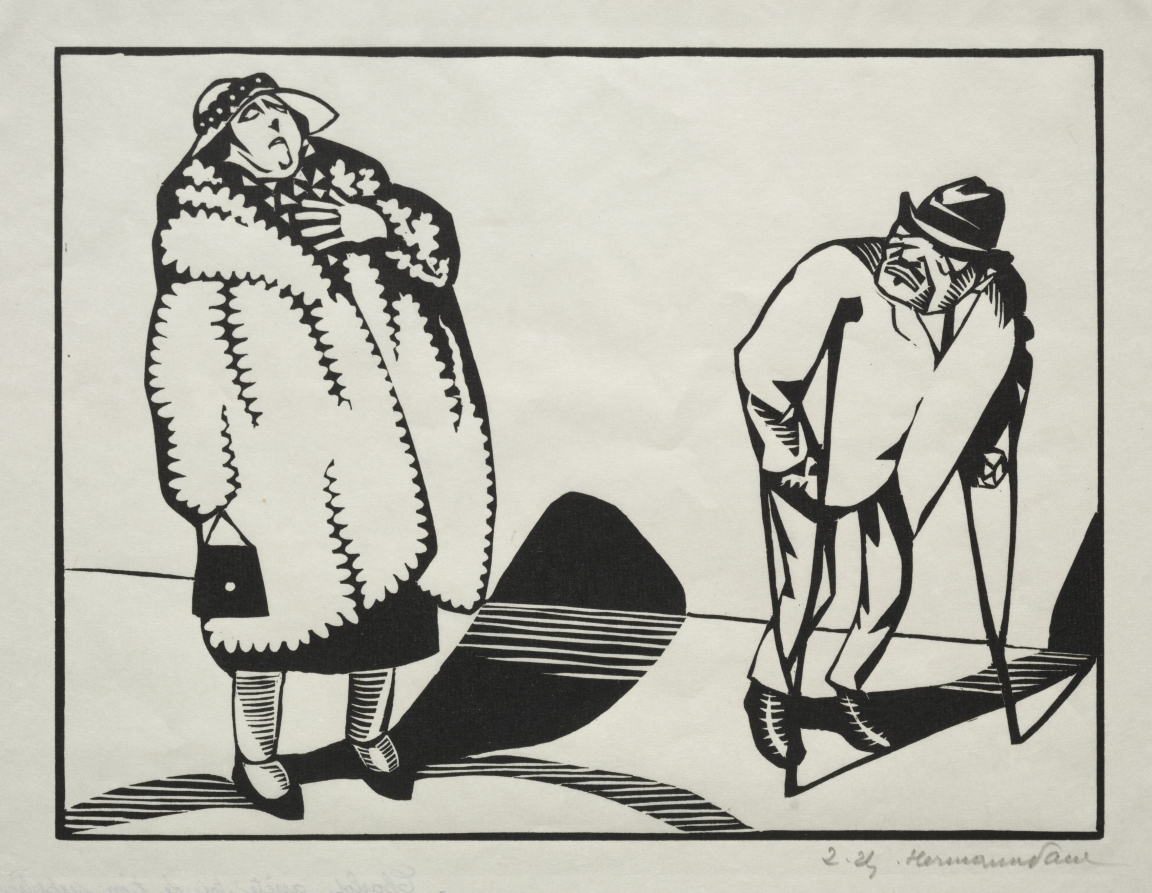
Hermann Paul — Charlot arrête toi je t'en supplie, jai jambres brisées

Hermann Paul

Charlot arrête toi je t'en supplie, jai jambres brisées

1920

Hermann Paul's woodcut "Charlot arrête toi je t'en supplie, jai jambres brisées" (Charlot Stop I Beg You, I Have Broken Legs) depicts a dramatic moment of desperation and physical suffering rendered in the bold, expressive style characteristic of late 19th century woodcut printmaking. The work employs the medium's inherent contrast between black and white to convey emotional intensity, with rough, gestural marks that emphasize the urgency of the scene. The French title suggests a narrative of appeal and bodily trauma, showcasing Paul's interest in depicting human vulnerability and emotional extremity through the graphic potential of the woodblock medium.

Medium
woodcut

Start the Discussion

Request access to join the discussion

Spotted works by Hermann Paul

About this work

Hermann Paul, Charlot arrête toi je t'en supplie, jai jambres brisées, 1920

Hermann Paul's woodcut "Charlot arrête toi je t'en supplie, jai jambres brisées" (Charlot Stop I Beg You, I Have Broken Legs) depicts a dramatic moment of desperation and physical suffering rendered in the bold, expressive style characteristic of late 19th century woodcut printmaking. The work employs the medium's inherent contrast between black and white to convey emotional intensity, with rough, gestural marks that emphasize the urgency of the scene. The French title suggests a narrative of appeal and bodily trauma, showcasing Paul's interest in depicting human vulnerability and emotional extremity through the graphic potential of the woodblock medium.

Medium
woodcut
Year
1920
Seen at
Cleveland Museum of Art, Cleveland, OH

Related themes

Figure Study, dramatic gesture, Emotional Intensity, 19th Century, Charcoal Drawing, French Artist, Theatrical Performance, Melancholic, Symbolism, Expressive Line Work

More works by Hermann Paul

Collected by

Cleveland Museum of Art