Join The Collection to save, track, and explore works like this.

Hai Tong (project founder); various Tang craftsmen — Leshan Giant Buddha
Hai Tong (project founder); various Tang craftsmen

Leshan Giant Buddha

803

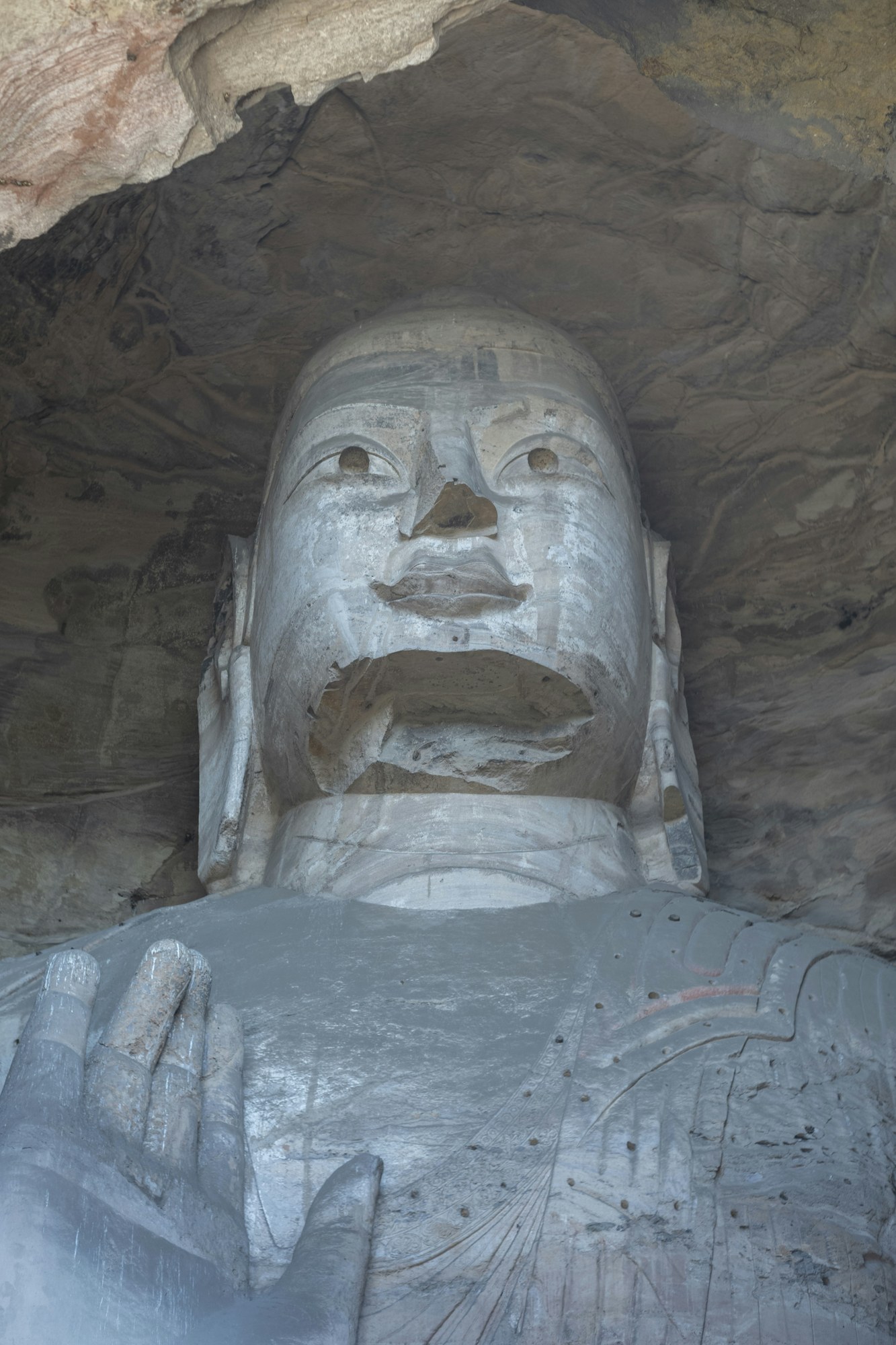
Carved directly into the sandstone cliff face of Lingyun Mountain at the confluence of two rivers, this monumental Buddha sculpture represents one of the world's largest stone carvings at approximately 71 meters in height. Initiated by monk Hai Tong in 803 CE and completed by successive Tang dynasty craftsmen over decades, the figure displays serene classical features with downcast eyes, an enigmatic expression, and hands positioned in a meditative gesture. The weathered white stone reveals the sculpture's ancient origins while showing remarkable preservation of fine sculptural details; the work integrates harmoniously with the natural rock formations surrounding it, demonstrating the Buddhist principle of harmony between human creation and landscape. This monumental undertaking served both spiritual and practical purposes, as its construction allegedly calmed dangerous river currents threatening local navigation. The Leshan Giant Buddha remains a pinnacle achievement of religious sculpture and engineering skill in early medieval Asia. Photo by tommao wang on Unsplash

Medium
Stone carving (sandstone cliff)

Start the Discussion

Request access to join the discussion

About this work

Hai Tong (project founder); various Tang craftsmen, Leshan Giant Buddha, 803

Carved directly into the sandstone cliff face of Lingyun Mountain at the confluence of two rivers, this monumental Buddha sculpture represents one of the world's largest stone carvings at approximately 71 meters in height. Initiated by monk Hai Tong in 803 CE and completed by successive Tang dynasty craftsmen over decades, the figure displays serene classical features with downcast eyes, an enigmatic expression, and hands positioned in a meditative gesture. The weathered white stone reveals the sculpture's ancient origins while showing remarkable preservation of fine sculptural details; the work integrates harmoniously with the natural rock formations surrounding it, demonstrating the Buddhist principle of harmony between human creation and landscape. This monumental undertaking served both spiritual and practical purposes, as its construction allegedly calmed dangerous river currents threatening local navigation. The Leshan Giant Buddha remains a pinnacle achievement of religious sculpture and engineering skill in early medieval Asia. Photo by tommao wang on Unsplash

Medium
Stone carving (sandstone cliff)
Year
803
Seen at
Lingyun Mountain, confluence of the Min and Dadu rivers

Related themes

Landscape Integration, Religious Art, Temple Art, Stone Carving, Outdoor Art, Buddhist Art, Cultural Heritage, Cliff Carving, Architectural Sculpture, Public Art, Sandstone, Tang Dynasty, Monumental Sculpture, Meditative Figure, Weathered Stone, UNESCO World Heritage, Iconic Landmark, Large Scale, Historic Monument, Ancient China