
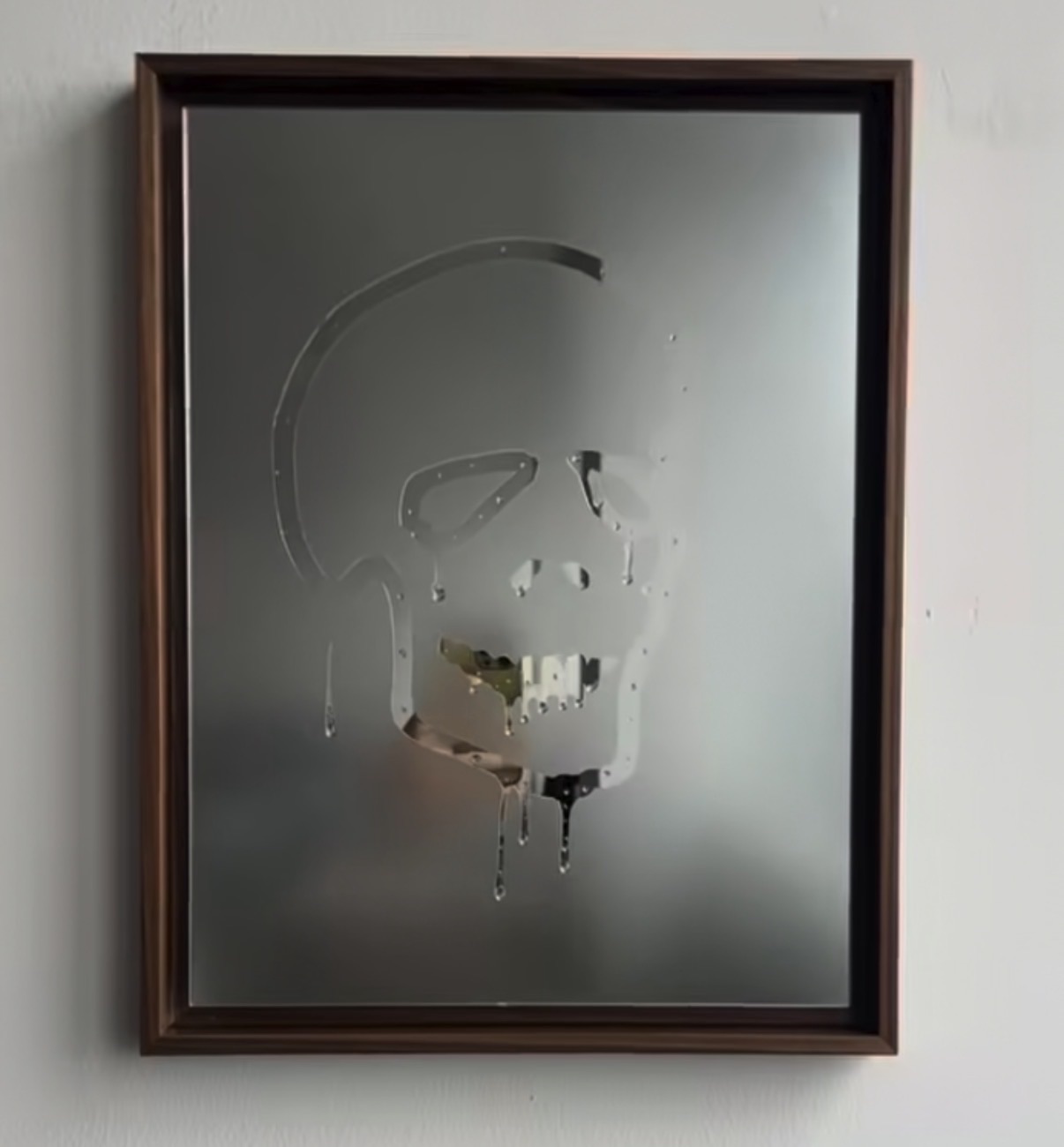
Skull
This striking contemporary work by German artist Jochen Mühlenbrink features a skull motif rendered directly onto a mirror surface, meticulously executed to appear as though formed by dripping condensation or moisture. The framed piece plays brilliantly with reflection and illusion, as the skull seems to dissolve and reform depending on the viewer's vantage point and the ambient light. Housed in a warm wood frame, the work exemplifies Mühlenbrink's signature practice of making the invisible utterly visible, inviting contemplation on themes of impermanence, mortality, and the ephemeral nature of perception.
- Medium
- Mirror, wood frame
Notes
Artist profile sourced from an app (likely Artsy or similar) showing Jochen Mühlenbrink, b. 1980, German, 16 works listed. Article referenced: 'Jochen Mühlenbrink Makes the Invisible Utterly Visible'. Work is spotted, not owned.
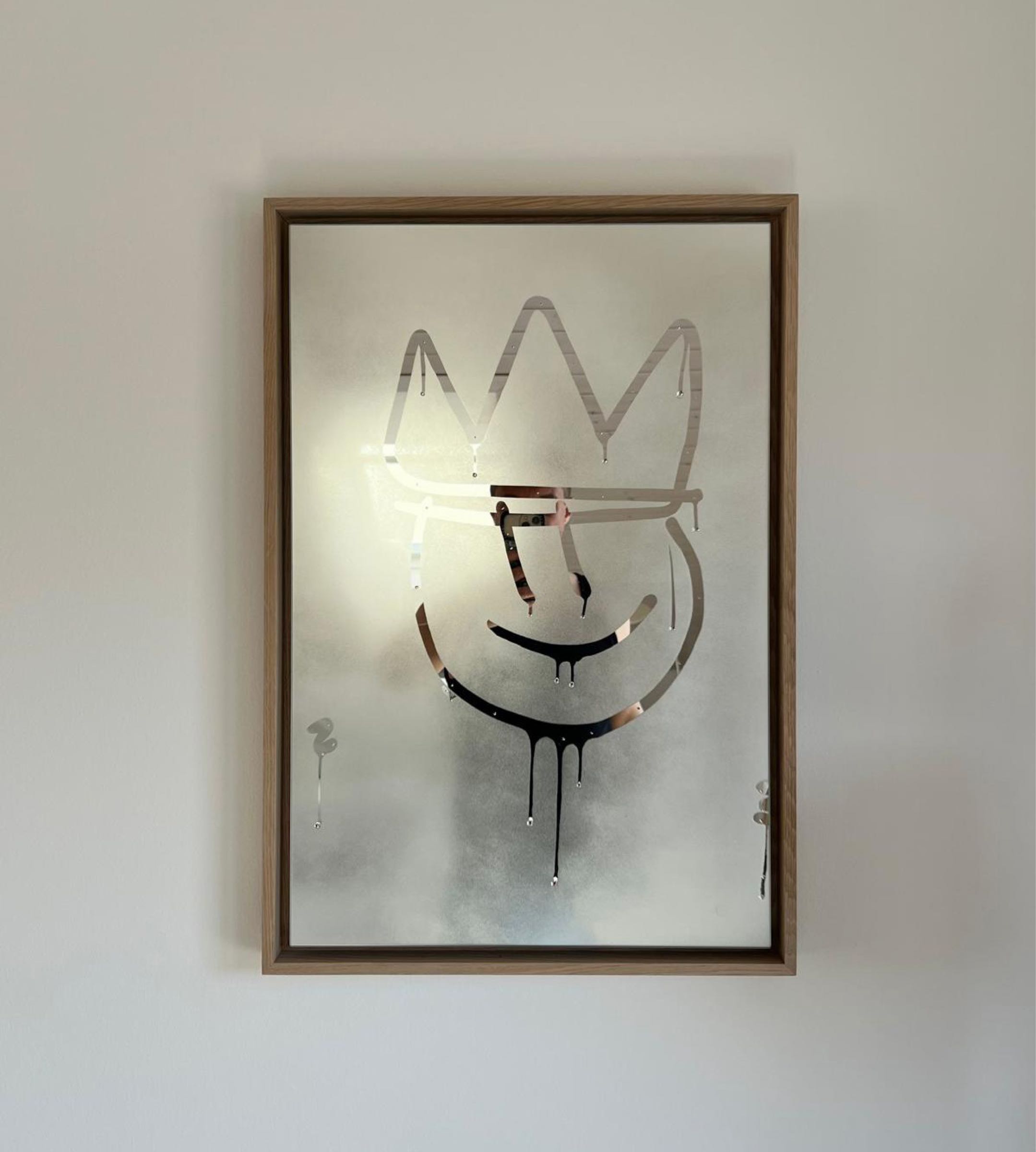
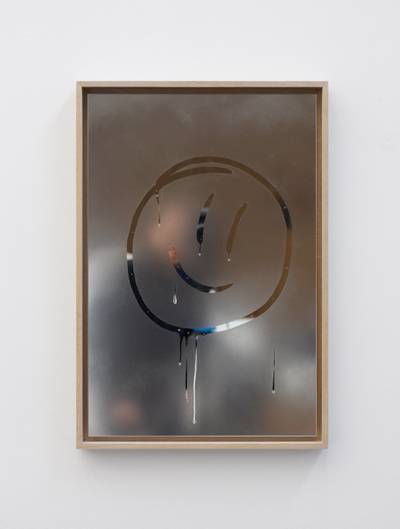
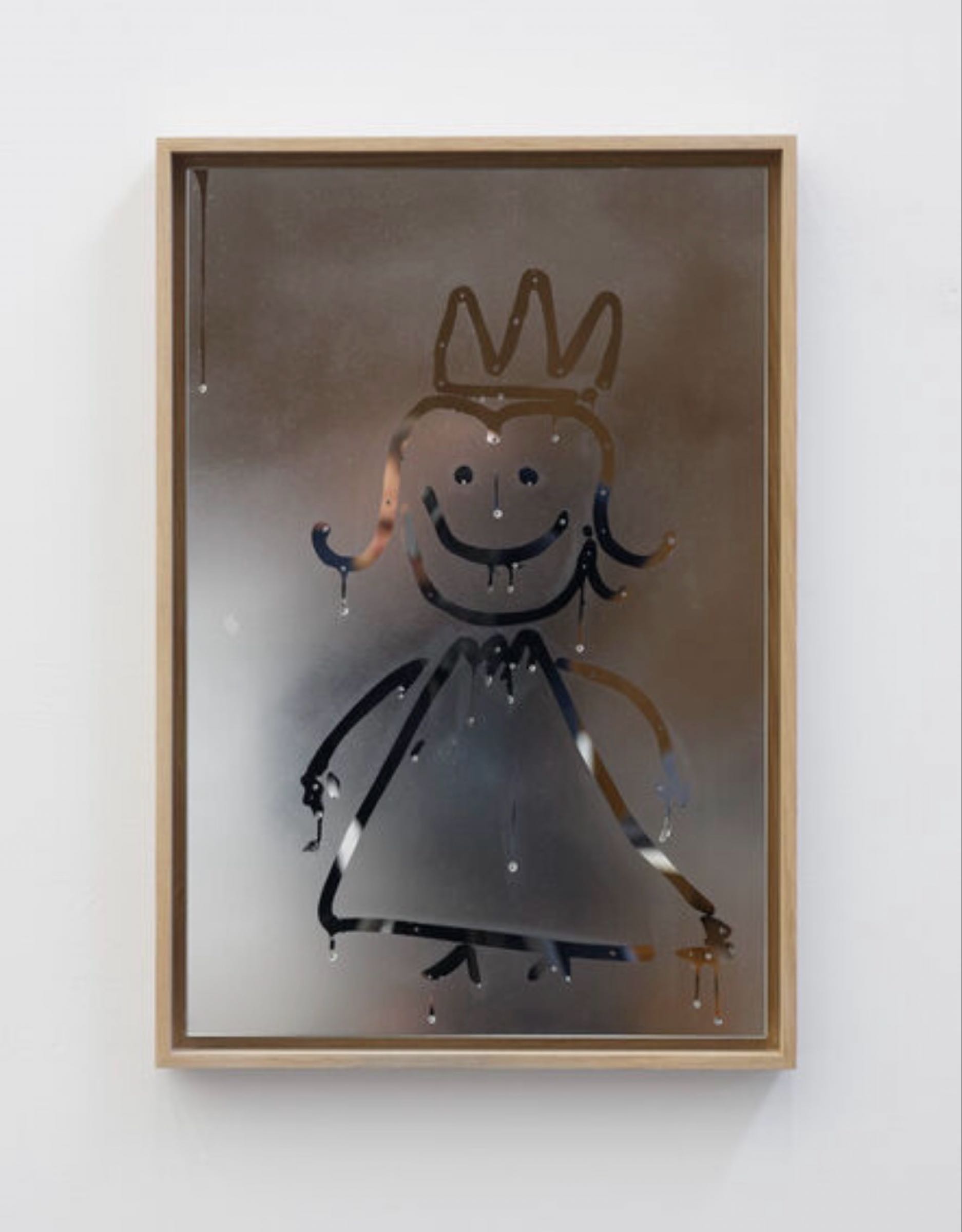
Collectors of Jochen Mühlenbrink

Artists in conversation
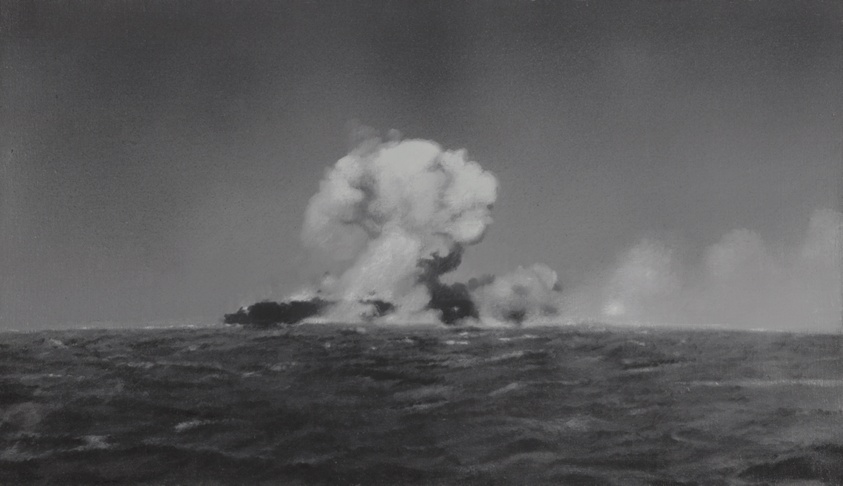
Vija Celmins
American (Latvian-born) · b. 1938
Celmins creates obsessively detailed photorealist paintings of everyday surfaces and textures, sharing Mühlenbrink's focus on visual deception and the philosophical act of looking. Her meticulous rendering of ocean surfaces, spider webs, and night skies prompts the same perceptual questioning about representation versus reality.
Raphaella Spence
British · b. 1978
Spence works in hyper realistic oil painting of transparent and reflective surfaces including glass and condensation, directly paralleling Mühlenbrink's trompe l'oeil explorations of water droplets and window panes. Both artists use photorealist technique to interrogate perception and the boundary between painted illusion and physical reality.
Tjalf Sparnaay
Dutch · b. 1954
Sparnaay is a Dutch hyperrealist painter who renders mundane everyday objects and packaging materials at monumental scale with obsessive detail, closely mirroring Mühlenbrink's large scale canvases and focus on material culture and everyday objects. Both artists elevate overlooked surfaces and humble materials into conceptually charged still life paintings.
Start the Discussion
Request access to join the discussion