Join The Collection to save, track, and explore works like this.

Albert Schickedanz & György Zala — Millennium Monument, Heroes' Square

Millennium Monument, Heroes' Square

1900

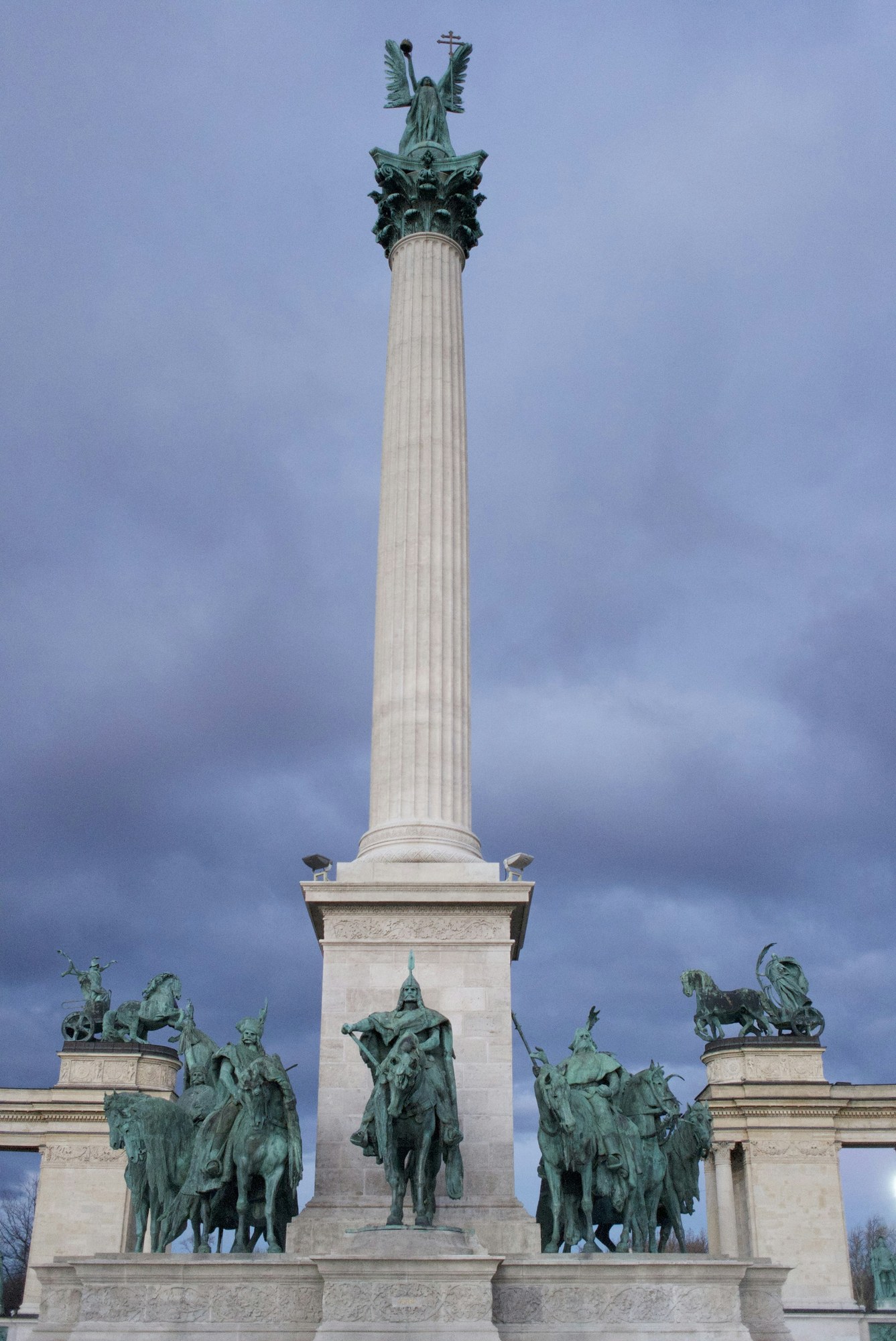
The Millennium Monument stands as a towering celebration of Hungarian national identity and historical achievement, crowned by a gilded winged figure holding a cross. Designed by architects Albert Schickedanz and sculptor György Zala, this monumental work rises from Heroes' Square in Budapest with a soaring Corinthian column of pale stone that commands the plaza. The column is anchored by a substantial base adorned with bronze equestrian statues depicting Hungarian leaders and warriors, their verdigris patina contrasting dramatically against the monument's limestone shaft. Completed in 1900 to commemorate a millennium of Magyar settlement, the composition synthesizes neoclassical architectural principles with romantic nationalism, establishing it as an iconic symbol of Budapest's grandeur and Hungary's cultural significance. The monument's scale and symbolic imagery reflect turn of the century aspirations to assert national pride through monumental public sculpture. Photo by Eva Balogh on Unsplash

Medium
Stone and bronze monument

Start the Discussion

Request access to join the discussion

About this work

Albert Schickedanz & György Zala, Millennium Monument, Heroes' Square, 1900

The Millennium Monument stands as a towering celebration of Hungarian national identity and historical achievement, crowned by a gilded winged figure holding a cross. Designed by architects Albert Schickedanz and sculptor György Zala, this monumental work rises from Heroes' Square in Budapest with a soaring Corinthian column of pale stone that commands the plaza. The column is anchored by a substantial base adorned with bronze equestrian statues depicting Hungarian leaders and warriors, their verdigris patina contrasting dramatically against the monument's limestone shaft. Completed in 1900 to commemorate a millennium of Magyar settlement, the composition synthesizes neoclassical architectural principles with romantic nationalism, establishing it as an iconic symbol of Budapest's grandeur and Hungary's cultural significance. The monument's scale and symbolic imagery reflect turn of the century aspirations to assert national pride through monumental public sculpture. Photo by Eva Balogh on Unsplash

Medium
Stone and bronze monument
Year
1900
Seen at
Hősök tere (Heroes' Square)

Related themes

Bronze, Twentieth Century, Heroes' Square, Verdigris Patina, Architectural Sculpture, Patriotic Art, Budapest, Hungarian Heritage, National Identity, Public Art, European Sculpture, Historical Monument, Monumental Sculpture, Column Monument, Stone, Commemorative Art, Outdoor Monument, Neoclassical, Iconic Landmark, Romantic Nationalism, Equestrian Statues