The People's Clock
2020
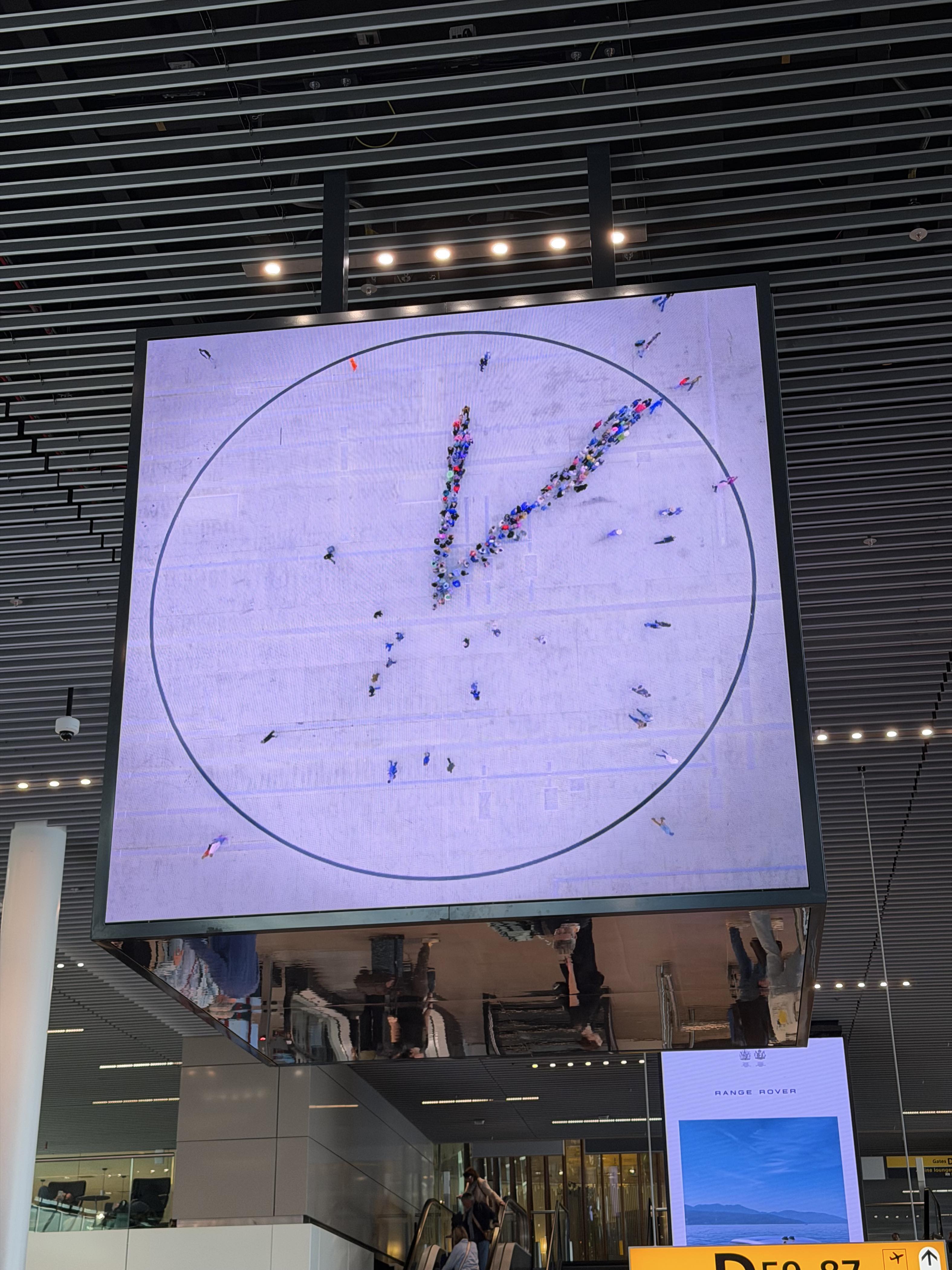
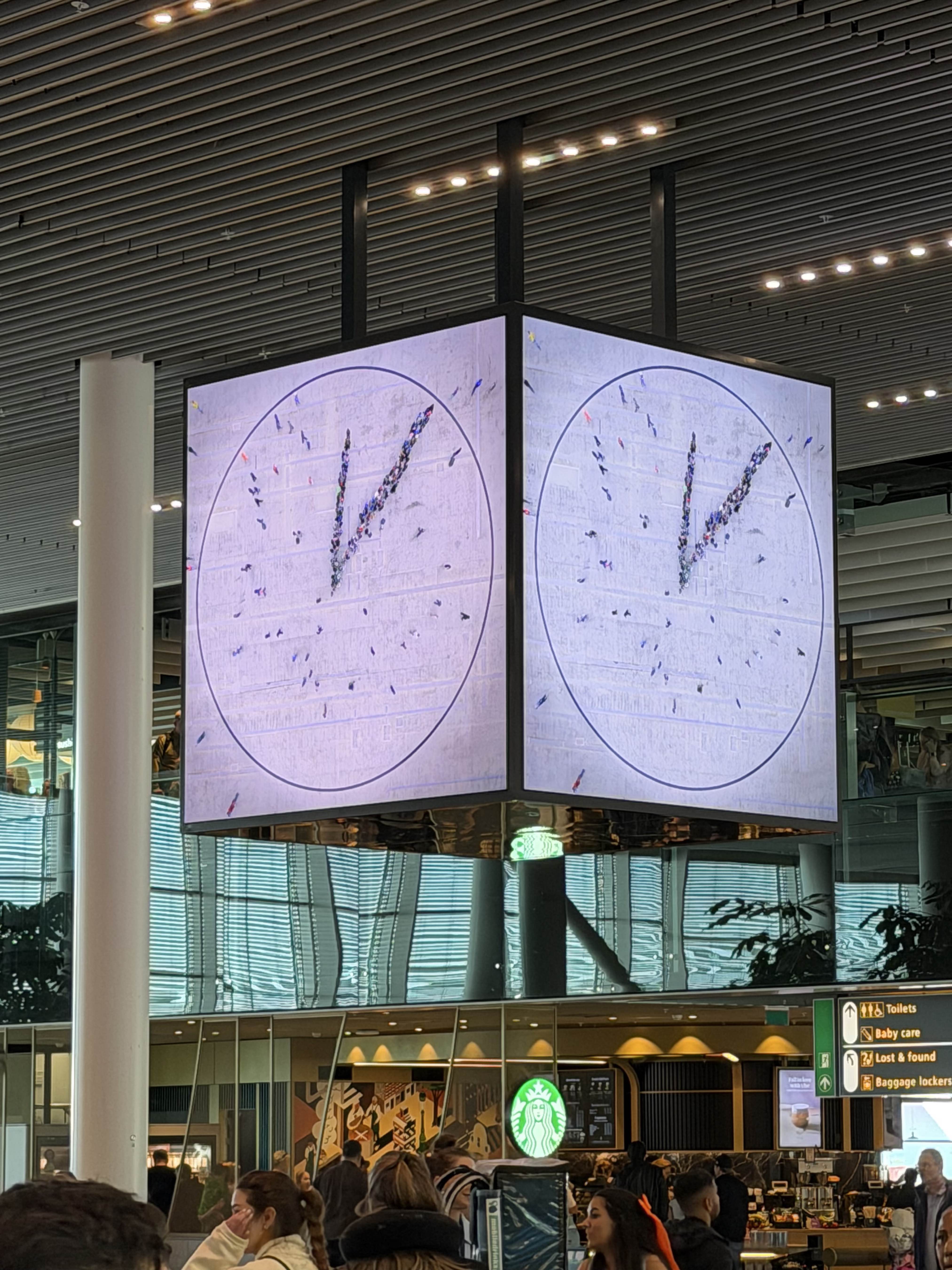
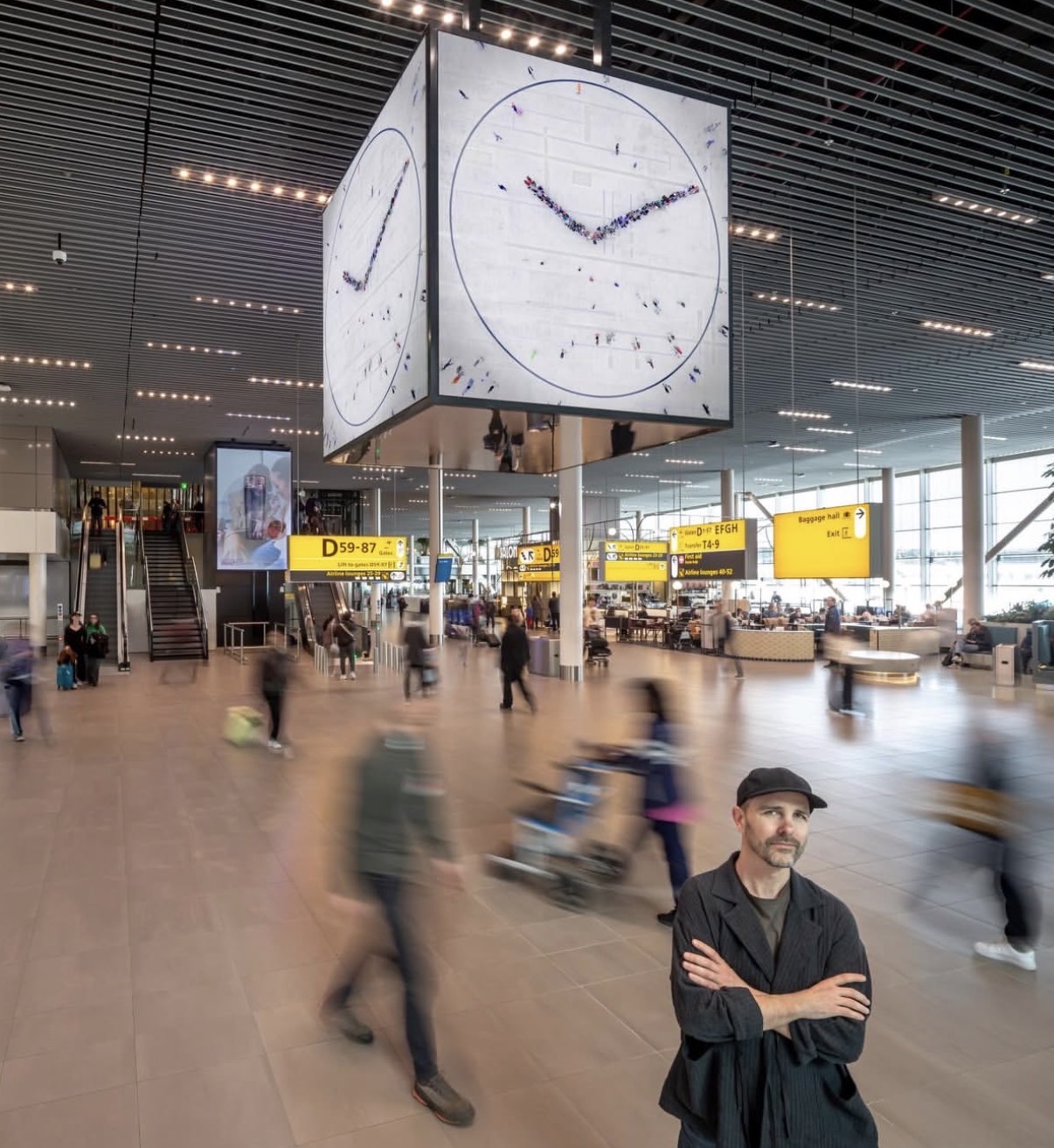
Maarten Baas's The People's Clock is a monumental public video installation permanently sited in the departure hall of Amsterdam Schiphol Airport, specifically Lounge 1 in the Schengen area. The work takes the form of a large four sided LED cube displaying a functioning 12 hour clock whose hour and minute hands are formed by groups of volunteers and performers arranged in aerial footage to collectively embody the passing of time. Rather than mechanical precision, timekeeping becomes a communal and human act, with colorfully dressed participants organizing themselves into living clock hands against a pale urban ground. The piece stands as one of Baas's most ambitious public commissions, transforming an everyday object into a collaborative performance that thousands of travelers encounter daily.
- Medium
- Video installation on LED screen
Notes
Instagram post by @maarten.baas confirms the work is installed in Schiphol's renewed departure hall, Lounge 1, Schengen area. Photography credit: @thijswolzak. Background music referenced in post: Tom Waits, Time. Post engagement: 3,435 likes, 73 comments, 35 reshares, 392 saves.
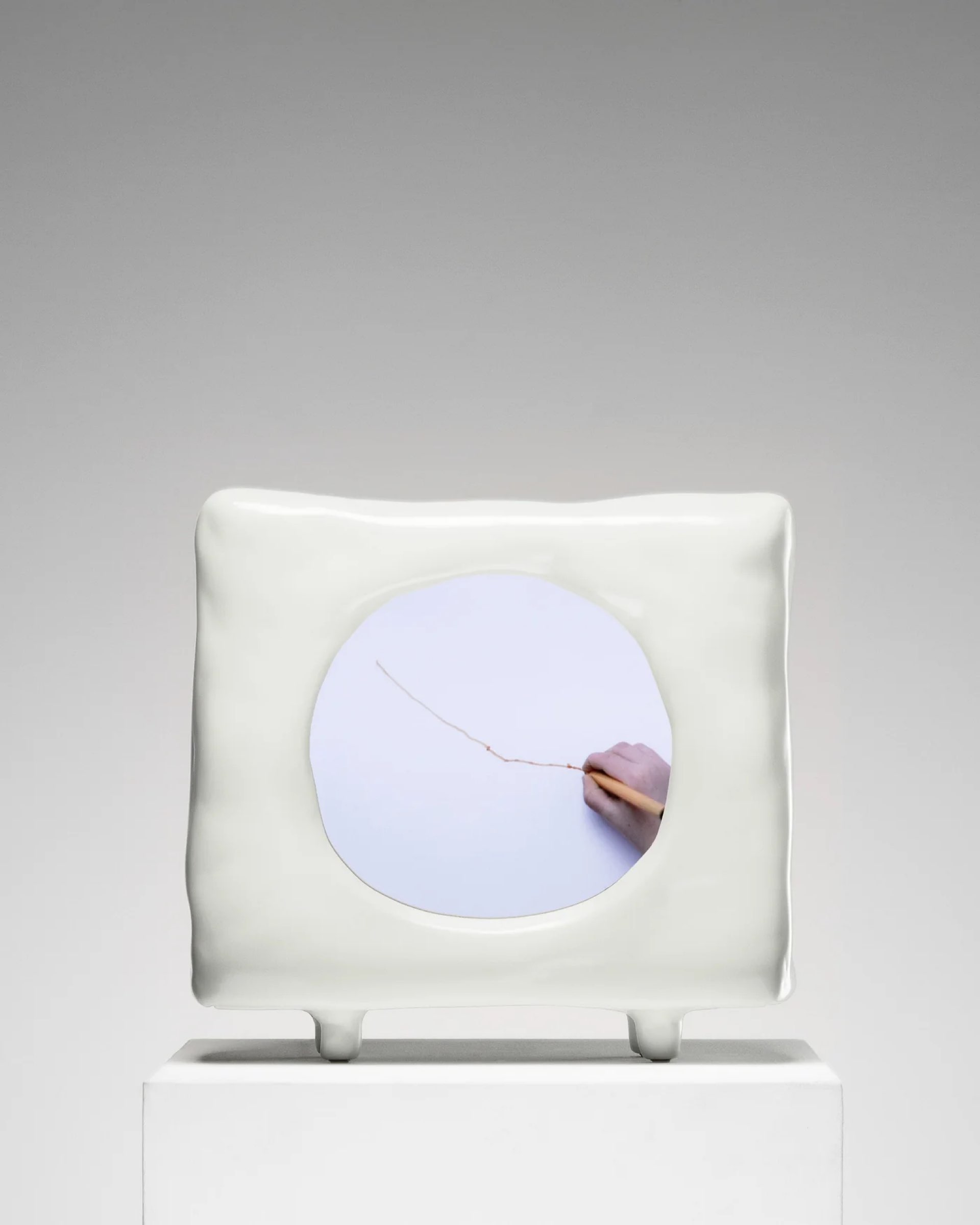
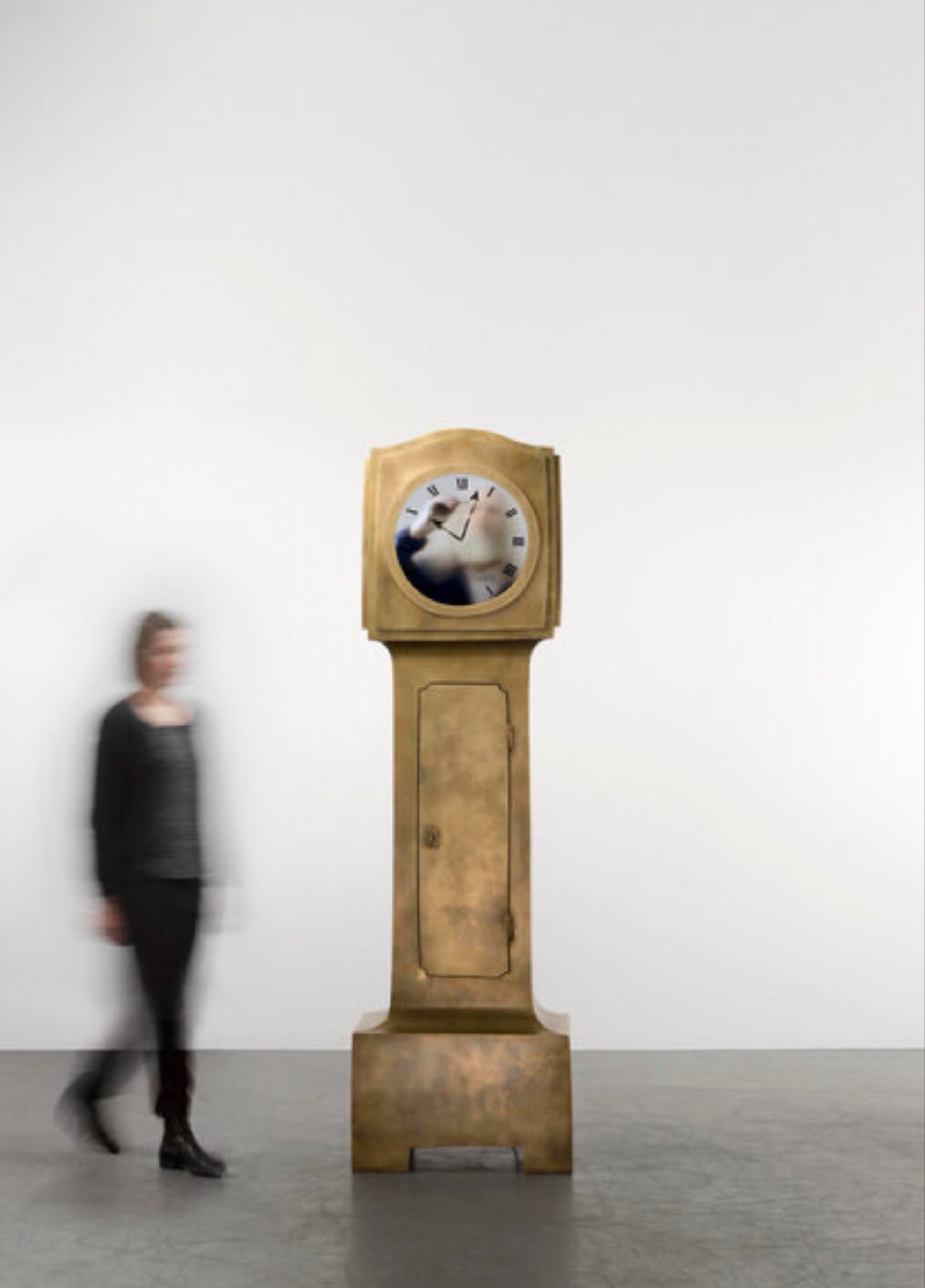
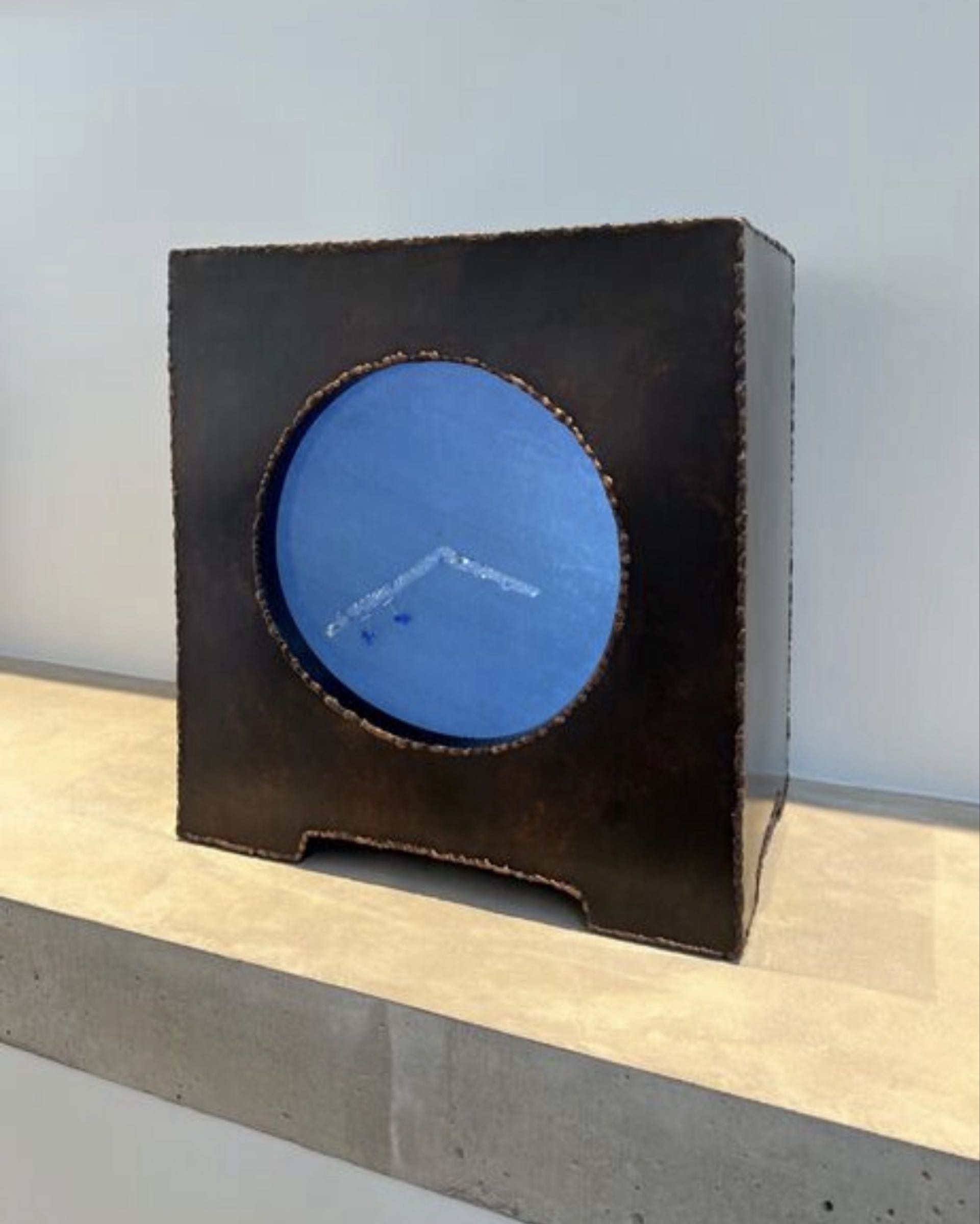
Spotted works by Maarten Baas
Artists in conversation
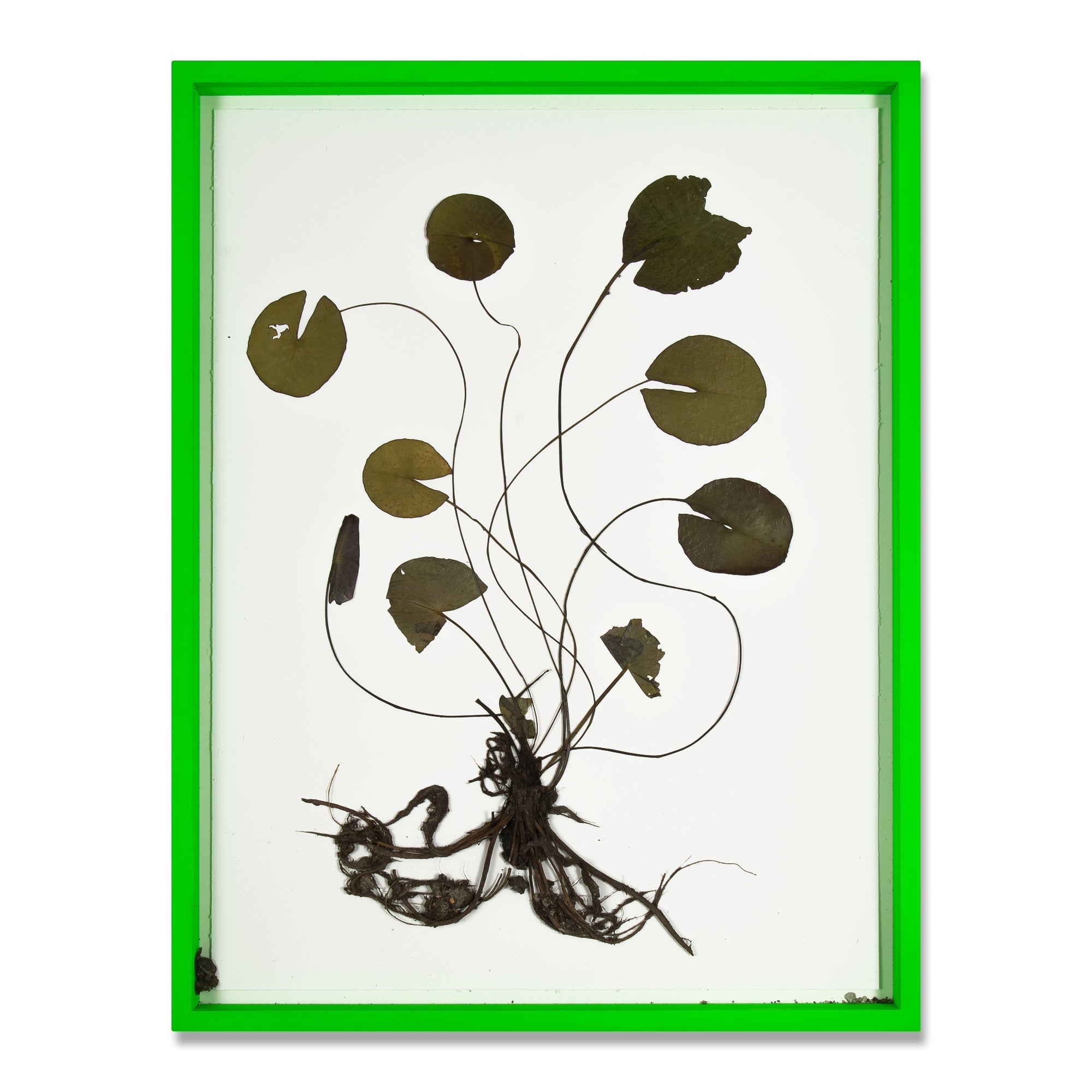
Olafur Eliasson
Danish-Icelandic · b. 1967
Eliasson creates large scale immersive public installations that engage collective human experience and the perception of natural phenomena like time and light, directly paralleling Baas's communal approach to timekeeping in a monumental public setting.
Julius von Bismarck
German · b. 1983
Von Bismarck works with video and performance based installations in which human bodies and collective action are choreographed to create systems and visual spectacles, closely mirroring the aerial choreography of performers forming clock hands in Baas's piece.
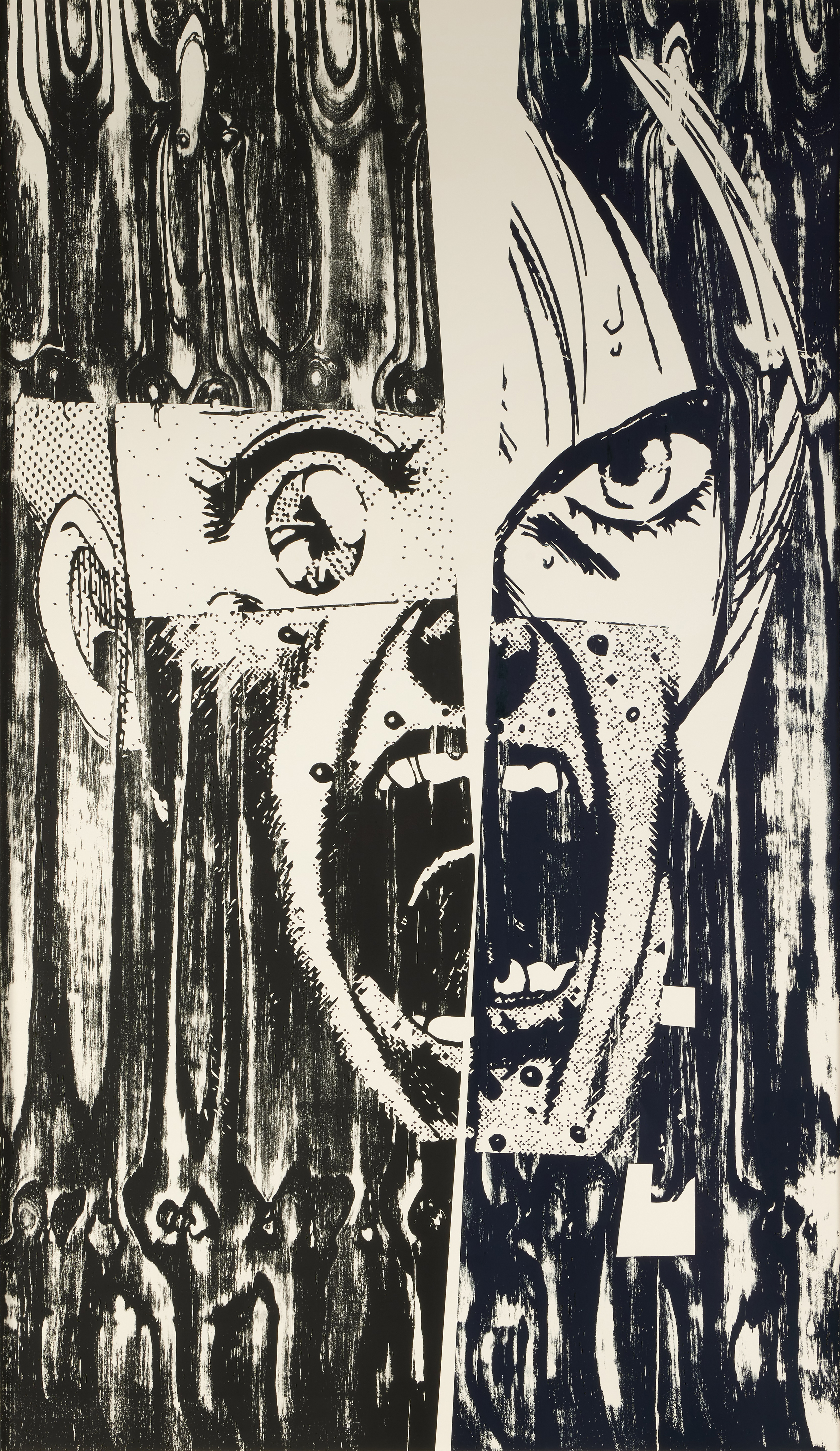
Christian Marclay
American-Swiss · b. 1955
Marclay's iconic video installation The Clock is the closest conceptual parallel to Baas's work, transforming a functioning real time clock into a durational video artwork installed in public and institutional spaces, using human performance and imagery as the medium of timekeeping.
Start the Discussion
Request access to join the discussion