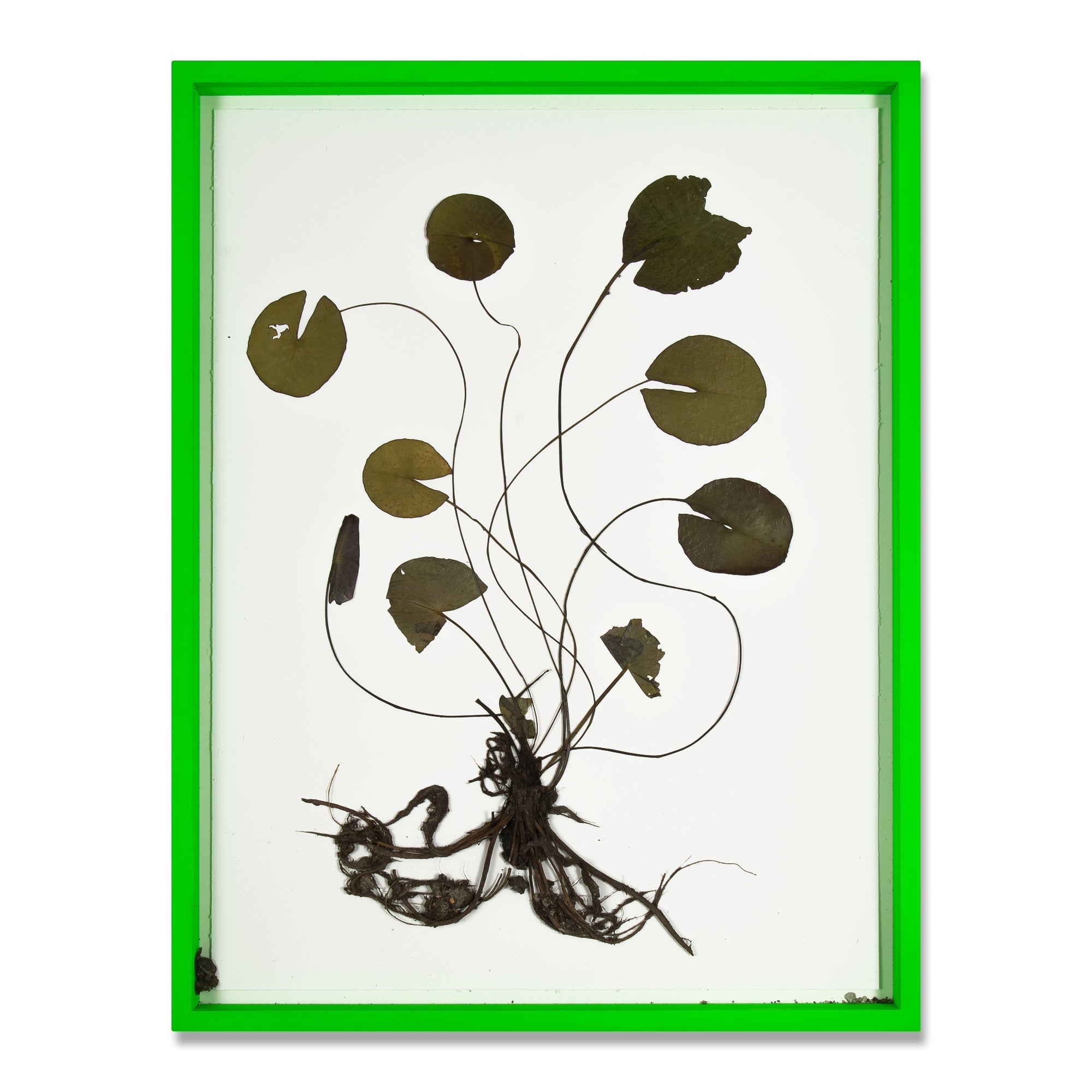
In the autumn of 2023, the Fondation Beyeler in Basel presented a sweeping retrospective of Olafur Eliasson's work, drawing audiences from across the globe to stand inside rooms that breathed, shimmered, and seemed to dissolve the boundary between the self and the surrounding world. The exhibition was a reminder, if one were needed, that Eliasson occupies a singular position in contemporary art: an artist whose work is at once rigorously conceptual and deeply, almost viscerally felt. To walk into one of his installations is not merely to look at art but to become aware of the fact that you are looking, that you are a body in space, that perception itself is something constructed and therefore open to question. Few artists working today can make that argument so beautifully. Olafur Eliasson was born in Copenhagen in 1967 to Icelandic parents, and the landscape of Iceland, with its geysers, glaciers, volcanic plains, and perpetually shifting light, became one of the foundational imaginative territories of his practice. He spent formative periods of his childhood in Iceland, absorbing a natural world that operates on a scale and with an indifference that can render human presence simultaneously small and precious. He studied at the Royal Danish Academy of Fine Arts in Copenhagen, graduating in 1995, and it was during those years that he began developing the conceptual framework that would sustain his work for the following three decades. He moved to Berlin in 1994, establishing what would become Studio Olafur Eliasson, a remarkable collaborative enterprise that now employs architects, engineers, art historians, and craftspeople working in genuine dialogue with the artist. Eliasson's early exhibitions in the 1990s already demonstrated the ambition and the philosophical coherence that would define his career. Works such as Beauty from 1993, in which a fine mist of water droplets is illuminated to produce a shifting, luminous rainbow inside a darkened room, announced an artist who understood that wonder and rigorous thinking are not opposites. Throughout this period he was experimenting with the most fundamental elements of visual experience: light, water, fog, reflection, and colour. He was also reading deeply in the phenomenological tradition, engaging with thinkers such as Maurice Merleau Ponty, whose ideas about the embodied nature of perception gave philosophical grounding to what Eliasson was pursuing through physical and sensory means. His work from this era belongs firmly within the lineage of artists who interrogate how we see, including James Turrell, whose explorations of light and space offer a useful point of comparison, and Robert Irwin, whose practice similarly asks viewers to become conscious of their own perceptual apparatus. The moment that introduced Eliasson to a mass audience came in the autumn of 2003, when Tate Modern invited him to install a work in the Turbine Hall as part of the Unilever Series. The Weather Project, which occupied that vast industrial nave from October 2003 through March 2004, created an artificial sun from a semicircular disc of monofrequency lamps and a ceiling covered in reflective foil that doubled the space and the light into something monumental and aching. Visitors lay on the floor, raised their arms, watched their reflections merge with those of strangers. More than two million people came. It was a work that functioned as a kind of collective meditation on nature, longing, and the human need to orient oneself toward a source of light, and it remains one of the most discussed and beloved public art moments of the twenty first century. The Weather Project did not simply make Eliasson famous; it demonstrated that ambitious, intellectually serious art could generate genuine community. In the years that followed, Eliasson's practice expanded in scale, ambition, and social engagement. New York City Waterfalls, a 2008 commission by the Public Art Fund, saw four enormous artificial waterfalls installed along the shores of Manhattan and Brooklyn, visible from the water and from the land, transforming the harbor into something legendary. His 2014 installation Inside the Horizon at the Louisiana Museum of Modern Art in Denmark placed visitors inside a corridor of yellow light and triangular forms that seemed to go on forever. His work Ice Watch, first presented in Copenhagen in 2014 and subsequently installed outside major institutions including the Tate Modern and the Pantheon in Paris, brought blocks of ice harvested from the Greenland ice sheet into public spaces, allowing passersby to watch them melt in real time as a direct encounter with the consequences of climate change. This dimension of his practice, the integration of ecological urgency into aesthetic experience, has only grown more significant as the planetary crisis has deepened. For collectors, Eliasson's practice offers remarkable range and depth. His editions and multiples, including works from the Herbarium series of 2021, bring his characteristic engagement with natural phenomena and geometric abstraction into an accessible and collectible format. The Herbarium works, with their pressed plant specimens arranged according to Eliasson's precise compositional instinct, connect his long standing interest in the natural world to a more intimate, contemplative scale. His large scale unique works and sculptures command serious attention at auction, with institutions and major private collections in Europe, the United States, and Asia holding significant examples of his output. Collectors are drawn to Eliasson for the same reasons audiences are: his work is never decorative in a passive sense but always activating, always asking something of the person in the room with it. Owning an Eliasson is to have an ongoing conversation with the nature of perception. Eliasson's place in art history is secure and continues to deepen. He sits within a tradition that includes Dan Flavin's use of artificial light as pure sculptural material, Yayoi Kusama's infinity rooms, and the land art practices of artists like Robert Smithson, who also understood that landscape is not a backdrop but a protagonist. Yet Eliasson has pushed these inheritances in a distinctly contemporary direction, integrating sustainability into his studio's operations, collaborating with scientists and activists, and insisting that art has a genuine role to play in how societies understand and respond to environmental change. His Little Sun project, launched in 2012, distributes solar powered lamps to communities without reliable access to electricity, a project that refuses the separation between aesthetic ambition and social responsibility. What Olafur Eliasson has given contemporary art is something rare and genuinely valuable: a practice that is philosophically serious without being cold, politically engaged without being didactic, and formally inventive without ever losing sight of the human being standing in front of it. His work reminds us that perception is not passive, that the act of seeing is itself an act of participation, and that art, at its most ambitious, can change not just how we look at a room but how we look at the world outside it. As new generations of collectors and audiences encounter his work, that invitation remains as open and as generous as it has always been.