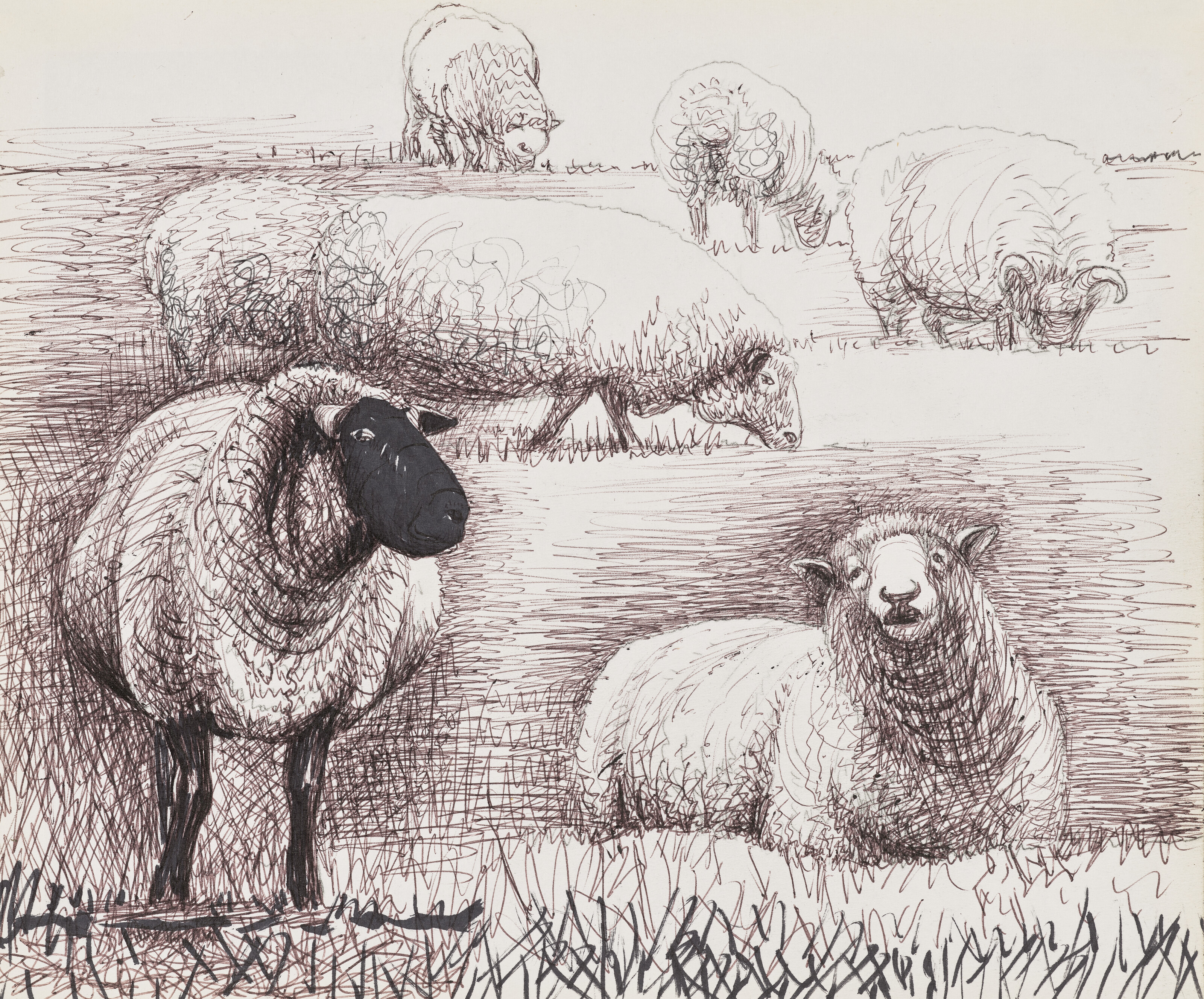
Field of Sheep
"Field of Sheep" by Henry Moore exemplifies the sculptor's characteristic abstraction of organic forms, translating the pastoral landscape and animals into smooth, biomorphic shapes that suggest rather than literally depict their subjects. Created in Moore's mature period, the work reflects his fascination with how natural forms could be simplified and distorted to convey emotional and spatial presence while maintaining a connection to the observed world. The piece demonstrates Moore's mastery of form and void, using negative space as actively as the sculptural volumes themselves to create a dynamic composition that invites viewing from multiple angles.
- Signed
- Yes
- Location
- Christie's, Beverly Hills, CA
- Spotted At
- Auction House · Christie'sView on map
Notes
LITERATURE H. Moore and K. Clark, Henry Moore's Sheep Sketchbook, London, 1972, p. 31, illustrated. A. Garrould (ed.), Henry Moore: Complete Drawings 1950-76, Vol. 4, Much Hadham, 2003, pp. 238-39, no. AG 72.31, HMF 3347, illustrated. Conditions of sale Brought to you by Pippa Jacomb Director, Head of Day Sale PJACOMB@CHRISTIES.COM +44 (0) 20 7389 2293
🔨 Auction Lot
Modern British and Irish Art Day Sale
March 19, 2026
Estimate: $20,000 to $30,000
Sold: $17,000
Lot 142
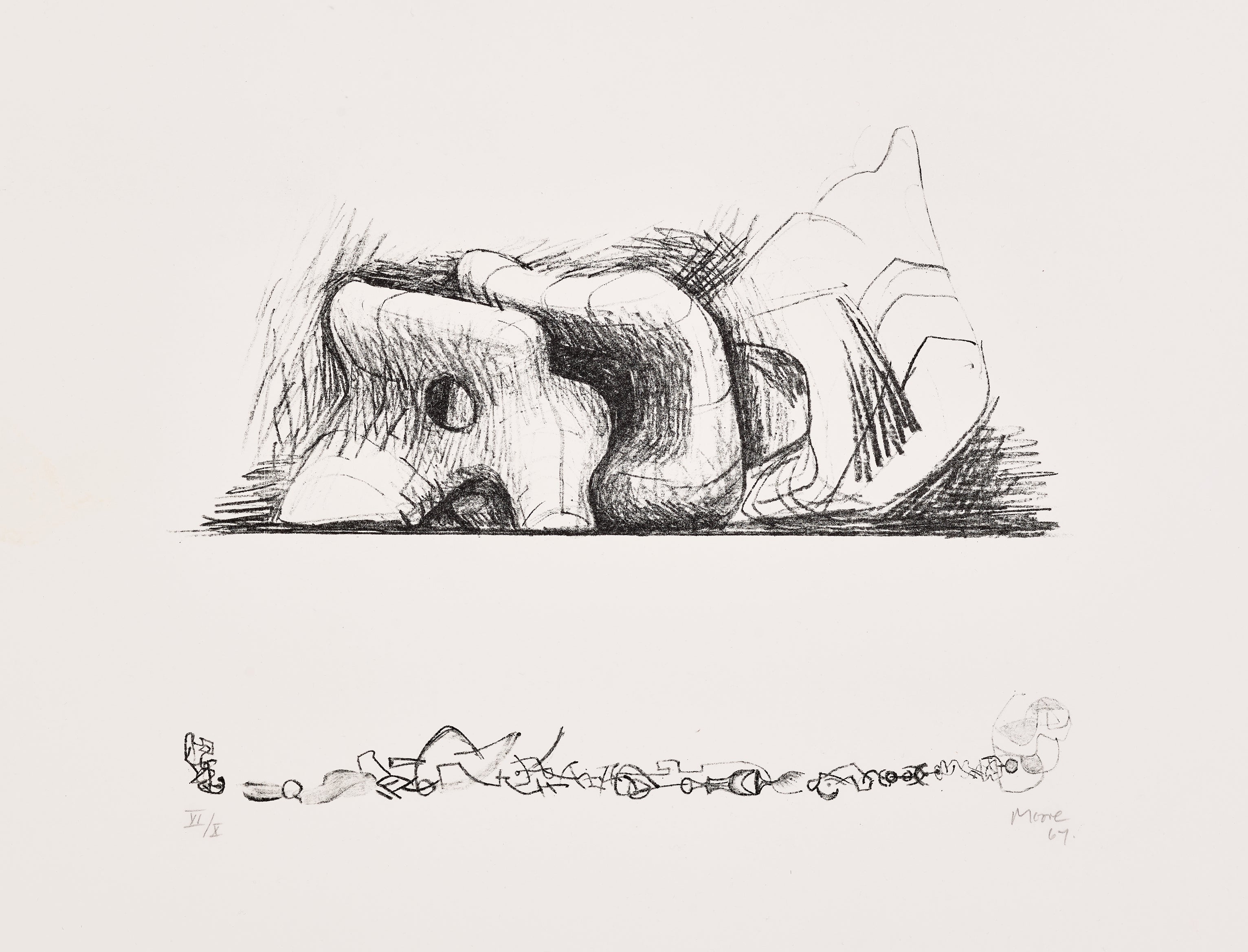
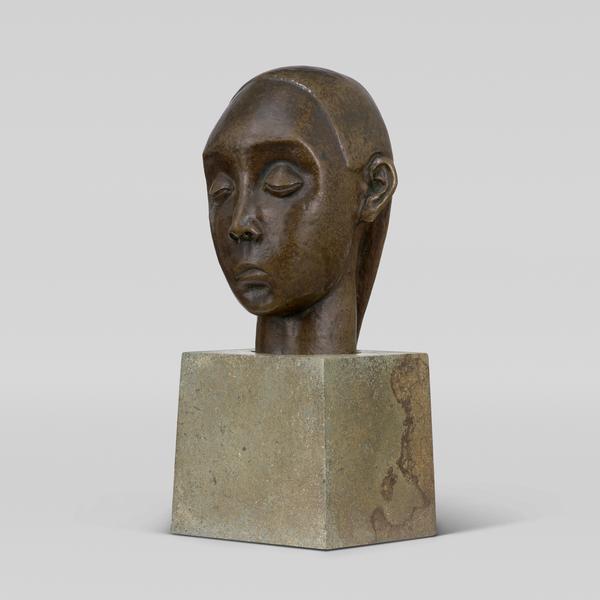
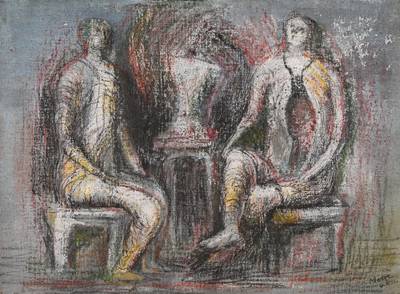
Artists in conversation
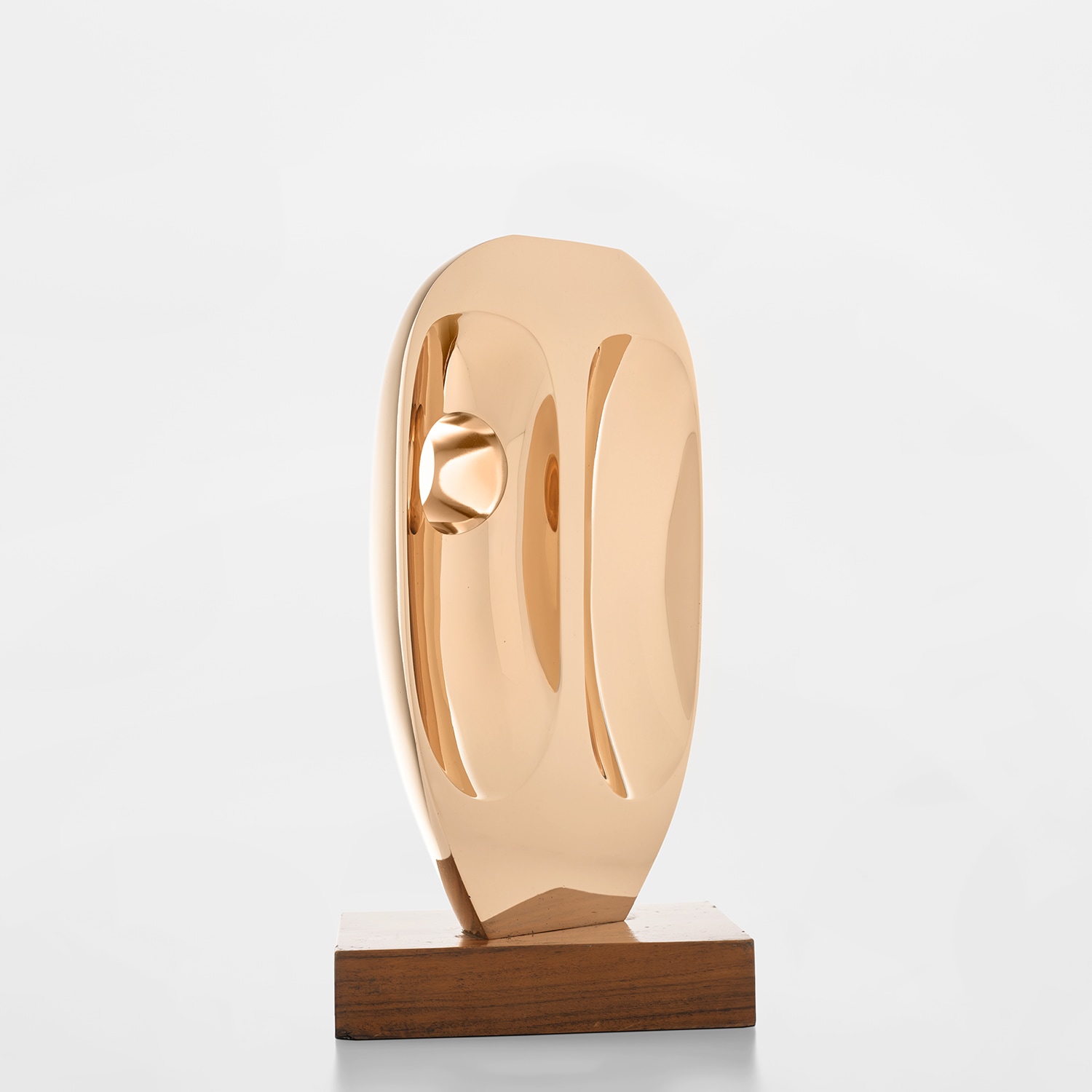
Barbara Hepworth
British · b. 1903
Hepworth shared Moore's dedication to biomorphic abstraction in bronze and stone, creating smooth organic sculptures that evoke natural landscapes and living forms while maintaining a distinctly modernist sensibility rooted in the British countryside.
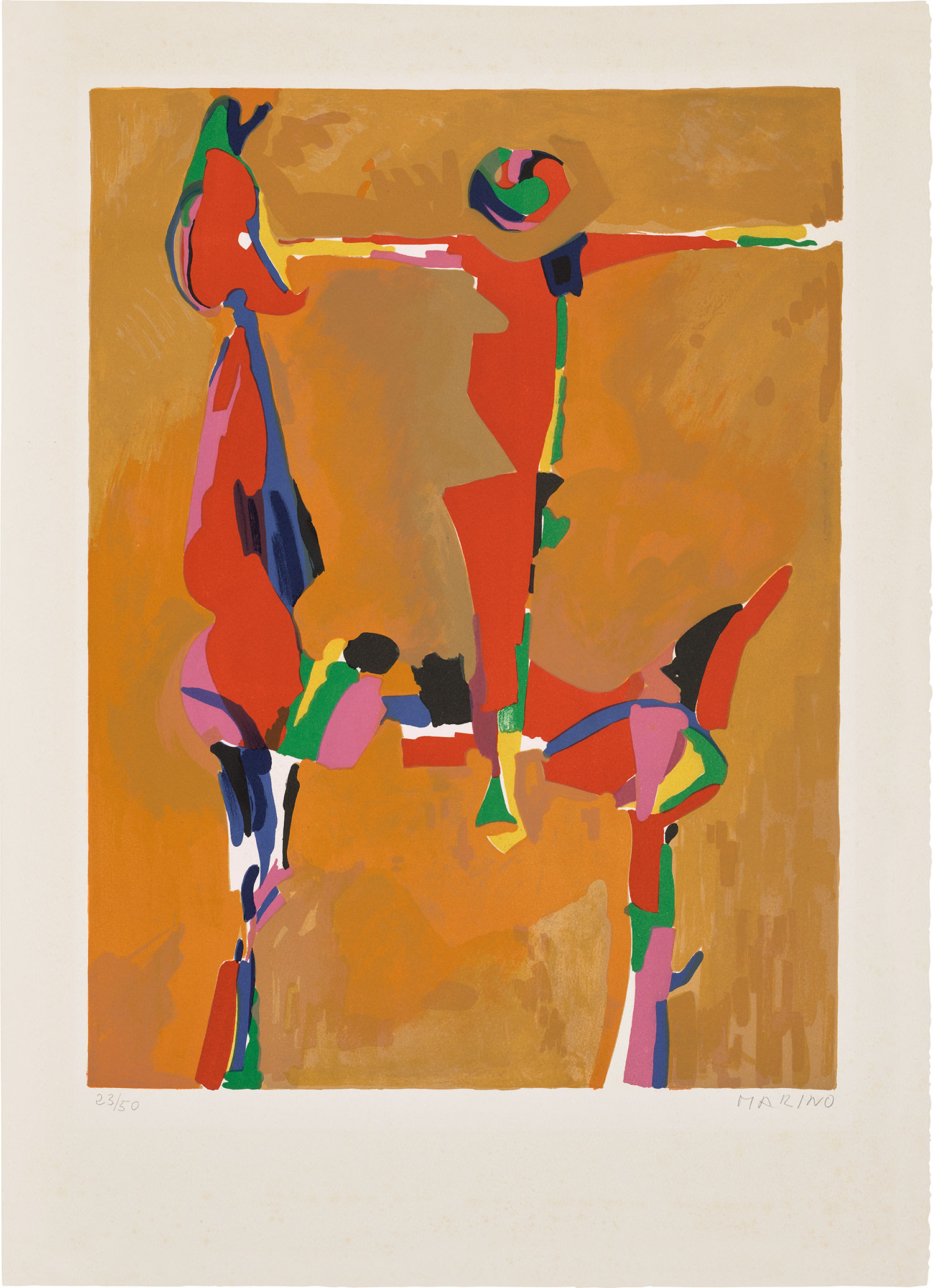
Marino Marini
Italian · b. 1901
Marini similarly worked in bronze to depict animal and figure subjects with simplified, abstracted organic forms, capturing the essence and emotional weight of living creatures rather than literal representation in a 20th century modernist tradition.
Antoine Pevsner
French · b. 1886
Pevsner created monumental bronze sculptures that translate organic and natural references into abstracted biomorphic forms, sharing Moore's interest in how sculptural mass and simplified shapes can convey spatial presence and connection to the natural world.
Start the Discussion
Request access to join the discussion