Bulldog Monument
1989
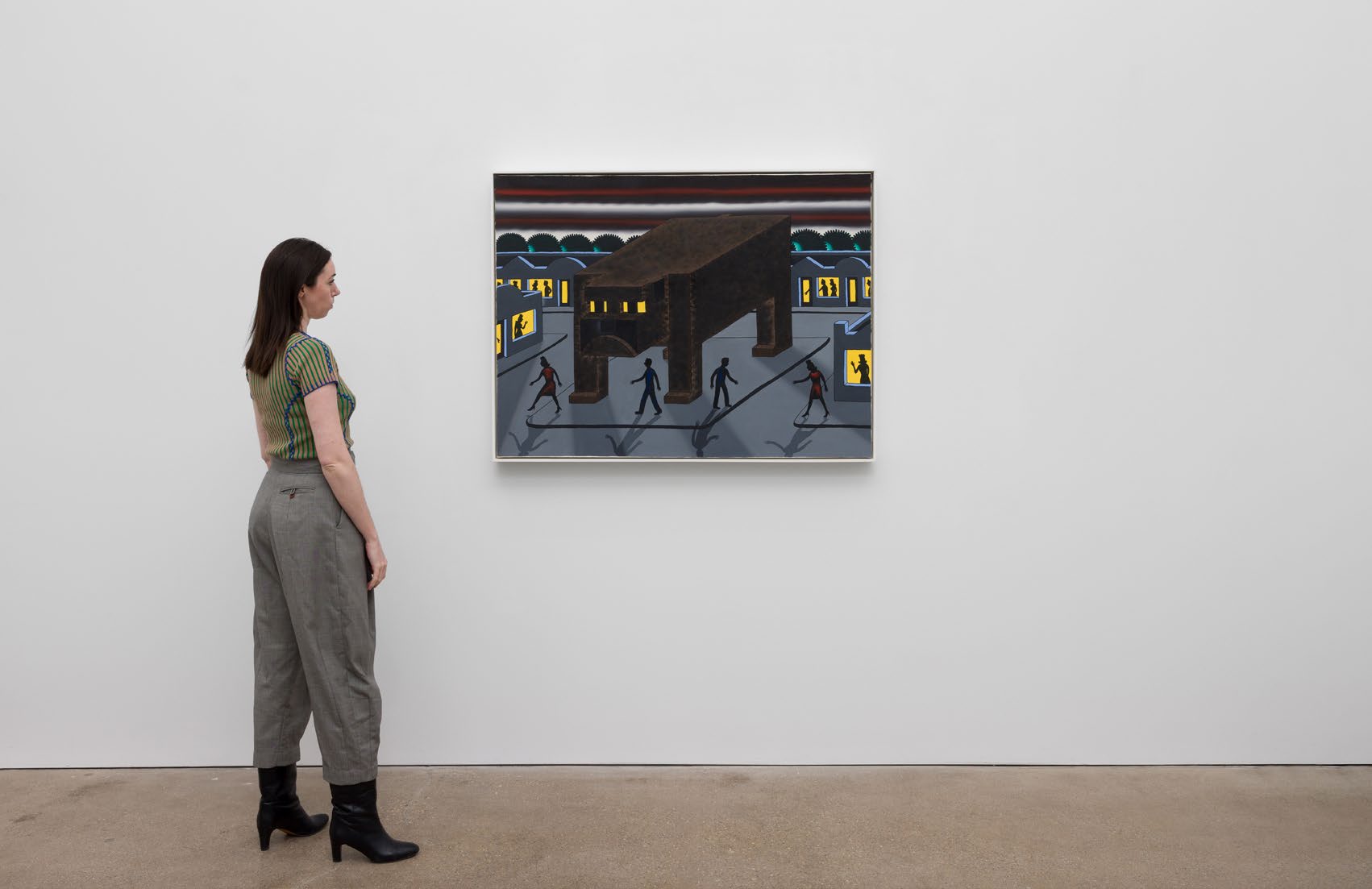
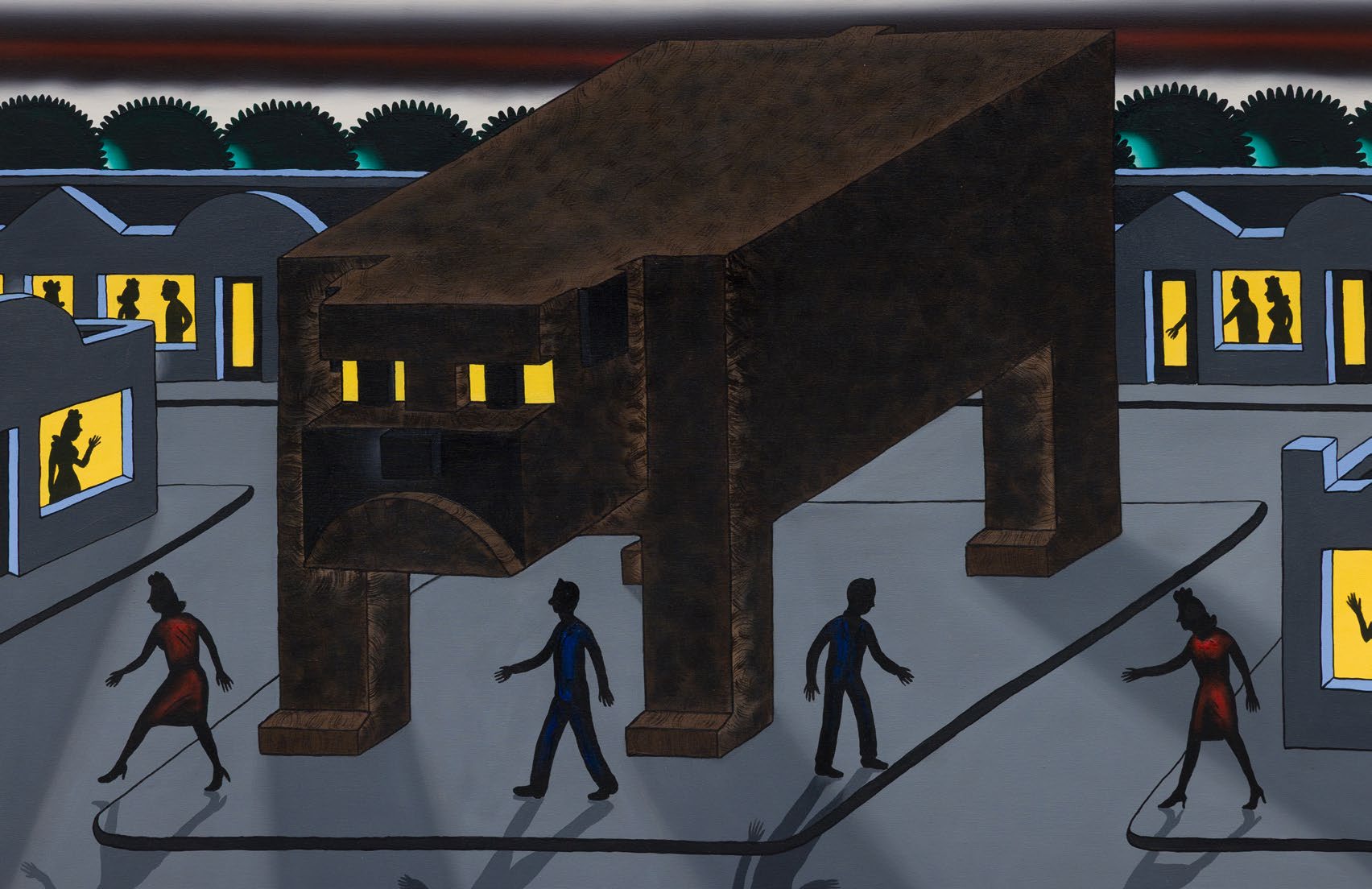
Roger Brown's 1989 oil on canvas, "Bulldog Monument," renders a stark and theatrical nocturnal cityscape, measuring 36 × 48 inches (91.4 × 121.9 cm). At its center stands a formidable, dark brown structure, its geometric bulk resembling a stylized bulldog, punctuated by small, glowing yellow windows that hint at an inner life. This imposing form is flanked by a series of uniform, simplified houses, each also illuminated from within, creating a rhythm of light against the deep twilight. Silhouetted figures, some highlighted with touches of red, traverse the foreground, casting long, dramatic shadows across the pavement. Above, a stratified sky of deep reds and blacks adds to the painting's potent atmosphere, suggesting an industrial haze or an otherworldly sunset. The work exemplifies Brown's signature graphic style, characterized by bold outlines, flattened perspectives, and an almost stage-like composition that draws the viewer into its enigmatic urban scene. This powerful composition extends Brown's exploration of American culture and the urban experience, themes central to his work as a prominent figure of the Chicago Imagists. The "Bulldog Monument" itself serves as a potent symbol, perhaps representing an institutional power, a specific industrial presence, or even the stubborn spirit of a community. The anonymous figures walking beneath its shadow underscore a sense of collective movement within a landscape dominated by formidable structures, while the glowing windows of the surrounding homes offer a glimpse into countless private narratives unfolding simultaneously. Brown masterfully transforms everyday architectural and human forms into an iconic tableau, inviting contemplation on the relationship between individual lives and the monumental forces that shape our environments. The painting is a testament to Brown's ability to infuse the familiar with a compelling sense of myth and social commentary.
- Medium
- Oil on canvas
- Location
- Richard Gray Gallery, Chicago, IL
For Sale
Start the Discussion
Request access to join the discussion