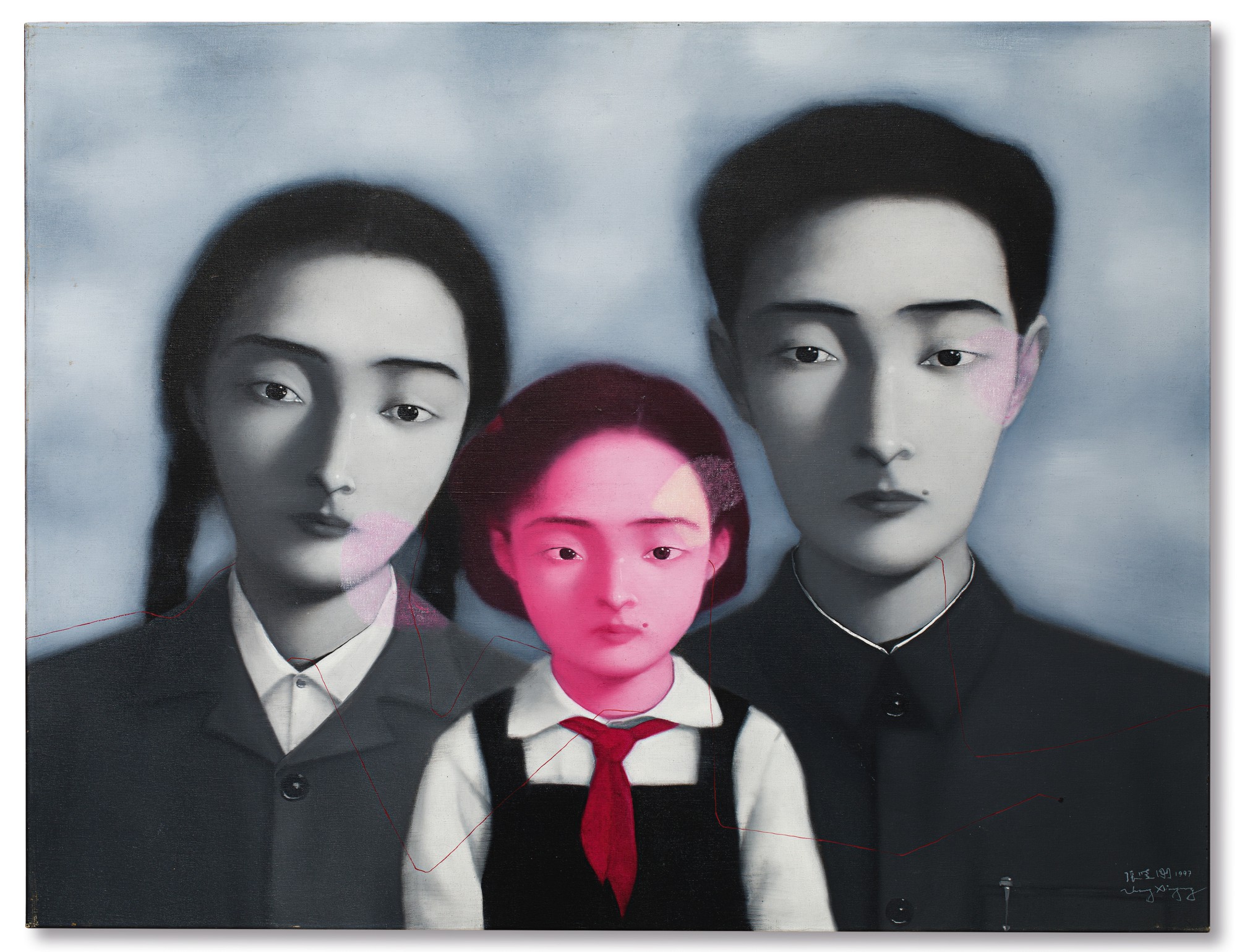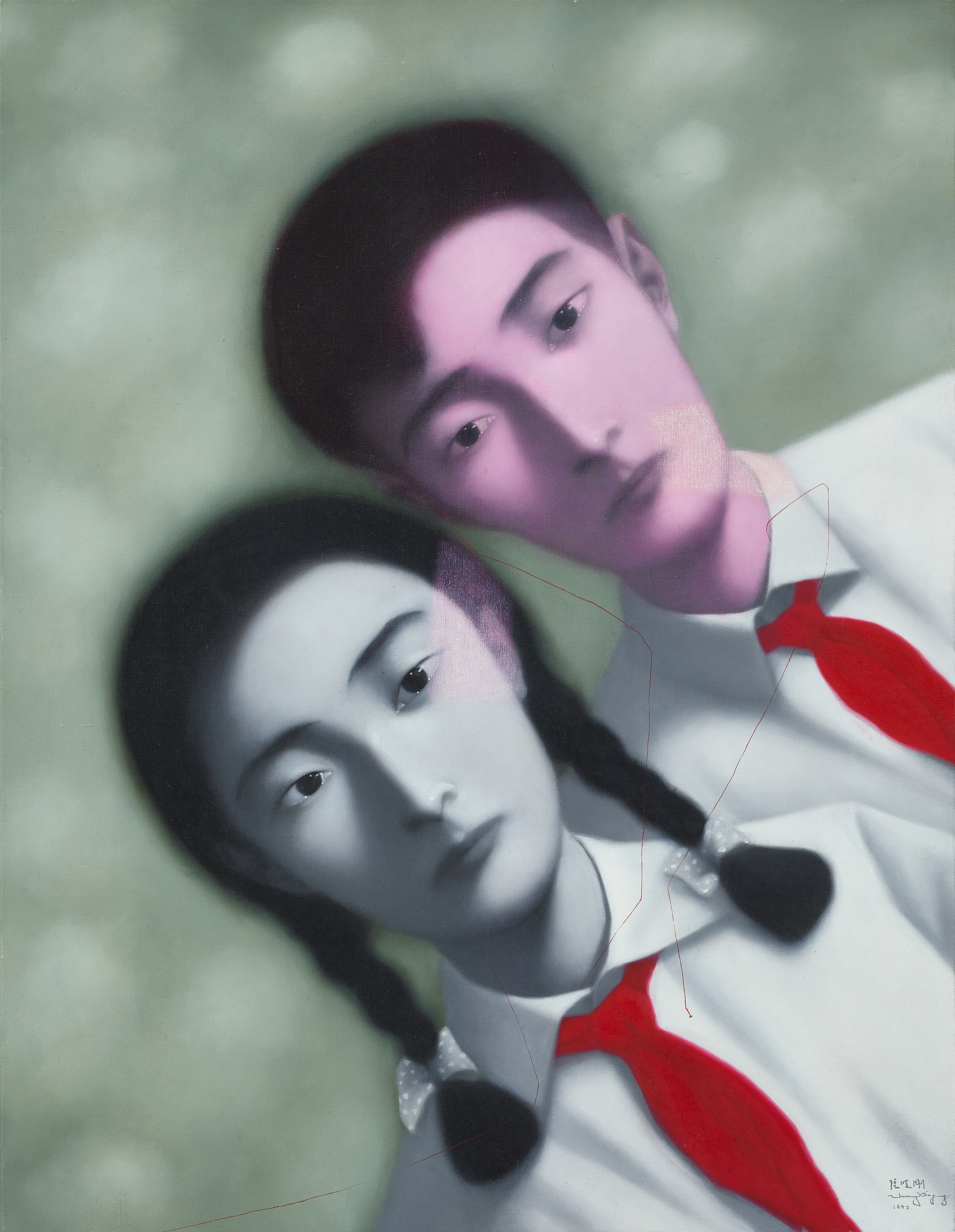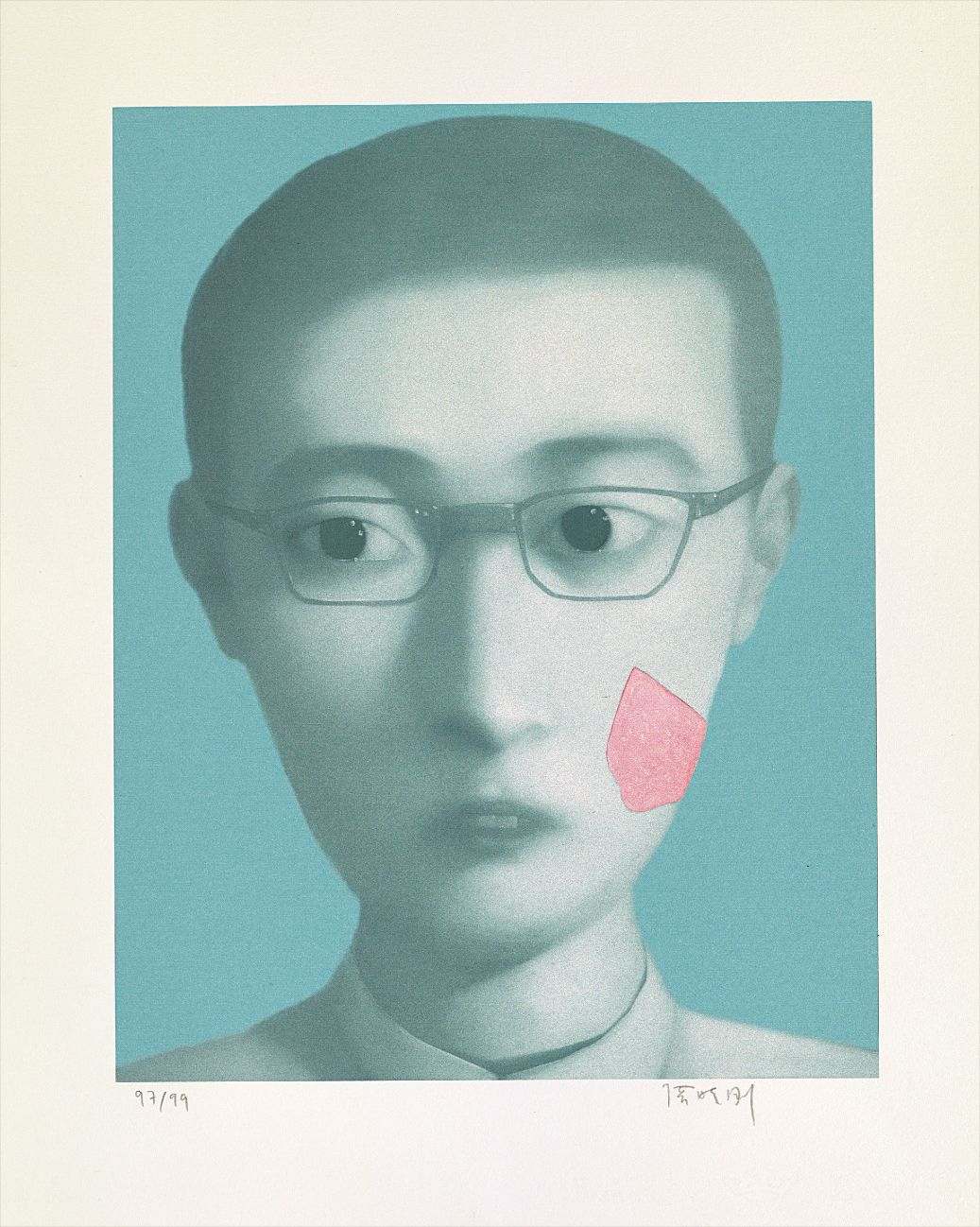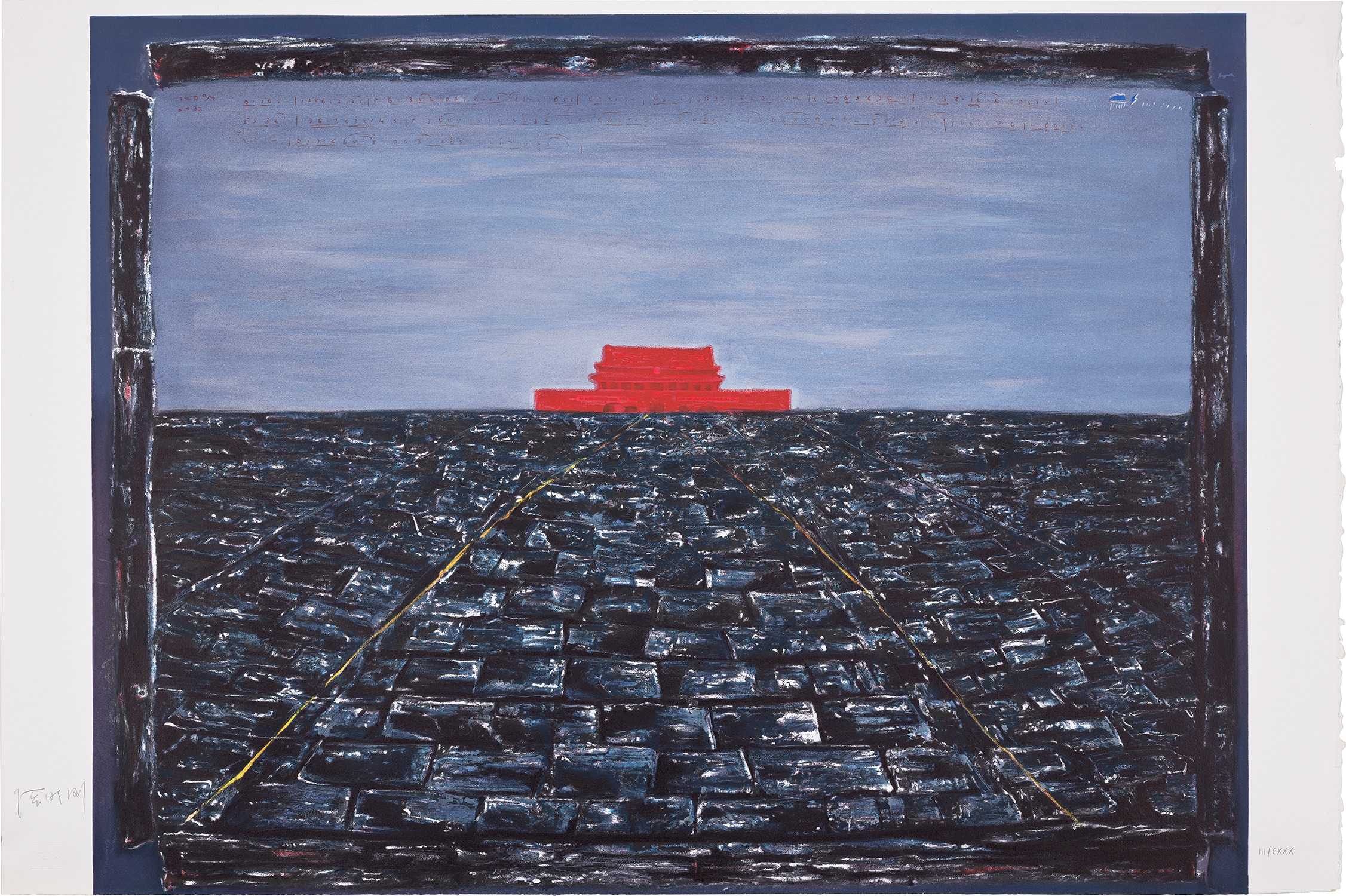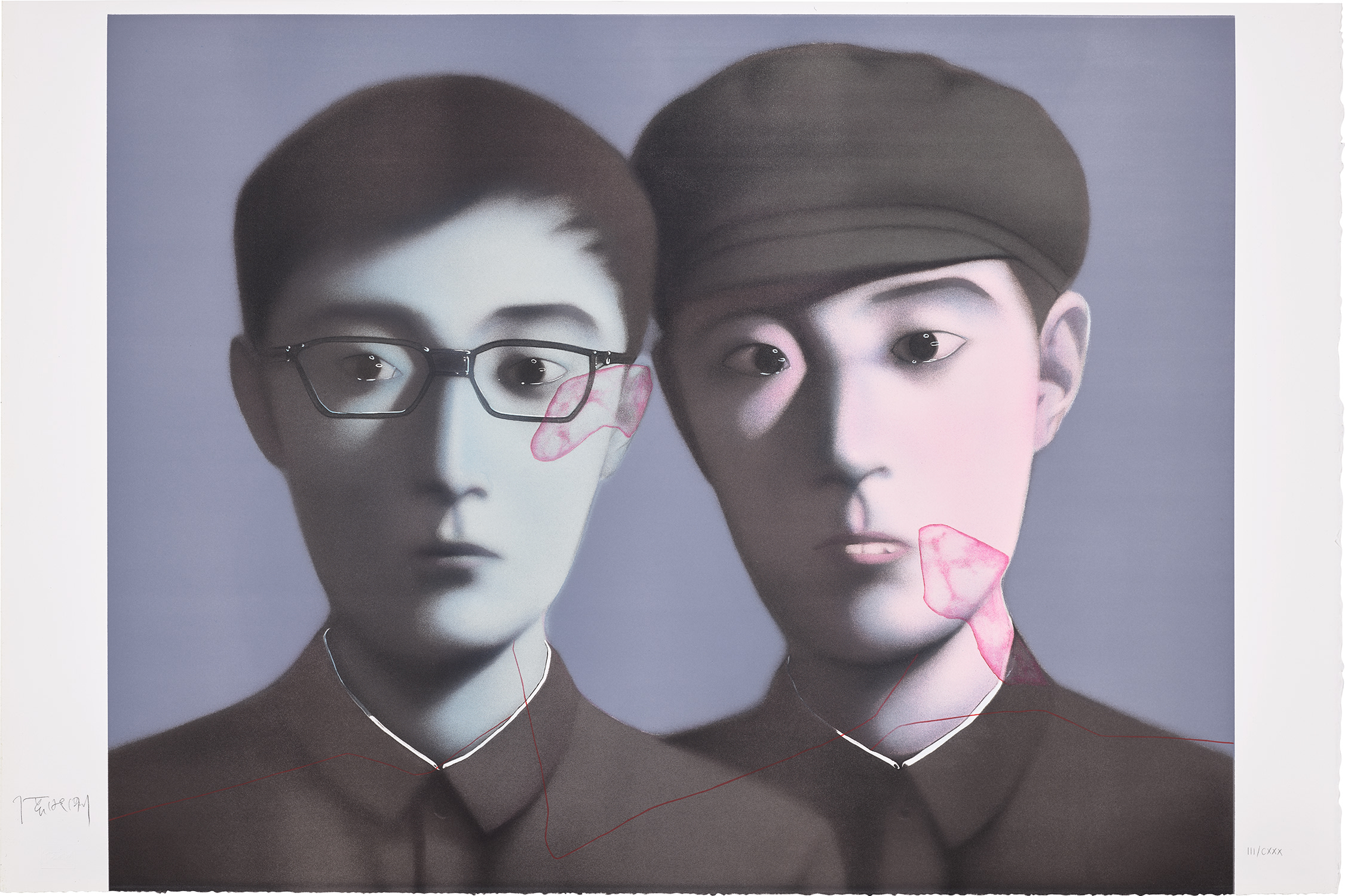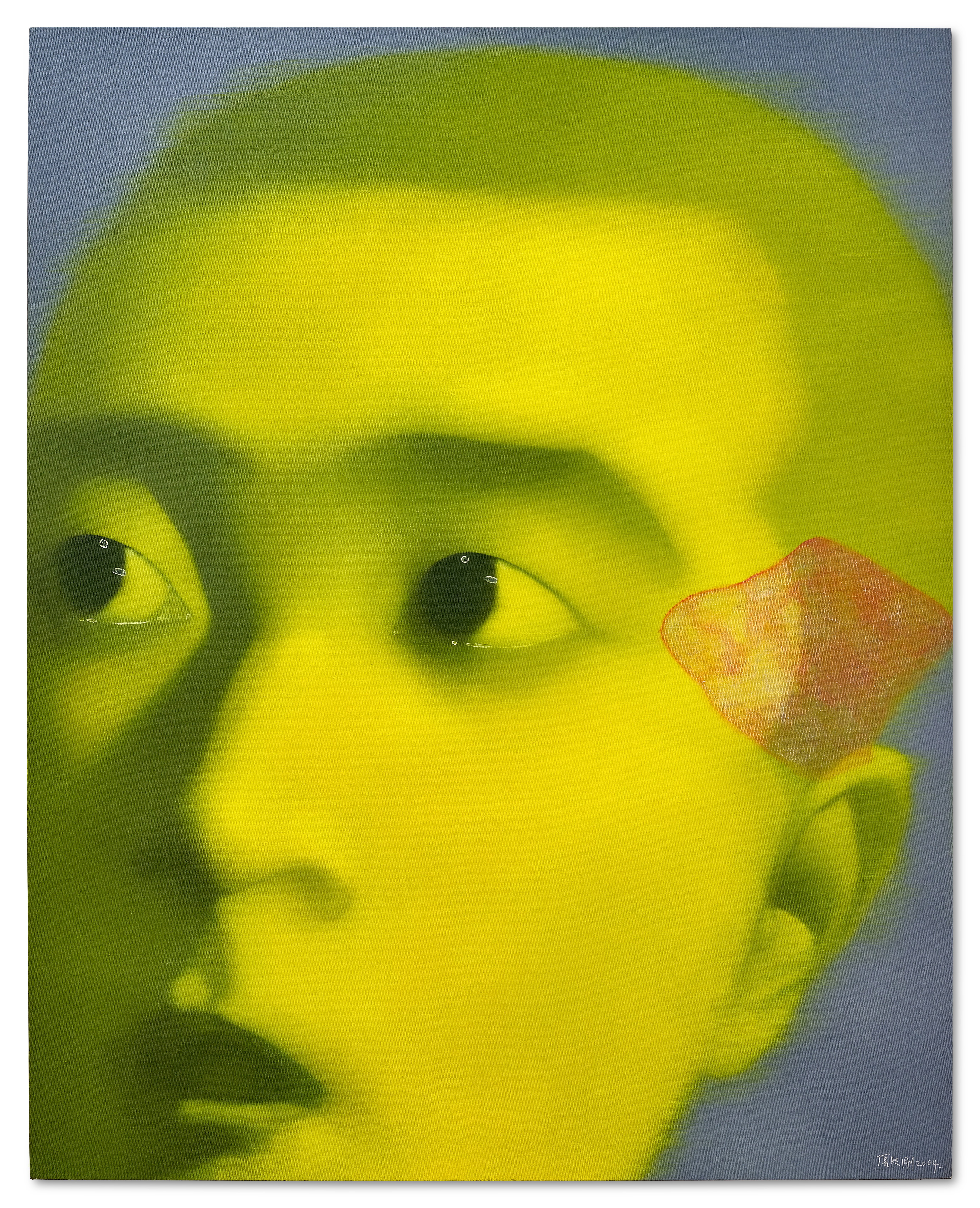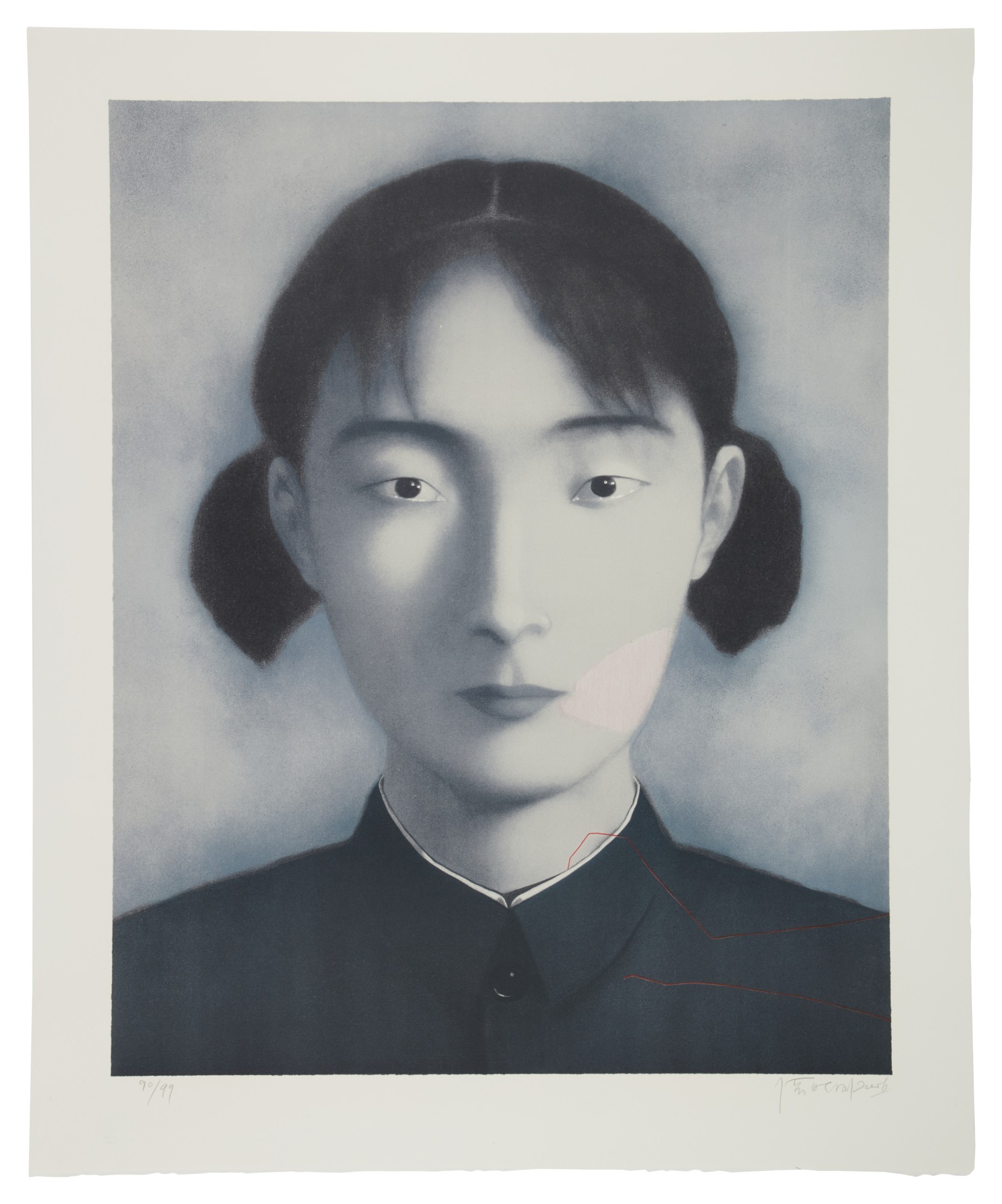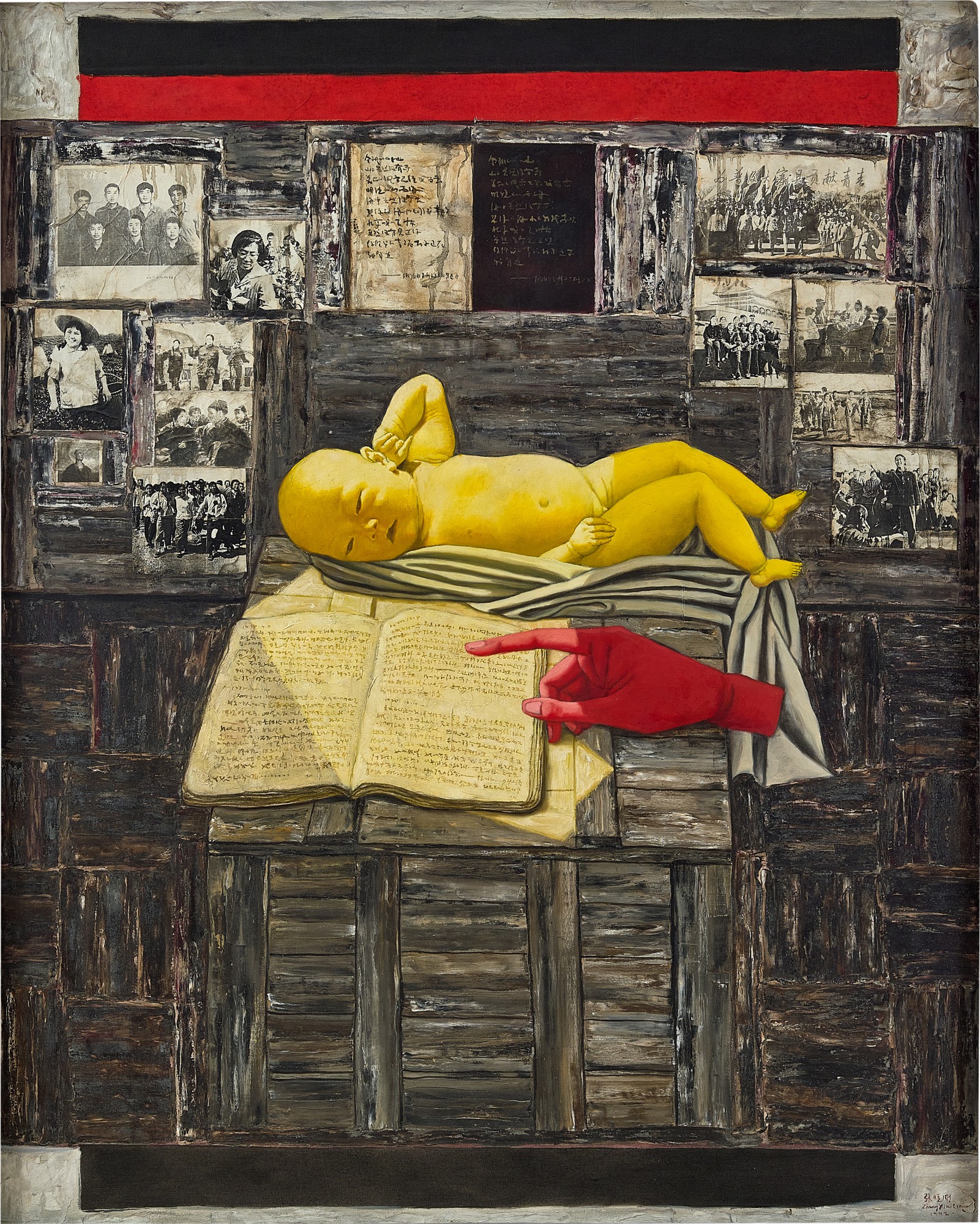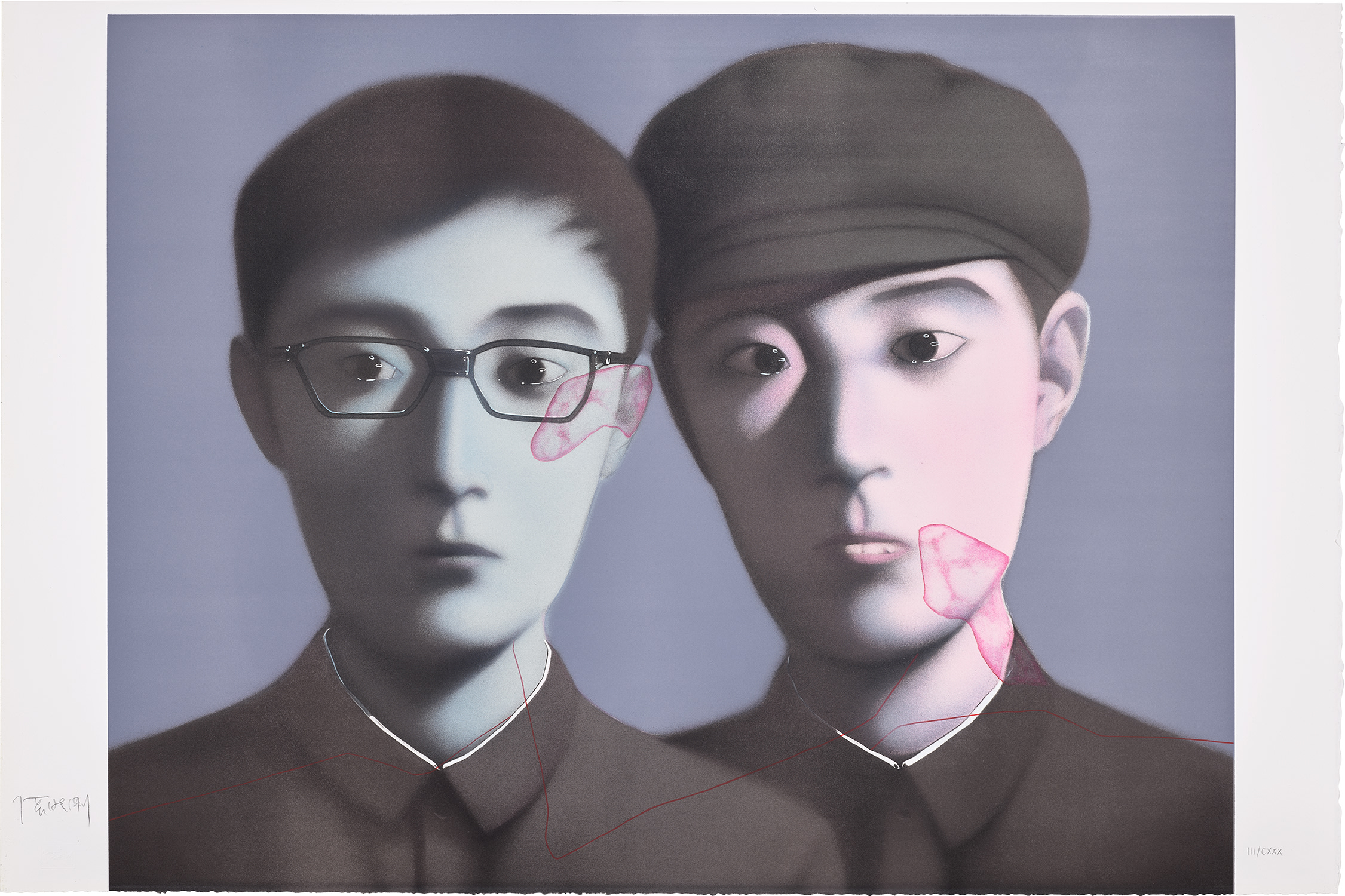
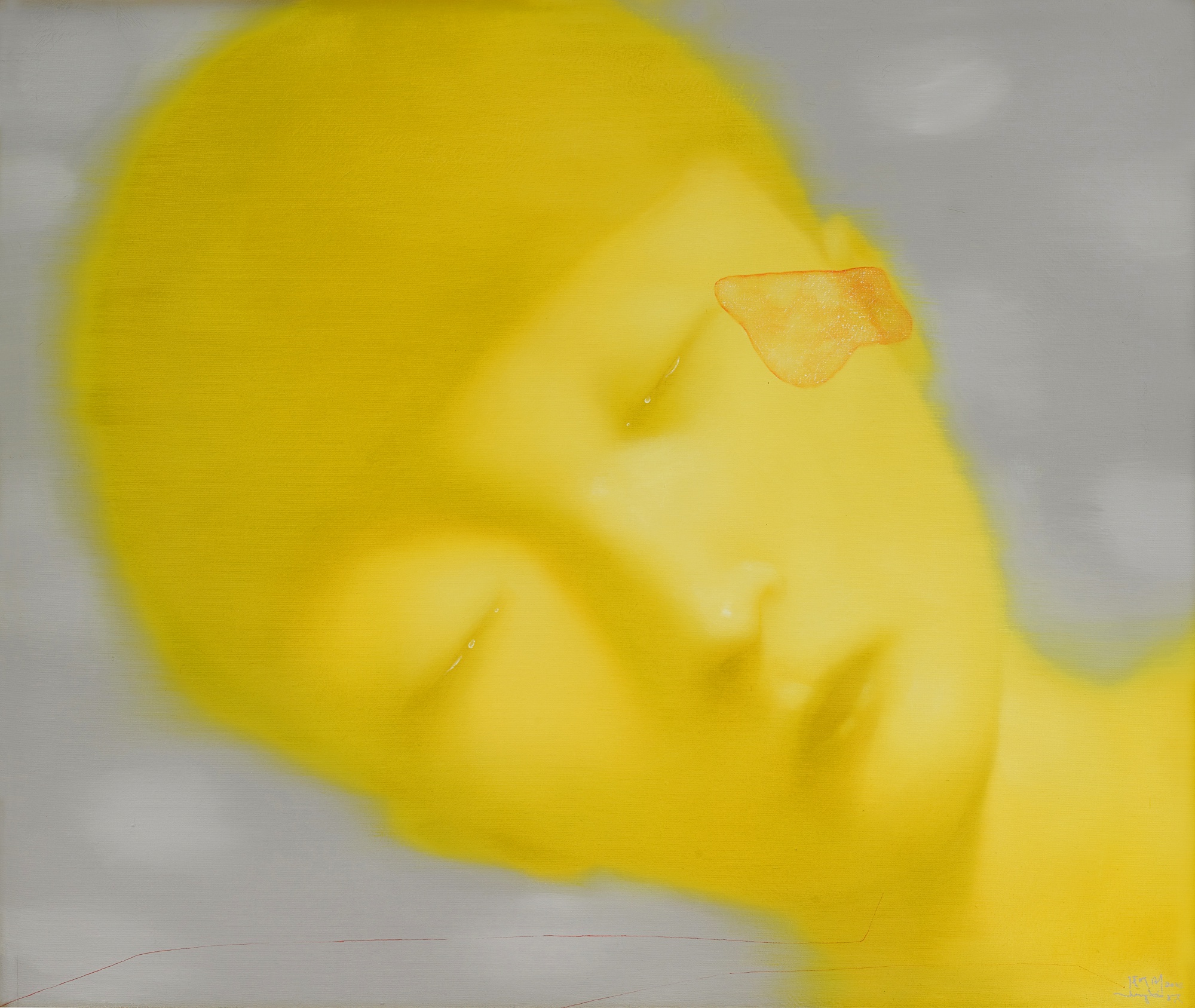
In the spring of 2023, a major survey of Zhang Xiaogang's work drew renewed international attention to an artist who has spent four decades turning the weight of collective history into something luminous and unforgettable. Institutions from Beijing to New York have continued to revisit his practice, and auction houses in Hong Kong and London regularly see his canvases achieve prices that place him firmly among the most important living painters working anywhere in the world today. That sustained momentum is not merely a market phenomenon. It reflects a growing consensus among curators, scholars, and serious collectors that Zhang Xiaogang has produced one of the most coherent and emotionally resonant bodies of work to emerge from China in the postwar era. Zhang was born in Chengdu, Sichuan Province, in 1958, placing him squarely within the generation that came of age during the Cultural Revolution. That period, which lasted from 1966 to 1976, dismantled traditional family structures, suppressed individual expression, and replaced personal identity with the uniform language of revolutionary ideology. For a child growing up during those years, the family photograph became one of the few private objects that retained any sense of intimacy and specificity. Those images, often stiff and formal, shot in state studios with subjects dressed in matching Mao suits, would later become the central visual language of Zhang's most celebrated work. He studied at the Sichuan Fine Arts Institute in Chongqing, graduating in 1982, where he was exposed to both Soviet realist painting and the emerging currents of Western modernism that were beginning to circulate among Chinese artists in the post Mao era. The 1980s were a period of intense searching for Zhang, as they were for many Chinese artists who suddenly found themselves navigating the collision between a tightly controlled visual culture and an overwhelming influx of Western art historical references. He explored Expressionism, Surrealism, and various strands of figurative painting before traveling to Europe in the early 1990s. That encounter with the original canvases of Francis Bacon, Giorgio de Chirico, and Egon Schiele proved transformative. Zhang returned to China with a clearer sense of what he wanted to do: to find a visual language that was unmistakably rooted in Chinese experience while drawing on the full expressive vocabulary of twentieth century painting. The result was the Bloodline series, which he began developing around 1993 and which would go on to define his international reputation. The Bloodlines, formally titled Bloodline: The Big Family, are among the most quietly devastating and visually arresting works produced by any painter of his generation. They depict families posed in the manner of mid century Chinese studio portraits, their skin rendered in an eerie, luminous pale gray that recalls both the flatness of old photographs and the otherworldly pallor of memory itself. The figures share identical, slightly vacant expressions, their individuality subsumed into the collective. And yet a thin red line, the bloodline of the title, connects them to one another, suggesting that beneath the flattened surface of ideology and conformity, something irreducibly human persists. Small details, a birthmark, a subtle variation in a gaze, a child's toy glimpsed at the edge of the composition, accumulate into something deeply moving. The works exist at the intersection of portraiture, political commentary, and psychological inquiry, and they do so without a single moment of didacticism or sentimentality. Zhang's practice has never stood still. Beyond the Bloodline canvases, works such as Boy and TV and his Chapter of a New Century series demonstrate a willingness to expand the formal and conceptual parameters of his painting. The Chapter of a New Century works incorporate cotton tape, black and white photocopy collage, and layered oil paint, introducing a texture of archival materiality that reinforces their themes of historical accumulation and imperfect remembrance. His prints, including the Brother and Sister lithographs published on Arches paper and the Tian'anmen screenprints, have extended his imagery to collectors who approach his work through works on paper, and these editions are considered among the most important multiples produced by any contemporary Chinese artist. The full range of his output, from large scale oil paintings to intimate lithographs, reveals a practice that is rigorously consistent in its concerns while remaining formally adventurous. For collectors, Zhang Xiaogang represents a genuinely blue chip proposition grounded in artistic substance rather than speculation alone. His work entered major Western institutional collections relatively early, and the San Francisco Museum of Modern Art and the Metropolitan Museum of Art in New York both hold significant examples. At auction, his Bloodline paintings have achieved prices well into the millions at Christie's and Sotheby's sales in Hong Kong and New York, with major works consistently attracting competitive bidding from both Asian and Western collectors. What distinguishes Zhang's market is its breadth: there is serious collector interest at every level, from monumental exhibition paintings to the beautifully produced print editions, which offer an accessible and historically important entry point into his world. Collectors who have followed his career from the early 2000s have seen both aesthetic and financial rewards, and advisors consistently recommend him to institutions building serious collections of postwar and contemporary Asian art. Zhang's position within art history places him in a compelling constellation of contemporaries and predecessors. His engagement with portraiture and collective identity invites comparison with Gerhard Richter, whose photo paintings similarly interrogate the gap between photographic and painted reality, and with the German Neo Expressionists whose emotional intensity clearly left a mark on his formation. Within the Chinese contemporary canon, he stands alongside artists such as Fang Lijun and Yue Minjun, whose figurative practices also grappled with the psychic residue of the Mao era, though Zhang's palette and emotional register are distinctly his own. He was a central figure in the Cynical Realism movement that emerged in the early 1990s, and his work helped bring that movement to international attention through landmark exhibitions including the 1993 Venice Biennale, where Chinese contemporary art made one of its most significant early appearances on the global stage. What makes Zhang Xiaogang so enduringly important is the precision with which his work locates the universal within the historically specific. The Cultural Revolution is his subject, but memory, family, the tension between the individual and the collective, and the question of what survives beneath the surfaces we are given to inhabit: these are concerns that resonate far beyond the borders of any single nation or era. To stand before a Bloodline canvas is to feel the pull of something you may never have personally experienced but nonetheless recognize. That is the measure of a great painter, and Zhang Xiaogang is, by any serious measure, one of the great painters of our time. His work belongs in the most thoughtful collections being assembled anywhere in the world right now, and its place in the permanent record of postwar art is already assured.