Jean Fouquet
1
Works
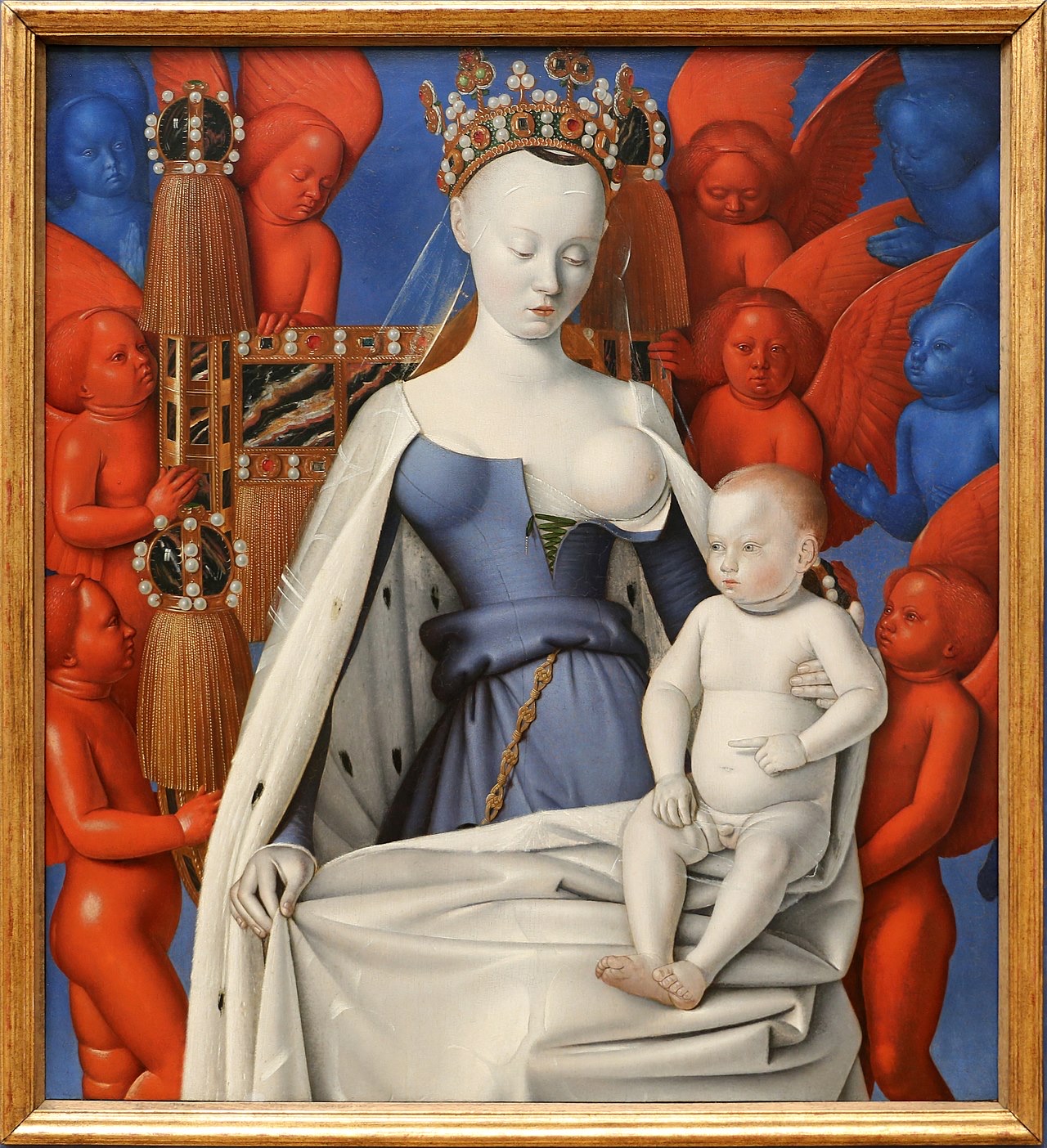
Jean Fouquet was the preeminent French painter and illuminator of the 15th century, renowned for his masterful integration of Flemish realism with Italian Renaissance principles. Born in Tours, he traveled to Italy around 1445-1447, where he encountered the works of Fra Angelico and other Renaissance masters, absorbing their approaches to perspective, architectural space, and classical forms. Upon returning to France, Fouquet became court painter to King Charles VII and later to Louis XI, establishing himself as the leading artistic figure of his generation. His work represents a remarkable synthesis of Northern European attention to naturalistic detail with the monumental clarity and spatial rationality of Italian art. Fouquet's most celebrated works include the Melun Diptych (c. 1450), featuring the Virgin and Child surrounded by angels in an otherworldly blue and red palette, and a portrait panel of Étienne Chevalier with Saint Stephen. His manuscript illuminations are equally distinguished, particularly the Hours of Étienne Chevalier and the Grandes Chroniques de France, which demonstrate his innovative approach to narrative illustration and his ability to create convincing architectural spaces within miniature formats. These illuminations reveal Fouquet's command of perspective, his sensitive portraiture, and his talent for rendering both sacred and secular subjects with equal sophistication. His self-portrait, believed to be one of the earliest independent self-portraits in Western art, shows him as a dignified professional artist. Fouquet's significance lies in his role as a bridge between medieval manuscript tradition and Renaissance painting, and as the founder of a distinctly French Renaissance style. His influence on French art was profound, establishing conventions for royal portraiture and religious imagery that persisted for generations. Though his panel paintings are relatively rare today, many have been lost or dispersed, his surviving works and illuminations demonstrate technical virtuosity, compositional innovation, and a refined aesthetic sensibility that secured his reputation as one of the greatest artists of 15th-century Europe.
Spotted by

Artists in conversation