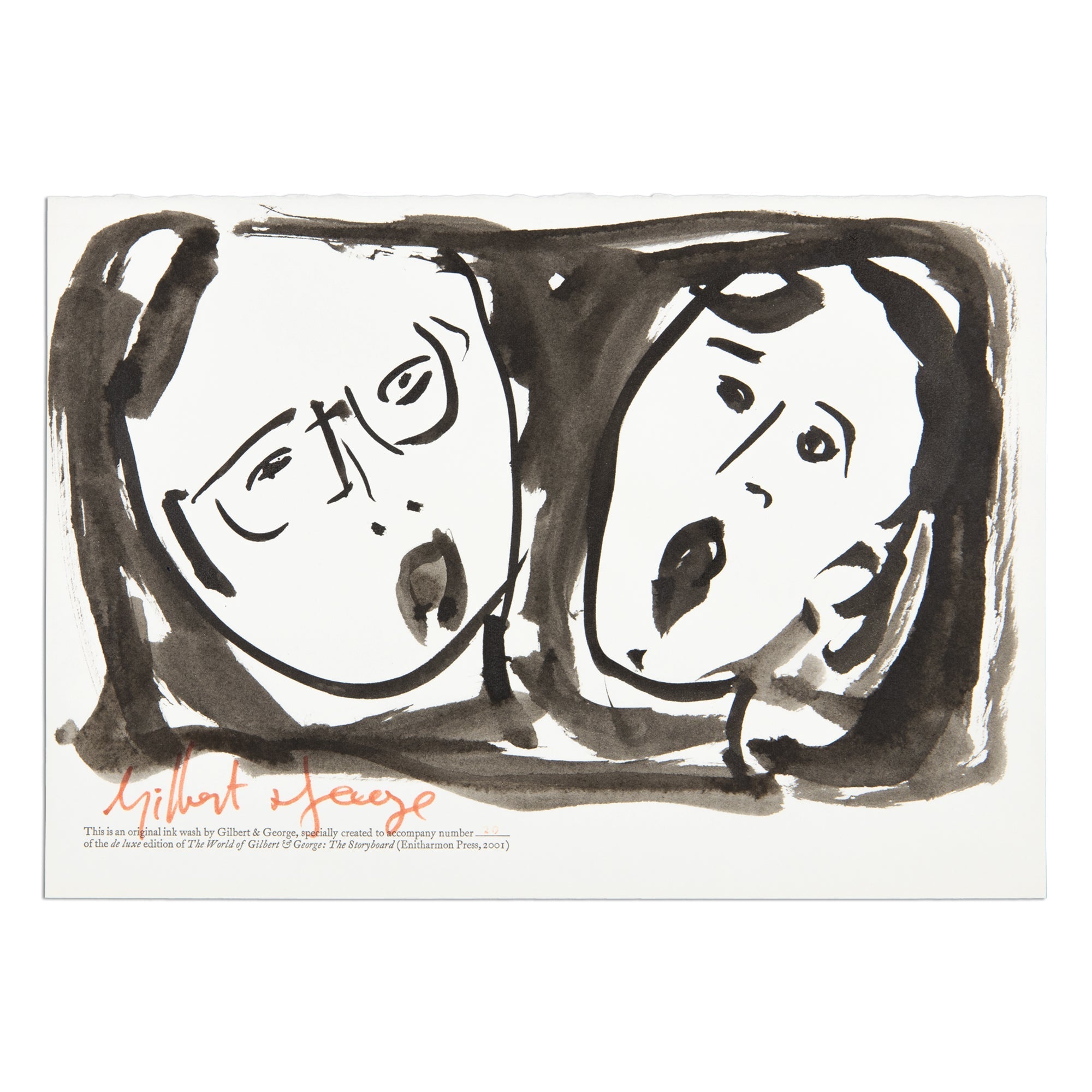
Gilbert & George
3
Works
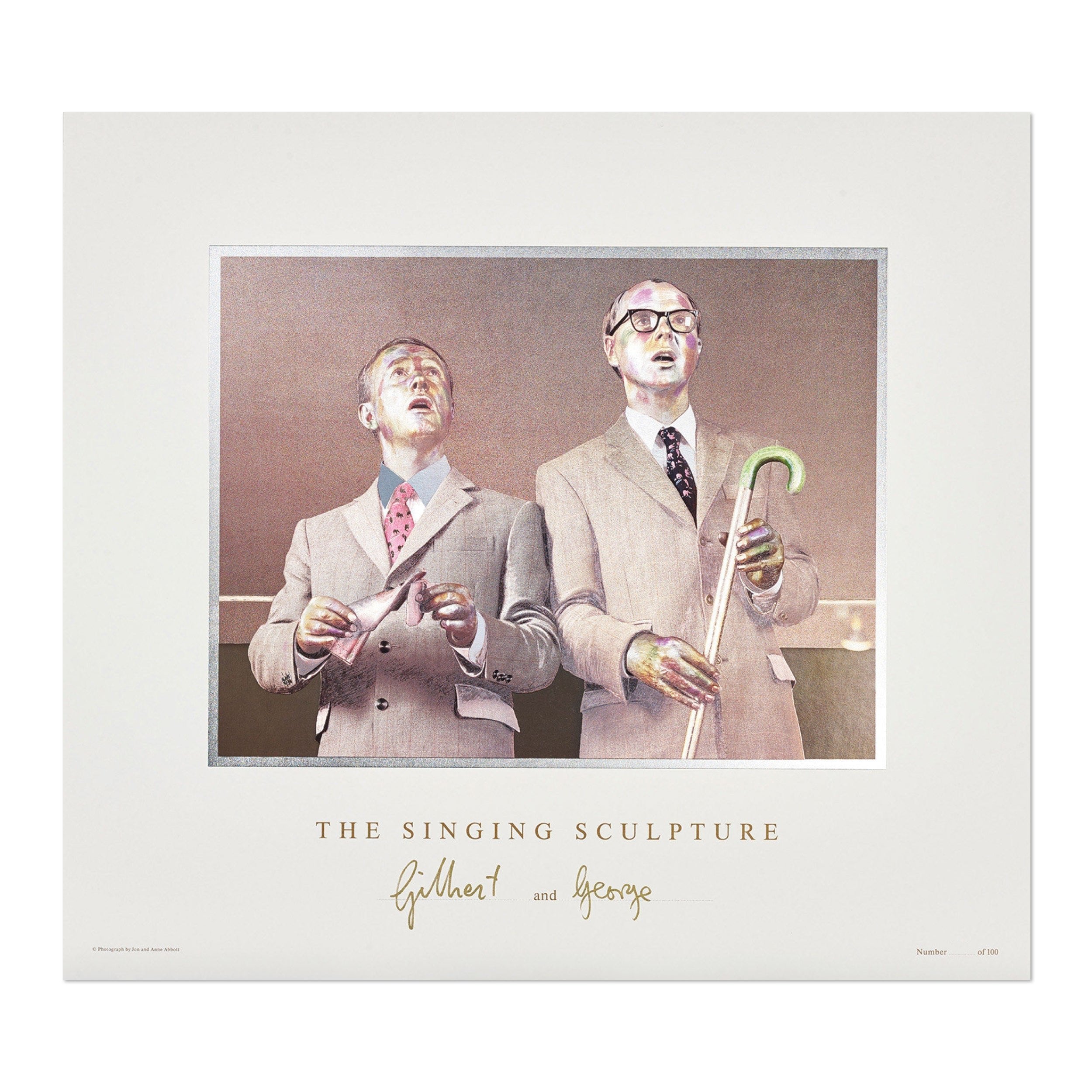
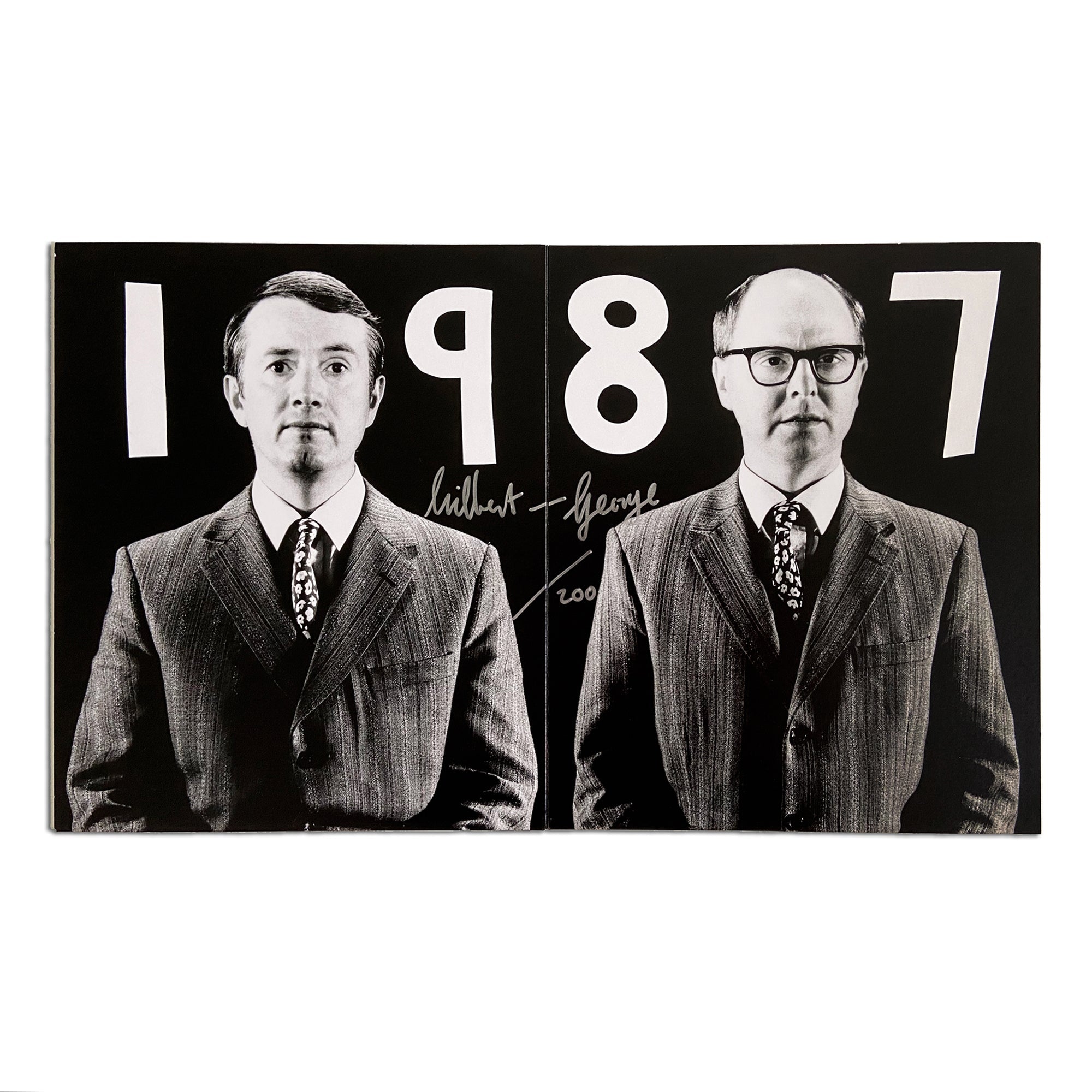
Gilbert & George are one of the most iconic and provocative duos in contemporary art, consisting of Gilbert Proesch (born 1943 in the Dolomites, Italy) and George Passmore (born 1942 in Devon, England). They met at Saint Martin's School of Art in London in 1967 and have worked together as a singular artistic entity ever since, famously declaring themselves 'living sculptures' and blurring the boundaries between art and life. Their early performances, most notably 'Singing Sculpture' (1969, 1973), in which they stood on a table with metallic-painted faces performing to Flanagan and Allen's 'Underneath the Arches,' established them as radical conceptualists who challenged the conventions of both performance art and the art object itself. Over the following decades, Gilbert & George developed their signature large-scale photographic works, bold, grid-based compositions combining photography, text, and vivid colour. Works such as 'Dirty Words Pictures' (1977), 'The Naked Shit Pictures' (1994), and the 'Jack Freak Pictures' (2007) are emblematic of their practice, which consistently engages with themes of sexuality, religion, race, death, and the visceral realities of urban life, particularly drawing from their long residence in London's East End. Their imagery is simultaneously confrontational and meticulously formal, often featuring themselves as central figures surrounded by symbols of social transgression, bodily fluids, or religious iconography, delivered with an almost graphic-design clarity. Gilbert & George have achieved major international recognition, representing Britain at the Venice Biennale in 2005 and receiving the Turner Prize in 1986. Their work has been the subject of major retrospectives at institutions including Tate Modern, the Pompidou Centre in Paris, and the State Hermitage Museum in St. Petersburg. They are considered central figures in British contemporary art and have had a lasting influence on generations of artists who explore the intersection of identity, politics, and visual culture. Their unwavering commitment to living as art, maintaining a rigid daily routine and always appearing in matching suits, makes them as much a conceptual statement as any individual work.
Artists in conversation