Arshile Gorky
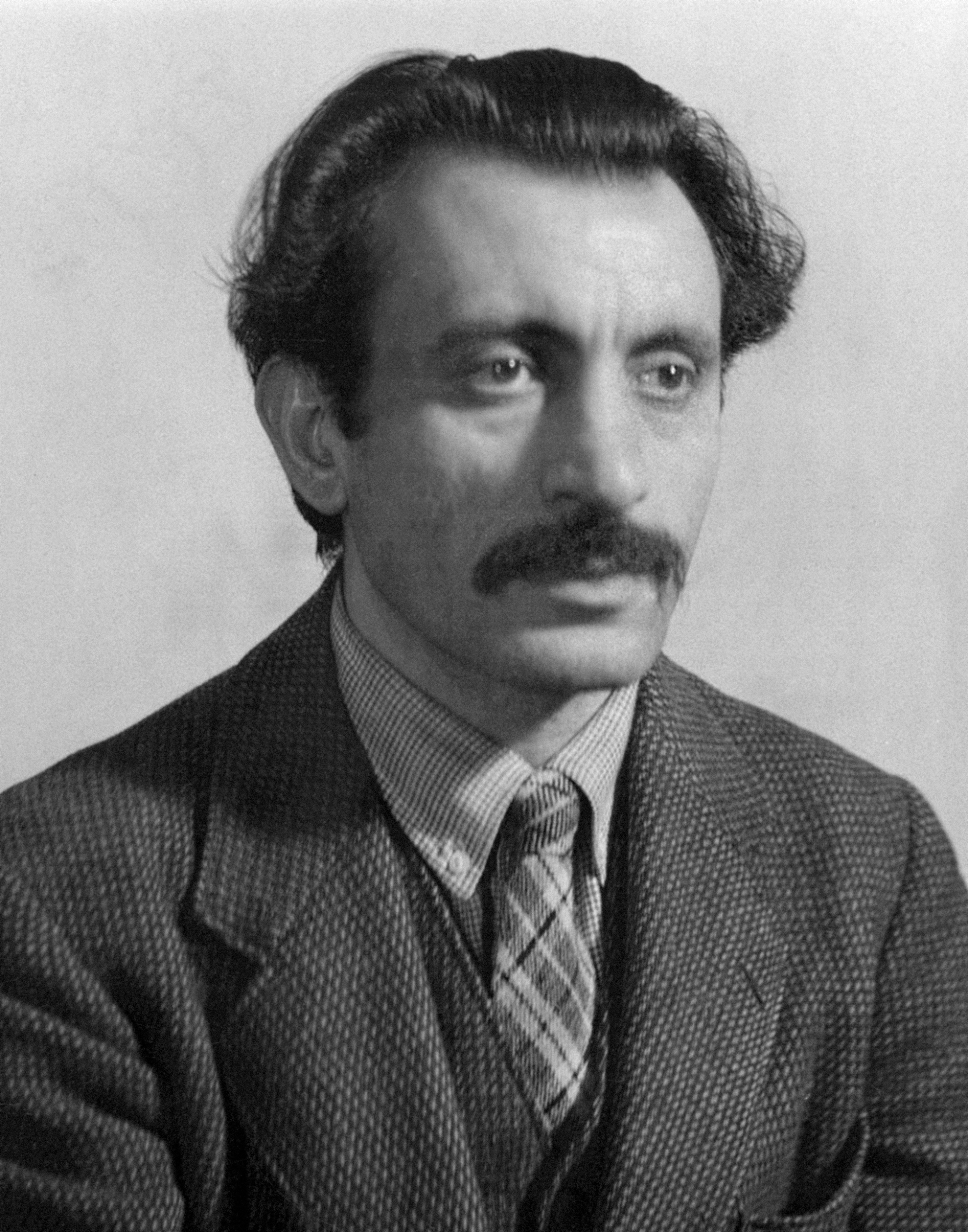
Arshile Gorky, The Bridge Between Worlds
Artist Spotlight · The Collection Editorial
“I never finish a painting. I just stop working on it for a while.”
Arshile Gorky
There is a moment in the permanent collection galleries at the Museum of Modern Art in New York where visitors often slow their pace and stop altogether. The painting before them seems to breathe, its forms hovering between the recognizable and the dissolved, between memory and sensation. That painting belongs to Arshile Gorky, and the pause it provokes is precisely the point. Decades after his death in 1948, Gorky's work continues to exert a gravitational pull on anyone who encounters it, a testament to the singular vision of a man who reinvented himself and, in doing so, helped reinvent American painting.
Arshile Gorky
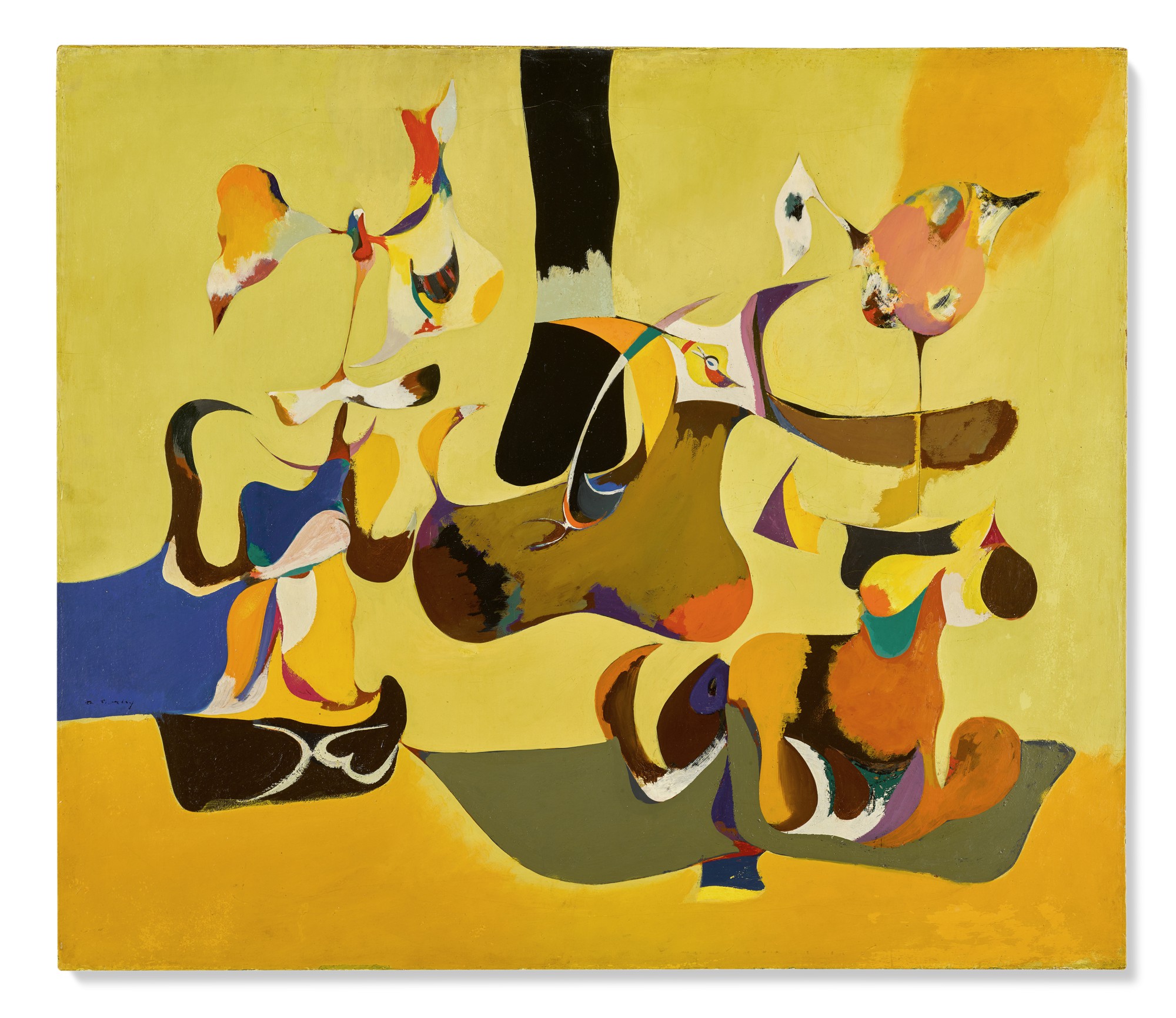
《索契的花園》, 1940
Gorky was born Vostanik Manoug Adoian in 1904 in the village of Khorkom, near Lake Van in what was then the Ottoman Empire and is now eastern Turkey. His early years were marked by the catastrophe of the Armenian Genocide, a trauma that shaped both the man and the mythology he would later construct around himself. His mother died of starvation in 1919 during a forced march, a loss so profound it became a permanent undercurrent in his art. In 1920, the young artist emigrated to the United States, eventually settling in New York City, where he would spend most of his adult life.
He renamed himself Arshile Gorky, a name that carried echoes of the Russian writer Maxim Gorky and projected a romantic, invented self into the world. This act of reinvention was not mere affectation. It was the first of many creative transformations through which Gorky forged his identity as an artist. New York in the 1920s and 1930s was a city electric with the arrival of European modernism, and Gorky threw himself into its currents with extraordinary discipline and appetite.
Arshile Gorky
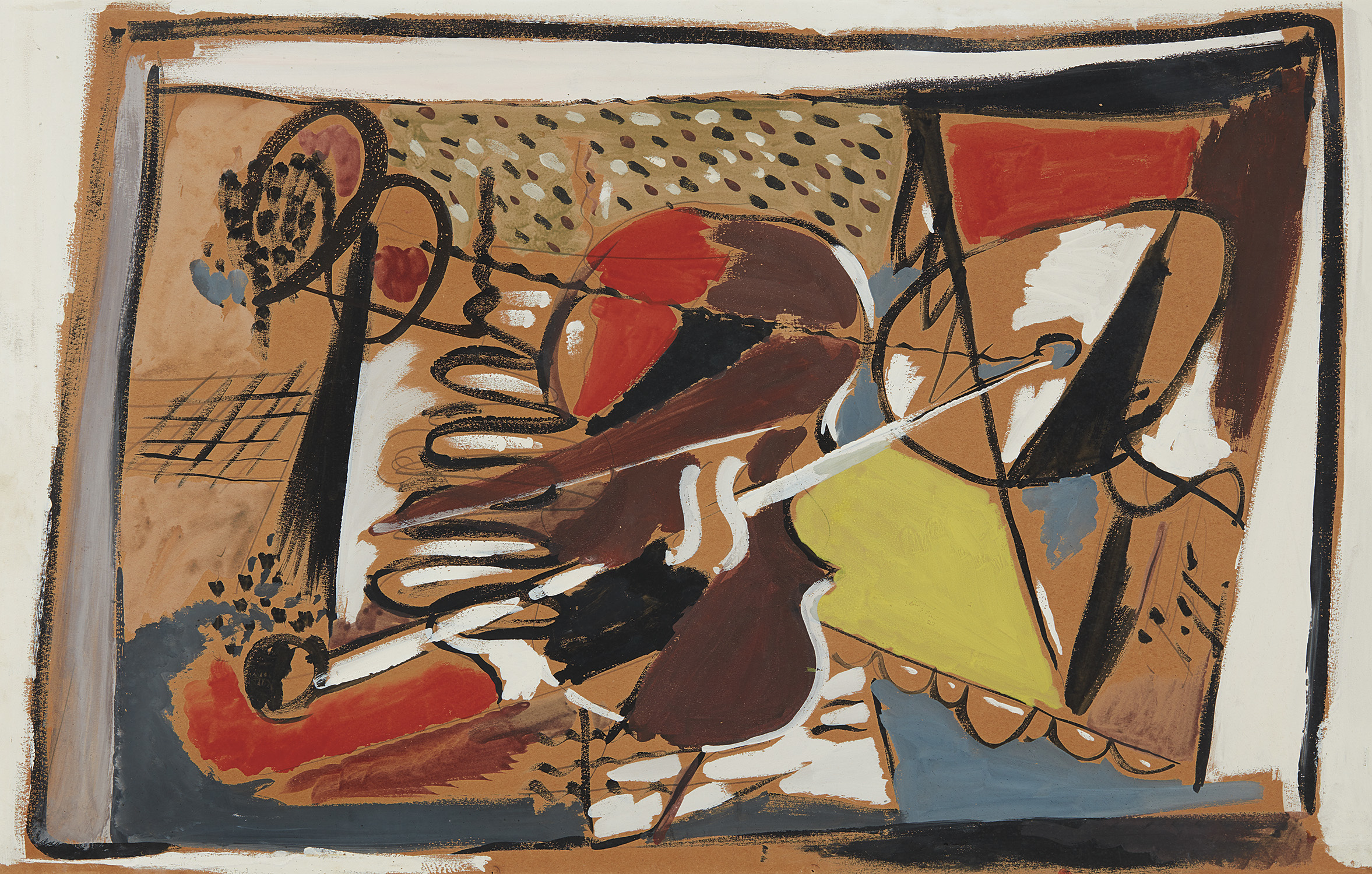
Musical Abstraction, 1928
He studied at the New School of Design in Boston and later taught at the Grand Central School of Art in New York, where he became known as a demanding and visionary instructor. He immersed himself in the work of Paul Cézanne, Pablo Picasso, and Joan Miró, not merely admiring them but metabolizing them, spending long hours in front of their canvases at MoMA and at the galleries along 57th Street. His peers sometimes teased him for his devotion to these masters, but Gorky understood that deep study was not imitation. It was preparation.
“My subject matter is directional. American plains are horizontal. New York City is vertical.”
Arshile Gorky, 1933, quoted in Francis V. O'Connor
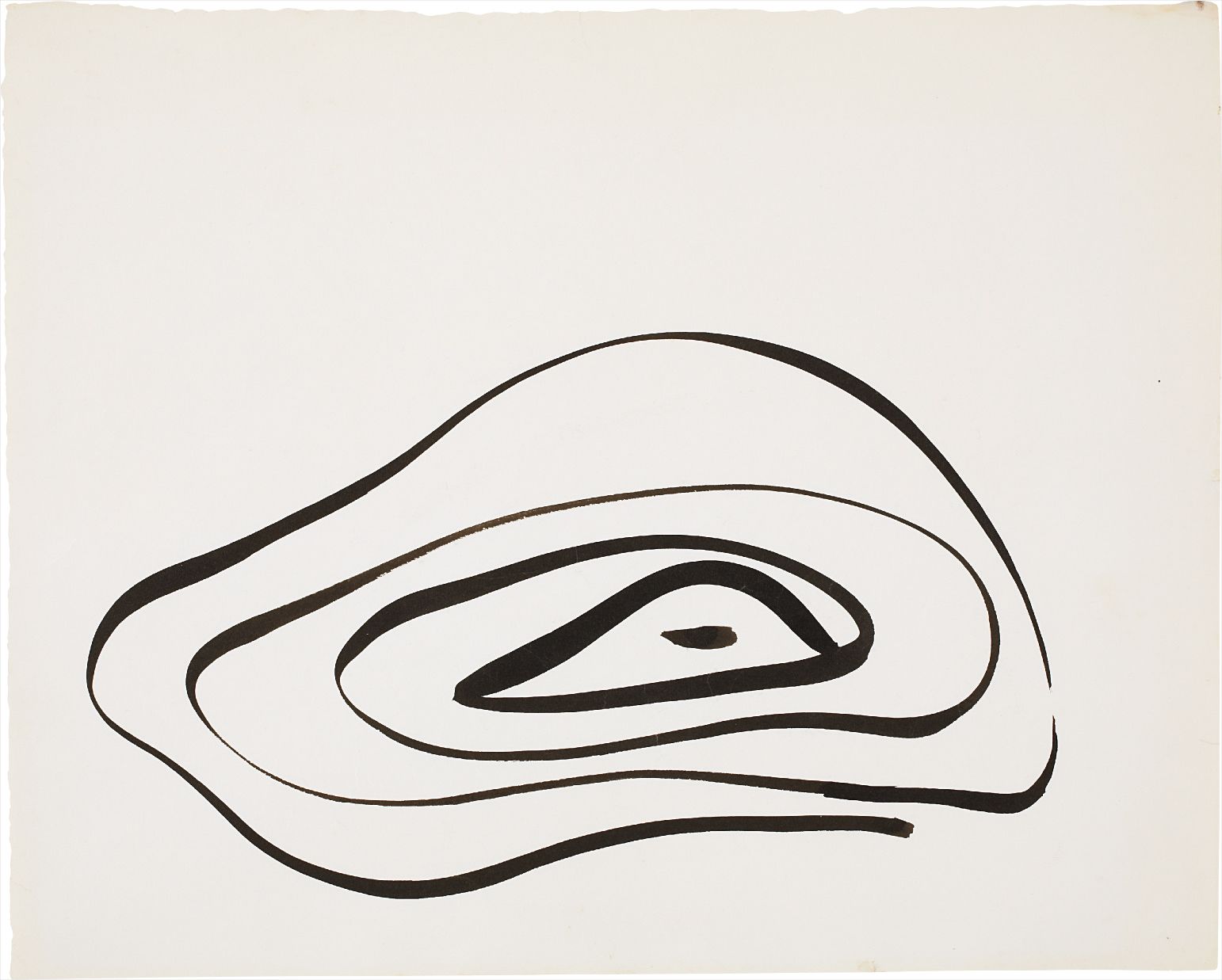
He was building a vocabulary that would eventually become entirely his own. The 1930s produced some of Gorky's most searching and structurally ambitious paintings, including his long engagement with the Nighttime, Enigma and Nostalgia series and his work toward what would become the Garden in Sochi paintings. His 1930 ink drawing Study for Nighttime, Enigma and Nostalgia, represented in The Collection, exemplifies this period: meticulous, biomorphic, and quietly charged with a surrealist sensibility absorbed from Miró and André Breton. The Garden in Sochi paintings, including the 1940 canvas known in Chinese as Garden in Sochi, mark a pivotal threshold in his development.
Arshile Gorky
This work is registered in the archives of the Arshile Gorky Foundation under number #D1512.
Rooted in childhood memories of his father's garden in Armenia, these works move fluidly between abstraction and organic memory, between the specific and the universal. They are among the most personal and accomplished works in his entire output. The early 1940s brought Gorky into direct contact with the European Surrealists who had fled to New York during the Second World War. His friendship with André Breton, Roberto Matta, and Yves Tanguy opened new possibilities for automatism and the liberation of the unconscious in painting.
Breton famously described Gorky as the only American Surrealist, a characterization Gorky both welcomed and quietly resisted, because his ambitions were ultimately his own. A series of summers spent in Virginia at the farm of his father in law, Crosby Farm, unleashed a new fluency in his line and color. His drawings from this period, including the luminous gouache and ink works on paper, show a hand that had become magnificently free. The 1945 work Young Cherry Trees Secured Against Hares, a gouache and ink piece on colored paper bound in a hardcover book and available through The Collection, captures this lyrical confidence at its peak.
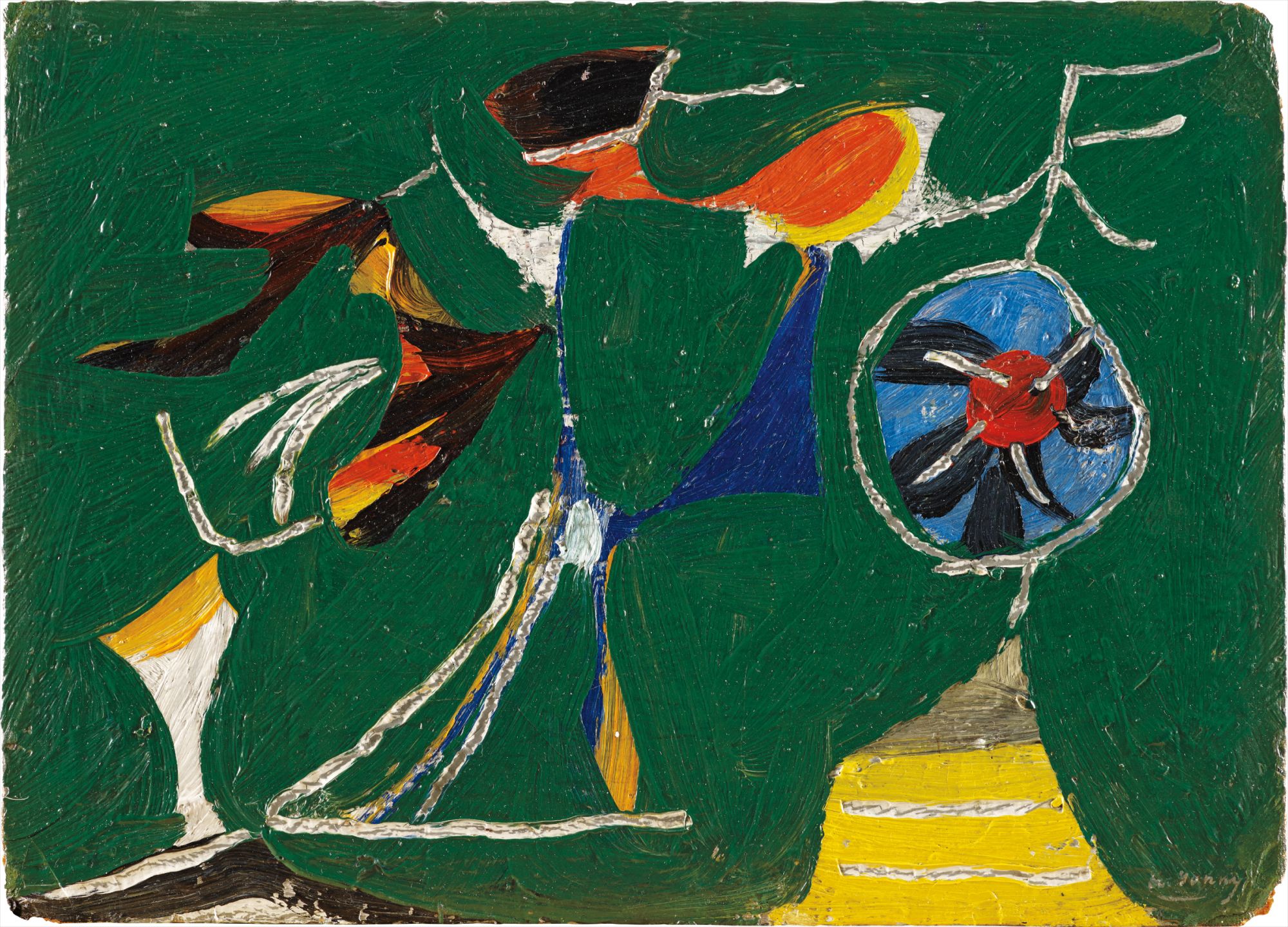
Arshile Gorky
Study for Sochi
Gorky's paintings are difficult to categorize precisely because they sit so productively at the intersection of two major movements. He was too psychological and improvisational for the structured world of Cubism, and too personally rooted in memory and loss for pure Surrealist dream logic. What he achieved was something entirely his own: a biomorphic abstraction saturated with emotional temperature. Works like Portrait of the Artist's Wife from 1946, an oil on canvas mounted to Masonite, demonstrate his ability to carry figuration right up to the edge of dissolution without letting it fall.
For collectors, these works occupy a rare position. They document the exact moment American art found its own voice, and they do so with an intimacy and painterly intelligence that rewards sustained looking. In the auction market, major works by Gorky have achieved significant prices at Christie's and Sotheby's, reflecting sustained institutional and private demand. His drawings and works on paper, particularly those connected to the Sochi and Nighttime, Enigma and Nostalgia series, represent an especially compelling entry point for collectors who wish to follow the evolution of his thinking at close range.
The graphite and gouache Musical Abstraction from 1928, available through The Collection, is a striking example of early Gorky: disciplined, searching, and already reaching toward a formal freedom he had not yet fully unlocked. Collectors drawn to Gorky are typically those who respond to art that operates simultaneously on the intellectual and emotional registers, work that has a rigorous internal logic and also a pulse. To understand Gorky fully, one must place him within a constellation of artists that includes Willem de Kooning, Franz Kline, and Mark Rothko, figures who acknowledged his foundational influence on what became Abstract Expressionism. De Kooning, who was a close friend, spoke of Gorky with genuine reverence.
Gorky's relationship to European masters like Miró, Kandinsky, and late Cézanne also illuminates how he served as a living bridge between the old world and the new, between a modernism rooted in European capitals and one that would eventually speak in an unmistakably American accent. Gorky's life ended too soon in 1948, but the body of work he left behind has only grown in stature. Museums from the Whitney to the Tate have devoted major retrospectives to his achievement, and scholars continue to find new dimensions in his paintings and drawings. His story is one of transformation: of grief channeled into beauty, of displacement transformed into a wholly original artistic language.
For collectors and admirers who encounter his work today, whether on a gallery wall or through the intimate viewing experience offered by a platform like The Collection, what comes through above all is his generosity. Gorky painted as though his survival depended on it, and in a very real sense, it did. That urgency has not faded.
Explore books about Arshile Gorky
Arshile Gorky: A Retrospective
Michael R. Taylor
Arshile Gorky: The Breakthrough Years
Harry Rand
Gorky: The Implications of Symbols
Jim M. Jordan
Arshile Gorky
Melvin P. Lader
Arshile Gorky: A Life
Mary Davis MacNaughton
Gorky: Paintings, Drawings, Prints
Agnes Mongan
The Paintings of Arshile Gorky: A Critical Catalogue
Jim M. Jordan and Robert Goldwater