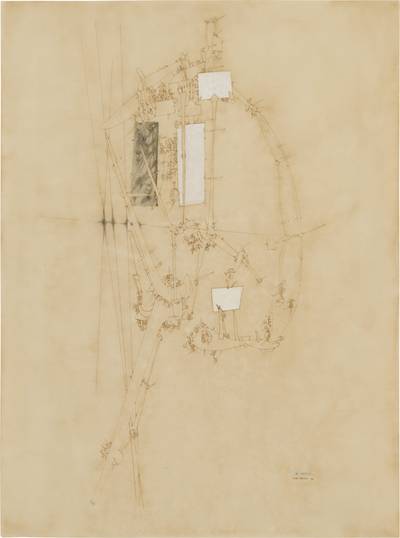
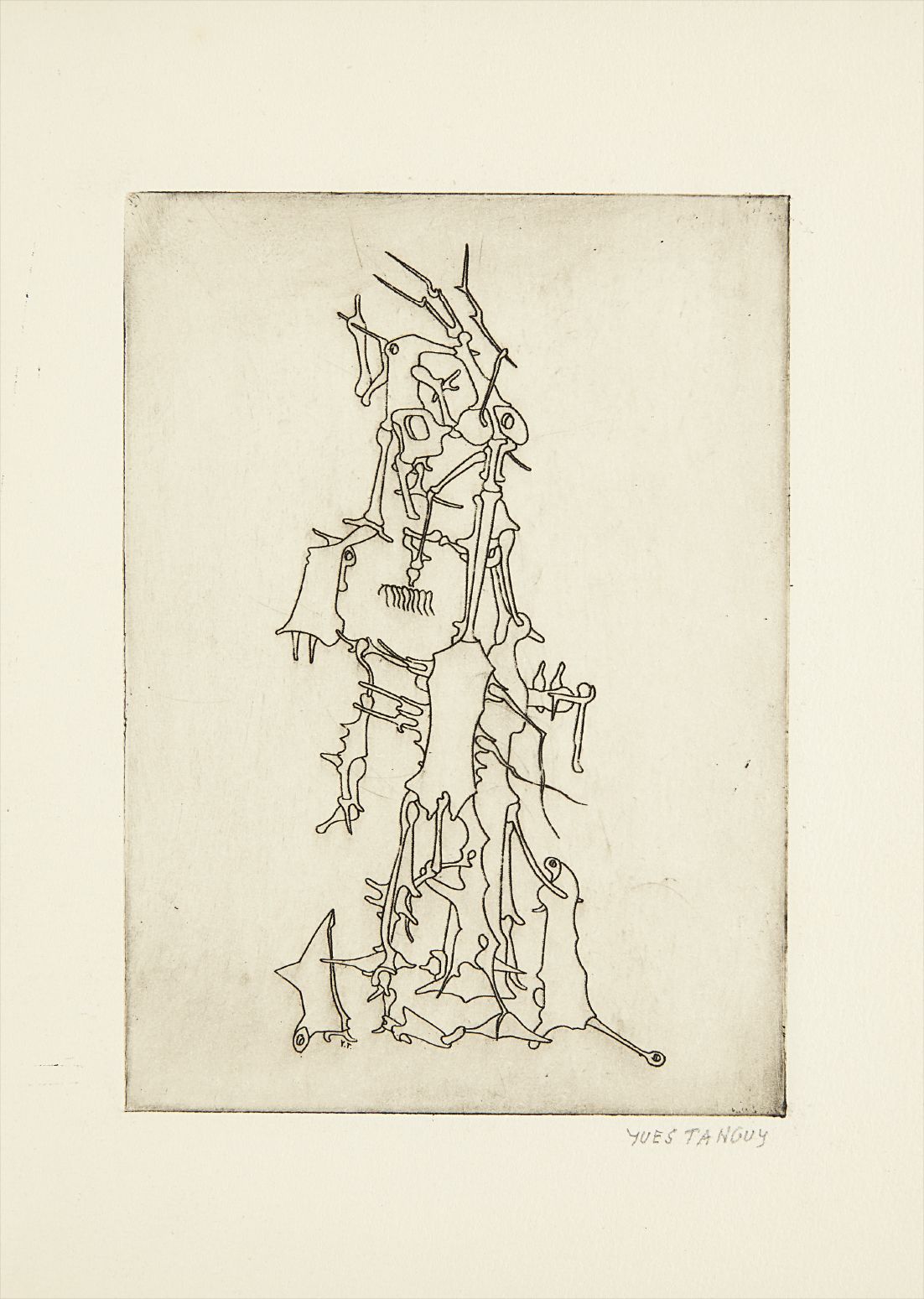
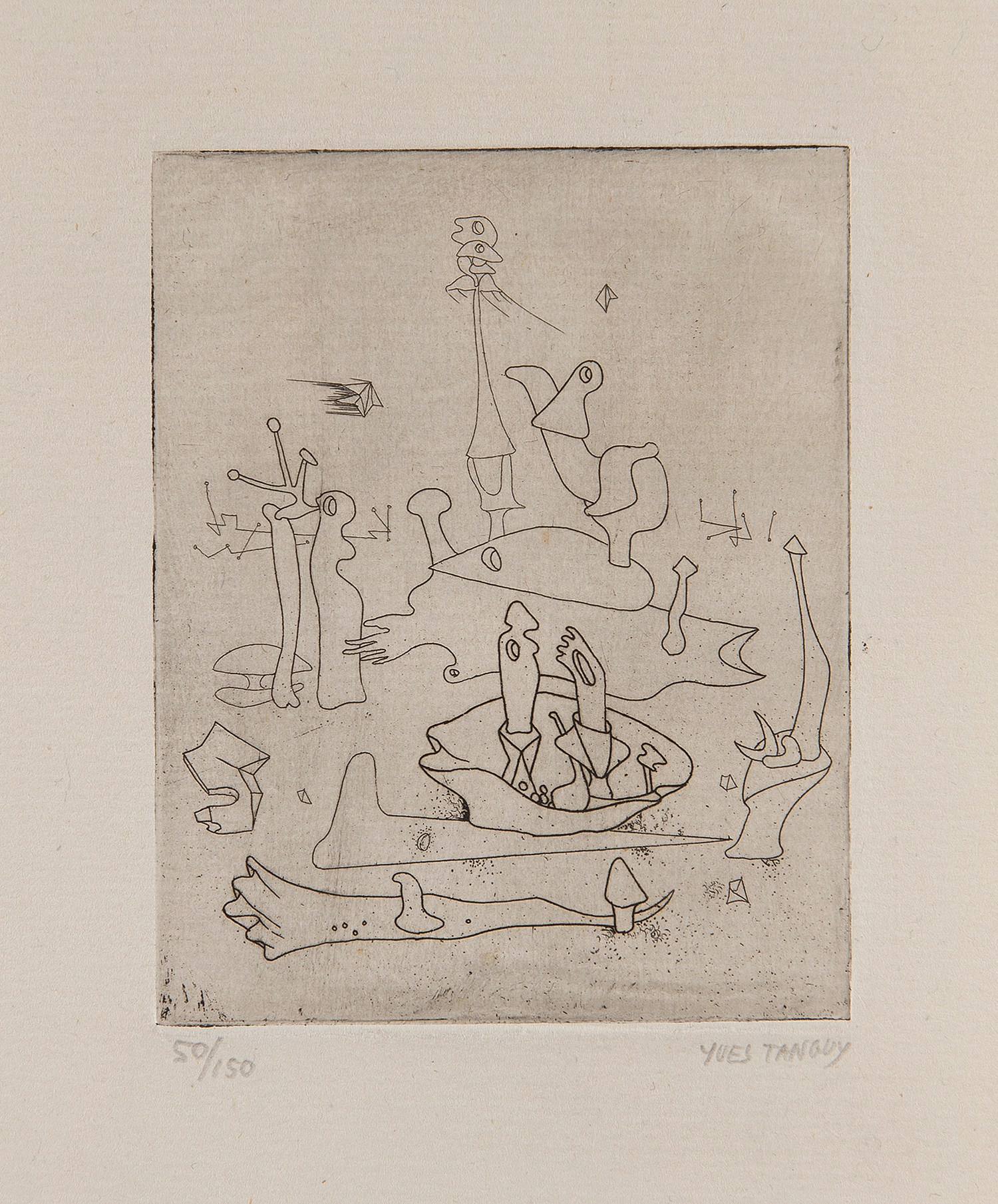
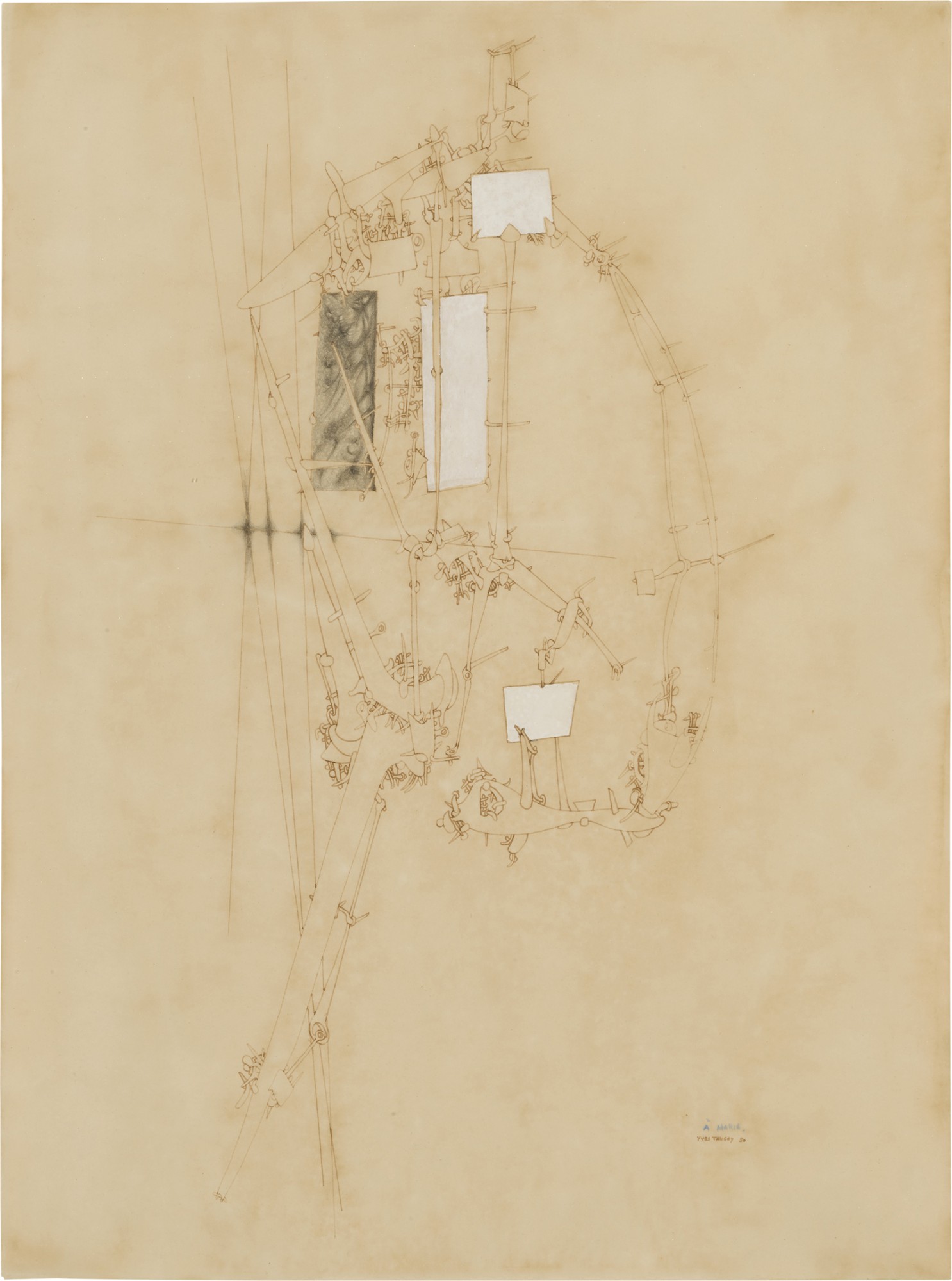
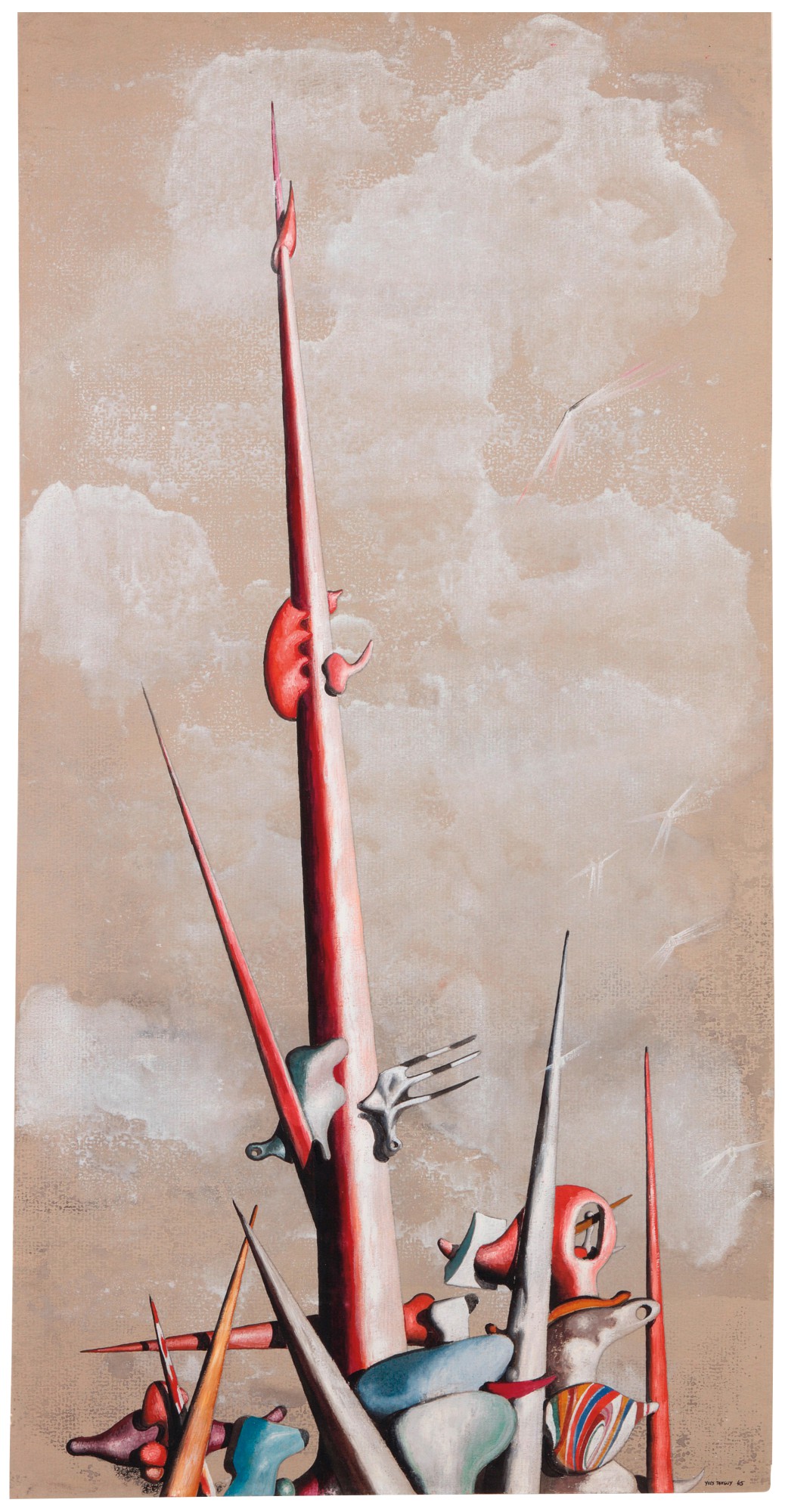
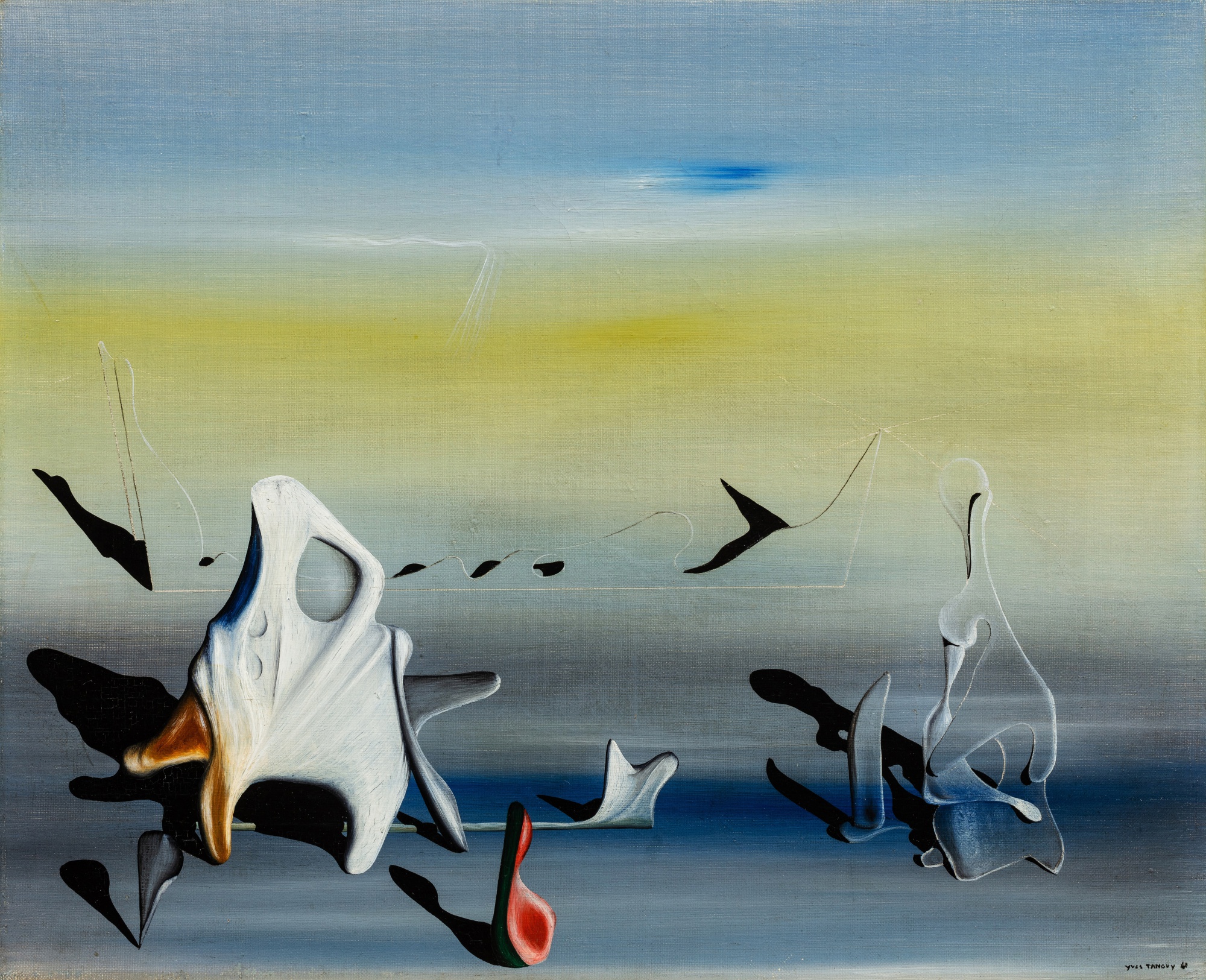
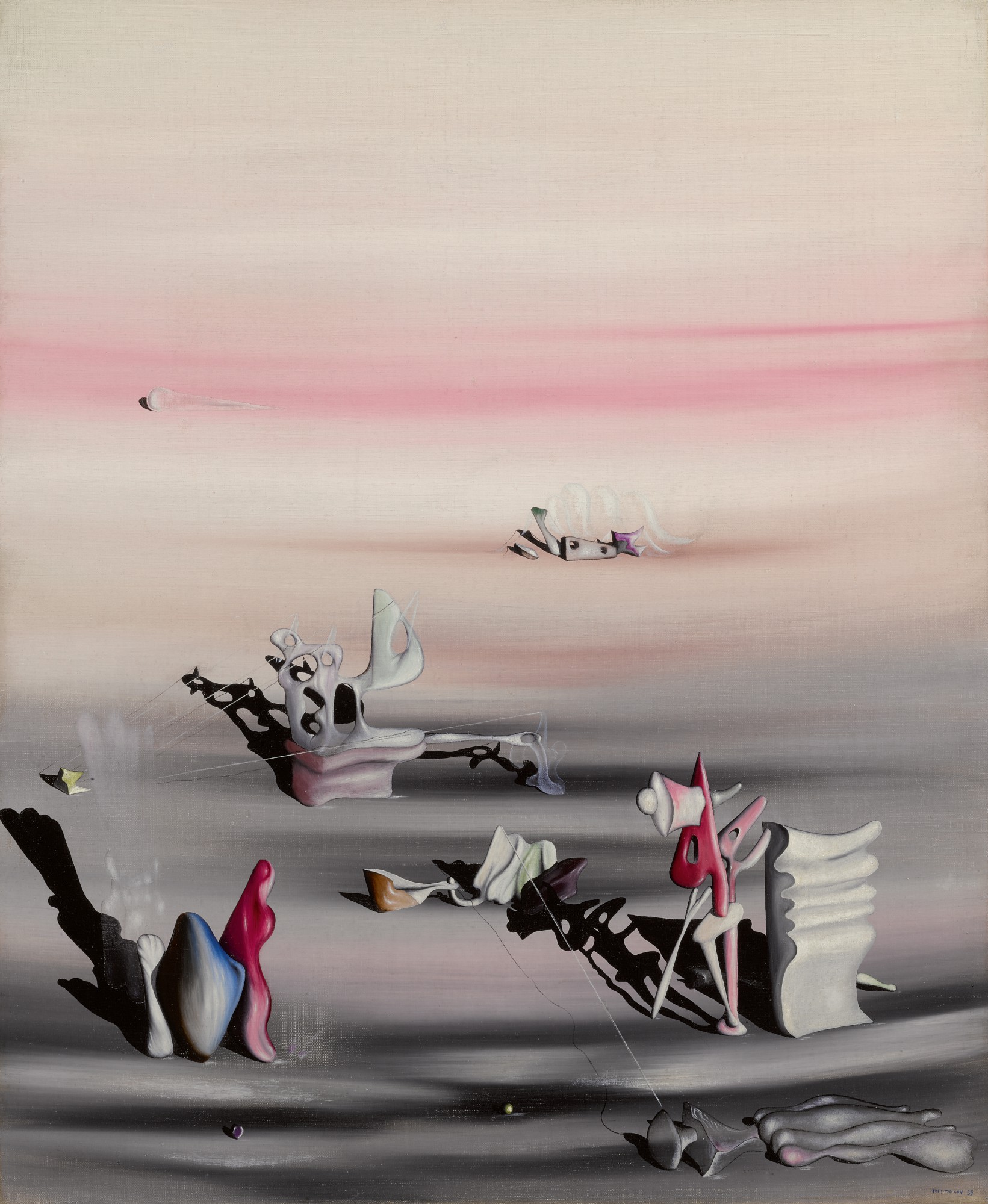
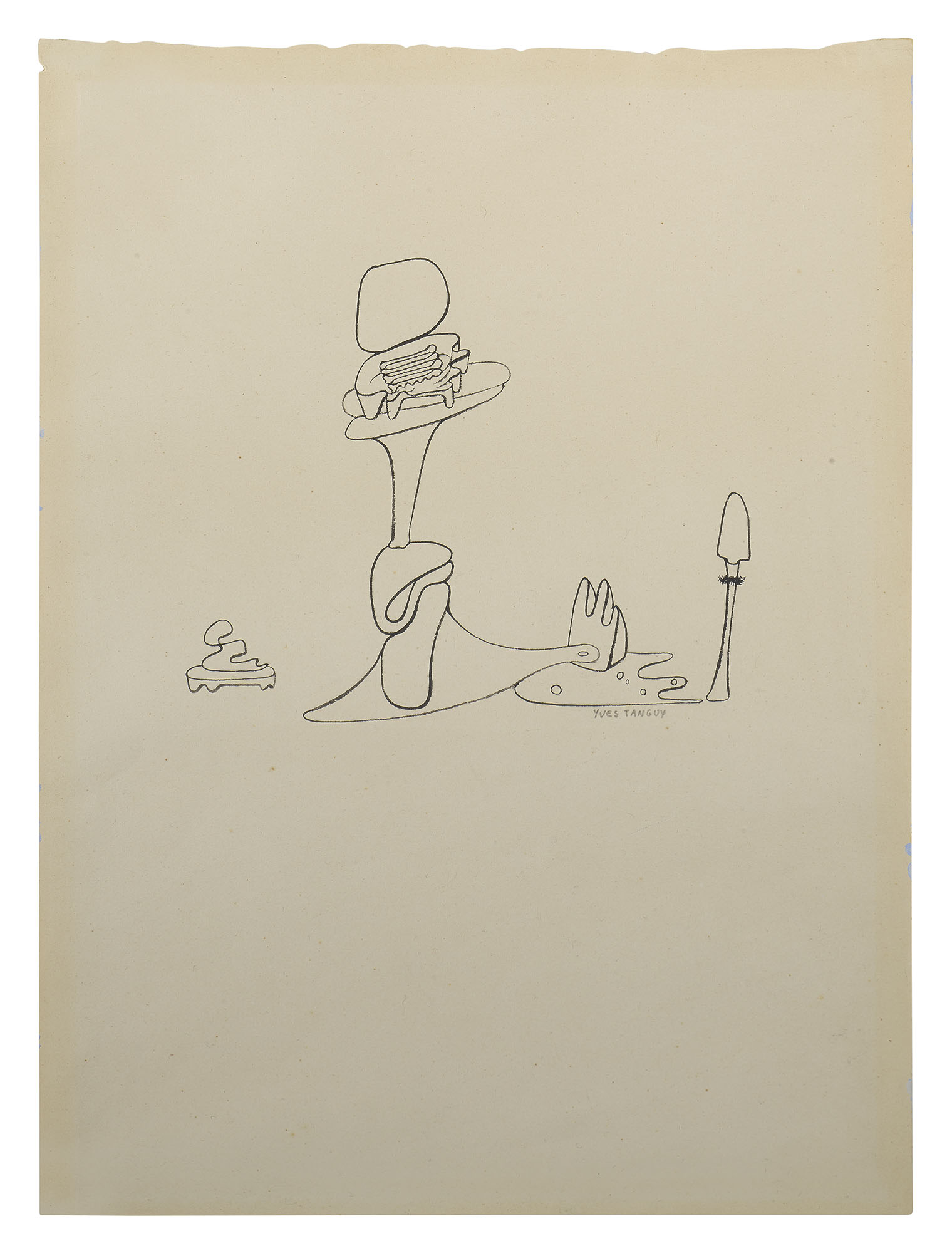
There is a particular quality of light in Yves Tanguy's paintings that no other artist has quite managed to replicate: a pale, sourceless luminescence that seems to emanate from somewhere beneath the canvas itself, illuminating landscapes that exist nowhere on earth and everywhere in the unconscious mind. When the Museum of Modern Art in New York mounted its landmark retrospective of his work in 1955, the year of his death, it confirmed what those in the Surrealist circle had long understood that Tanguy had built an entirely private universe, rendered with the patience and precision of a scientific illustrator, and populated it with forms that felt simultaneously ancient and alien. Decades later, that universe continues to pull collectors, curators, and dreamers into its gravitational field, and the market for his paintings and works on paper has never felt more vital. Yves Tanguy was born in Paris on January 5, 1900, into a family with deep roots in Brittany, the rugged, fog drenched coastal region of northwestern France whose stark seascapes and prehistoric standing stones would leave a permanent imprint on his visual imagination. His father was a retired sea captain, and as a child Tanguy spent long stretches of time on the Breton coast, absorbing a landscape that seemed to belong to geological time rather than human history. He received no formal artistic training whatsoever, a fact that would come to define not just his biography but his entire aesthetic philosophy. Before he became a painter, he worked as a merchant sailor and later as a streetcar conductor in Paris, living the peripatetic, improvisational life of someone who had not yet found his form. The transformation came in 1923, when Tanguy was riding a bus through Paris and caught a glimpse of a painting in the window of a gallery on the Rue La Boétie. The painting was by Giorgio de Chirico, and the encounter was, by all accounts, so overwhelming that Tanguy leapt from the moving bus to look more closely. De Chirico's uncanny, shadow pooled piazzas revealed to Tanguy that paint could be a medium for the irrational, for the architectures of sleep and premonition. He taught himself to paint almost immediately, with a seriousness and focus that belied his late start. By 1925 he had made contact with André Breton, the poet and theorist who was assembling the Surrealist movement, and his work was shown in the landmark first Surrealist exhibition in Paris. He was, from very early on, recognized as one of the movement's most genuinely visionary contributors. Tanguy's mature style emerged with startling speed. By the late 1920s his canvases already bore the hallmarks that would define his entire career: vast, horizontal planes suggesting land or sea or some intermediate zone, bathed in an eerie, even illumination, and scattered with biomorphic objects that cast long, impossible shadows. These objects, smooth and mineral and strangely organic, resemble nothing so much as the remnants of a civilization too old or too alien for human archaeology to have catalogued. Works from the 1930s such as "Mère des rêves" (1937) and the haunting oil on canvas "Janvier" (1930) show him at the height of his early powers, navigating a territory somewhere between the geological and the psychological. His technique was meticulous to the point of obsession: he would work and rework the surfaces of his paintings until they achieved the airless, polished finish of an object found rather than made. The 1939 painting "La lumière de l'ombre" is a particularly arresting example, its title translating as "The Light of the Shadow," a phrase that captures perfectly the paradox at the heart of everything he painted. In 1939, on the eve of the Second World War, Tanguy emigrated to the United States with the American Surrealist painter Kay Sage, whom he would marry the following year. The couple settled eventually in Woodbury, Connecticut, where Tanguy continued working with undiminished intensity. The American years produced some of his most ambitious canvases, including "Les Jeux nouveaux" from 1940, a large and commanding oil in which his characteristic forms accumulate into something almost architectural, as though the dreaming mind had finally decided to build rather than merely wander. His palette in this period deepened and grew more complex, the horizons more remote, the spaces between forms charged with a new kind of tension. He became an American citizen in 1948, a biographical fact that still surprises those who think of him purely as a French artist, but his work acknowledged no nationality and no geography that cartographers would recognize. For collectors, the appeal of Tanguy is both immediate and enduring. His works on paper, including the pen and ink drawings and the luminous gouaches that appear with some regularity on the market, offer an accessible entry point into his world. A work such as "Sans titre (Taille de guêpe)" from 1945, a gouache with brush and ink and pencil on paper, demonstrates that his vision was no less complete or compelling at smaller scale: the same hallucinatory precision, the same sense of a world governed by laws that feel intuitively right even as they defy articulation. His oil paintings command significant auction attention whenever they appear, with major works having passed through Sotheby's and Christie's at prices that reflect both the rarity of top tier examples and the sustained institutional regard for his practice. Collectors drawn to Tanguy tend to share a particular temperament: they are people who find order beautiful and mystery necessary, and who want both in the same object. Tanguy's position within art history is most fully understood when he is placed in relation to his contemporaries and his antecedents. The debt to de Chirico is real but quickly transcended: where de Chirico populated his dreamscapes with recognizable, if dislocated, objects from the classical world, Tanguy stripped his of all cultural reference and arrived at something more radical. Among his fellow Surrealists, he is perhaps closest in spirit to Salvador Dalí in his technical precision, though Tanguy's work is altogether less theatrical and more genuinely strange. The American Abstract Expressionists who came after him, particularly Arshile Gorky and Roberto Matta, absorbed and transformed elements of his biomorphic vocabulary, and the line from Tanguy to the organic abstraction of the postwar period is one of the more fascinating threads in twentieth century painting. Yves Tanguy died on January 15, 1955, in Woodbury, Connecticut, of a cerebral hemorrhage, just ten days after his fifty fifth birthday. He left behind a body of work that feels, if anything, more necessary now than it did in his own lifetime. In an era saturated with images, his painted worlds offer something rare: genuine strangeness, pursued without irony, with the full force of a sensibility that refused every available shortcut. To spend time with a Tanguy is to be reminded that the imagination has no floor, that beneath the known world there are strata of vision that only the most patient and original artists ever reach. The collectors and institutions who hold his work are the custodians of something irreplaceable, and the pleasure of encountering it, whether in a museum gallery or on the screen of a private platform, remains as sharp and surprising as it must have been the first time someone pressed their face to a Paris gallery window and felt the world open up.