Saint Joseph
Archived article
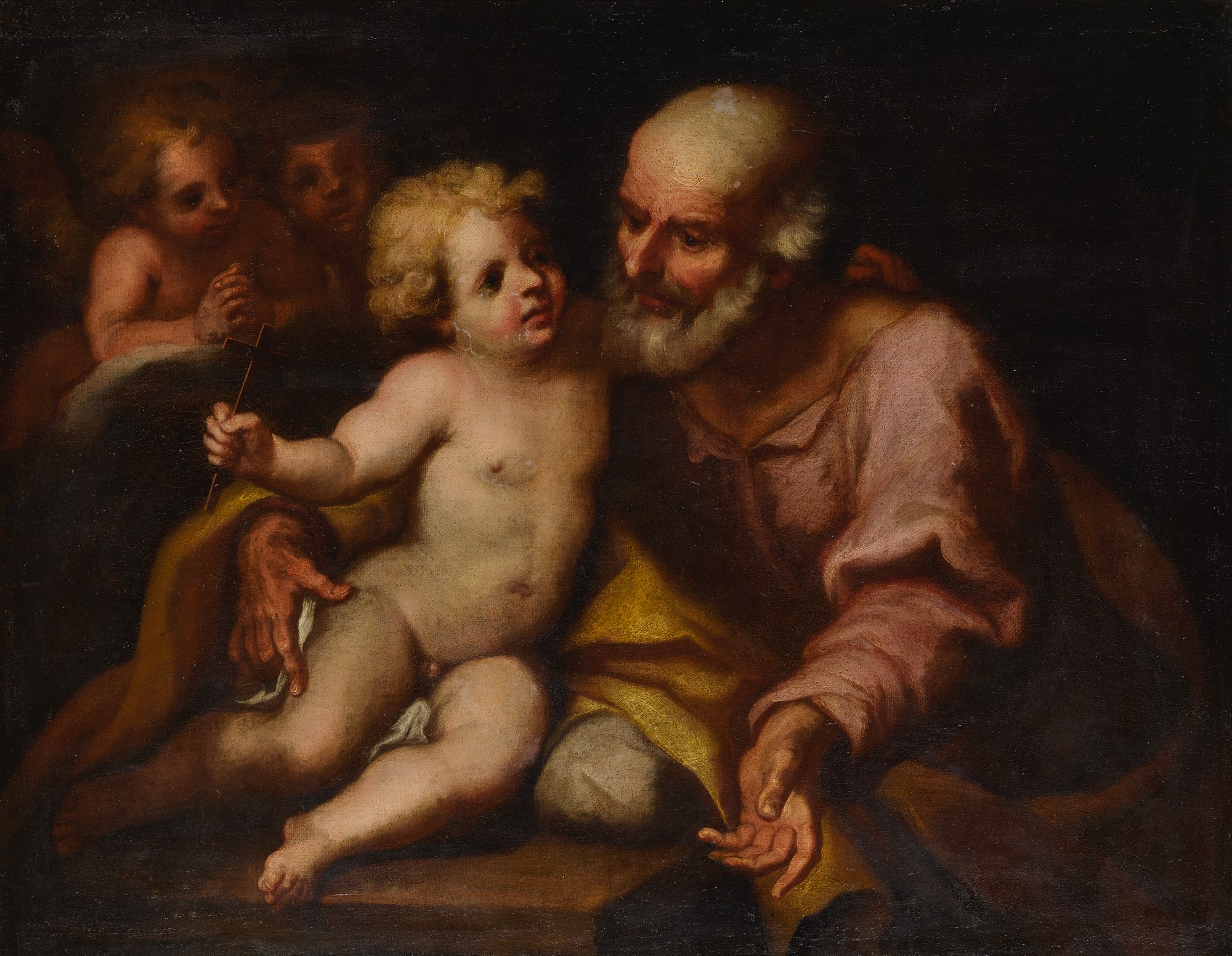
Genoese School, late 17th century
Saint Joseph and the Christ Child
You are reading a previous version of this article.
Read the latest version```json { "headline": "The Saint Who Keeps Surprising Serious Collectors", "body": "There is something quietly radical about collecting images of Saint Joseph. For centuries he occupied the margins of devotional painting, a background figure holding a lily or a carpenter's tool while the drama unfolded around the Holy Family. Yet the works that survive from the great Catholic workshops of seventeenth century Europe tell a different story, one of extraordinary psychological depth, technical ambition, and a subject matter that serious collectors are increasingly rediscovering. To live with a well chosen depiction of Joseph is to live with a work that rewards attention over time, that shifts in mood depending on the light, and that carries within it the full weight of the Counter Reformation's emotional program.
", "What draws collectors to this territory is rarely piety in the conventional sense. It is more often the sheer quality of execution that the subject demanded from its painters. The devotion to Saint Joseph surged across Catholic Europe following the Council of Trent, and patrons with serious money commissioned serious artists to render him. The result was a body of work produced at the highest levels of ambition, often experimental in its use of chiaroscuro and figure placement, and frequently among the strongest paintings a given artist made.
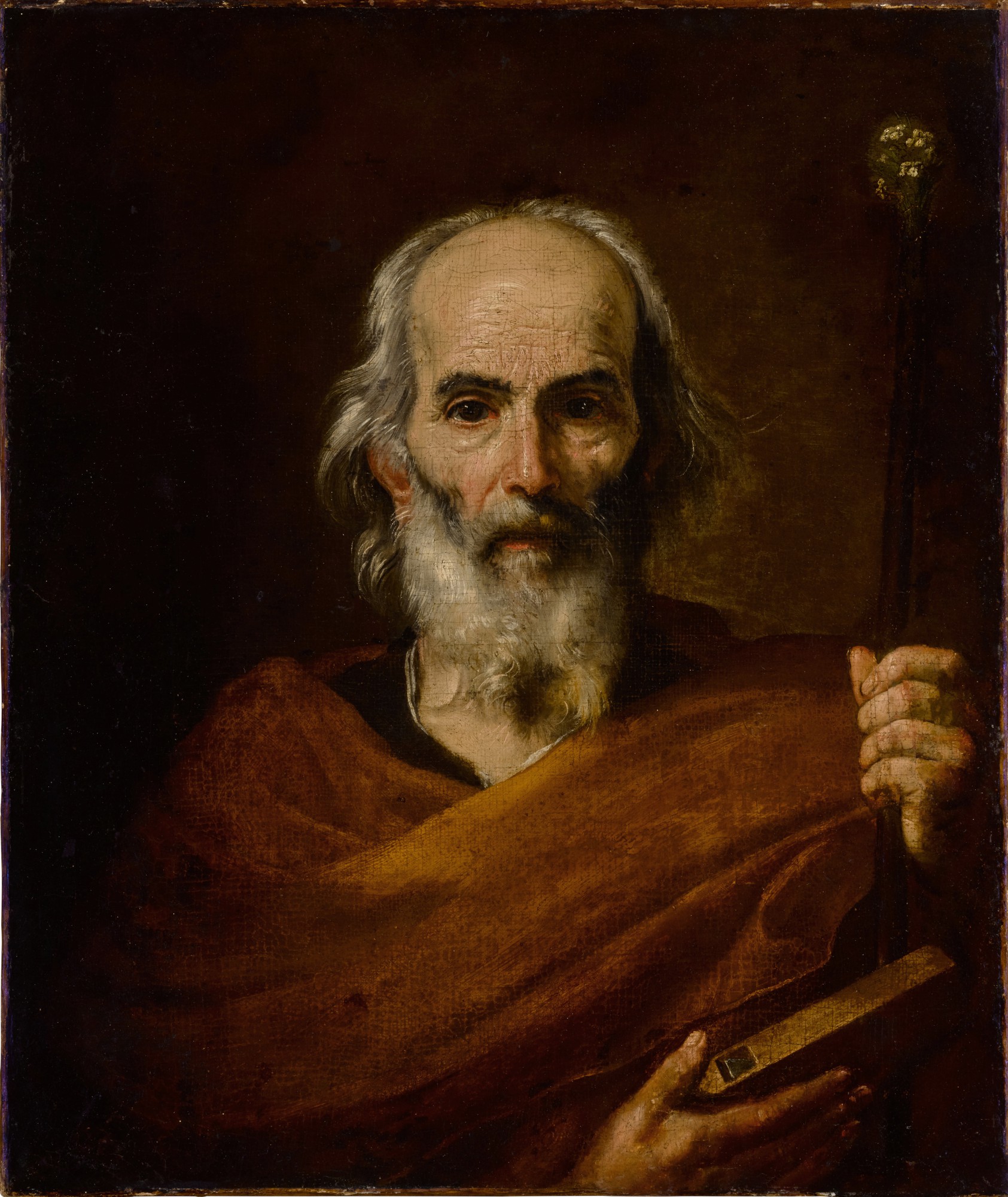
Jusepe de Ribera, called lo Spagnoletto
Saint Joseph with a plane and square
Collectors who have spent time with this material understand that a great Joseph is rarely a sentimental image. It is, more often, an exercise in restraint and concentrated feeling.", "Separating a good work from a great one in this category comes down to a handful of qualities that any experienced collector learns to read quickly. The first is the handling of the figure's interiority.
The finest examples do not give you a saint performing holiness. They give you a man thinking, or resting, or turning toward something just outside the frame with an expression that seems genuinely unresolved. The second quality is light. The Catholic Baroque was obsessed with what light could do to a face and to a hand, and in the best works of this period the illumination feels almost like a theological argument.
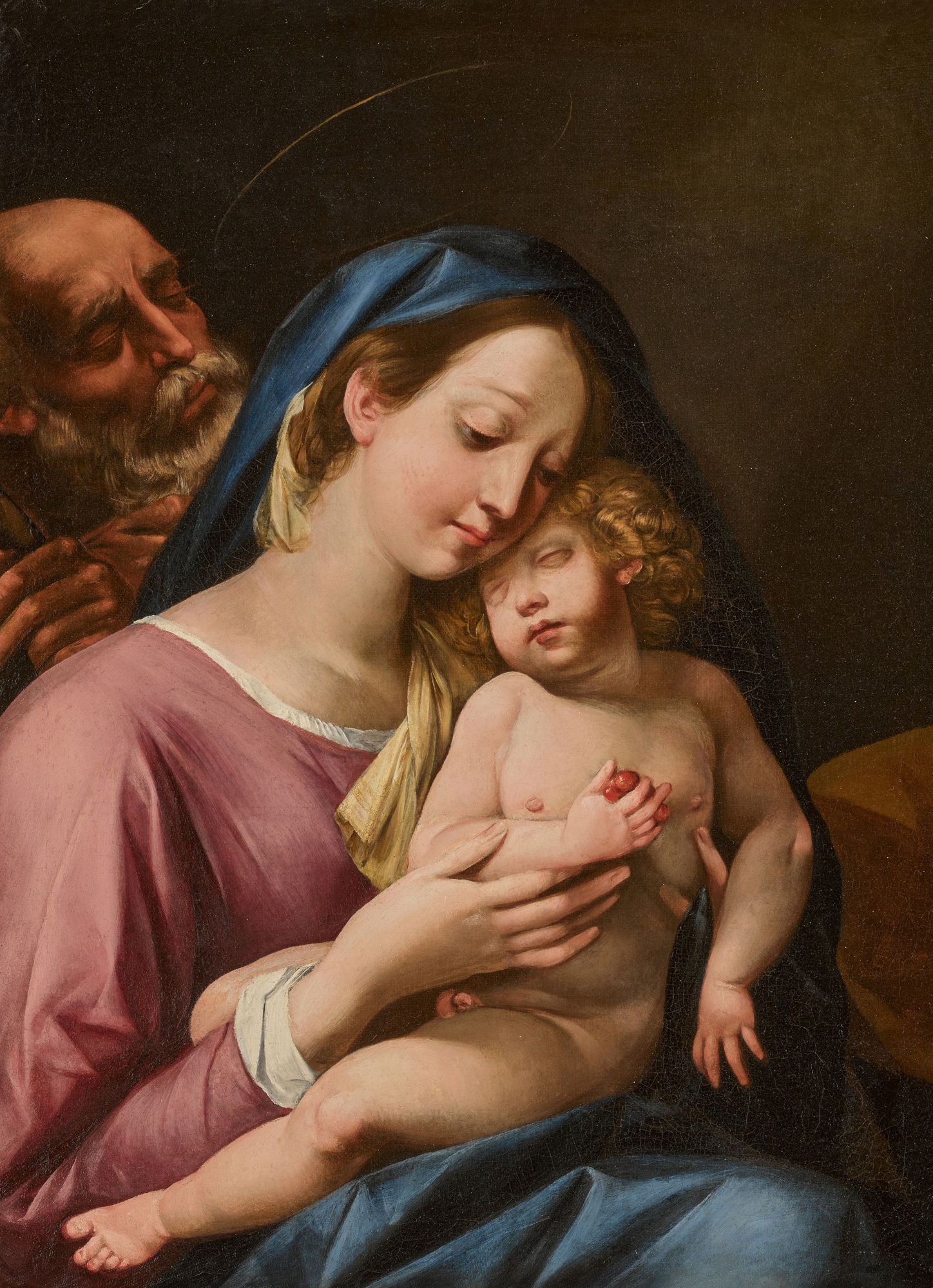
Giuseppe Cesari, called Cavaliere d'Arpino
The Virgin with Child and Saint Joseph
When you find those two things together, in a work with solid provenance and genuine physical presence, you are looking at something worth serious consideration.", "Among the artists represented on The Collection, Jusepe de Ribera stands in a category of his own when it comes to market authority. Known as lo Spagnoletto, the little Spaniard, Ribera worked in Naples and developed a manner of painting flesh and shadow that influenced virtually every serious painter who came after him in the southern Italian tradition. His treatments of aged male figures, saints, philosophers, ascetics, carry a rawness that collectors find both unsettling and impossible to look away from.
Works securely attributed to Ribera have performed consistently at major auction houses for decades, and the gap between authenticated works and those carrying school or circle attributions has widened considerably in recent years, making genuine attribution increasingly valuable. Giovanni Battista Tiepolo represents a different kind of authority entirely, the grand decorative intelligence of the Venetian eighteenth century, and a Tiepolo study or devotional work brings with it the full weight of that tradition's prestige and continued scholarly attention.", "The case of the Genoese School in the late seventeenth century is one of the more genuinely interesting collecting opportunities in this space right now. Genoa produced painters of remarkable quality during this period who have been consistently undervalued relative to their Roman and Neapolitan counterparts, partly because the scholarship has moved more slowly and partly because the city's paintings have had a different dispersal history through the market.
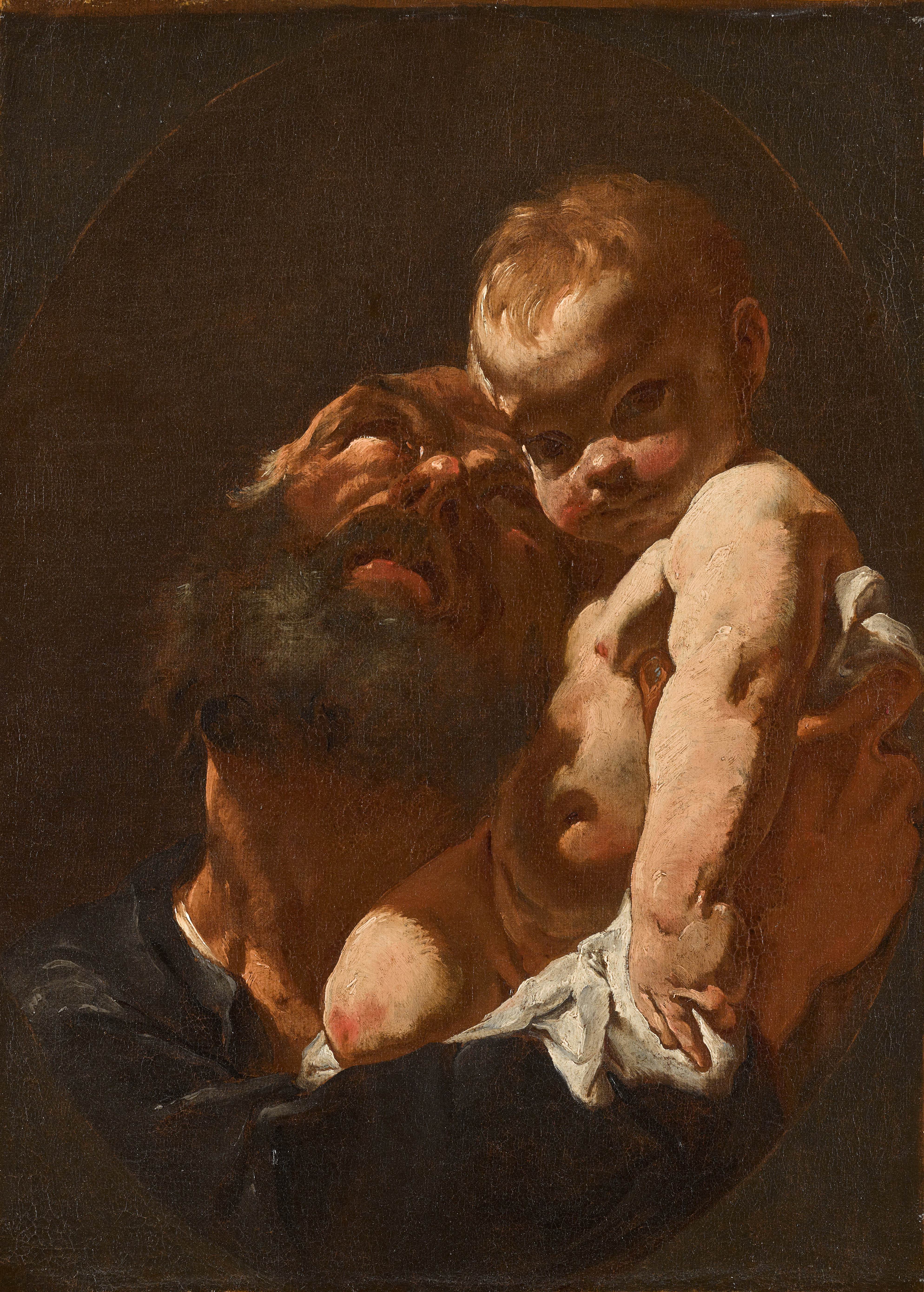
Giovanni Battista Tiepolo
Saint Joseph and the Christ Child
Works attributed to the Genoese School, particularly those with strong physical quality and traceable ownership history, represent the kind of positioning that experienced collectors find attractive: real quality at a price that has not yet caught up with the scholarship. Similarly, Giuseppe Cesari, called the Cavaliere d'Arpino, occupied a pivotal position in Roman painting in the late sixteenth and early seventeenth centuries and was a figure of genuine historical importance, employed by popes and admired by contemporaries. His work has attracted renewed critical interest, and collectors who have been watching the market carefully will have noticed that attributions to Cesari have begun to generate more serious bidding than they did even a decade ago.", "At auction, devotional Old Master paintings occupy an interesting position.
The top of the market, meaning works with triple A provenance, major exhibition histories, and secure attribution to canonical names, has remained robust even through periods of broader market softness. The middle market, which is where many Genoese School works and attributed studio pieces circulate, has shown real volatility, but that volatility creates opportunity for the patient and knowledgeable buyer. The key is understanding that auction estimates in this category are often conservative, set to drive bidding rather than to reflect genuine replacement value, and that the hammer price tells you relatively little without knowing the full condition and provenance picture behind it.", "Practically speaking, collectors coming to this material for the first time should prioritize a few things above all others.
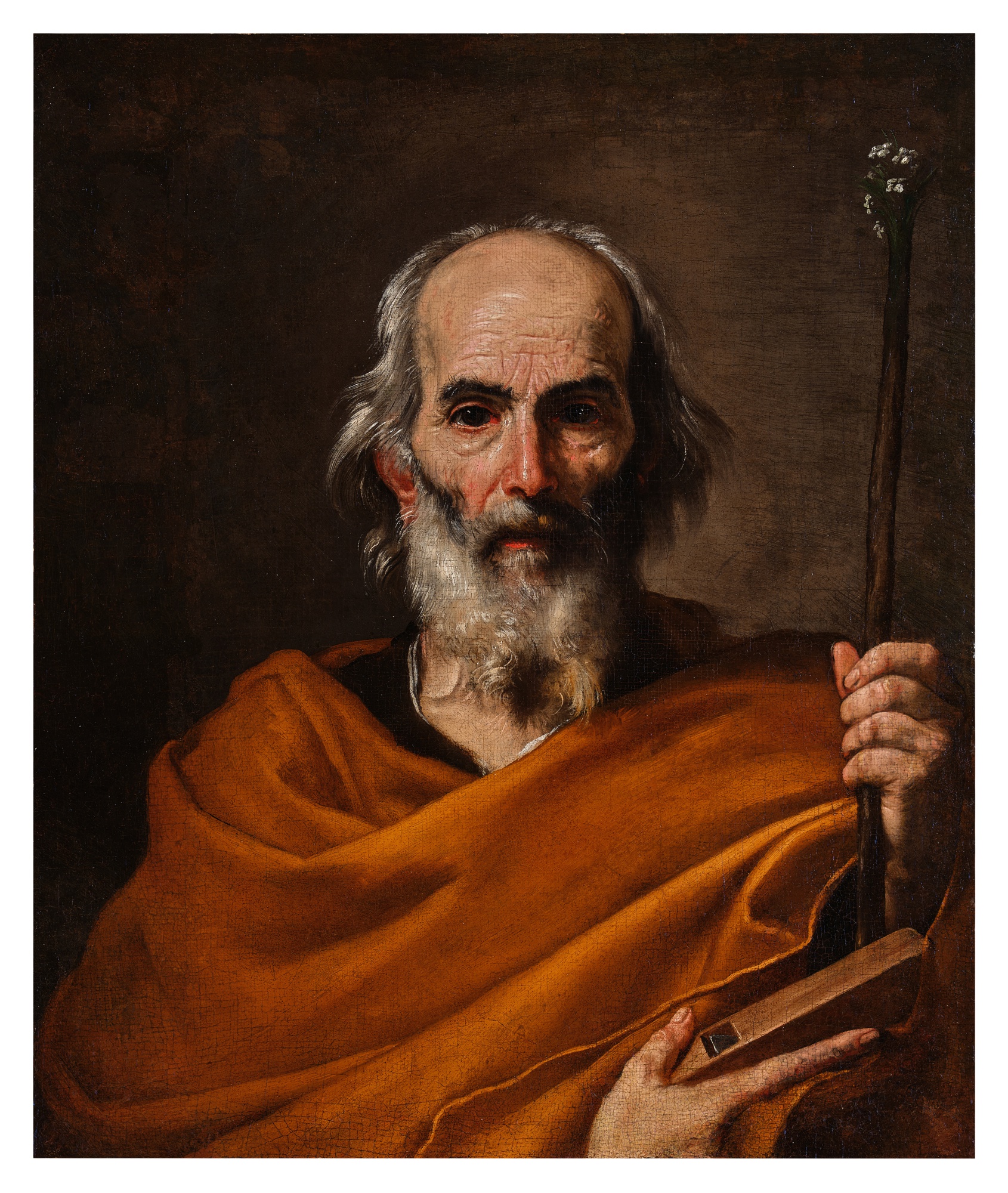
Jusepe de Ribera, called Spagnoletto
Saint Joseph Holding a Plane and Flowering Rod
Condition in old panel and canvas paintings is everything, and the question to ask any gallery is not just whether a work has been conserved but what the condition report actually says about the original paint surface versus later additions. A painting that has been cleaned, stabilized, and minimally restored is a very different proposition from one that has been extensively repainted. For display, these works reward hanging in rooms with natural light, but not direct sunlight, and at eye level or slightly above, where the directional lighting the artist intended can begin to do its work on you across a room. Ask the gallery about provenance documentation in full, and ask specifically whether the work has appeared in any scholarly catalogue or exhibition dedicated to the artist or the school.
That kind of documented presence is the foundation of future value.", "The deeper truth about collecting Saint Joseph is that the subject connects you to one of the great sustained projects in Western painting: the attempt to render the interior life visible. The artists who took this commission seriously, and the ones worth collecting did take it seriously, were asking the same questions about psychology and light and the nature of human attention that contemporary painting is still asking. That continuity is part of what makes living with this work feel alive rather than archival.
The best of it does not belong in a storage facility or behind glass in a climate controlled room. It belongs on a wall where someone who cares about looking can spend time with it.
Works tagged Saint Joseph
Genoese School, late 17th century
Saint Joseph and the Christ Child
Jusepe de Ribera, called lo Spagnoletto
Saint Joseph with a plane and square
Giuseppe Cesari, called Cavaliere d'Arpino
The Virgin with Child and Saint Joseph
Giovanni Battista Tiepolo
Saint Joseph and the Christ Child
Jusepe de Ribera, called Spagnoletto
Saint Joseph Holding a Plane and Flowering Rod