Owl Motif
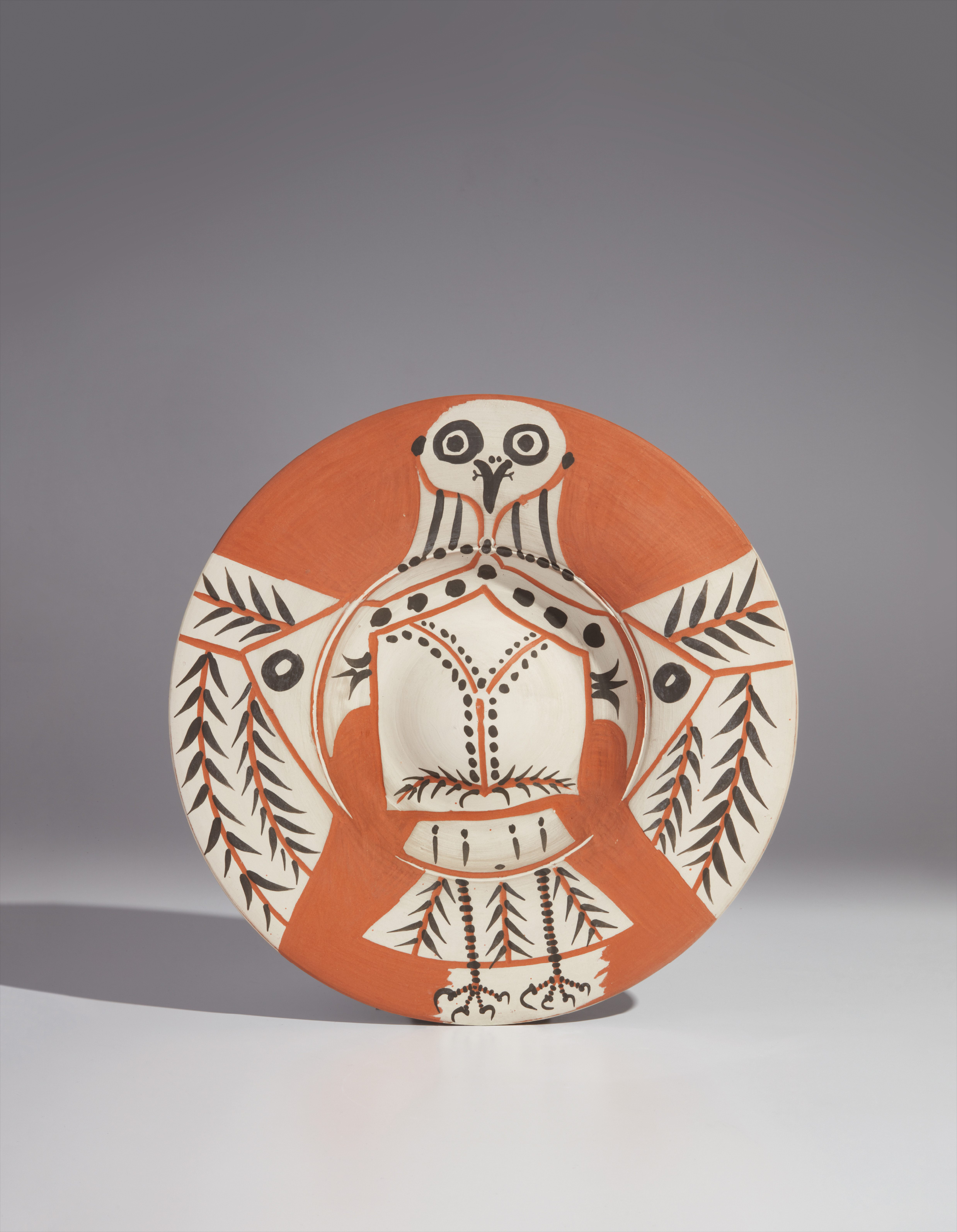
Pablo Picasso
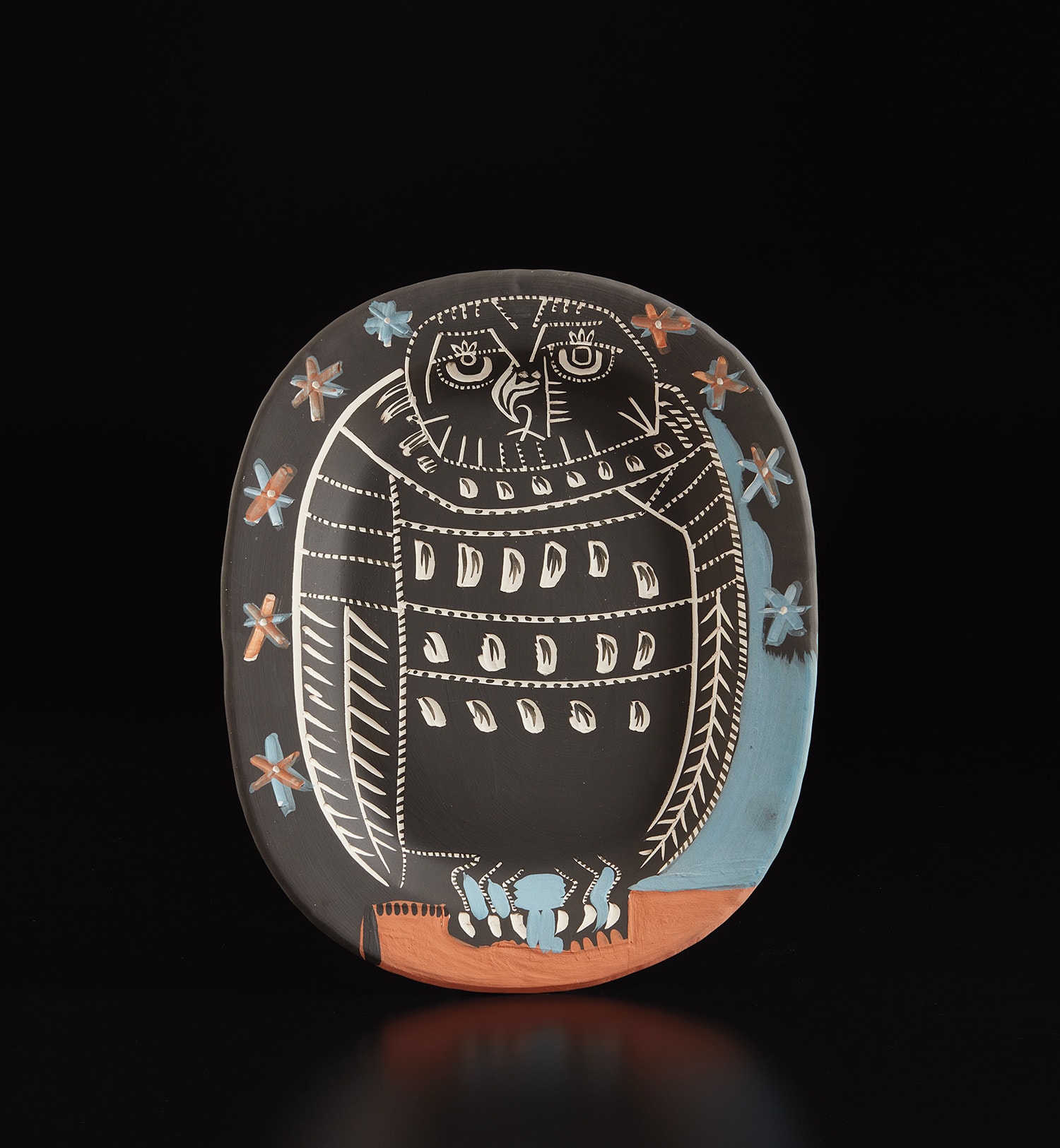
White owl on red ground (Hibou blanc sur fond rouge)

The Owl Has Always Known Something
There are certain images that refuse to stay in their time. The owl is one of them. It has appeared on Athenian coins, in Flemish vanitas paintings, on Picasso's ceramic plates, and on the graphic textiles of mid century design visionaries, carrying across all of these contexts a quality that resists easy definition. Wise, yes, but also strange.
Watchful. Slightly unsettling in its stillness. The owl motif in art is not simply a symbol that artists reach for when they want to suggest intelligence or nocturnal mystery. It is a mirror in which each era sees something different about itself.
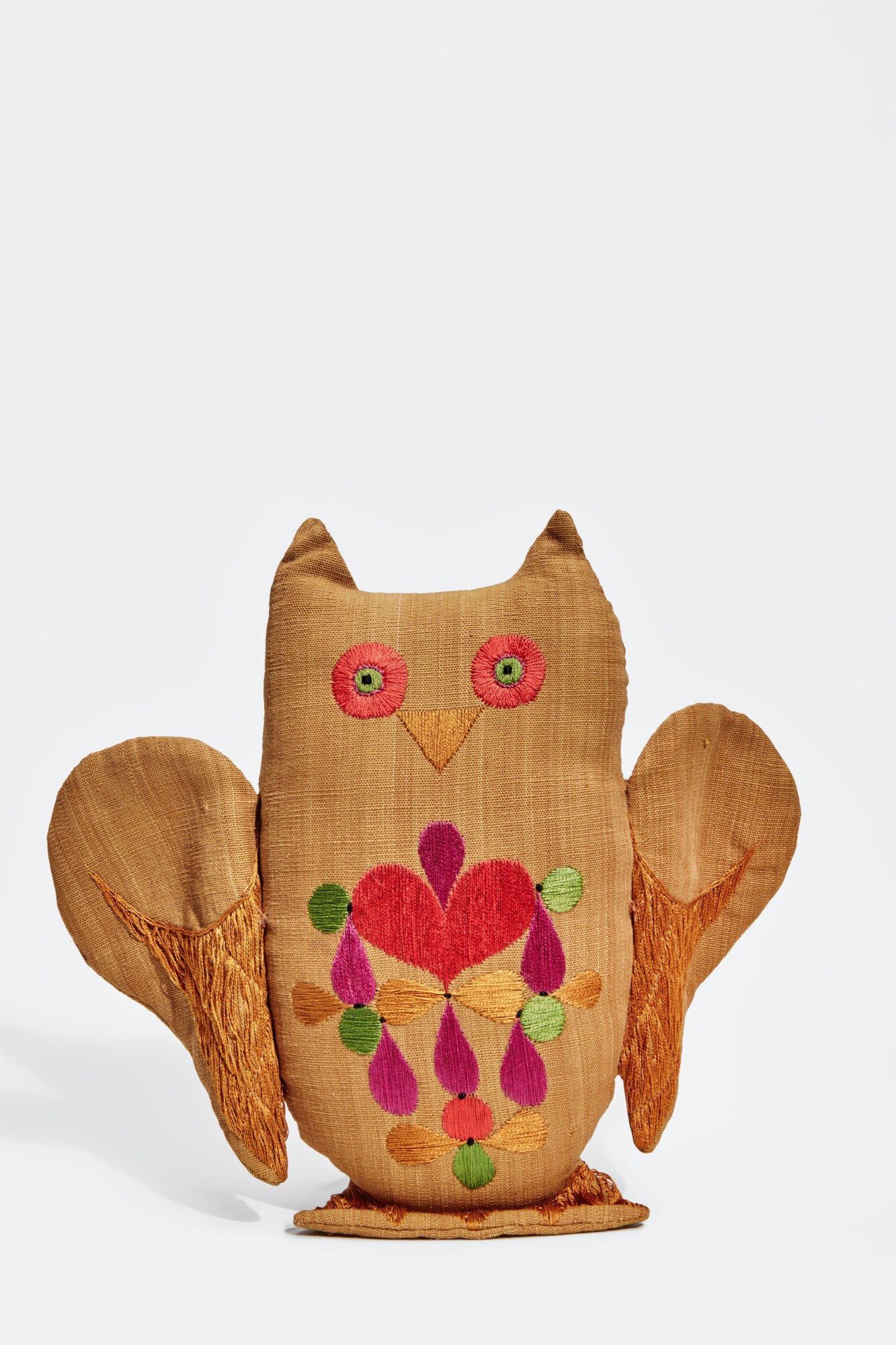
Alexander Girard
Owl
The owl's earliest appearances in Western art are inseparable from Athens itself. The little owl, Athena noctua, became the emblem of Athena and by extension of Athenian civic life around the fifth century BCE, stamped onto the silver tetradrachm coins that circulated throughout the ancient Mediterranean world. This was not merely decorative iconography. The owl represented a particular kind of seeing, a penetrating clarity that could operate even in the dark.
That association between the owl and an almost uncomfortable perceptiveness has never fully left the motif, even as it migrated across centuries and cultures into entirely different visual vocabularies. By the Northern Renaissance the owl had acquired more ambiguous company. In the work of Hieronymus Bosch, owls appear as witnesses to human folly, tucked into corners of hellscapes and moral allegories with an expression that reads as knowing and contemptuous in equal measure. Pieter Bruegel the Elder continued this tradition, embedding the bird into genre scenes as a kind of deadpan commentator.
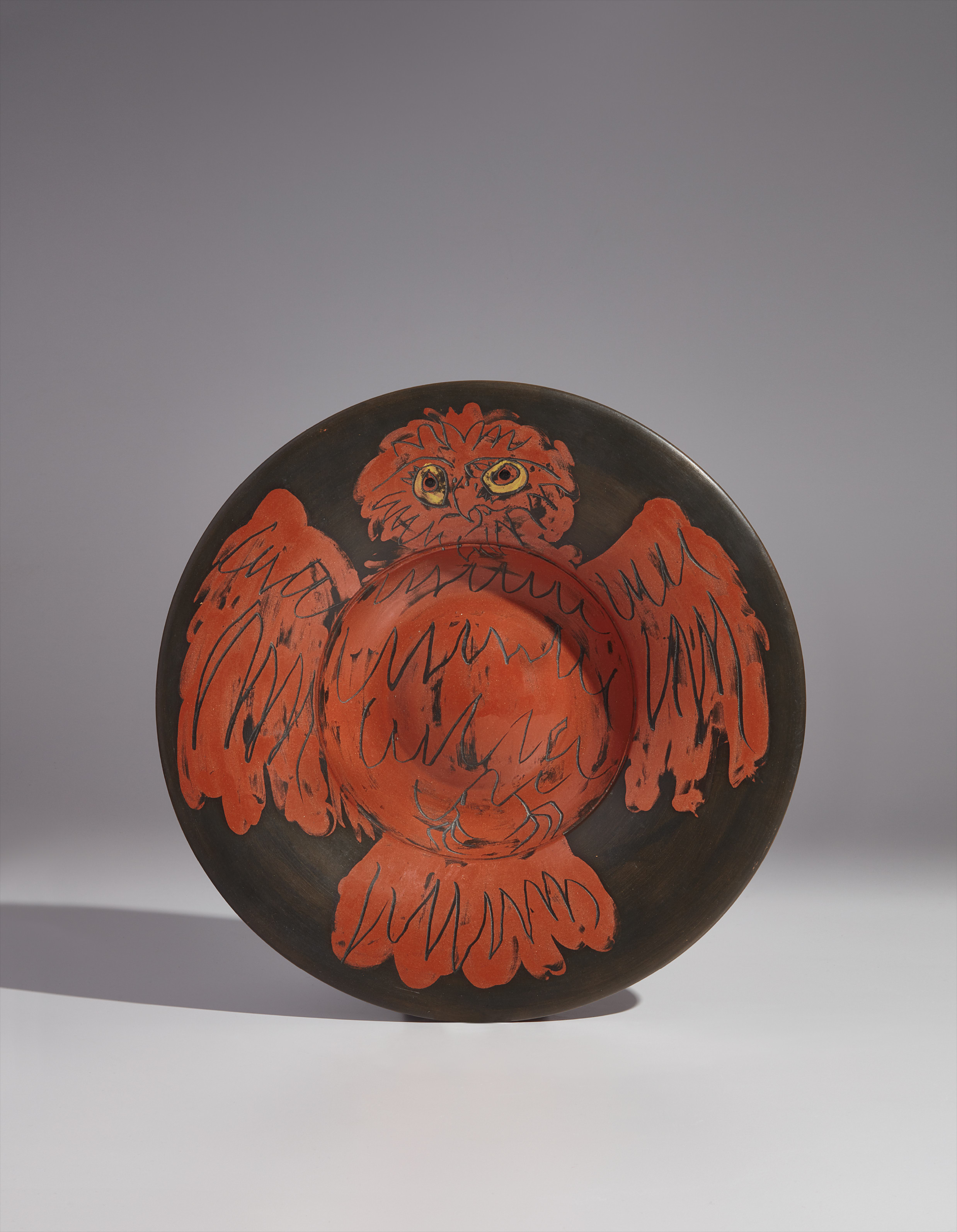
Pablo Picasso
White owl on red ground (Hibou blanc sur fond rouge)
The owl in these works is not a comfort. It sees what we would prefer remained unseen. This darker register of the motif would surface again and again in Western art, particularly in images connected to death, transformation, and the limits of human reason. The Romantic period brought the owl into a new emotional register entirely.
Francisco Goya's famous print from his Caprichos series, published in 1799, placed owls and bats swarming above a sleeping figure slumped at a desk, with the caption that translates roughly as the sleep of reason produces monsters. Goya's owls here are not wise. They are what reason keeps at bay. The image became one of the most reproduced and debated prints of the modern era, and it fundamentally complicated the owl's symbolic biography.
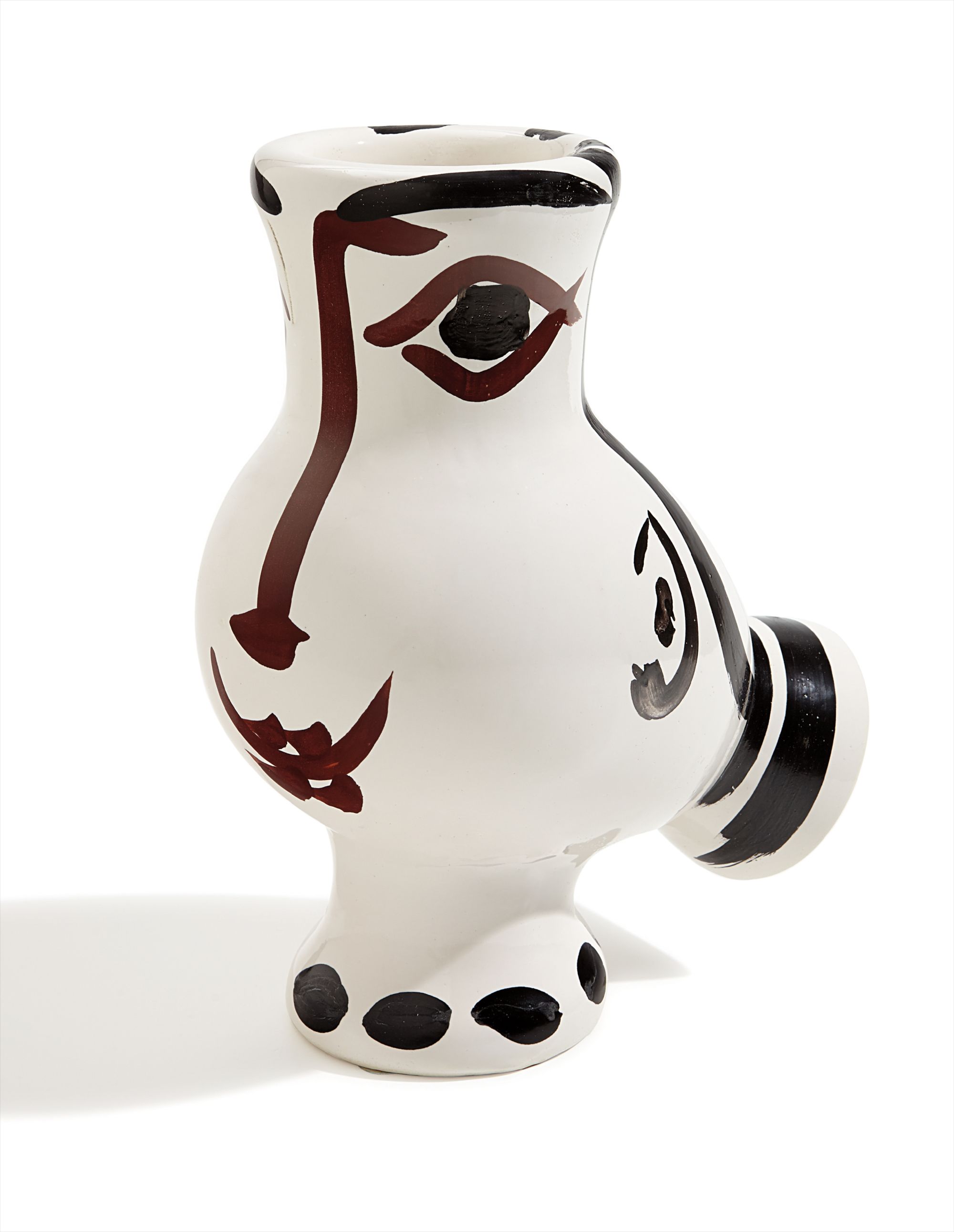
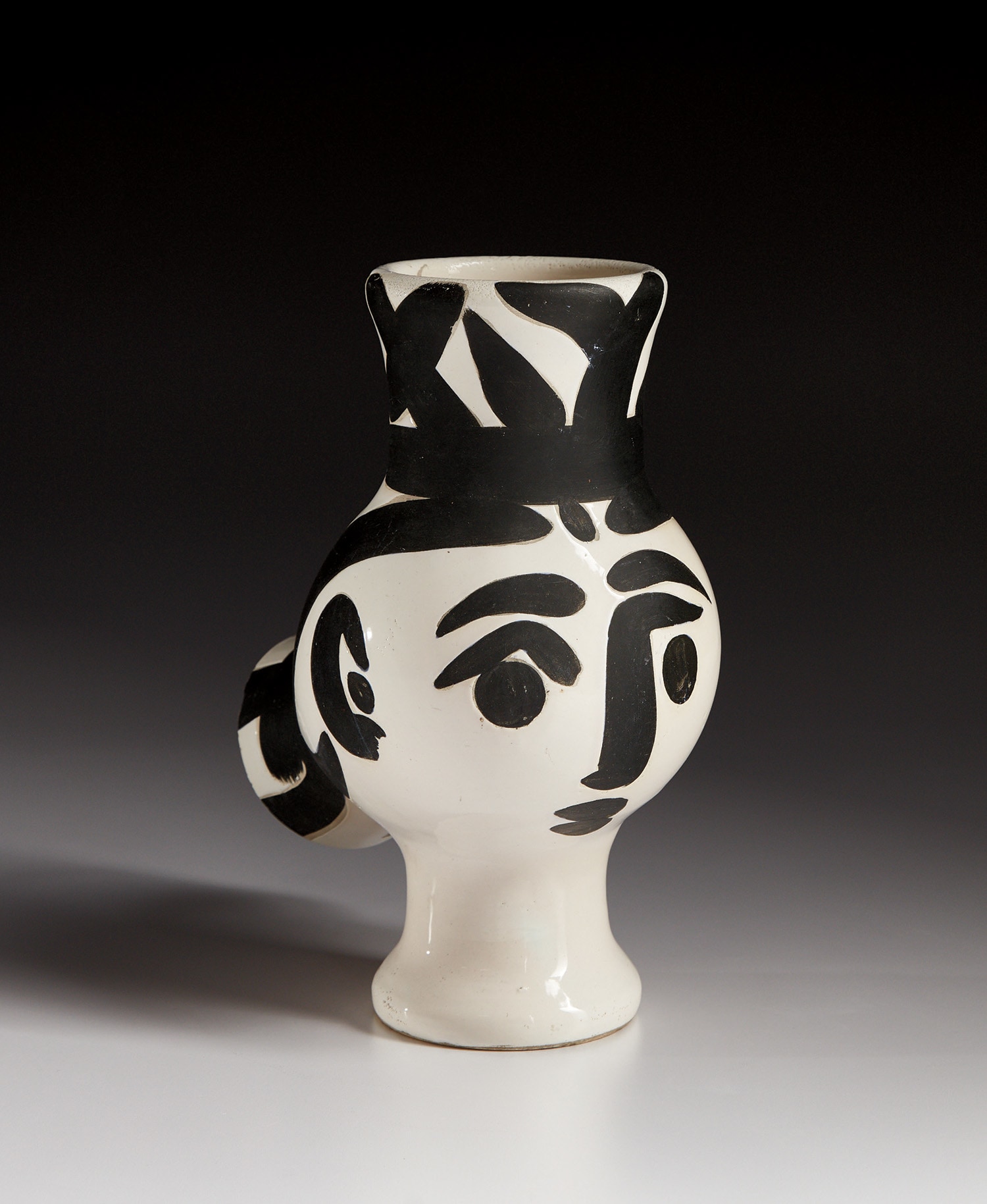
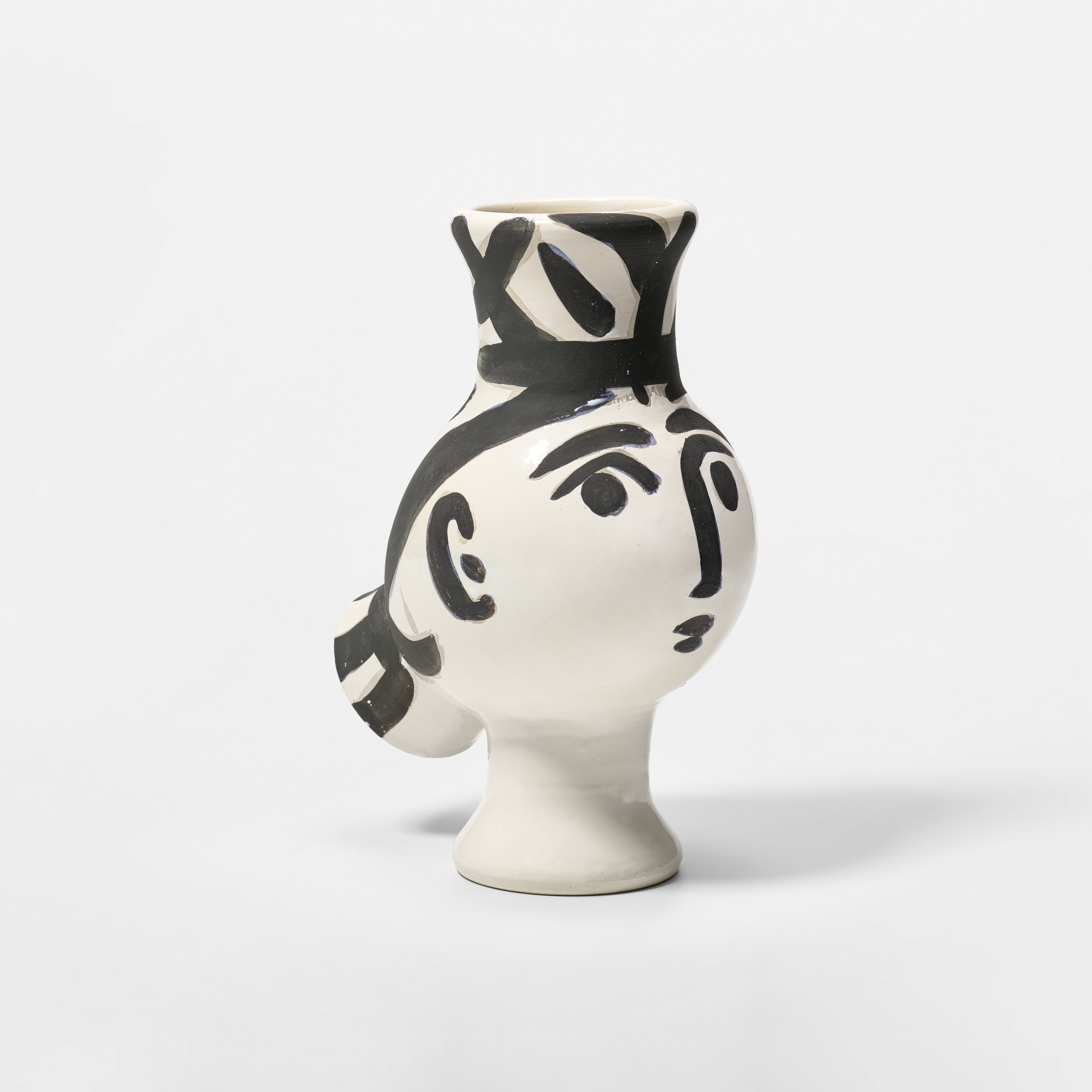
After Goya, the bird could not be purely a figure of wisdom. It carried the shadow of irrationality, of the unconscious, of everything civilization claims to have tamed. It is in this context that Pablo Picasso's sustained engagement with the owl becomes so fascinating. Beginning in the late 1940s and continuing through his ceramic period at Vallauris, Picasso returned to the owl again and again as a subject, producing plates, jugs, and sculptural vessels in which the bird's fixed stare seems to absorb and return the viewer's gaze.
One well known story holds that Picasso kept a live owl in his studio for a period, a gift from a friend, and became genuinely captivated by the creature's quality of absolute attention. His ceramic owls, with their flattened, graphic treatment and that characteristic Picassian compression of volume into pattern, manage to be simultaneously ancient and completely modern. They feel like objects that could have been made in the fifth century BCE and also like something entirely of their postwar moment. The works on The Collection offer a window into just how central this animal was to his visual thinking.
Where Picasso approached the owl through the accumulated weight of art history and personal mythology, Alexander Girard arrived at it through an entirely different door. Girard, whose design practice ranged from Herman Miller interiors to the glorious folk art collection he assembled over a lifetime, was drawn to animals and totemic figures as vehicles for what he called emotional warmth. His use of the owl motif was rooted in folk traditions from Latin America and beyond, traditions in which the bird carried protective and spiritual significance that had nothing to do with European intellectual allegory. Girard's owls are bold, flat, and joyful in a way that European high art rarely permitted the subject to be.
His work, represented on The Collection, is a reminder that the motif's history is genuinely global and that some of its most vital expressions came from craft and vernacular traditions that the art world spent too long ignoring. The techniques through which artists have rendered owls reveal as much as the images themselves. The owl's face, more frontal and flattened than almost any other bird, naturally invites graphic reduction. It accommodates abstraction in a way that feels earned rather than imposed.
Ceramic, with its capacity for both sculptural volume and painted surface, has been a particularly sympathetic medium, as Picasso understood. Textile and print, the domains Girard moved between so fluently, allow the owl's essential geometry to become rhythm, repetition, pattern. In each case the motif seems to find the medium that best expresses its particular quality of concentrated looking. What makes the owl motif so durable in contemporary collecting is precisely this accumulated layering of meaning.
When you acquire a work that engages this image, you are not acquiring a single symbol. You are stepping into a conversation that runs from ancient Athens through Goya's print studio through the ceramics workshop at Vallauris and into the present. The owl watches from all of these moments simultaneously. It has outlasted empires, stylistic revolutions, and every attempt to reduce it to a single reading.
That persistence is not accidental. It is the mark of a motif that touches something genuinely deep in how human beings understand the relationship between seeing and knowing, between light and the knowledge that lives in darkness.