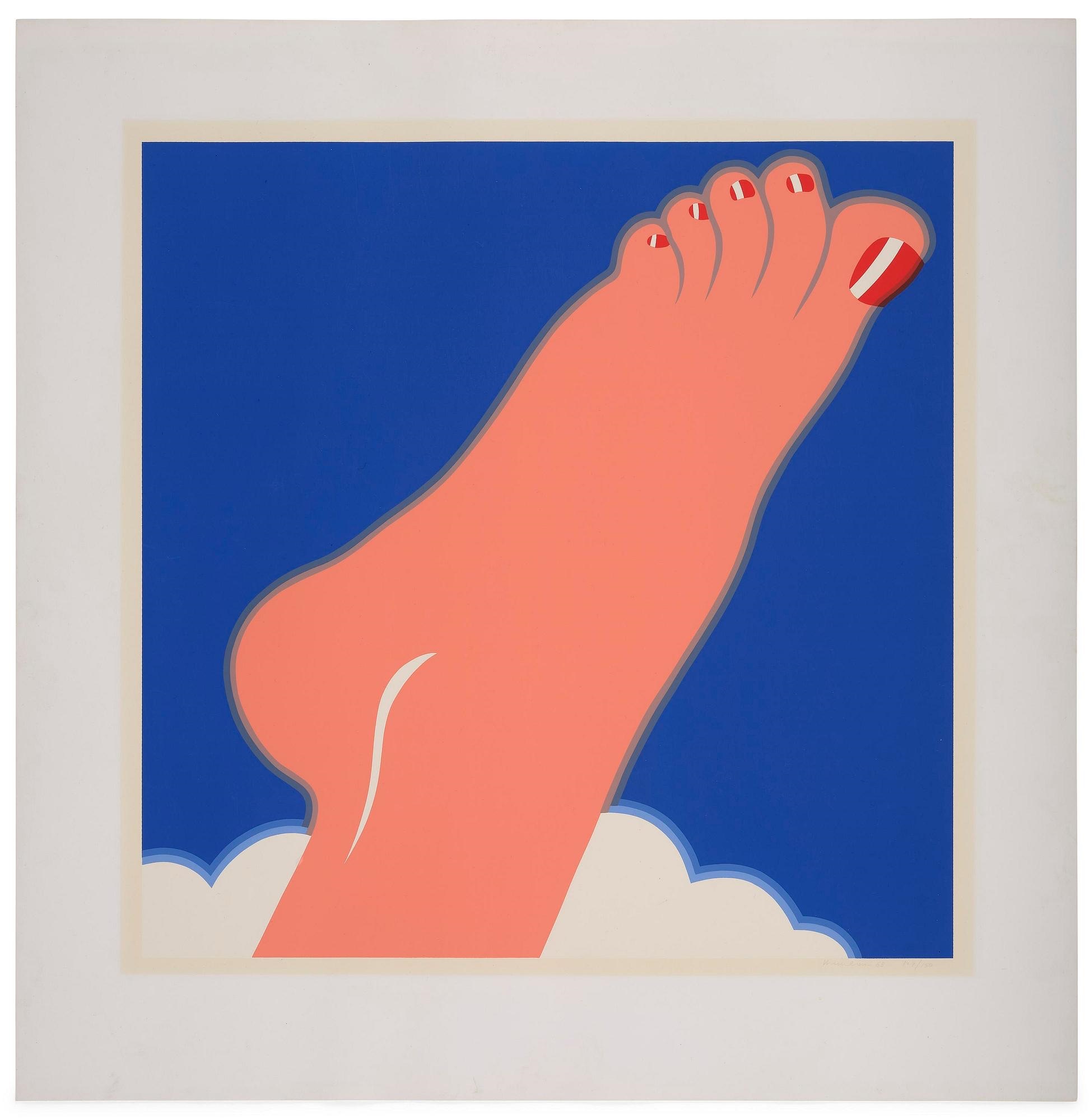
Maternity
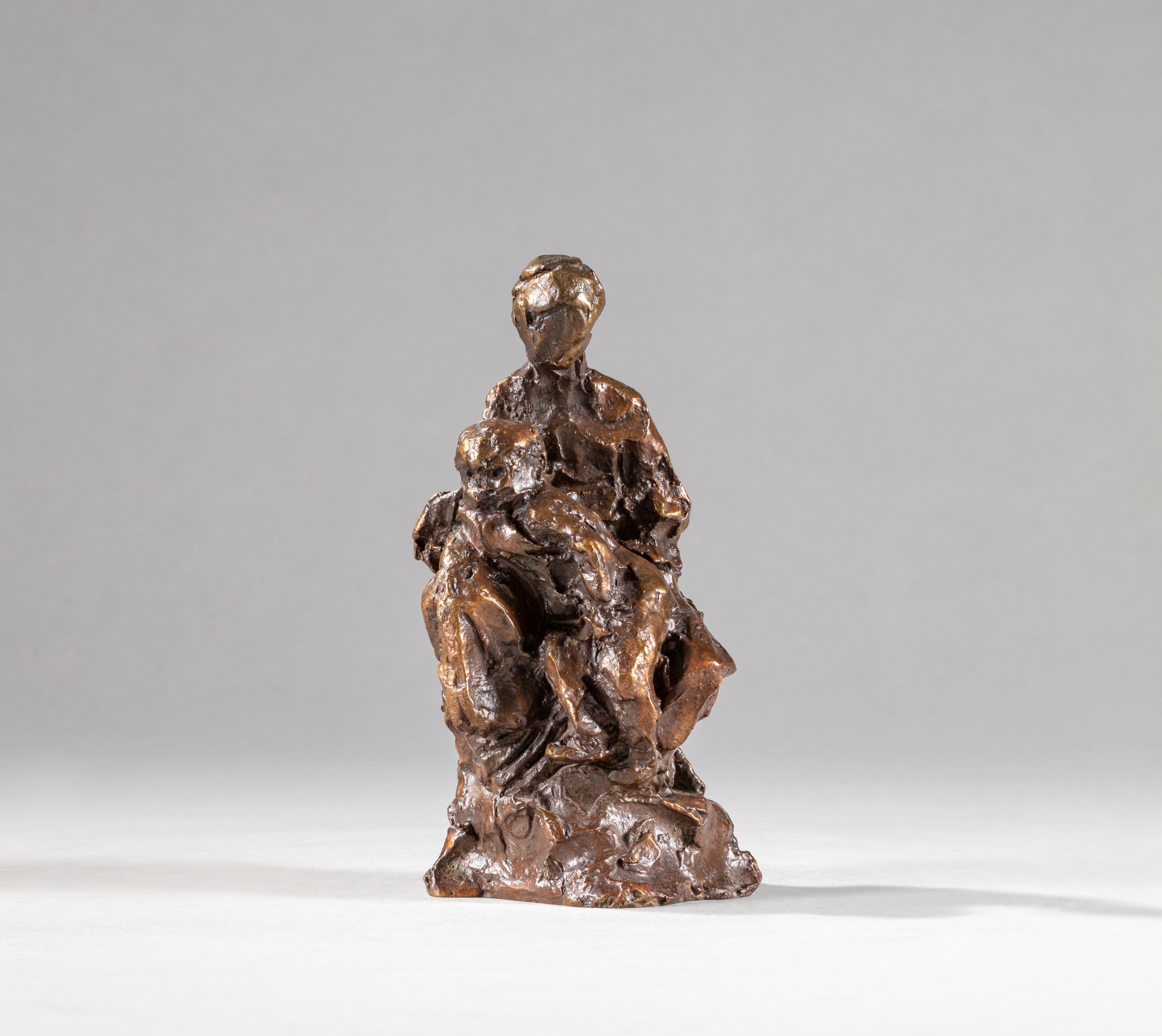
Jean-Baptiste Carpeaux
Maternité (Maternity)

The Body That Made Everything: Collecting Maternity
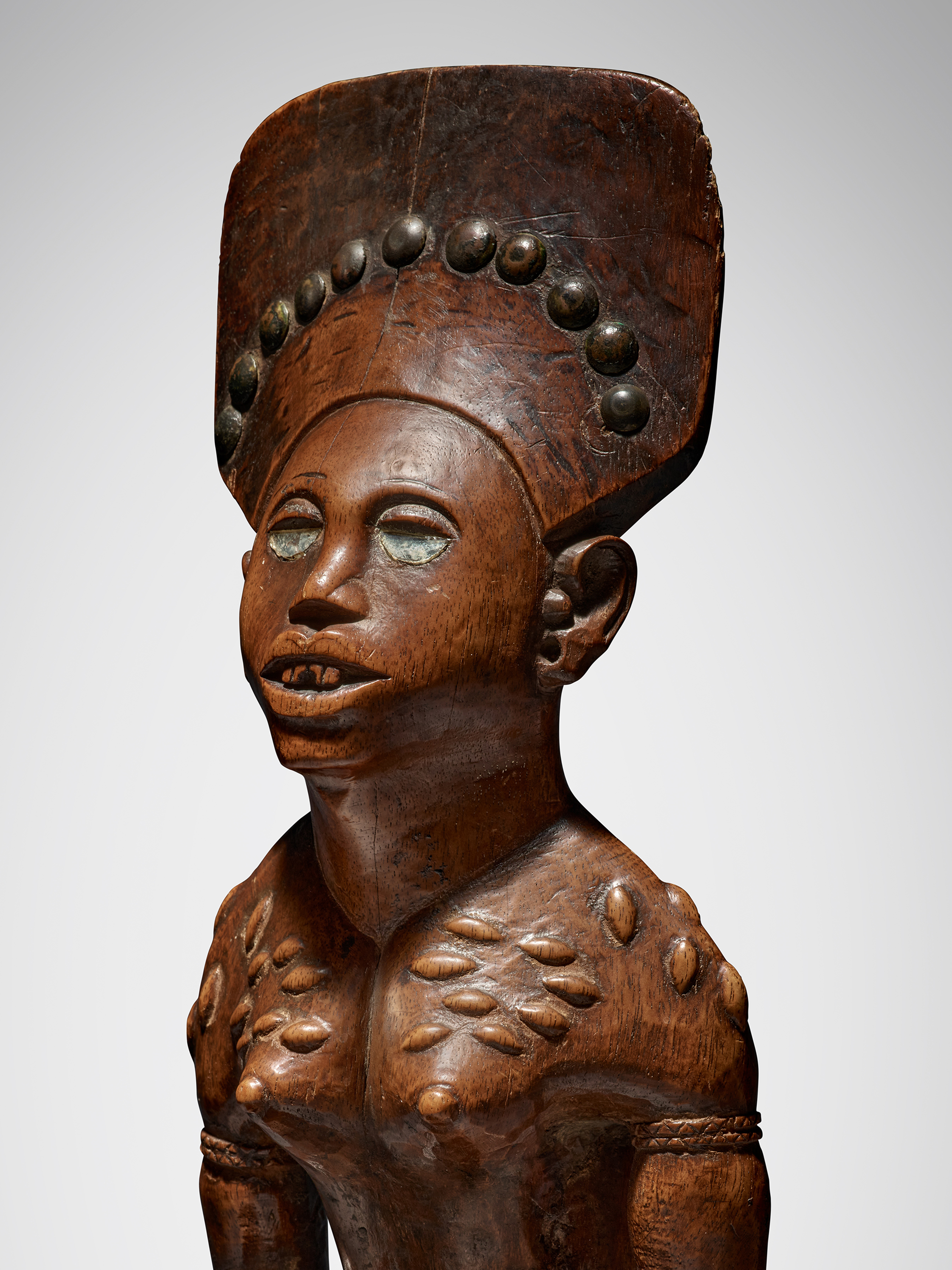
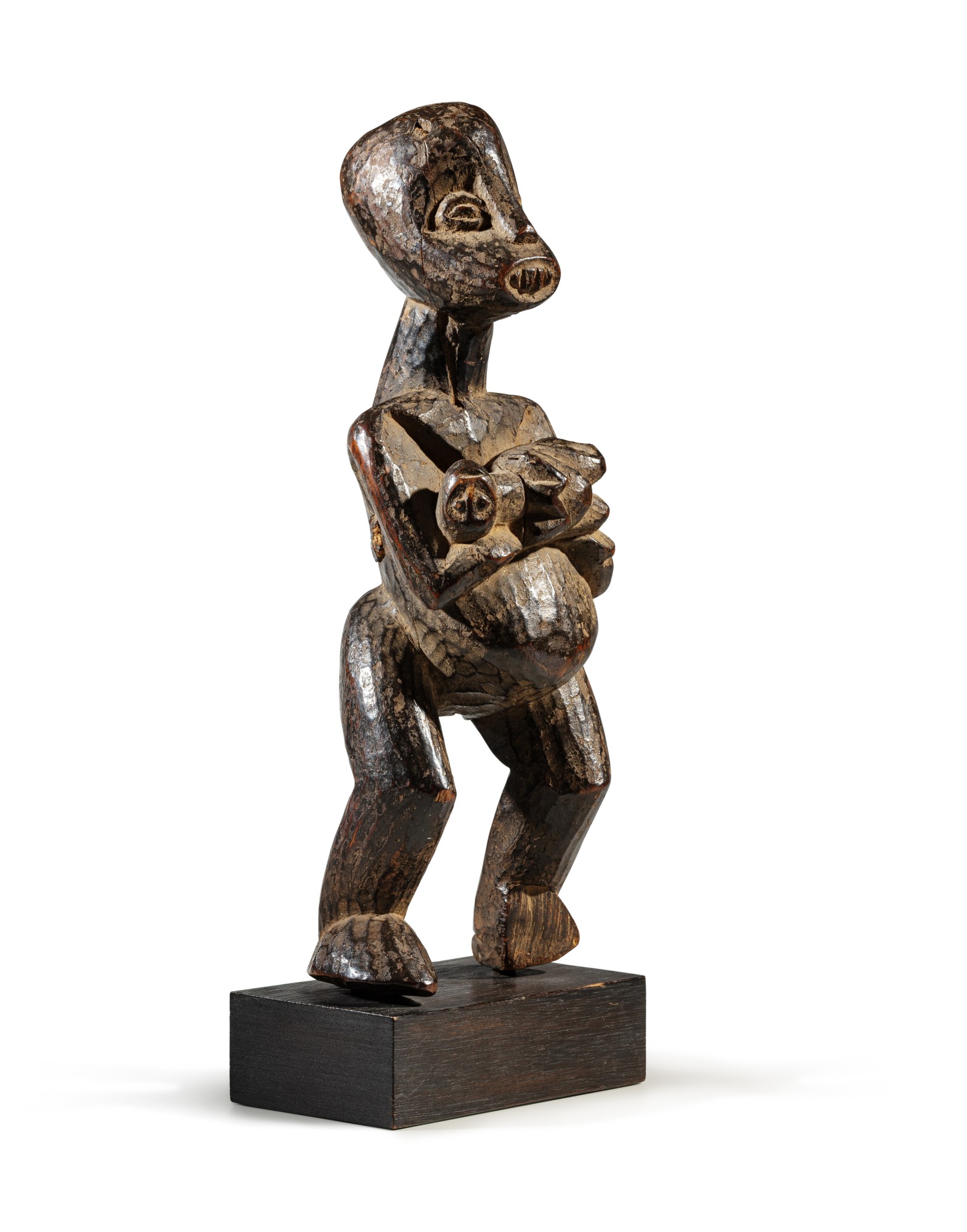
When a carved Bamileke maternity figure from Cameroun sold at a Paris auction house in recent years for a price well above its estimate, the room paused. These works, often attributed simply to the Bamileke or Bangwa peoples of the Grasslands region, had long circulated through ethnographic collections and specialist African art sales, respected but not exactly contested. The bidding that day suggested something was shifting. Institutional buyers, private collectors from West Africa and the diaspora, and a new generation of advisors were all in the room, and they all wanted the same object.
The mother and child, rendered in dense hardwood with an authority that needed no signature, had become one of the most desired forms in the market. Maternity as a subject in art is so ancient and so persistent that it risks appearing settled, even exhausted. It is not. Across sculpture, painting, ceramics, and ritual objects, the image of a woman holding or nursing a child has served as a site of theological meaning, political assertion, psychological inquiry, and formal invention for millennia.
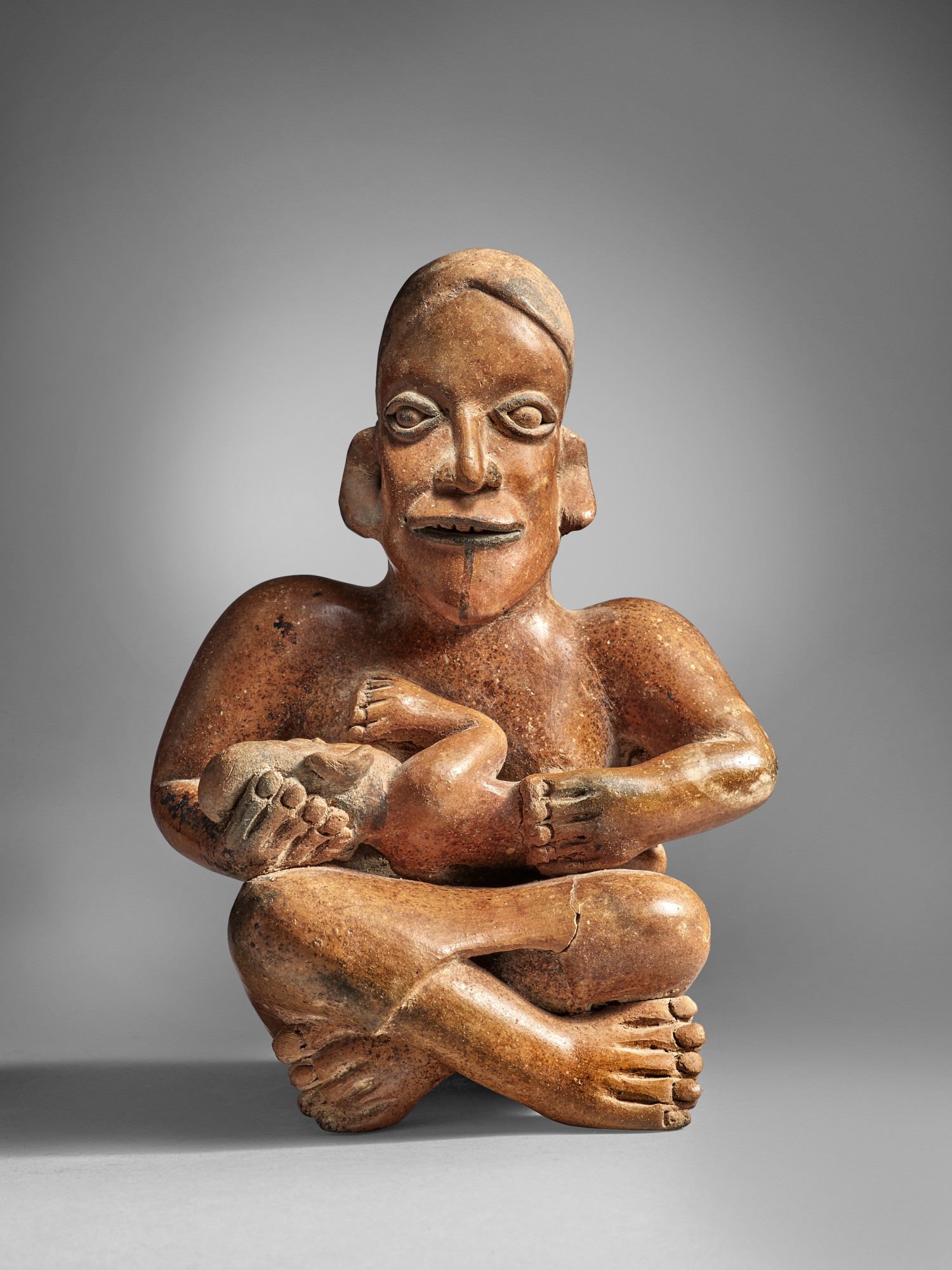
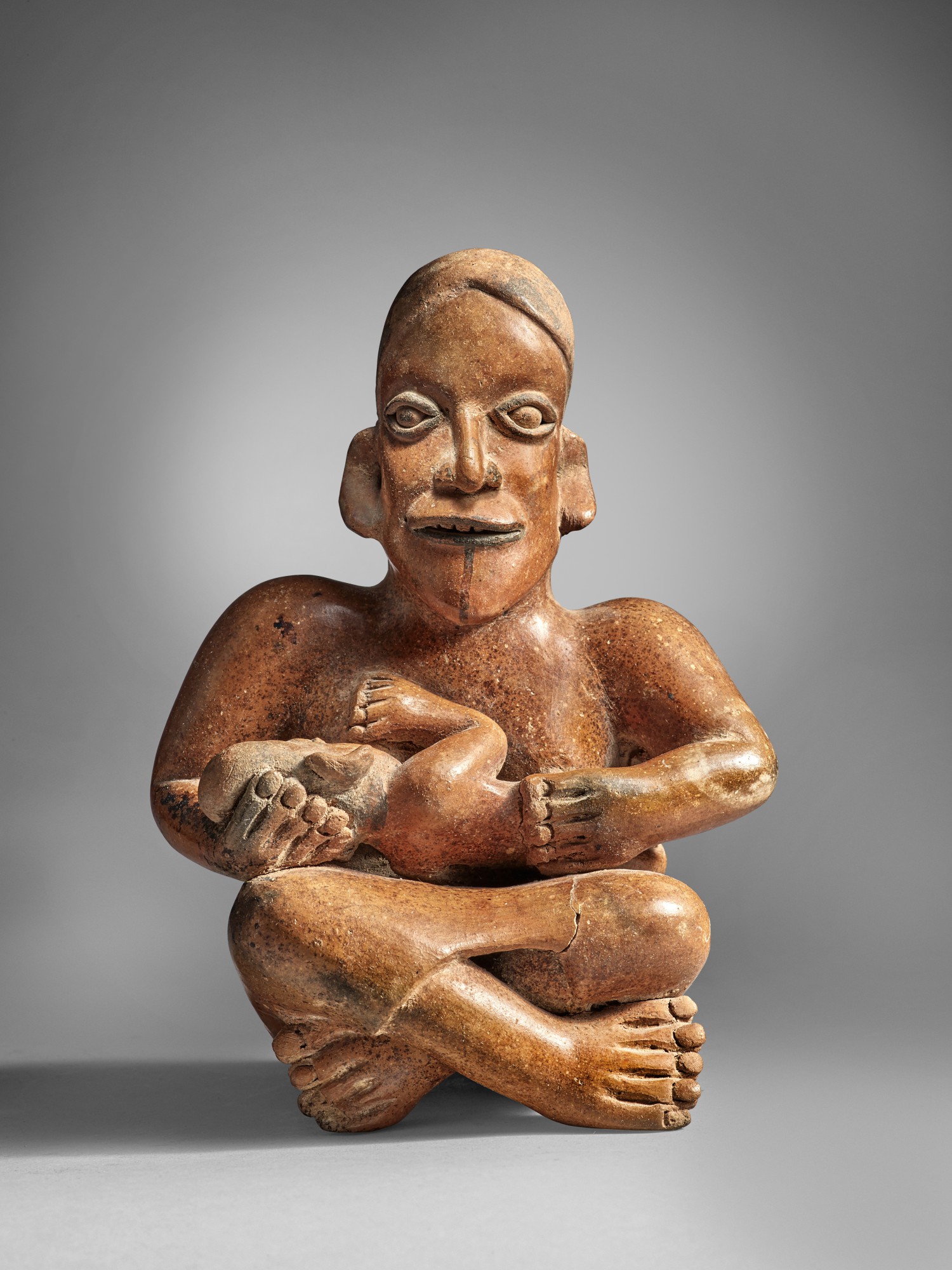
Jalisco Maternity Group
Jalisco Maternity Group Protoclassic, circa 100 BC - AD 250
What is happening now is a reckoning with whose maternities have been centered, whose have been marginalized, and what the market has been slow to acknowledge. Collectors and curators are reading the subject with new attentiveness, and the results are appearing in salesrooms, biennials, and permanent collection galleries simultaneously. The African art market has been one of the clearest indicators of this revaluation. Works from the Bamileke and Bangwa kingdoms of Cameroun have attracted serious scholarship alongside rising prices, with figures representing royal mothers understood now as monuments of political and spiritual authority rather than anonymous craft.
Similarly, objects from the Jalisco region of western Mexico, where a distinct tradition of ceramic maternity figures flourished during the Preclassic and Classic periods, have moved from anthropological footnotes to centerpieces of pre Columbian sales. The Jalisco maternity tradition, in which female figures are rendered with a warm directness and physical confidence that feels almost modern, has attracted fresh attention from collectors who came to pre Columbian material through contemporary Latin American art and found themselves pulled backward in time. These are not decorative objects. They carried meaning about lineage, fertility, and the continuity of communities, and that weight is precisely what makes them compelling to live with.
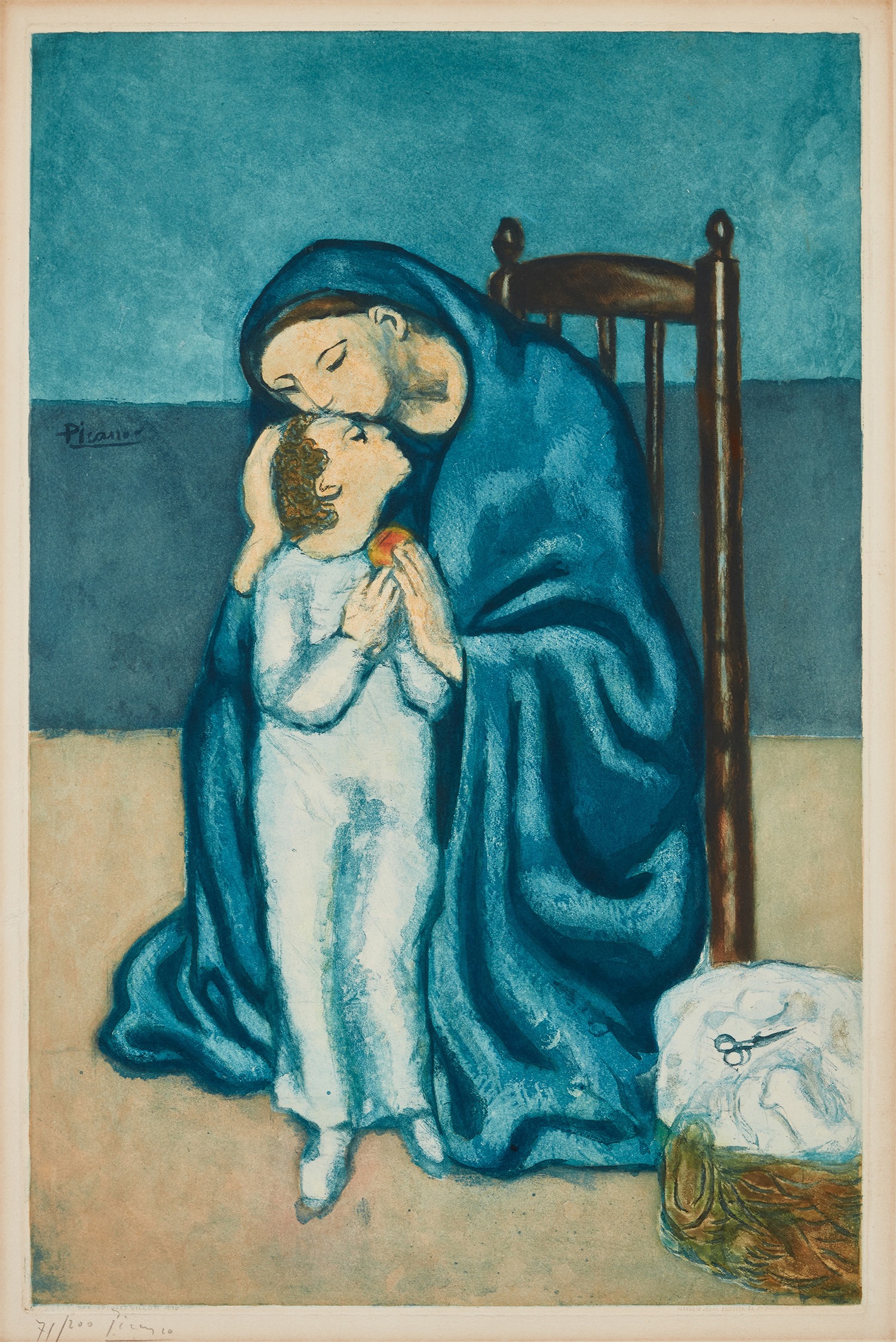
Pablo Picasso
Maternité (Maternity), by Jacques Villon
The European sculptural tradition offers its own pressure points. Jean Baptiste Carpeaux, the great French sculptor whose work bridged Romanticism and realism in the nineteenth century, understood the maternal body as a site of pure emotional force. His figures breathe and strain in ways that academic marble rarely allowed, and collectors who encounter his work often describe being caught off guard by its intimacy. Meanwhile Pablo Picasso's engagement with maternity, particularly in his Neoclassical period of the early 1920s, produced images of monumental tenderness that remain among the most reproduced and most contested works in his vast catalogue.
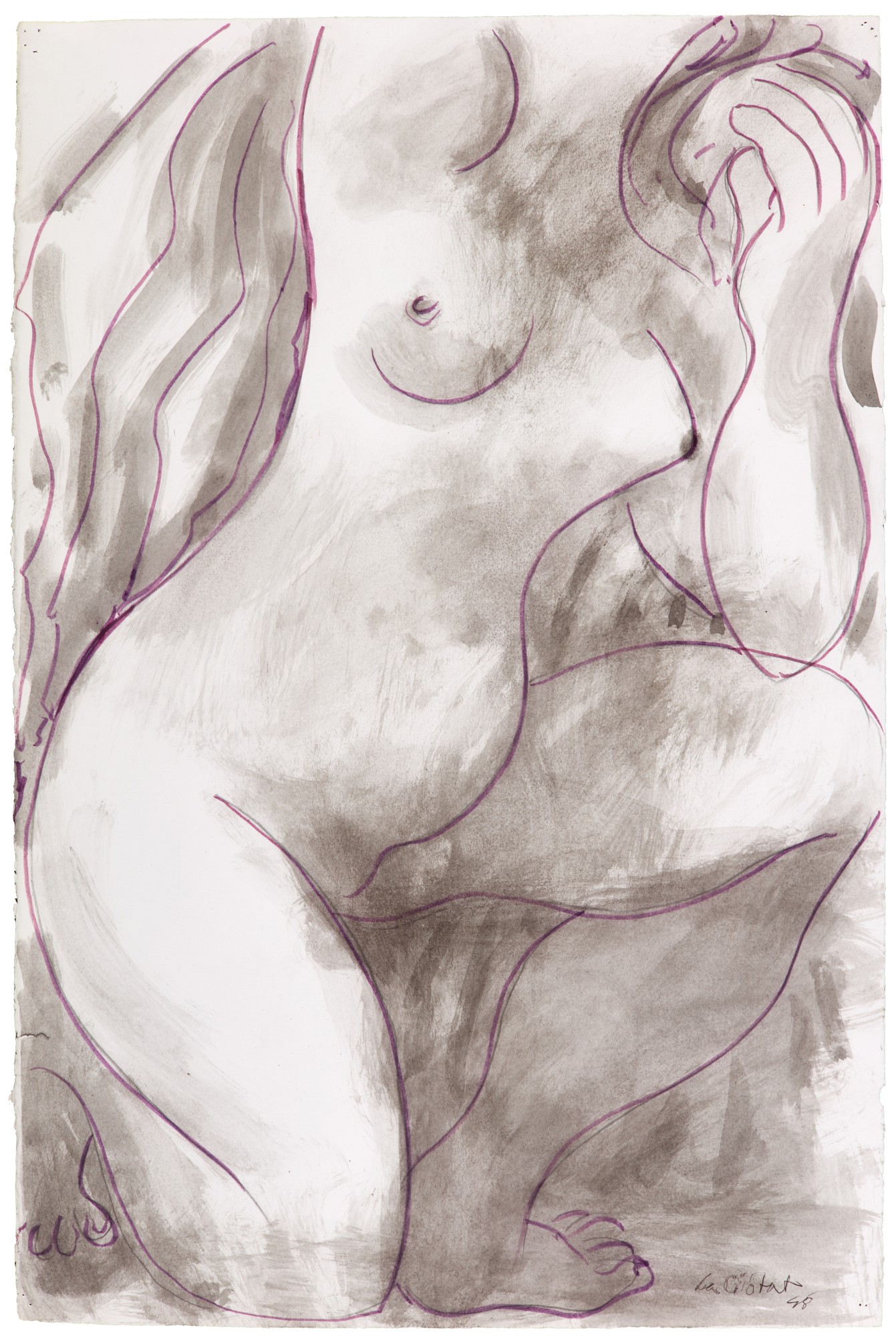
The maternities he made during that period carry the weight of art historical inevitability, which is to say they appear in every survey, every auction catalogue introduction, every museum wall text about the subject. But encountering them in the salesroom or in a strong private collection, they still deliver. Baltasar Lobo, the Spanish sculptor who spent most of his working life in Paris after fleeing Franco's Spain, built an entire practice around the maternal form. His rounded, abstracted figures, smoothed to a kind of essential warmth, have found a devoted following among collectors who appreciate sculpture that is neither coldly Minimalist nor theatrically figurative.
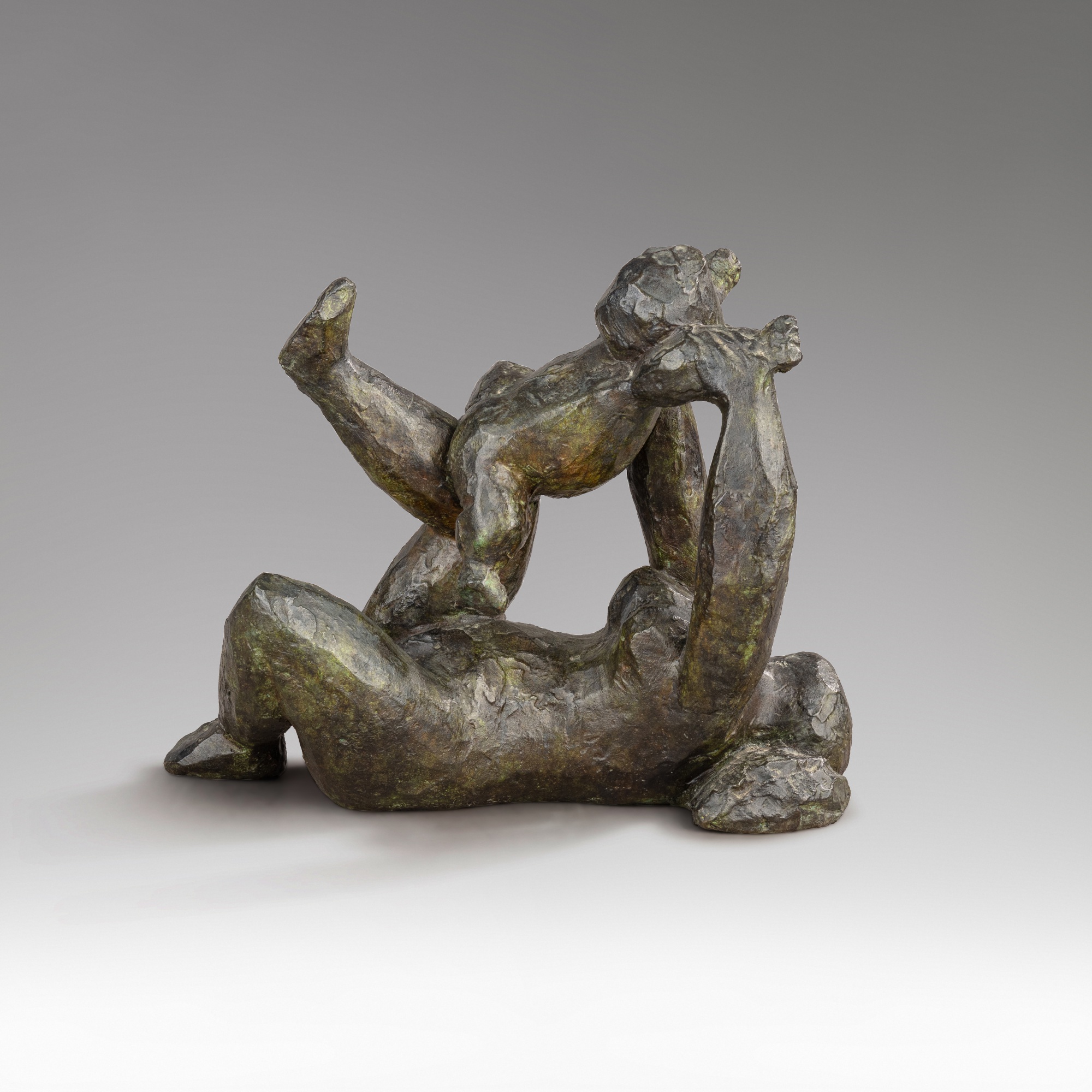
Baltasar Lobo
Maternity
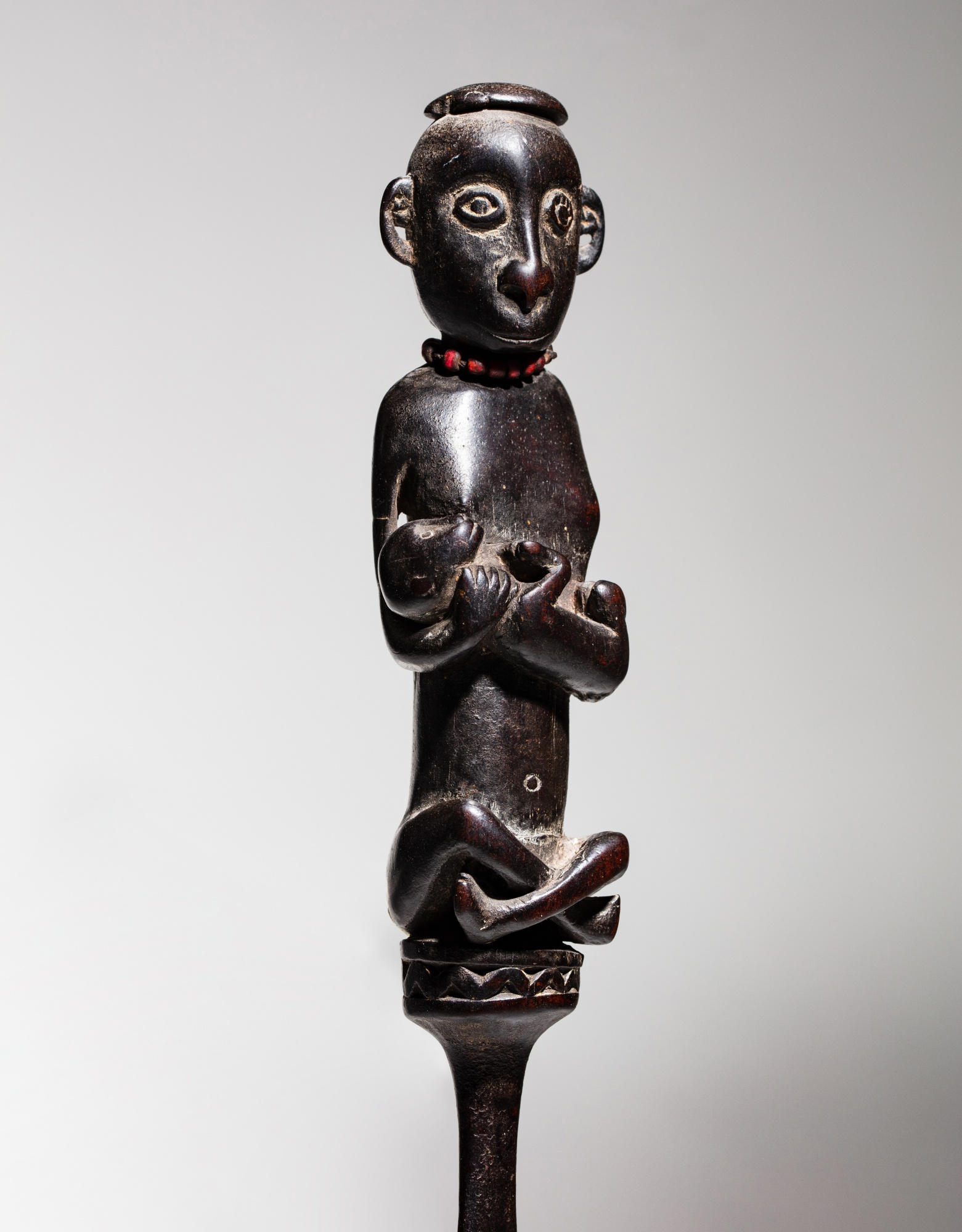
Lobo sits in a space that feels increasingly relevant as the market appetite for mid century European figuration continues to grow. His work appears in strong European collections and has been the subject of dedicated retrospective attention in Spain and France, though he remains less known in Anglophone markets than his quality deserves. That gap is the kind of opportunity attentive collectors notice. The Trobriand Islands lime spatula depicting a maternity, an object from the Pacific that entered Western collections through early twentieth century ethnographic expeditions, represents yet another current in this conversation.
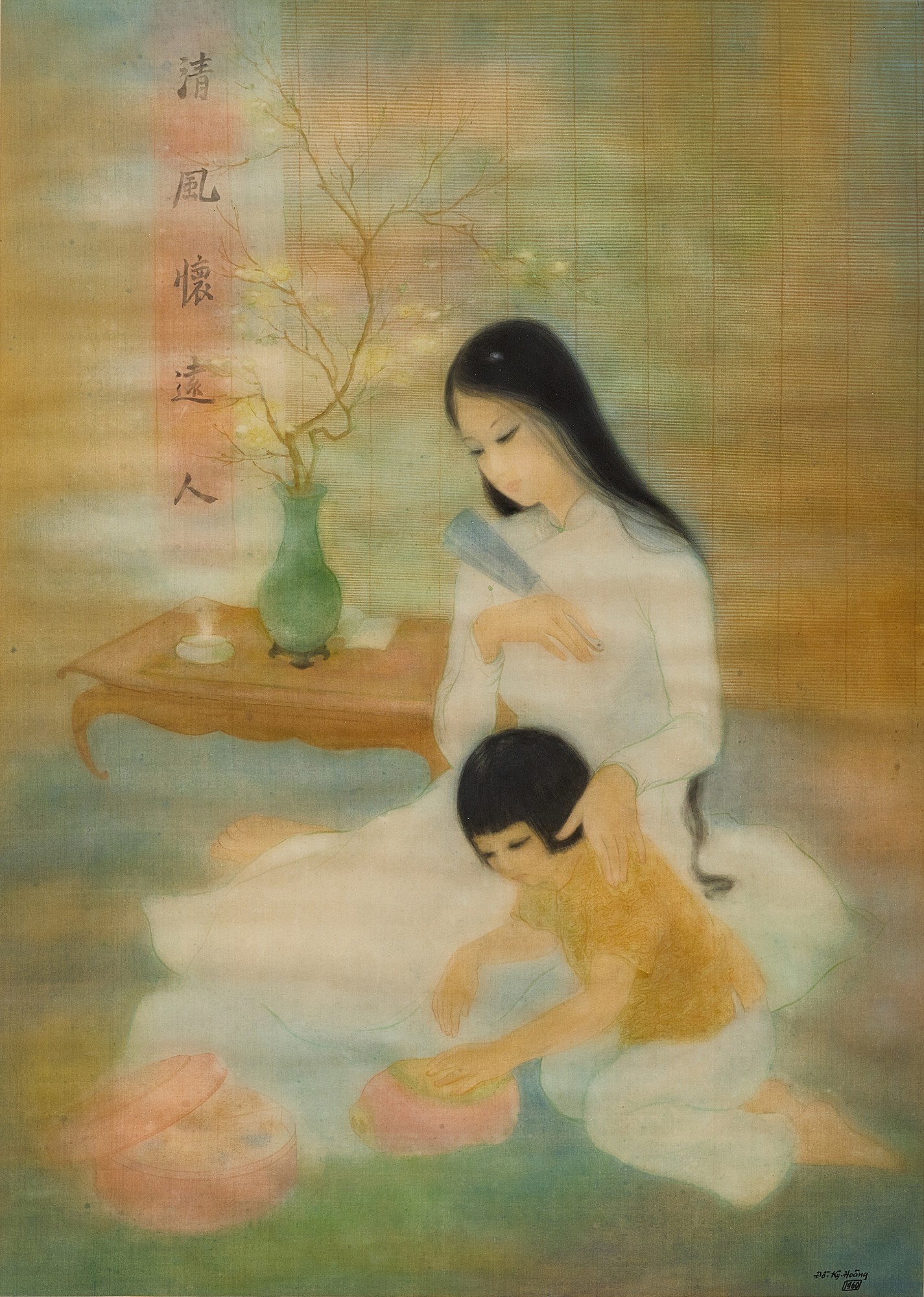
The Trobriand material entered art historical consciousness in part through Bronislaw Malinowski's fieldwork and has since been subject to sustained postcolonial critique about how and why these objects were collected, where they ended up, and who controls their interpretation today. Major institutions including the British Museum, the Musée du quai Branly in Paris, and the Metropolitan Museum of Art have all grappled publicly with questions of provenance and repatriation in their Pacific and African holdings. Collecting in this space now requires genuine engagement with those questions, and the most serious collectors are approaching it accordingly. Do Ky Hoang, a Vietnamese artist whose work engages the maternal body through a contemporary lens, represents the other current pulling through this subject right now.
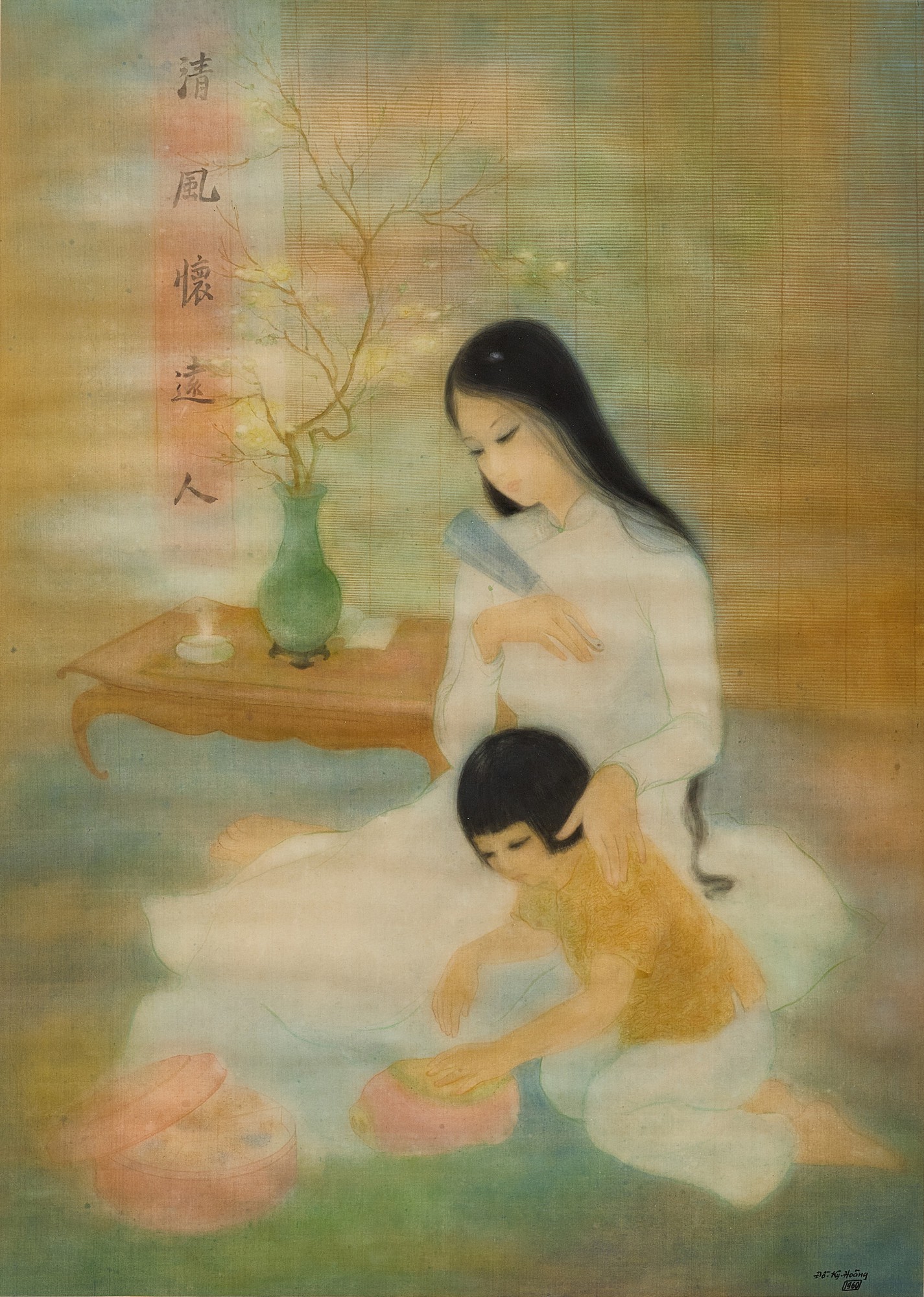
Do Ky Hoang
Maternity in First Day of the New Year 母愛與元旦
Younger artists across Southeast Asia, West Africa, and Latin America are returning to maternity not as a universal symbol but as a specifically located experience, shaped by history, migration, geography, and the body's particular vulnerabilities. This work is appearing in biennials from Venice to Sharjah, attracting curatorial attention from institutions eager to expand their contemporary holdings beyond the established Western canon. The critical writing following this shift has been strong, with essays in journals like Third Text and catalogues from the Tate and the Centre Pompidou framing maternity as a decolonial question as much as an aesthetic one. What feels alive right now is the friction between these currents.
The ancient carved figure and the contemporary painting are in conversation in a way they have not been before, because collectors, curators, and scholars are insisting on that conversation. What feels settled, perhaps, is the idea that maternity is a minor subject, a soft corner of art history best suited to greeting cards and devotional prints. That idea has been decisively overturned. What surprises are coming is harder to predict, but the energy in rooms where serious collectors gather suggests that the works on The Collection in this area are positioned at the center of a genuinely live debate, which is exactly where you want to be.