Landscape With Figures
Archived article
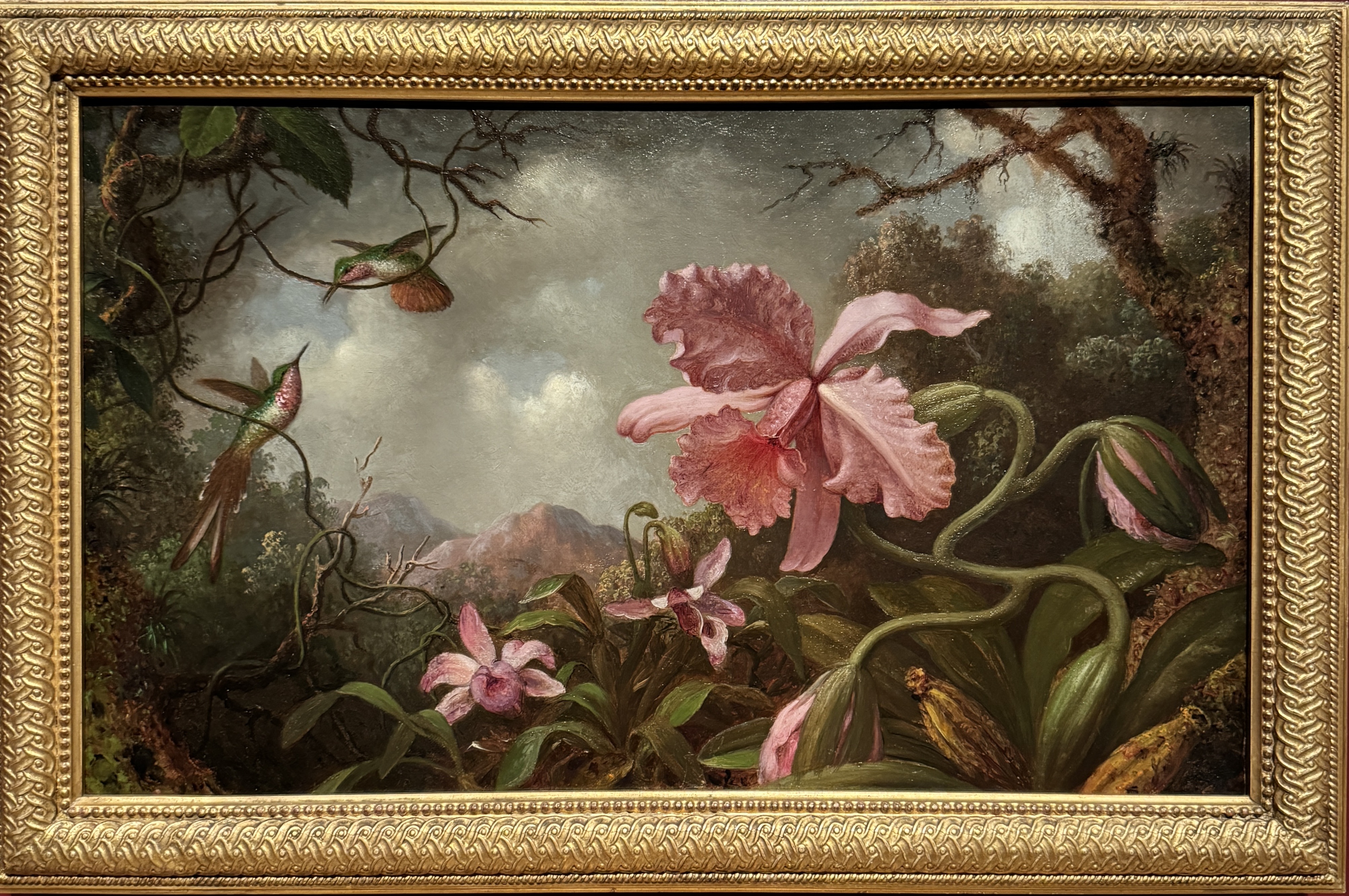
Unknown
Untitled
You are reading a previous version of this article.
Read the latest version```json { "headline": "The World in Miniature: Collecting Landscape With Figures", "body": "There is something quietly radical about a painting that refuses to choose between the land and the people who inhabit it. Landscape with figures sits at one of the most compelling intersections in the history of art: the moment when a vista becomes a stage, when weather and light and topography are asked to share the canvas with human presence, desire, and the passage of time. Collectors who fall for this genre rarely fall lightly. These are works you live with differently than a portrait or an abstract.
They invite you to step into them, to wonder who those small figures in the middle distance are, where they are going, and what they know that you do not.", "For many serious collectors, landscape with figures offers something that pure landscape cannot quite achieve on its own: narrative tension held inside atmosphere. You are not simply looking at a meadow or a coastline. You are watching a world in motion, caught at one precise and unrepeatable instant.
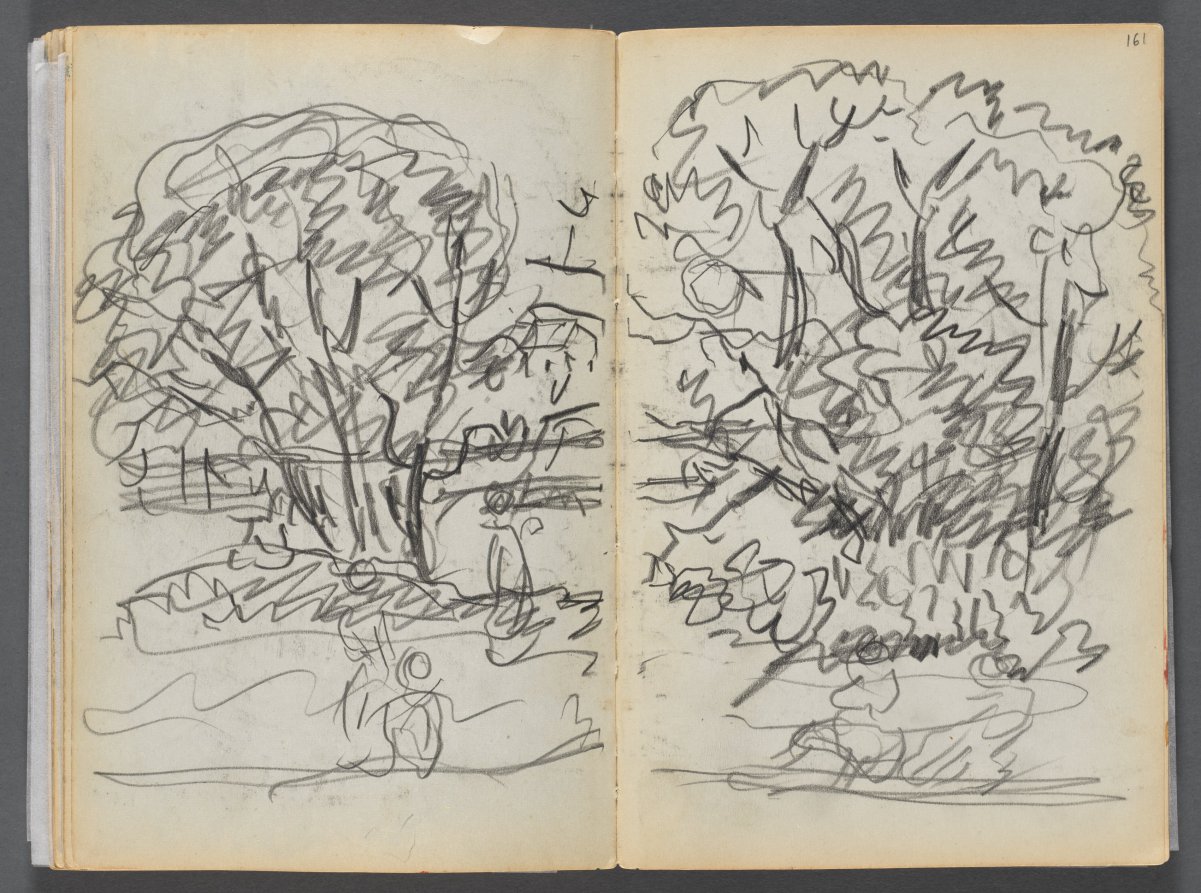
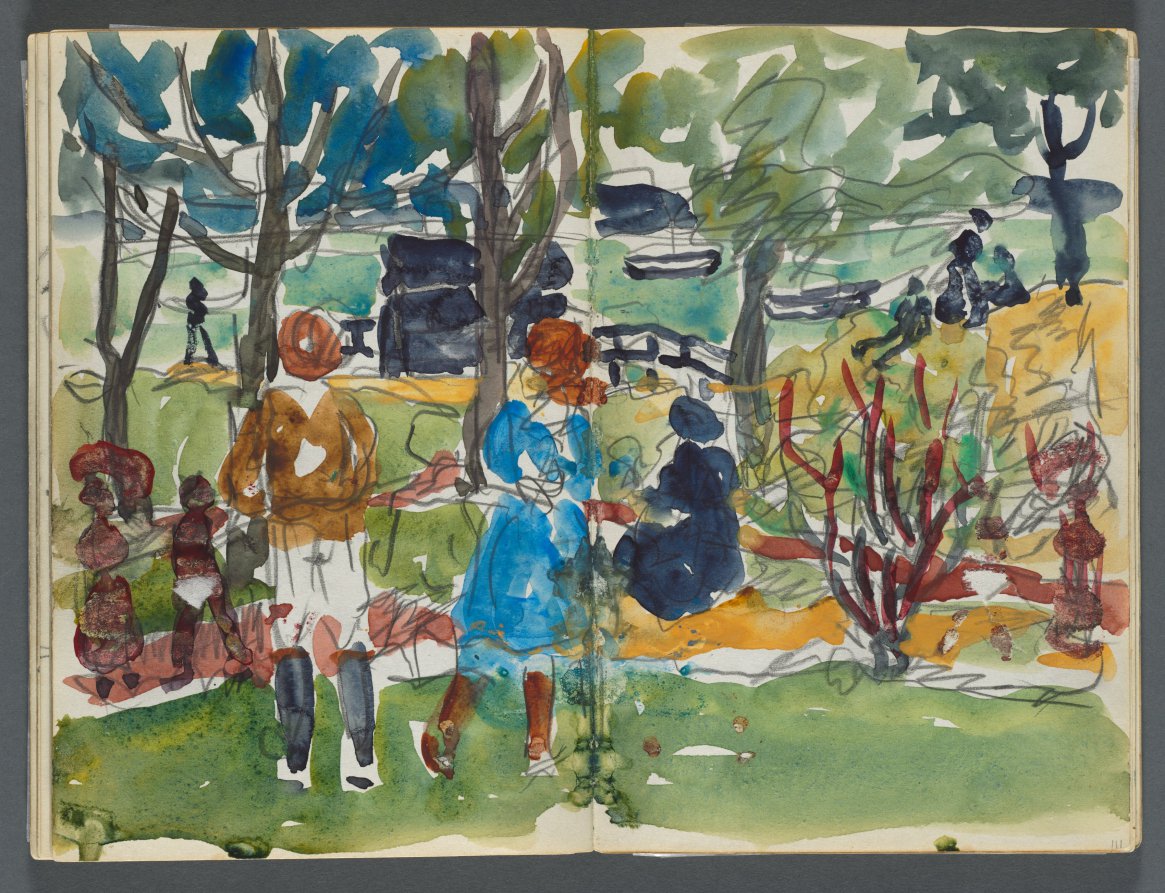
Maurice Prendergast
Sketchbook- The Granite Shore Hotel, Rockport, page 160 & 161: Landscape with Figures , 1905
This quality makes such works genuinely alive in a domestic or institutional setting. They change with the light in a room, they reward sustained looking, and they tend to hold the attention of guests in a way that more formally composed subjects sometimes do not.", "The difference between a good work and a great one in this category comes down to what you might call the quality of the relationship between figure and ground. In a lesser painting, the figures feel placed, almost decorative, dropped in to justify the genre classification.
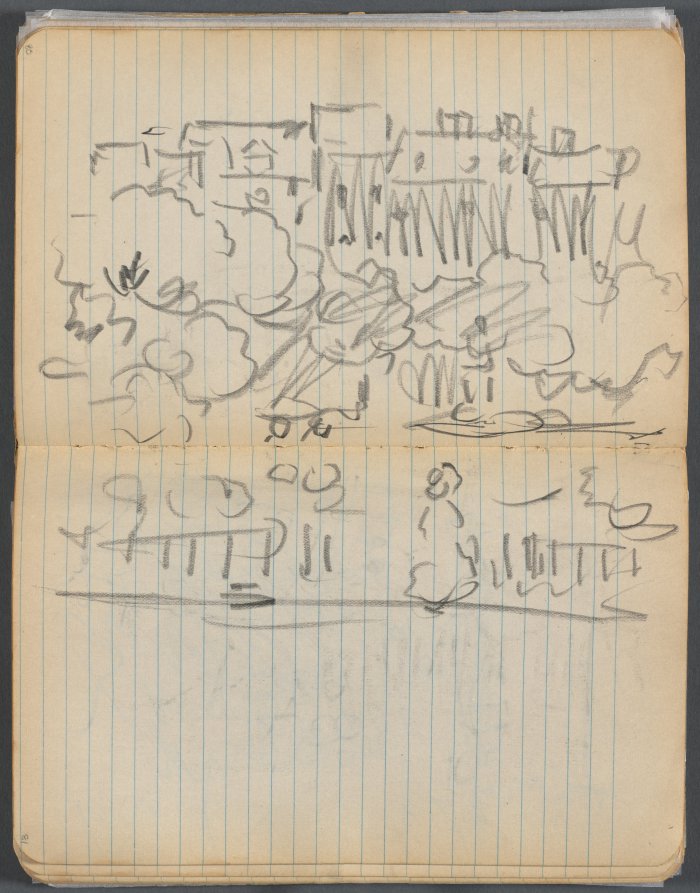
In a truly exceptional work, the figures and the landscape are in genuine conversation. They generate meaning together. Maurice Prendergast understood this as well as anyone working in the early twentieth century. His park scenes and beach gatherings, with their mosaic of dabs and saturated color, make the crowd inseparable from the light filtered through trees or reflected off water.
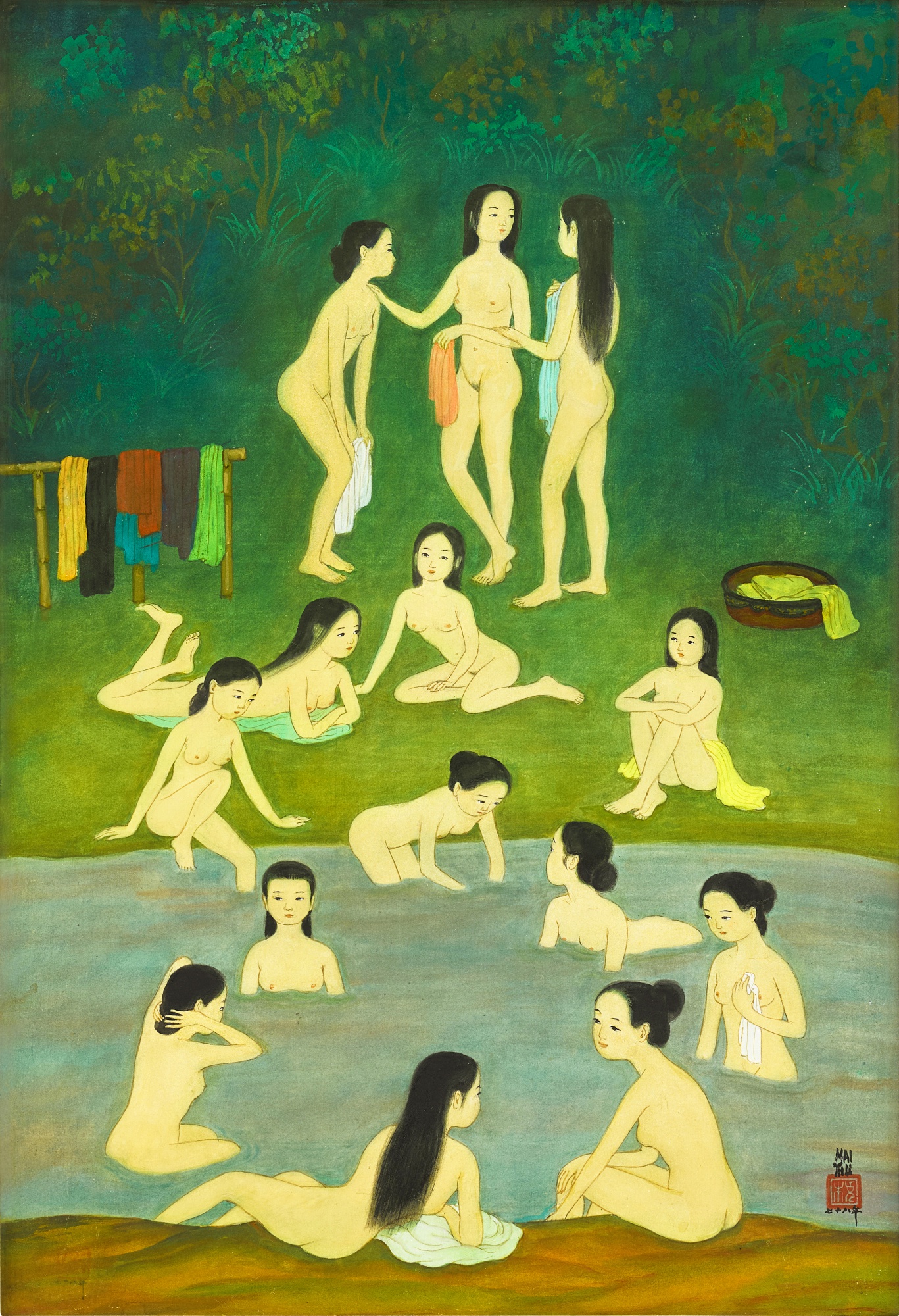
Mai Trung Thu
Mai Trung Thu 枚中栨 (梅忠恕) | Le petit cours d’eau, la baignade 小溪,沐浴, 1978
The figures are not illustrating a place. They are that place, animated and warm. Collectors who have followed Prendergast's market over the past two decades know how consistently his major works hold and grow in value, particularly those from the 1910s when his Post Impressionist vocabulary was fully developed.", "For collectors with a strong interest in European tradition, Charles François Daubigny represents an area worth serious attention.
As a central figure of the Barbizon school, Daubigny was fascinated by the interplay of working figures and river landscapes, particularly along the Oise and the Seine. His paintings carry that sense of lived geography, of people who belong to a specific stretch of land rather than simply wandering through it. Works by Daubigny in strong condition with good provenance continue to find eager buyers at the major auction houses, and they represent a more accessible entry point into nineteenth century French naturalism than comparable works by Corot or Millet. The Barbizon painters as a group have enjoyed renewed critical interest, and Daubigny specifically has benefited from increased museum attention in France and the Netherlands.
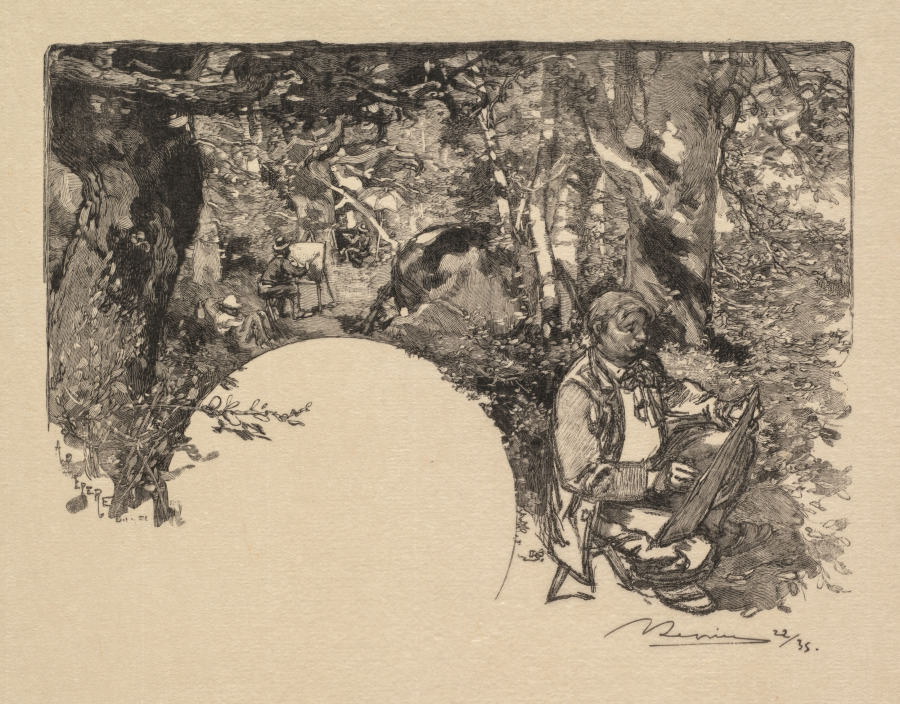
Auguste Louis Lepère
Fontainebleau Forest: The Painters (La Forêt de Fontainebleau: Les Peintres), 1890
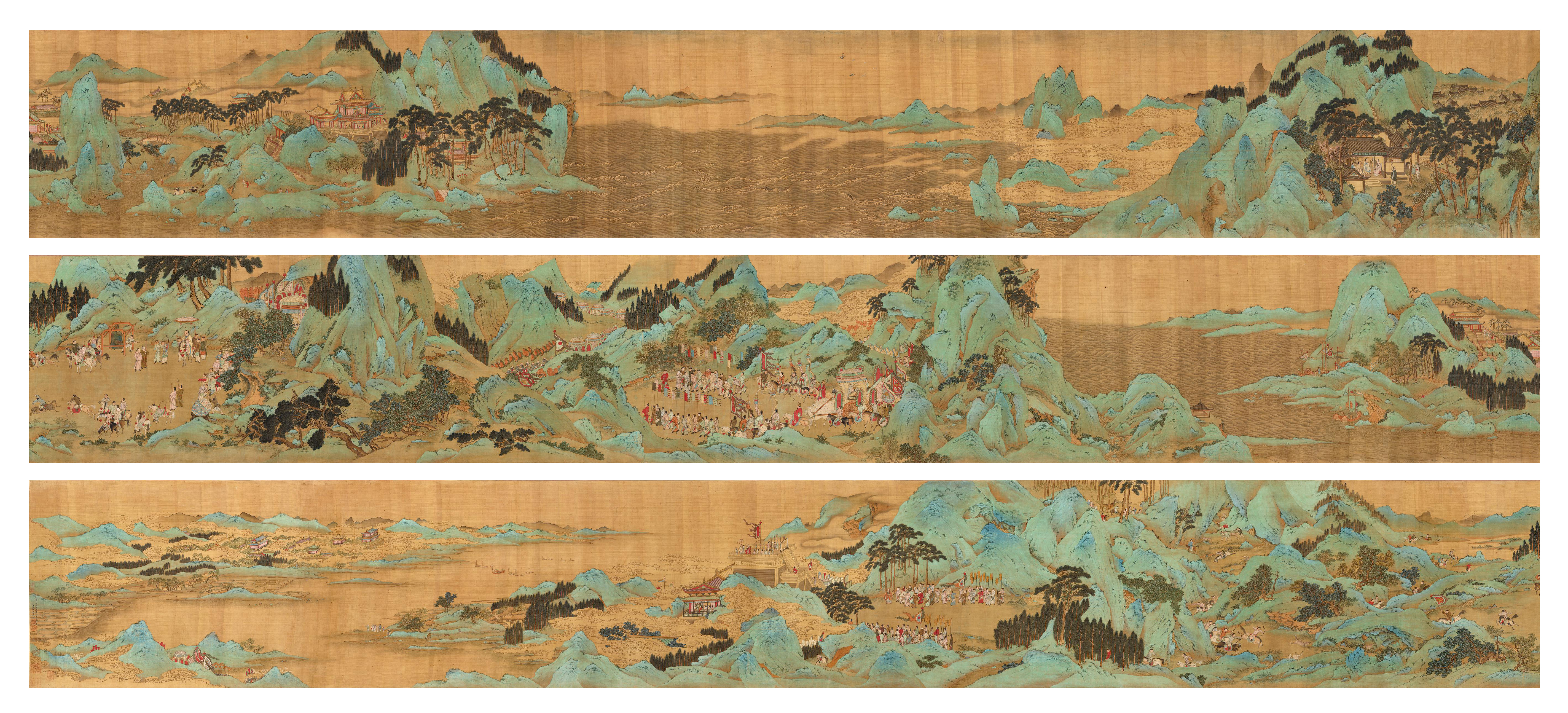
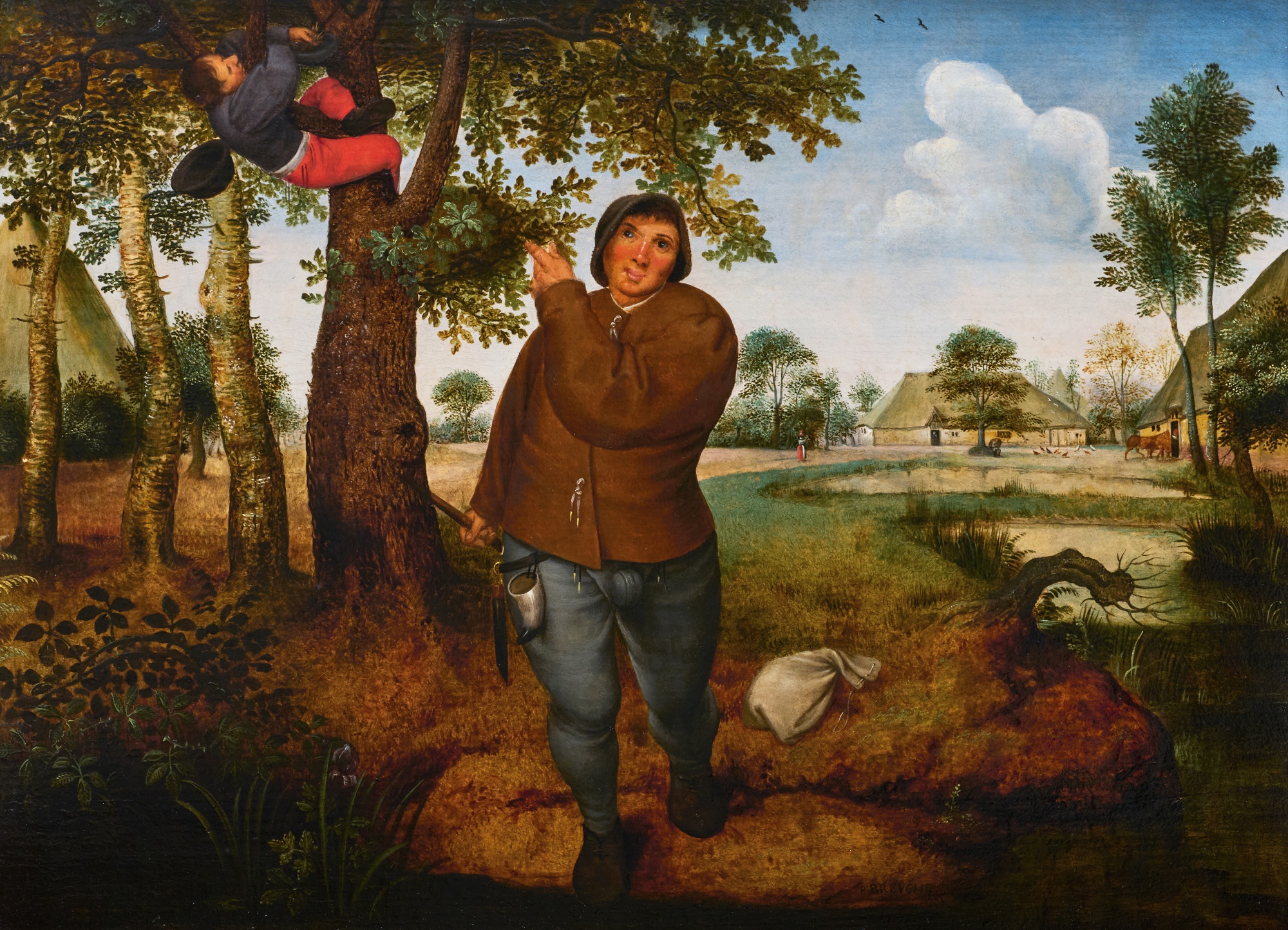
", "Pieter Brueghel the Younger offers a different kind of opportunity: the prestige of a major dynastic name, with works that reach the market more frequently than those of his father. His village landscapes populated with peasants at work and at leisure carry the full weight of Flemish pictorial tradition and are genuinely thrilling to encounter in person. Attribution is everything in this territory, and collectors must work closely with specialists, but authenticated works remain remarkably strong performers at auction and in private sale. Across a very different cultural axis, the work of Hongren, the seventeenth century Chinese painter who brought Chan Buddhist austerity to his mountain landscapes, represents a category where Western collectors have often underestimated the depth and sophistication of what they are encountering.
His sparse, structural compositions, with figures reduced nearly to calligraphic gestures against monumental rock formations, have found passionate advocates among collectors building across multiple traditions.", "One of the most interesting emerging opportunities in this genre sits in mid century Asian modernism, where artists working between Eastern and Western traditions produced works of genuine originality that the market has not yet fully absorbed. Mai Trung Thu, the Vietnamese painter trained at the École des Beaux Arts in Hanoi and later based in Paris, worked in lacquer and silk to create scenes of Vietnamese life where figures and landscape are woven into something that feels simultaneously intimate and decorative in the best sense. His works have seen meaningful price appreciation as collectors from Southeast Asia and the Vietnamese diaspora have become more active in international auction rooms, but there remains real opportunity here compared to what comparable work by better known Asian modernists commands.
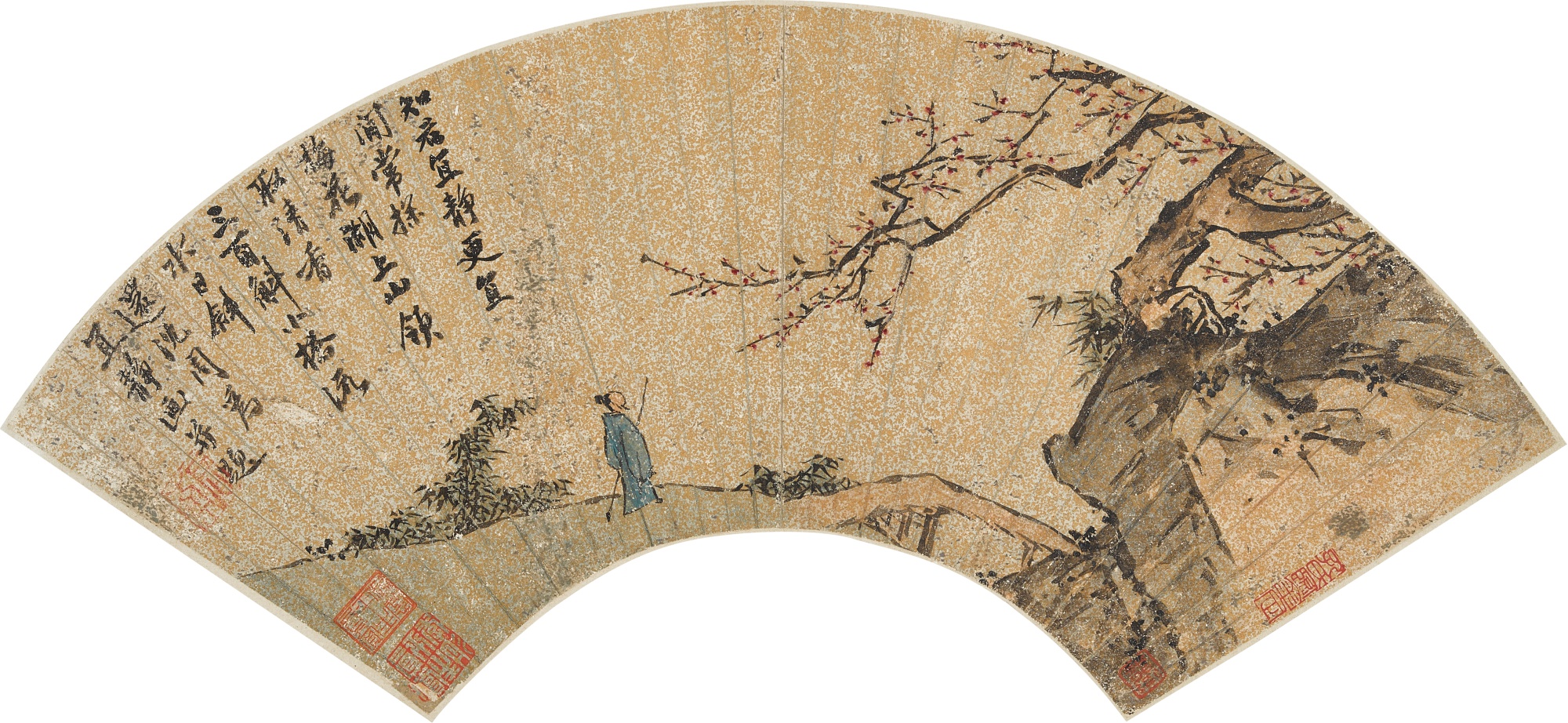
「小聽颿樓」藏畫 拍品編號9001-9052
Shen Zhou, Scholar Appreciating Plum Blossom
", "At auction, landscape with figures tends to perform with notable consistency across market cycles, which is one of the reasons experienced collectors gravitate toward it as a category for long term holding. The best works in this area rarely suffer the violent price corrections that can affect contemporary categories with heavier speculative activity. The secondary market for artists like Prendergast is well established, with reliable price benchmarks that allow collectors to make informed decisions. For works on paper and prints, Auguste Louis Lepère is worth considering: his printmaking combined landscape tradition with a journalistic eye for human activity in ways that feel surprisingly modern, and fine impressions by him are still available at prices that seem unlikely to stay accessible indefinitely.
", "On the practical side, condition is especially critical with works in this category, because the atmospheric effects that make landscape with figures so compelling are often the first casualties of poor storage or clumsy restoration. Ask specifically about lining, about any history of cleaning, and about the state of the varnish. Works that have been over cleaned lose exactly the tonal subtlety that gives the genre its depth. When it comes to display, these paintings are almost always best in natural or carefully calibrated light, since the figure to ground relationship depends on the viewer reading subtle shifts in tone and color temperature.
Finally, when speaking with a gallery or dealer, the most useful question you can ask is not simply about provenance but about exhibition history. A work that has been seen, studied, and published is a work whose condition and attribution have been tested by the light of serious scrutiny. That kind of record is worth every penny it adds to the asking price.
Works tagged Landscape With Figures
Maurice Prendergast
Sketchbook- The Granite Shore Hotel, Rockport, page 160 & 161: Landscape with Figures
Mai Trung Thu
Mai Trung Thu 枚中栨 (梅忠恕) | Le petit cours d’eau, la baignade 小溪,沐浴
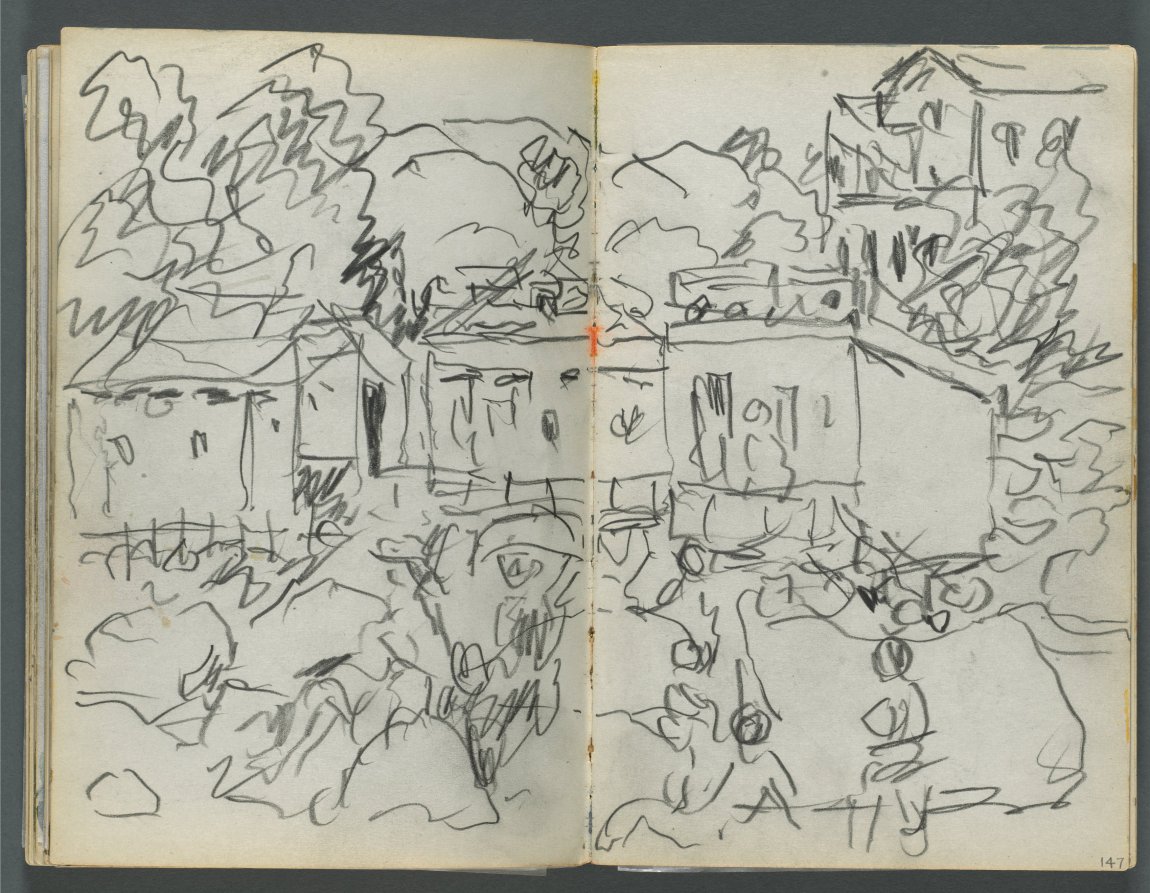
Maurice Prendergast
Sketchbook, The Dells, N° 127, page 146 & 147: Landscape with figures and buildings
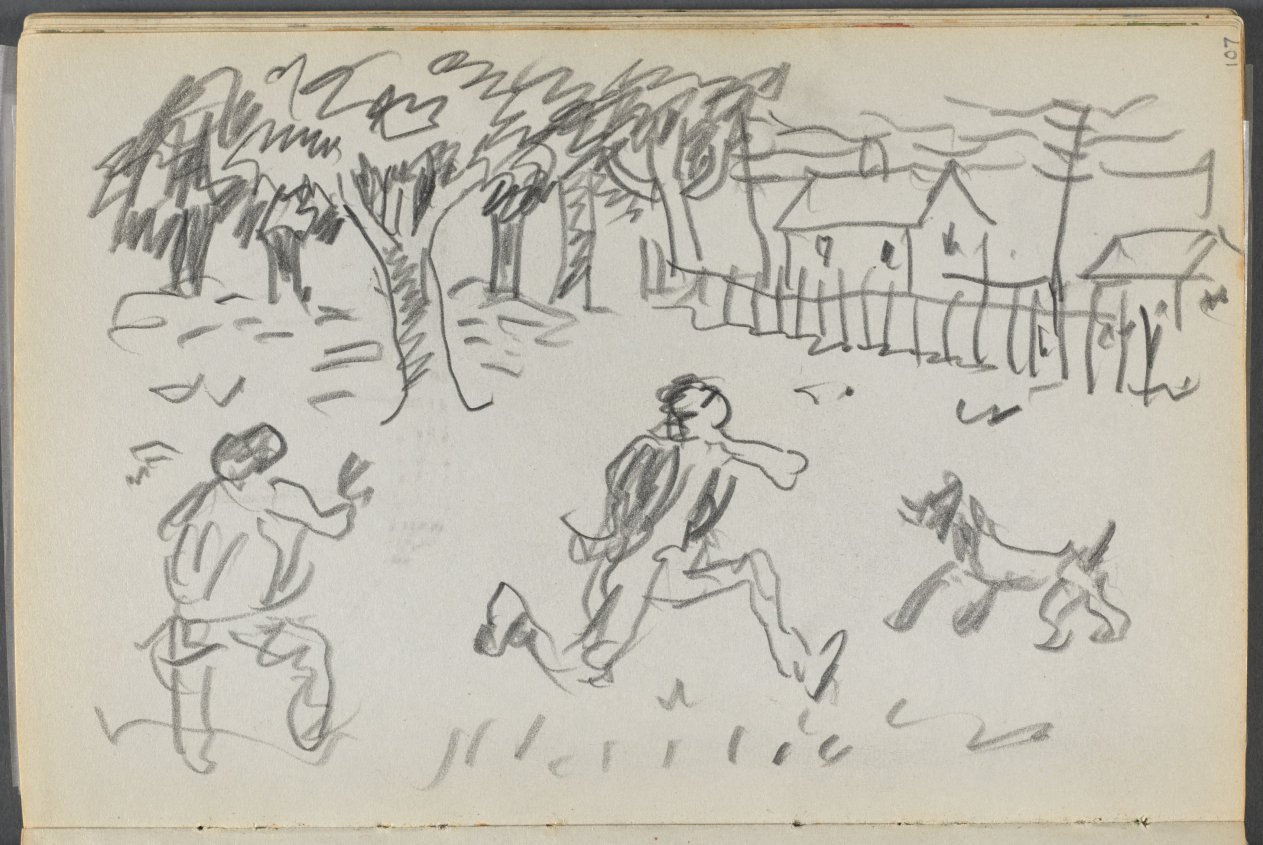
Maurice Prendergast
Sketchbook, The Dells, N° 127, page 107: Landscape with Figures and dog
Auguste Louis Lepère
Fontainebleau Forest: The Painters (La Forêt de Fontainebleau: Les Peintres)
Unknown
Untitled
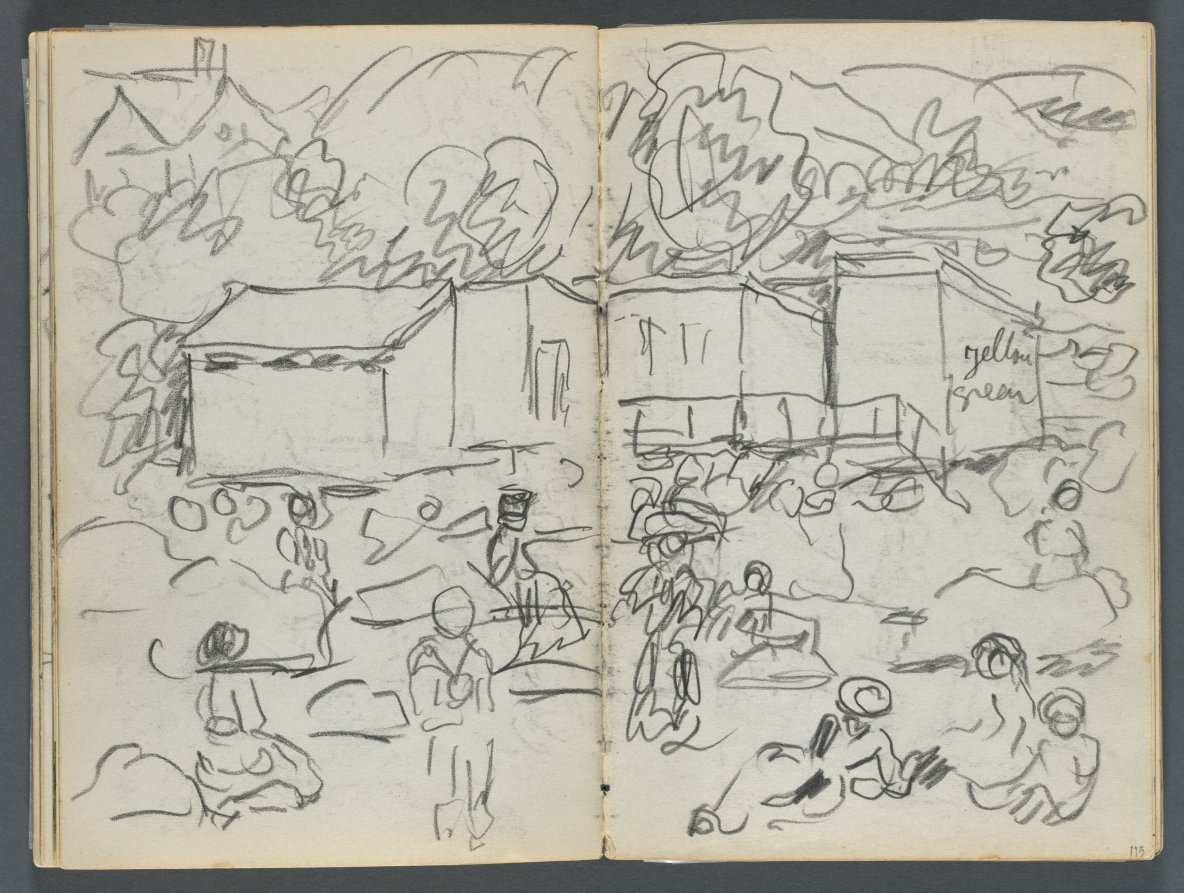
Maurice Prendergast
Sketchbook, The Dells, N° 127, page 114 & 115: Landscape with Figures and Buildings
「小聽颿樓」藏畫 拍品編號9001-9052
Shen Zhou, Scholar Appreciating Plum Blossom
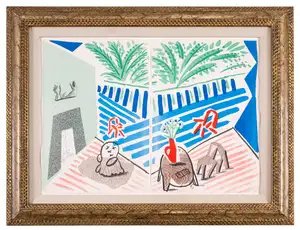
David Hockney
Livingroom and Terrace, July 1986
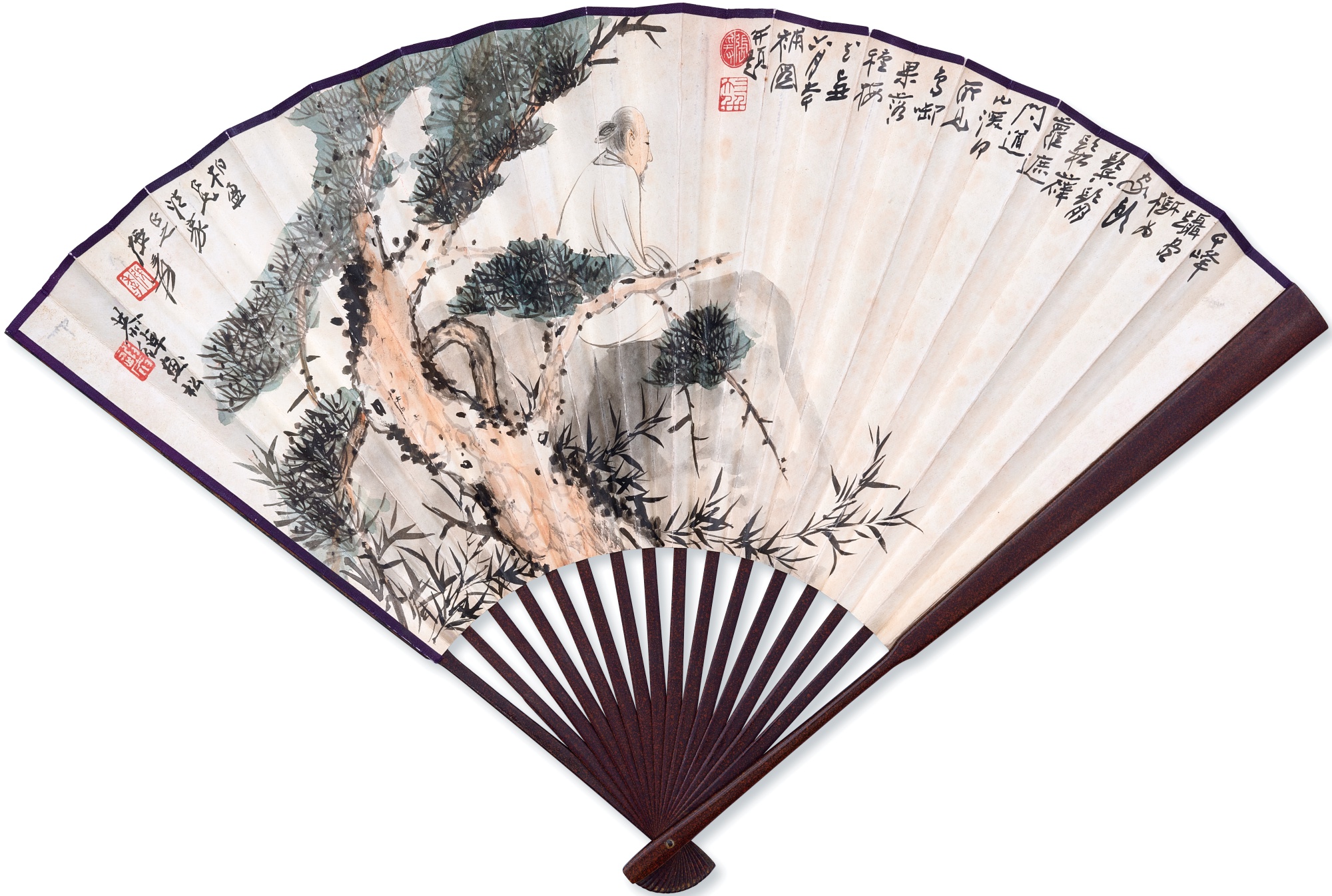
Unknown
Chang Dai-chien, Ye Gongchuo, Scholar by the Pine Tree
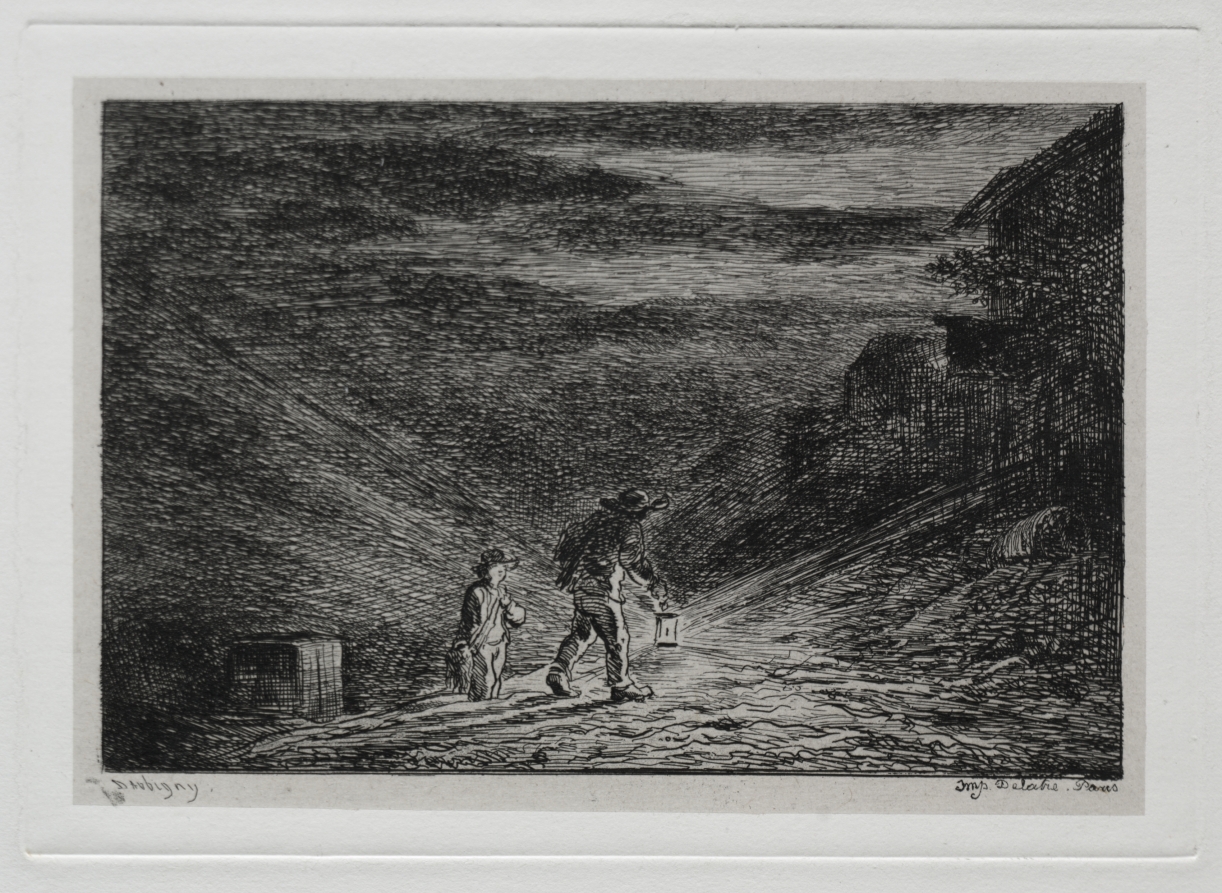
Charles François Daubigny
The Boat Trip: The Search for an Inn
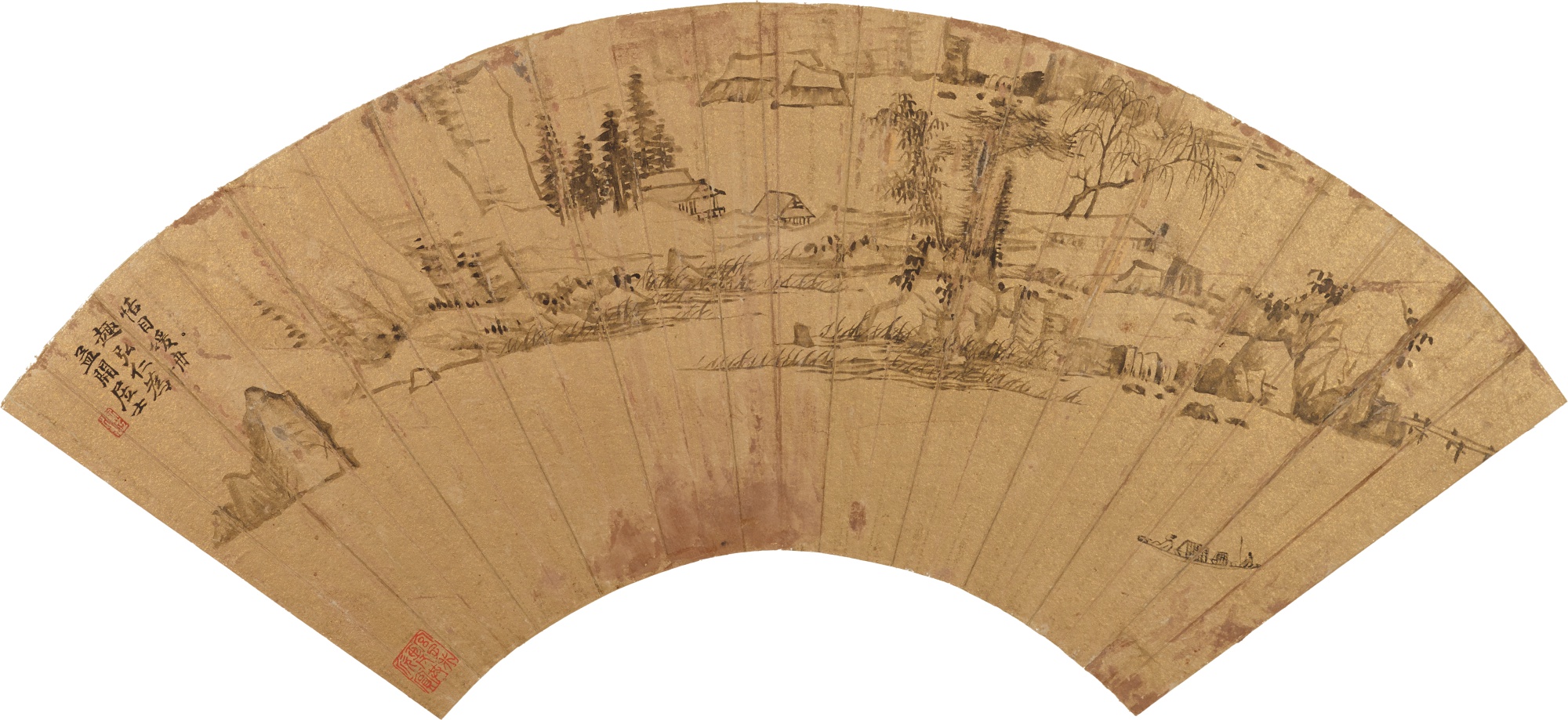
Hongren 1610-1664
Hongren, Sailing by the Shore
Maurice Prendergast
Sketchbook, The Dells, N° 127, page 110 & 111: Figures in a Landscape
Maurice Prendergast
Sketchbook, page 080 & 81: Landscape with Figures and Houses
仇英(款) 行樂圖
Attributed to Qiu Ying, Landscape
Pieter Brueghel the Younger
The Nest Robber