Cultural Scene
Archived article
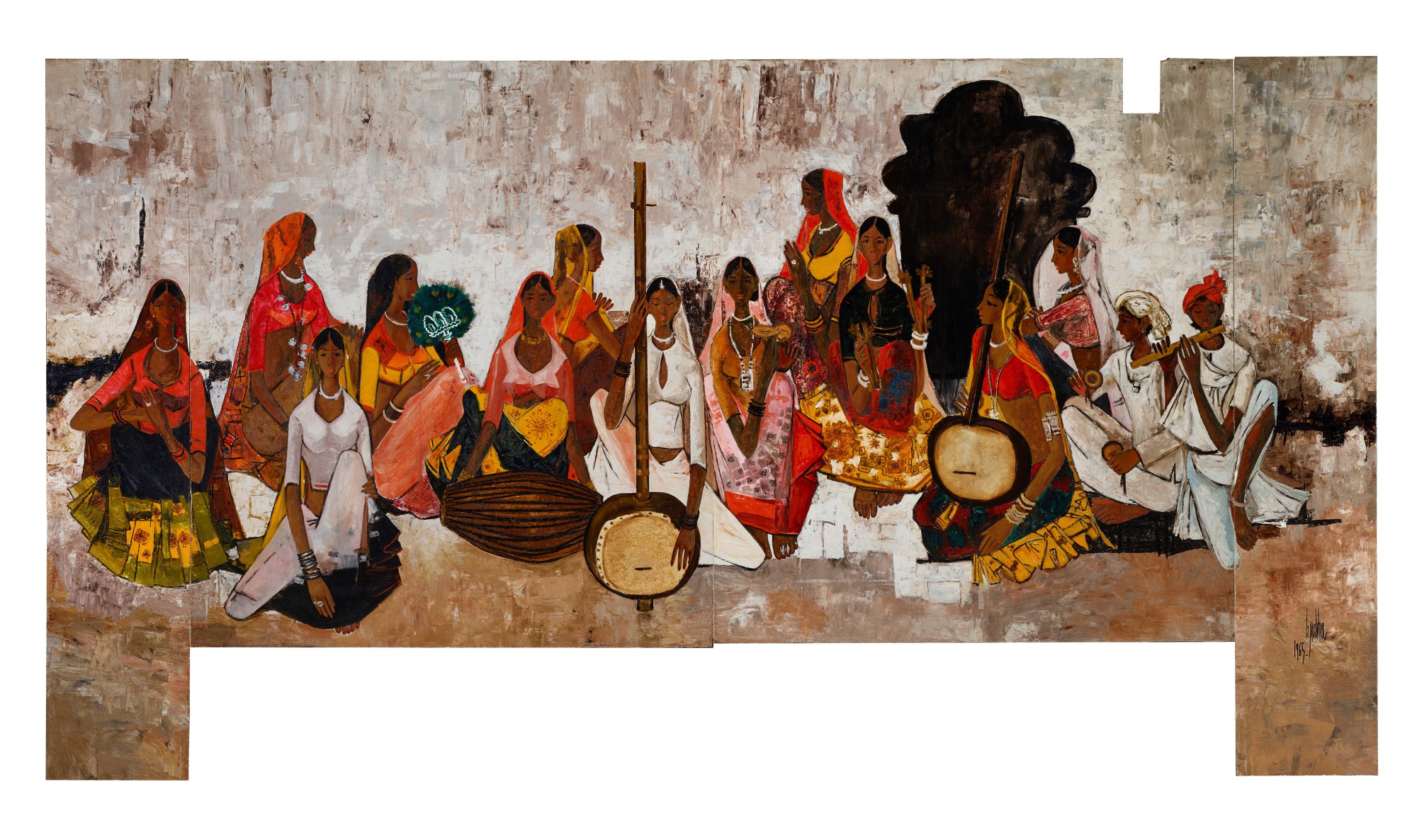
B. Prabha
Untitled (Wedding Musicians)
You are reading a previous version of this article.
Read the latest version```json { "headline": "The World as Someone Else Saw It", "body": "There is something deeply intimate about collecting works that capture a cultural scene. Not a portrait, not a landscape in the traditional sense, but a moment of human life caught in a particular place at a particular time, with all the texture, ceremony, and unscripted energy that implies. Collectors who gravitate toward this category often speak about the quality of attention such works demand. You find yourself drawn back again and again, noticing the vendor in the background you missed the first time, or the shadow falling across a courtyard in a way that tells you exactly what hour of day it was when the artist stood there.
These are works that reward sustained looking, and that is a rare thing to live with.", "The question of what separates a good cultural scene work from a great one comes down to a kind of honest witness. The best works in this category do not idealize or sentimentalize the subjects. They observe with precision and something approaching love, but without condescension.
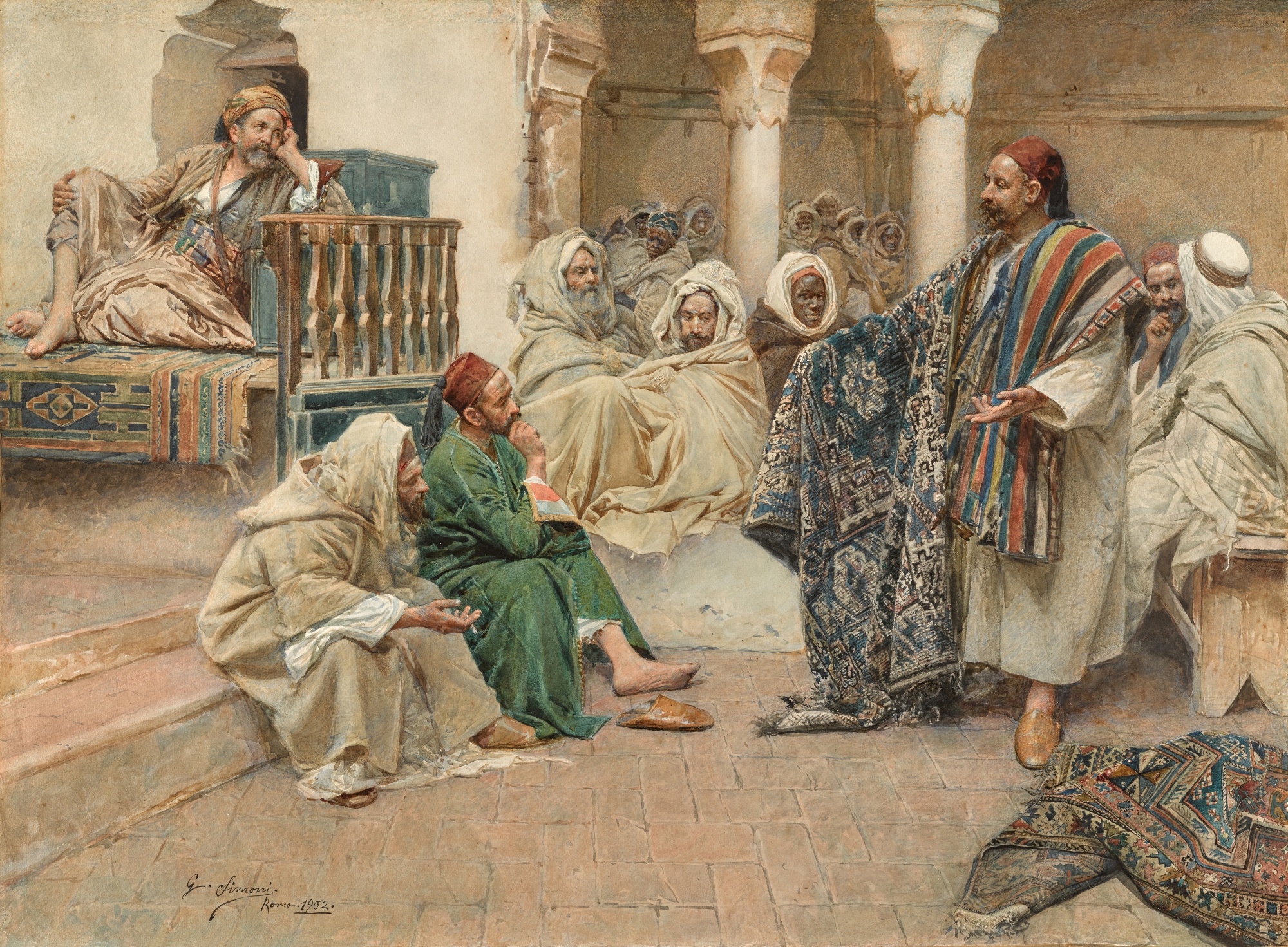
Gustavo Simoni
The Carpet Seller
What collectors should look for is specificity over generality: the artist who painted one particular souk on one particular afternoon rather than a generic notion of the Orient, or the photographer who understood that the decisive moment is not about drama but about rightness. Compositional command matters enormously here. A cluttered scene can feel alive or merely chaotic, and the difference lies entirely in how the artist has organized the visual information without making that organization feel imposed.", "Henri Cartier Bresson, whose work appears on The Collection, is perhaps the clearest illustration of this principle at the highest level.
His images of mid twentieth century life across Europe, India, China, and the Americas carry an almost uncanny sense of inevitability. Nothing feels staged, yet nothing feels accidental either. For collectors, even a vintage print from a less celebrated series carries significant cultural and monetary weight, precisely because Cartier Bresson understood that cultural documentation and formal art were not separate ambitions but the same one pursued simultaneously. His presence in any serious collection signals a commitment to photography as a primary rather than supplementary medium.
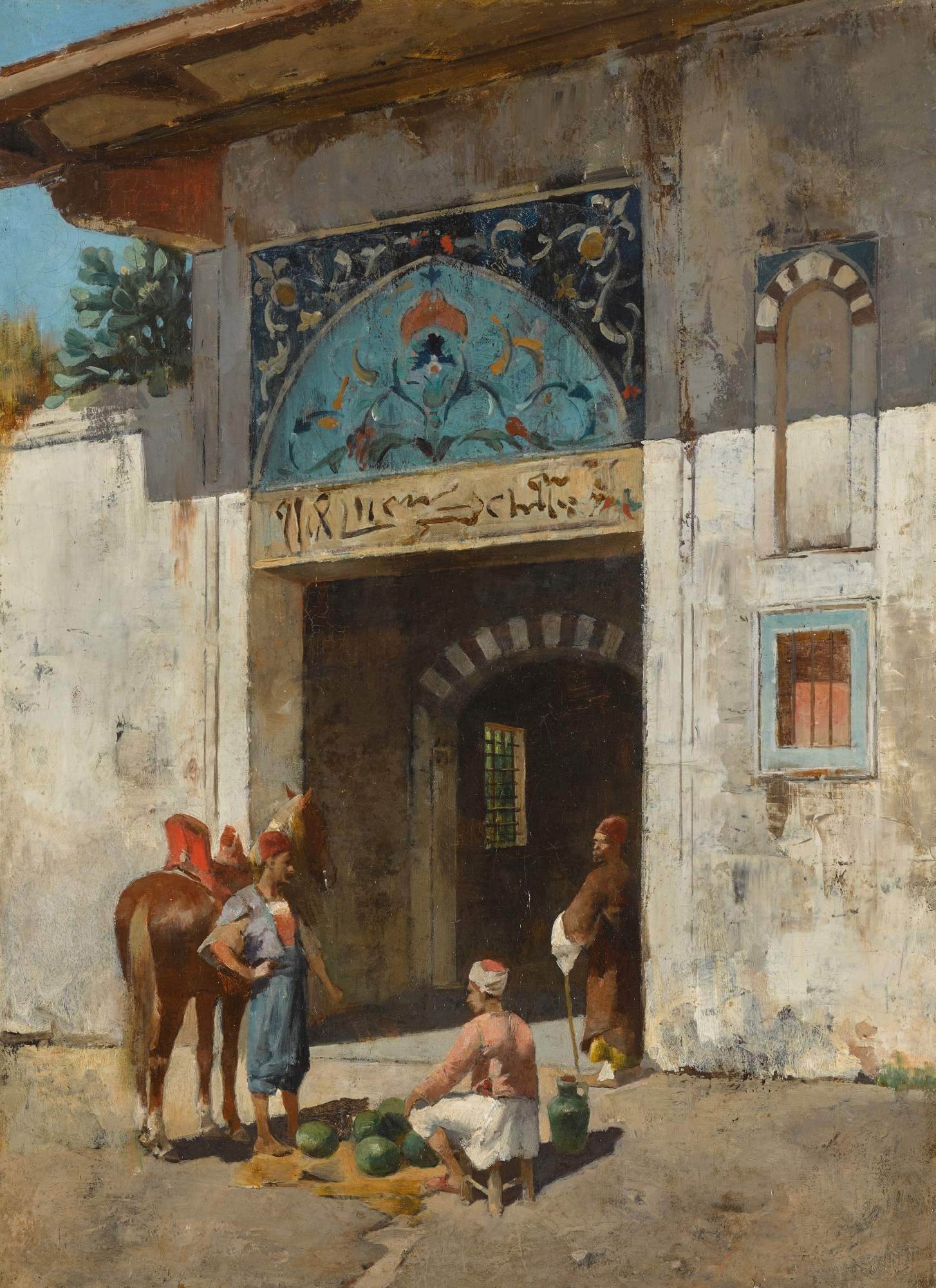
Alberto Pasini
The Melon Seller
", "Among the painters working in this territory, Alberto Pasini offers a compelling case study in value. A nineteenth century Italian artist who traveled extensively through the Middle East and Persia following diplomatic missions in the 1850s, Pasini brought a reportorial energy to Orientalist painting that distinguishes him from contemporaries who worked primarily from imagination or borrowed compositions. His scenes of bazaars, caravanserais, and urban streets have a documentary credibility that collectors increasingly prize as the Orientalist market matures and buyers become more discerning about authenticity of encounter. Works by Pasini have performed consistently well at major European auction houses, with quality examples regularly attracting competitive bidding from both institutional and private buyers.
", "Gustavo Simoni occupies a similar space in the Italian Orientalist tradition, and his works represent an interesting entry point for collectors who find Pasini prices prohibitive. Simoni traveled to North Africa and the Levant and brought genuine observational rigor to his canvases. The Orientalist category broadly has experienced a reassessment over the past decade, with scholars and curators reckoning more carefully with questions of representation and power. This critical conversation has not suppressed the market so much as refined it, pushing collectors toward artists like Simoni and José Benlliure y Gil whose engagement with their subjects feels considered and whose technical achievements are substantial.
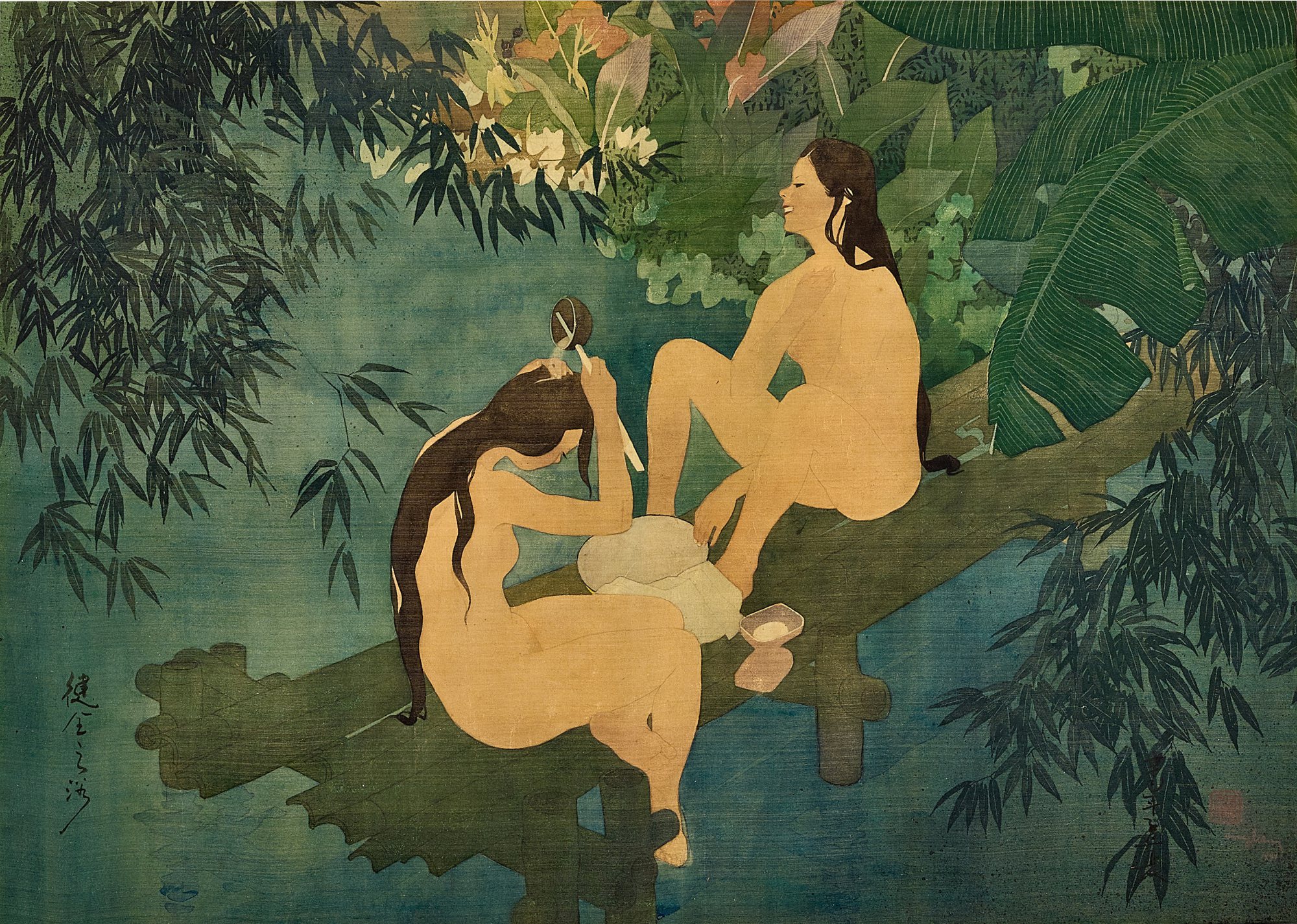
Tran Duy Liem
La Baignade Dans La Rivière (The River Bath) 河浴
Benlliure y Gil, the Spanish painter who worked in Valencia and Rome and was deeply connected to the artistic life of late nineteenth century Europe, brought an almost theatrical sensibility to scenes of Moroccan and Italian life that makes his works immediately compelling on the wall.", "For collectors with an eye on emerging and underrecognized value, the work of B. Prabha and Tran Duy Liem deserves serious attention. B.
Prabha, the Indian painter who came to prominence in the 1960s and 1970s and whose figurative work depicting rural women of central India carries enormous emotional authority, remains significantly undervalued relative to her male contemporaries from the same generation. Her cultural scenes are not documentary in the journalistic sense but rather deeply felt evocations of feminine experience and community life. As the global art market continues its serious reckoning with overlooked modernist voices from Asia and Africa, Prabha's work is positioned for substantial revaluation. Tran Duy Liem, working in the tradition of Vietnamese lacquer painting, brings a comparable depth of cultural specificity to street and village scenes that feel essential rather than decorative.
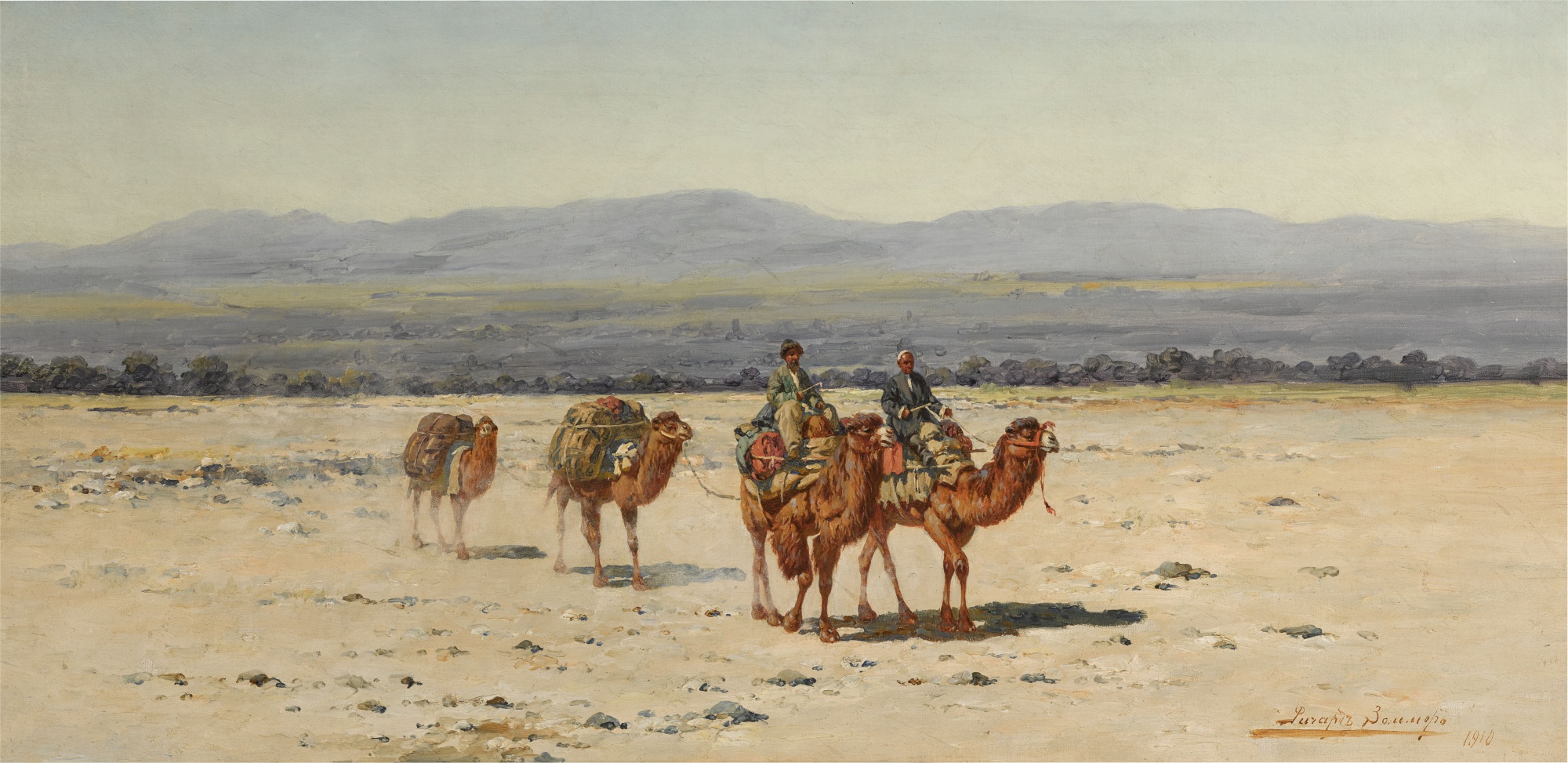
Richard Zommer
Camel Drivers in the Steppes
Works on silk and lacquer from Vietnamese artists of this period are actively being collected by institutions that missed the first wave.", "In terms of auction performance, cultural scene works occupy an interesting position in the secondary market. Unlike pure landscapes or academic portraits, strong examples tend to hold value well during periods of market softness because they carry dual appeal: formal quality for the connoisseur and narrative engagement for the broader collector. Richard Zommer, the Russian painter of Central Asian scenes who worked in the late nineteenth and early twentieth centuries, exemplifies this dynamic.
His works appear regularly at Russian and Eastern European specialist sales, where regional interest sustains a consistent floor while quality pieces attract international buyers. For any artist working in this territory, provenance from a significant collection adds meaningful value, as does exhibition history that places the work within a recognized critical conversation.", "Practically speaking, collectors approaching this category should ask a gallery several direct questions before committing. What is the condition of the paint layer or photographic surface, and has any restoration been undertaken.
For works on paper or photographic prints, how has the work been stored and what is its light exposure history. For unique paintings, request a full condition report from a conservator rather than the gallery's in house assessment. Display considerations matter considerably for these works: scenes depicting strong light and color benefit from controlled artificial lighting rather than direct natural light, which accelerates fading and can alter the chromatic relationships the artist carefully established. For editions, particularly in photography, always confirm what the total edition size is and where the specific print falls within that edition, as lower edition numbers from the artist's lifetime carry meaningfully different weight than later authorized prints.
The difference between living with a cultural scene and truly inhabiting it begins with knowing exactly what you have.
Works tagged Cultural Scene
B. Prabha
Untitled (Wedding Musicians)
Gustavo Simoni
The Carpet Seller
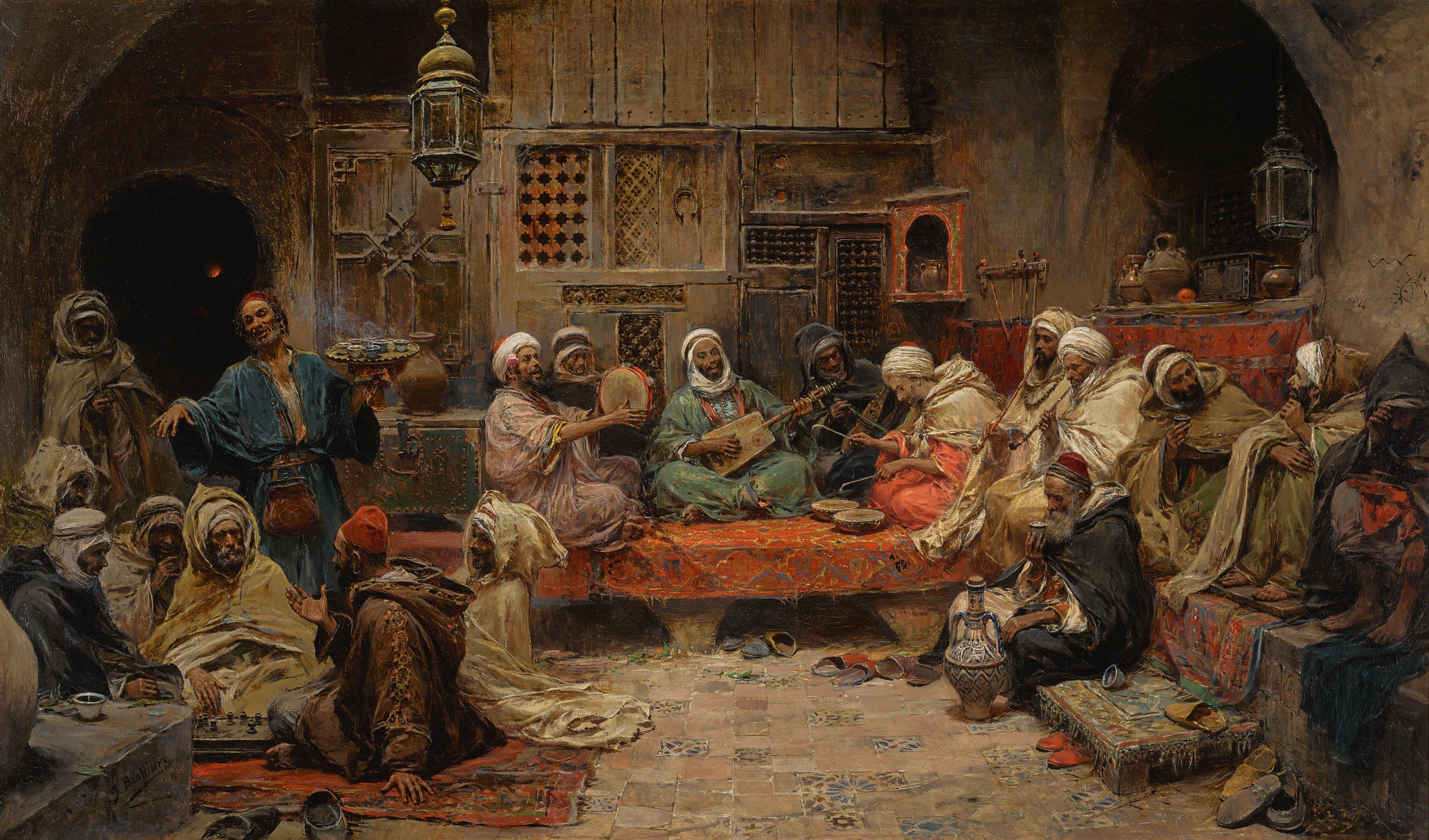
José Benlliure Y Gil
Inside A Coffee House, Tunis
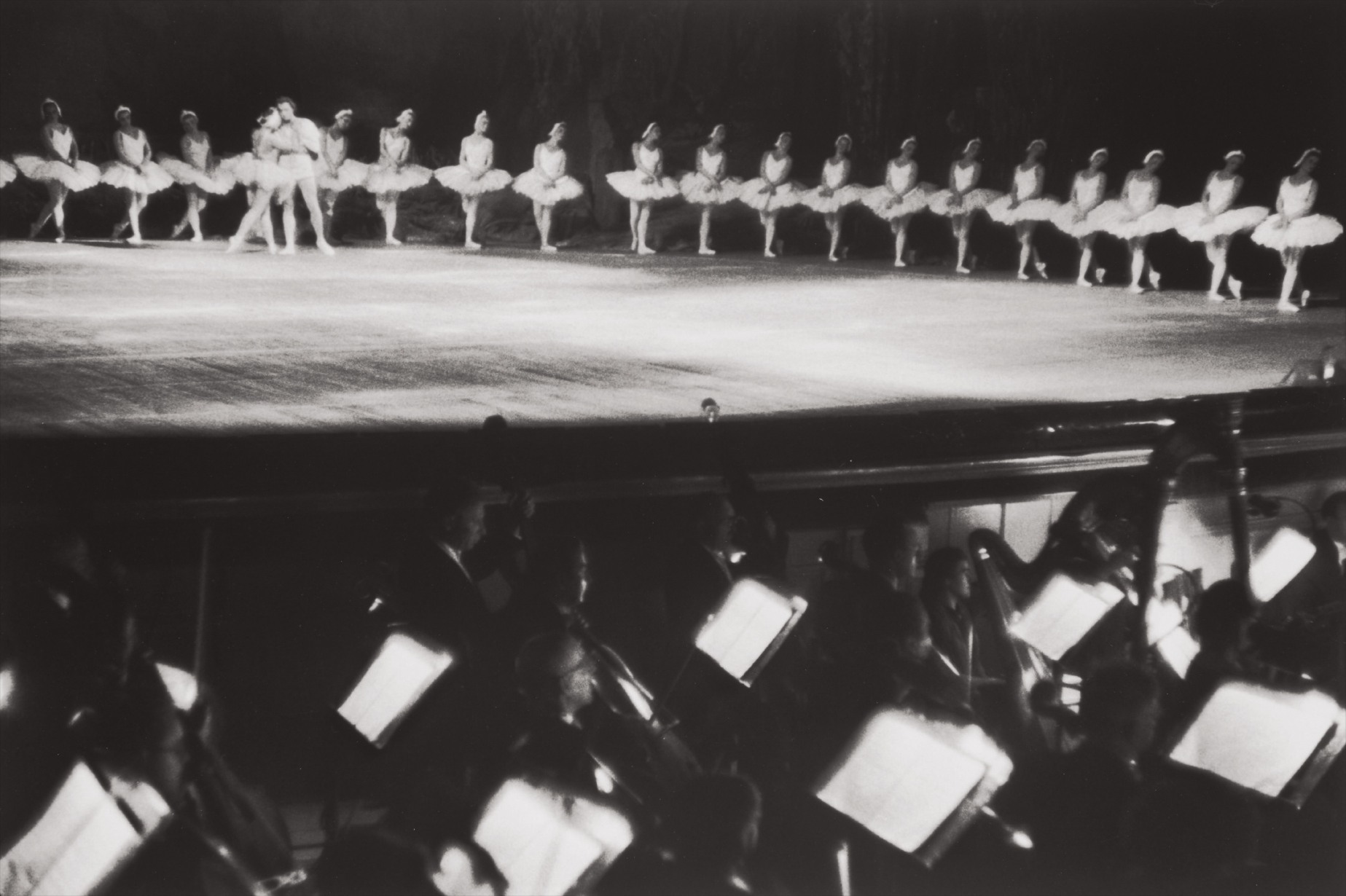
Henri Cartier-Bresson
Swan Lake, Bolshoi Theatre, Moscow, USSR
Tran Duy Liem
La Baignade Dans La Rivière (The River Bath) 河浴
Richard Zommer
Camel Drivers in the Steppes
Alberto Pasini
The Melon Seller