Cultural Scene
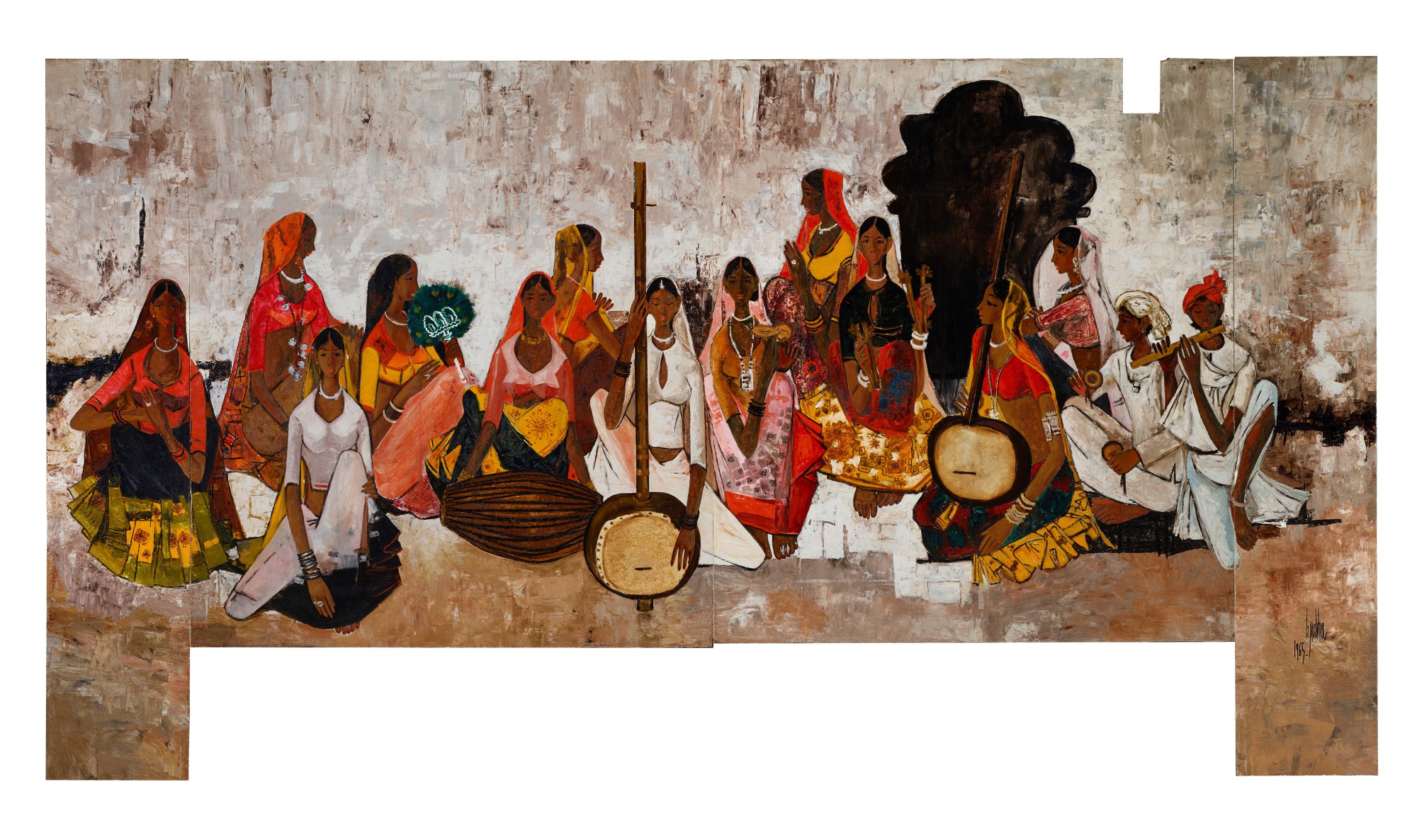
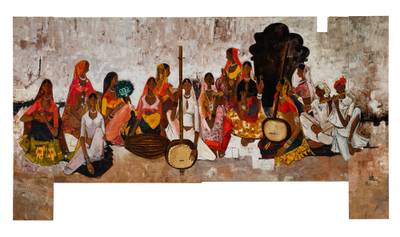
B. Prabha
Untitled (Wedding Musicians), 1965

The World You Want to Walk Into
There is a particular kind of collector who is drawn not to the isolated object but to the inhabited world. Cultural scene paintings, those works that place figures within the rituals and textures of daily life across different civilizations, answer a hunger that purely formal or abstract work simply cannot satisfy. They offer what few categories in art collecting can: the sensation of being transported, of standing just outside the frame of someone else's afternoon, someone else's market or ceremony or quiet domestic moment. This is why collectors who acquire one cultural scene work so often acquire many.
The appetite compounds. What makes living with these works so rewarding is also what makes acquiring them so demanding. You are not simply choosing a pleasing composition or a resonant palette, though both matter enormously. You are choosing a window, and the question is always what that window looks like at seven in the morning when you pass it on the way to the kitchen, and what it looks like again at dusk.
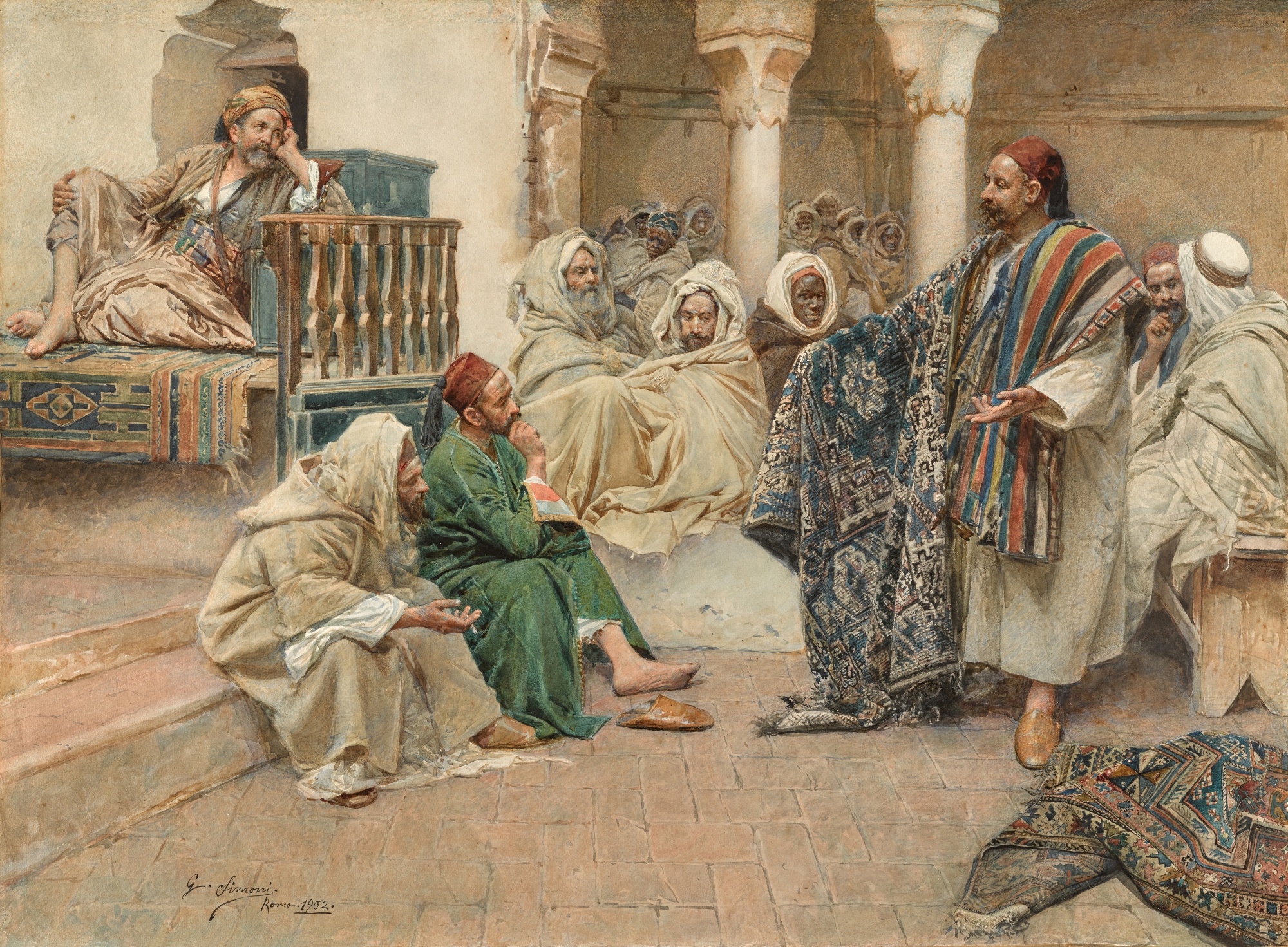
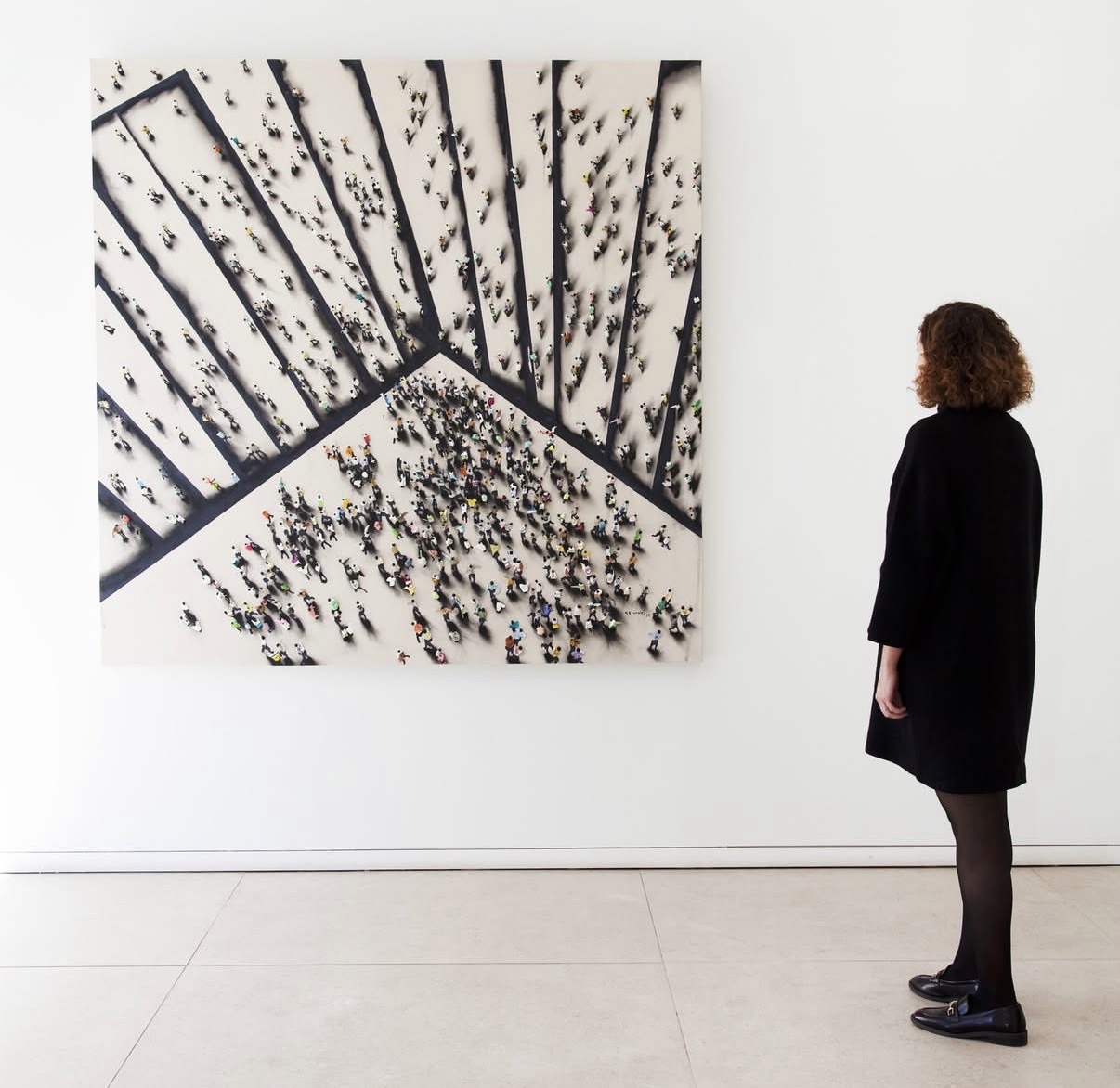
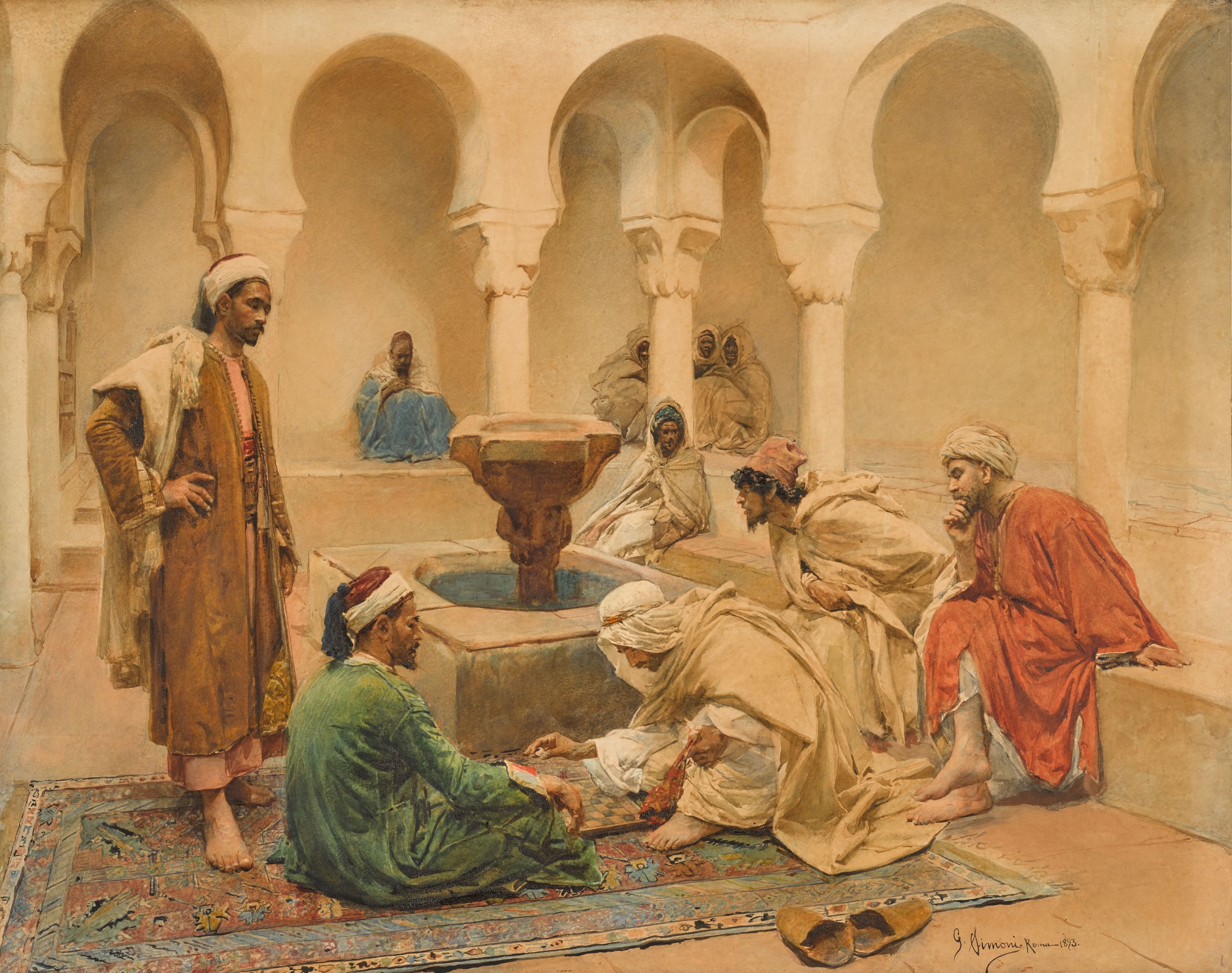
Gustavo Simoni
The Carpet Seller
The best cultural scene works sustain that daily renegotiation. They give you something new each time because the human situations they depict carry real weight, real specificity. Generalized exoticism fades quickly. Genuine observation does not.
Separating a good work from a great one in this category comes down to a few things experienced collectors learn to read quickly. The first is the artist's relationship to their subject. Work made from sustained observation, from real presence within a culture rather than from received visual ideas about it, has a quality of attention that registers even before you can articulate why. Look at the handling of space within a scene: does it feel inhabited or staged?
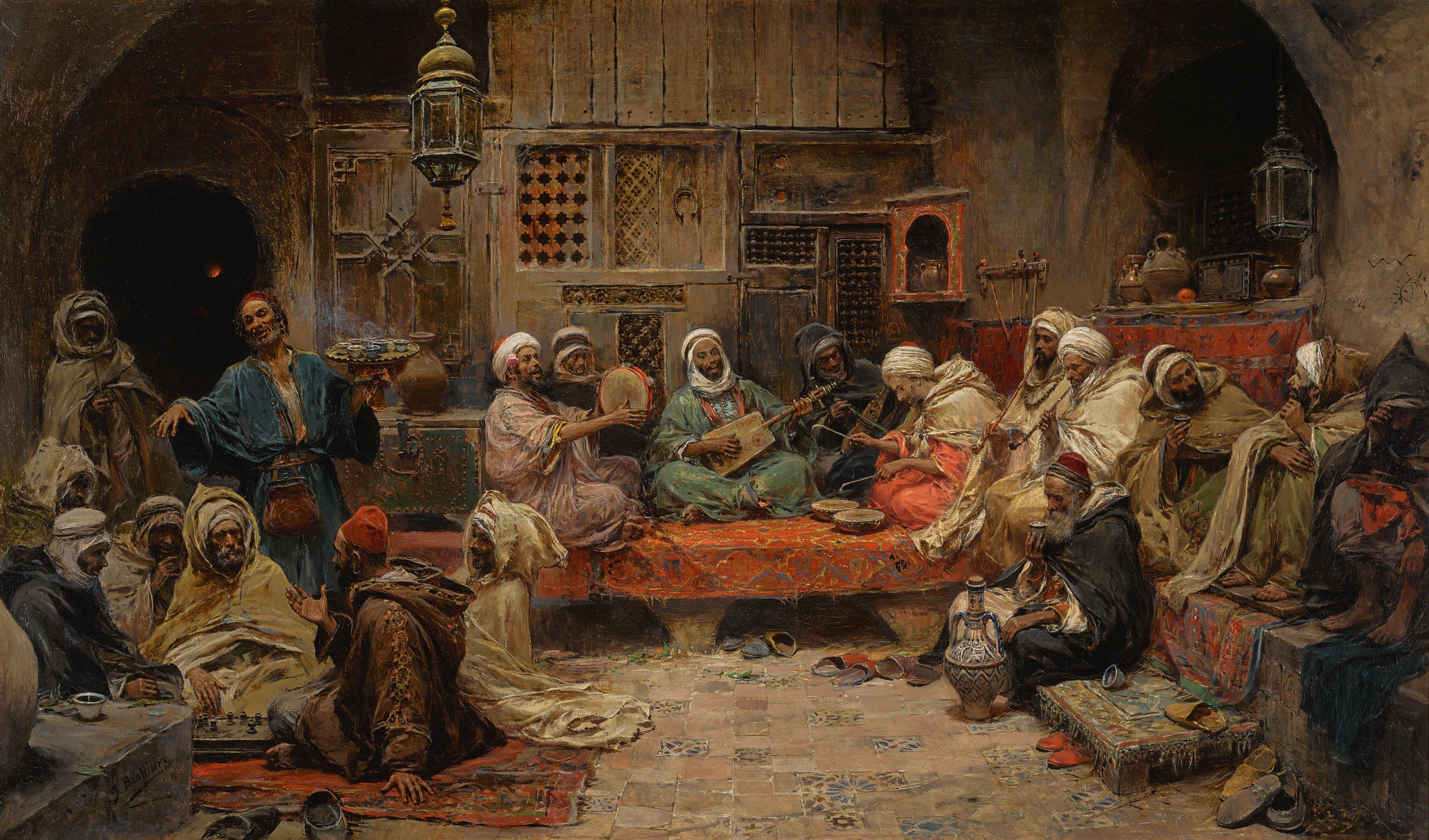
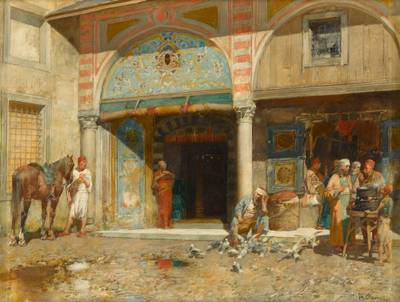
José Benlliure Y Gil
Inside A Coffee House, Tunis
Are the figures engaged in their own activity, indifferent to being looked at, or are they performing for the viewer? The latter is almost always a sign that you are looking at illustration rather than art. The second thing to scrutinize is light. Cultural scene painters live and die by their understanding of specific light, the quality of afternoon sun in a Persian bazaar versus the filtered interior light of a North African courtyard versus the diffuse glow of a South Asian festival evening.
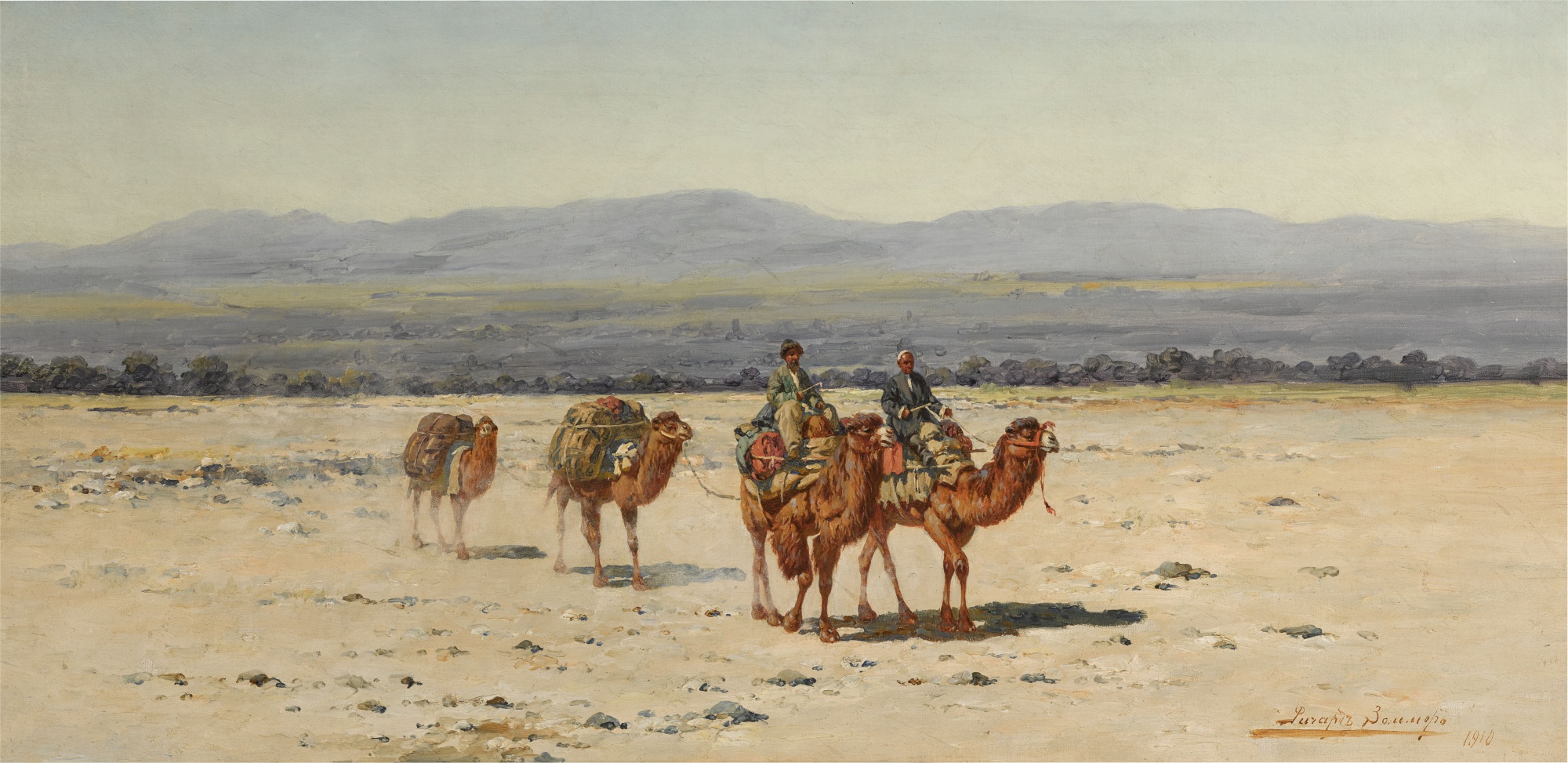
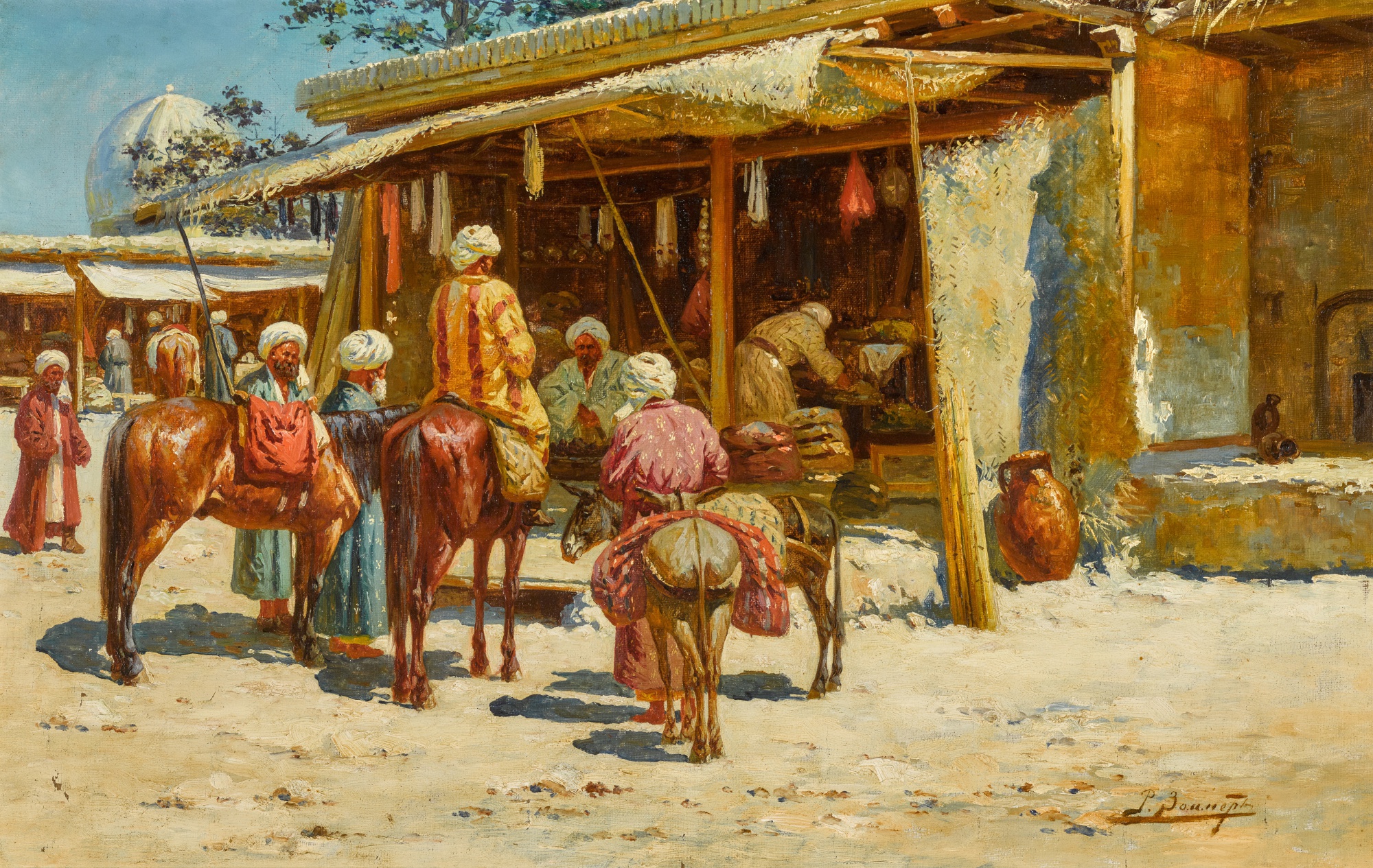
Vagueness here is always a weakness. The artists represented on The Collection offer a genuinely instructive range. Alberto Pasini, the nineteenth century Italian painter who spent years in the Middle East and Central Asia following diplomatic missions in the 1850s, is among the most serious Orientalist painters in terms of documentary credibility. His work is not the armchair fantasy that some of his contemporaries produced.
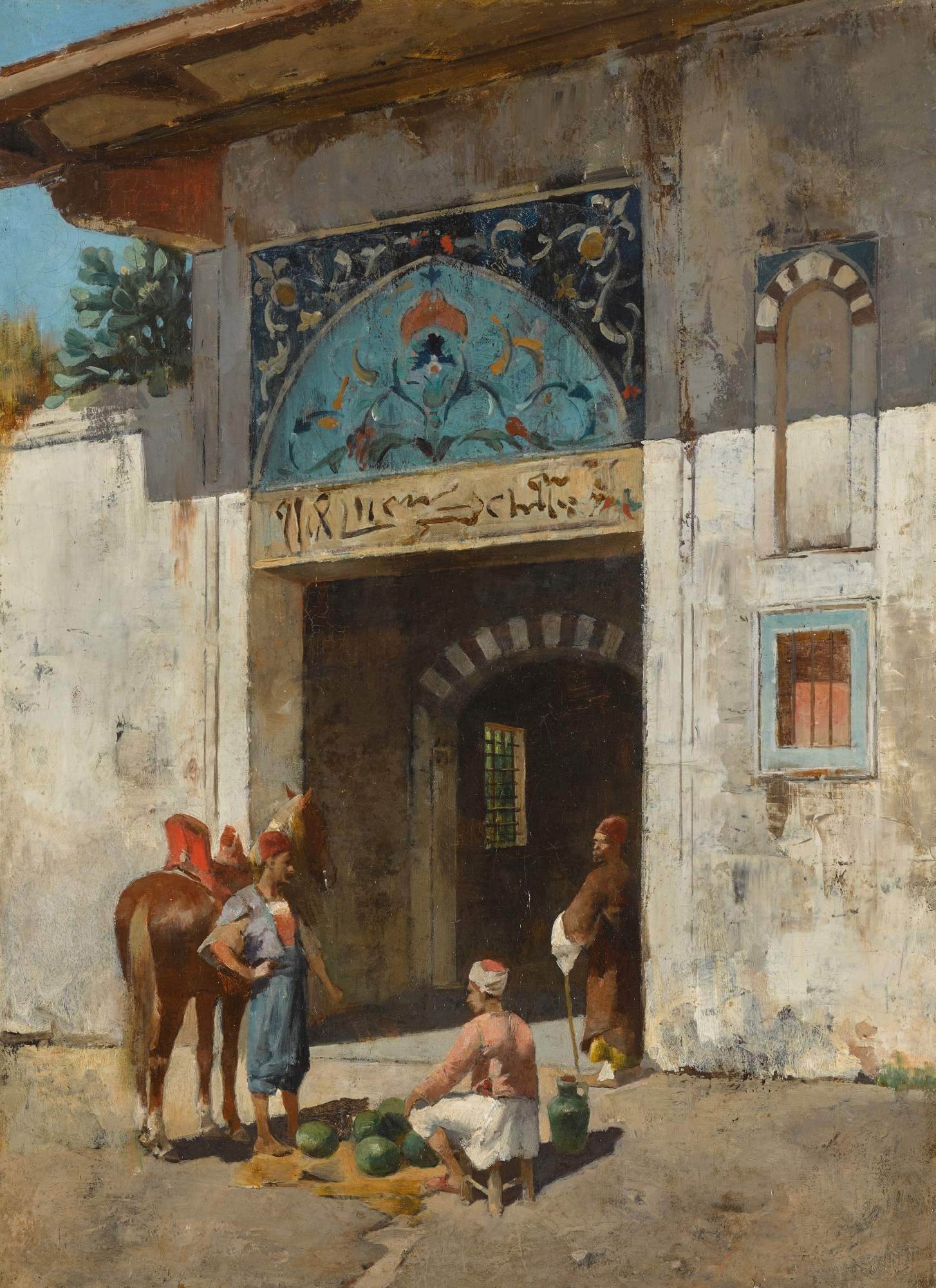
Alberto Pasini
The Melon Seller
He traveled extensively, and it shows in the specificity of his architecture, his costume, his understanding of how animals and people actually occupy a space together. Pasini works have performed consistently well at auction over the past two decades, with strong results at Christie's and Sotheby's Paris particularly, where the appetite for serious nineteenth century Orientalism remains real among both European and Gulf region collectors. Gustavo Simoni occupies a similar space, and his quieter, more intimate domestic interiors from North Africa have attracted growing attention from collectors who find the grand theatrical compositions of some of his peers less livable on a daily basis. José Benlliure y Gil, the Spanish painter working in the late nineteenth and early twentieth centuries, brings a different quality to the category.
His work, deeply rooted in Mediterranean and Moorish subject matter, has a warmth and technical fluency that places it comfortably within the broader revival of interest in Spanish academic painting. That revival has been building steadily since the major reassessments of the 1990s and has now reached a point where strong works by Spanish Orientalists and genre painters are receiving serious institutional attention. For collectors with an eye on long term value, this is a moment worth taking seriously. B.
B. Prabha
Untitled (Wedding Musicians), 1965
Prabha, the Indian modernist painter whose work engages so tenderly with rural women and village life, represents a genuinely different tradition within this broad category. Her figures are not exotic to her. They are her world rendered with care and formal intelligence, and as the global market for Indian modern art continues its upward trajectory, her work sits at an interesting intersection of critical respect and increasing market demand. For collectors interested in where the next wave of attention may land, works by artists like Tran Duy Liem deserve serious consideration.
Vietnamese painters of the mid twentieth century are still substantially underpriced relative to their quality and historical significance, and the growing institutional interest in Southeast Asian modernism, visible in major museum acquisitions and dedicated auction categories at Christie's and Bonhams Asia, suggests the market is beginning to catch up with what scholars have known for some time. Acquiring now, before that correction fully completes itself, is the kind of positioning that builds a collection's character as well as its financial resilience. From a practical standpoint, cultural scene works on canvas or panel from the nineteenth century require particular attention to condition. Ask specifically about lining history, about any areas of previous inpainting, and request ultraviolet examination reports before committing to a purchase.
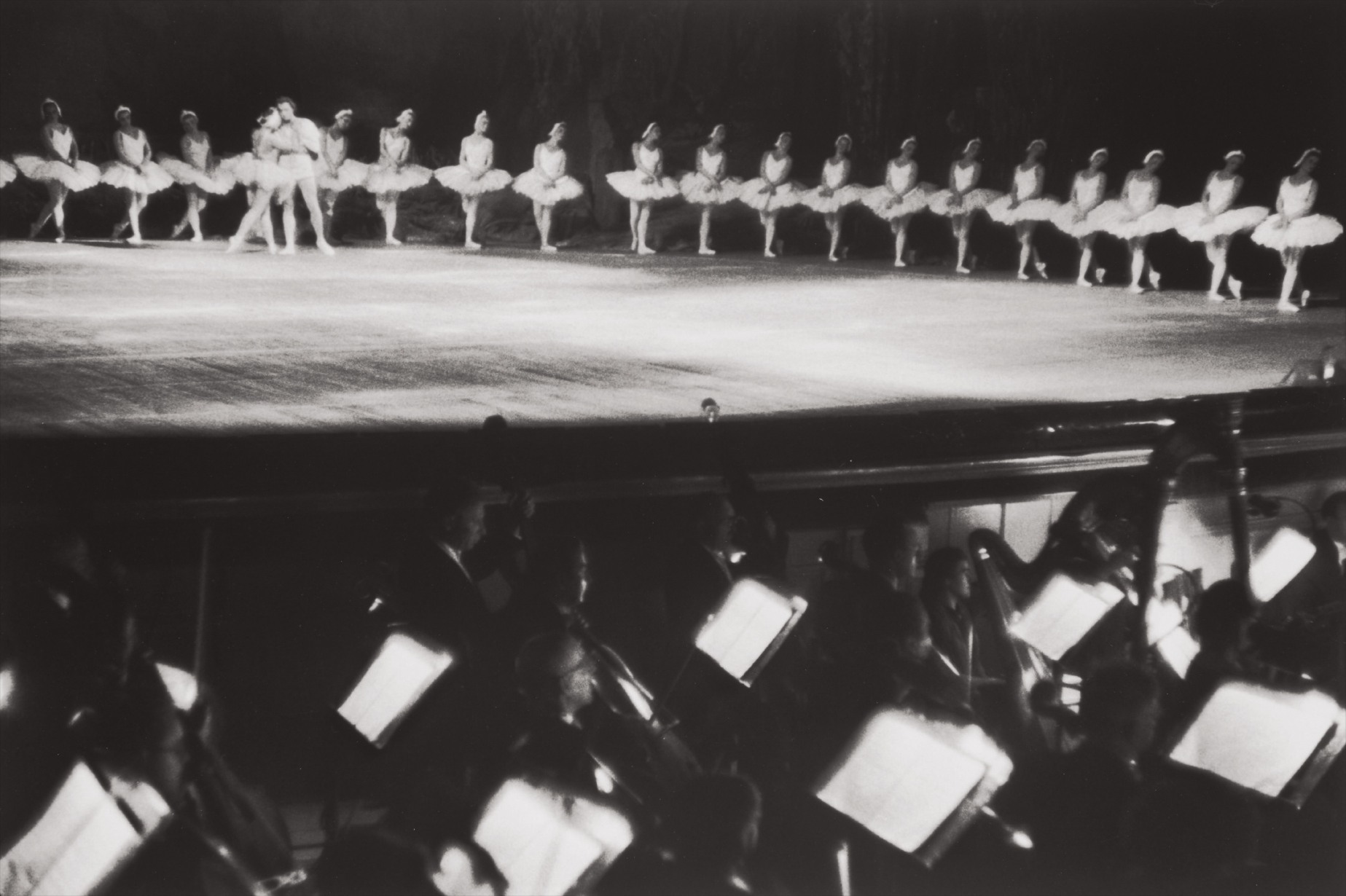
Works that have been aggressively cleaned can lose the surface texture that gives Orientalist and genre painting much of its warmth. On the question of display, these works respond well to warmer lighting temperatures, around 2700 to 3000 Kelvin, which brings out the earth tones and richly saturated pigments that define the category. For photographic works in this space, Henri Cartier Bresson being a significant presence, the question of edition size and print vintage becomes central to any acquisition conversation. A gallery should be able to tell you clearly where a print sits within its edition, who printed it, and what the authentication documentation looks like.
These are not pedantic questions. They are the difference between a work that holds value and one that does not. The deeper reason cultural scene works endure as a collecting category is that they are fundamentally about curiosity. They were made by artists who wanted to understand how other people lived, and they are collected by people who share that impulse.
In a market increasingly dominated by work that turns inward, by painting that is primarily about painting, there is something genuinely sustaining about a work that looks outward at the world with intelligence and appetite. That quality does not go out of fashion. It accumulates meaning over time.