Crucifixion
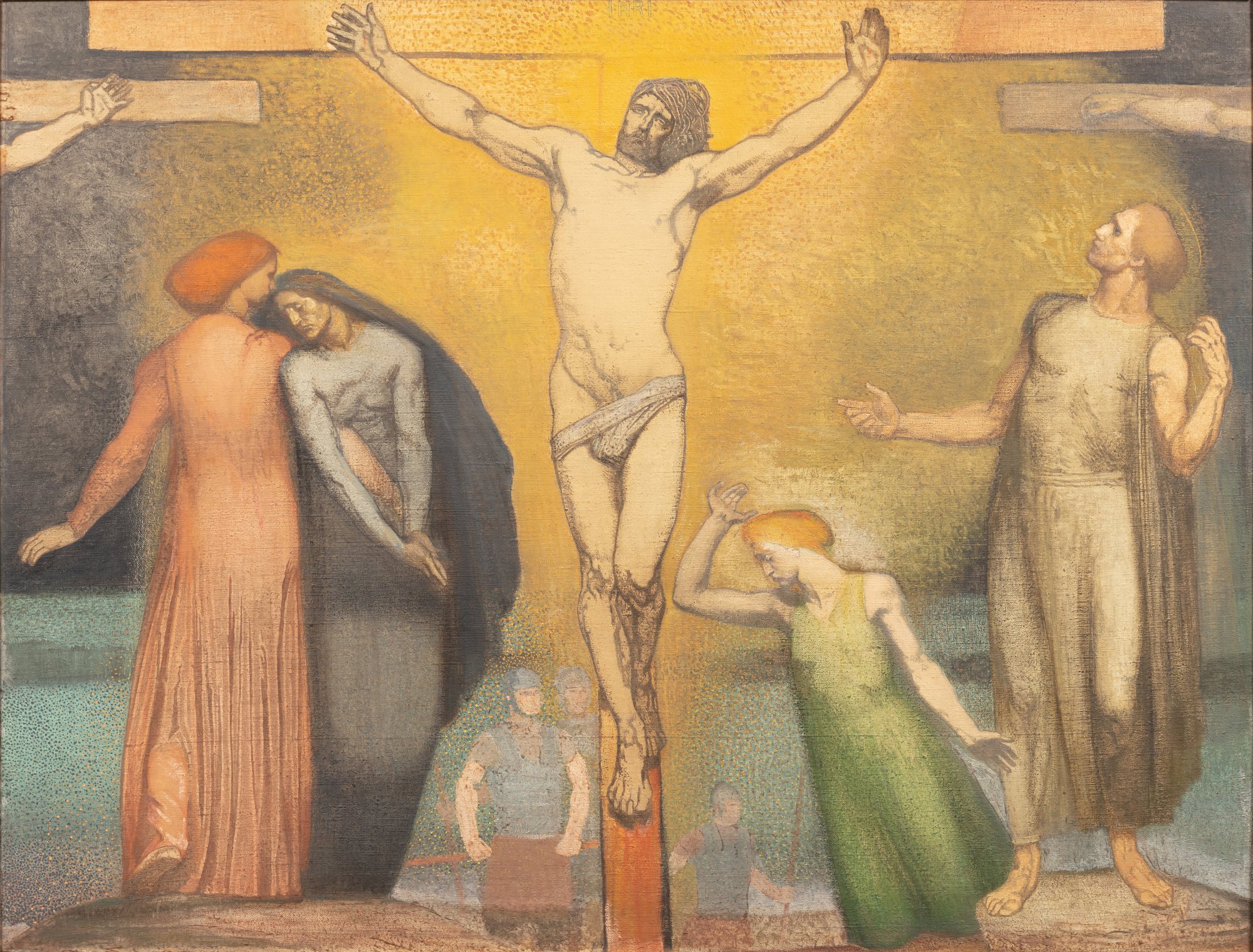
Emile Fabry
Crucifixion
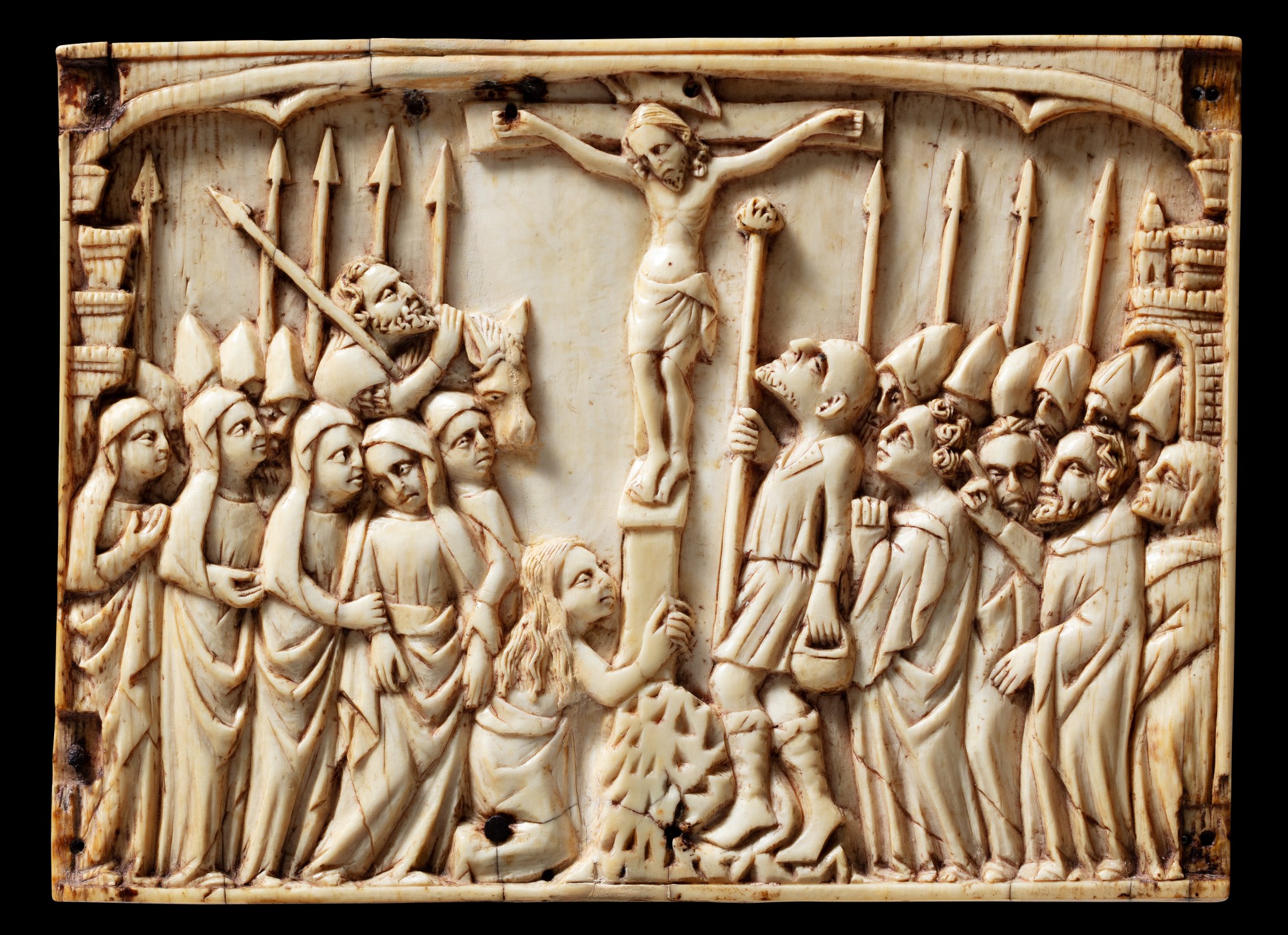

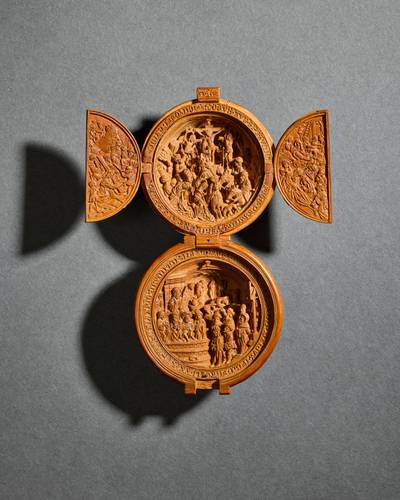
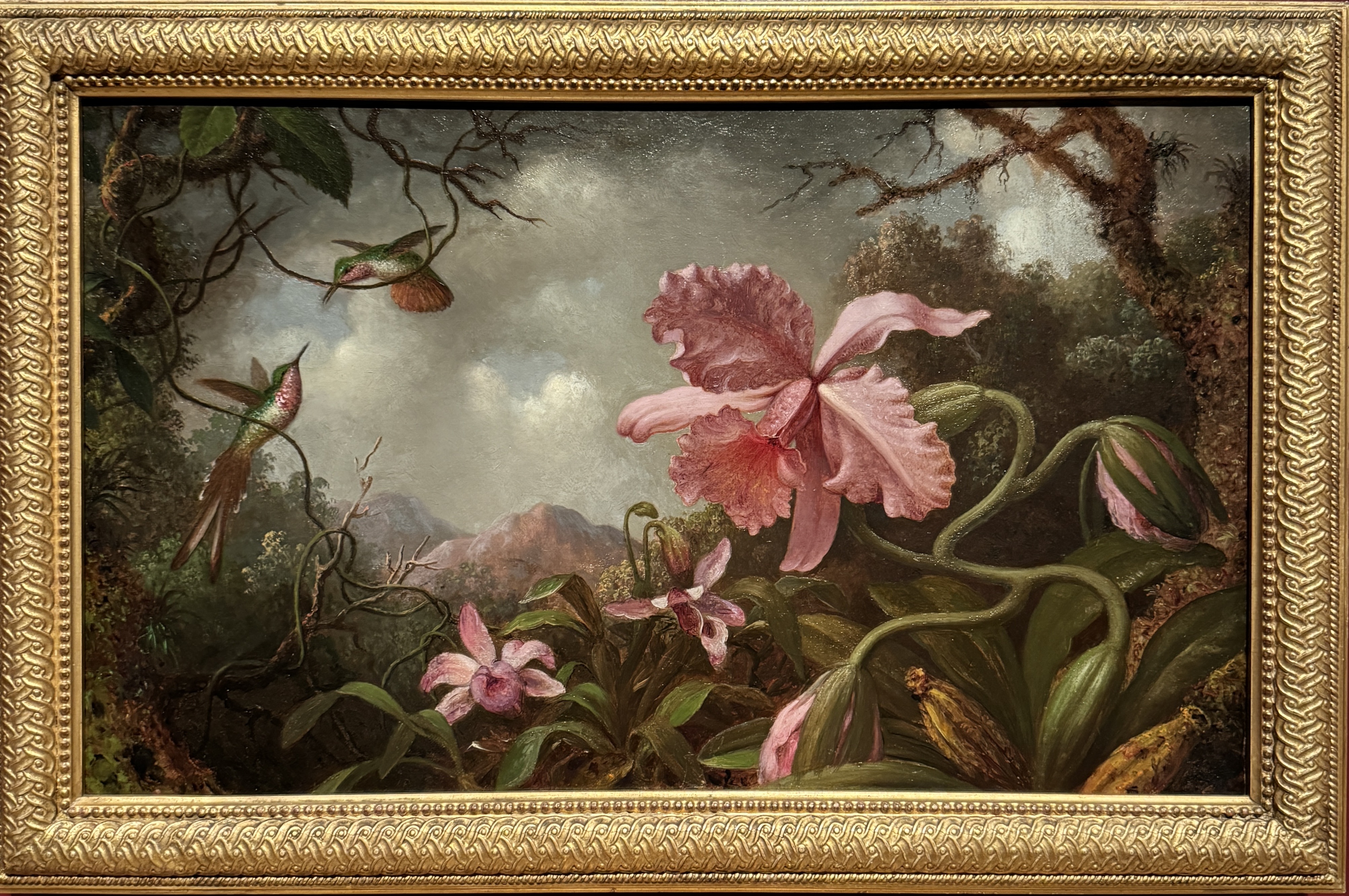
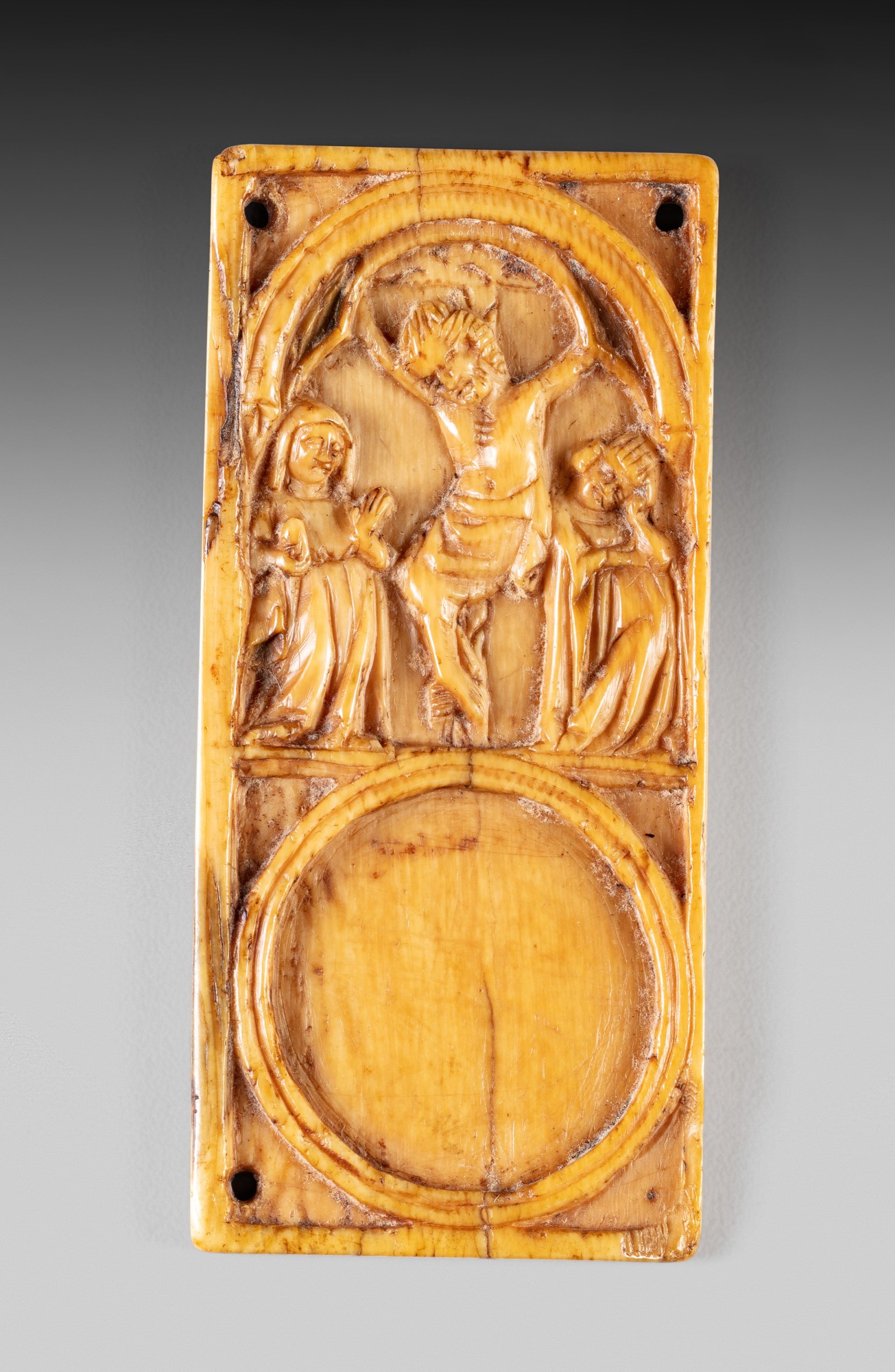
```json
{ "headline": "The Wound That Became Western Art", "body": "No image in the history of Western art has been painted, carved, illuminated, and reimagined more relentlessly than the Crucifixion. For roughly two millennia, artists have returned to a single moment of extreme violence and attempted to make it bearable, beautiful, or unbearable in entirely new ways. The persistence of this subject is not merely theological. It is a story about how human beings use art to process suffering, and why the most difficult images are often the ones we cannot stop making.
", "The earliest surviving Crucifixion images date to the fourth and fifth centuries, emerging cautiously after the Emperor Constantine legalized Christianity in 313 CE. In those first representations, Christ was shown alive and serene on the cross, his body untroubled, his expression calm. This was a theological statement as much as an aesthetic one: the divine could not be shown in agony. It was not until the medieval period that artists began to turn toward suffering as the central fact of the image, and this shift transformed the Crucifixion into one of the most emotionally complex subjects in art history.
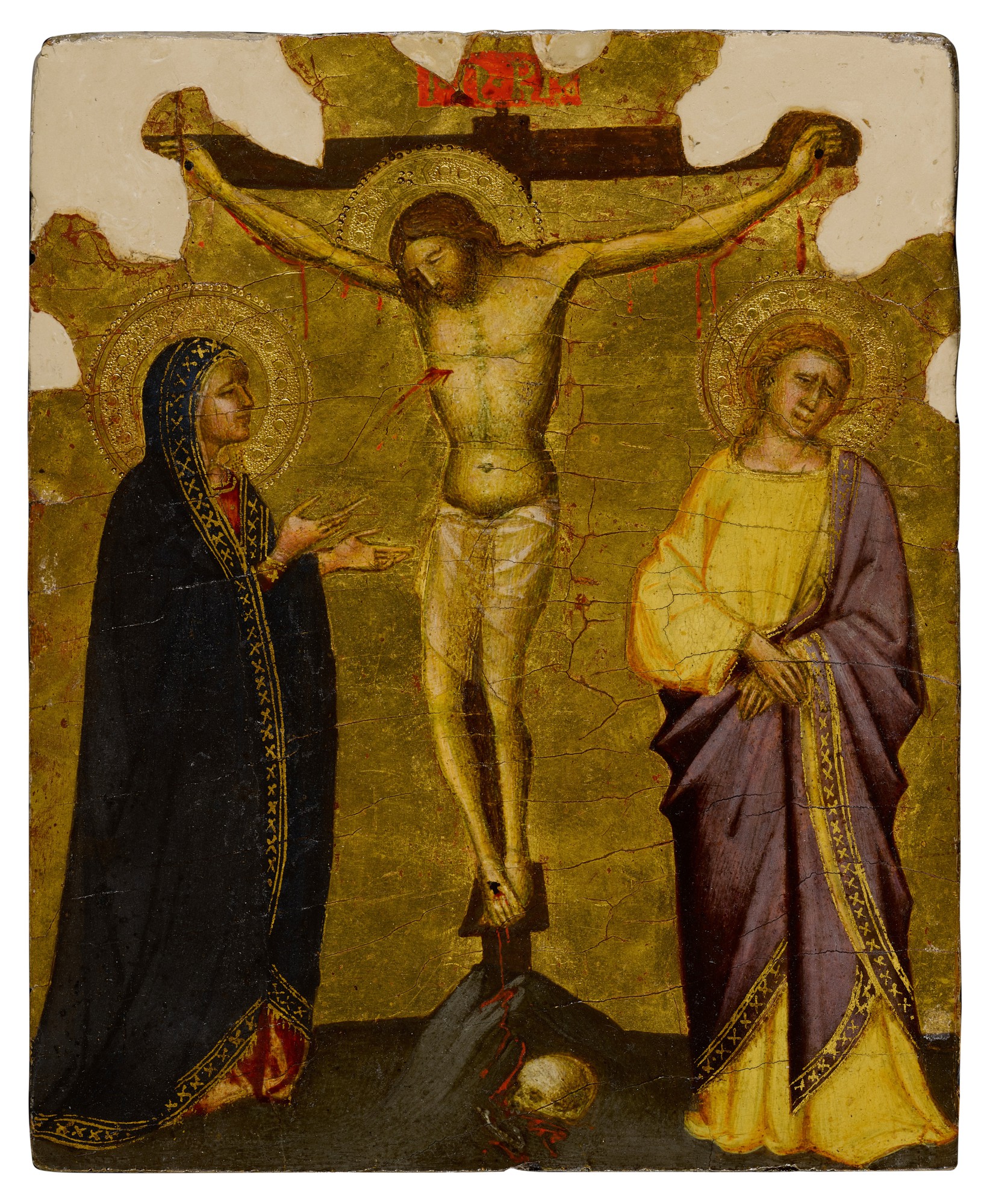
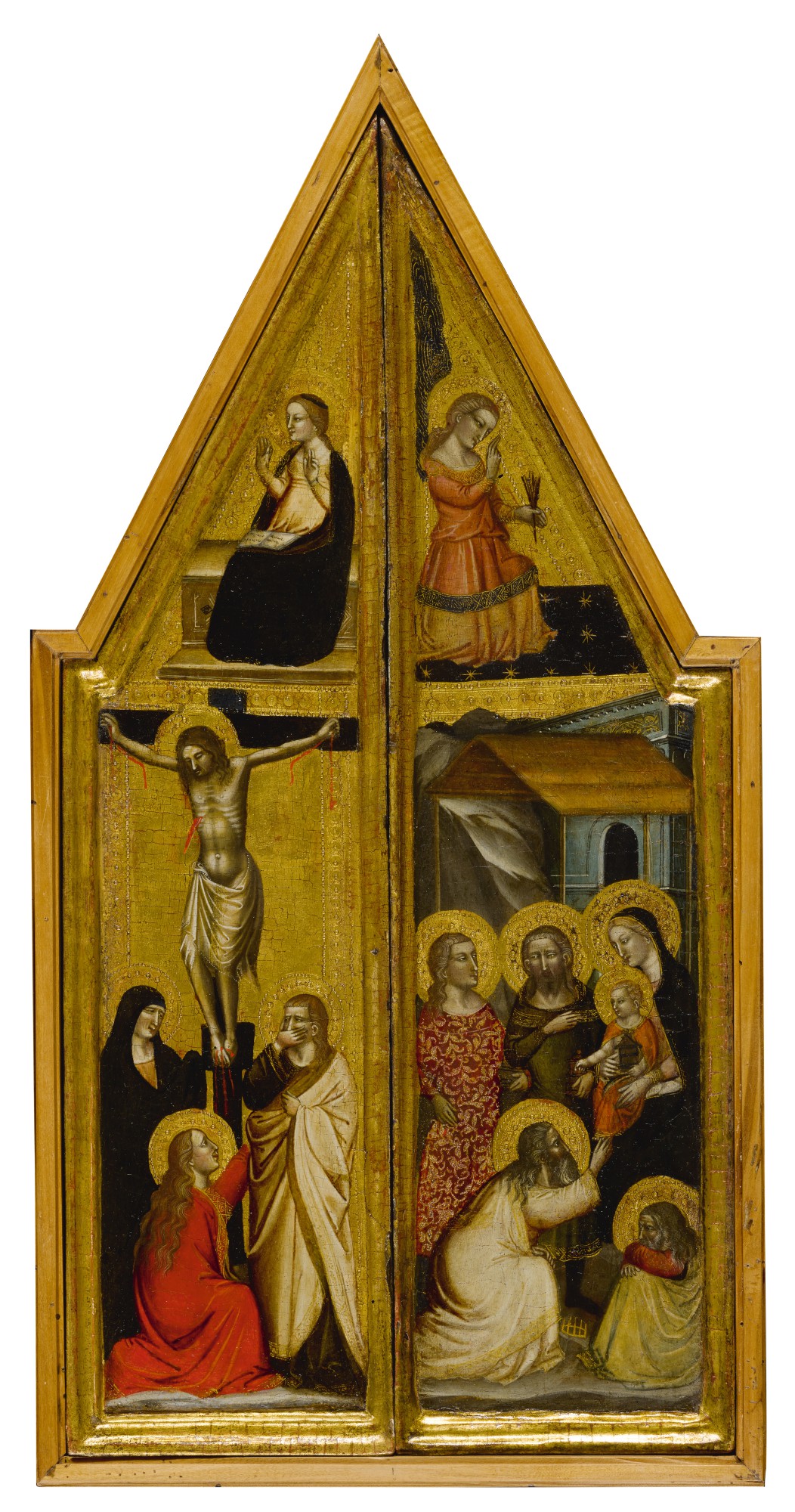
Niccolò di Pietro Gerini
Crucifixion with the Mourning Virgin and Saint John the Baptist
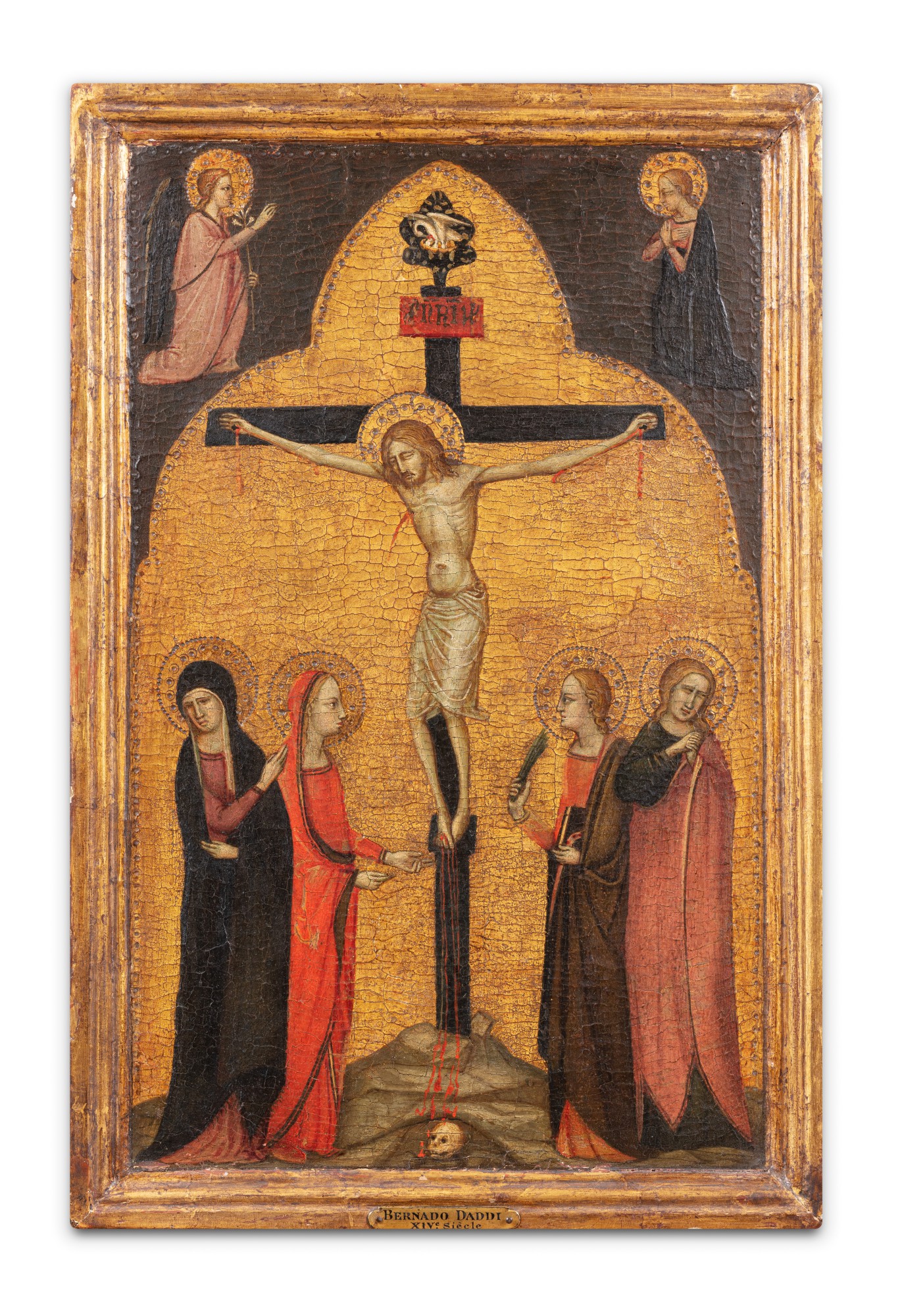
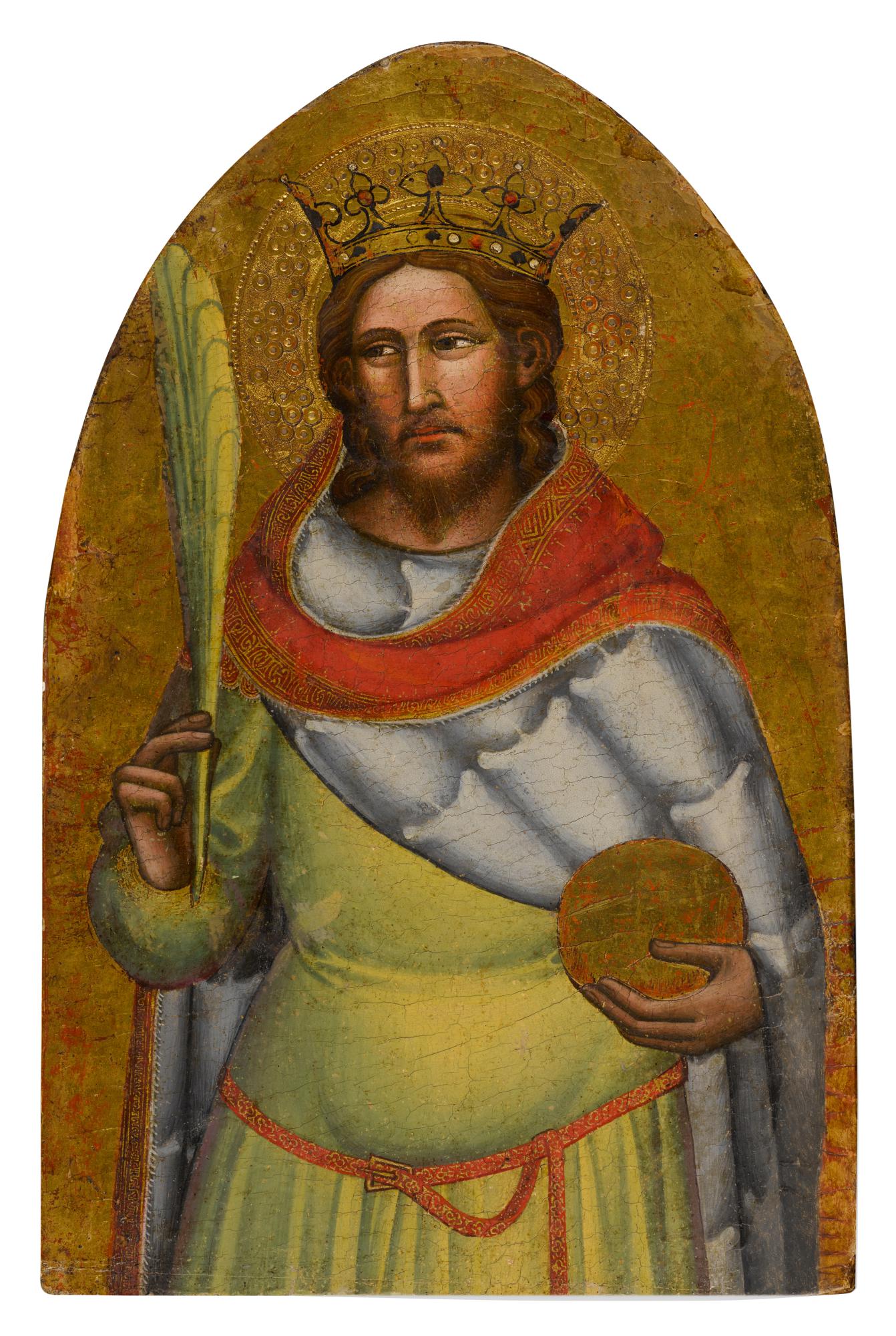
", "The works collected on The Collection span a remarkable arc of this evolution, from the hierarchical gold ground panels of the Italian Trecento through the psychologically charged productions of northern Europe in the fifteenth and sixteenth centuries. A panel attributed to Niccolò di Pietro Gerini, the Florentine painter active in the second half of the fourteenth century, places the crucified Christ within a formal devotional structure that owes much to the Byzantine tradition he inherited but begins to breathe with a new Gothic pathos. Working in roughly the same period, Taddeo di Bartolo, the Sienese painter whose career stretched from the 1380s into the early fifteenth century, brought a related but distinctly more emotional intensity to the subject, his figures contorted with grief in ways that feel genuinely felt rather than merely prescribed. These Italian masters were working within the devotional revolution driven by Franciscan spirituality, which encouraged ordinary worshippers to imagine themselves present at Calvary, to feel the grief of the Virgin, to hear the sound of the hammer.
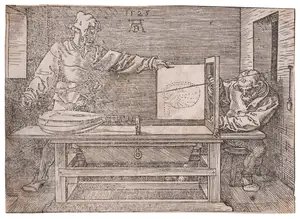
", "In the northern European tradition, the Crucifixion took on different qualities altogether. The Flemish and German painters of the fifteenth and sixteenth centuries brought a forensic attention to physical suffering that could border on the disturbing. Albrecht Dürer, whose influence radiated across the whole of European printmaking and painting, treated the Crucifixion with the same analytical eye he brought to a piece of turf or a hare. His engravings and woodcuts gave subsequent generations a visual grammar of anguish that proved almost impossible to escape.
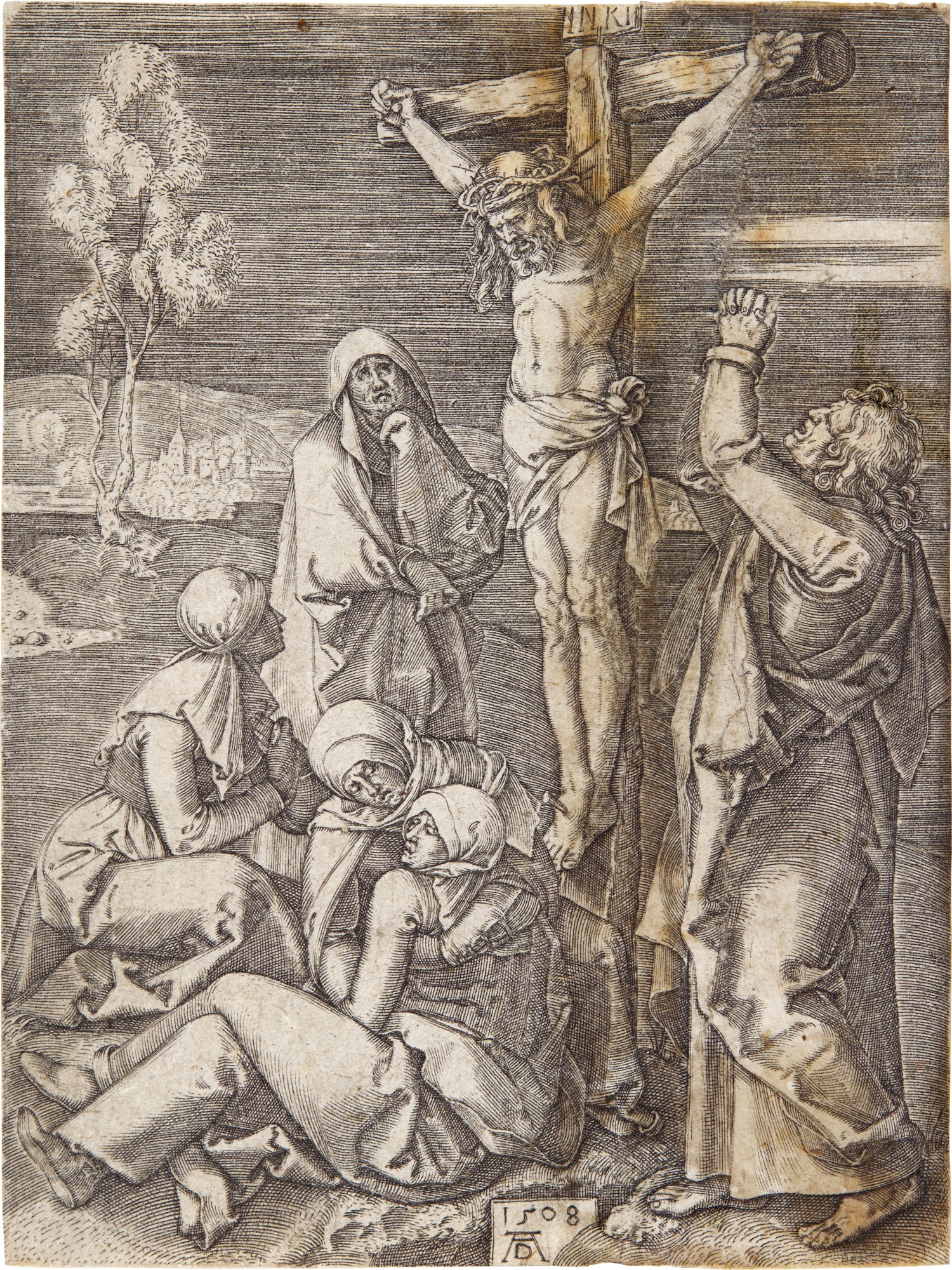
Albrecht Dürer
Crucifixion (B. 24; M., Holl. 23)
Works from the Antwerp School of the sixteenth century, well represented on The Collection, show how deeply this northern tradition had absorbed and transformed the Italian models, producing images that are simultaneously doctrinally precise and viscerally immediate. The workshop practices of painters like Adam Dircksz, to whom a work in our collection is attributed, remind us that the Crucifixion was not only a devotional subject but a commercial one: these images were produced to meet a widespread demand from churches, confraternities, and private patrons.", "The follower of Jan Gossaert represented in the collection points toward a fascinating transitional moment in Netherlandish painting, when Italian Renaissance ideals of bodily perfection began to merge with northern traditions of intense emotional realism. Gossaert himself had traveled to Rome in 1508 and returned transformed, and his followers carried that synthesis forward into the second quarter of the sixteenth century.
The Circle of Joachim Patinir, another fascinating attribution in our holdings, reminds us that by this period the Crucifixion had become inseparable from landscape: Christ on the cross against a panoramic view of an impossible blue distance, heaven and earth made simultaneously present. Patinir essentially invented this tradition of world landscape painting in the early sixteenth century, and the Crucifixion was one of his primary vehicles for it.", "By the late sixteenth century, the Counter Reformation had introduced a new set of demands on religious imagery. The Council of Trent, which concluded in 1563, called for sacred images to be clear, emotionally affecting, and doctrinally correct.
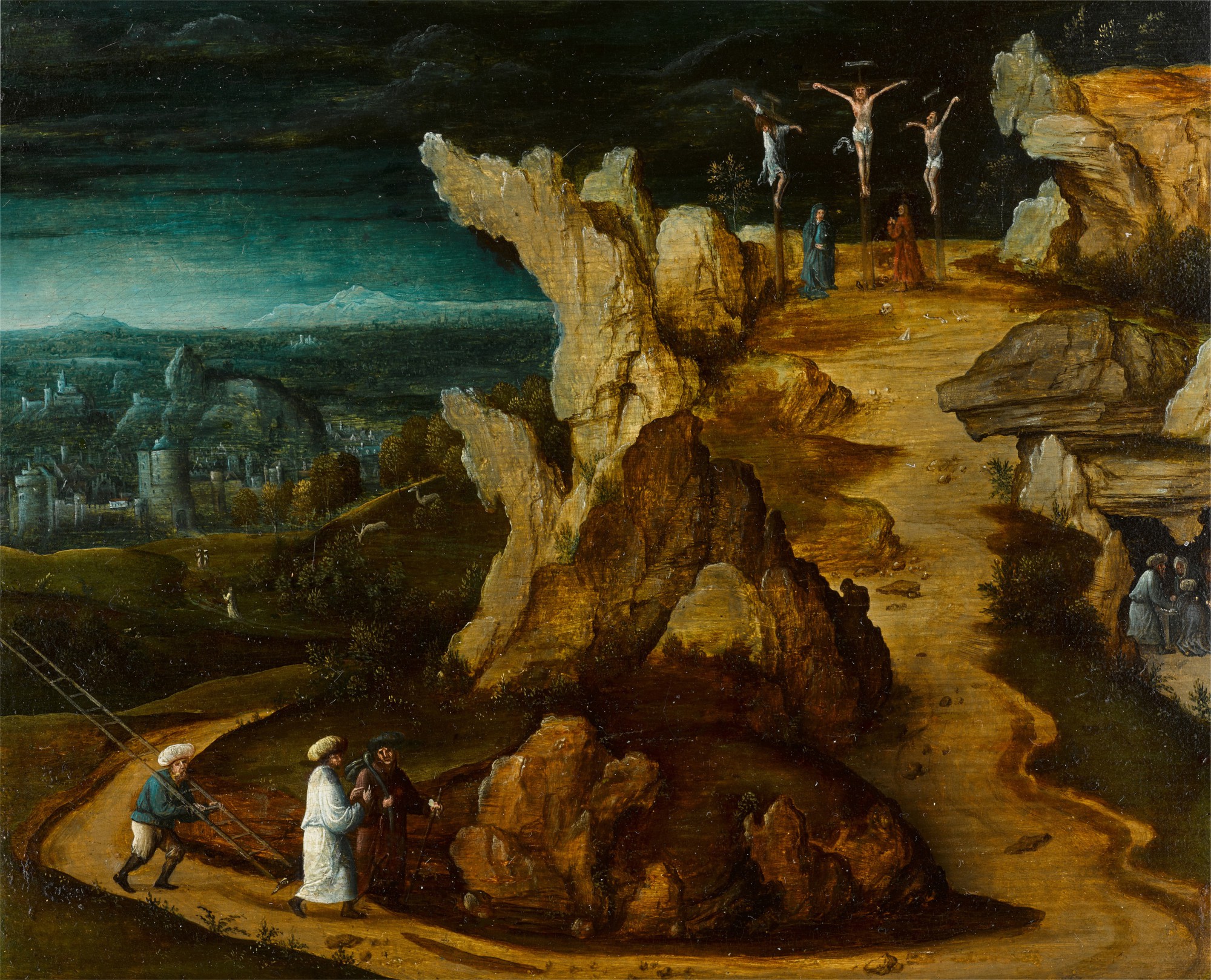
Circle of Joachim Patinir
An extensive rocky landscape with the Crucifixion at Calvary
The result was a wave of monumental, theatrical Crucifixion paintings, and works from the Spanish School and the School of Toledo in the collection reflect this moment vividly. A Spanish work after Marco Venusti, the Roman painter closely associated with Michelangelo, demonstrates how the greatest Italian models were adapted and recirculated throughout Catholic Europe as instruments of renewed devotion. The follower of Gaspar de Crayer, the seventeenth century Flemish painter who specialized in large scale religious compositions for churches and altars, represents the mature Baroque phase of this tradition, where emotional intensity and compositional grandeur were understood as inseparable virtues.", "What makes the Crucifixion so enduring as an artistic subject is precisely its resistance to resolution.
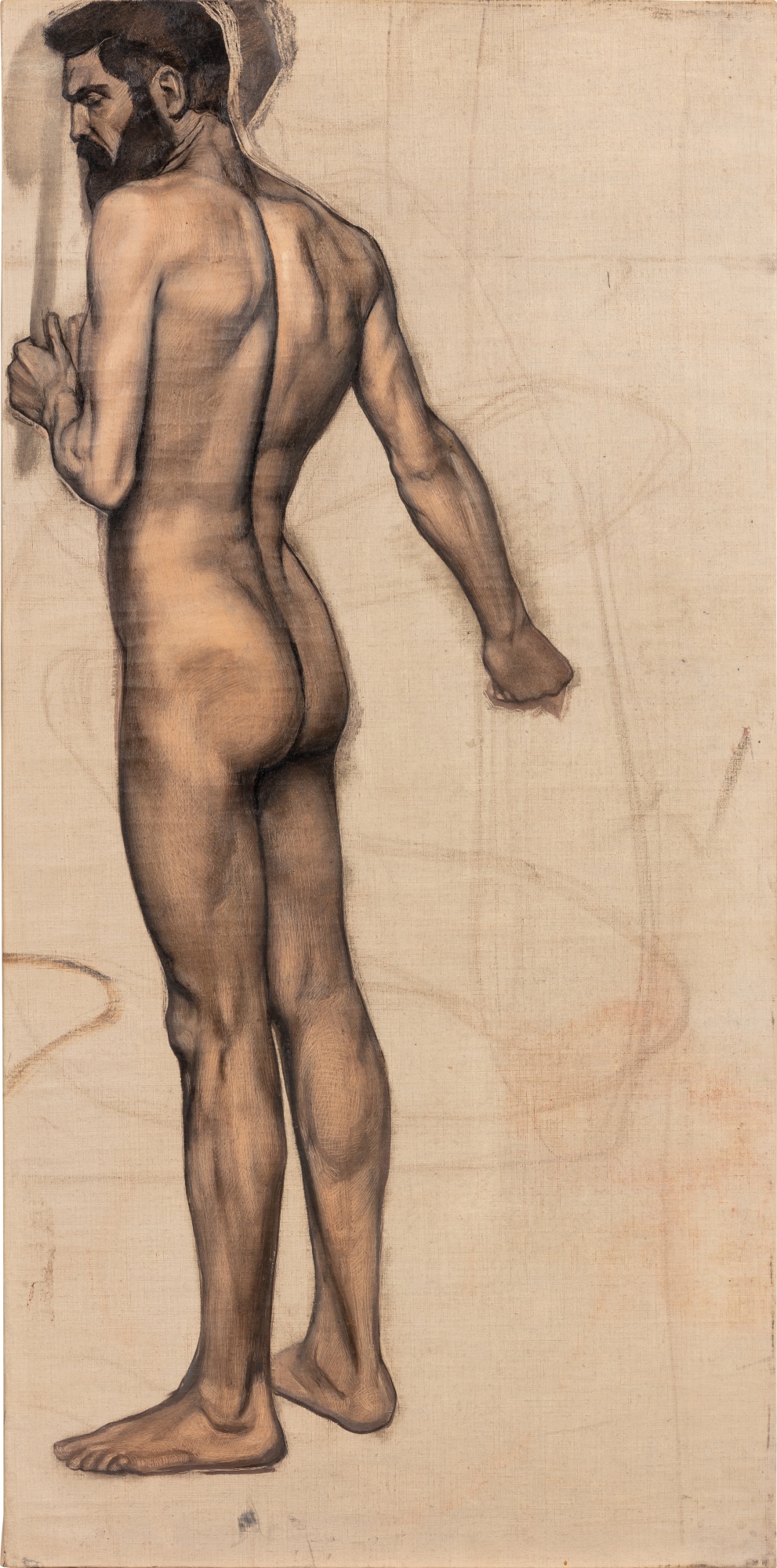
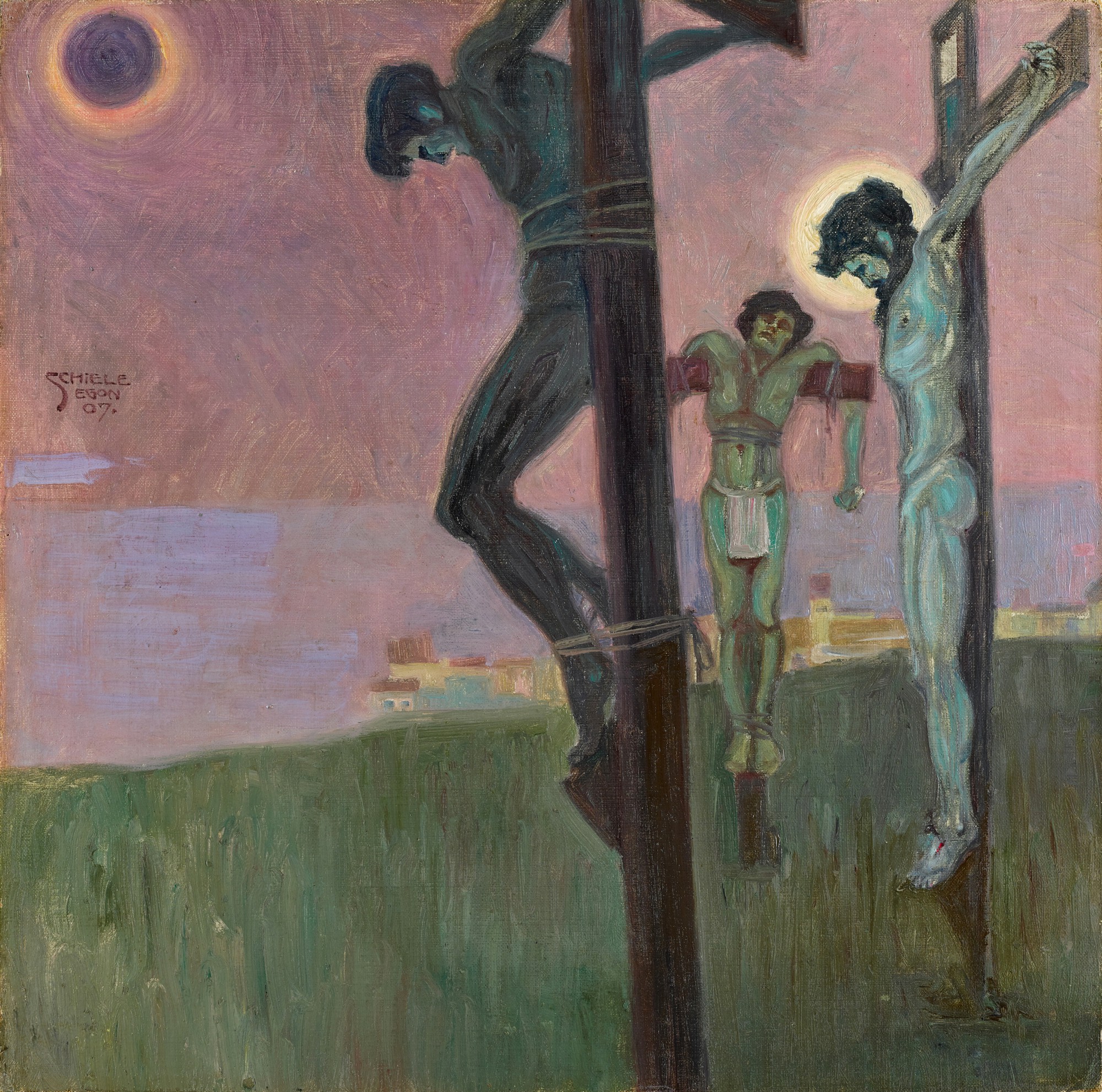
It contains within itself irreconcilable tensions: death and transcendence, humiliation and glory, the particular and the universal. These tensions have made it available to artists working in almost every cultural moment as a vehicle for whatever feels most urgent or unresolved. When Egon Schiele turned to the subject in the early twentieth century, he brought to it the same raw exposure of the self that characterizes his entire body of work, the Crucifixion becoming a figure for the isolated, suffering individual rather than a cosmic theological event. The Belgian Symbolist Emile Fabry approached sacred subjects through the filtering lens of late nineteenth century spiritual aestheticism, finding in the Crucifixion an occasion for a different kind of transcendence, one rooted in color and surface and dream.
Emile Fabry
Crucifixion
", "For collectors today, the Crucifixion as a category of works offers something genuinely rare: a subject with enough depth and range that almost any period, school, or sensibility can be explored within it. Whether your interest lies in the material history of devotional objects, the evolution of the human figure in Western painting, or the long dialogue between suffering and beauty, these works repay sustained attention. They are not merely historical artifacts. They are records of how people across eight centuries have tried to look directly at something almost impossible to look at, and made art from the attempt.
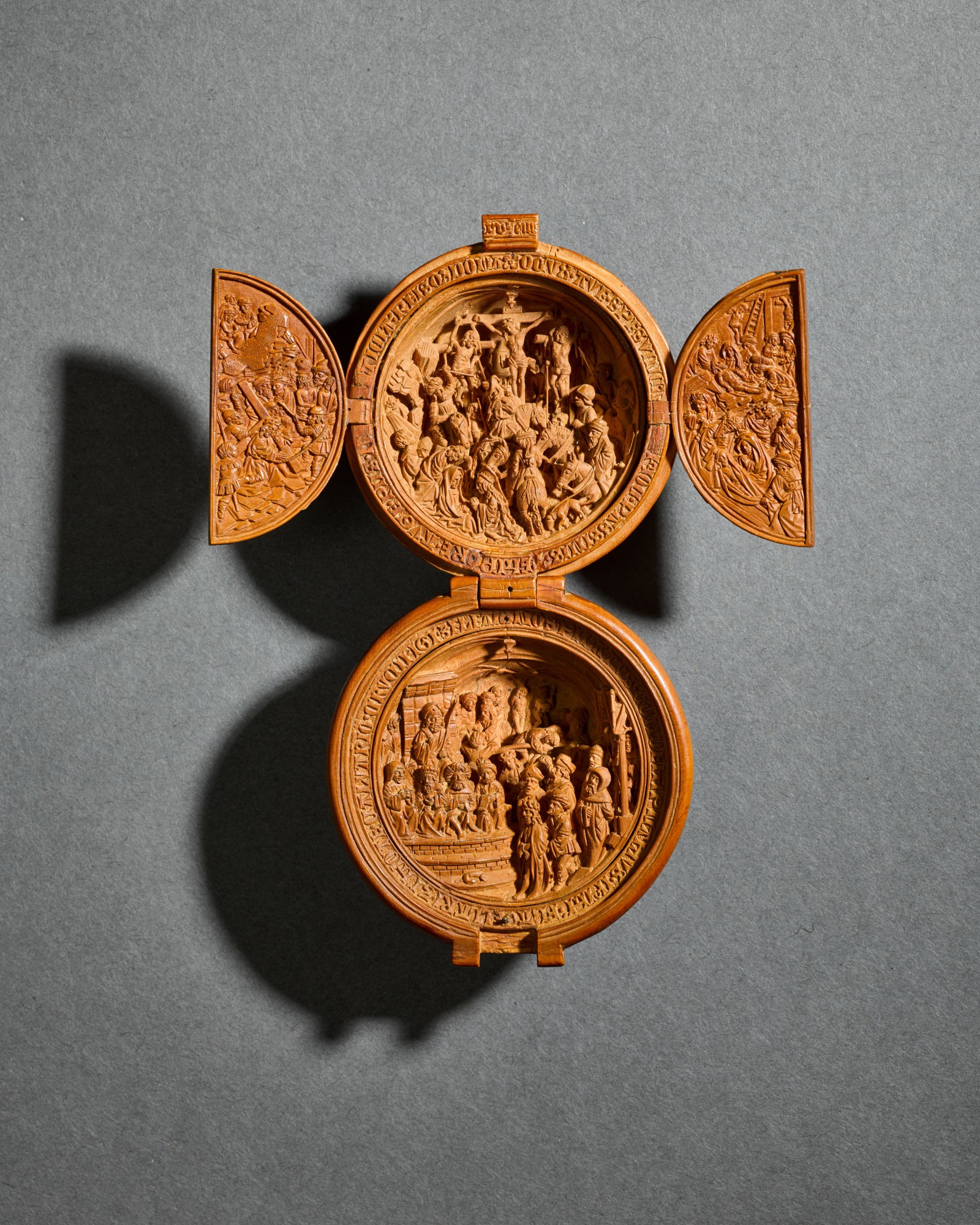
![Flemish School, first quarter of the 16th century — Triptych with the Crucifixion and Saints John the Evangelist, Francis of Assisi, Ursula, Nicholas[?], Barbara, and religious donors](https://rtwaymdozgnhgluydsys.supabase.co/storage/v1/object/public/artwork-images/auction-lots/N10938-20220519-lot201.jpg)