Join The Collection to save, track, and explore works like this.

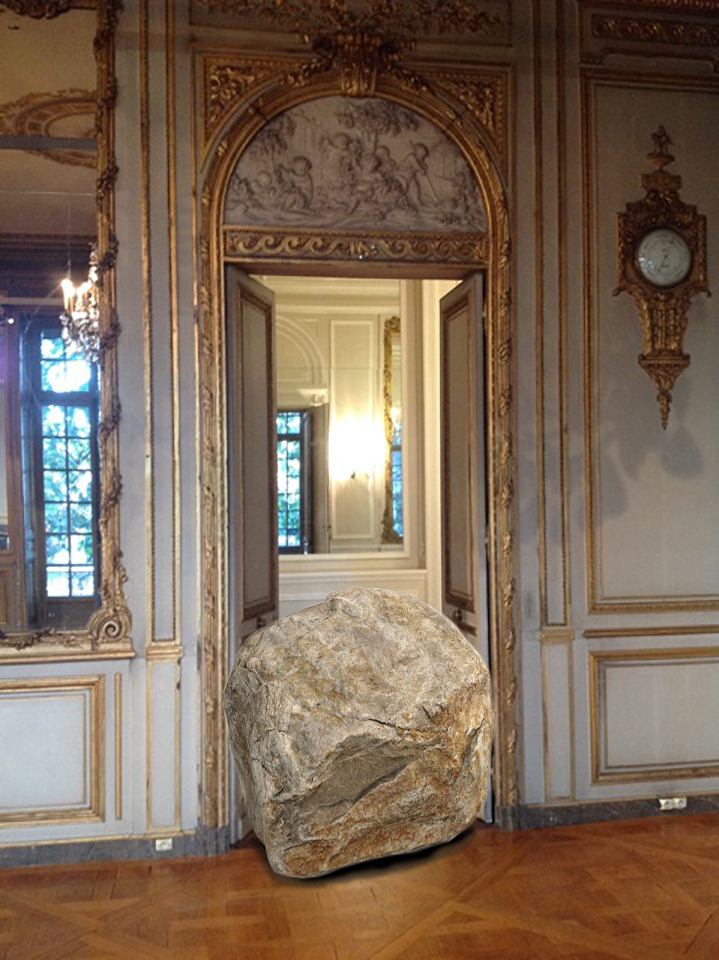
Daniel Joseph Martinez — Self-portrait #9BFifth attempt to clone mental disorder or How one philosophizes with a hammer, After Gustave Moreau, Prometheus, 1868; David Cronenberg, Videodrome, 1981
Daniel Joseph Martinez

Self-portrait #9BFifth attempt to clone mental disorder or How one philosophizes with a hammer, After Gustave Moreau, Prometheus, 1868; David Cronenberg, Videodrome, 1981

2001

A large-scale digital print measuring roughly four by five feet, this work by Daniel Joseph Martinez compresses an extraordinary density of cultural and philosophical reference into a single confrontational image. The title alone operates as a kind of manifesto, threading together Nietzschean provocation, the myth of Prometheus, Gustave Moreau's symbolist rendering of bound suffering, and David Cronenberg's body-horror meditation on technology and flesh. Martinez uses these layered citations not as decoration but as structural material, forcing the viewer to reckon with the violence implicit in the act of self-portraiture when the self in question is explicitly framed as fractured, cloned, and disordered. The digital medium is integral to this argument, allowing the artist to manipulate, duplicate, and destabilize the body with a clinical precision that painting or photography alone could not achieve. Martinez has long occupied a critical position within contemporary art, using his own body and identity as instruments for interrogating systems of power, representation, and psychological rupture. This work sits within his broader practice of radical self-portraiture, where the portrait genre is weaponized rather than celebrated. The allusion to "cloning mental disorder" speaks to questions of inheritance, repetition, and the degree to which psychological states are reproduced through culture and institutions as much as through biology. Cronenberg's Videodrome lends the piece its undercurrent of technological dread, the sense that the body is already penetrated and reorganized by external forces before any act of individual will can take place. For collectors, this work represents a significant moment in Martinez's career and in the broader history of politically engaged digital art from the early 2000s. Signed by the artist and currently held within the collection context of the Museum of Contemporary Art San Diego, it carries both institutional provenance and the kind of argumentative density that rewards sustained engagement. Its scale commands a room, and its conceptual ambition places it in direct conversation with the most urgent discourses of its era concerning identity, embodiment, and the ethics of representation.

Medium
Digital Print
Overall
Signed
Yes
Location
Museum of Contemporary Art San Diego, San Diego, CA

Start the Discussion

Request access to join the discussion

About this work

Daniel Joseph Martinez, Self-portrait #9BFifth attempt to clone mental disorder or How one philosophizes with a hammer, After Gustave Moreau, Prometheus, 1868; David Cronenberg, Videodrome, 1981, 2001

A large-scale digital print measuring roughly four by five feet, this work by Daniel Joseph Martinez compresses an extraordinary density of cultural and philosophical reference into a single confrontational image. The title alone operates as a kind of manifesto, threading together Nietzschean provocation, the myth of Prometheus, Gustave Moreau's symbolist rendering of bound suffering, and David Cronenberg's body-horror meditation on technology and flesh. Martinez uses these layered citations not as decoration but as structural material, forcing the viewer to reckon with the violence implicit in the act of self-portraiture when the self in question is explicitly framed as fractured, cloned, and disordered. The digital medium is integral to this argument, allowing the artist to manipulate, duplicate, and destabilize the body with a clinical precision that painting or photography alone could not achieve. Martinez has long occupied a critical position within contemporary art, using his own body and identity as instruments for interrogating systems of power, representation, and psychological rupture. This work sits within his broader practice of radical self-portraiture, where the portrait genre is weaponized rather than celebrated. The allusion to "cloning mental disorder" speaks to questions of inheritance, repetition, and the degree to which psychological states are reproduced through culture and institutions as much as through biology. Cronenberg's Videodrome lends the piece its undercurrent of technological dread, the sense that the body is already penetrated and reorganized by external forces before any act of individual will can take place. For collectors, this work represents a significant moment in Martinez's career and in the broader history of politically engaged digital art from the early 2000s. Signed by the artist and currently held within the collection context of the Museum of Contemporary Art San Diego, it carries both institutional provenance and the kind of argumentative density that rewards sustained engagement. Its scale commands a room, and its conceptual ambition places it in direct conversation with the most urgent discourses of its era concerning identity, embodiment, and the ethics of representation.

Medium
Digital Print
Dimensions
overall: 121.9 x 152.4 cm
Year
2001
Signed
Hand-signed by the artist
Seen at
Museum of Contemporary Art San Diego, San Diego, CA

Related themes

Mohn Art Collective

More works by Daniel Joseph Martinez