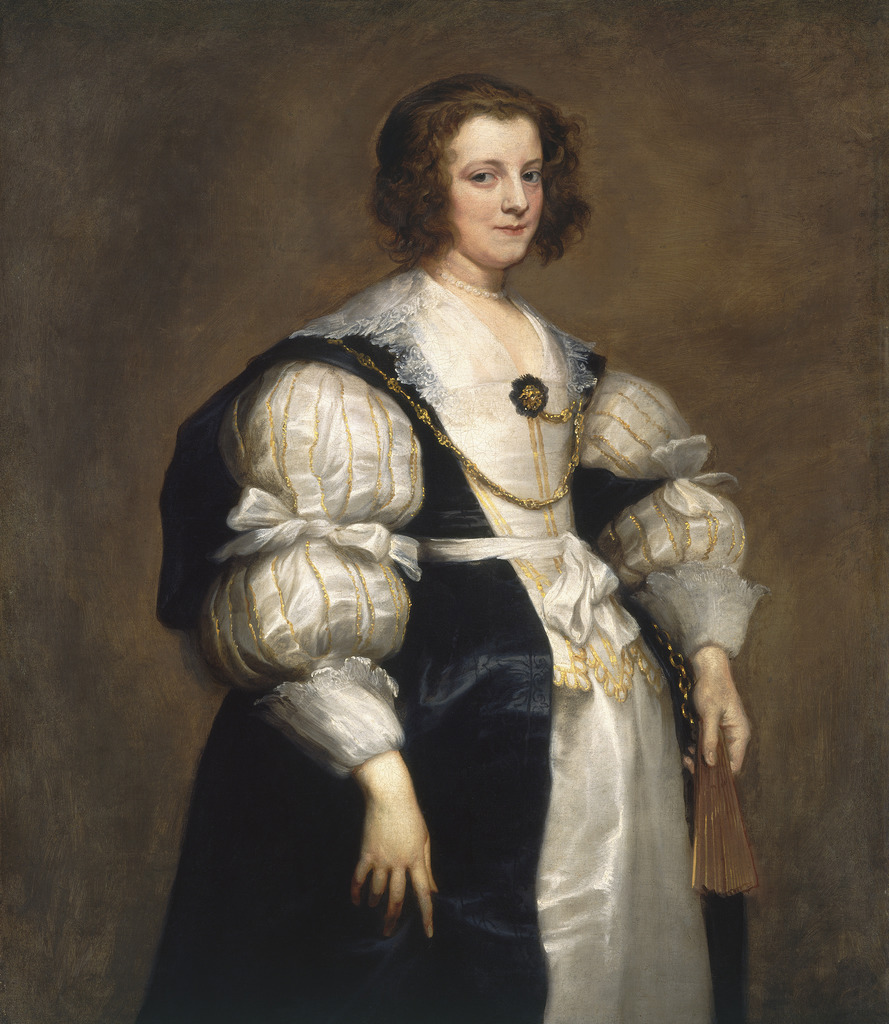
Lady with a Fan
1628
Painted in 1628 during Anthony van Dyck's extraordinarily productive Antwerp period, Lady with a Fan presents an unidentified aristocratic sitter rendered with the psychological depth and material sumptuousness that would soon make the artist the most sought-after portraitist in Europe. The subject occupies the canvas with quiet authority, her gaze direct yet coolly self-possessed, while the folded fan she holds serves as both compositional anchor and social signifier. Van Dyck's handling of fabric is at its most virtuosic here, the silks and lacework described with a feathery touch that no contemporary could match, and the warm, controlled palette draws the eye inward toward the sitter's face while sustaining an air of patrician reserve across every inch of the composition. At 109.7 by 97 centimeters, the work commands attention at a scale commensurate with its ambitions. Van Dyck understood portraiture as a form of theater, and this canvas demonstrates how fully he had absorbed lessons from Titian and Rubens while forging a visual language entirely his own, one that privileges elegance over bombast and interiority over mere display. The sitter's identity remains unknown, which paradoxically lends the picture a timeless quality, freeing it from the circumstantial and allowing it to function as a meditation on presence, composure, and the art of self-presentation. For collectors, signed works from this concentrated period in van Dyck's career represent some of the most significant opportunities available in the market for Old Master paintings. The artist's output from the late 1620s bridges his Italian formation and his celebrated English court career, placing Lady with a Fan at a pivotal juncture in the development of European portrait painting. Its condition, provenance within a major institutional context, and the undeniable authority of its execution make it an exceptionally rare and compelling acquisition.
- Medium
- Oil on canvas
- Overall
- Signed
- Yes
Spotted works by Anthony van Dyck

Start the Discussion
Request access to join the discussion