Join The Collection to save, track, and explore works like this.

Anthony van Dyck — A Genoese Noblewoman and Her Son
Anthony van Dyck

A Genoese Noblewoman and Her Son

1626

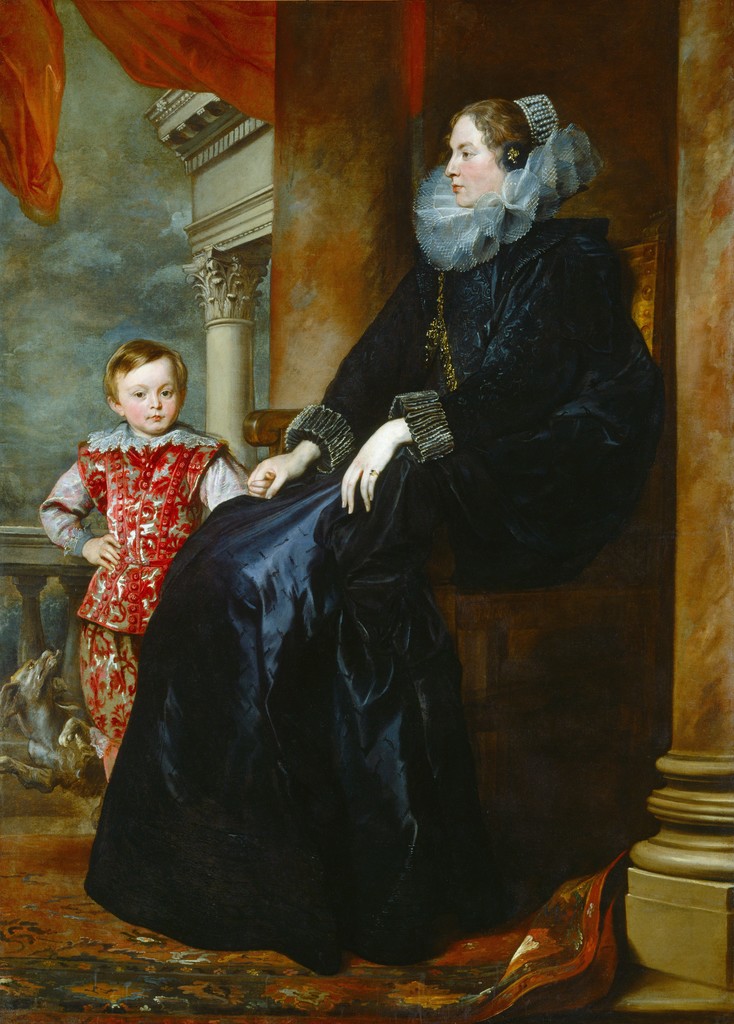
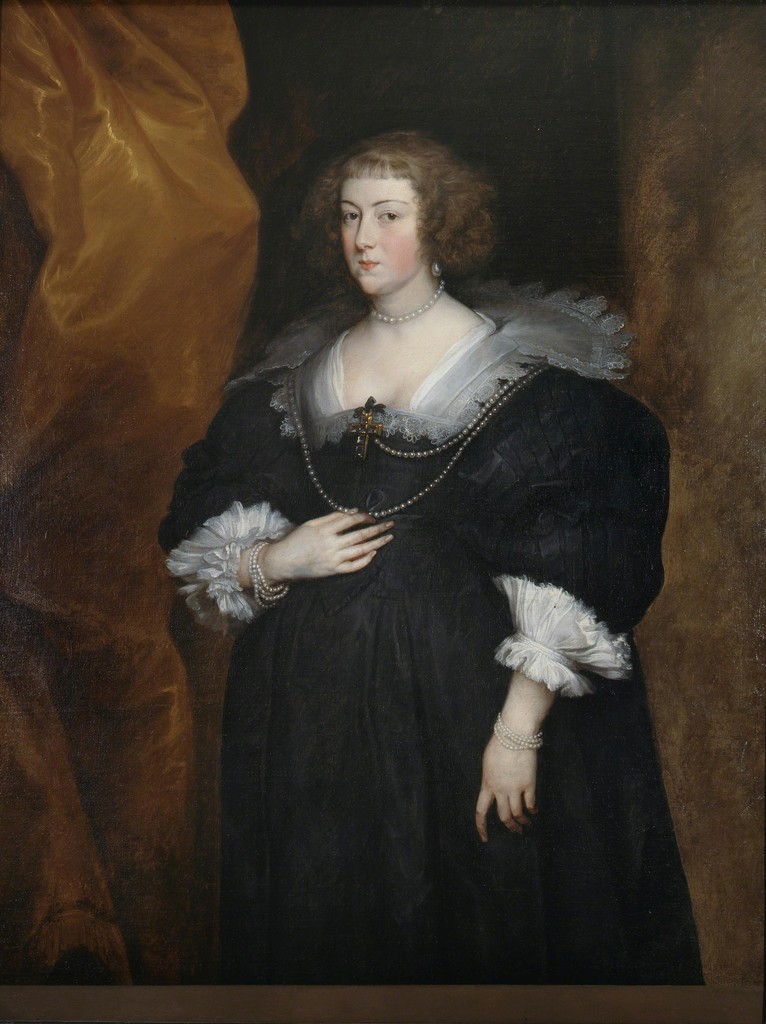
A monumental double portrait from the height of Anthony van Dyck's transformative Italian sojourn, this 1626 canvas captures a Genoese noblewoman and her young son with a psychological acuity that would come to define aristocratic portraiture for generations. The composition is commanding in its scale, the mother's dark silks and lace rendered with extraordinary tactile precision against an architectural backdrop that reinforces the family's social standing. Van Dyck positions the figures with the easy authority of someone already fluent in the visual language of power, the child's upturned gaze connecting him to his mother in a moment that feels simultaneously ceremonial and intimate. At 191.5 by 139.5 centimeters, the work imposes itself physically upon the viewer in a way entirely befitting its patrician subject matter. Van Dyck arrived in Genoa in the early 1620s and found in the city's merchant nobility an ideal clientele, families of immense wealth who were eager to be portrayed with the gravitas and refinement that the Flemish painter could deliver with unmatched facility. This canvas belongs to that celebrated Genoese sequence, works in which the artist synthesized the lessons of Titian and Rubens into something distinctly his own, a mode of portraiture defined by elegant elongation, atmospheric sensitivity, and a gift for conveying social confidence without sacrificing human warmth. The drapery, in particular, demonstrates his virtuosity, cascading in passages that reward close examination while contributing to the overall compositional flow. The work's institutional pedigree speaks to its enduring significance. Long held within the Widener Collection before entering the National Gallery of Art in Washington in 1942, it represents the kind of acquisition that shaped the foundational holdings of a major public institution. Collectors encountering it at the Royal Academy of Arts have a rare opportunity to engage directly with a painting that has been central to scholarly understanding of Van Dyck's development at a pivotal moment in his career.

Medium
Oil on canvas
Overall
Signed
Yes
Location
Royal Academy of Arts, City of Westminster, United Kingdom
Start the Discussion

Request access to join the discussion

Spotted works by Anthony van Dyck

About this work

Anthony van Dyck, A Genoese Noblewoman and Her Son, 1626

A monumental double portrait from the height of Anthony van Dyck's transformative Italian sojourn, this 1626 canvas captures a Genoese noblewoman and her young son with a psychological acuity that would come to define aristocratic portraiture for generations. The composition is commanding in its scale, the mother's dark silks and lace rendered with extraordinary tactile precision against an architectural backdrop that reinforces the family's social standing. Van Dyck positions the figures with the easy authority of someone already fluent in the visual language of power, the child's upturned gaze connecting him to his mother in a moment that feels simultaneously ceremonial and intimate. At 191.5 by 139.5 centimeters, the work imposes itself physically upon the viewer in a way entirely befitting its patrician subject matter. Van Dyck arrived in Genoa in the early 1620s and found in the city's merchant nobility an ideal clientele, families of immense wealth who were eager to be portrayed with the gravitas and refinement that the Flemish painter could deliver with unmatched facility. This canvas belongs to that celebrated Genoese sequence, works in which the artist synthesized the lessons of Titian and Rubens into something distinctly his own, a mode of portraiture defined by elegant elongation, atmospheric sensitivity, and a gift for conveying social confidence without sacrificing human warmth. The drapery, in particular, demonstrates his virtuosity, cascading in passages that reward close examination while contributing to the overall compositional flow. The work's institutional pedigree speaks to its enduring significance. Long held within the Widener Collection before entering the National Gallery of Art in Washington in 1942, it represents the kind of acquisition that shaped the foundational holdings of a major public institution. Collectors encountering it at the Royal Academy of Arts have a rare opportunity to engage directly with a painting that has been central to scholarly understanding of Van Dyck's development at a pivotal moment in his career.

Medium
Oil on canvas
Dimensions
overall: 191.5 x 139.5 cm
Year
1626
Signed
Hand-signed by the artist
Seen at
Royal Academy of Arts, City of Westminster, United Kingdom
More works by Anthony van Dyck

Collected by

Cleveland Museum of Art