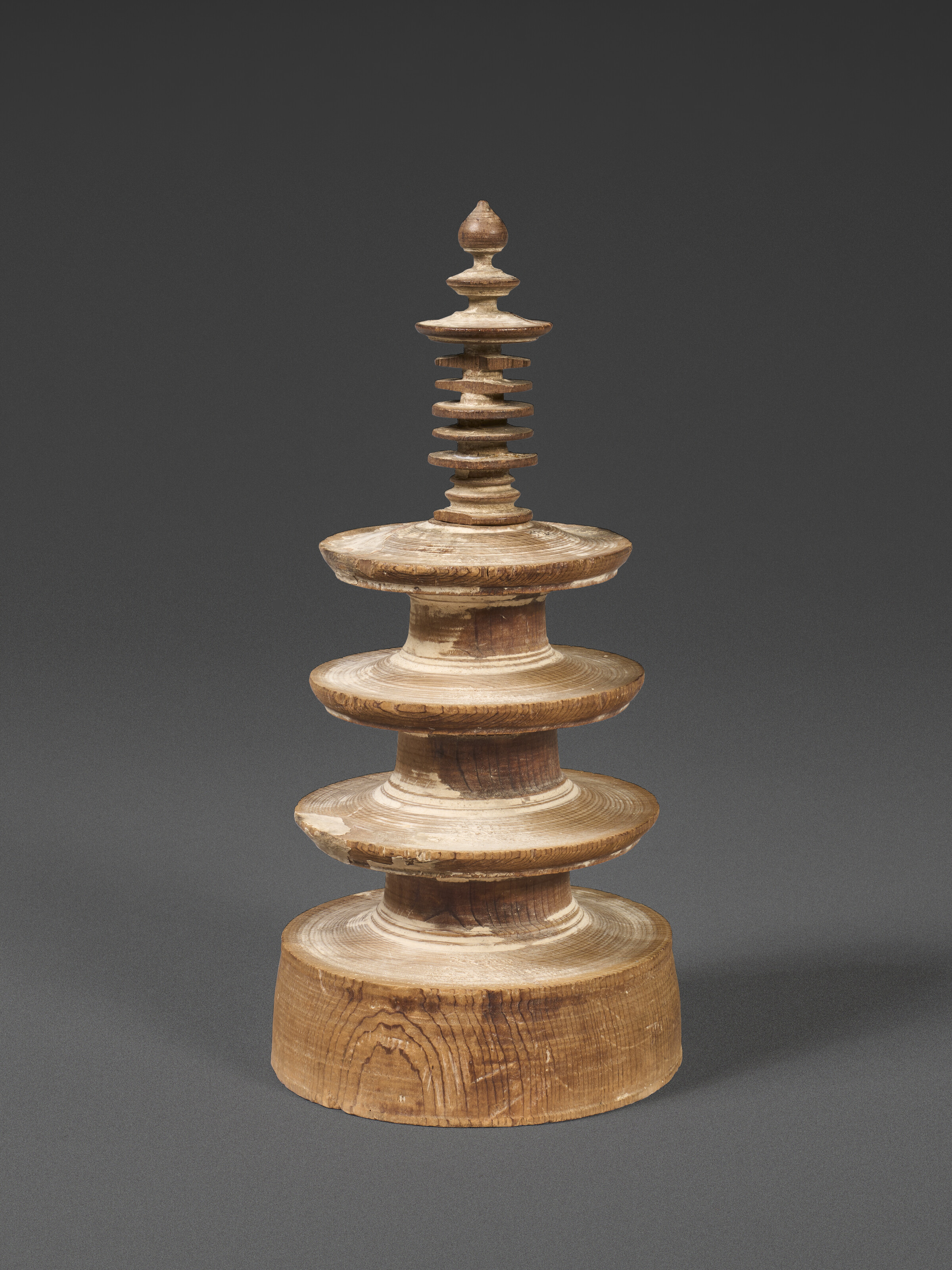
A Wood Pagoda From The Set Of 'one Million Pagodas' ( Hyakumanto )
NARA PERIOD (8TH CENTURY)
This wooden pagoda represents one of the Hyakumanto (One Million Pagodas), a remarkable mass production project commissioned by Empress Koken in the 8th century as an offering for peace and prosperity. Each diminutive pagoda contained a printed dharani (Buddhist prayer) and was distributed to temples throughout Japan, making this one of the earliest examples of woodblock printing. The delicate architecture and meticulous craftsmanship exemplify the refined aesthetic and religious devotion characteristic of the Nara Period.
- Spotted At
- Auction House · Christie's
Notes
LOT ESSAY The Empress Shotoku, either in gratitude or hopes for the end of civil strife or to atone for an inappropriate liaison with a Buddhist monk (accounts vary), commissioned one million miniature pagodas to be placed in Buddhist temples throughout Japan. Each hyakumanto contained in its hollow core one small scroll, called dharani, in Sanskrit with Chinese characters, printed on paper from either a wood block or metal plate (historians disagree on the production method). The Buddhist charm or prayer is an excerpt from a sutra (a collection of precepts) that promises expiation of sin and the awarding of religious merit through the copying of prayers and construction of the repositories. There was a selection of four texts for the dharani. This is the earliest authenticated physical example of printing (there is a Korean contender), preceding Gutenberg’s moveable type by several centuries. Although there remain pagodas in the temple at Horyuji, examples of the hyakumanto are fairly rare outside of Japan.
🔨 Auction Lot
Japanese and Korean Art
March 24, 2026
Estimate: $5,000 – $7,000
Lot 27
Start the Discussion
Request access to join the discussion