Join The Collection to save, track, and explore works like this.

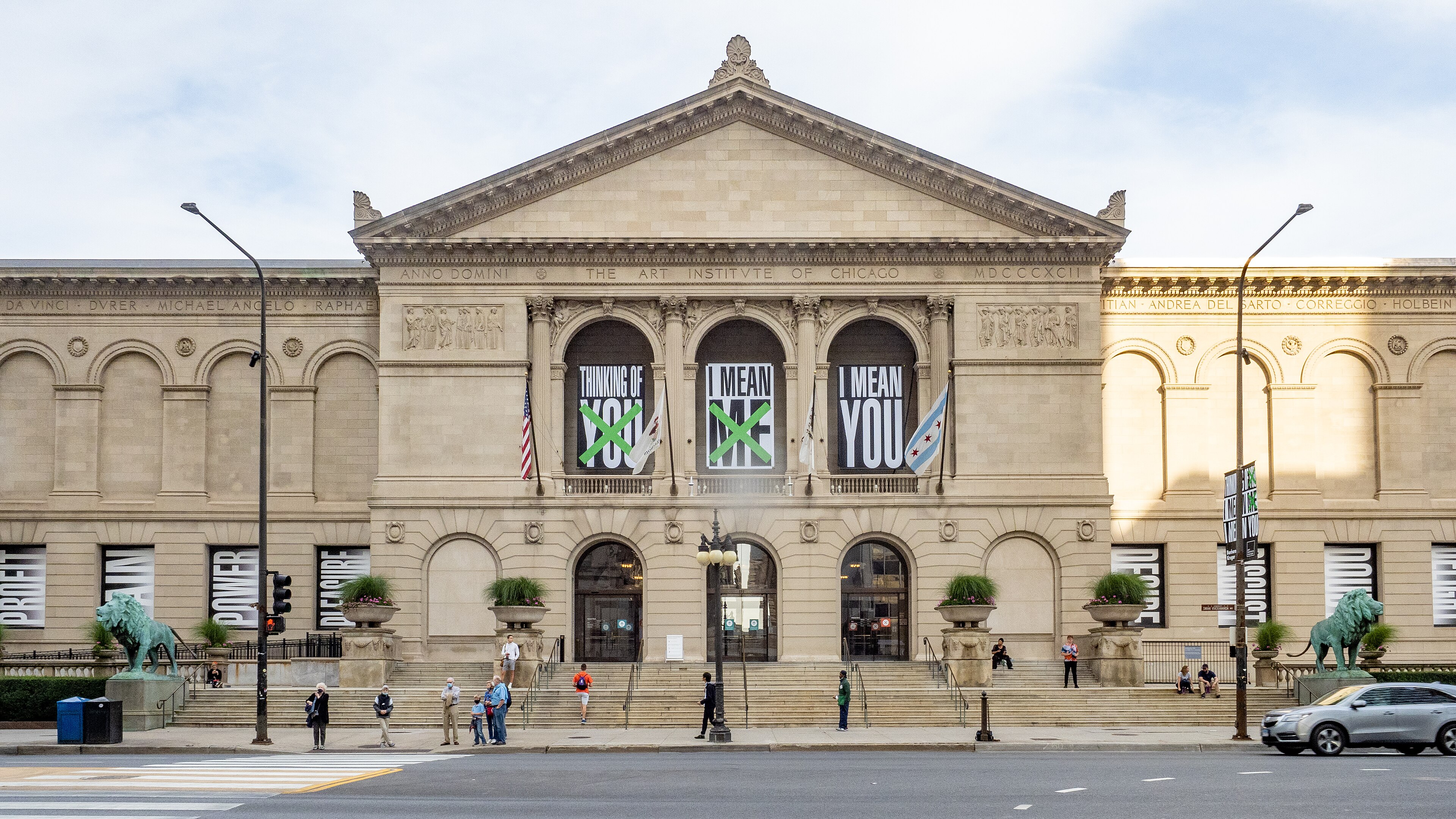
Art Institute of Chicago

Spotted

Claude Monet — Water Lilies
Claude Monet

Water Lilies

1906

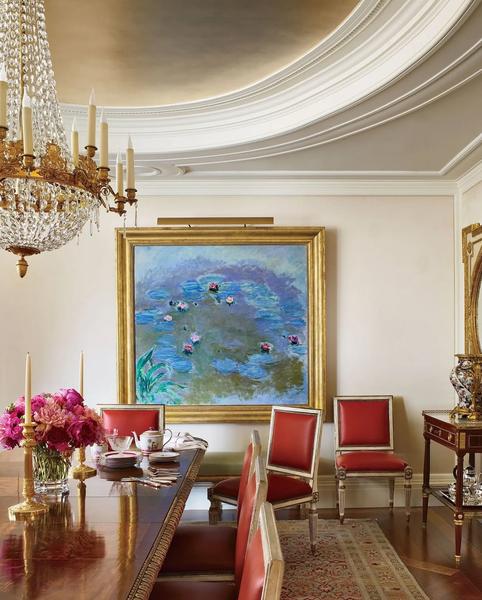
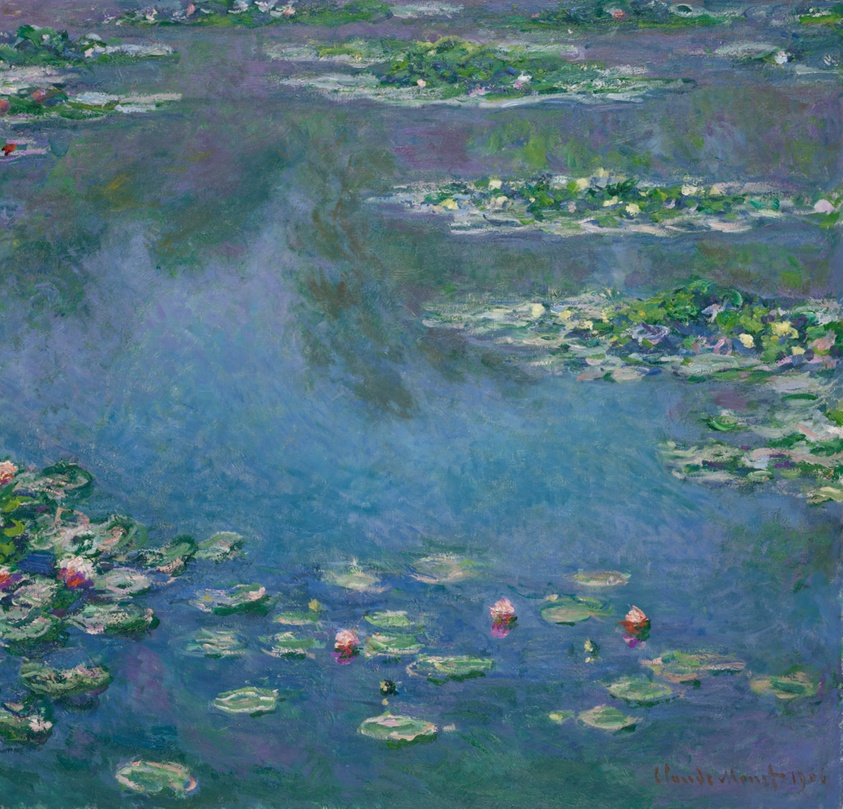
“One instant, one aspect of nature contains it all,” said Claude Monet, referring to his late masterpieces, the water landscapes that he produced at his home in Giverny between 1897 and his death in 1926. These works replaced the varied contemporary subjects he had painted from the 1870s through the 1890s with a single, timeless motif—water lilies. The focal point of these paintings was the artist’s beloved flower garden, which featured a water garden and a smaller pond spanned by a Japanese footbridge. In his first water-lily series (1897–99), Monet painted the pond environment, with its plants, bridge, and trees neatly divided by a fixed horizon. Over time, the artist became less and less concerned with conventional pictorial space. By the time he painted Water Lilies, which comes from his third group of these works, he had dispensed with the horizon line altogether. In this spatially ambiguous canvas, the artist looked down, focusing solely on the surface of the pond, with its cluster of vegetation floating amid the reflection of sky and trees. Monet thus created the image of a horizontal surface on a vertical one.

Medium
Oil on canvas
Dimensions

Start the Discussion

Request access to join the discussion

About this work

Claude Monet, Water Lilies, 1906

“One instant, one aspect of nature contains it all,” said Claude Monet, referring to his late masterpieces, the water landscapes that he produced at his home in Giverny between 1897 and his death in 1926. These works replaced the varied contemporary subjects he had painted from the 1870s through the 1890s with a single, timeless motif—water lilies. The focal point of these paintings was the artist’s beloved flower garden, which featured a water garden and a smaller pond spanned by a Japanese footbridge. In his first water-lily series (1897–99), Monet painted the pond environment, with its plants, bridge, and trees neatly divided by a fixed horizon. Over time, the artist became less and less concerned with conventional pictorial space. By the time he painted Water Lilies, which comes from his third group of these works, he had dispensed with the horizon line altogether. In this spatially ambiguous canvas, the artist looked down, focusing solely on the surface of the pond, with its cluster of vegetation floating amid the reflection of sky and trees. Monet thus created the image of a horizontal surface on a vertical one.

Medium
Oil on canvas
Dimensions
89.9 x 94.1 cm
Year
1906
Seen at
Art Institute of Chicago, Chicago, IL

Related themes

Modern, Unique Work, Painting, Oil on Canvas

More works by Claude Monet

Collected by

Sebastián In Situ, Art Institute of Chicago, Harvard Art Museums, Cleveland Museum of Art, Alex Capecelatro, Sebastián Naranjo