Join The Collection to save, track, and explore works like this.

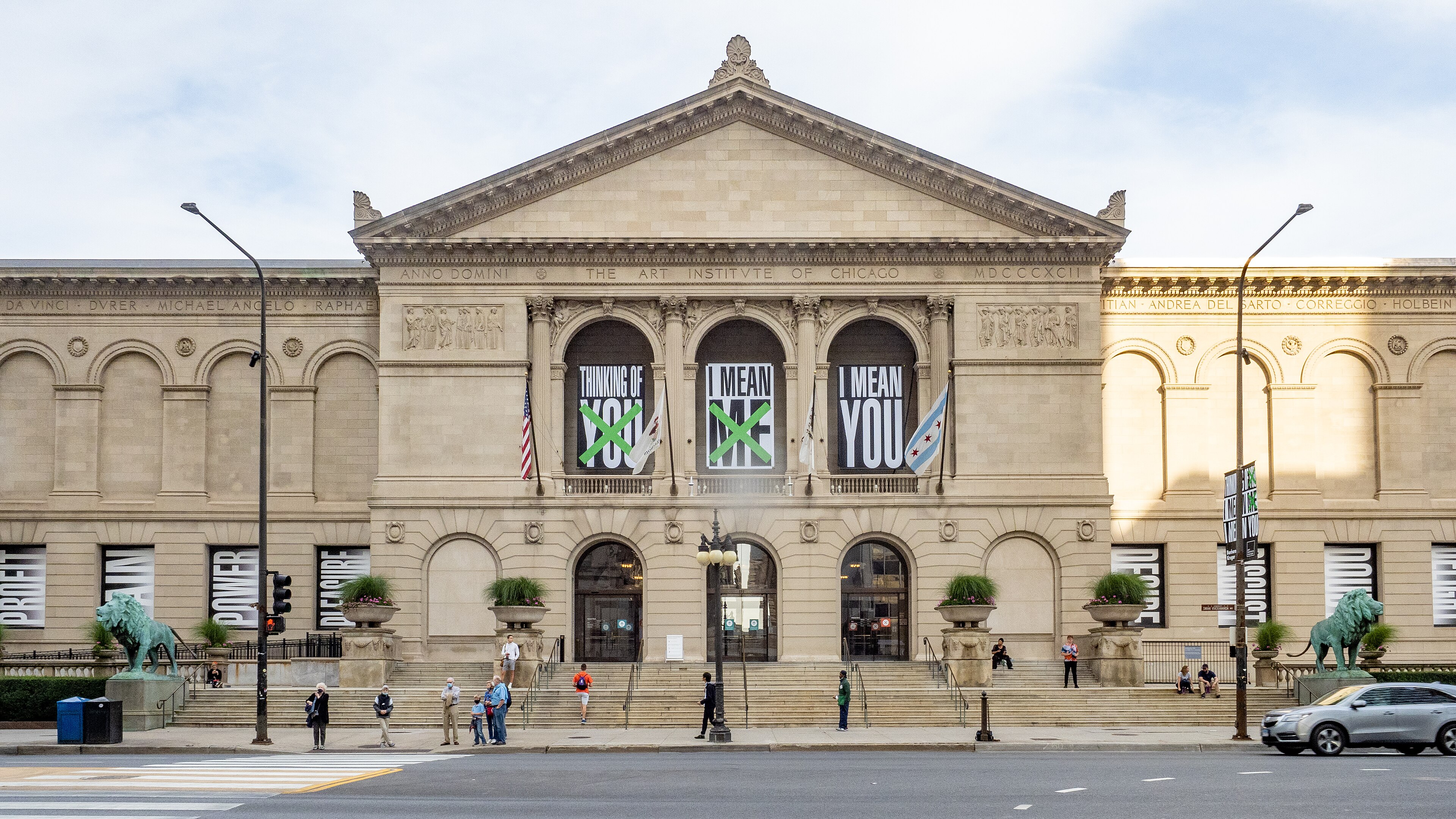
Art Institute of Chicago

Spotted

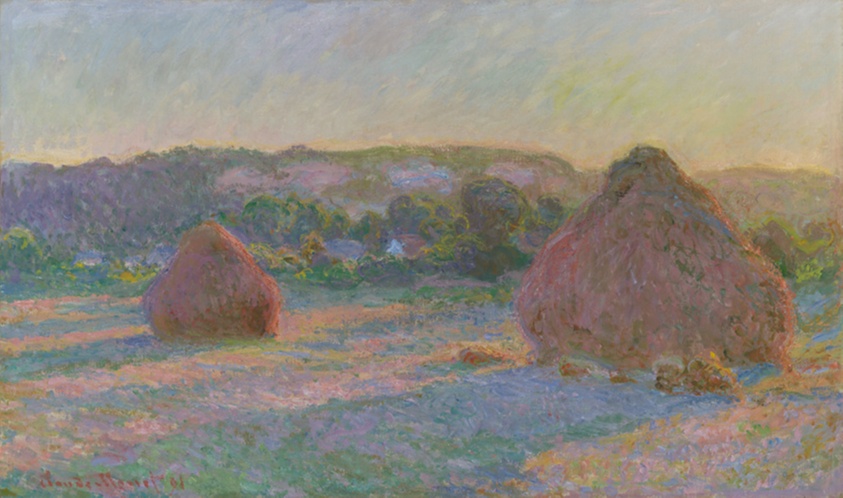
Claude Monet — Stacks of Wheat (End of Summer)
Claude Monet

Stacks of Wheat (End of Summer)

1890

The monumental stacks that Claude Monet depicted in his series Stacks of Wheat rose fifteen to twenty feet and stood just outside the artist’s farmhouse at Giverny. Through 1890 and 1891, he worked on this series both in the field, painting simultaneously at several easels, and in the studio, refining pictorial harmonies. In May 1891, Monet hung fifteen of these canvases next to each other in one small room in the Galerie Durand-Ruel in Paris. An unprecedented critical and financial success, the exhibition marked a breakthrough in Monet’s career, as well as in the history of French art. In this view, and in nearly all of the autumn views in the series, the conical tops of the stacks break the horizon and push into the sky. But in most of the winter views, which constitute the core of the series, the stacks seem wrapped by bands of hill and field, as if bedded down for the season. For Monet, the stack was a resonant symbol of sustenance and survival. He followed this group with further series depicting poplars, the facade of Rouen Cathedral, and, later, his own garden at Giverny. The Art Institute has the largest group of Monet’s Stacks of Wheat in the world.

Medium
Oil on canvas
Dimensions

Start the Discussion

Request access to join the discussion

About this work

Claude Monet, Stacks of Wheat (End of Summer), 1890

The monumental stacks that Claude Monet depicted in his series Stacks of Wheat rose fifteen to twenty feet and stood just outside the artist’s farmhouse at Giverny. Through 1890 and 1891, he worked on this series both in the field, painting simultaneously at several easels, and in the studio, refining pictorial harmonies. In May 1891, Monet hung fifteen of these canvases next to each other in one small room in the Galerie Durand-Ruel in Paris. An unprecedented critical and financial success, the exhibition marked a breakthrough in Monet’s career, as well as in the history of French art. In this view, and in nearly all of the autumn views in the series, the conical tops of the stacks break the horizon and push into the sky. But in most of the winter views, which constitute the core of the series, the stacks seem wrapped by bands of hill and field, as if bedded down for the season. For Monet, the stack was a resonant symbol of sustenance and survival. He followed this group with further series depicting poplars, the facade of Rouen Cathedral, and, later, his own garden at Giverny. The Art Institute has the largest group of Monet’s Stacks of Wheat in the world.

Medium
Oil on canvas
Dimensions
60 x 100.5 cm
Year
1890
Seen at
Art Institute of Chicago, Chicago, IL

Related themes

Modern, Unique Work, Painting, Oil on Canvas

More works by Claude Monet

Collected by

Sebastián In Situ, Art Institute of Chicago, Harvard Art Museums, Cleveland Museum of Art, Alex Capecelatro, Sebastián Naranjo