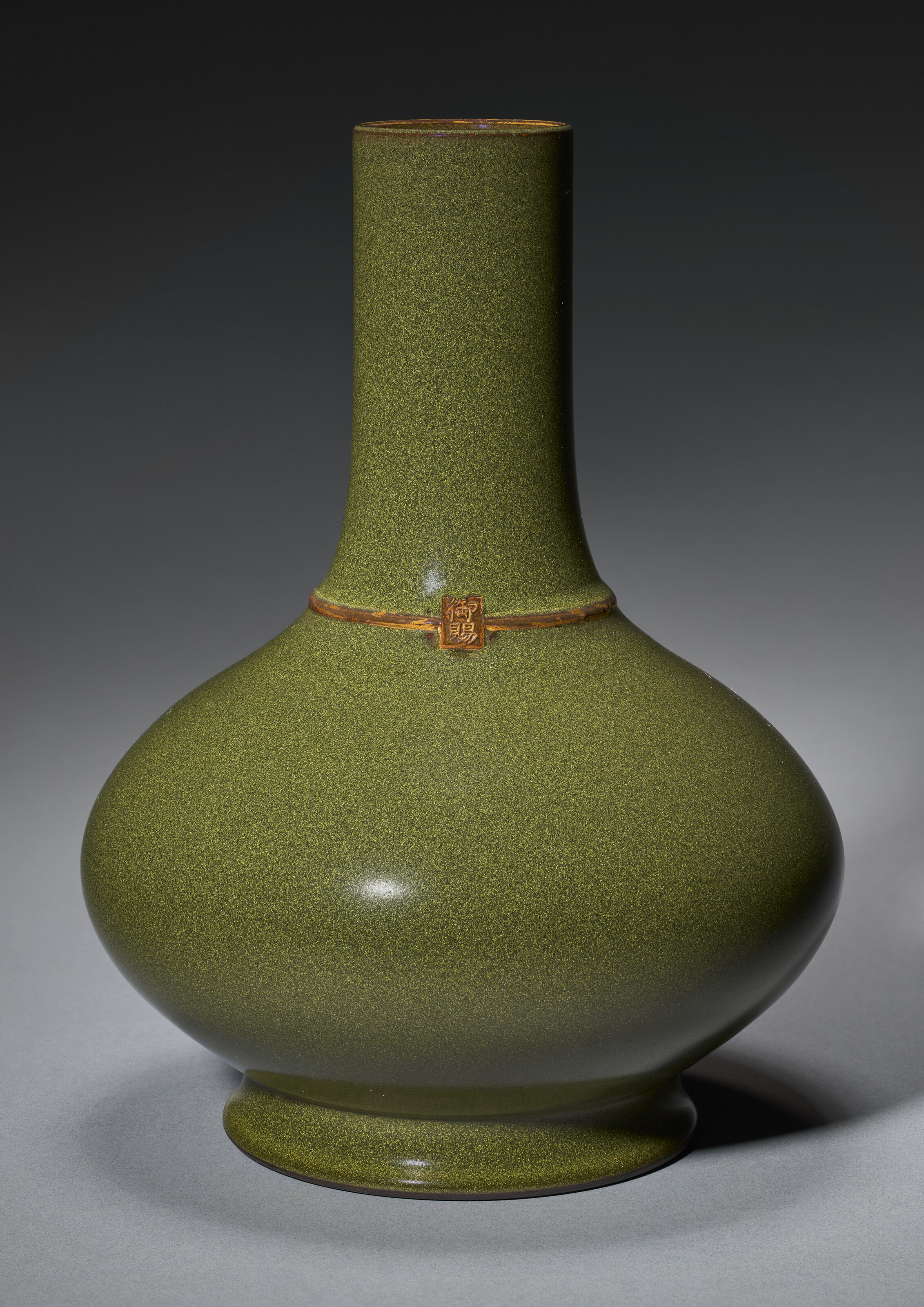
QIANLONG IMPRESSED SEAL MARK AND OF THE PERIOD (1736-1795)
This exceptional bottle vase exemplifies the refined ceramics produced during the Qianlong Emperor's reign, one of the most prosperous periods in Chinese porcelain manufacture. The teadust glaze, a subtle and sophisticated finish featuring fine speckled coloration, represents a technically demanding achievement that required considerable skill to execute consistently. The presence of an impressed seal mark confirms imperial attribution, indicating this piece was created within the palace workshops and represents the pinnacle of Qing dynasty ceramic artistry.
- Spotted At
- Auction House · Christie's
Notes
LOT ESSAY The present vase is of the form known in Chinese as biqi ping (荸荠瓶), named for its compressed, rounded body resembling the water chestnut. With its straight neck, gently sloping shoulders, and flattened globular body, this elegant silhouette achieved particular popularity during the Kangxi, Yongzheng, and Qianlong reigns, when it was produced in a wide range of monochrome and decorated wares. The vessel is covered overall with a finely mottled teadust glaze. The neck is encircled with an applied orange-red band edged in gilt and centered on the front with a raised rectangular plaque carved in regular script with the gilt inscription reading yuci (御賜, “imperially bestowed”). The refined execution of the inscription—rare on imperial monochrome porcelains—strongly indicates that the vase was intended as a presentation piece bestowed by the court upon a meritorious recipient, underscoring its special status and rarity. A nearly identical Qianlong mark-and-period teadust-glazed example, similarly inscribed yuci on the neck, is in in the collection of the Shenyang Imperial Palace Museum and illustrated in The Prime Cultural Relics Collected by the Shenyang Imperial Palace Museum: The Chinaware Volume The Second Part, Shenyang, 2008, pp. 98–9.
🔨 Auction Lot
Important Chinese Art
March 26, 2026
Estimate: $70,000 – $100,000
Lot 664
Start the Discussion
Request access to join the discussion