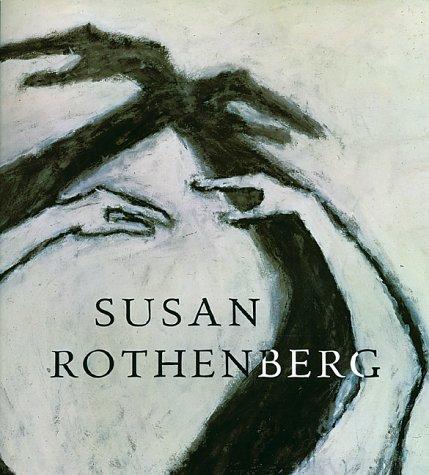
Susan Rothenberg
Susan Rothenberg: A Force Utterly Her Own
Artist Spotlight · The Collection Editorial
When the Whitney Museum of American Art mounted a major retrospective of Susan Rothenberg's work in 2000, visitors encountered something rare in contemporary painting: an artist who had remade the language of her medium not once but several times over, each reinvention as assured and necessary as the last. The exhibition moved through decades of charged, trembling canvases and revealed a painter of extraordinary depth, one who had managed to hold abstraction and figuration in a state of permanent, productive tension. Critics who had followed her career since the 1970s found themselves reconsidering the full arc of her achievement, while younger visitors discovered for the first time just how singular her vision had always been. It was a homecoming of the highest order.
Susan Rothenberg
Stumblebum
Susan Rothenberg was born in Buffalo, New York in 1945, and came of age artistically in New York City during one of the most charged periods in American cultural history. She studied at Cornell University before continuing her education at the Corcoran Museum School in Washington, D.C., and she arrived in New York in the late 1960s at precisely the moment when minimalism was consolidating its grip on the most serious galleries and critical conversations in the country.
The atmosphere was rigorous, demanding, and in certain ways constraining, shaped by an insistence on pure form and an almost doctrinal suspicion of anything that smelled of personal emotion or narrative meaning. Rothenberg absorbed these lessons with genuine intelligence, but she was already beginning to feel toward something else. The breakthrough came in the mid 1970s, when Rothenberg introduced the image of the horse into her paintings. These were not horses in any illustrative or representational sense: they were ghostly presences, bisected by vertical lines, rendered in muted earth tones and powdery whites, hovering between symbol and sensation.
Susan Rothenberg
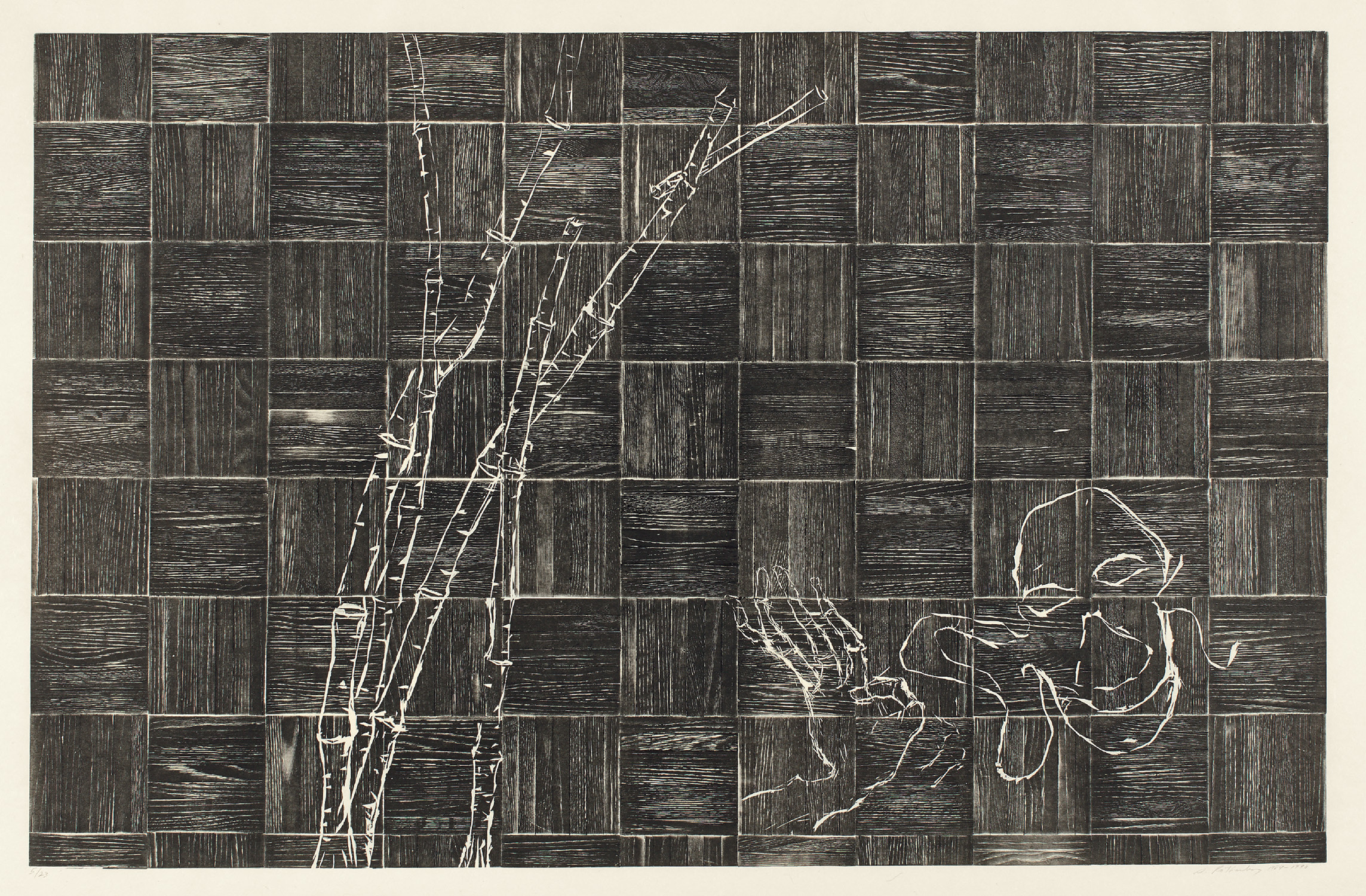
Listening Bamboo
The 1975 canvas known as Axes, in which a horse form is divided by a bold cross shape, announced an entirely new possibility in American painting. It was figurative but not illustrational, abstract but not empty, emotionally resonant but never sentimental. The art world took immediate notice. Paula Cooper Gallery, which had been her dealer and champion since the mid 1970s, provided the platform from which her reputation spread rapidly through New York and then internationally.
These early horse paintings, made with acrylic and Flashe on canvas, placed Rothenberg at the vanguard of what would soon be called Neo Expressionism, though she was too original and too restless to be comfortably contained by any movement. The critic Robert Hughes, writing in 1984, captured something essential about Rothenberg's method when he observed that she always liked to play on contradictions between the quick, snapshot nature of her chosen image and the nuanced, obviously slow way it was presented. This tension between the instantaneous and the labored, the gestural and the considered, is at the heart of everything that makes her work so compelling to live with. Her paintings reward sustained looking precisely because they were made through sustained looking, through a process of accumulation and revision that left its traces in the layered, atmospheric surfaces of her canvases.
Susan Rothenberg
Susan Rothenberg
Works from this period such as Red Trunk from 1980 carry that quality of concentrated attention, the paint building meaning gradually the way ice forms over still water. In 1990, Rothenberg made a significant life change when she moved with the painter Bruce Nauman to Galisteo, New Mexico, a small community outside Santa Fe. The move proved transformative. The light of the Southwest, its expansive silence and its particular quality of physical presence, began to infiltrate her canvases in ways both obvious and subtle.
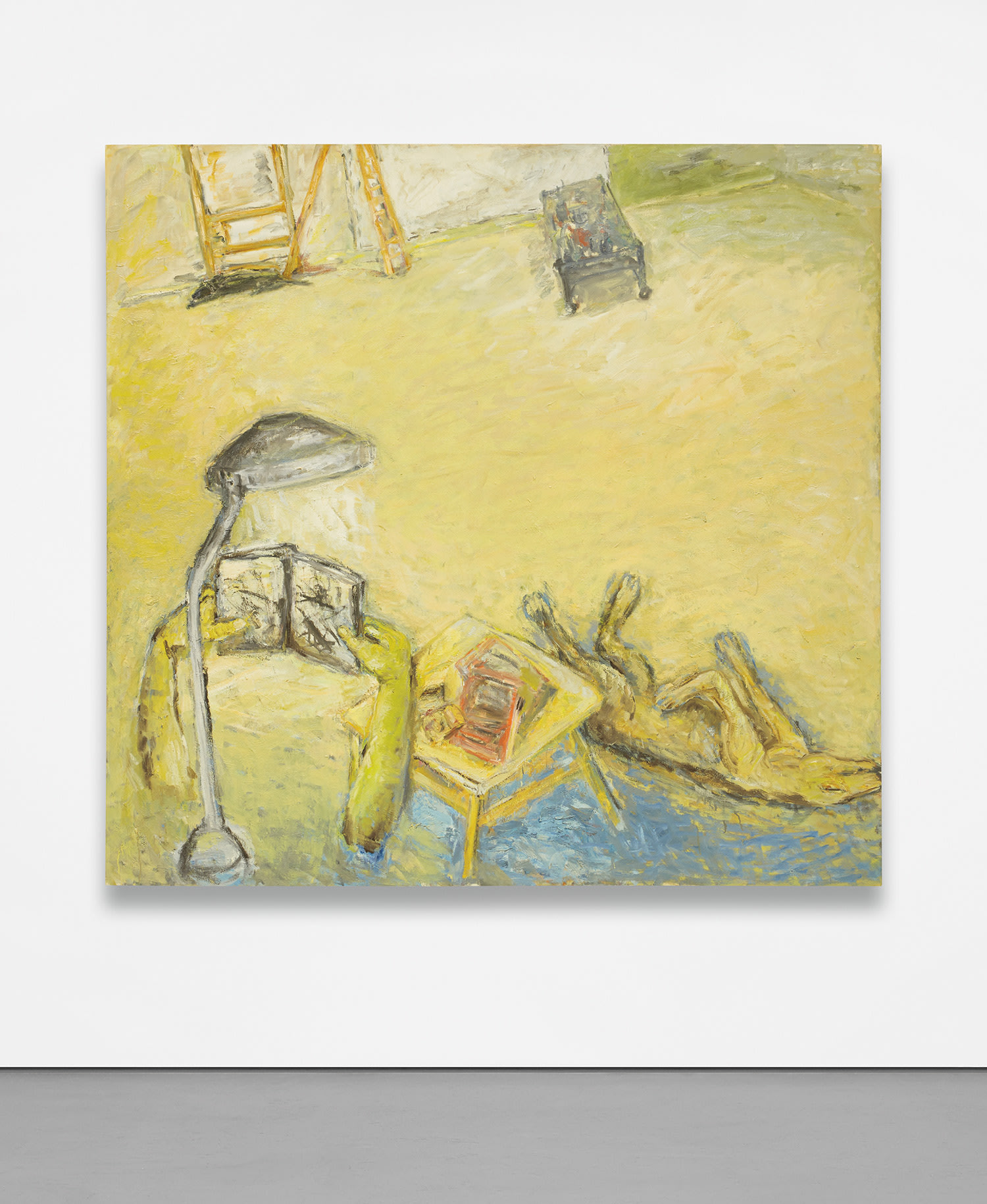
Figures became more explicitly human, sometimes performing actions that hovered between the mundane and the ritualistic. Heads appeared, hands, bodies in motion. The horses did not disappear entirely but gave way to a broader vocabulary of gesture and presence. Paintings like Yellow Studio from 2002 reflect this matured vision, in which domestic space and psychological interiority become interchangeable territories.
Susan Rothenberg
Yellow Studio, 2002
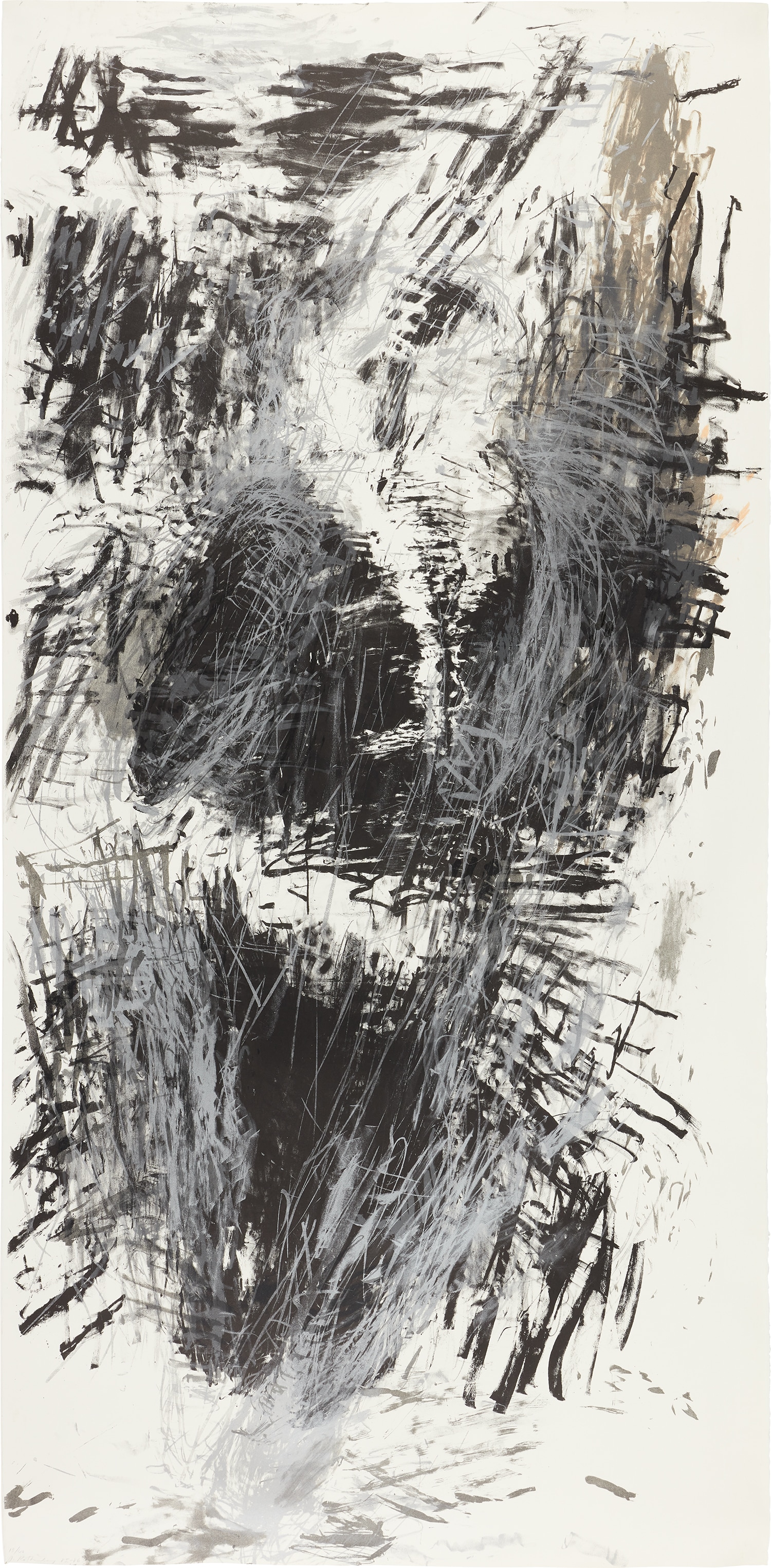
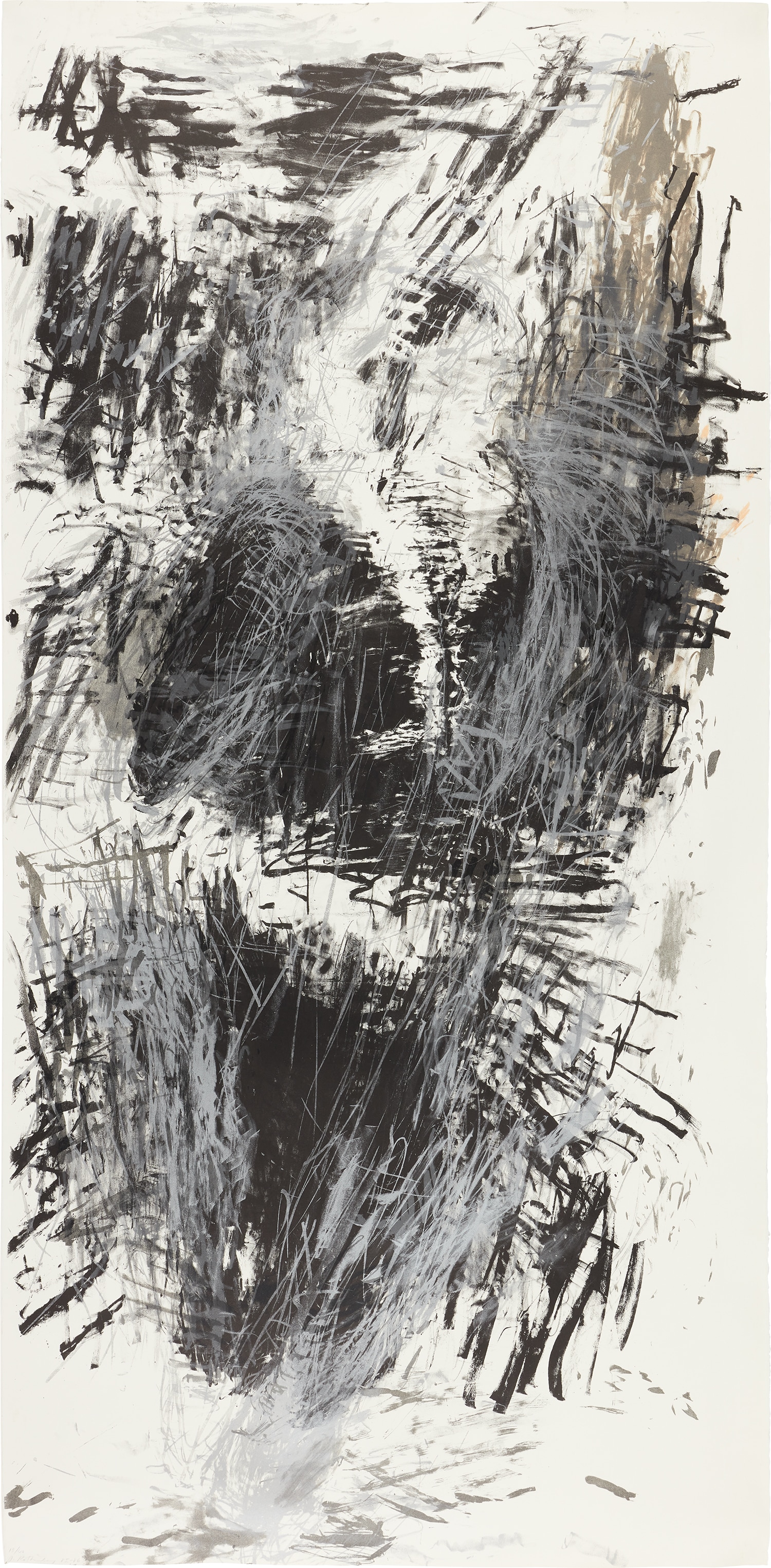
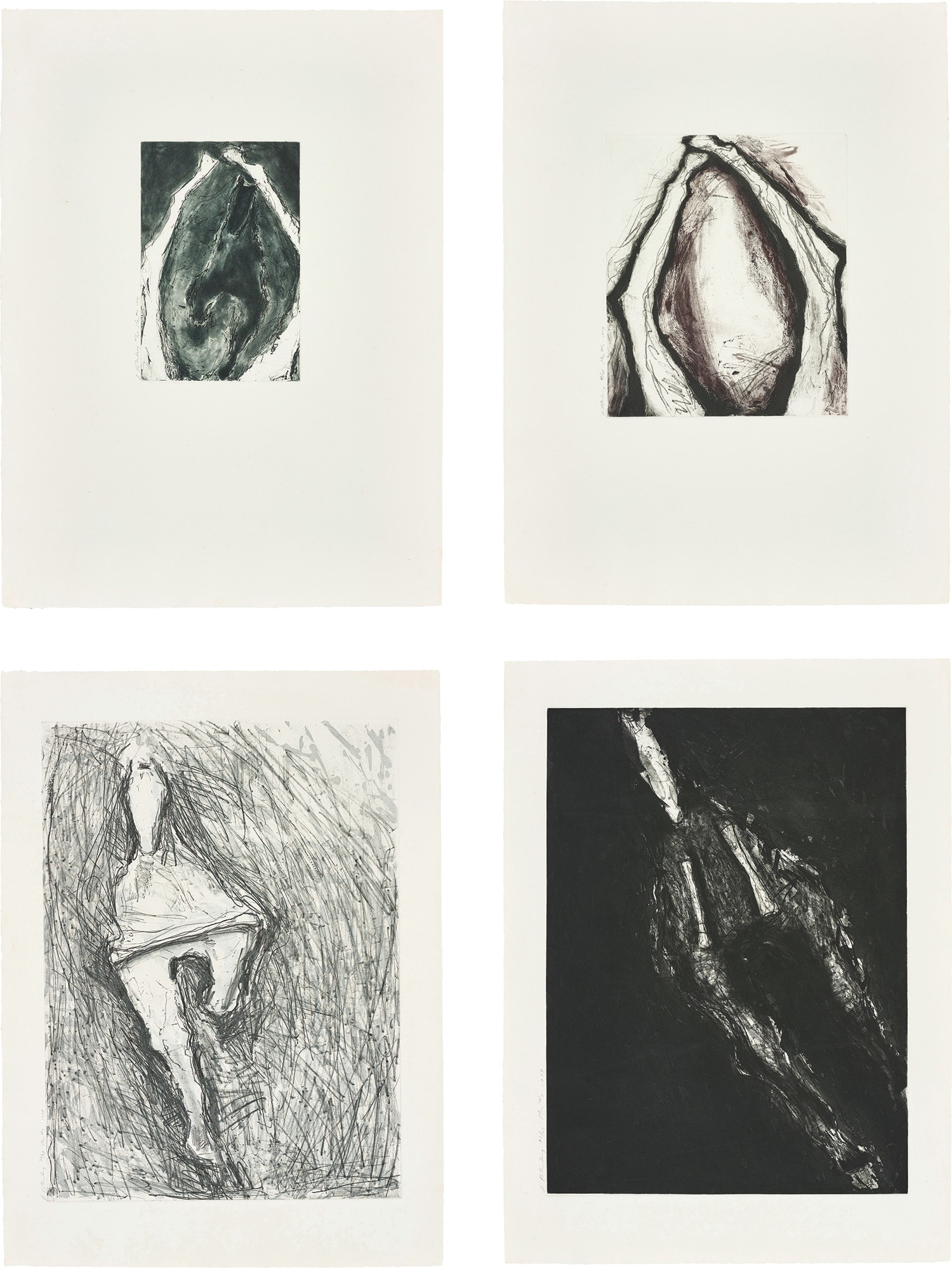
Her printmaking practice, which ran throughout her career and produced extraordinary works including monumental lithographs, woodcuts, and etchings, allowed her to explore imagery with a different kind of deliberateness, and the results stand as significant contributions to the history of the medium on their own terms. For collectors, Rothenberg's work occupies a position of exceptional importance within the story of postwar American painting. Her paintings are held in depth by the Museum of Modern Art, the Whitney Museum, Tate Modern in London, and numerous other major institutions, which speaks to the broad consensus around her historical significance. Works on paper and prints, including the monumental lithographs and woodcuts that appear in her catalogue raisonné, offer collectors a genuine and deeply considered engagement with her artistic intelligence at a range of price points.
The prints are not peripheral work: they represent sustained investigations into the same questions of figure, ground, and gesture that animate the paintings, and they have attracted serious attention from collectors who understand that Rothenberg approached every medium with complete commitment. At auction, her more significant canvases from the late 1970s and 1980s have commanded prices that reflect both institutional demand and the sustained admiration of private collectors who recognize in her work something that cannot be replicated. To understand Rothenberg's place in art history, it helps to consider the company she kept and the conversations she was part of. She emerged alongside painters such as Elizabeth Murray, Jennifer Bartlett, and Neil Jenney, all of whom were finding ways to reintroduce image and feeling into a painting culture that had grown wary of both.
Internationally, her work resonated with the concerns of artists like Georg Baselitz and Anselm Kiefer in Germany, though her approach was quieter, more interior, less mythological in its ambitions. She was always more interested in the tremor of a single observed moment than in grand historical narrative. That quality of intimate intensity is what separates her work from the more theatrical strains of Neo Expressionism and ensures its lasting power. Susan Rothenberg passed away in May 2020 at her home in New Mexico, and the tributes that followed from artists, curators, and collectors around the world confirmed what her paintings had always made visible: she was one of the genuinely transformative figures in American art.
Her legacy is not a matter of influence alone, though her influence on subsequent generations of painters is real and traceable. It is a matter of the works themselves, which continue to hold their ground with a quiet, unshakeable authority. To encounter a Rothenberg painting, whether a great horse canvas from the 1970s or a late figure study from New Mexico, is to feel the presence of a mind that was always reaching for something just beyond the edge of what words can hold. That reaching, that sustained and passionate attention, is what collecting her work means.
It is an invitation into one of the most distinctive inner worlds American painting has ever produced.
Explore books about Susan Rothenberg