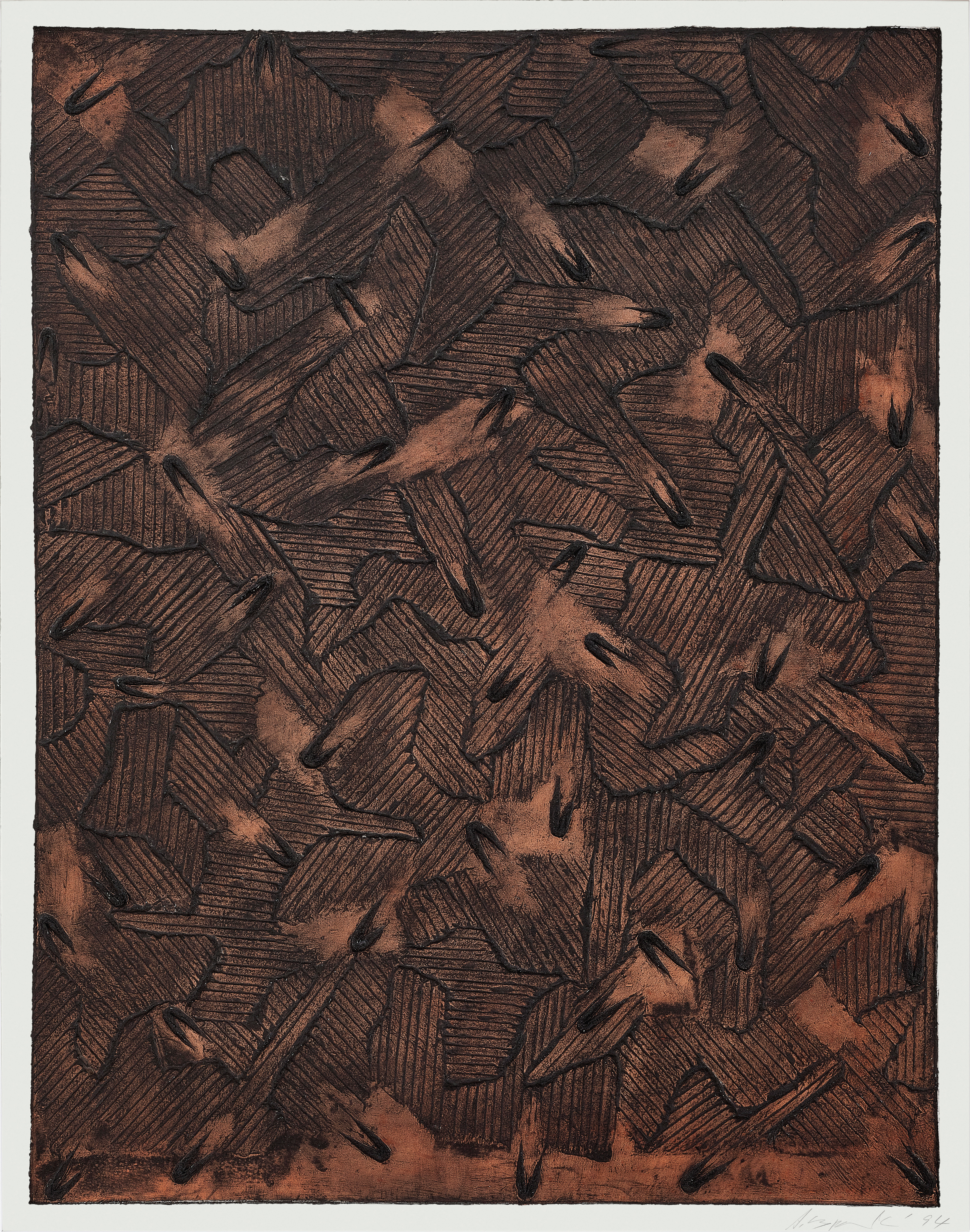
Park Seo-Bo
Park Seo-Bo, Master of Sacred Stillness
Artist Spotlight · The Collection Editorial
“Art without spirit is not art. Art has to have soul.”
Park Seo-Bo
In the autumn of 2022, the Tate Modern in London presented a landmark survey of Dansaekhwa, the Korean monochrome painting movement that had quietly reshaped the boundaries of postwar abstraction. Park Seo Bo, its most celebrated and enduring voice, stood at the centre of that conversation with the authority of someone who had spent six decades proving that restraint is its own form of radicalism. His works drew long, contemplative crowds, people leaning close to surfaces that seemed to breathe, to pulse with a patience that felt almost spiritual. It was a moment that confirmed what serious collectors had understood for years: Park Seo Bo was not merely a regional master but one of the defining painters of the twentieth and twenty first centuries.
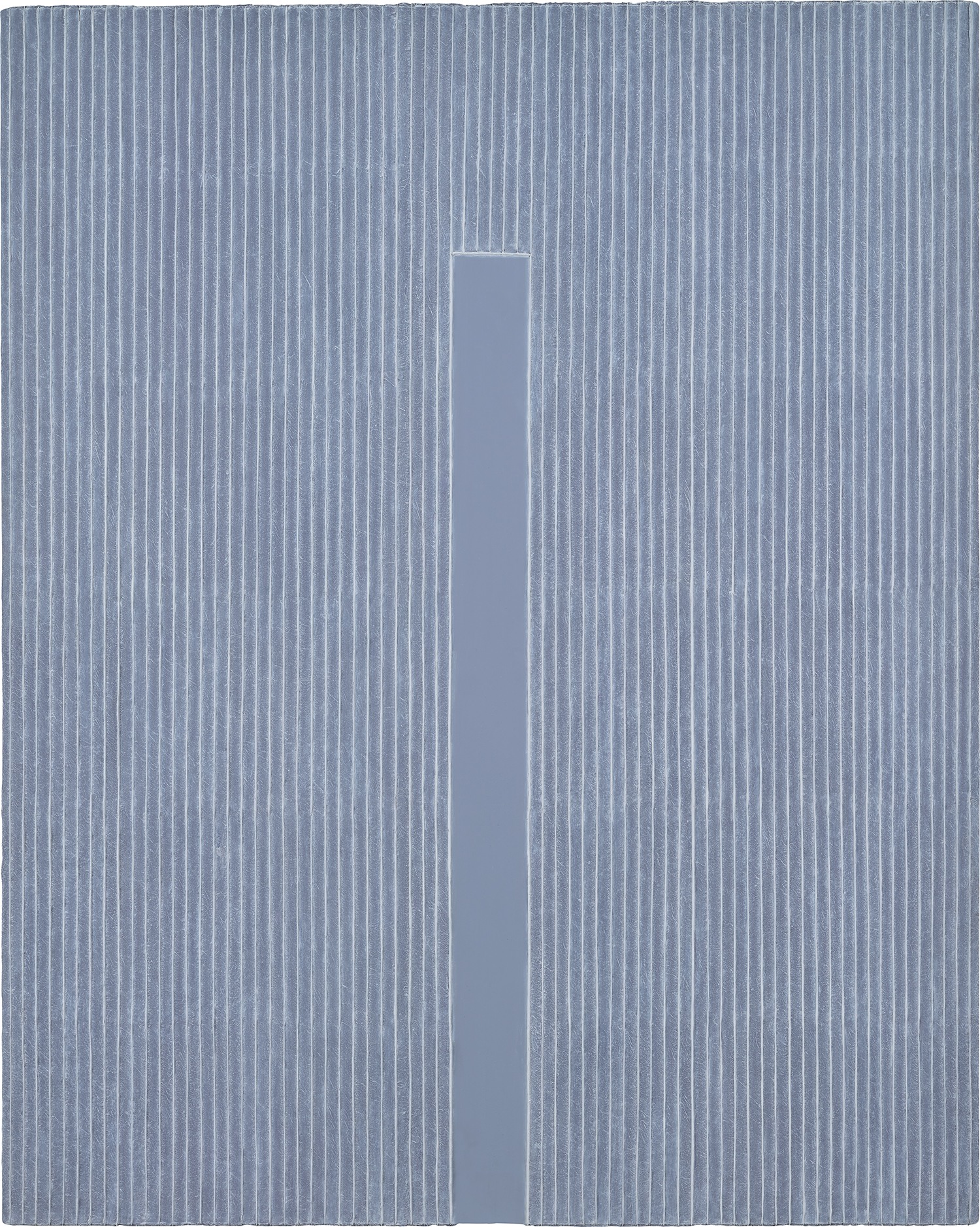
Park Seo-Bo
Ecriture No.040718, 2004
Park was born in 1931 in Yecheon, in the North Gyeongsang province of what is now South Korea, a region of dramatic landscape and deep Confucian tradition. His early years were marked by the ruptures of the Korean War, a conflict that devastated the peninsula and shattered whatever continuity Korean cultural life had managed to preserve through the long years of Japanese colonial rule. These twin traumas, colonial erasure and wartime destruction, gave Park's generation of artists an urgent question: what could Korean art mean, and what could it become? He studied at Hong ik University in Seoul, which would become the intellectual home of the Korean avant garde, and it was there that his restless ambition first took shape.
In the late 1950s and early 1960s, Park was a leading figure in the Korean Informel movement, a furious, gestural response to the conservatism of the academic establishment. He helped organise the first Korean Modern Art Exhibition in 1957 and was vocal, sometimes fiercely so, about the need for Korean artists to engage with international modernism on their own terms. A pivotal visit to Paris in 1961 exposed him to the full force of European abstraction, and he returned to Seoul both energised and, in certain ways, unsatisfied. The borrowed languages of Western modernism, however compelling, could not carry what he needed to say.
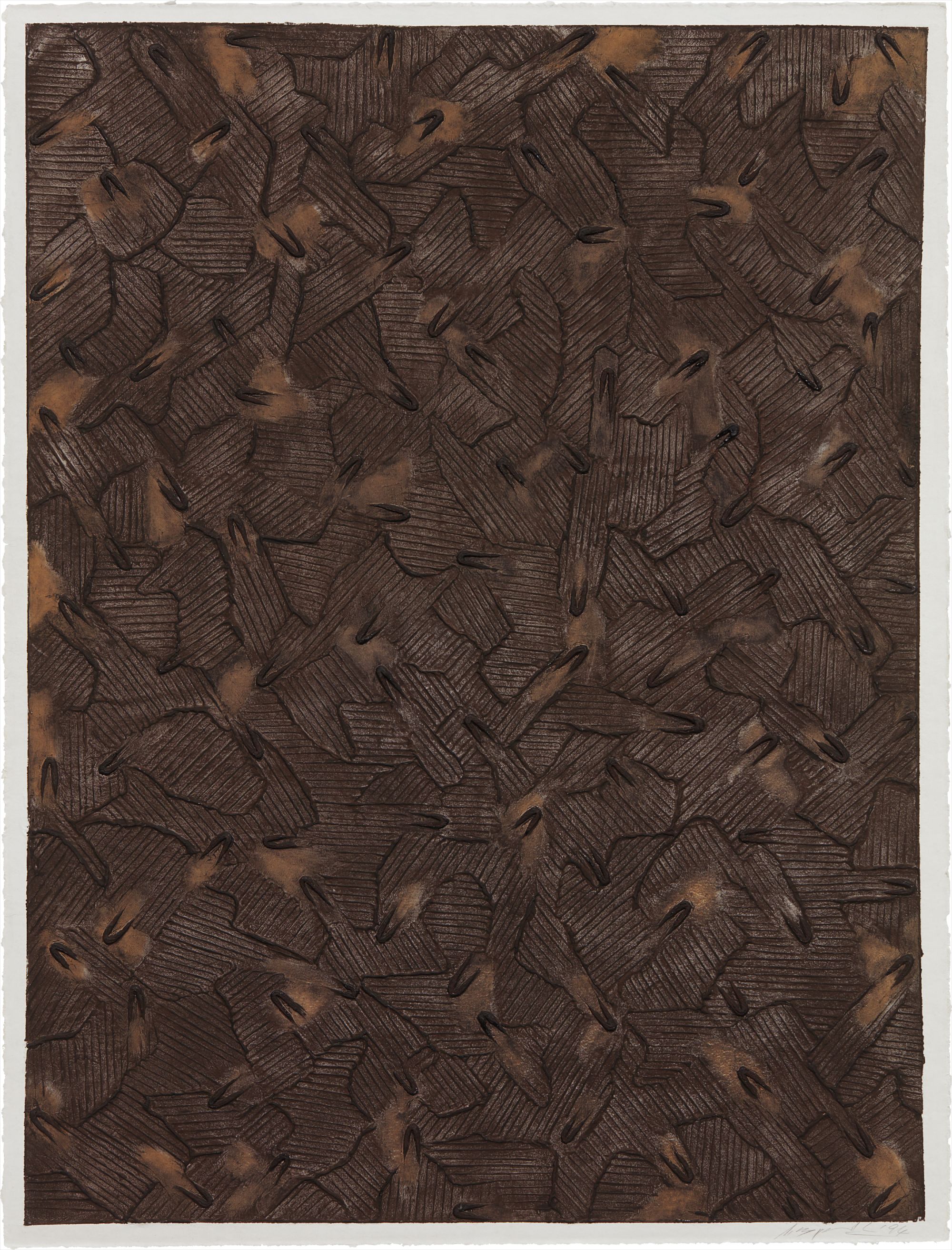
Park Seo-Bo
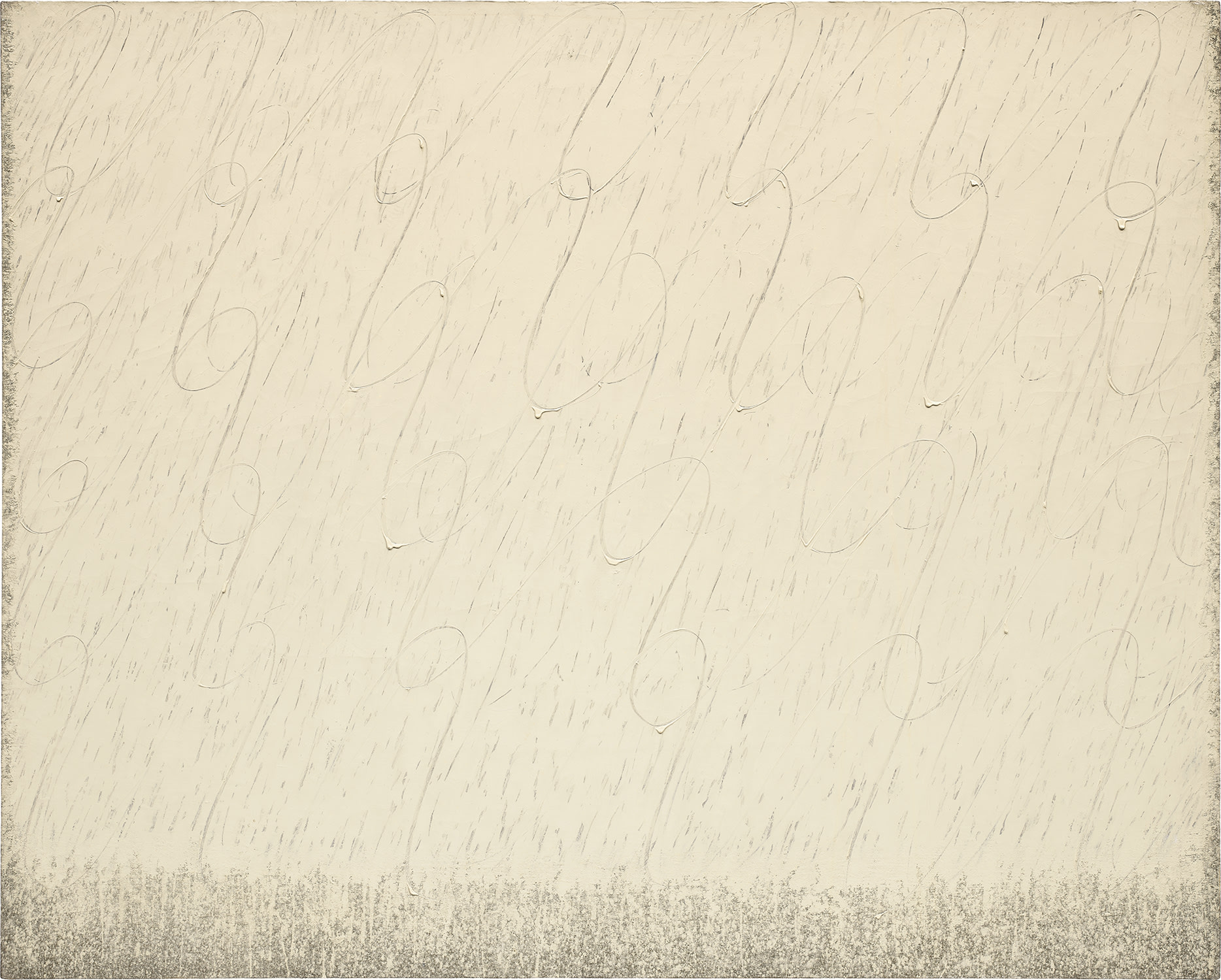
Écriture No. 67-78-79, 1979
The search for something more essentially Korean, more rooted in philosophy and material culture, would consume the rest of his career in the most productive way imaginable. The breakthrough came with hanji, the handmade mulberry paper that has been central to Korean craft and culture for over a millennium. Park began embedding hanji into the surfaces of his canvases, layering it with clay, pigment, and paint, and then drawing into the still wet material with pencil, his lines repetitive, rhythmic, almost meditative in their accumulation. This was the beginning of his Ecriture series, a body of work he would develop with extraordinary consistency and inventiveness from the 1960s onwards, the title borrowing a French word for writing to gesture toward mark making as a form of inscription, of presence, of being.
“I empty myself so that nature can flow through me.”
Park Seo-Bo, interview
The act of drawing these endless parallel grooves was not mechanical but deeply intentional, a practice closer to Zen calligraphy or contemplative ritual than to anything in the Western painterly tradition. The Ecriture works are immediately recognisable and endlessly surprising. Pieces such as Ecriture No. 110507 from 2011 and Ecriture No.
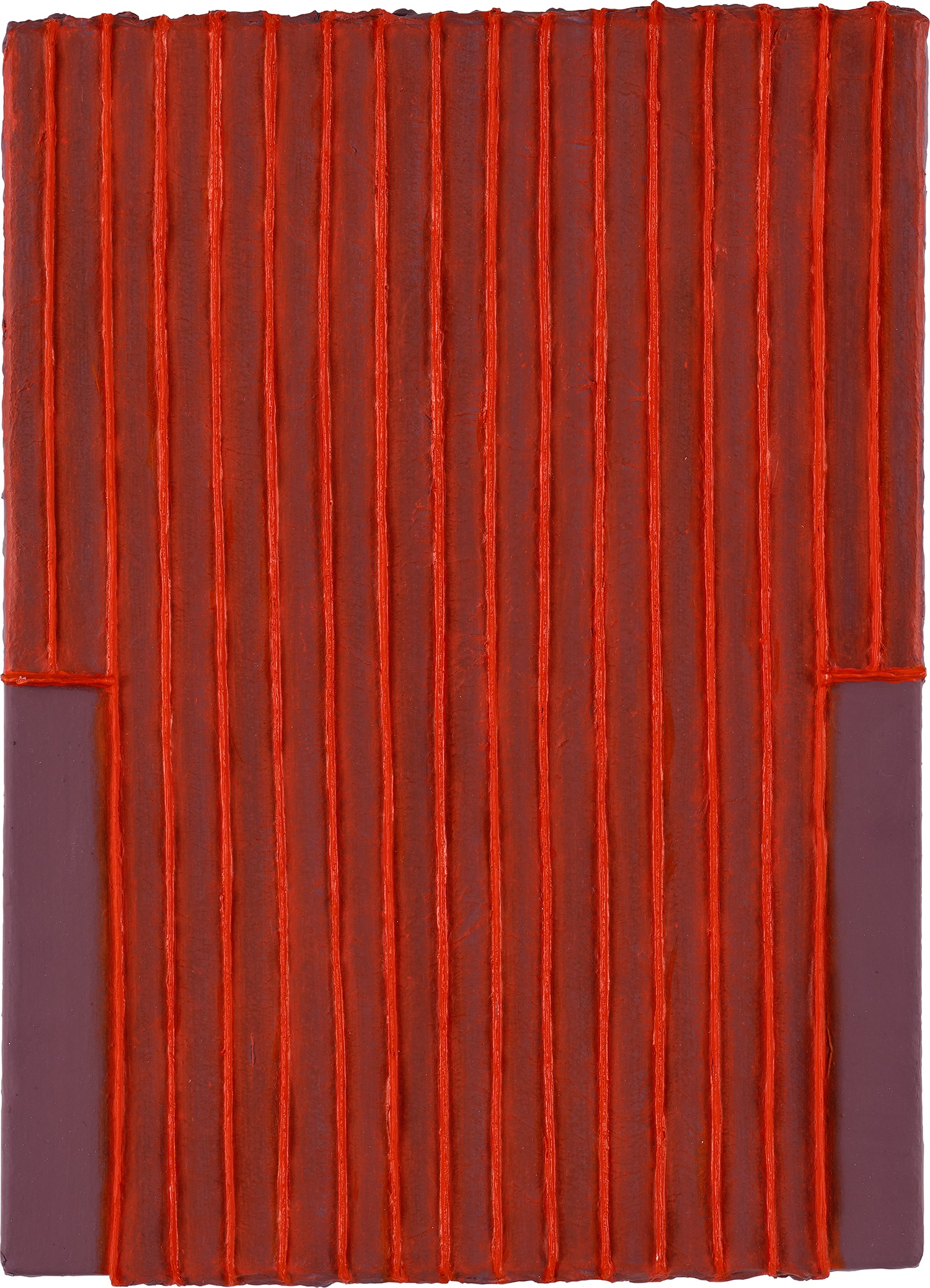
Park Seo-Bo
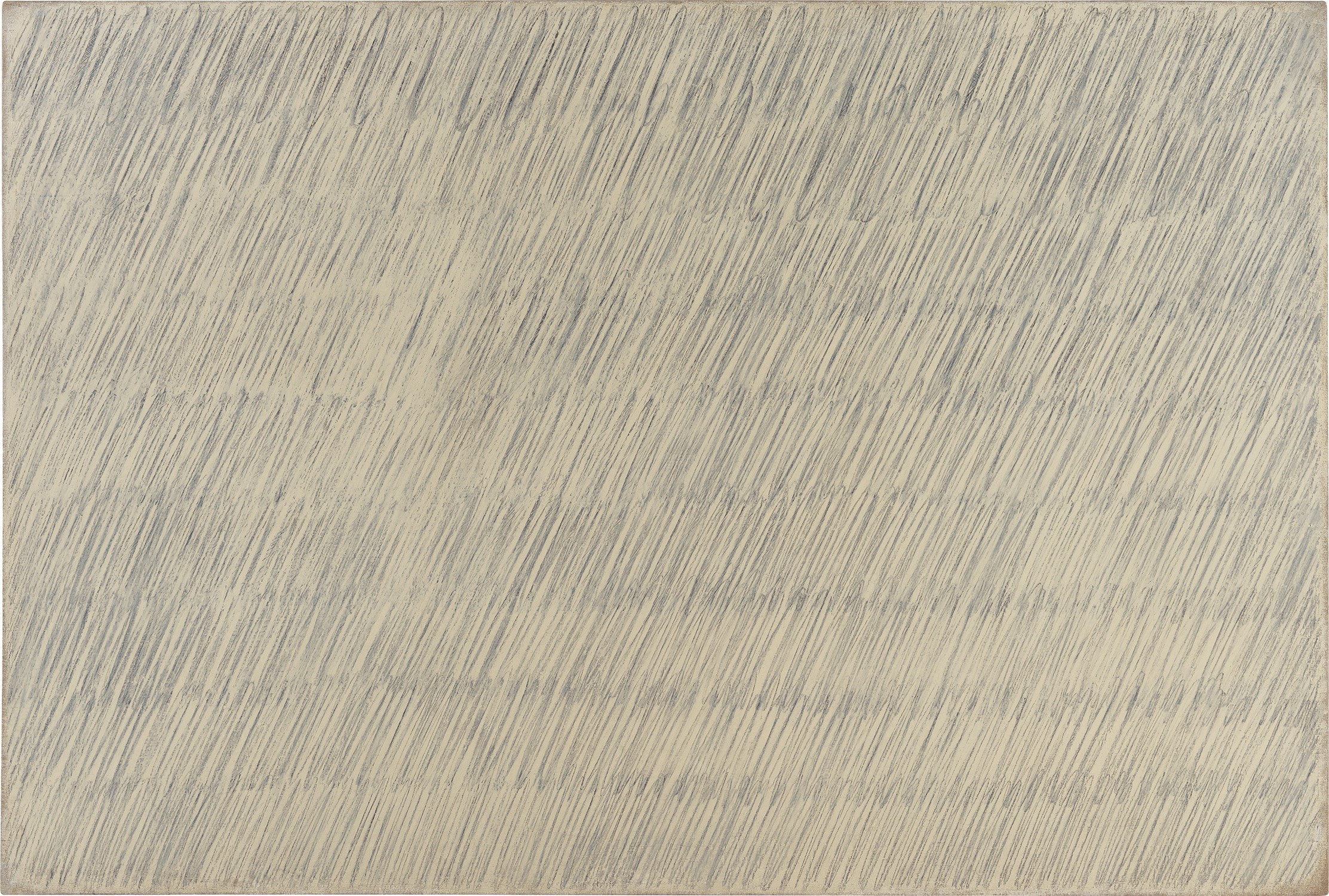
Ecriture No. 15, 1977
120507 from 2012 demonstrate the full maturity of his language: surfaces of extraordinary tactile richness, where hanji fibres catch light in ways that shift with the viewer's position, and where the pencil lines create a field of quiet energy that rewards sustained looking. Earlier works in the series, such as Ecriture No. 26 76 from 1976, show the movement finding its grammar, the compositions bolder, the surfaces rawer, and the dialogue between material and gesture more openly declared. By the 1990s, seen in works like Ecriture No.
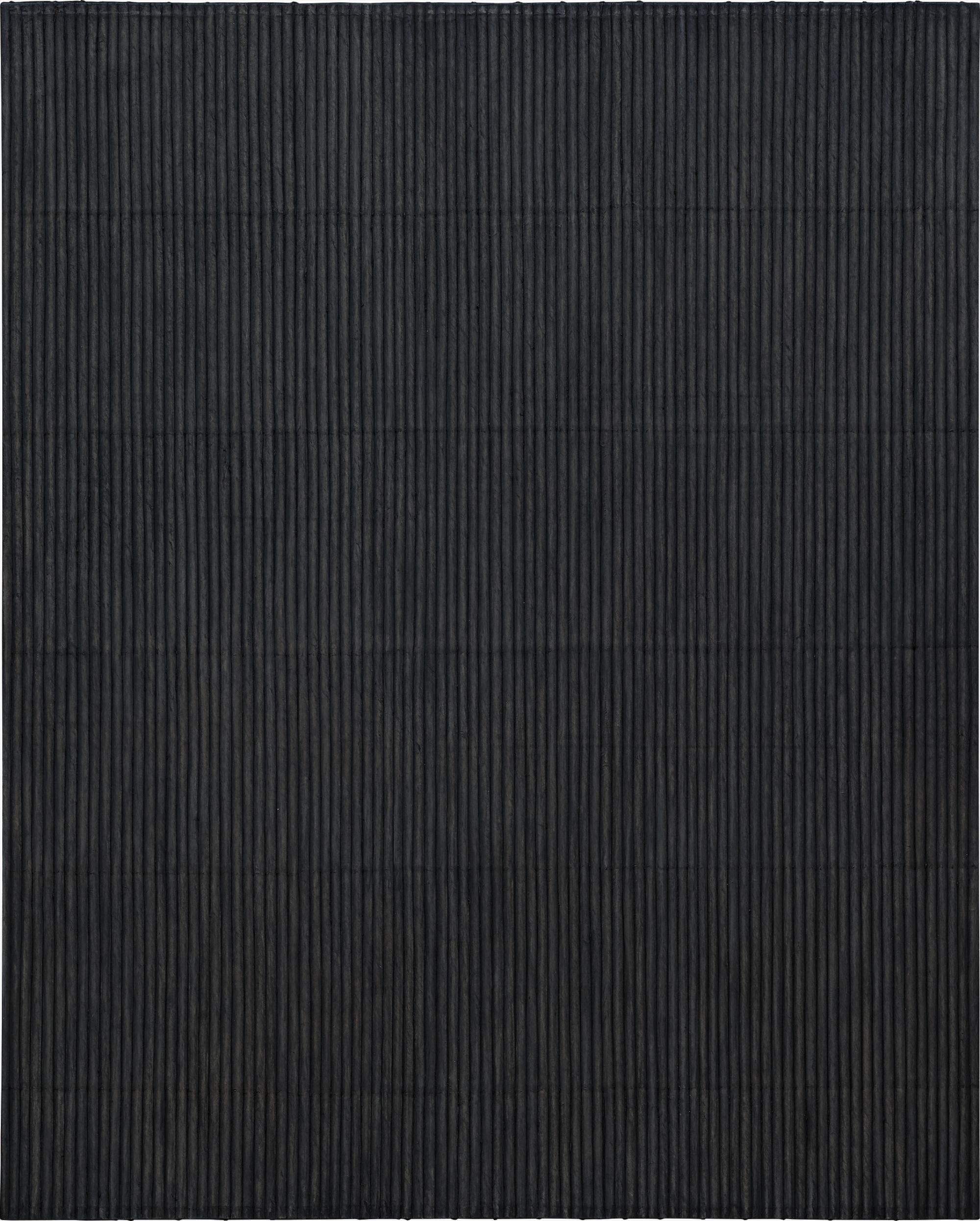
961128 from 1996, Park had achieved a serenity that felt hard won and wholly earned, his palette often resolving into soft greens, warm ochres, and the palest creams, colours drawn from nature and from the traditional Korean ceramic palette he so deeply admired. For collectors, the Ecriture series offers a rare combination of visual immediacy and intellectual depth. The works function beautifully in domestic and institutional contexts alike, their surfaces creating a kind of ambient presence that changes with the light and with the viewer's own mood. What distinguishes the most desirable examples is the interplay between colour temperature and the density of the mark making: works where Park pushed his palette into unexpected territory, or where the hanji surface has a particular sculptural complexity, tend to attract the strongest interest.
Park Seo-Bo
Écriture No.961128, 1996
The market for Park's work has grown substantially over the past two decades, with major auction results at Christie's and Sotheby's reflecting both regional enthusiasm from Korean and broader Asian collectors and sustained interest from European and American institutions and private buyers who encountered Dansaekhwa through its expanding exhibition presence. To understand Park Seo Bo fully it helps to place him alongside his contemporaries and peers within Dansaekhwa, a movement that included artists such as Ha Chong Hyun, Lee Ufan, Chung Sang Hwa, and Kwon Young Woo. Each developed a distinct vocabulary around monochrome, materiality, and process, but all shared a commitment to finding forms of abstraction grounded in Korean philosophical and cultural traditions, particularly the influence of Taoism and Zen Buddhism with their emphasis on emptiness, repetition, and the dissolution of the ego in sustained practice. Park's work also resonates with certain strands of Japanese Mono ha and with Arte Povera's interest in humble, elemental materials, though his practice remains irreducibly particular to its origins.
Park Seo Bo passed away in October 2023 at the age of ninety two, leaving behind a legacy of exceptional richness and a body of work that continues to grow in critical and commercial stature. His life traced an arc from the ruins of wartime Seoul to the walls of the Guggenheim and the great auction houses of London and New York, a journey made entirely on his own terms and through an act of creative faith that lasted more than sixty years. The Ecriture series stands as one of the great sustained artistic projects of the postwar era, a reminder that the deepest forms of expression are often found not in gesture or spectacle but in patience, in repetition, and in the quiet insistence of a line drawn again and again into yielding earth.
Featured Works