Mario Schifano
Mario Schifano, Italy's Luminous Pop Visionary
Artist Spotlight · The Collection Editorial
In the winter of 2023, the Galleria Nazionale d'Arte Moderna in Rome mounted a sweeping reassessment of postwar Italian painting that placed Mario Schifano at its unmistakable center. Alongside works by Lucio Fontana and Alberto Burri, his canvases burned with a particular kind of heat: monochromes fractured by Coca Cola lettering, television static rendered in luminous enamel, landscapes half remembered from a screen. For a new generation of Italian collectors and international curators alike, it was a reminder that Schifano had always been something more than a footnote to American Pop Art. He was its Roman twin, its Mediterranean conscience, and one of the most instinctively gifted painters of his century.
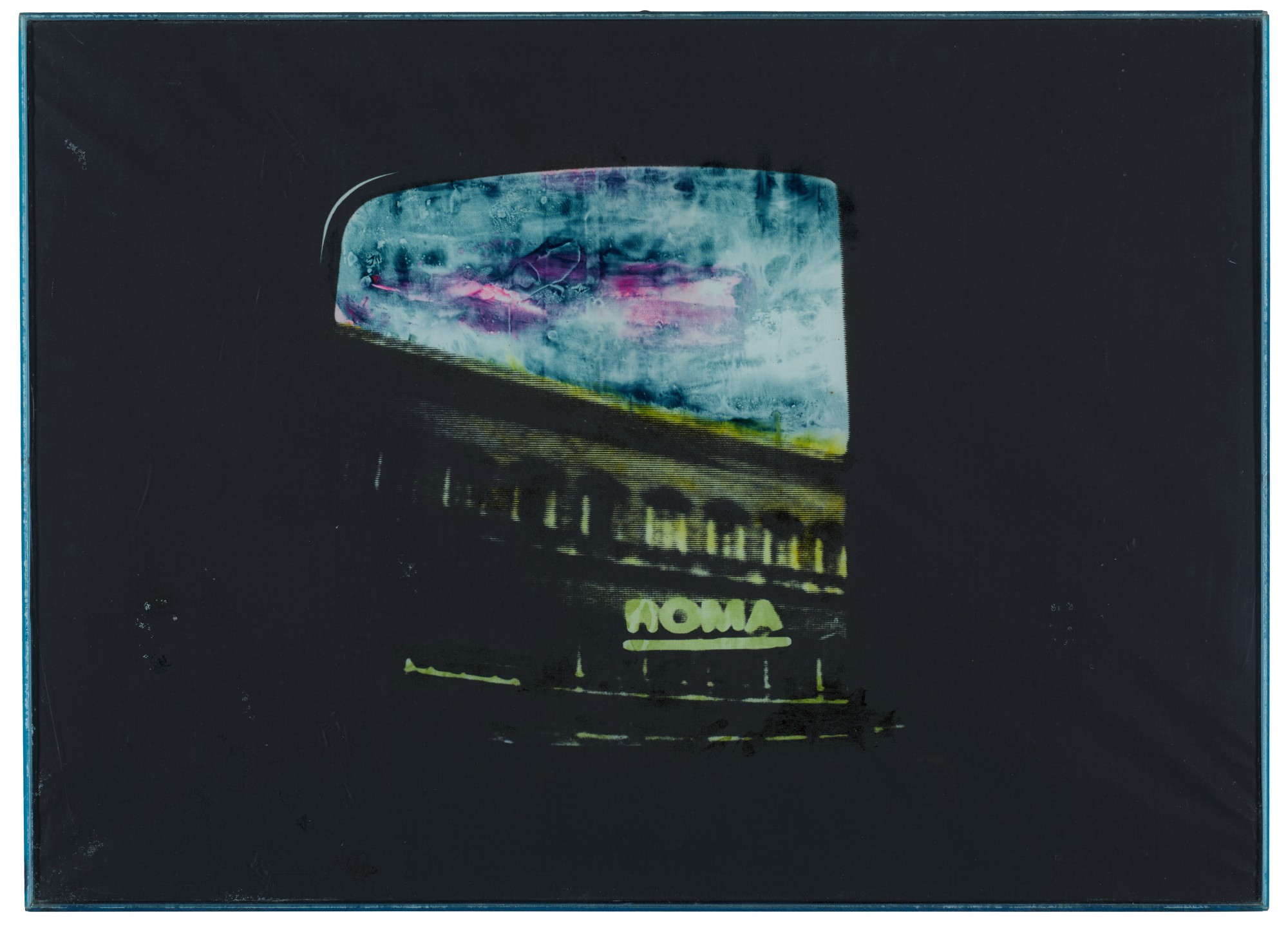
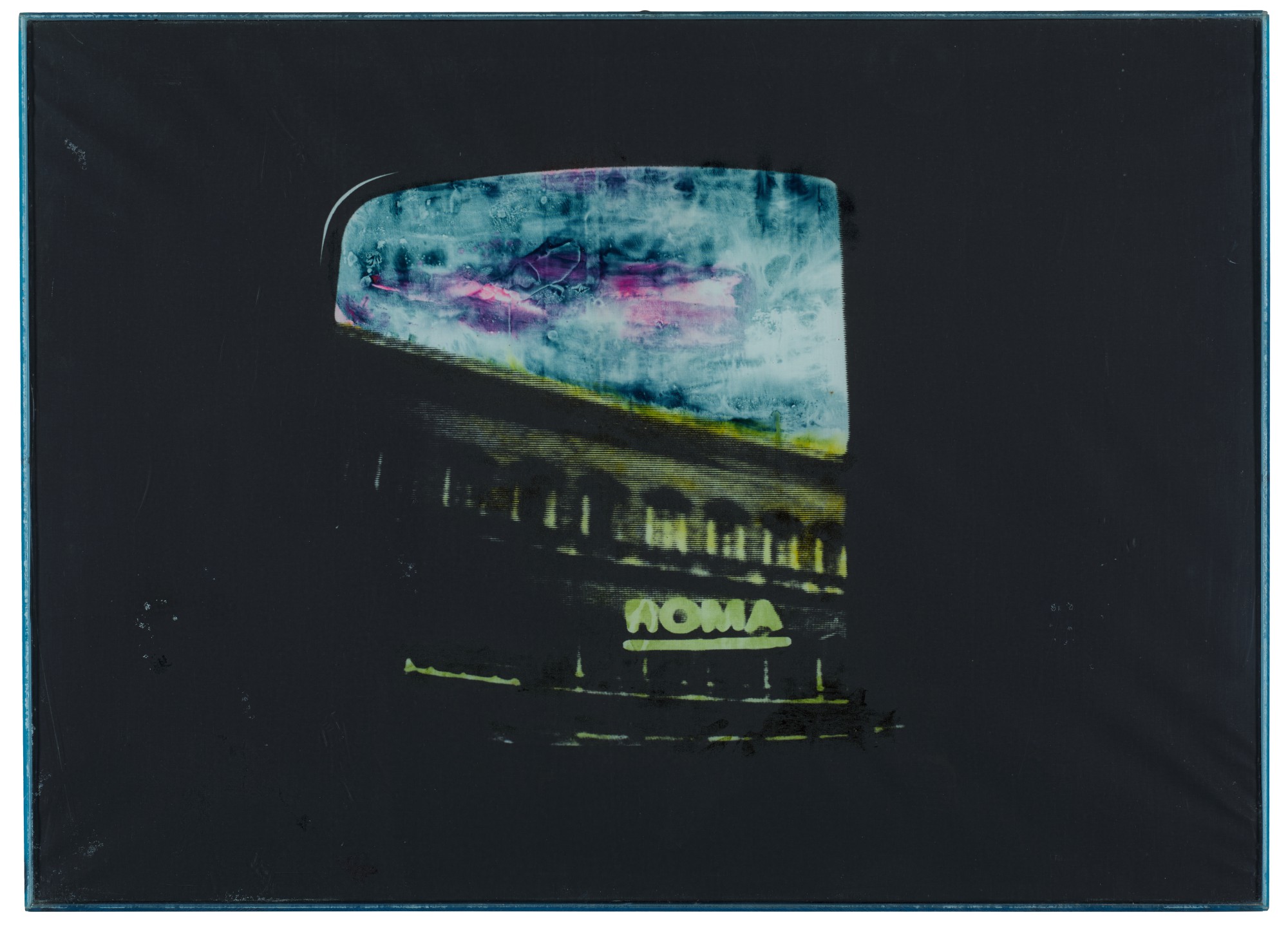
Mario Schifano
Paesaggio TV (Roma), 1974
Mario Schifano was born in Homs, Libya, in 1934, and arrived in Rome as a young child, growing up in a city still rebuilding itself from the rubble of the Second World War. His father was an archaeologist, a detail that feels quietly significant: Schifano would spend his entire career excavating layers of imagery and cultural memory, sifting through the wreckage of modernity with the patience of someone trained to find meaning beneath the surface. He came of age in the Rome of the 1950s, a city intoxicated by American cinema, consumer goods, and the strange new grammar of mass media. Before he ever touched a canvas, he worked restoring ancient artifacts, and that intimacy with material, with surfaces worn smooth by time, would remain visible in everything he made.
By the early 1960s, Schifano had become a magnetic presence in the Roman art world, part of a loose, energetic scene gathering around the galleries of Via del Babbuino and the cafes of the bohemian Testaccio neighborhood. His first mature works announced a sensibility unlike anything being made in Italy at the time. Works such as Tempo Moderno, dating to 1962, used enamel and graphite on paper laid down on canvas to create surfaces that felt simultaneously ancient and urgently contemporary. The enamel, applied in flat, almost industrial washes, gave the paintings an impersonal sheen, while the graphite lines beneath whispered of something hand made, intimate, unresolved.
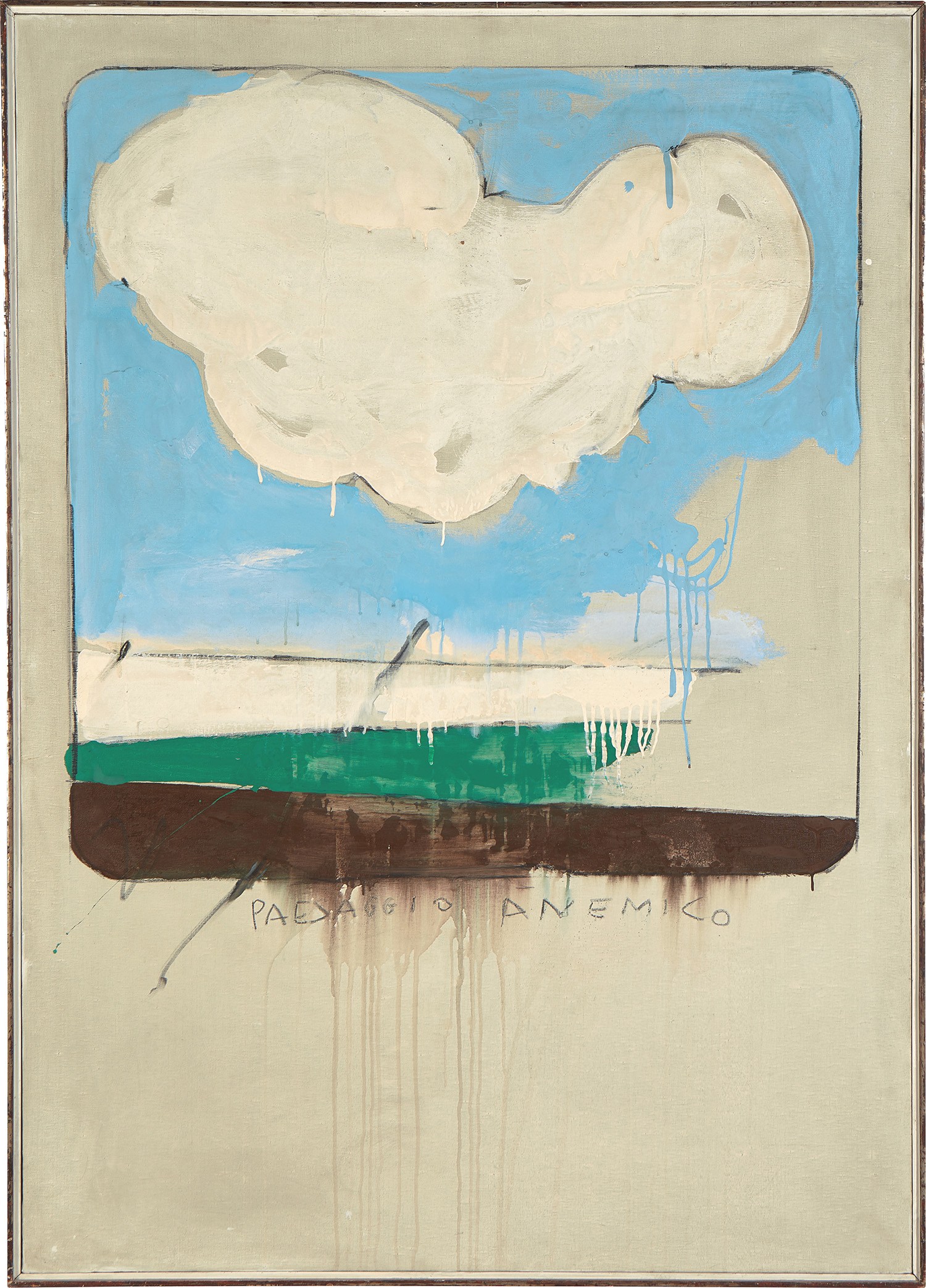
Mario Schifano
Paesaggio anemico, 1964
It was a tension Schifano would never fully let go of, and it is precisely what makes his paintings so compelling to live with. His breakthrough in the international conversation came through his engagement with the visual language of consumer culture. Where Andy Warhol in New York was silk screening soup cans and Marilyn Monroe, Schifano was absorbing the signage of the American corporations that had flooded postwar Italian life: Esso petrol stations, Coca Cola advertisements, the flickering blue light of the television set. His Esso paintings and Coca Cola works from the early and mid 1960s are among the most seductive objects in postwar European art.
But unlike Warhol, Schifano was never quite celebratory. His brand imagery is always slightly adrift, bleached or blurred, as though seen through frosted glass or half remembered from a dream. The logos are there, but they are melancholy, unmoored, floating on monochromatic grounds that seem to absorb them rather than display them. A work such as the 1975 canvas Esso, enamel on canvas paper, captures this perfectly: the familiar lettering rendered with an ache that turns advertisement into elegy.
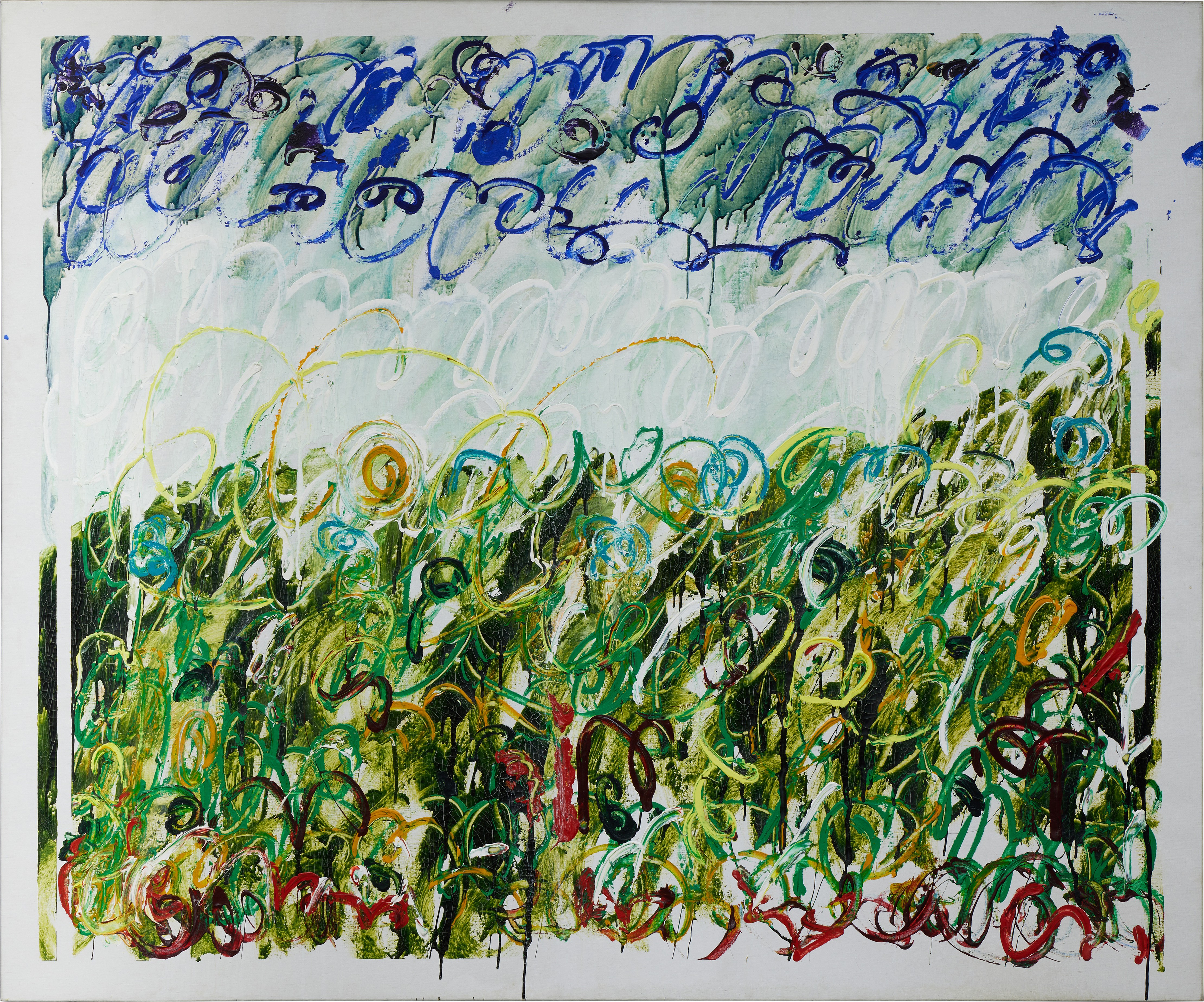
Mario Schifano
Botanical Garden, 1982
Through the late 1960s and into the 1970s, Schifano became increasingly preoccupied with the television image as both subject and medium. The Paesaggio TV series, of which Paesaggio TV (Roma) from 1974, enamel on emulsified canvas and perspex, is an outstanding example, translates the flickering landscape of broadcast television into painterly terms of extraordinary delicacy. The perspex overlay creates a literal screen between viewer and image, collapsing the distance between watching and looking, between passive consumption and aesthetic experience. These works anticipate by decades the conversations around media saturation and image culture that would come to dominate contemporary art discourse in the 1990s and beyond.
Schifano was asking these questions while the television set was still a novelty in many Italian households. His practice never stood still. The 1980s brought a new warmth and botanical lushness to his canvases, exemplified by works such as Botanical Garden from 1982, in which enamel paint on canvas gives rise to a world of foliage rendered with an almost hallucinatory intensity. By the mid 1990s, works such as Boccioli (1996) showed an artist still fully in command of his materials, the enamel surface as alive and luminous as ever.
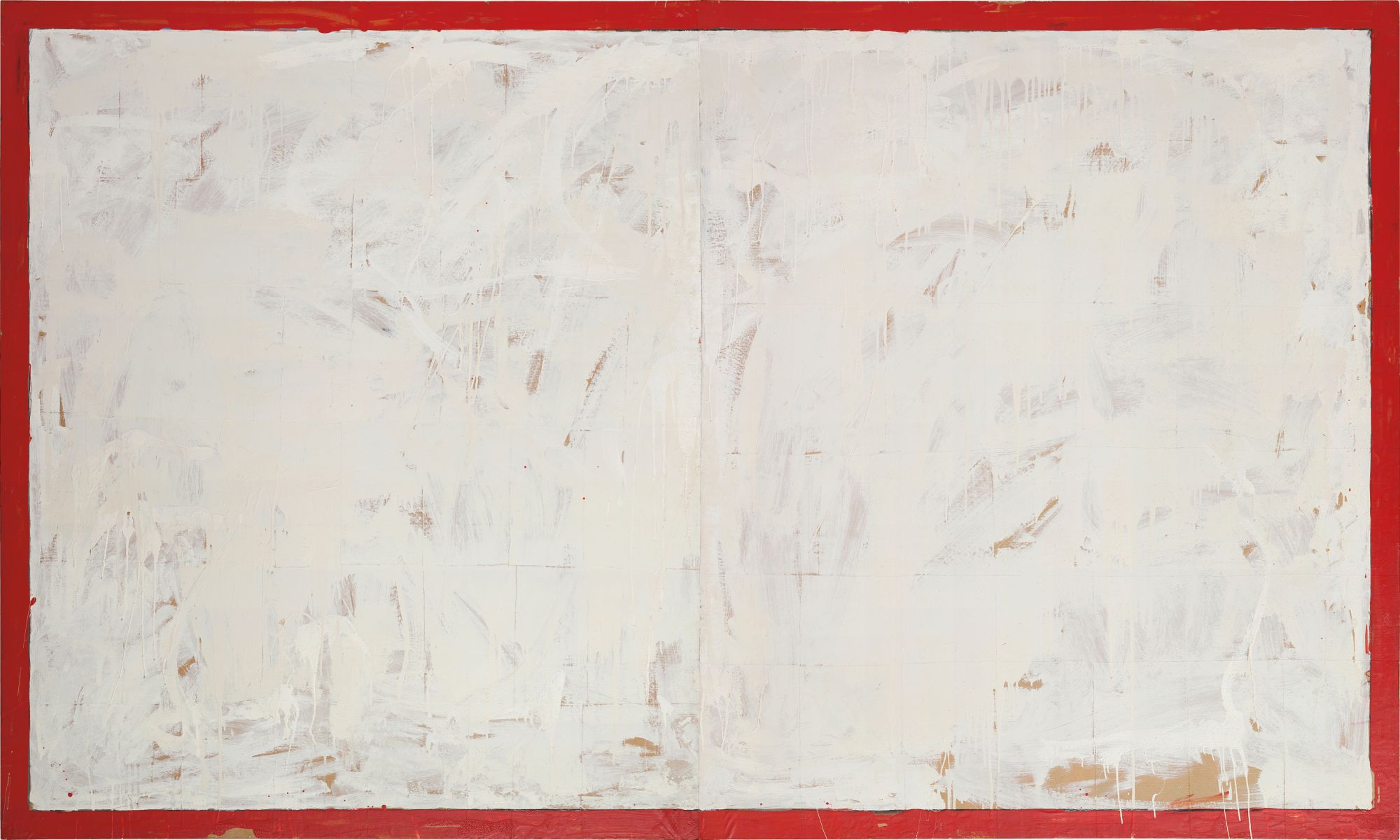
Mario Schifano
This work is accompanied by three separate certificates of authenticity issued by the Mario Schifano Foundation in 1999, the Archivio Mario Schifano in 2013 and Memmo Mangini (the artist's colourist and now the colour technician at the Archivio Mario Schifano).
Schifano was prolific to an extraordinary degree, and his output was uneven, as the output of any genuinely restless artist tends to be. But at his best, and his best was very frequent, he achieved a quality of surface and a depth of cultural resonance that places him firmly among the defining painters of the postwar era. For collectors, Schifano represents one of the most compelling opportunities in the Italian postwar market. His work has attracted sustained institutional attention, with major holdings at MAXXI and the Galleria Nazionale d'Arte Moderna in Rome, and his auction presence has grown steadily over the past decade as international buyers have come to recognise what Italian collectors have long understood.
The Paesaggio TV works and the early monochrome brand paintings from the 1960s are the most sought after, commanding serious prices at Italian auction houses as well as at Christie's and Sotheby's. But the market for his later botanical works and the mixed media canvases of the 1970s offers genuine opportunity, with quality available at price points that still feel generous given the artist's historical significance. When considering works, provenance and authentication are important as with any prolific postwar painter, and the existence of certificates from the Archivio Mario Schifano, established to document and authenticate the artist's output, provides meaningful reassurance. In the wider arc of art history, Schifano belongs in the company of Warhol and Rauschenberg, of Richter and Pistoletto, of artists who understood that the great subject of postwar painting was the image itself, the flood of pictures that modern life had become.
He was a friend and peer of figures including Cy Twombly, who also made Rome his home, and his work shares with Twombly a quality of cultural layering, a sense that the ancient and the contemporary are not opposites but permanent companions. He was also a significant figure in the Arte Povera adjacent scene of the 1960s, though his allegiances were always to painting above all else. Mario Schifano died in Rome in 1998, leaving behind a body of work that continues to reward close looking and serious collecting in equal measure. His paintings do something rare: they make the noise of modern life beautiful without pretending it is anything other than noise.
In a cultural moment saturated with images, algorithms, and screens, his long investigation into what it means to look at a picture feels not dated but prophetic. To collect Schifano is to own a piece of that investigation, and to participate in one of the most rewarding ongoing conversations in postwar art.
Explore books about Mario Schifano