Lita Cabellut
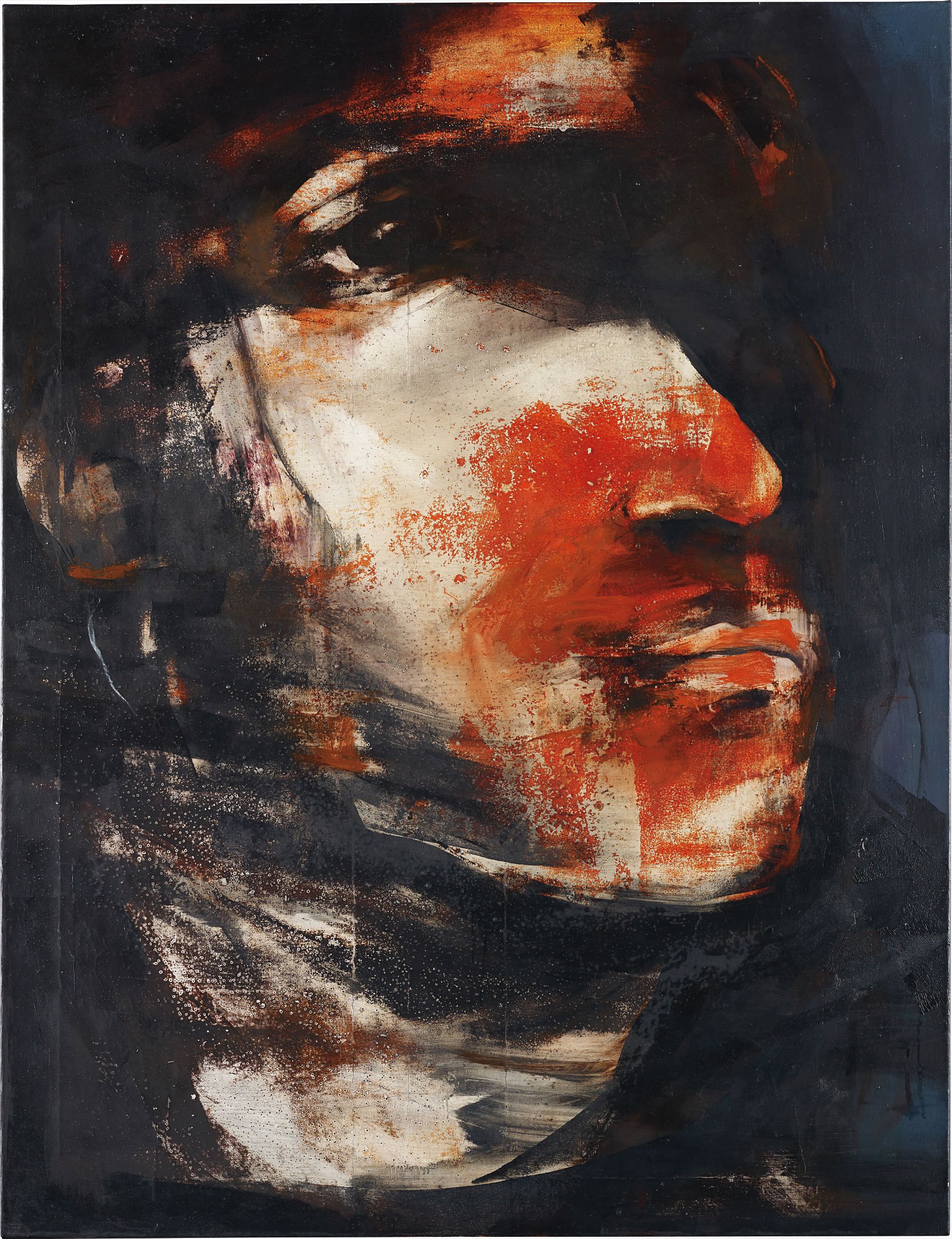
Lita Cabellut: Painting the Soul Wide Open
Artist Spotlight · The Collection Editorial
In recent seasons, European museum audiences and international collectors have increasingly turned their attention toward a Spanish painter whose monumental canvases seem to pulse with something ancient and urgently alive at once. Lita Cabellut, long celebrated in the Netherlands where she has made her home, has moved steadily into the global consciousness through major institutional presentations and a sustained critical reappraisal of figurative painting as one of the most vital modes of contemporary expression. Her work commands spaces rather than simply occupying them, and those who encounter her paintings in person rarely forget the experience. There is a reason serious collectors pursue her with real devotion.
Lita Cabellut
Roxanne, 2007
Cabellut was born in Barcelona in 1961, and her early life carried the kind of weight that would eventually find its way onto enormous canvases. She spent part of her childhood in circumstances of real hardship, living on the streets of Barcelona before being taken in and adopted by a wealthy family. That profound discontinuity between worlds, between poverty and privilege, between invisibility and belonging, became a permanent current running beneath her artistic vision. The experience of being looked past, and then suddenly seen, gave her an almost forensic sensitivity to the human face and what it conceals or reveals.
It planted in her an obsession with dignity, vulnerability, and the complexity of identity that has never left her work. Her formal training took her to the Rijksacademie van Beeldende Kunsten in Amsterdam, one of Europe's most rigorous and respected institutions for advanced artistic practice. Immersion in the Dutch and Flemish Old Master tradition proved transformative. She absorbed the technical vocabulary of Rembrandt, Velázquez, and Goya with genuine seriousness, studying how light falls across a face, how paint can render skin as something simultaneously physical and spiritual.
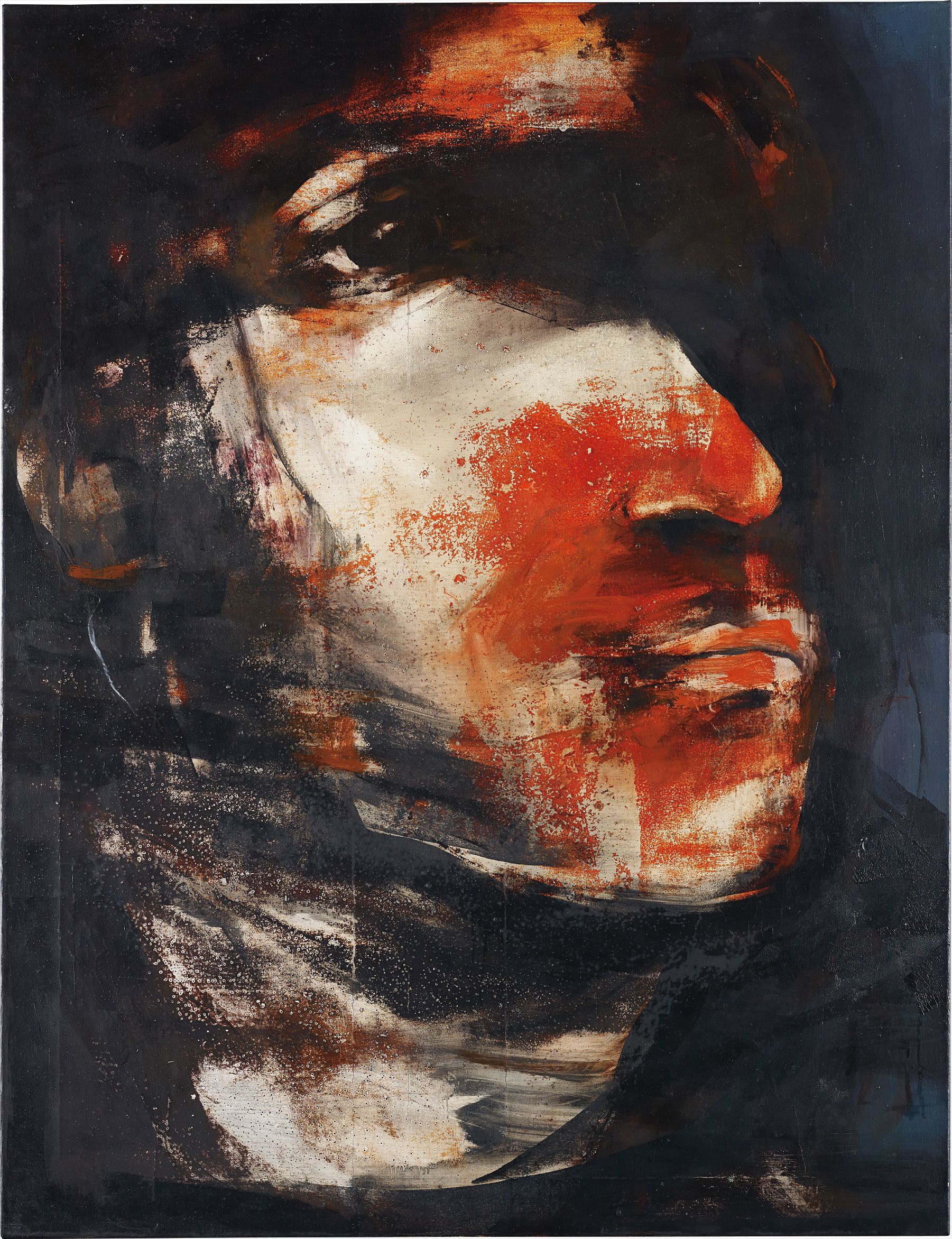
Lita Cabellut
Gitana
But Cabellut was never interested in mere revival or pastiche. She took those classical foundations and pushed them through her own vivid, contemporary sensibility, arriving at a language that feels simultaneously timeless and entirely of the present moment. The Netherlands became her permanent base, and that northern European context, with its long and serious relationship to figuration, suited her deeply. The signature quality of a Cabellut painting is immediately recognizable and yet endlessly surprising on closer inspection.
She builds her surfaces with layers of mixed media, creating textures that recall the crumbling plaster of ancient frescoes, surfaces that appear to have been found rather than made, as though time itself has been a collaborator. Figures emerge from these weathered grounds with startling emotional force, their faces magnified to monumental scale, their expressions simultaneously specific and universal. She is a painter of the close up in the most profound sense: not merely zoomed in on a face, but zoomed in on a feeling. The fragmentation of her surfaces does not suggest decay so much as depth, the sense that what we are seeing has been layered over centuries of human experience.
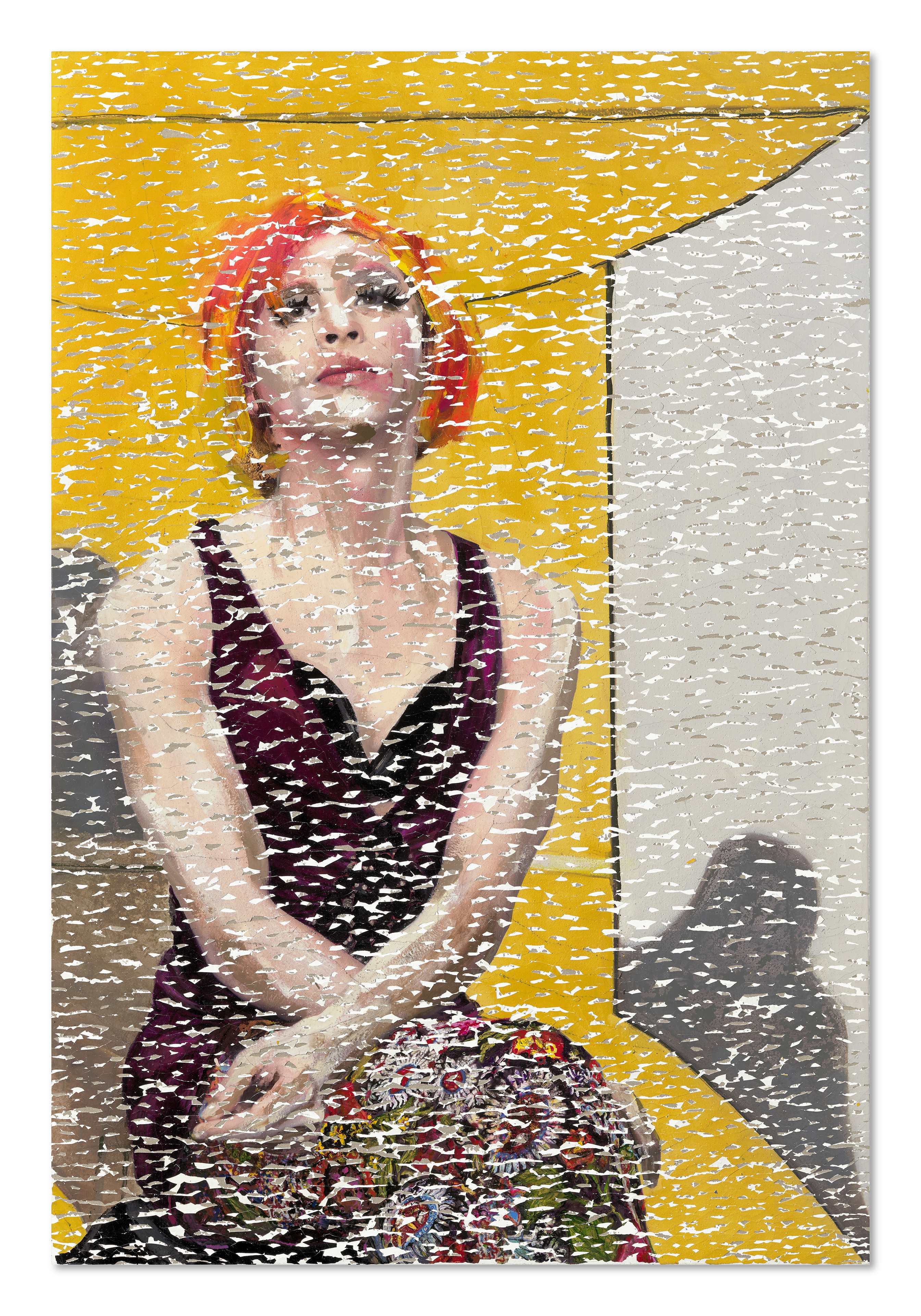
Lita Cabellut
Sunny, 2019
Among the works that best illuminate her practice are pieces such as Roxanne from 2007, a mixed media canvas that exemplifies her ability to conjure an entire psychological world from a single presence. Gitana is another work that demonstrates her deep connection to a particular cultural and emotional inheritance, the figure rendered with both tenderness and a kind of fierce pride. Sigmund Freud 02 from 2012, executed in oil on linen, shows the range of her intellectual curiosity, her willingness to place a canonical figure of modern thought within her own visual grammar. Leda from 2018 brings mythological territory into her distinctive formal language, and Sunny from 2019 shows that her practice continues to evolve and breathe with contemporary feeling.
Each of these works rewards sustained looking, offering new details and emotional registers the longer one stands before them. From a collecting perspective, Cabellut occupies a genuinely compelling position in the current market. She is an artist with serious institutional validation and a committed international following, yet her work remains accessible to a broader range of collectors than many of her peers with comparable critical standing. Collectors are drawn to the emotional directness of her paintings, to the sense that acquiring one means welcoming a powerful presence into daily life.
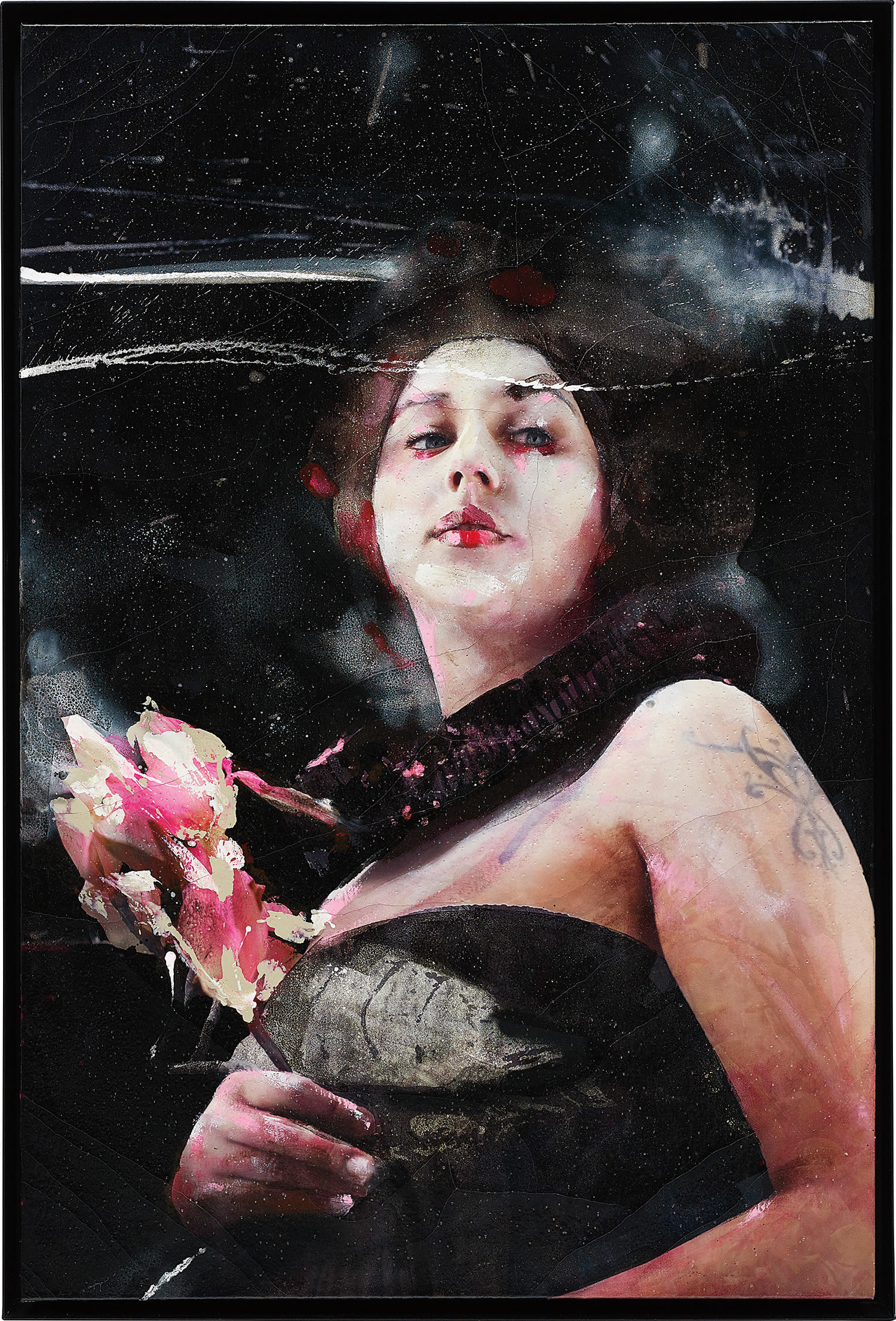
Lita Cabellut
Leda, 2018
Her large scale works carry particular gravitas in architectural spaces, and her smaller pieces in oil and mixed media on linen offer entry points for collectors building toward a relationship with her broader output. The distinctive framing that accompanies several of her key works, integrated by the artist herself as part of the total object, adds both conceptual and physical presence. In the context of art history, Cabellut belongs to a lineage of painters who have insisted on the continuing relevance of the human figure as a subject of philosophical and emotional inquiry. She is a natural companion to artists such as Marlene Dumas, whose large scale figurative works also interrogate identity, vulnerability, and the charged politics of being seen.
The influence of Francis Bacon in her approach to distorted or fragmented surfaces resonates, as does a shared sensibility with Neo Expressionists such as Georg Baselitz and Anselm Kiefer in her commitment to painting as a vehicle for historical and psychological weight. Yet Cabellut's work is distinctly her own, informed by a specifically Spanish emotional register and a personal biography that gives her images an authenticity that cannot be manufactured. What makes Lita Cabellut matter so urgently today is precisely the quality that defines great figurative painting across every era: she makes you feel that the person in the painting is looking back at you with full knowledge of who you are. In an art world that sometimes privileges concept over feeling, her insistence on emotional truth as the primary standard of a painting's success is both countercultural and deeply necessary.
Her canvases are acts of witness, honoring the complexity of human lives that might otherwise go unseen. For collectors and institutions with the vision to recognize painting that speaks across centuries, Cabellut represents not merely a sound acquisition but a genuine encounter with one of the most compelling voices working in contemporary art today.
Explore books about Lita Cabellut