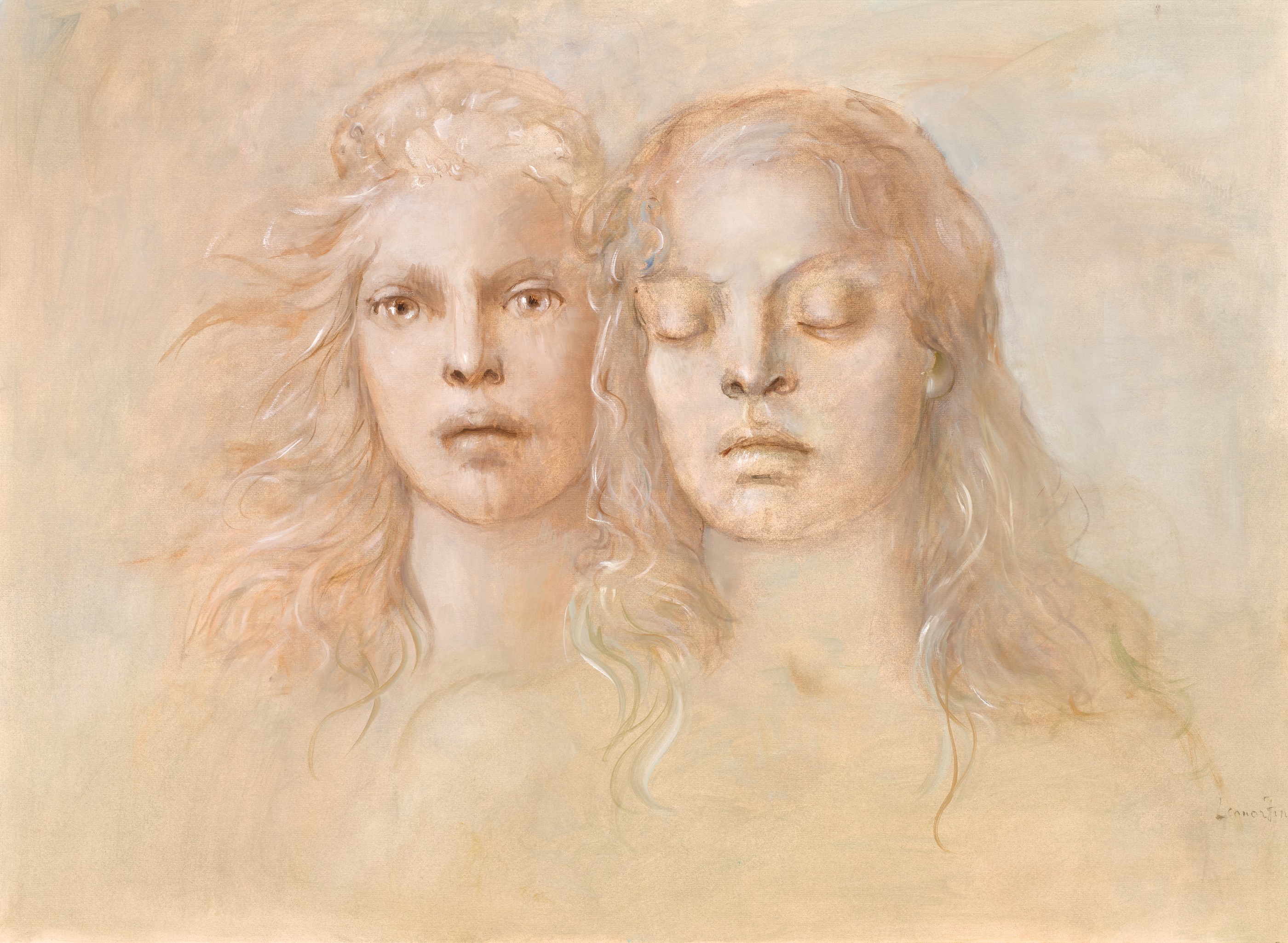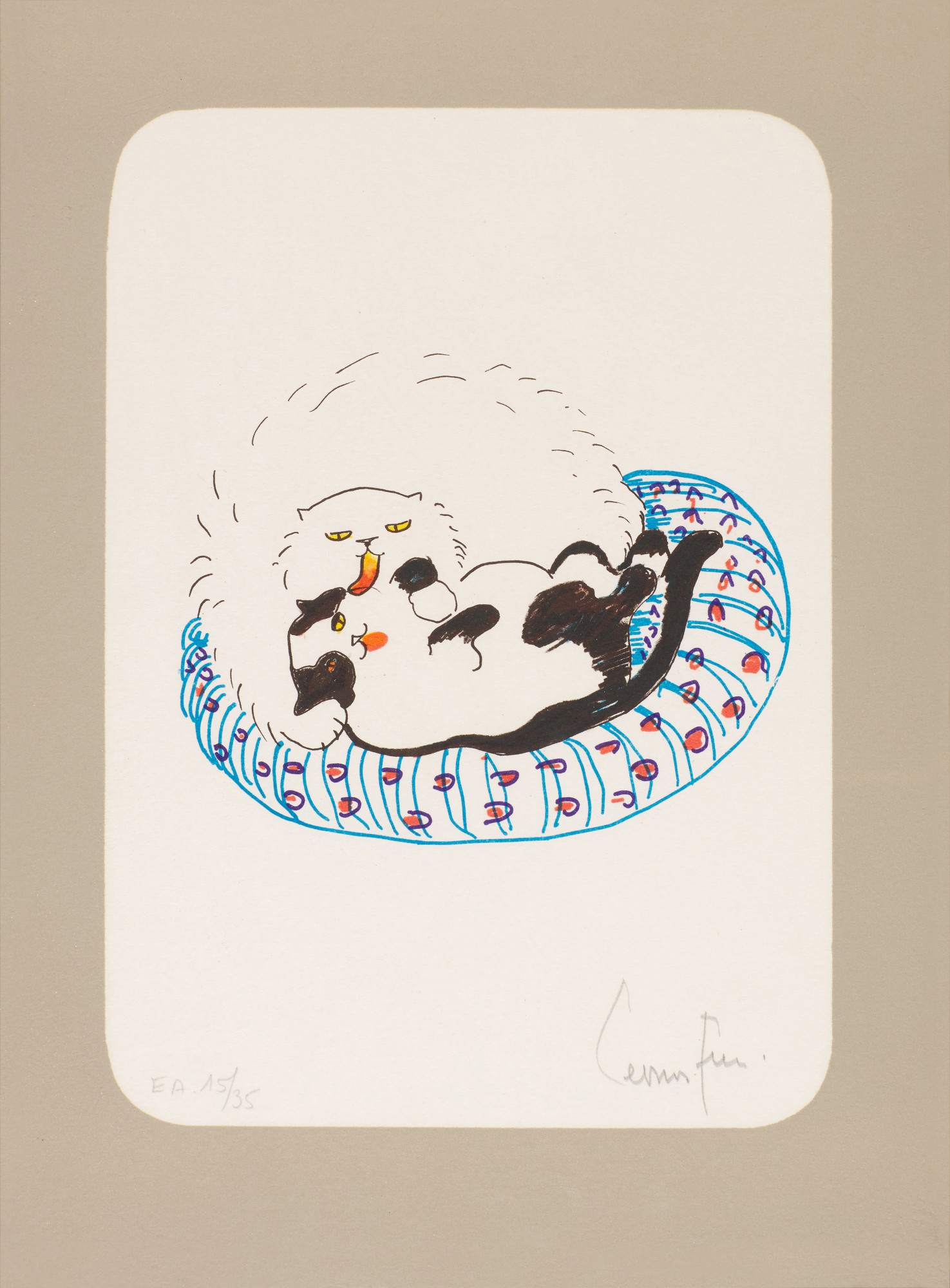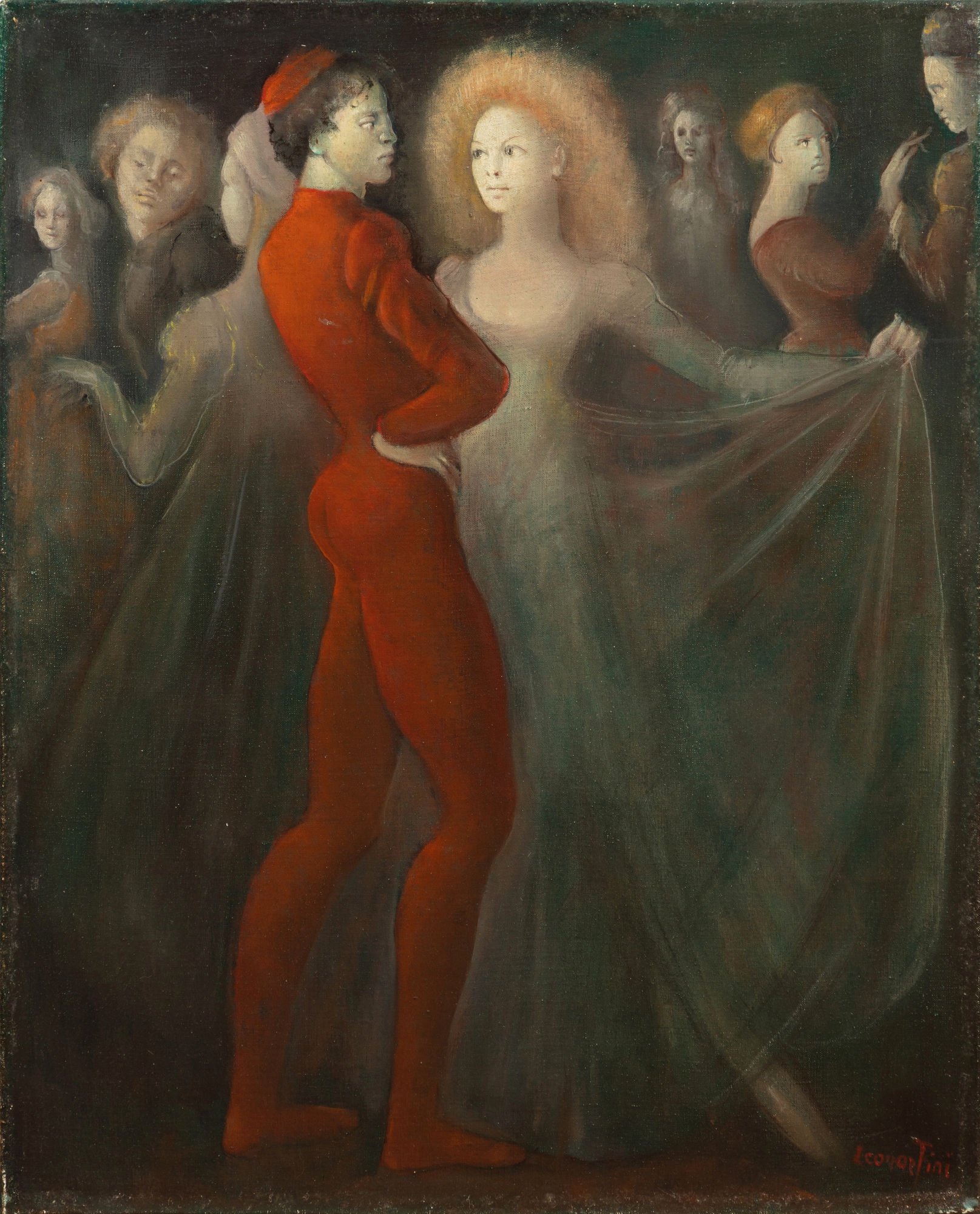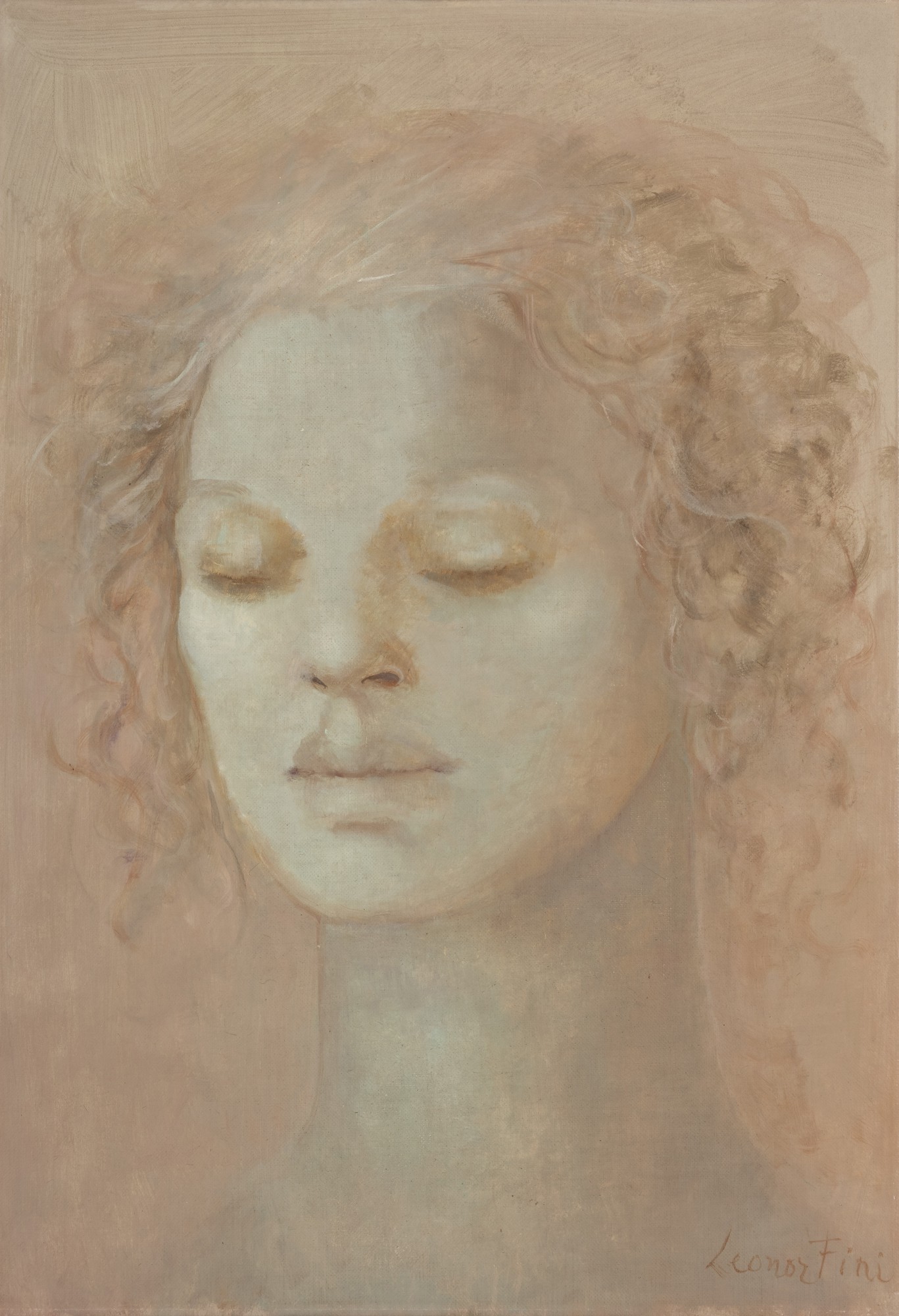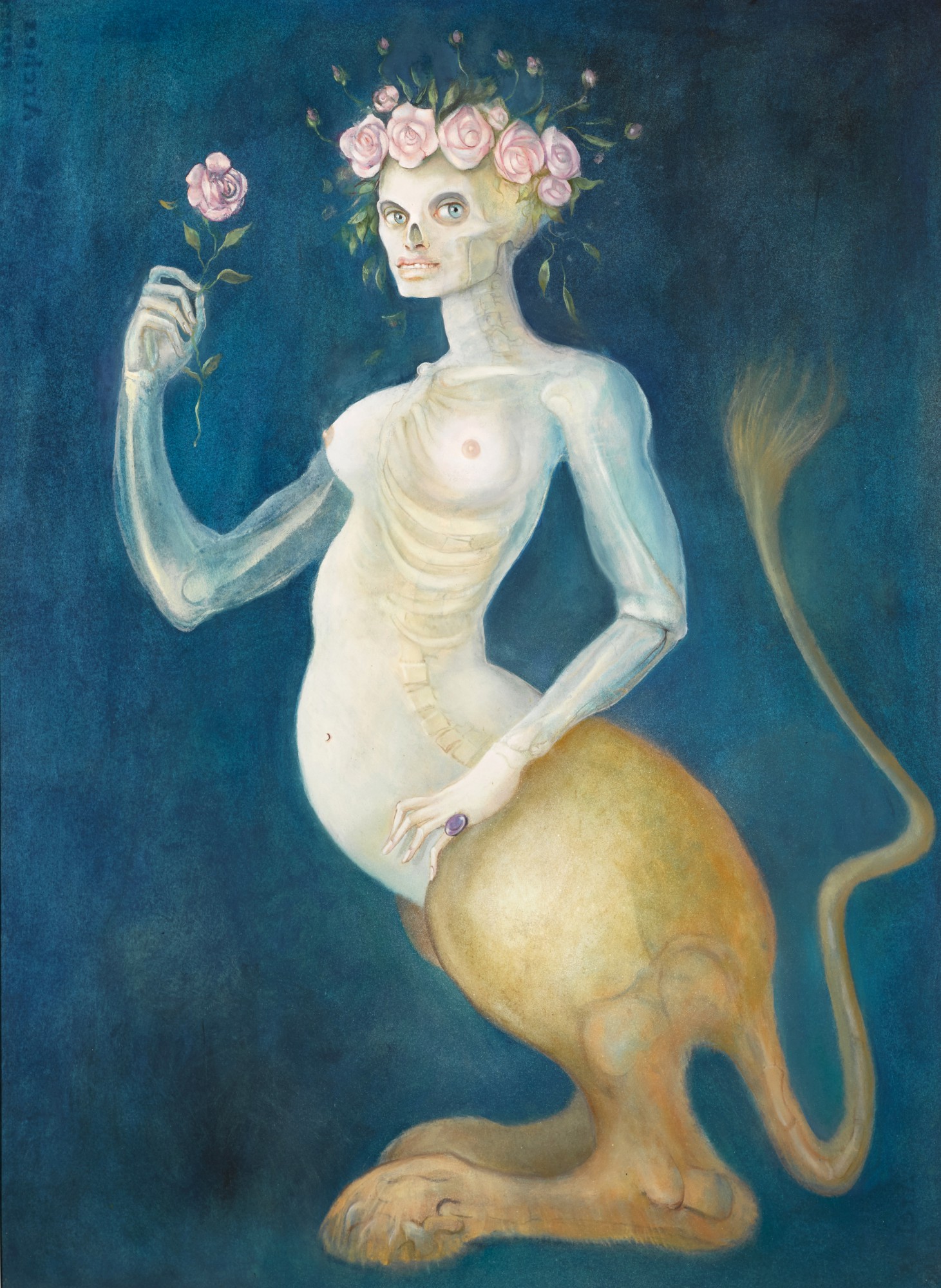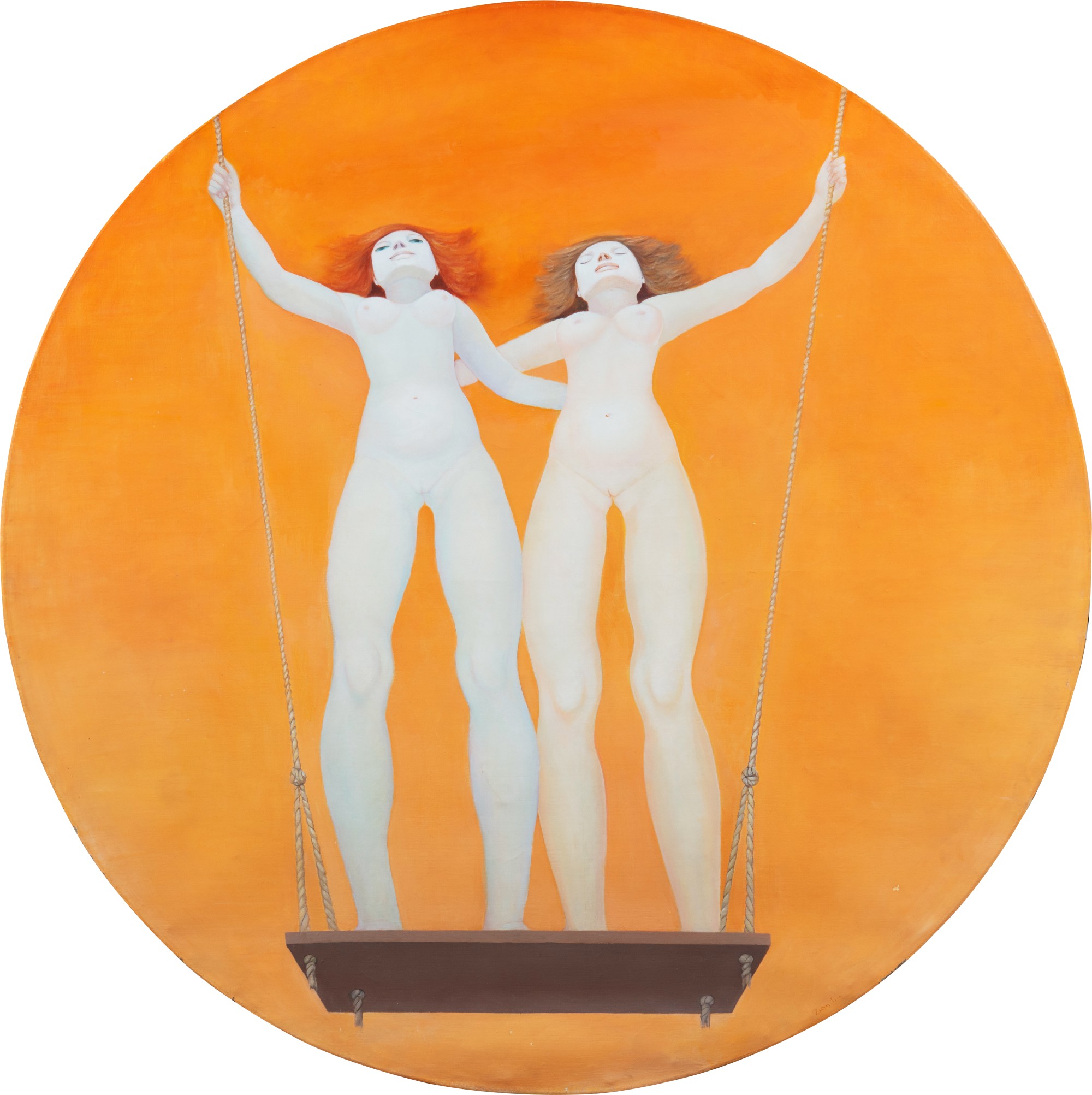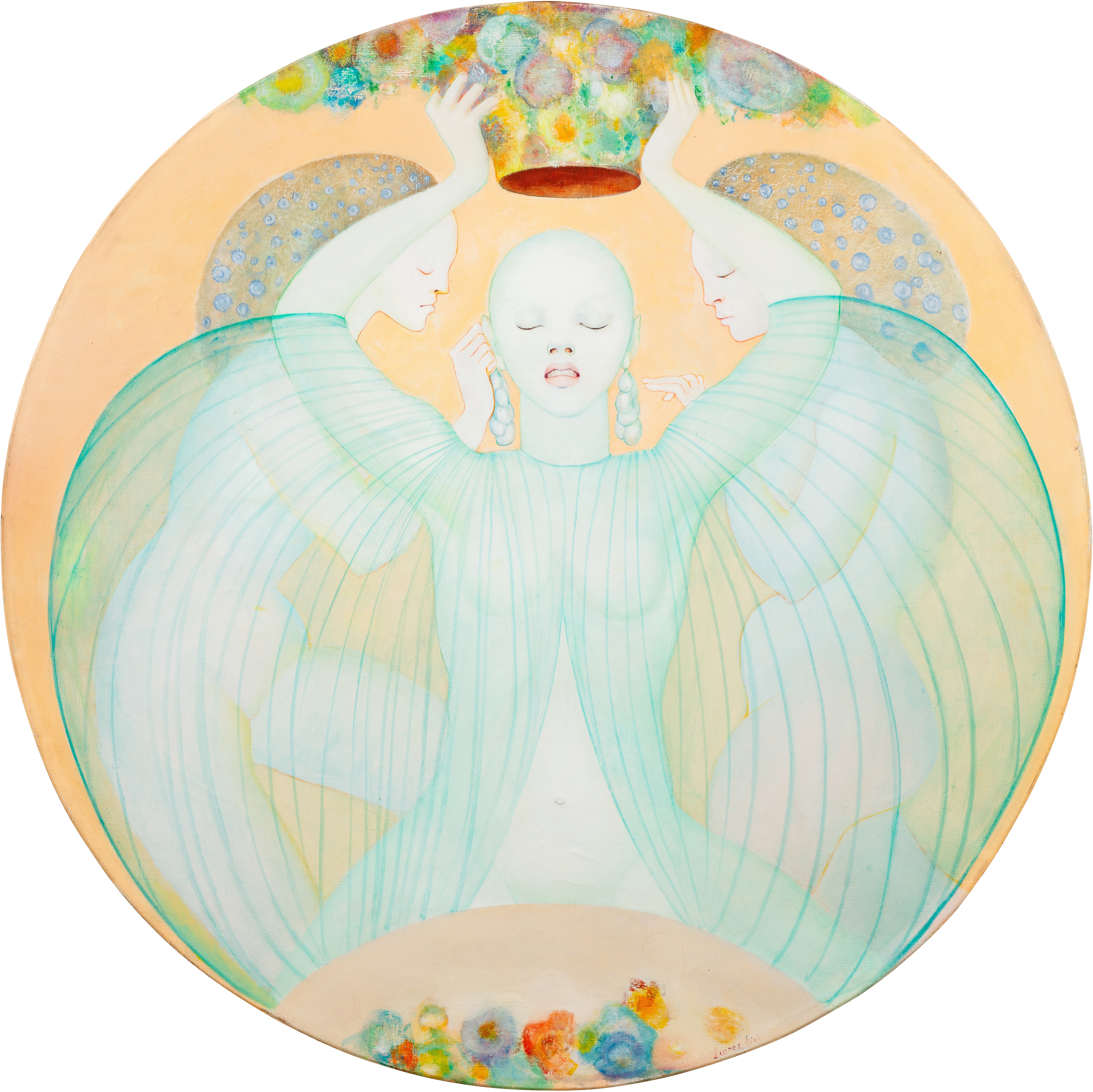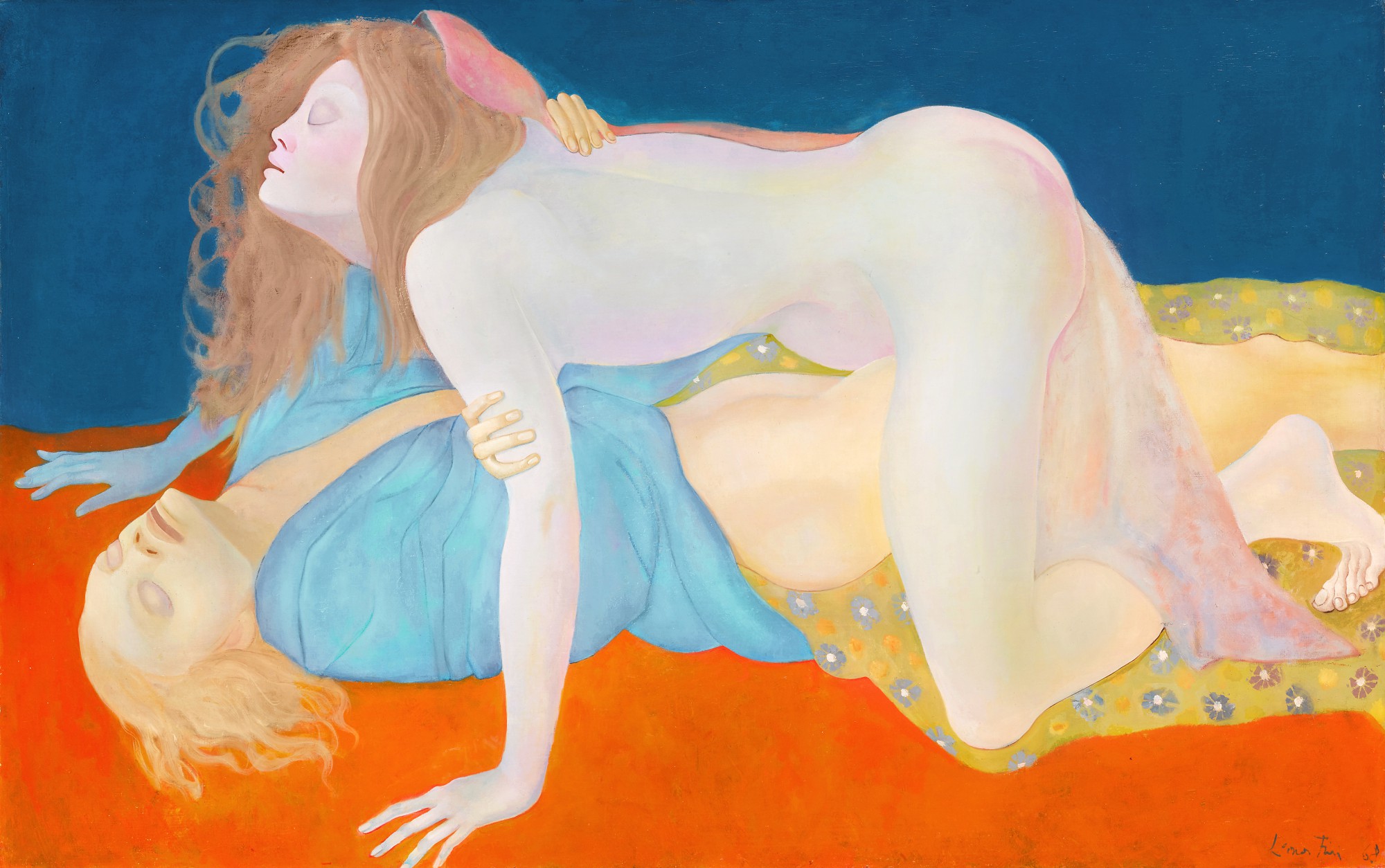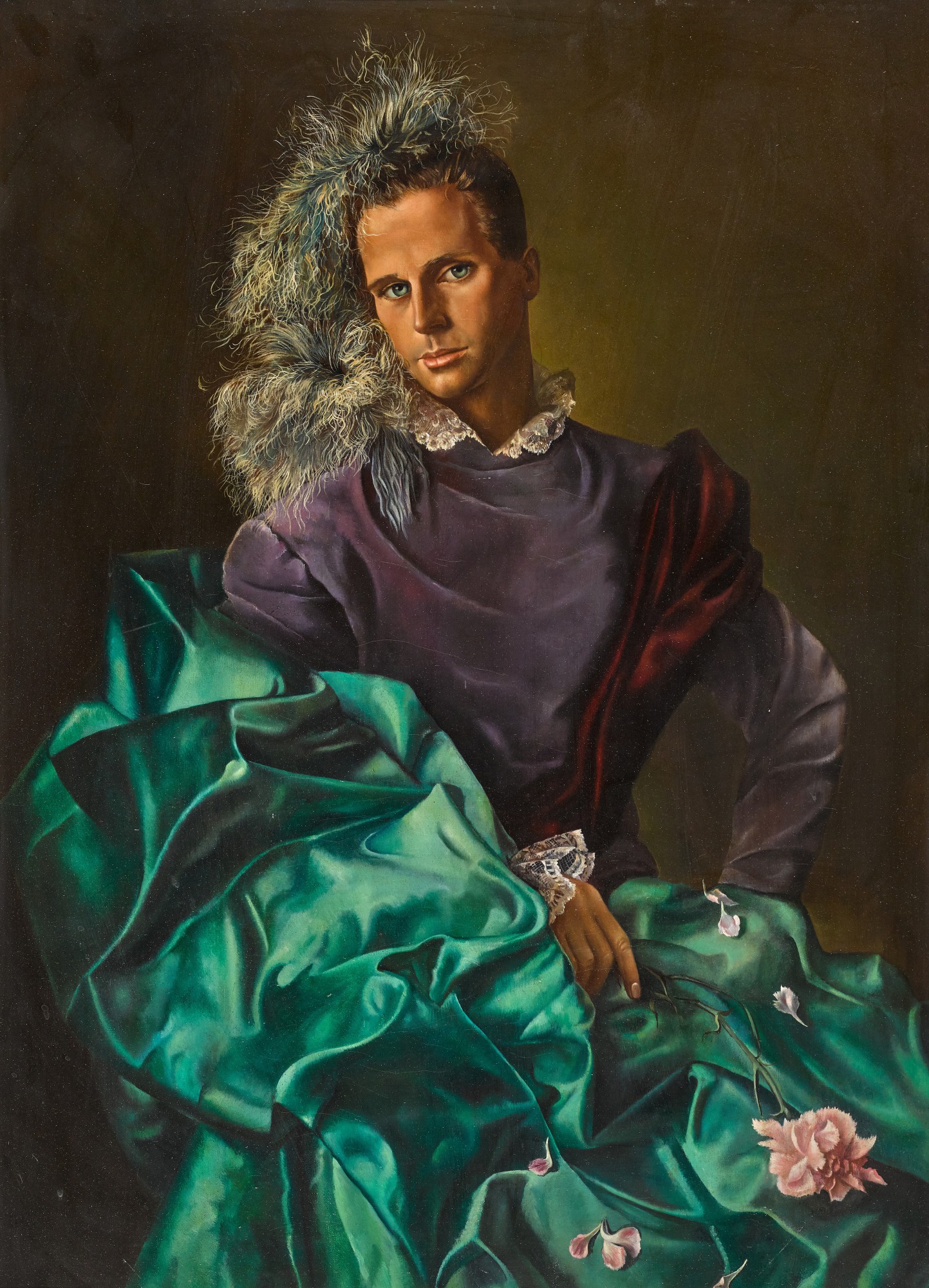
In 2022, the Musée Maillol in Paris mounted a landmark retrospective celebrating Leonor Fini, drawing visitors into a world of silken sphinxes, commanding women, and dreamlike interiors that felt as urgently alive as anything produced in contemporary art. The show reminded a new generation what devoted collectors and museum curators have long understood: Fini was not a footnote to Surrealism. She was a force entirely unto herself, an artist who built a sovereign creative universe on her own terms and never once asked permission to inhabit it. Born in Buenos Aires in 1907, Fini spent her formative years in Trieste, raised largely by her mother and maternal grandparents after her parents separated. Her Argentine father's attempts to reclaim custody of the young girl led to years of disguises and escapes, experiences that gave Fini an early, visceral education in the power of transformation, concealment, and female resilience. Trieste itself, that cosmopolitan port city caught between Italian and Central European cultures, fed her an unusually rich intellectual diet. She was largely self taught, visiting the city's museums obsessively, studying Old Masters with the eye of someone who intended to outmaneuver them. By the early 1930s, Fini had made her way to Paris, the gravitational center of the European avant garde. She moved with ease through the city's most electric circles, befriending Max Ernst, Salvador Dalí, Giorgio de Chirico, and Paul Éluard, as well as writers including Jean Genet and André Pieyre de Mandiargues. She exhibited alongside the Surrealists at their major group shows, including the landmark 1936 International Surrealist Exhibition in London, but she consistently refused to sign the movement's manifestos or submit to André Breton's self appointed authority. Her independence was not a pose. It was a philosophical position, a conviction that no movement, however radical, had the right to legislate the imagination. Fini's artistic development across the 1930s and 1940s traces a confident and deeply personal arc. Her early work, such as the extraordinary Autoportrait au scorpion from 1938, already announces her central preoccupations: female power, mortality, eroticism, and the uncanny. In that self portrait, she presents herself adorned with a scorpion, gazing outward with an unsettling calm that owes nothing to male fantasy and everything to self knowledge. Throughout the 1940s, she expanded her vocabulary of sphinx figures and androgynous presences, painting women who are neither passive nor victimized but rather primal, watchful, and in complete command of their environments. Femme Avec Le Sphinx from 1946 and Girl with Shells from 1947 show the refinement and delicacy she brought to works on paper, combining precise draftsmanship with a charged, almost otherworldly atmosphere. Her signature motifs, sphinxes, cats, women at the threshold between human and animal, between life and something beyond it, evolved across decades without ever becoming formulaic. The sphinxes in particular deserve special attention. Where male Surrealists so often cast women as objects of mystery or desire, Fini made the sphinx a self portrait of female intelligence: ancient, amused, and entirely comfortable with her own power. By the time she painted Sfinge la morte, also known as La Belle, in 1973, the image had accumulated layers of art historical resonance while remaining unmistakably personal. Her later works, including the luminous Tristan und Isolde from 1977 in gouache and pastel, show her handling of color and surface reaching a kind of confident late mastery, romantic and melancholy and gorgeous all at once. Fini was also a remarkably versatile creative presence beyond the canvas. She designed sets and costumes for theater and ballet, including productions at the Paris Opéra, and created illustrations for editions of works by Edgar Allan Poe and Georges Bataille. Her apartment in Rome, shared for decades with two male companions and a rotating population of cats, was itself a kind of total artwork, an environment of draped fabrics, antique curiosities, and theatrical staging that visitors described with the reverence usually reserved for sacred spaces. She wrote, she costumed herself for legendary masquerade balls, and she moved through the world as a living embodiment of her own mythology. For collectors, Fini's work presents a genuinely thrilling range of entry points. Works on paper, including ink drawings, watercolors, and gouaches, offer access to her draftsmanship at its most intimate and immediate. Her studies of faces and figures, such as the Visage imaginaire series from the late 1970s, reveal the sustained intensity she brought even to smaller scale compositions. Oil paintings from the 1940s through the 1970s represent the heart of her market, with major institutions including the Centre Pompidou, the Museum of Modern Art in New York, and the Peggy Guggenheim Collection in Venice holding significant examples. At auction, strong works by Fini have achieved notable results at Christie's and Sotheby's, with demand growing steadily as critical reassessment of women artists from the Surrealist orbit has accelerated. Collectors who engaged with her work early have been well rewarded, and the market continues to reflect the seriousness with which scholars, curators, and fellow artists regard her contribution. Fini belongs in any conversation about the generation of artists who transformed twentieth century painting, alongside figures such as Remedios Varo, Dorothea Tanning, and Meret Oppenheim, women who worked within and against the Surrealist milieu to produce art of enduring originality. She shares with Varo a gift for populated, theatrical interiors and with Tanning a fascination with the threshold between the known and the uncanny. But Fini's visual world is her own entirely: more feline, more erotically charged, more frankly celebratory of female agency than almost any of her contemporaries. Her refusal of orthodoxy makes her, paradoxically, one of the most coherent artistic personalities of her era. Leonor Fini died in Paris in 1996, having outlived most of her famous circle and having watched her reputation, which was sometimes obscured during the decades when the male Surrealists dominated critical discussion, begin its long and deserved restoration. That restoration is now well underway. Major retrospectives, growing institutional acquisitions, and a surge of scholarly attention have returned her to the center of the story where she always belonged. To collect Fini is to align oneself with an artist of genuine courage and astonishing invention, someone who understood that the most radical act available to her was simply, completely, and brilliantly to be herself.