Leonid Sokov
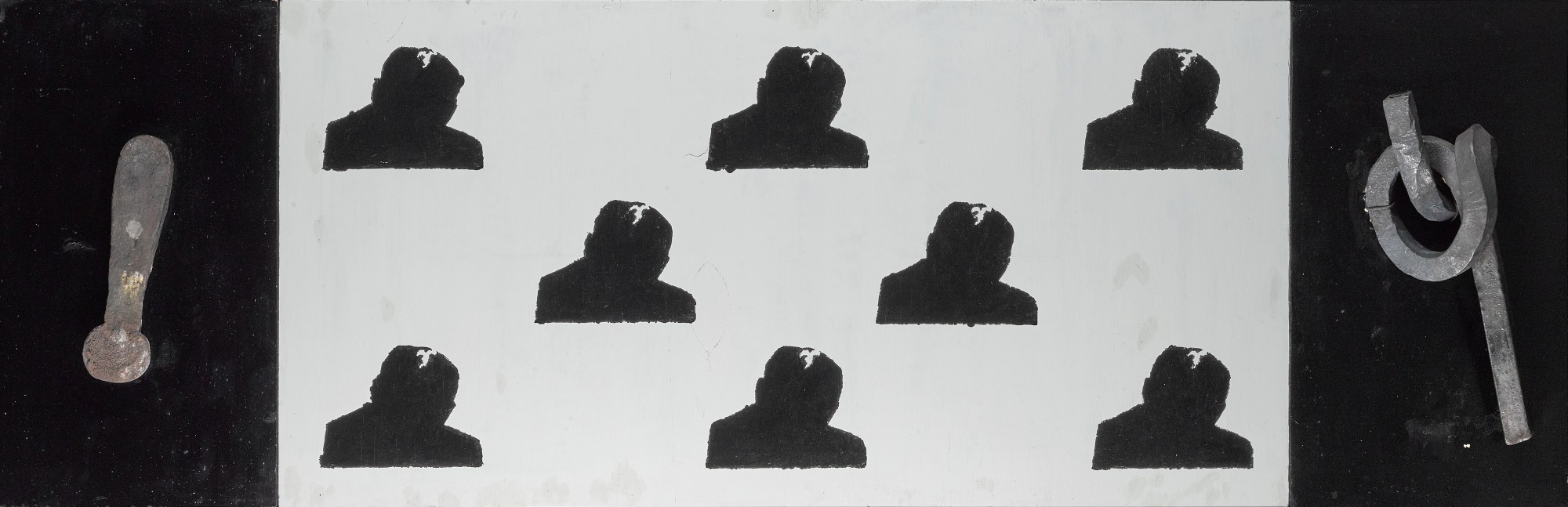
Leonid Sokov, Master of the Beautiful Absurd
Artist Spotlight · The Collection Editorial
There is a particular kind of laughter that catches in the throat, the kind that arrives when you recognize something impossible and yet perfectly true. That is the sensation conjured by the work of Leonid Sokov, the Russian American sculptor and painter whose career spanned five decades and two continents, and whose art transformed the iconography of Cold War culture into something both hilarious and genuinely profound. When the State Tretyakov Gallery in Moscow presented his work alongside the broader Sots Art movement, it confirmed what international audiences had long understood: Sokov was not merely a satirist. He was a myth maker operating at the precise intersection of East and West, power and absurdity, reverence and irreverence.
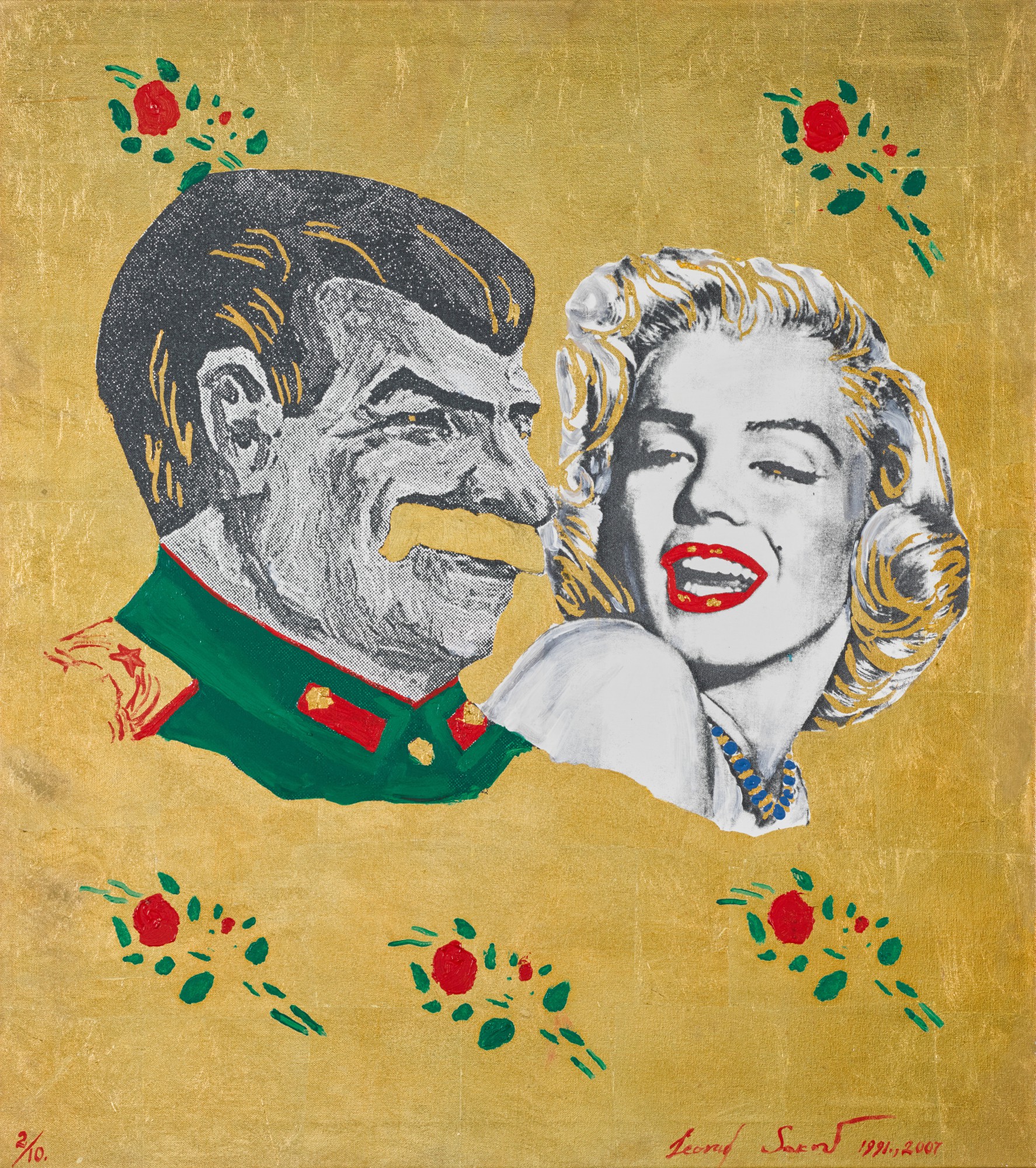
Leonid Sokov
Stalin and Marylin
Sokov was born in 1941 in the Soviet Union, entering the world at one of the most turbulent moments in modern history, the same year Germany invaded Russia and the entire architecture of Soviet life was thrown into crisis. He trained as a sculptor and woodcarver, developing a technical fluency that would later give his most provocative political works an almost classical weight and dignity. His early formation in Soviet artistic institutions gave him an intimate understanding of the visual language of state power, the monumental bronze figures, the heroic poses, the carefully calibrated symbols of collective identity. He learned that language from the inside, which is precisely what made him so effective at subverting it.
In the early 1970s, Sokov became a founding figure of Sots Art alongside fellow Moscow artists Vitaly Komar and Alexander Melamid. The movement took its name as a deliberate echo of Pop Art, substituting the consumer imagery of Western capitalism with the propagandistic imagery of Soviet socialism. Where Andy Warhol had found poetry in Campbell's soup cans and Marilyn Monroe, Sokov and his colleagues found an equally rich visual vocabulary in Lenin, Stalin, and the iconography of Soviet heroism. But Sokov's particular genius was his instinct for collision, for placing these Soviet symbols in direct and disorienting contact with Western cultural figures, creating works that belonged fully to neither world and illuminated both.
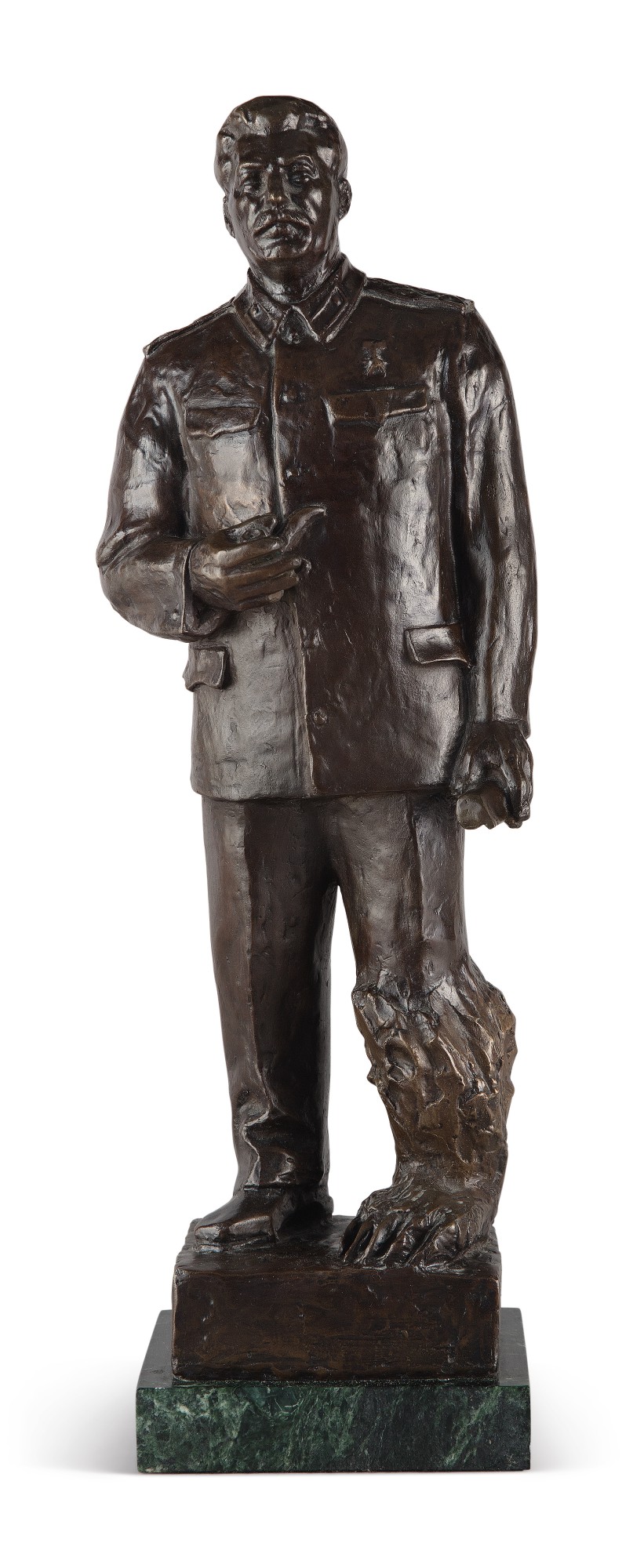
Leonid Sokov
Stalin With A Bear's Foot
His emigration to New York in 1979 proved to be not a rupture but an expansion. Arriving in a city already electrified by the energies of postmodern art and the tail end of Pop, Sokov found that his sensibility resonated deeply with an American audience just beginning to grapple seriously with the aesthetics of the Cold War. New York gave him access to new materials, new audiences, and the direct experience of American popular culture that his work had been engaging with from a distance. The juxtapositions became richer, stranger, and more layered.
His sculptures began to feel less like critique and more like genuine cultural hybrids, objects that could not have been made by anyone who had not lived on both sides of the iron curtain. The signature works that define Sokov's legacy reward sustained attention. "Lenin and Giacometti" is perhaps his most intellectually elegant achievement, placing the Soviet icon in direct formal dialogue with the attenuated bronze figures of Alberto Giacometti, two traditions of sculpted humanity confronting each other across an ideological chasm. "Stalin With A Bear's Foot," cast in bronze on a green marble base, is a masterpiece of deadpan gravitas, using the materials of official commemoration to create something simultaneously majestic and deeply strange.
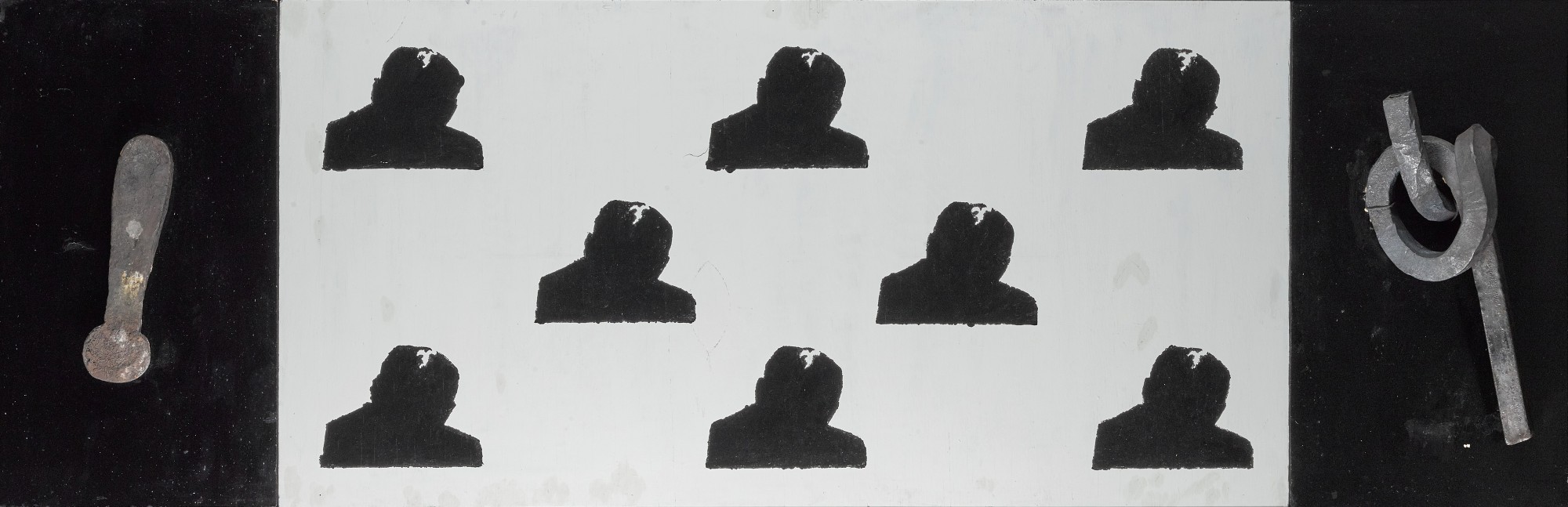
Leonid Sokov
Gorbachev (Triptych)
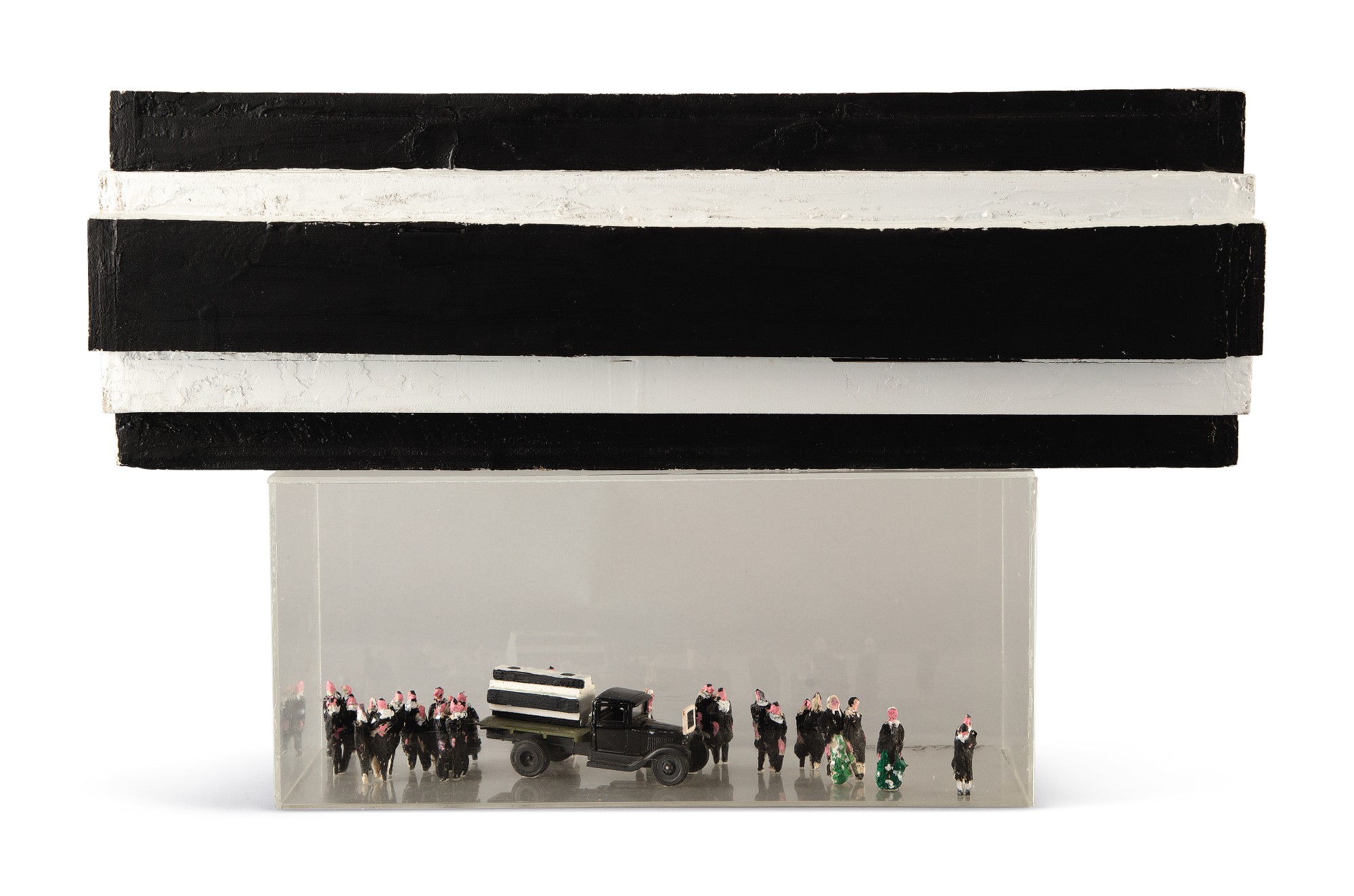
The works featuring Stalin and Marilyn Monroe, rendered in screen print with gold leaf and oil on canvas, are among his most visually arresting, reducing two of the twentieth century's most mythologized figures to pure icon, equal in their glamour, equal in their constructed unreality. "In Memory Of Malevich" displays a different register of his intelligence, layering art historical homage with sculptural wit through a combination of oil, plaster, papier mâché, a toy truck, and Perspex, making the legacy of Russian abstraction feel both monumental and tenderly human. Sokov exhibited at institutions that represented the full range of serious contemporary art. MoMA in New York presented his work, as did the Guggenheim, and the State Tretyakov Gallery in Moscow, a geographic sweep that mirrors his own biography.
These are not minor footnotes but confirmations of an artist whose ideas were genuinely important to the institutions tasked with shaping our understanding of postwar and contemporary art. His work appeared in exhibitions that traced the history of Sots Art and Soviet nonconformist practice, and he was consistently recognized as one of the movement's most formally inventive and conceptually rigorous figures. For collectors, Sokov's work presents an opportunity that is both historically significant and visually rewarding. His sculptures carry the weight and permanence of classical bronze while his works on paper and canvas have an immediacy and graphic confidence that makes them powerful presences in any context.
Leonid Sokov
In Memory Of Malevich
Works such as "Glasses For Every Soviet Person," rendered in gouache on cardboard, demonstrate his ability to find genuine pathos and humor in the most modest materials. "Marilyn Monroe and the Russian Bear," a screenprint combining string and mixed media on card, shows his appetite for formal experimentation within a consistent conceptual framework. Collectors drawn to the intersection of art history and political culture, to works that function simultaneously as objects, ideas, and historical documents, will find Sokov's practice deeply satisfying. His prices have remained remarkably accessible relative to his institutional standing, making this a moment of genuine collecting opportunity.
Sokov stands alongside Komar and Melamid, Erik Bulatov, and Ilya Kabakov as one of the essential figures of the Russian nonconformist tradition, artists who transformed the constraints of Soviet cultural life into a remarkably fertile artistic language. Like those peers, he belongs to a broader conversation about appropriation, iconography, and the politics of representation that connects him to Western contemporaries from Warhol to Jeff Koons to Barbara Kruger. His work anticipates many of the concerns that would come to dominate contemporary art in the 1980s and 1990s, and it retains a freshness and urgency that has not dimmed with time. Leonil Sokov passed away in 2018, leaving behind a body of work that continues to speak with remarkable directness to the present moment.
In an era when the symbols of political power feel more unstable and contested than at any point since the Cold War, his practice of cheerful, rigorous, formally beautiful iconographic collision feels less like history and more like prophecy. He understood that the most powerful images are also the most vulnerable to transformation, that a bronze Stalin on a marble plinth and a toy truck and a silk screened Marilyn are all, at root, the same kind of human dreaming made visible. To encounter his work is to feel that understanding land, fully and joyfully, in the body.
Explore books about Leonid Sokov
Leonid Sokov: Sots Art and Beyond
Igor Golomstock
Leonid Sokov: Monuments and Transformations
David Ross
Russian Art of the Soviet Period
Alla Rosenfeld and Norton T. Dodge
Leonid Sokov: Recent Works
Peter Halley
Sots Art: Soviet Art in the Style of Socialist Realism
Vitaly Komar and Alex Melamid