Lennart Anderson
Lennart Anderson, Painter of Radiant Everyday Beauty
Artist Spotlight · The Collection Editorial
There is a particular quality of light in Lennart Anderson's still lifes that stops you mid step. It is not the dramatic, staged illumination of theatrical painting, nor the cool conceptual light of modernist abstraction. It is something closer to the light of a Tuesday morning, falling across a lemon and a plastic cup on a table, asking you to look again at the world you have been walking through without seeing. When the art world rediscovers a painter of Anderson's caliber, the experience feels less like discovery and more like recognition, a sense that something true and important has been present all along, waiting with quiet patience.
Lennart Anderson
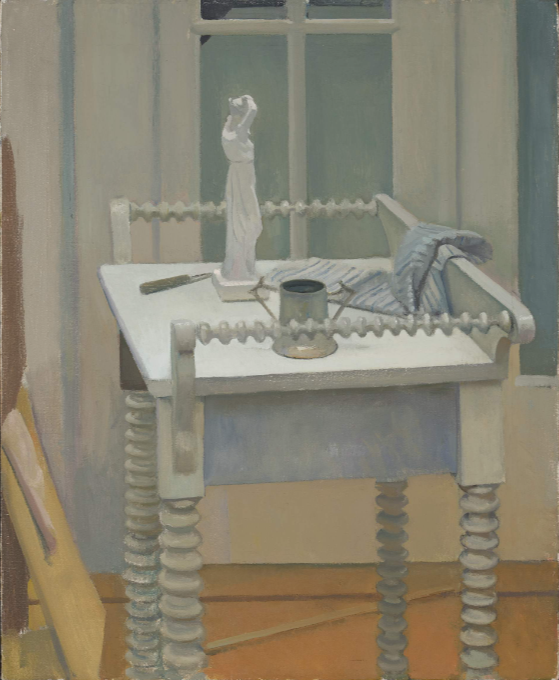
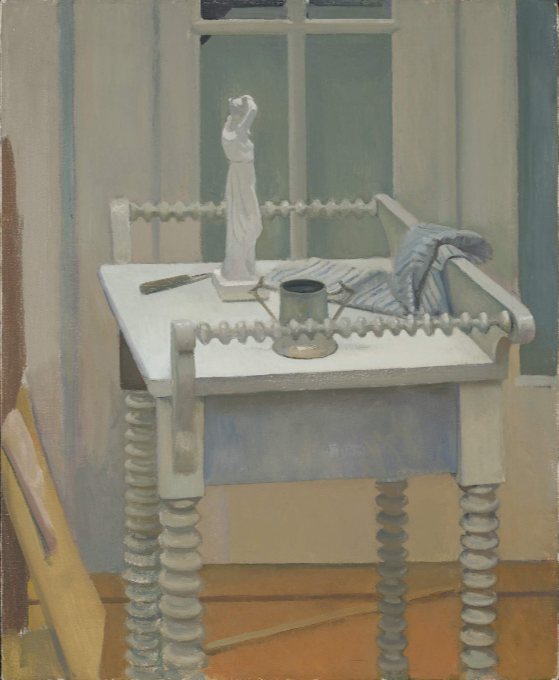
Still Life with Victorian Washstand, 1967
Lennart Anderson was born in Detroit, Michigan in 1928, and his formation as an artist followed a path shaped by some of the most rigorous institutions in American art education. He studied at the Art Institute of Chicago, one of the great training grounds for American painters, before moving on to the Cranbrook Academy of Art in Bloomfield Hills, Michigan. Cranbrook in the postwar years was a remarkable place, an institution steeped in the ideals of craft, design, and artistic seriousness, and it left a permanent mark on Anderson's understanding of what a painting could and should aspire to be. He went on to study at the Art Students League in New York, absorbing the figurative traditions that would anchor his entire working life.
The New York that Anderson entered as a young painter in the 1950s was electrified by Abstract Expressionism. Willem de Kooning, Franz Kline, and Mark Rothko commanded the cultural conversation, and figurative painting was frequently treated as a rearguard position, a retreat rather than a commitment. Anderson held his ground. He belonged to a generation of painters, including Gabriel Laderman and the circle around the critic Fairfield Porter, who believed that the human figure, the still life, and the painted landscape retained enormous expressive and philosophical possibility.
Lennart Anderson
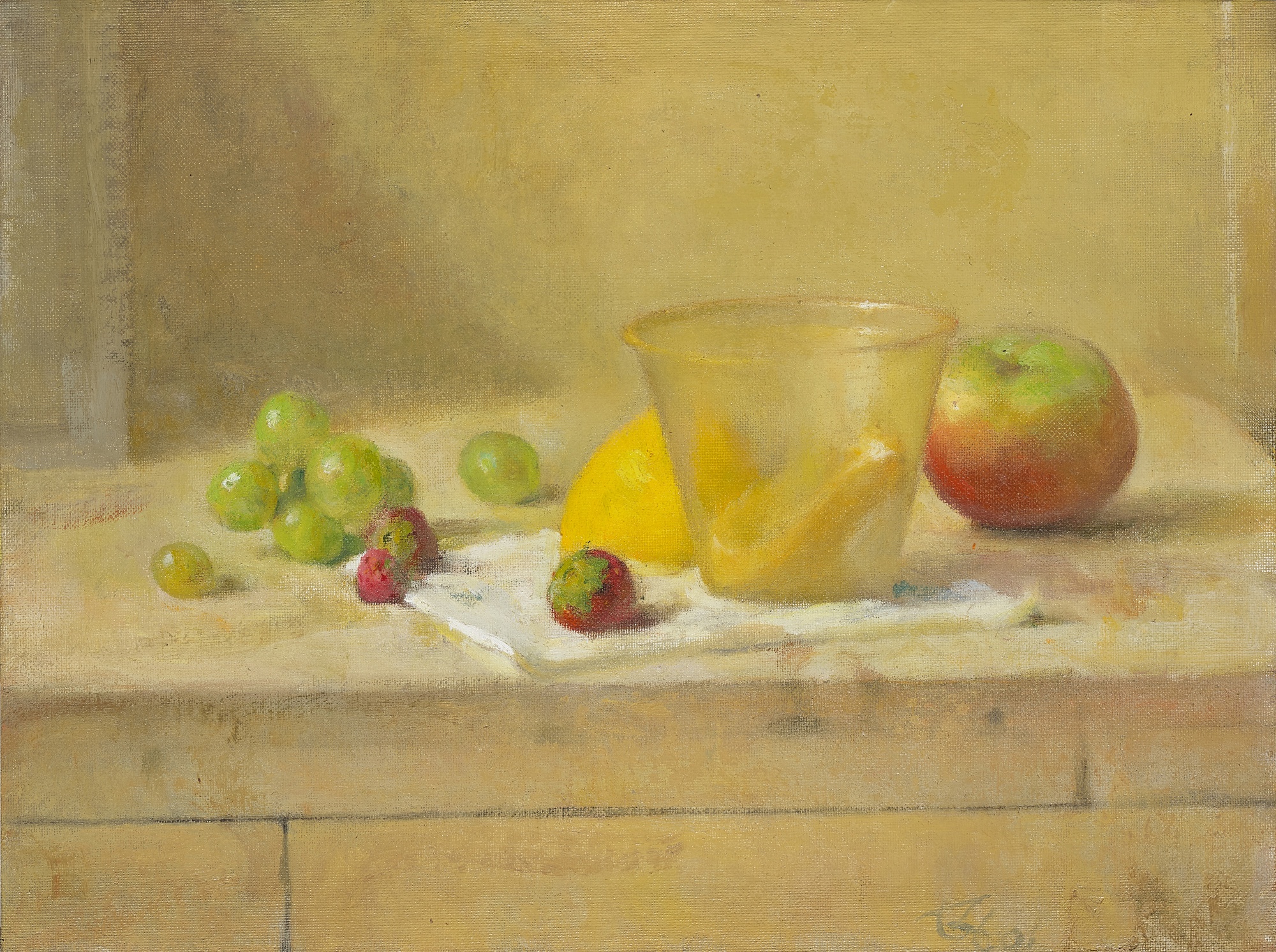
Plastic Cup with Lemon, Strawberries and Grapes, 2001
This was not nostalgia. It was a considered artistic argument, made canvas by canvas over decades, that representation and formal rigor were not in opposition but were, in fact, inseparable. Anderson's artistic development moved through several richly productive periods. His early work of the late 1950s and 1960s shows a painter working to synthesize the lessons of Cézanne and the Italian Renaissance with a distinctly American directness.
The 1960 oil on canvas board "September Eve" is a beautiful example of this early seriousness, a work in which atmosphere and observation are held in careful tension. By 1967, with a painting like "Still Life with Victorian Washstand," Anderson had arrived at a fully realized language of his own. The Victorian Washstand is a remarkable object: layered, domestic, and freighted with the accumulation of ordinary use. Anderson renders it with the patient attention of a Dutch Golden Age master, bringing Old Master luminosity to a subject rooted in American domestic life.
Lennart Anderson
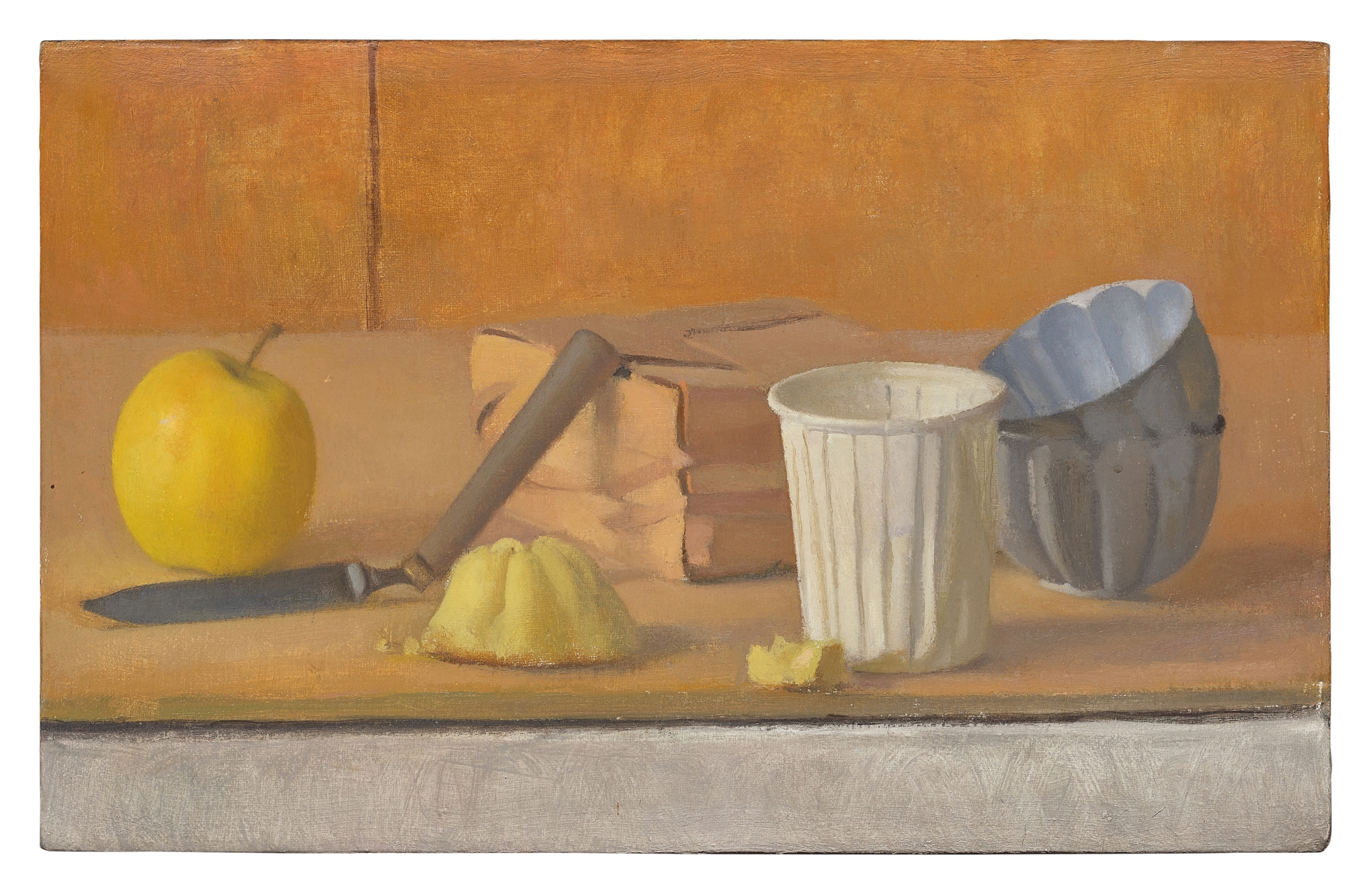
Still Life with Yellow Apple, Muffin and Paper Cup, 1983
It is a painting that rewards long looking. The still lifes of Anderson's middle and later career are where his genius burns most steadily. Works like "Still Life with Yellow Apple, Muffin and Paper Cup" from 1983 and "Plastic Cup with Lemon, Strawberries and Grapes" from 2001 demonstrate his extraordinary ability to locate the monumental within the modest. A paper cup in Anderson's hands is not a throwaway object.
It becomes a form with weight, shadow, and presence, a small vessel that holds the same formal significance as a chalice in a Zurbarán painting. The 1995 oil on canvasboard "Lettuce" is perhaps the most austere and quietly radical of the works available through The Collection: a vegetable elevated to the status of a formal study, all structure and light and the patient intelligence of the painter's eye. For decades, Anderson taught at Brooklyn College, where he became one of the most beloved and influential painting instructors in American art education. His students, many of whom have gone on to distinguished careers of their own, speak of his teaching with a reverence that goes beyond professional admiration.
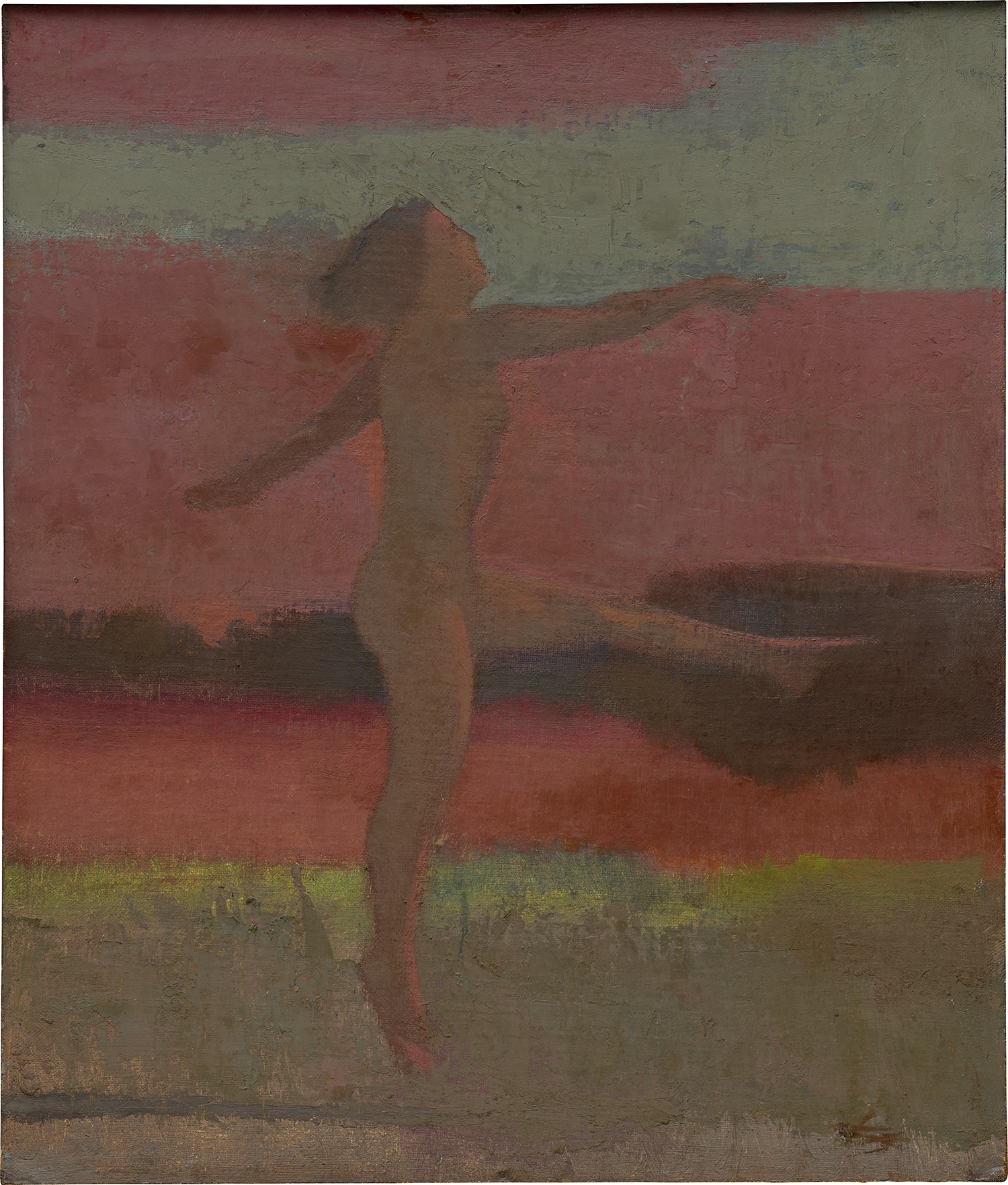
Lennart Anderson
September Eve, 1960
He was not a teacher who imposed a style. He was a teacher who helped painters learn to see, to understand why Piero della Francesca placed a figure where he did, to feel the difference between a color relationship that works and one that almost works. This kind of transmission is among the most valuable things the art world produces, and Anderson was an extraordinary practitioner of it. From a collecting perspective, Anderson occupies a position of growing importance in the market for postwar American figurative painting.
His works appear regularly in specialist sales and through galleries committed to the American realist tradition, and they consistently attract collectors who have moved past the noise of contemporary art fashion toward something more enduring. The works on canvasboard, which include some of his most intimate and concentrated still lifes, offer an accessible point of entry for collectors new to his practice. The larger oil on canvas works, including the Victorian Washstand, represent the fuller ambition of his project and are the kinds of paintings that anchor a serious collection. Collectors drawn to artists such as Fairfield Porter, Jane Freilicher, Alex Katz, and Philip Pearlstein will find in Anderson a painter of comparable stature and integrity.
Anderson's place in American art history becomes clearer with each passing year. He was a painter who understood that the great traditions of European painting were not a ceiling but a floor, a foundation from which to build an art rooted in American experience and modern perception. He looked at Titian and Vermeer not to imitate them but to understand how they solved problems that painting still faces: how to make light visible, how to give an object its full presence, how to hold a viewer's attention through the quality of seeing rather than the drama of subject matter. Anderson died in 2015, but his paintings continue to ask their quiet, essential questions.
They ask you to slow down. They ask you to look at the lemon, the muffin, the cup, the apple, and to understand that attention itself is a form of love.