Jean Dufy
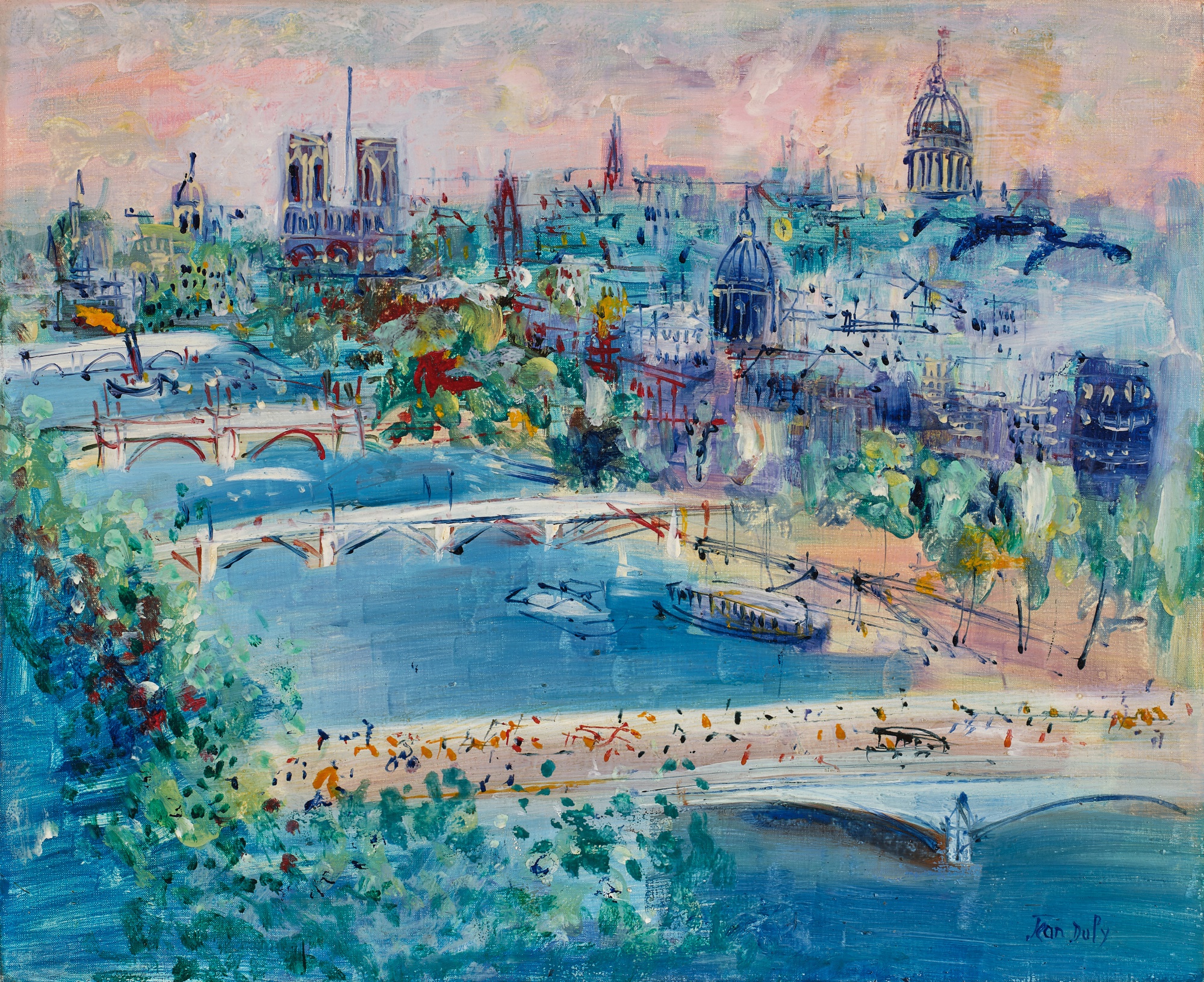
Jean Dufy, Paris in Perpetual Celebration
Artist Spotlight · The Collection Editorial
There is a particular quality of light that belongs only to Paris in the early afternoon, when the Seine catches the sun and the city seems to hum with its own quiet delight. It is this quality that Jean Dufy spent a lifetime chasing, capturing, and ultimately making his own. Though auction houses and private dealers have long known his name, a growing wave of collector interest over the past decade has brought Dufy firmly into the foreground, with works appearing regularly at Sotheby's, Christie's, and Bonhams, drawing serious attention from European and American collections alike. His paintings of the Seine, the grand boulevards, the cabarets, and the opera houses of Paris feel not like records of a vanished world but like open invitations to step inside one.
Jean Dufy
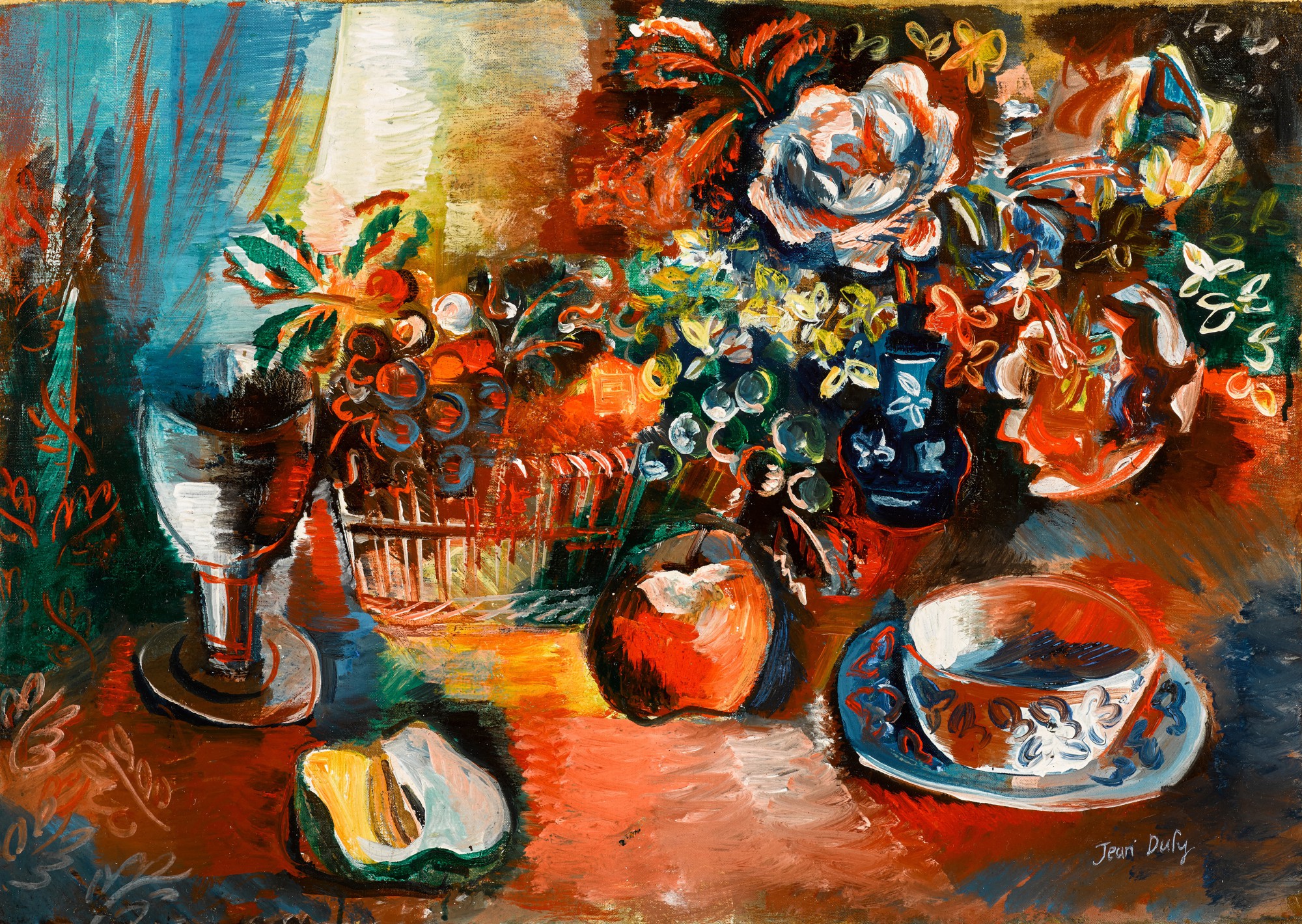
Nature morte à la tasse, 1927
Jean Dufy was born in Le Havre in 1888, the sixth of nine children in a family that would produce one of the most recognizable names in twentieth century French art. The Dufy household was modest but culturally alive, and Le Havre in the late nineteenth century was a port city buzzing with commercial energy and artistic possibility. Jean grew up in the long shadow cast by his older brother Raoul, who was already making his mark in Paris by the time Jean came of age. Rather than retreating from this dynamic, Jean moved toward it, following Raoul to Paris and immersing himself in the same circles of painters, musicians, and writers who were reshaping French visual culture in the years before and after the First World War.
His early formation was shaped by the twin forces of Post Impressionism and Fauvism, movements that prized color over fidelity, sensation over description. Jean studied with close attention to what was happening around him, absorbing the lessons of Matisse and the Fauves, who had scandalized Paris with their raw, unmodulated color as early as 1905. He also looked carefully at the work of Cézanne, whose structural approach to landscape gave Jean a framework within which to exercise his own more lyrical instincts. What emerged over the 1910s and 1920s was a style that was distinctly his own: loose, luminous, joyful, with a brushwork that felt improvised but was in fact deeply considered.
Jean Dufy
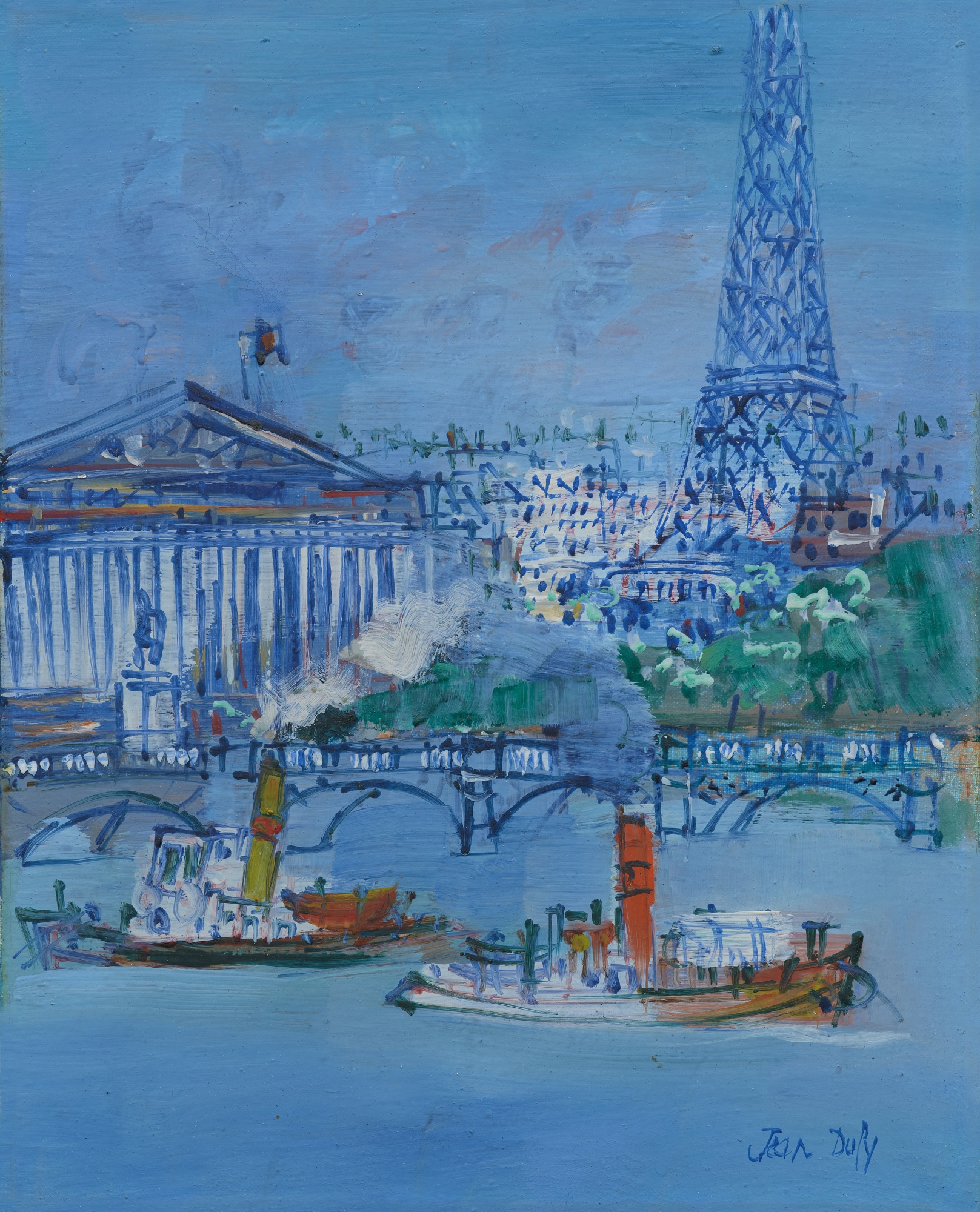
Paris, La Tour Eiffel
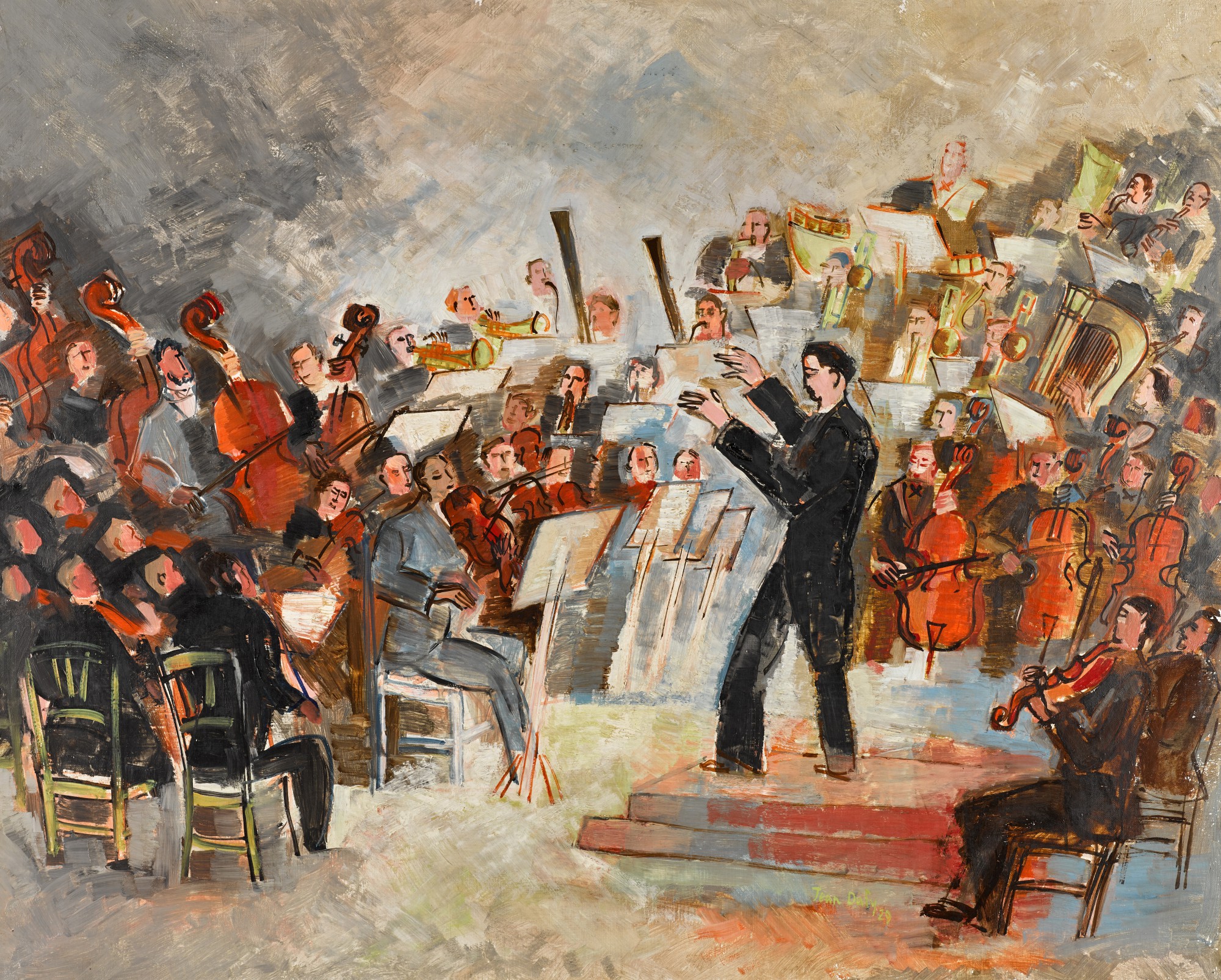
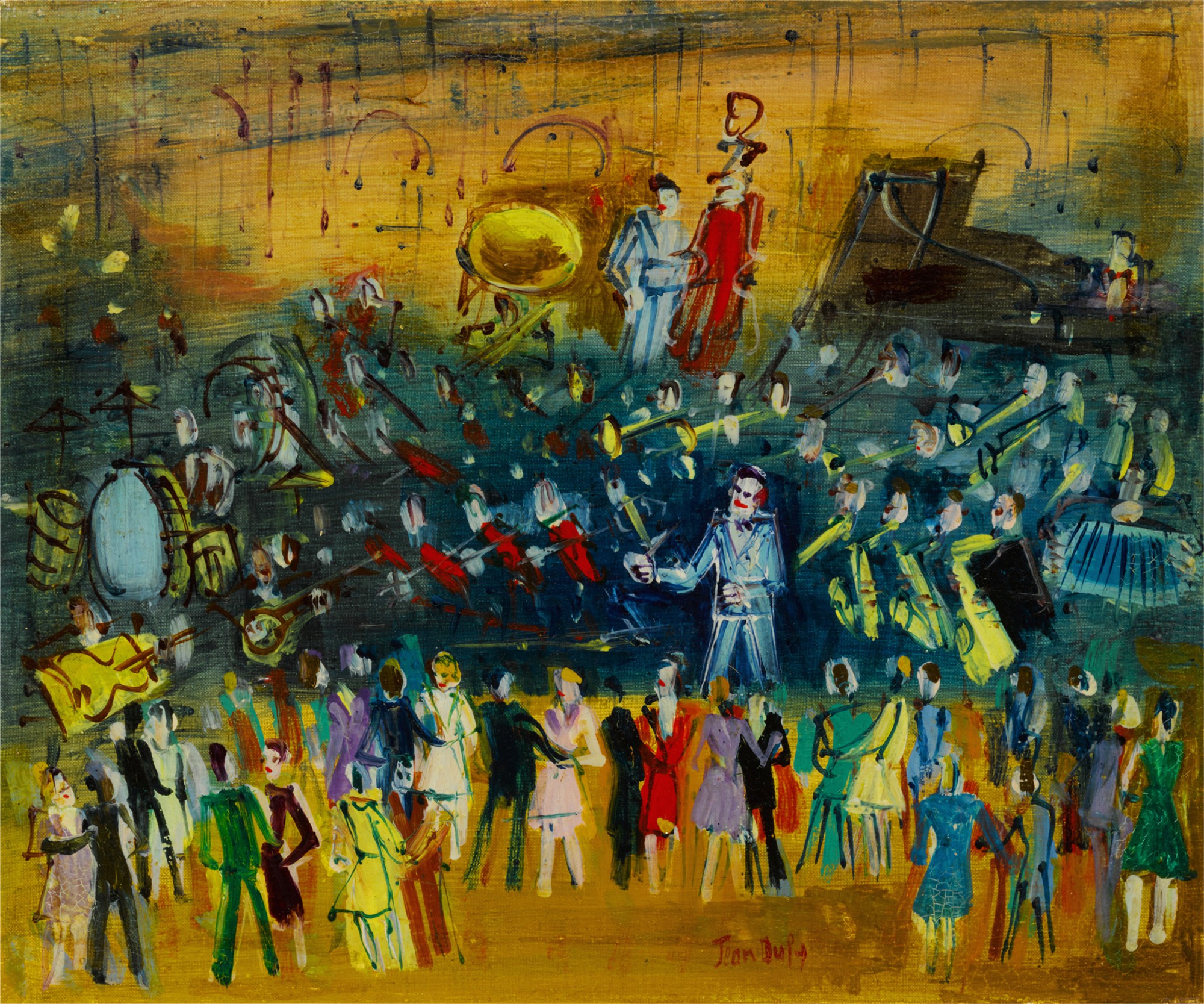
His palette leaned toward warm yellows, cerulean blues, and the soft greens of the French countryside. The 1920s and 1930s were years of remarkable productivity and creative confidence for Jean Dufy. He became fascinated with the spectacle of Parisian life, the music halls, the circus, the café terraces, and the grand monuments that gave the city its theatrical character. Works like "Au cabaret" from 1950 and "L'Arc de Triomphe du Carrousel" from 1930 exemplify his ability to translate the energy of public life into something intimate and warmly observed.
His views of the Seine, including the magnificent "La Seine" of 1948 and "La Seine au pont du Carrousel," reveal an artist who understood the river not merely as a geographical feature but as the emotional spine of the city he loved. These canvases have a breathing quality, as though the water itself is in motion beneath the paint. His watercolors and gouaches deserve particular attention from collectors and historians alike. Works such as "La Haye Descartes" from 1934, "L'Assemblée nationale," and "Paris, Place de l'Opéra" demonstrate a command of the watercolor medium that is frankly exceptional.
Jean Dufy
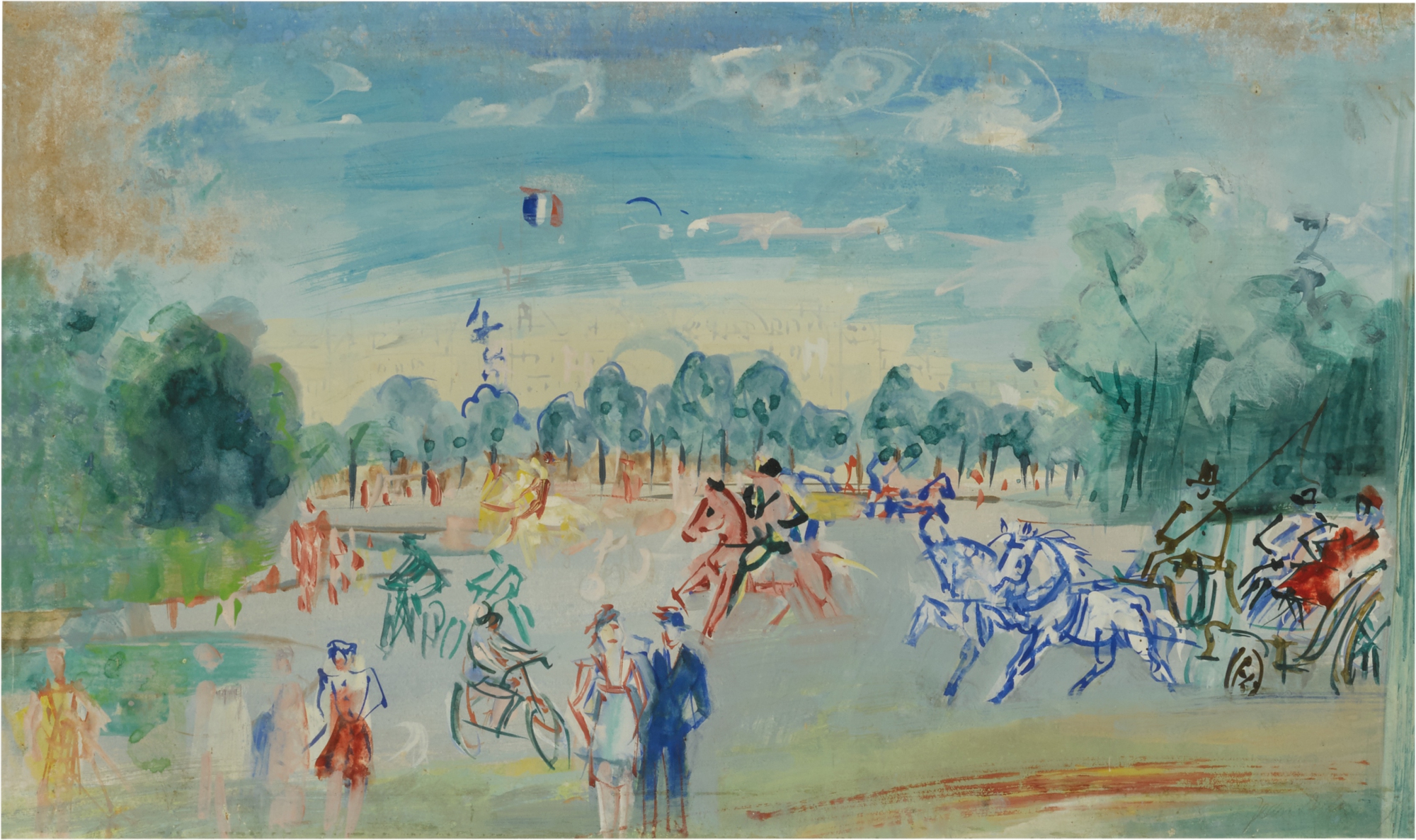
Calèche et cavaliers
In these works, Jean Dufy used the translucency of the medium to create layers of atmosphere that oil paint could not easily replicate. The gouaches, too, have an opaque richness that gives his color a jewel like intensity. His still lifes, including "Nature morte aux pommes" and "Nature morte à la tasse" from 1927, show a quieter, more introspective side of his practice, one that connects him to the long French tradition of intimate domestic painting stretching back through Chardin and forward through Bonnard. For collectors, Jean Dufy presents a compelling opportunity on several fronts.
His works occupy a sweet spot in the market: they are serious, historically grounded, and visually generous, yet they remain more accessible in price than comparable works by better known Fauvist and Post Impressionist contemporaries. A collector drawn to the world of Raoul Dufy, André Derain, Albert Marquet, or Maurice de Vlaminck will find in Jean Dufy a kindred sensibility with a distinct and fully realized artistic personality. The range of media he worked in, from oil on canvas to watercolor, gouache, and works on paper, means that collectors at various points of engagement with the market can find works that suit their circumstances. Condition and provenance are, as always, paramount, and the best examples retain the freshness of color and the spontaneous touch that make his work so immediately appealing.
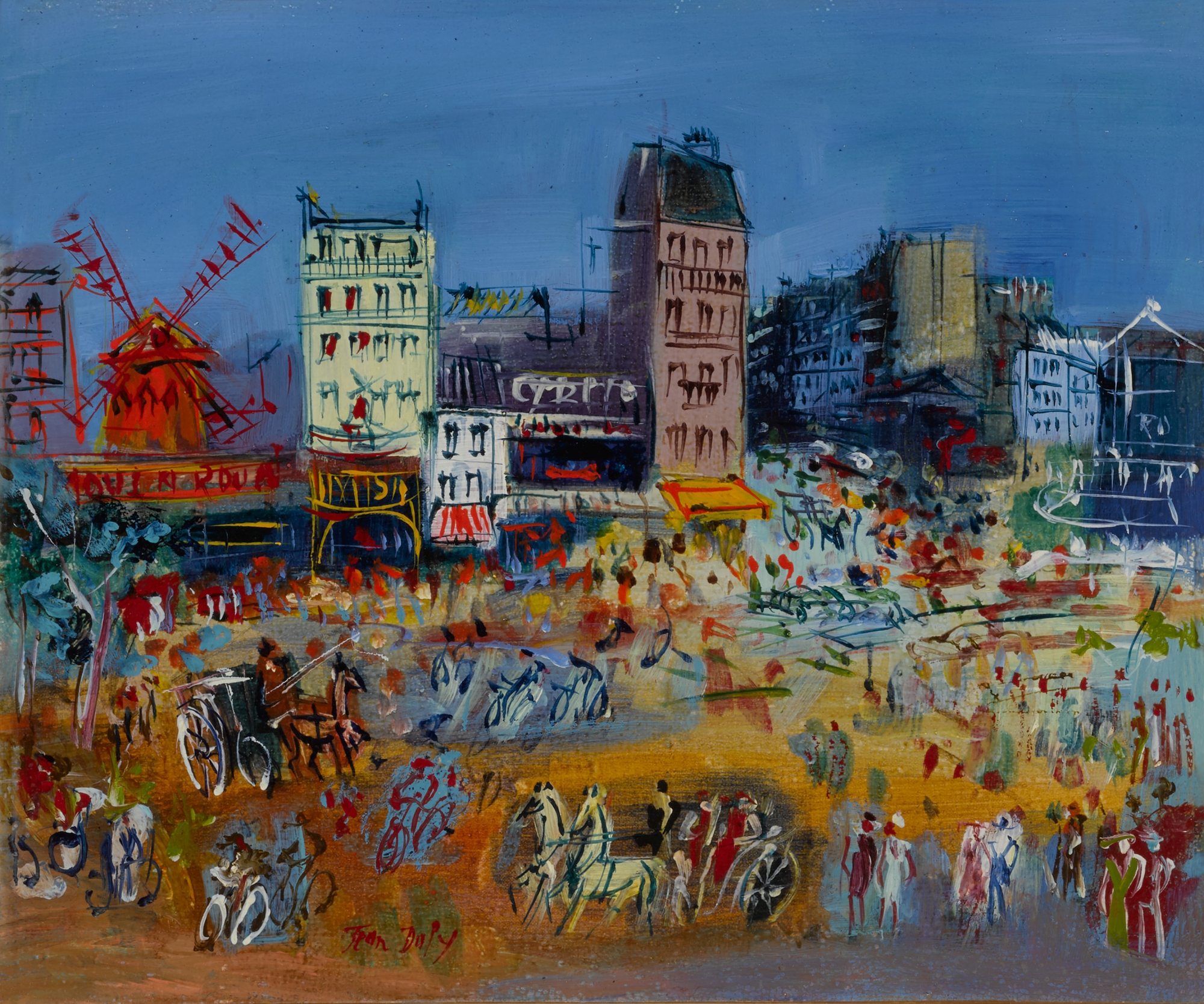
Jean Dufy
Le Moulin rouge, 1950
Placed within the broader art historical context, Jean Dufy sits comfortably alongside painters such as Albert Marquet, whose views of the Seine and the French ports share a similar economy of means and warmth of observation, and Émile Othon Friesz, another Le Havre native who moved through Fauvism toward a more personal and structured style. There are also affinities with the work of Henri Manguin and Charles Camoin, both of whom belonged to the same post Fauvist generation and shared Jean Dufy's commitment to color as the primary vehicle of emotional meaning. Understanding Jean Dufy in this company rather than always in relation to his brother gives his work the independent standing it has long deserved. Jean Dufy died in Bourgoin Jallieu in 1964, leaving behind a body of work that documents, with extraordinary warmth and skill, the pleasures and textures of French life across the first half of the twentieth century.
His reputation has grown steadily in the decades since his death, as scholars and collectors have come to appreciate the genuine originality that lay beneath a surface of apparent ease and delight. There is nothing accidental about the joy in his paintings. It is the product of a disciplined and deeply felt artistic vision, one that chose celebration as its subject and pursued it with the seriousness of a true master. To live with a Jean Dufy is to live with a particular quality of light, and a reminder that painting at its best is an act of profound generosity toward the world.
Featured Works
Explore books about Jean Dufy
Jean Dufy
François Marquet

Jean Dufy: Catalogue Raisonné
François Marquet
Les Dufy: Jacques, Raoul et Jean
Musée de Honfleur
Jean Dufy: Peintre de la Normandie
Paul Cornu
Jean Dufy: L'Homme et l'Œuvre
Germain Seligmann