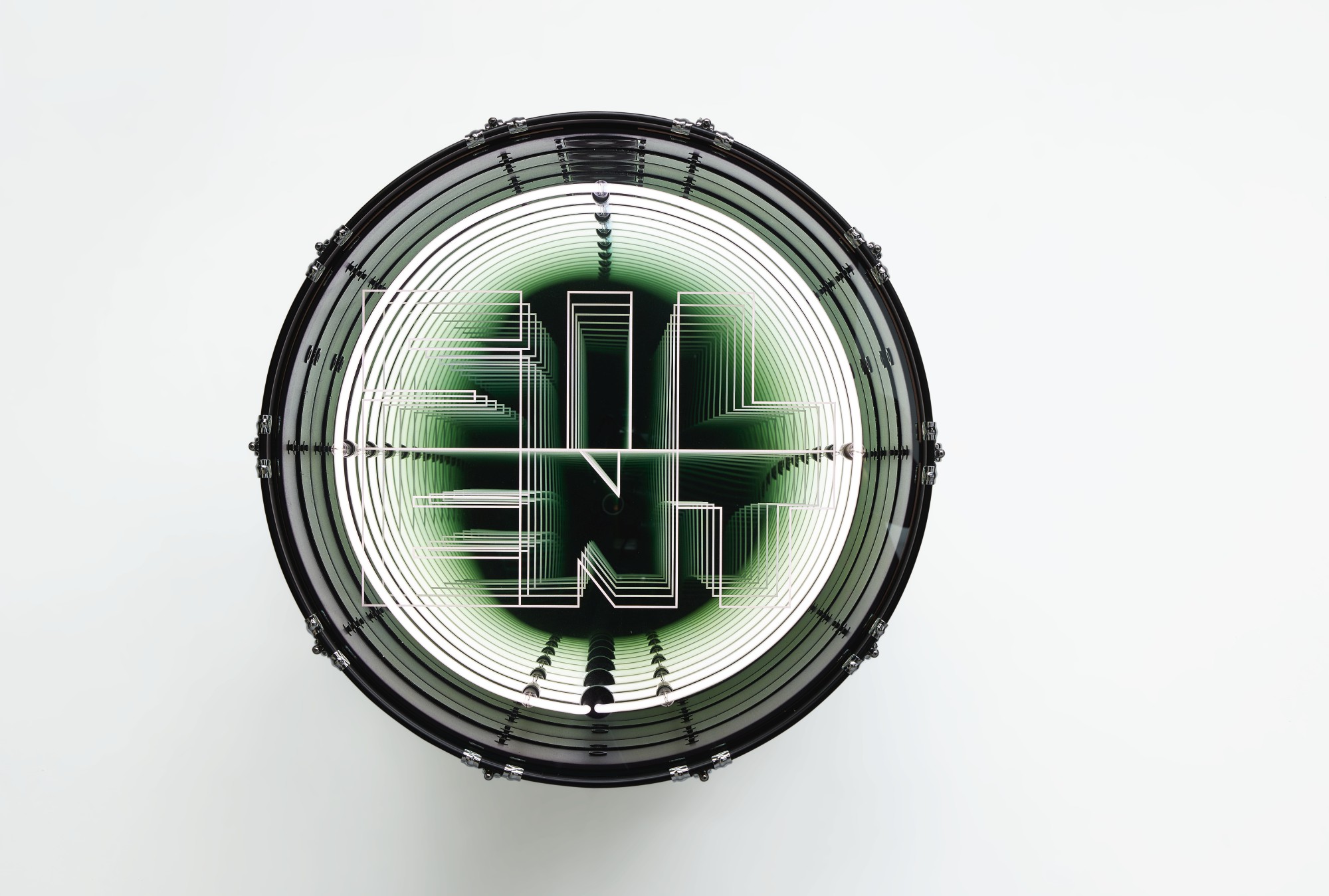
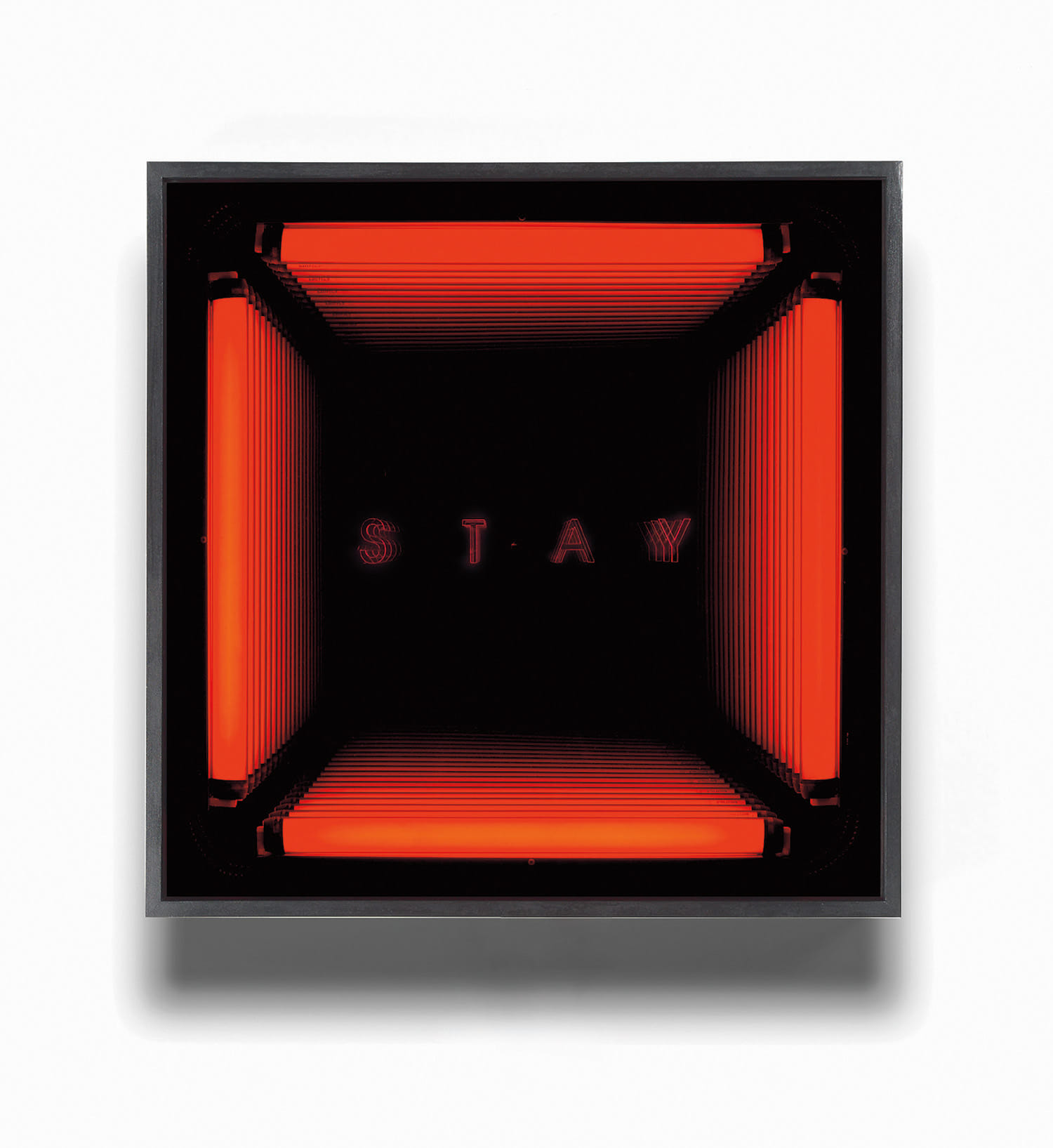
Iván Navarro
Iván Navarro Lights the Way Forward
Artist Spotlight · The Collection Editorial
When the 53rd Venice Biennale opened in 2009, one pavilion stopped visitors cold. Chile's national pavilion, presented in a rented bathroom space in the Dorsoduro district, housed Iván Navarro's "Threshold," a corridor of neon lit doors that receded into apparent infinity through the wizardry of mirrored surfaces. The work was disorienting, seductive, and quietly devastating, a tunnel you could not walk through but could not stop looking at. That moment announced Navarro to the international art world as a singular voice, an artist capable of turning the materials of consumer culture and industrial supply into something that reaches deep into the political unconscious.
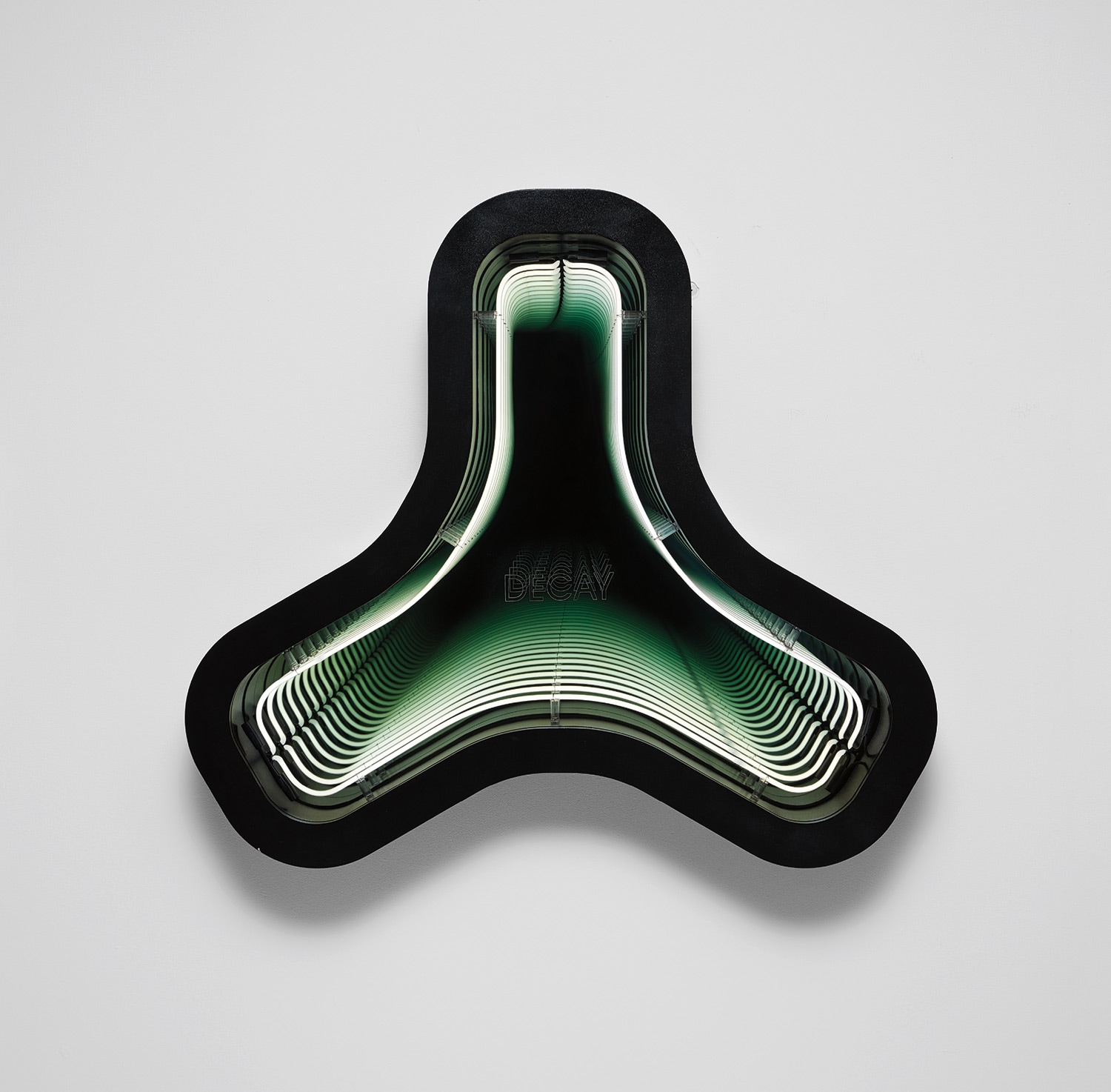
Iván Navarro
Decay (Lake Point Tower)
Navarro was born in Santiago, Chile in 1972, one year before Augusto Pinochet's coup toppled the democratically elected government of Salvador Allende and inaugurated seventeen years of military dictatorship. He grew up in a country where the state controlled energy supplies as a tool of social discipline, where blackouts could signal curfew, where electricity itself carried the threat of violence through the regime's notorious use of electroshock torture. These are not abstract historical facts for Navarro. They are the textures of his childhood, the atmosphere in which he came of age and began to understand that objects carry political weight.
He moved to New York in 1997 and has been based there ever since, finding in the city's relentless visual noise both a counterpoint to his origins and a new set of questions about power and spectacle. His artistic development in New York drew him toward materials that were already laden with cultural meaning: neon signage borrowed from the vocabulary of advertising and nightlife, fluorescent tubes familiar from offices and institutional corridors, mirrors that flatten and multiply space. What Navarro discovered was that these materials, recombined and reframed, could do something that straightforward political imagery rarely achieves. They could make the viewer feel, physically and viscerally, what it means to live inside a system designed to disorient and control.
Iván Navarro
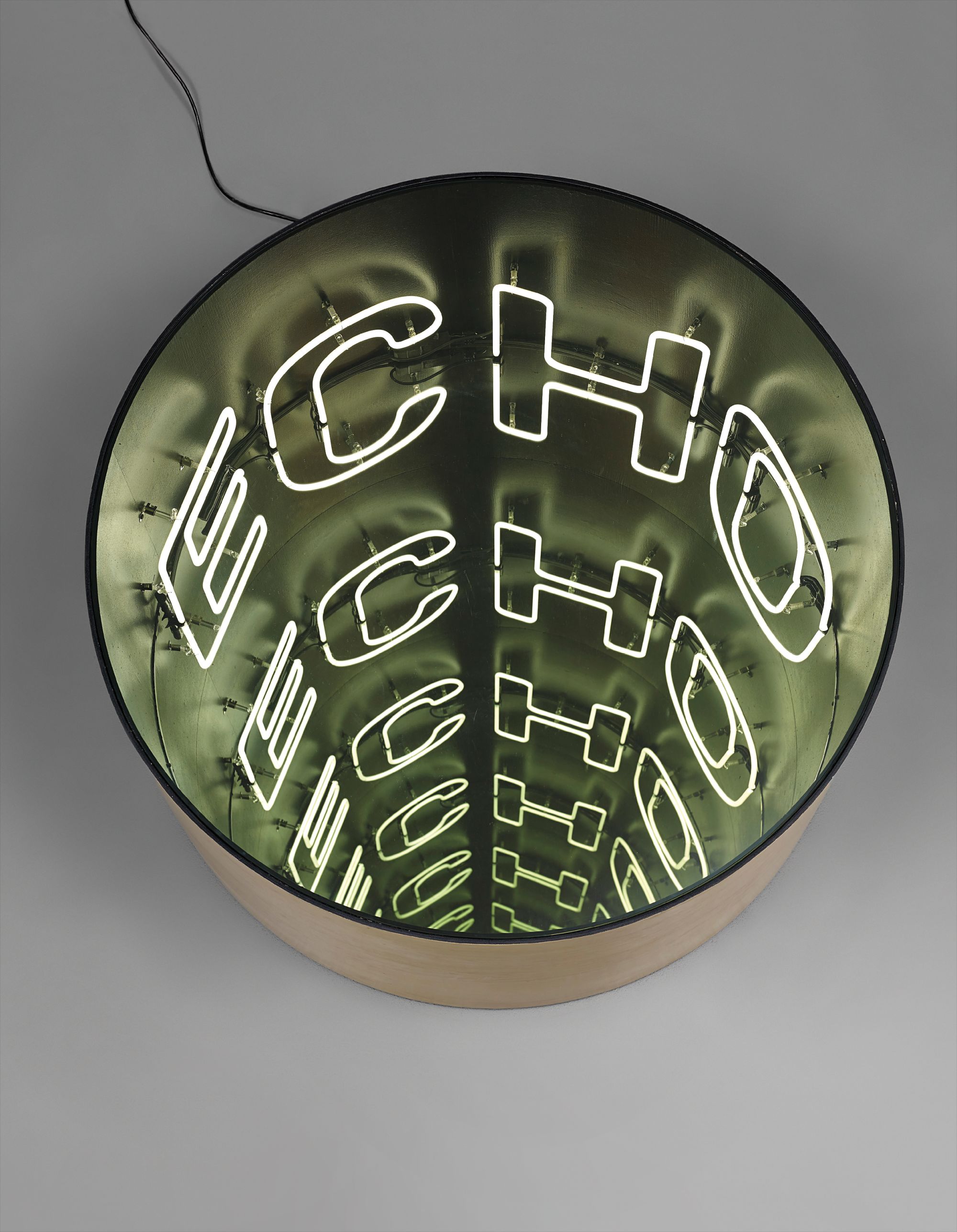
Echo
His early works in the late 1990s and early 2000s established the formal language he would refine over the following decades: the serialized light source, the mirrored depth illusion, the recognizable shape rendered strange. The works that have defined Navarro's reputation sit at the intersection of formal elegance and political urgency. "Blue Electric Chair" transforms the most notorious instrument of state execution into a glowing, almost beautiful object rendered in blue fluorescent light, forcing the viewer to reckon with their own aesthetic response to something terrible. "Sendero Luminoso," whose title references the Peruvian Maoist guerrilla movement, uses light bulbs and mirror to create a recursive glow that is simultaneously a critique of revolutionary violence and a meditation on how ideology illuminates and blinds.
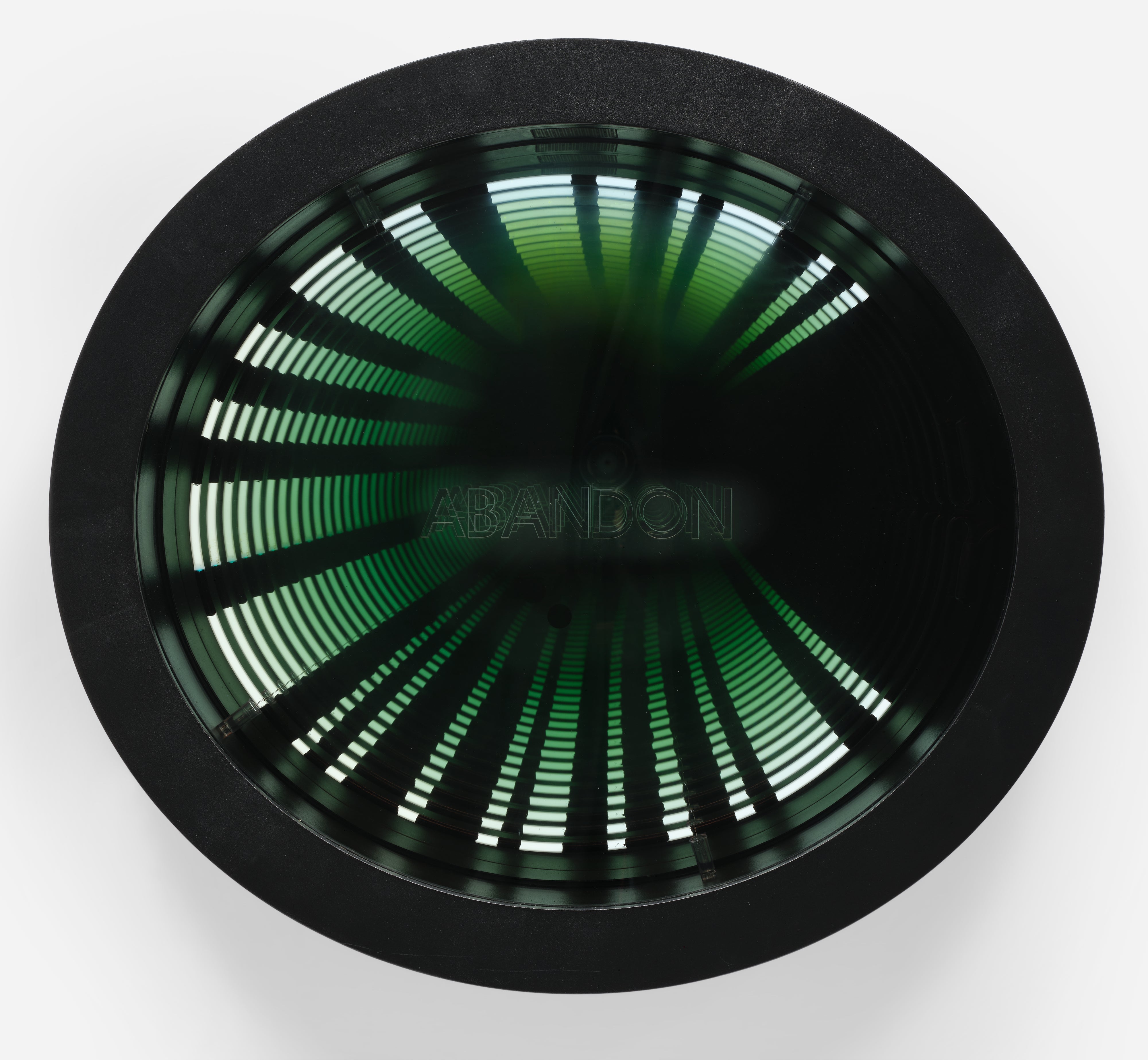
The "Abandon" series, which includes works referencing iconic modernist towers such as the Agbar Tower in Barcelona, uses neon, mirror, one way mirror, and painted wood to trap architectural forms in endless vertical descent, as if the monuments of civic optimism are forever falling into themselves. "Order (Maracana)" brings this formal vocabulary to bear on the famous Brazilian stadium, transforming a site of collective joy and national pride into a structure that appears to sink without end. Each of these works operates on multiple registers at once, functioning as sculpture, as optical experience, and as political argument. For collectors, Navarro's work presents a genuinely rare combination of qualities.
Iván Navarro
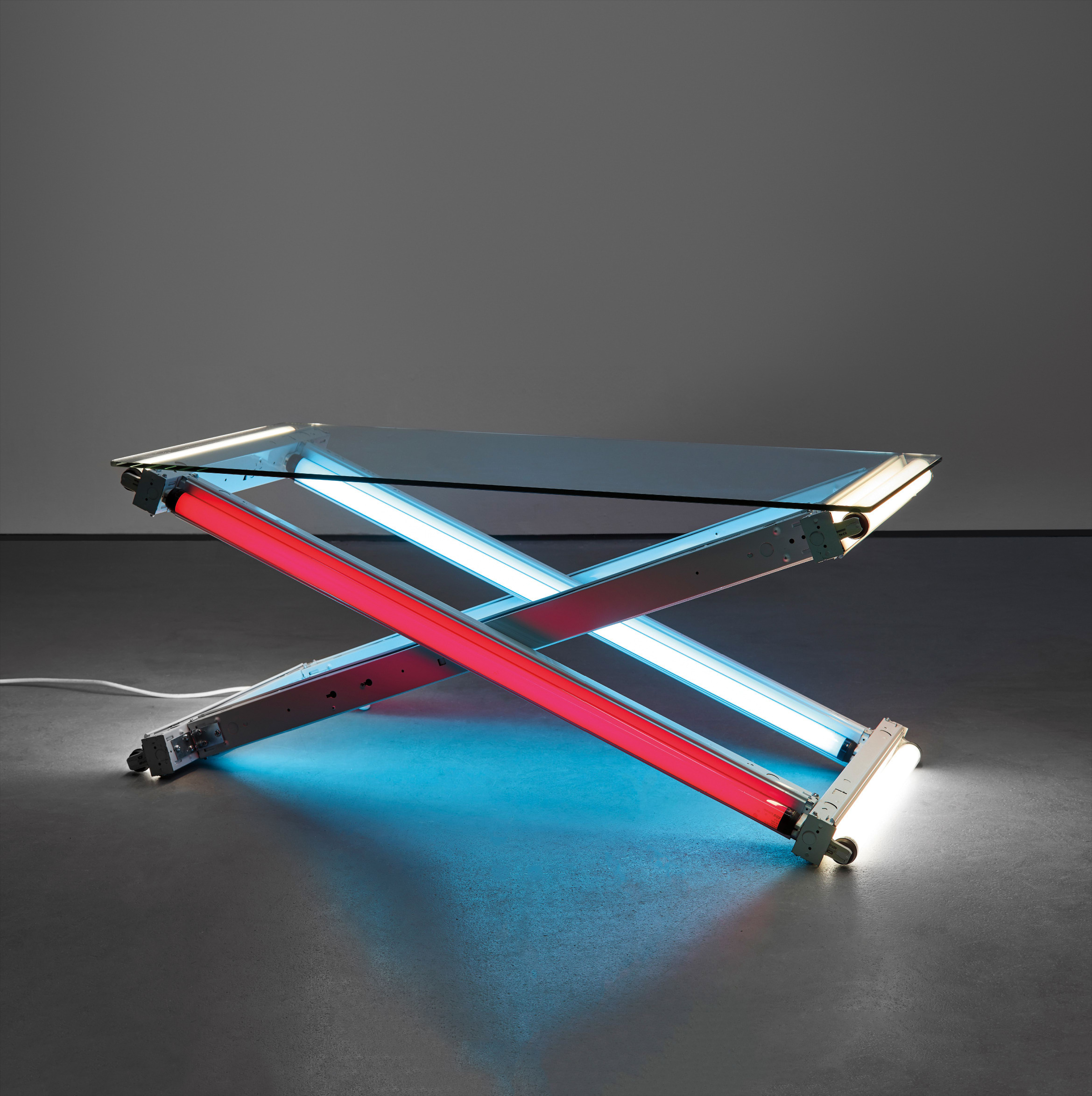
Lamp Table (Blue-Red-White), 2003
The pieces are visually commanding in almost any context, capable of anchoring a room and holding attention across repeated encounters. The optical illusions do not resolve or exhaust themselves on first viewing. At the same time, the works carry serious critical content that has been recognized by major institutional voices, ensuring their long term relevance within art historical discourse. Navarro is represented by Galerie Daniel Templon in Paris and Brussels and has worked with Paul Kasmin Gallery in New York, relationships that reflect the seriousness with which the market regards his practice.
Collectors who have acquired his work early have seen the value of that conviction borne out as his institutional profile has grown. For those approaching his practice now, the "Abandon" series and the light sculpture works on architectural themes represent some of the most intellectually rich entry points, while earlier works such as "Echo" and "Wall Hole" offer a more intimate scale without sacrificing the conceptual depth that defines his practice. Navarro's position within contemporary art history is illuminated by considering the company he keeps. He shares with Dan Flavin and Bruce Nauman an interest in fluorescent and neon light as a medium that is simultaneously industrial and transcendent.
Iván Navarro
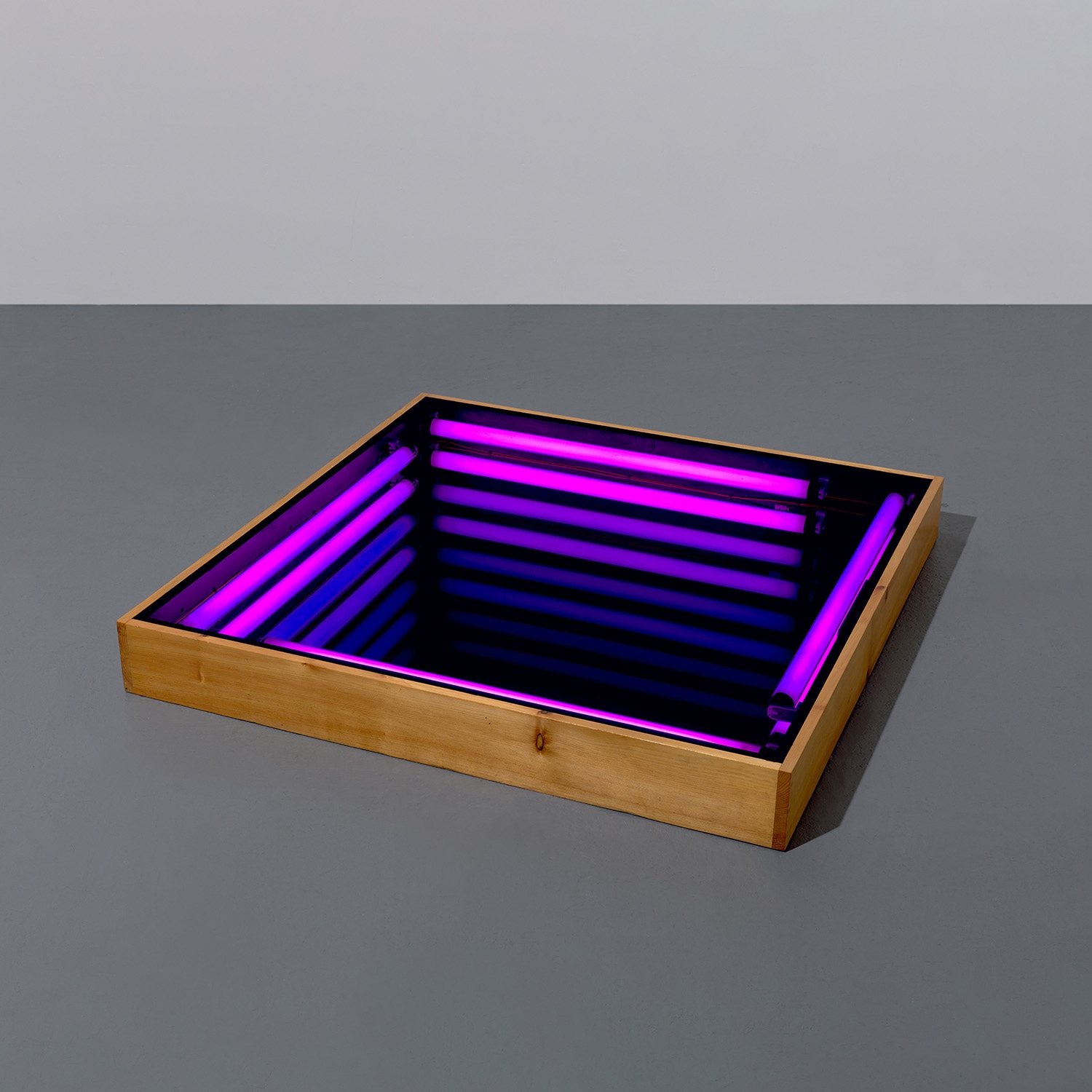
Black Hole of Light
Like Felix Gonzalez Torres, he understands that minimal formal means can carry enormous emotional and political freight. The mirrored infinity effects in his work invite comparison to Yayoi Kusama's immersive environments, though Navarro's deployment of depth and reflection is always in service of a darker conceptual proposition. Among Latin American artists, his work sits comfortably alongside that of Cildo Meireles, whose installations similarly use everyday materials to encode histories of violence and resistance. These comparisons are not to diminish Navarro's originality but to locate him within conversations that matter to collectors and institutions thinking seriously about where his work belongs in the longer story of art that uses light and space as primary languages.
What makes Navarro's practice feel so essential right now is precisely what has always made it relevant: the questions it asks about who controls light, energy, and space have not become less urgent. In an era when surveillance infrastructure is invisible, when the boundaries between illumination and exposure are more fraught than ever, his tunnels of light and mirrored corridors feel newly resonant. His work does not lecture. It invites you into an experience and trusts you to feel your way toward understanding.
That generosity, combined with the formal rigor and the weight of lived history behind every material choice, is what separates Navarro from artists who merely engage political themes decoratively. He has built a body of work that is beautiful, unsettling, and genuinely necessary, and the art world is still, rightly, catching up to everything it contains.
Featured Works