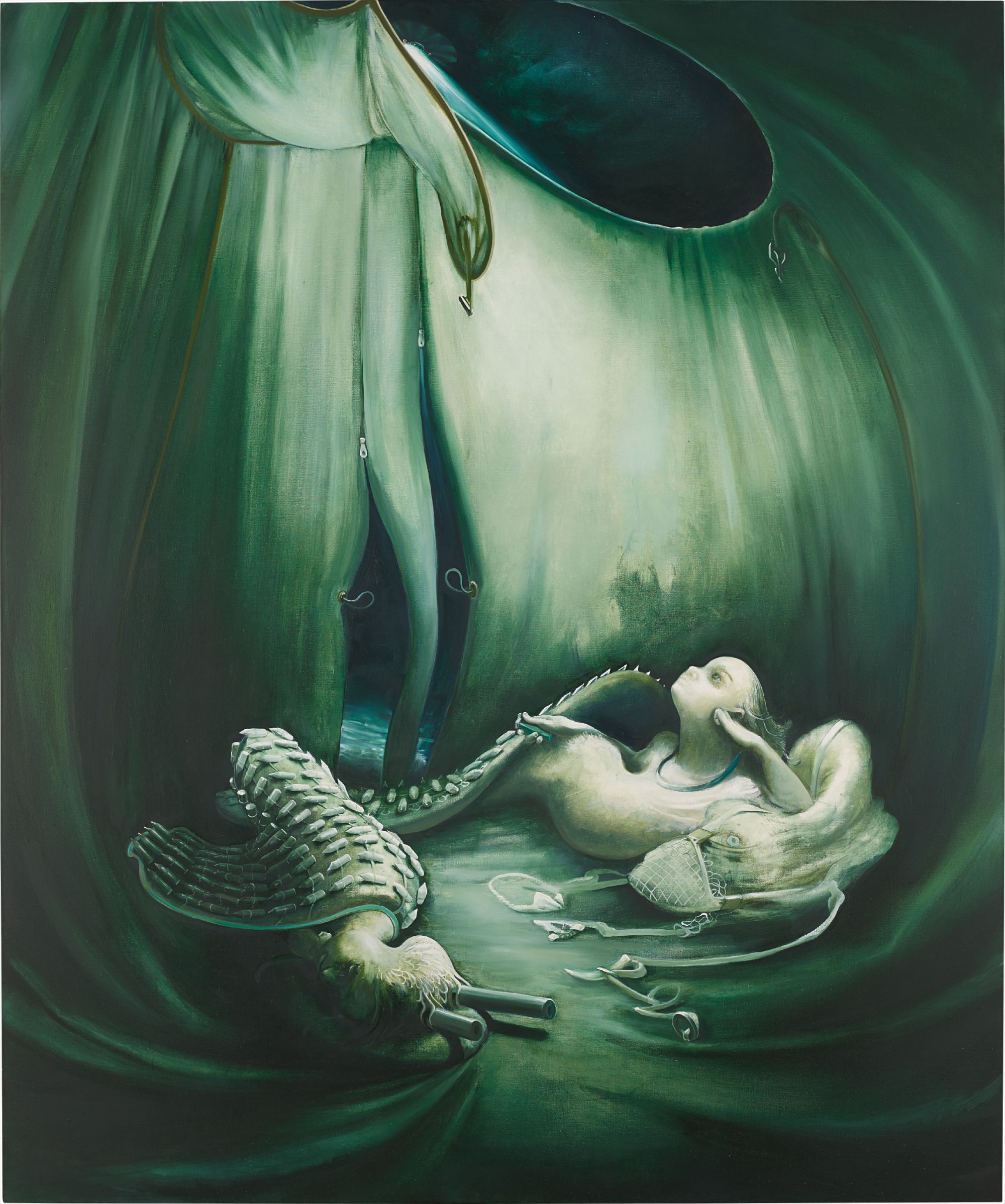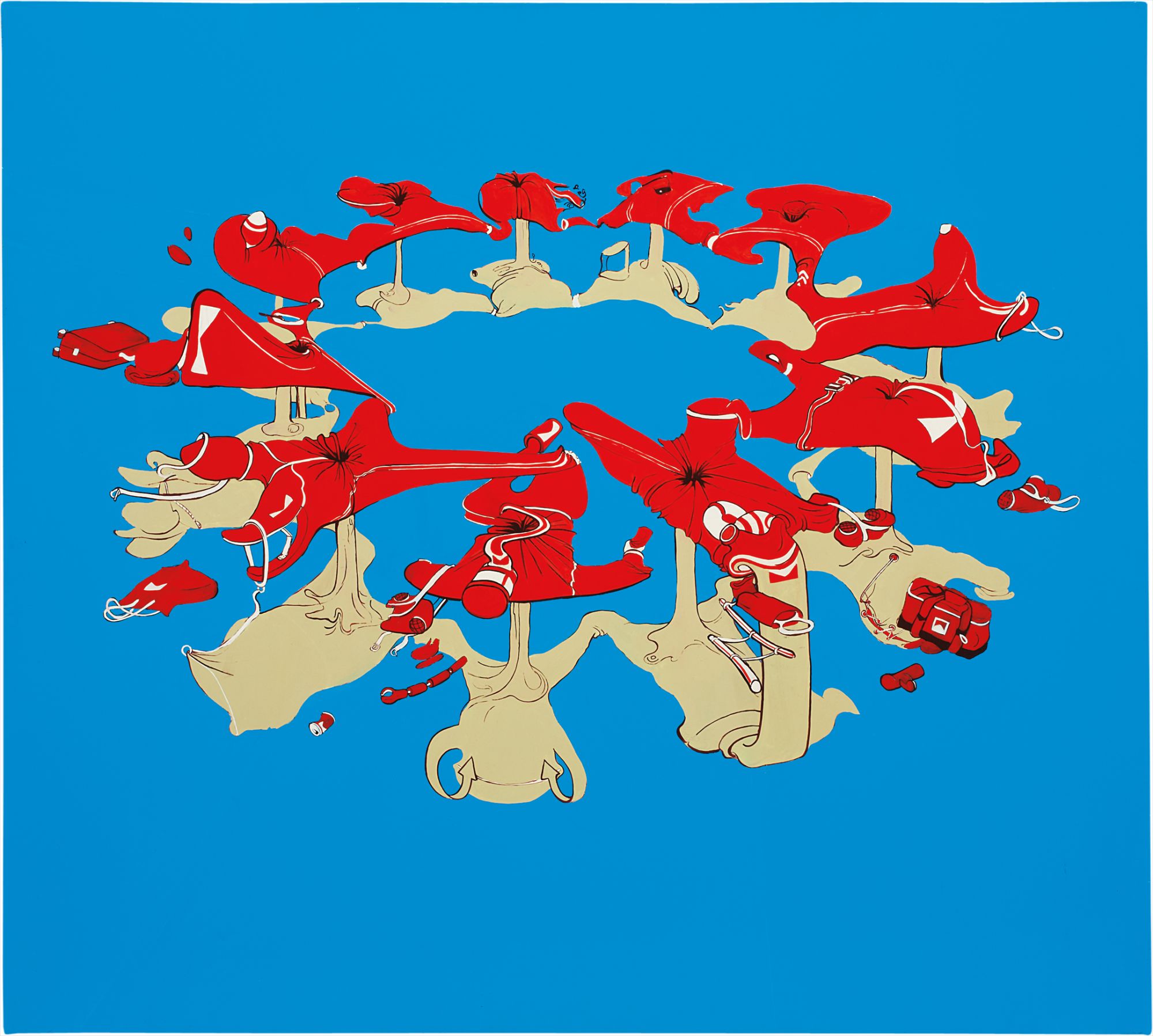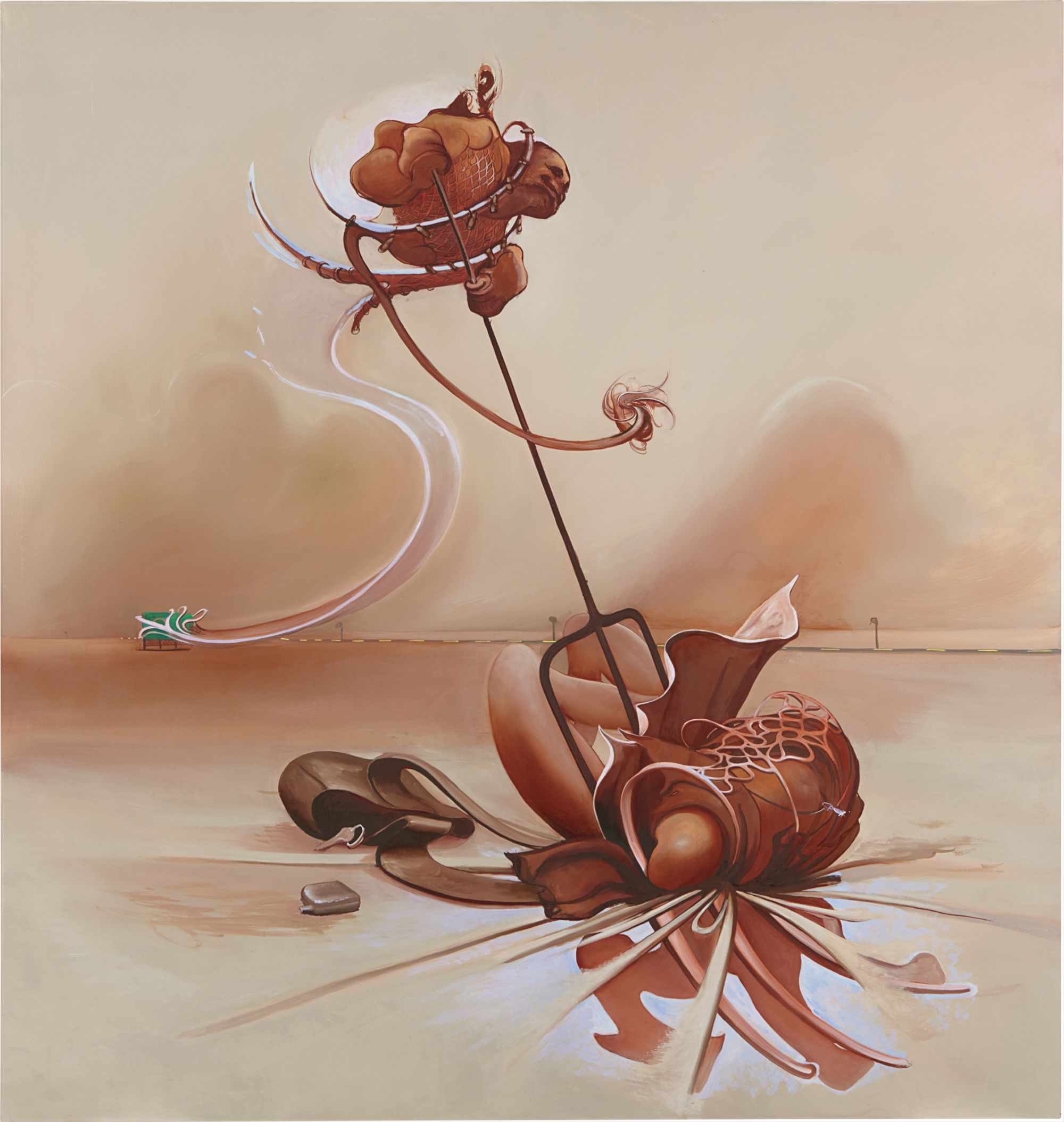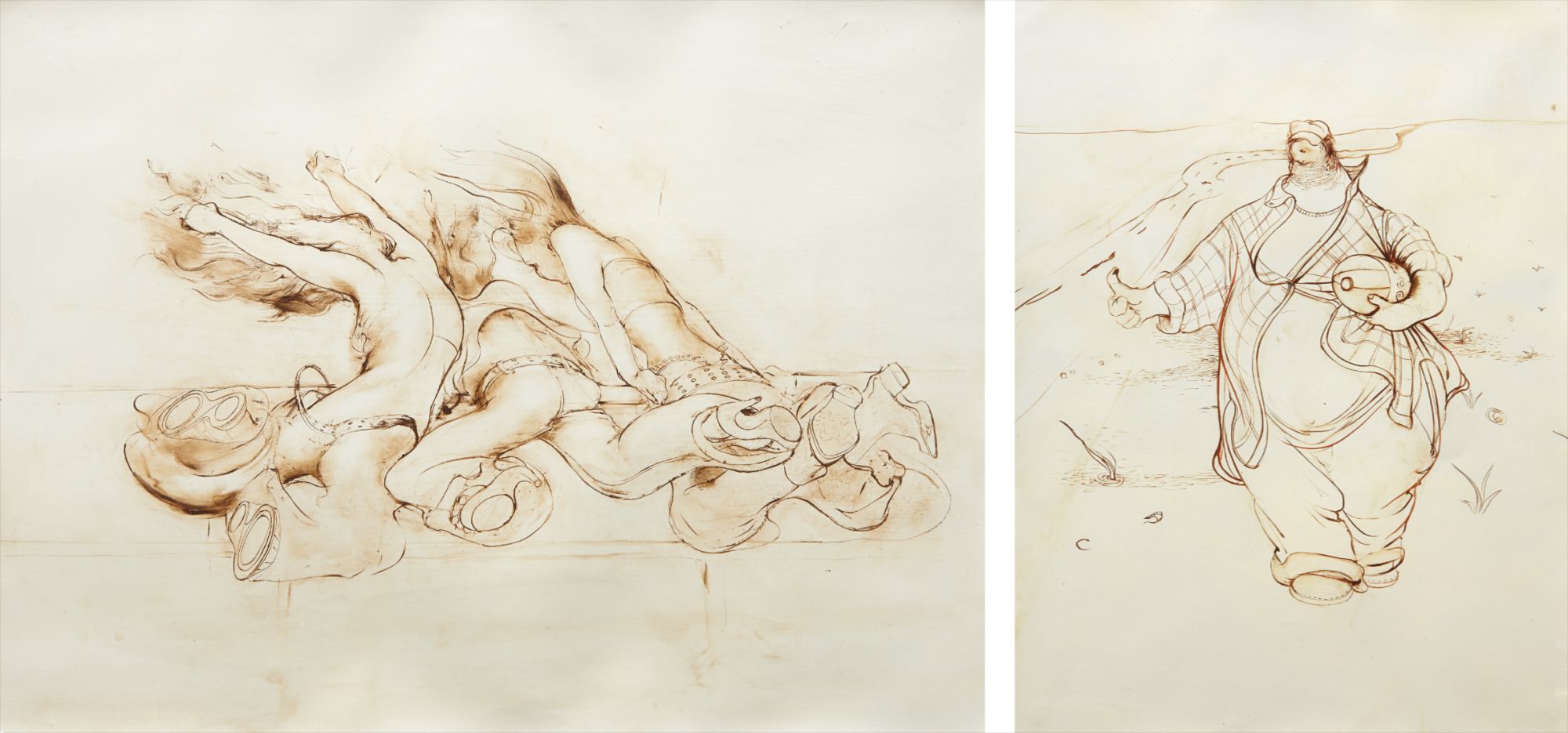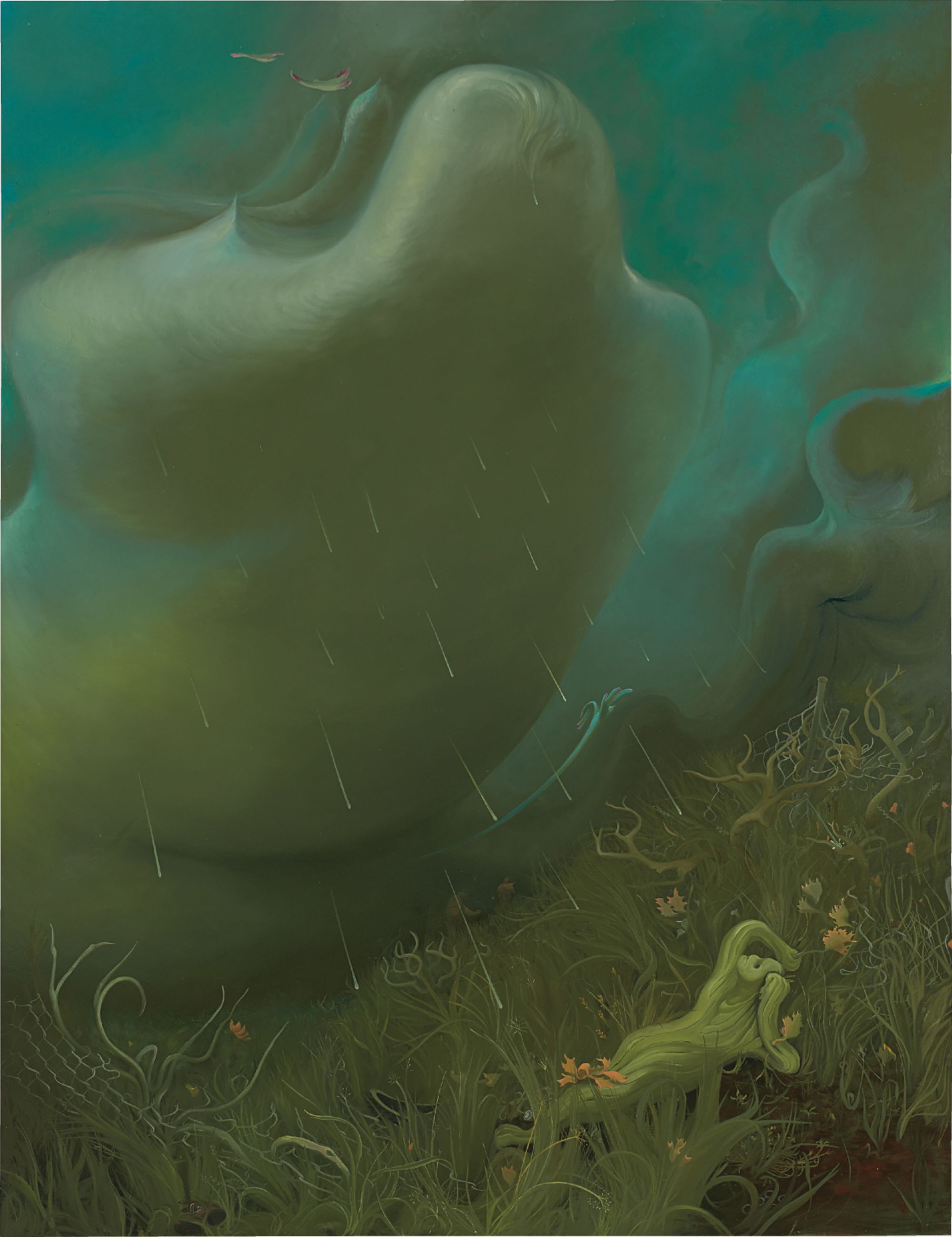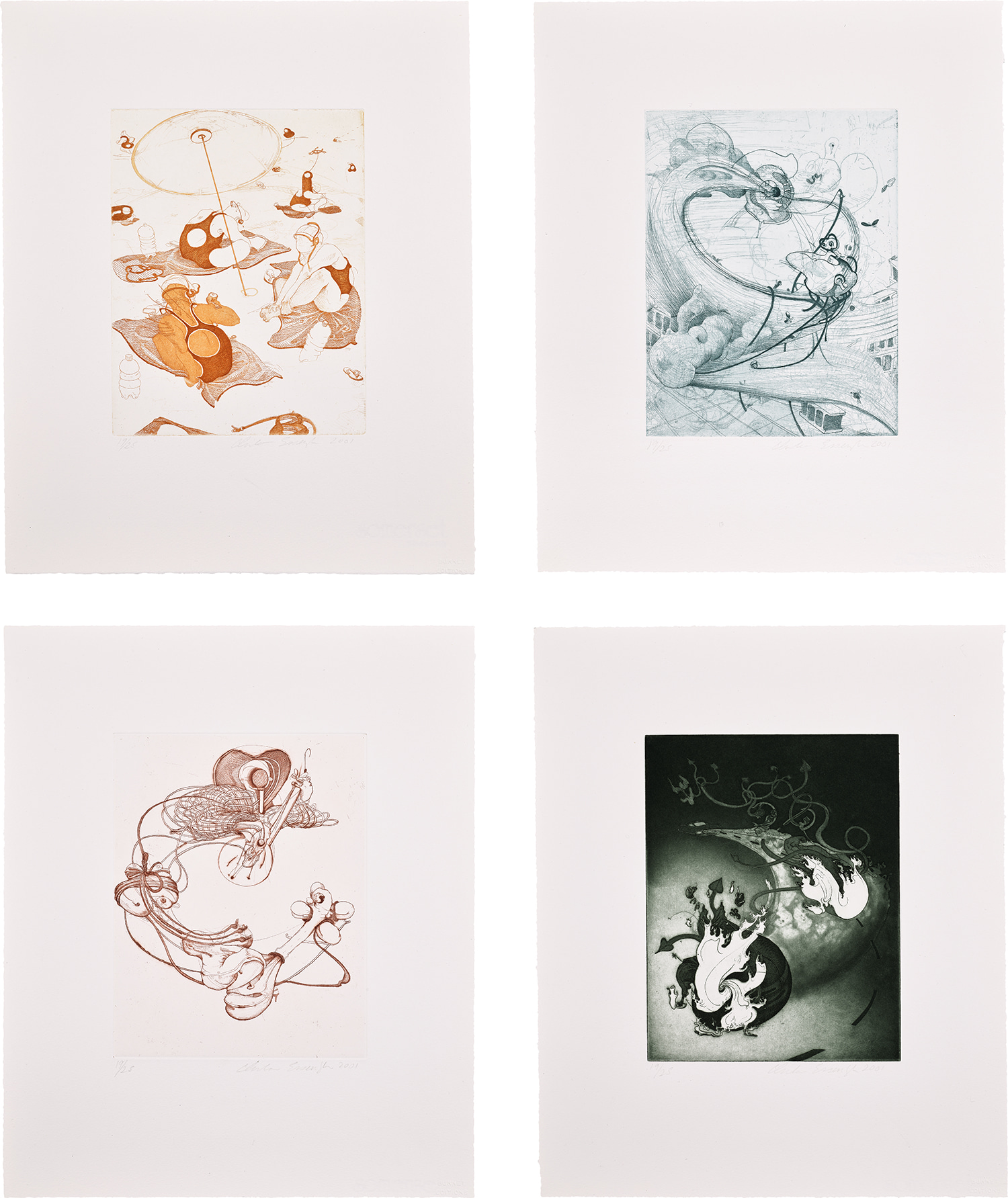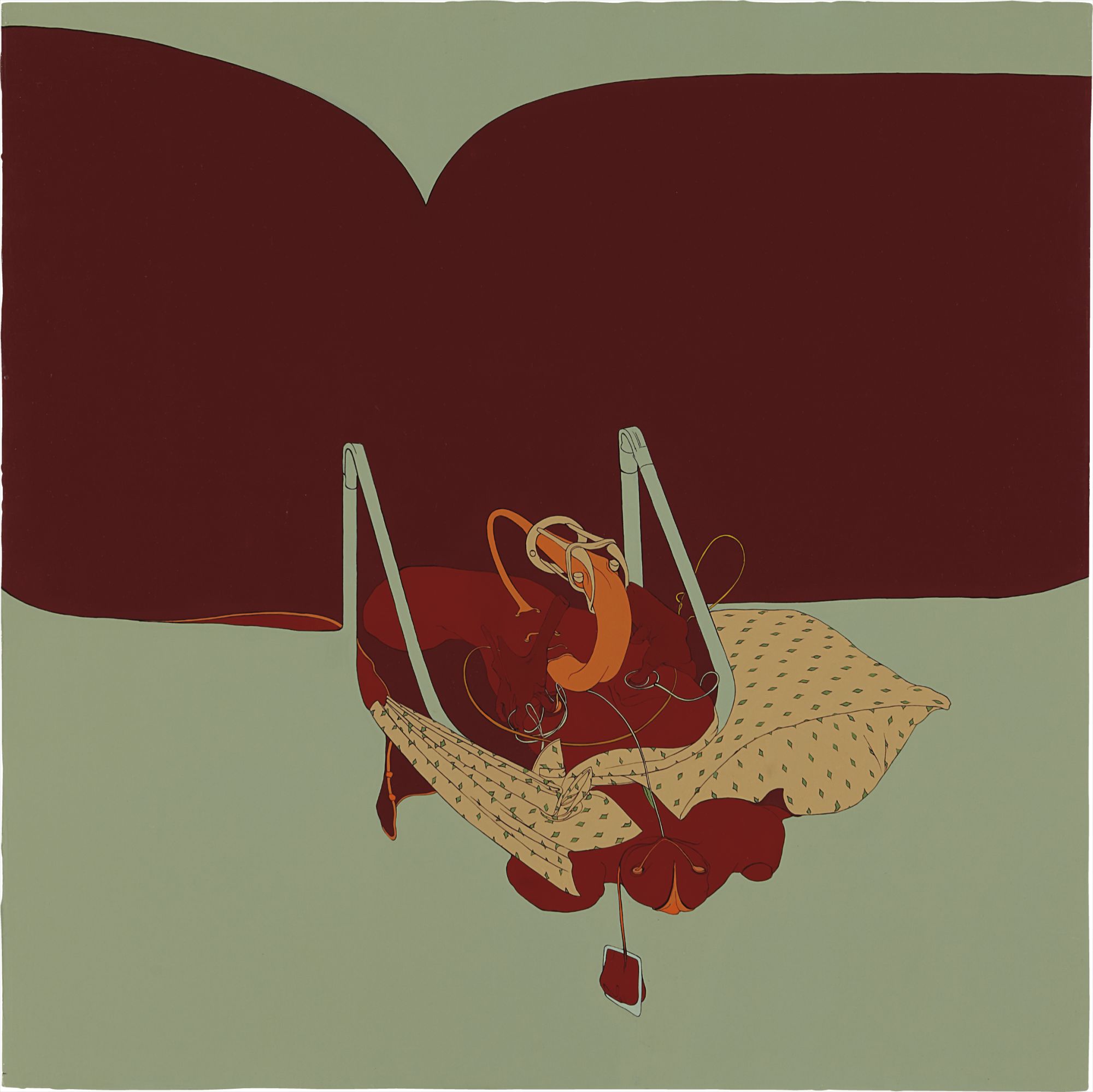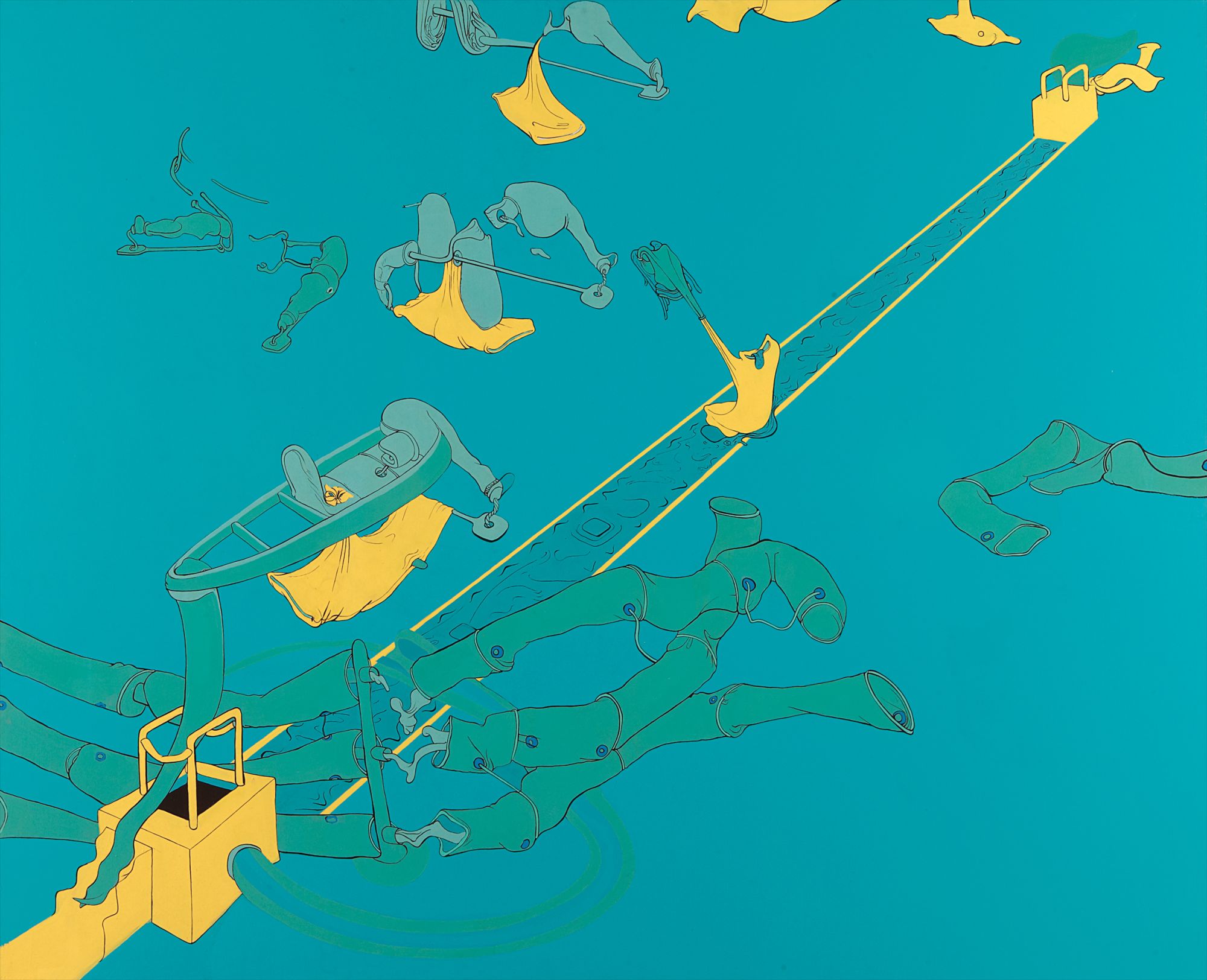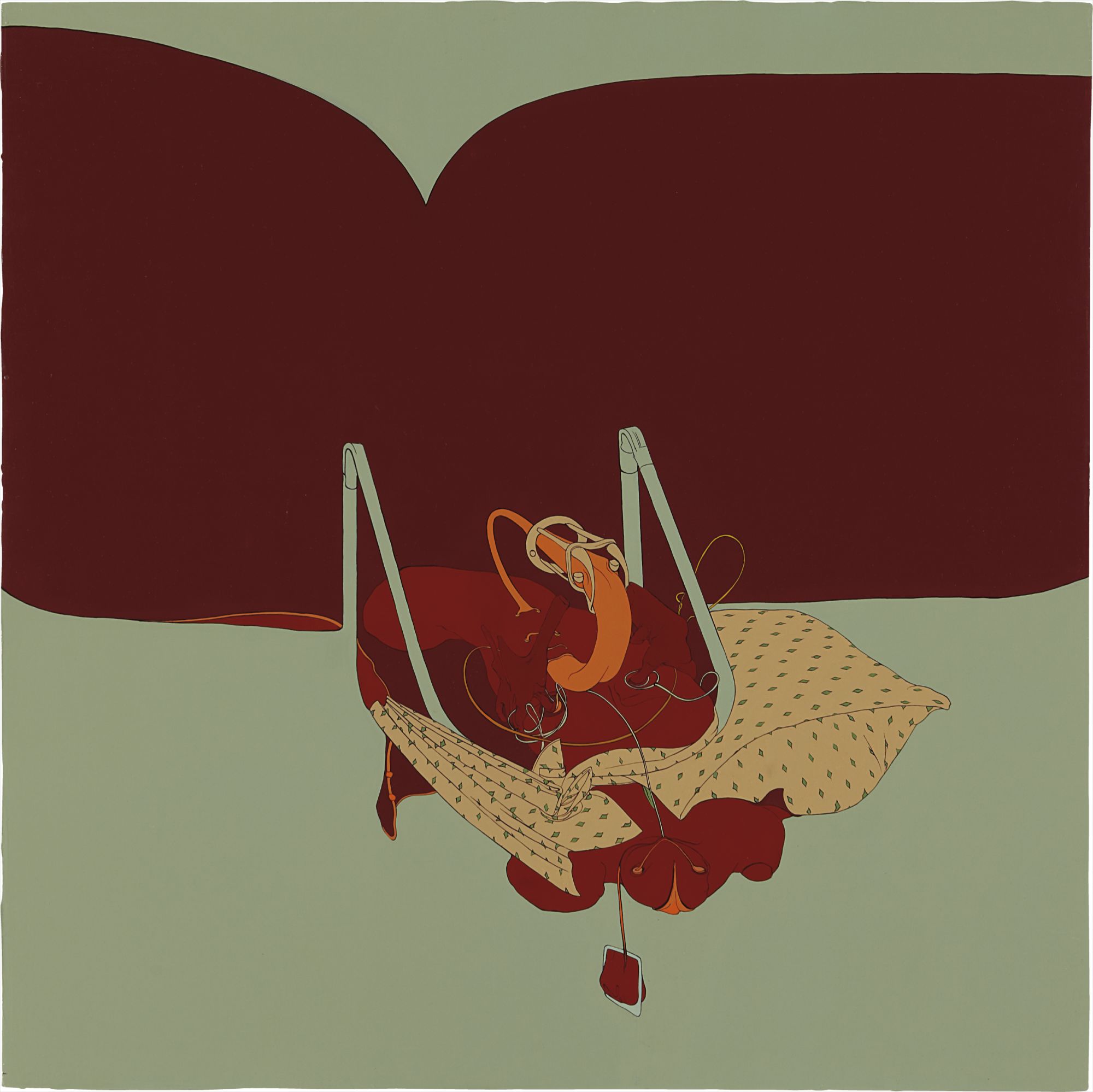
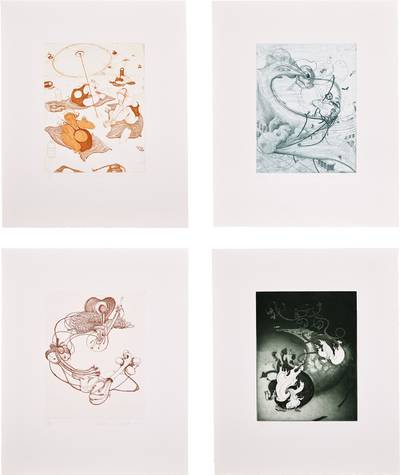
There are painters who describe the world, and then there are painters who conjure entirely new ones. Inka Essenhigh belongs firmly to the second category. Since her breakthrough in the late 1990s, she has built a visual universe so singular and so seductive that it operates by its own internal logic, a place where figures dissolve into landscapes, where mythology brushes shoulders with pop culture, and where the act of looking feels like waking from a particularly vivid dream. Her continued presence in major institutional and gallery contexts across New York and beyond confirms what collectors have long understood: Essenhigh is one of the most genuinely original painters working in America today. Essenhigh was born in 1969 and came of age in an America saturated with the visual languages of comic books, animated film, and the graphic intensity of commercial illustration. These were not guilty pleasures to be overcome on the path to fine art seriousness. They were formative, foundational, and she has never pretended otherwise. She studied at the Columbus College of Art and Design before completing her MFA at the School of Visual Arts in New York, where she absorbed the energy of a city in creative ferment and began synthesizing her unusually wide range of influences into a coherent and deeply personal vision. The New York scene she entered in the mid to late 1990s was hungry for figuration that did not feel retrograde, for painting that could hold its own conceptually without sacrificing visual pleasure. Essenhigh arrived at precisely the right moment and with precisely the right sensibility. Her early enamel works, executed with a fluidity and speed that the medium demands, announced her immediately as someone to watch. Galleries took notice. 303 Gallery in New York became her primary home, and the art world began paying close attention to a painter who seemed to have arrived fully formed, working with a confidence that belied her relative youth. Her signature approach rests on a tension that never quite resolves, and that is exactly the point. Her figures, typically female and rendered with that distinctive sinuous elongation, seem to exist in a state of perpetual becoming. They are never quite solid, never quite vaporous. Works like Beauty Contest from 1999, painted in enamel on canvas, show this quality at its most acute: groups of figures arranged in compositions that recall classical friezes but feel infused with the nervous energy of a Japanese anime sequence. The enamel paint, with its glossy surface and resistance to overworking, forces a kind of decisive commitment that gives her imagery its electric, urgent quality. Later works in oil, such as Spring Bar Scene from 2007 and the luminous Sunshine from 2004, reveal a painter who expanded her technical range without ever losing that essential strangeness. Some of her most psychologically charged works occupy the territory where pleasure and unease become indistinguishable. Figure Burning in Hell and Straight To Hell, both rendered in oil with that characteristic buttery fluidity, use mythological and cosmological imagery not to moralize but to explore the full emotional spectrum of human experience. Kate Dancing from 2002, painted in oil on panel, exemplifies her gift for capturing motion as a kind of ecstatic state, the figure caught at the exact moment where dancing becomes something more transcendent and harder to name. These are paintings that reward sustained looking, revealing new spatial relationships and emotional registers the longer one spends with them. For collectors, Essenhigh's work presents a genuinely compelling proposition. Her output spans works on canvas, panel, and paper, as well as works in print including etchings with drypoint and aquatint that demonstrate her mastery of mark making across different registers of scale and intimacy. The range of available works means that collectors at various stages of their journey can find a point of entry, while the consistent quality and internal coherence of her practice means that individual works hold and appreciate in value. She has been collected by serious institutional and private collectors who recognize that her paintings occupy a unique position: accessible in their visual delight, profound in their psychological depth. In terms of art historical context, Essenhigh belongs to a generation of painters who revived figuration not by returning to academic convention but by expanding what figuration could absorb and embody. Her work sits in productive conversation with artists such as Lisa Yuskavage, whose psychologically loaded figurative paintings emerged from the same New York moment, and with the broader lineage of painters who have looked to popular visual culture as a serious source of artistic intelligence rather than a distraction from it. One can also trace resonances with the dreamlike figuration of painters like Cecily Brown or the mythologically inflected imagery of Neo Rauch, though Essenhigh's visual DNA is entirely her own. She draws from anime, from classical mythology, from the history of painting itself, and from her own restless imagination, and the synthesis is unmistakably hers. What makes Essenhigh matter today, more than two decades after her emergence, is precisely the durability of her vision. The art world she entered has changed dramatically around her, cycling through movements and counter movements, but her work has never felt dated because it was never simply of its moment. It inhabits a kind of painted eternity, a space that exists outside of trend and fashion. Her paintings continue to attract new audiences, younger collectors who encounter them and feel the same charge of recognition that greeted her earliest exhibitions. To own an Essenhigh is to possess a window into a world that is genuinely unlike any other, made by a painter of rare and enduring gifts.