Imi Knoebel
Imi Knoebel: A Master Distills Pure Color
Artist Spotlight · The Collection Editorial
“Color is my material, my subject matter, and my feeling all at once.”
Imi Knoebel
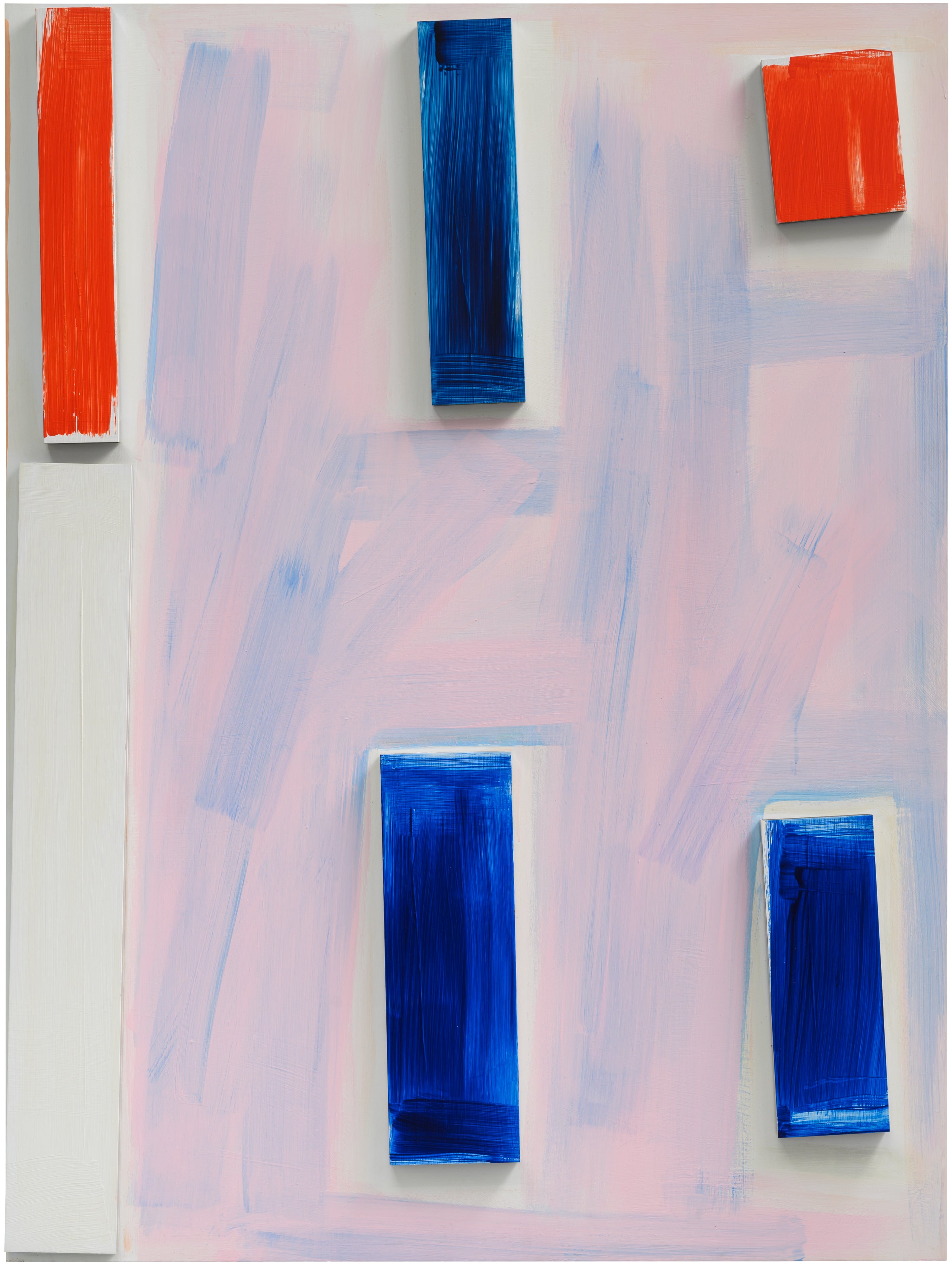
In the permanent collection of the Museum of Modern Art in New York, and across the great institutions of Europe from the Stedelijk in Amsterdam to the Hamburger Kunsthalle, the work of Imi Knoebel commands a quiet authority that few living artists achieve. Now well into his ninth decade, the German artist continues to produce paintings of startling vitality, his aluminium panels and plastic constructions arriving in galleries and auction rooms with the confidence of a practice that has never stopped evolving. A major survey of his Anima Mundi series in recent years reminded a new generation of collectors just how radical and how beautiful this body of work truly is, and the market has responded with sustained enthusiasm that shows no sign of abating. Knoebel was born Klaus Wolf Knoebel in Dessau in 1940, a city whose very name resonates with the history of modernism.
Imi Knoebel
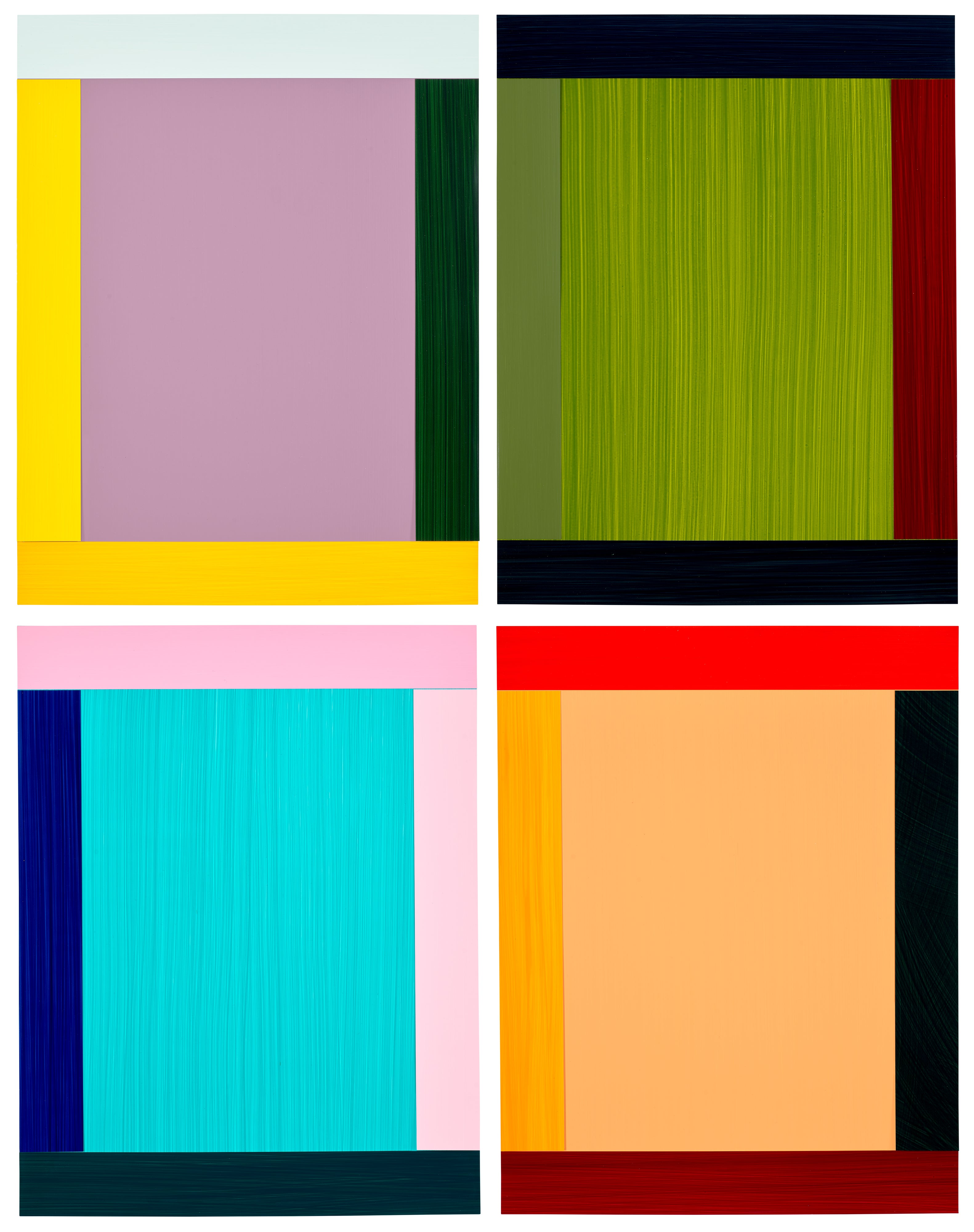
Anima Mundi 23-4 Ed.
Dessau was home to the Bauhaus before the National Socialists forced its closure, and growing up in its shadow meant growing up with an acute awareness of what abstraction could mean and what it could cost. He studied at the Kunstakademie Düsseldorf from 1962, where the encounter that would define his artistic life took place almost immediately. He became a student of Joseph Beuys, and alongside a fellow student named Imi Giese, with whom he shared both a studio and a nickname that would eventually become his artistic identity, he immersed himself in the radical possibilities that Beuys opened up. The two Imis, as they were known, pushed each other toward an increasingly austere and demanding vision of what art could be.
It was at Düsseldorf that Knoebel first encountered the work of Kasimir Malevich, and the encounter was transformative in the most literal sense. Malevich's insistence that pure geometric form and pure color could carry the full weight of human feeling became the foundation on which Knoebel would build an entire career. His early work from the late 1960s and 1970s pushed this inheritance to an extreme: "Raum 19," the legendary room installation created in his studio space at the Kunstakademie, consisted entirely of monochrome panels, projectors, and bare materials laid out with monastic severity. It was a statement about the irreducible elements of visual experience, and it announced an artist who was not interested in decoration or narrative but in the thing itself.
Imi Knoebel
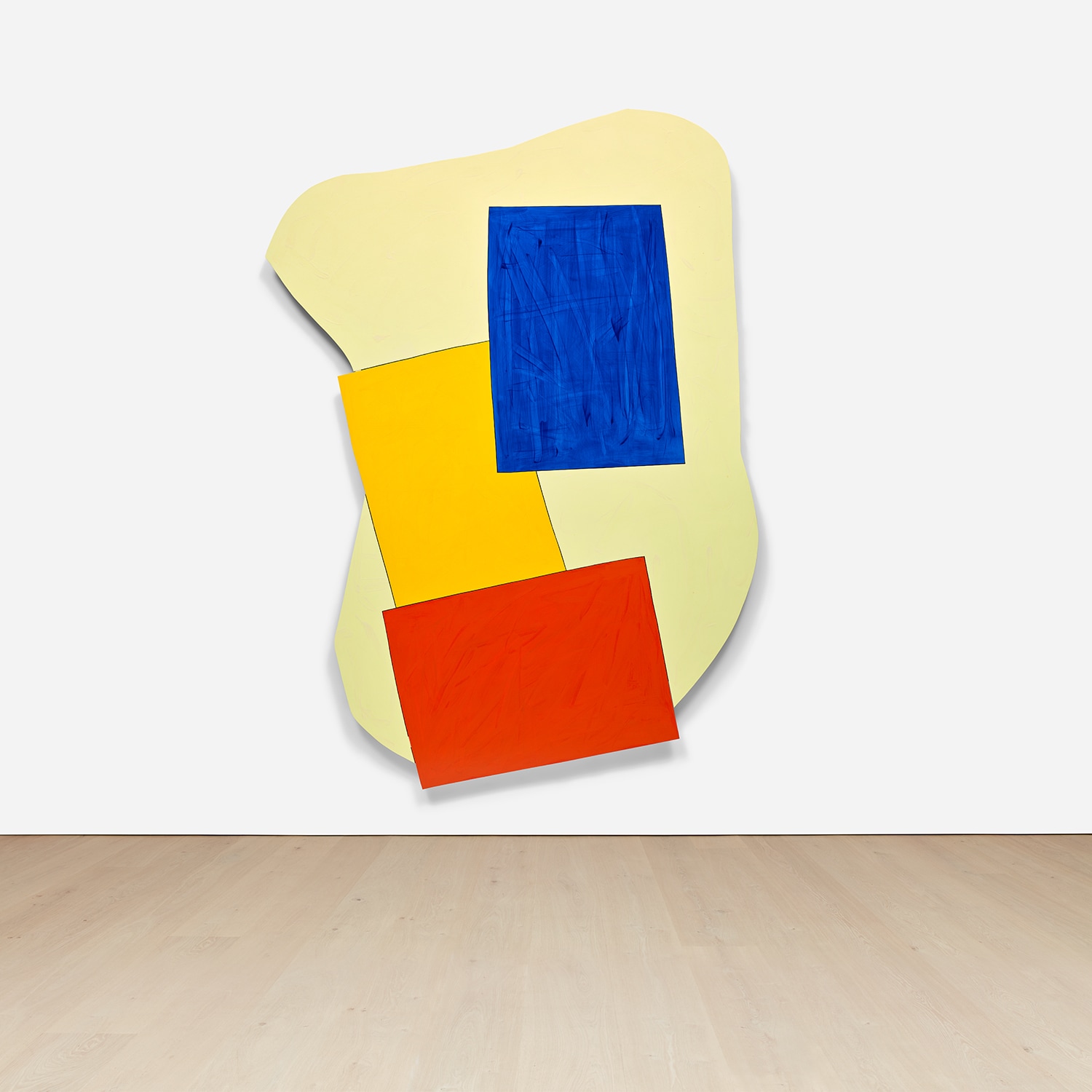
ma donna I, 2016
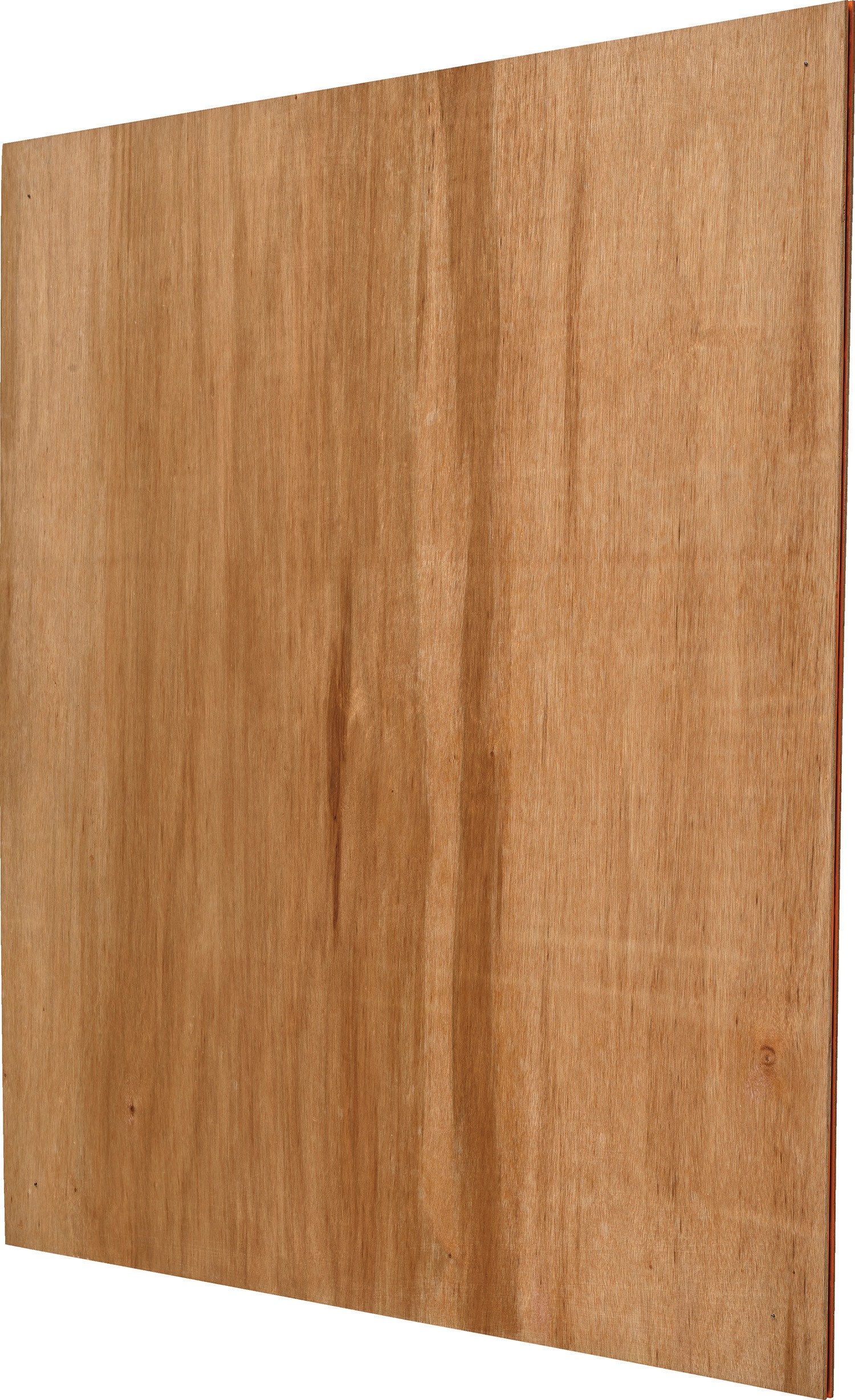
Through the 1970s and 1980s, Knoebel developed the shaped and constructed works that would become his calling card. He began working with plywood, then aluminium, then plastic panels, cutting and assembling supports that refused the neutrality of the rectangular canvas. Works like "Mennige (Red Lead)" from this period reveal the thinking with particular clarity: two plywood boards mounted together and painted on the inside with lead tetroxide, varnished on the outside, the whole object presented as both painting and sculpture simultaneously. The materiality is inseparable from the meaning.
Color is not applied to a surface; it is embedded in a structure, and that structure is itself the argument. The exploration of red in particular, from raw industrial pigment to the most luminous acrylic, runs through decades of his output like a continuous meditation. The Anima Mundi series, which Knoebel began in the 1990s and continued into the twenty first century, represents perhaps his most sustained and ambitious achievement. The title, meaning World Soul in Latin, signals an ambition that goes beyond the purely formal.
Imi Knoebel
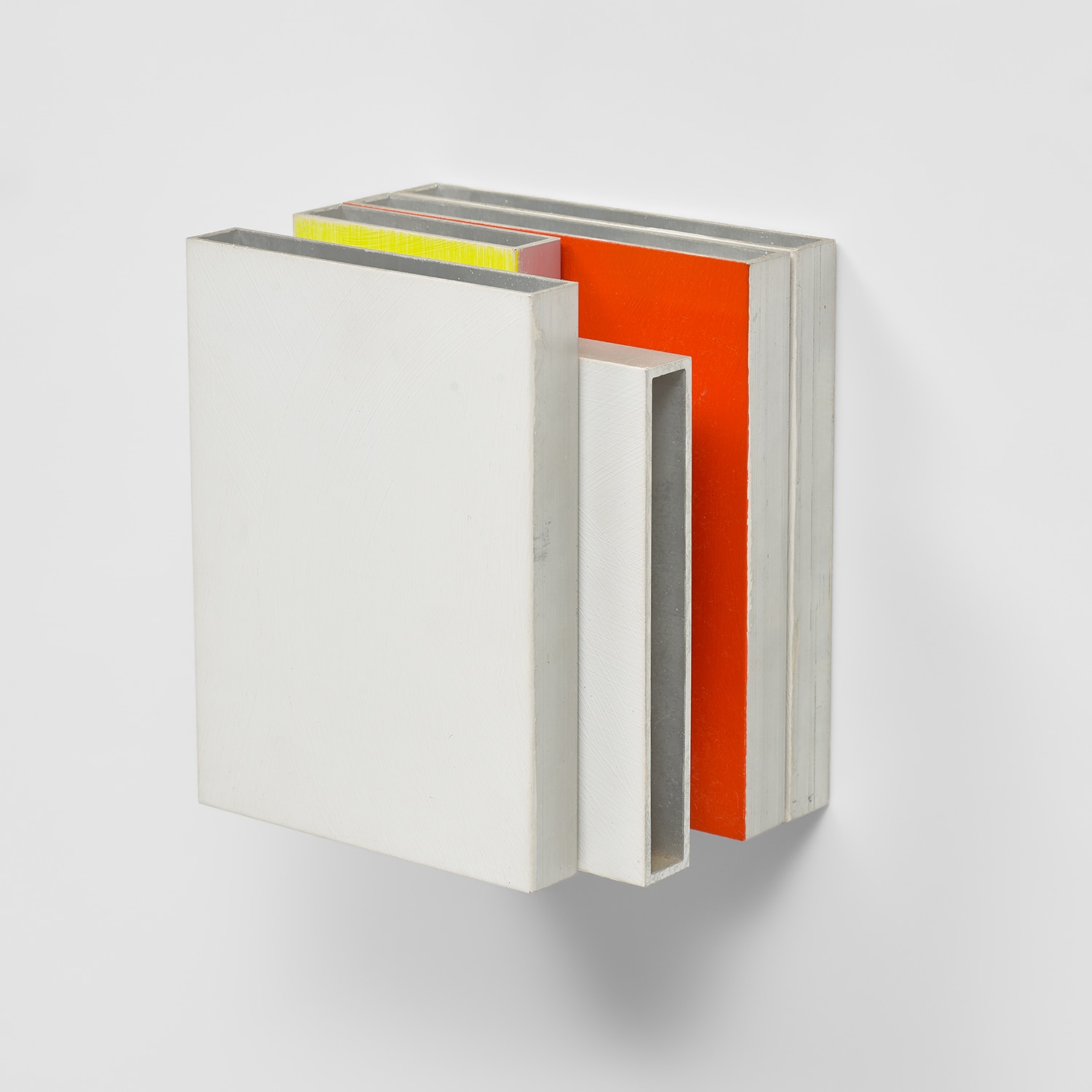
Kleines Rotes Quadrat (Small Red Square)
These works, collages with acrylic in colors on constructed and collaged plastic panels mounted to aluminium Dibond, bring together the rigorous geometry of his early abstraction with a new chromatic freedom and a sense of joyful accumulation. Forms overlap and jostle, colors sing against each other, and the result is something that feels simultaneously ancient and urgently contemporary. Individual editions within the series, such as Anima Mundi 23 4, 48 2, and 71 4, each present their own internal logic while participating in the larger conversation of the whole. For collectors, acquiring a work from this series means entering into a dialogue that spans decades and continents.
The aluminium paintings of the 1990s and 2000s extend this vocabulary into a more directly painterly register. Works like "ma donna I" from 2016 and "Tiger Woods" from 1999 demonstrate Knoebel's willingness to let color breathe across a surface while retaining the structural consciousness that has always governed his practice. The aluminium support is not neutral: it reflects light differently from canvas or board, it carries industrial associations that complicate any easy reading of the paint it holds, and it ages in ways that become part of the work's biography. The "Rot Gelb Blau Weiss" series, presenting the four primary colors of his practice together, has the directness of a manifesto and the elegance of a poem.
Imi Knoebel
Mennige (Red Lead)
These works have performed consistently well at auction, with editions appearing regularly at the major German and international houses, and they represent an accessible entry point for collectors new to his practice. Knoebel occupies a position in the history of postwar European abstraction that is both singular and deeply connected to a broader constellation of practice. He emerged from the same Düsseldorf crucible that produced Blinky Palermo, a close friend and collaborator whose early death in 1977 affected Knoebel profoundly, as well as Gerhard Richter and Sigmar Polke. His engagement with the legacy of Malevich and Mondrian places him in conversation with American painters such as Ellsworth Kelly and Frank Stella, artists who also understood that color and form are not decorative options but fundamental forces.
Yet Knoebel's work has a distinctly European quality, a physicality and a material honesty that sets it apart from the cooler elegance of its American counterparts. For collectors, the appeal of Knoebel's work is inseparable from its integrity. This is an artist who has never deviated from his core beliefs, never chased fashion or critical approval, and never made work that feels calculated for the market. The result is a body of work that ages extraordinarily well: pieces acquired thirty years ago look as vital today as they did when they were made, and the best works have only grown in significance as the art historical record has consolidated around his achievement.
The range of formats available, from major aluminium panel paintings to editions on plastic and works on paper, means that collectors at different levels of commitment can find meaningful points of entry. The Anima Mundi editions in particular offer a way to own a piece of one of the great ongoing projects in contemporary art at a price that reflects genuine value rather than speculative excess. Knoebel turns eighty five in 2025, and the occasion invites a recognition that is long overdue in some quarters: here is one of the essential artists of the twentieth and twenty first centuries, a painter and constructor whose work has deepened and expanded across six decades without ever losing the original spark of radical conviction. His colors remain among the most precise and most emotionally resonant in contemporary art.
His structures continue to ask fundamental questions about what painting is and what it can do. And his example, of an artist who has committed wholly and joyfully to a vision and pursued it without compromise, remains an inspiration to everyone who encounters it.
Explore books about Imi Knoebel

Imi Knoebel
Dieter Schwarz

Imi Knoebel: Arbeiten 1968-1992
Museum Folkwang
Imi Knoebel
Michael Brenson
Imi Knoebel: The Silence of Colors
Hans-Jürgen Müller
Imi Knoebel: Retrospektive
Kunstmuseum Bonn
Imi Knoebel: Drawings and Paintings
Thaddaeus Ropac

Imi Knoebel
Susanne Gaensheimer