Hubert von Herkomer
1
Works
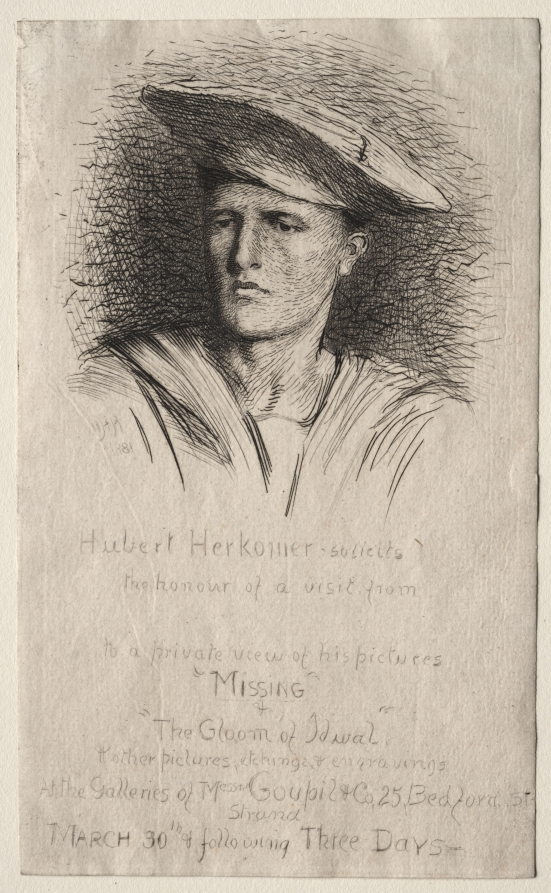
Hubert von Herkomer was a German-born British painter, engraver, and filmmaker who became one of the most celebrated and versatile artists of the Victorian era. Born in Waal, Bavaria, he emigrated with his family to England as a child and later studied at the South Kensington School of Art in London. He rose to prominence through his deeply empathetic portrayals of the working class, the elderly, and the disadvantaged, earning widespread recognition for combining technical mastery with sincere social conscience. His work reflects the influence of both the German Realist tradition and the broader Victorian social reform movement, positioning him alongside artists like Luke Fildes and Frank Holl in the circle of painters committed to documenting the struggles of ordinary people. Among his most celebrated works are 'Eventide: A Scene in the Westminster Union' (1878), depicting elderly women in a workhouse, and 'Hard Times' (1885), a harrowing image of a laborer and his family resting by a roadside. These paintings were frequently reproduced as engravings in the Graphic magazine, which dramatically widened their audience and cemented his reputation as a socially engaged artist. He was also a highly sought-after portraitist, painting figures including John Ruskin and Richard Wagner, and his portraits are notable for their psychological depth and confident handling of paint. In 1883 he was appointed Slade Professor of Fine Art at Oxford, a position that gave him considerable influence over the next generation of British artists. Beyond painting, Herkomer was a remarkably multidisciplinary figure who founded his own art school in Bushey, Hertfordshire, in 1883, which attracted students from across Europe and America. He experimented with printmaking, enamel work, and theater production, designing elaborate stage spectacles he called 'pictorial-music-plays.' Notably, he also directed several early films, making him a pioneer in cinema as well as the fine arts. He was knighted in 1907 and received numerous honors from European academies. His legacy endures as a bridge between Victorian social Realism and a broader Edwardian spirit of artistic innovation and public engagement.
Spotted by
Artists in conversation