Francis Bacon
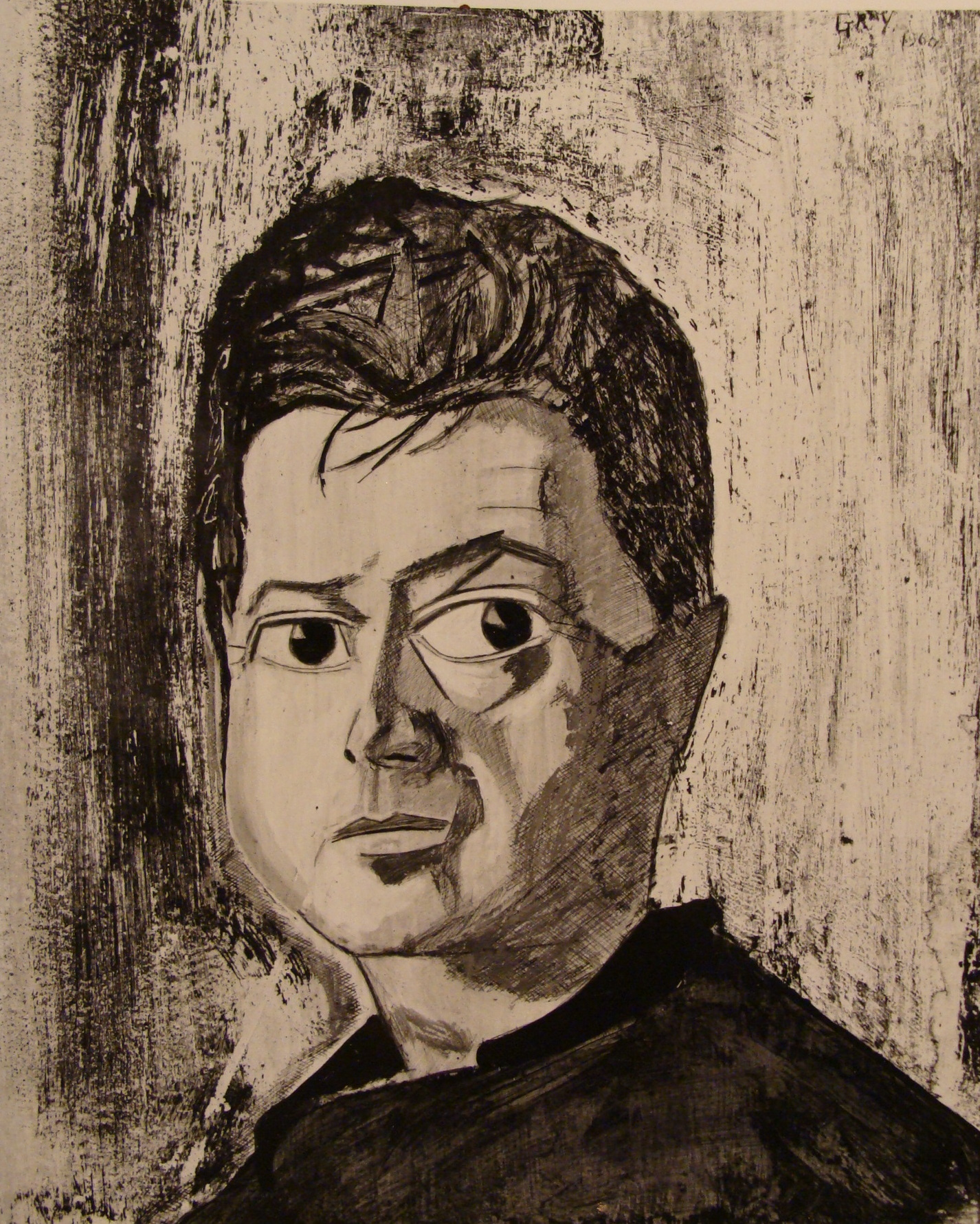
Francis Bacon: The Figure Reborn in Paint
Artist Spotlight · The Collection Editorial
“I think of myself as a kind of pulverizing machine into which everything I look at and feel is fed.”
David Sylvester, Interviews with Francis Bacon, 1975
In the spring of 2023, the Royal Academy of Arts in London drew record crowds to a landmark exhibition exploring the dialogue between Francis Bacon and Henry Moore, two giants whose visions of the human form defined British art in the postwar era. It was a reminder, if any were needed, that Bacon's paintings do not age. They arrive fresh with each encounter, urgent and alive, as though the paint itself still carries the electricity of the artist's touch. Decades after his death in 1992, Bacon remains one of the most sought after and emotionally compelling painters in the history of Western art.
Francis Bacon
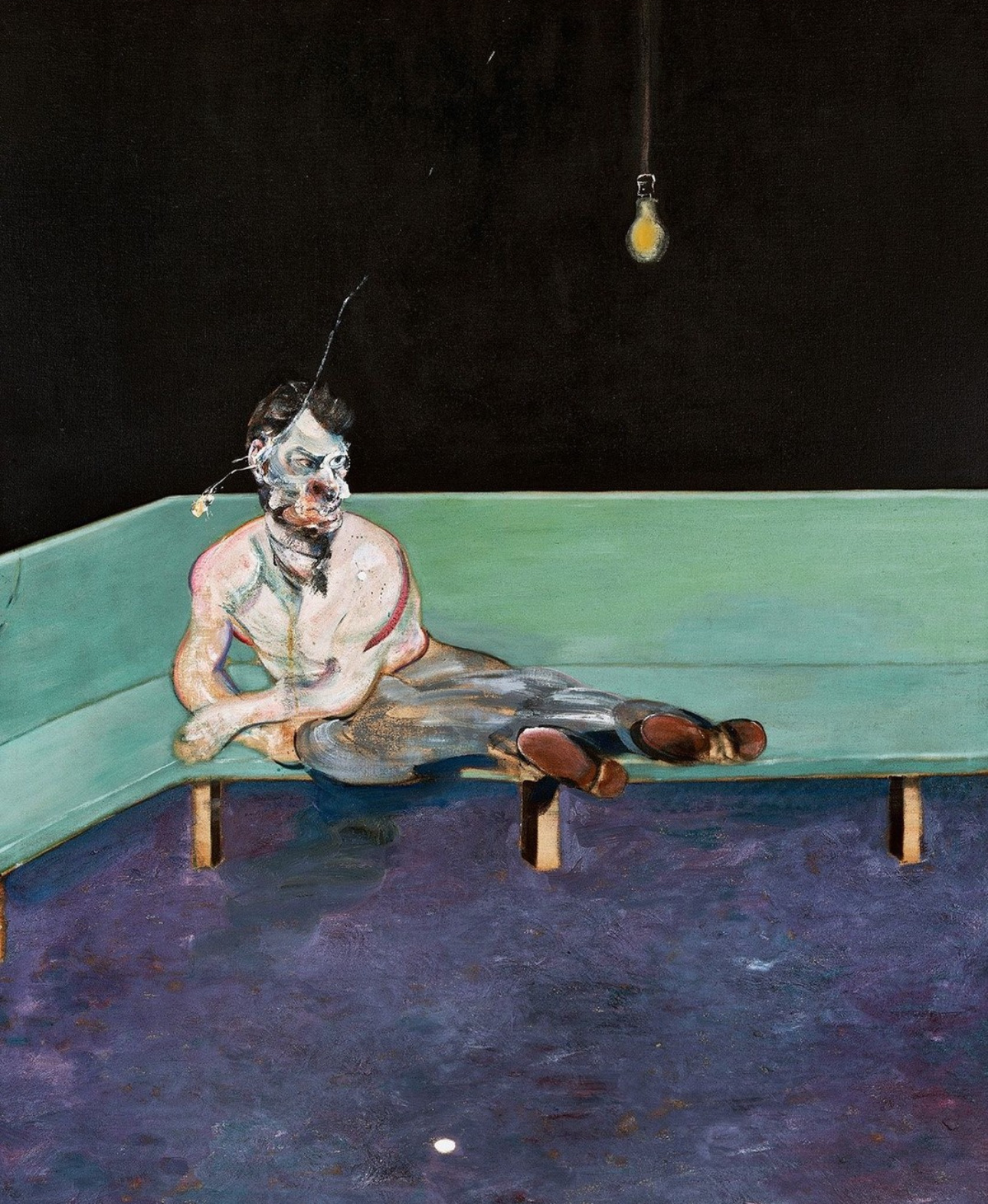
Study for Portrait of Lucian Freud, 1964
Francis Bacon was born in Dublin on 28 October 1909 to English parents, and his early years were marked by restlessness, displacement, and a sense of being profoundly out of place. His father, a racehorse trainer with a rigid temperament, reportedly expelled the teenage Bacon from the family home after discovering him wearing his mother's underwear. Bacon drifted through London and Berlin in the late 1920s, absorbing the charged atmosphere of Weimar decadence, before settling into a peripatetic existence that took him through Paris, where an encounter with a Picasso exhibition in 1927 is widely credited as one of the catalysts that turned him toward painting. He was largely self taught, learning by looking, by doing, and by destroying far more than he kept.
His early career was fitful and marked by genuine uncertainty. He worked as an interior decorator and furniture designer through the early 1930s and made paintings that he would later disown entirely, destroying the vast majority of his early output. The breakthrough, when it finally came, was seismic. In 1944, Bacon completed Three Studies for Figures at the Base of a Crucifixion, a triptych of shrieking, mutilated creature forms painted in a scorched orange field.
Francis Bacon
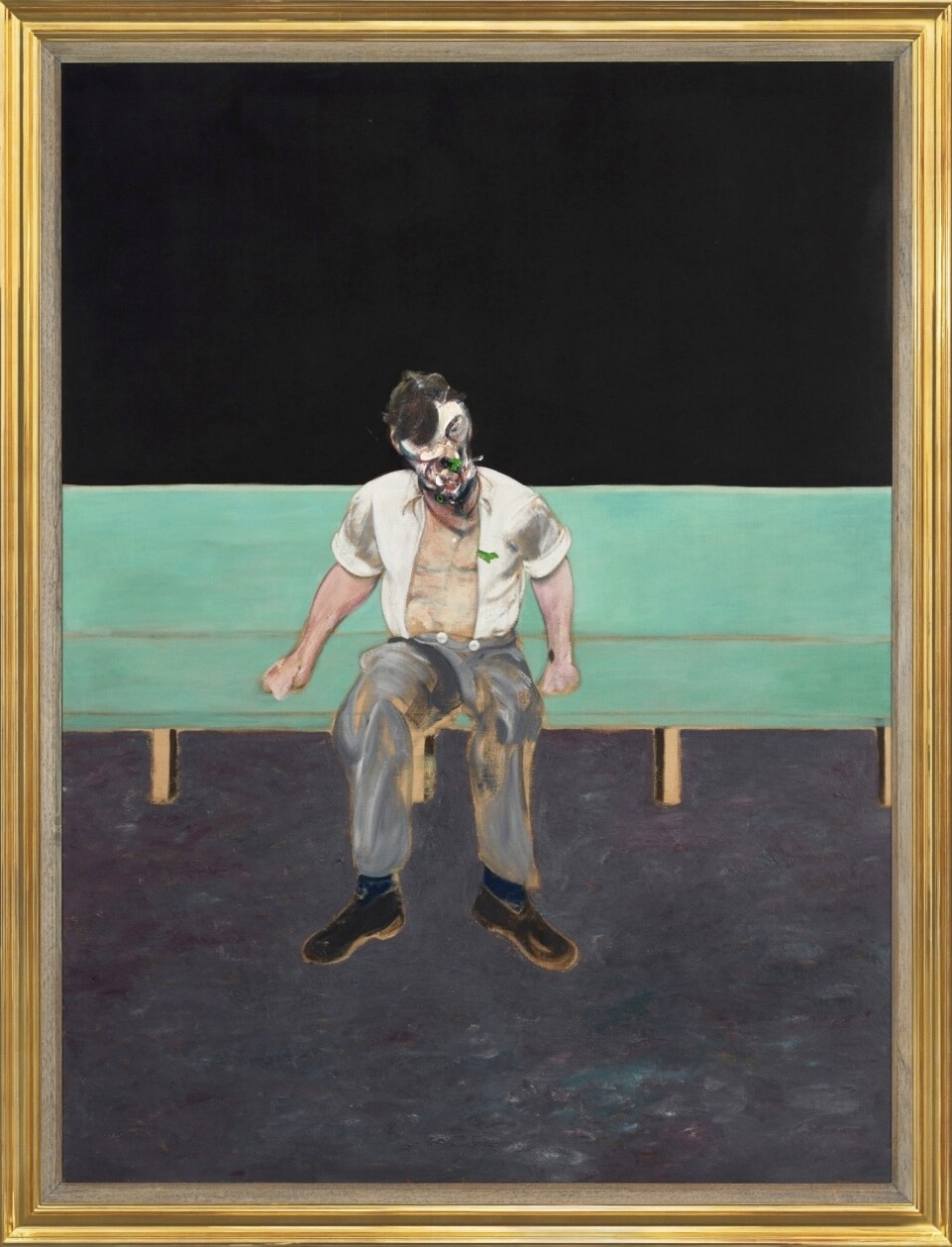
Study for Portrait of Lucian Freud, 1964
When it was shown at the Lefevre Gallery in London in 1945, it genuinely shocked audiences still raw from the violence of the Second World War. Bacon had found his subject: the human body in extremis, stripped of comfort, caught between sensation and dissolution. What followed was one of the most sustained and courageous artistic investigations of the 20th century. Through the 1950s and into the 1960s, Bacon developed his signature visual language: figures trapped inside geometric cage structures, mouths open in silent screams, flesh smeared and rotated as though seen through a distorting lens.
“The job of the artist is always to deepen the mystery.”
Francis Bacon
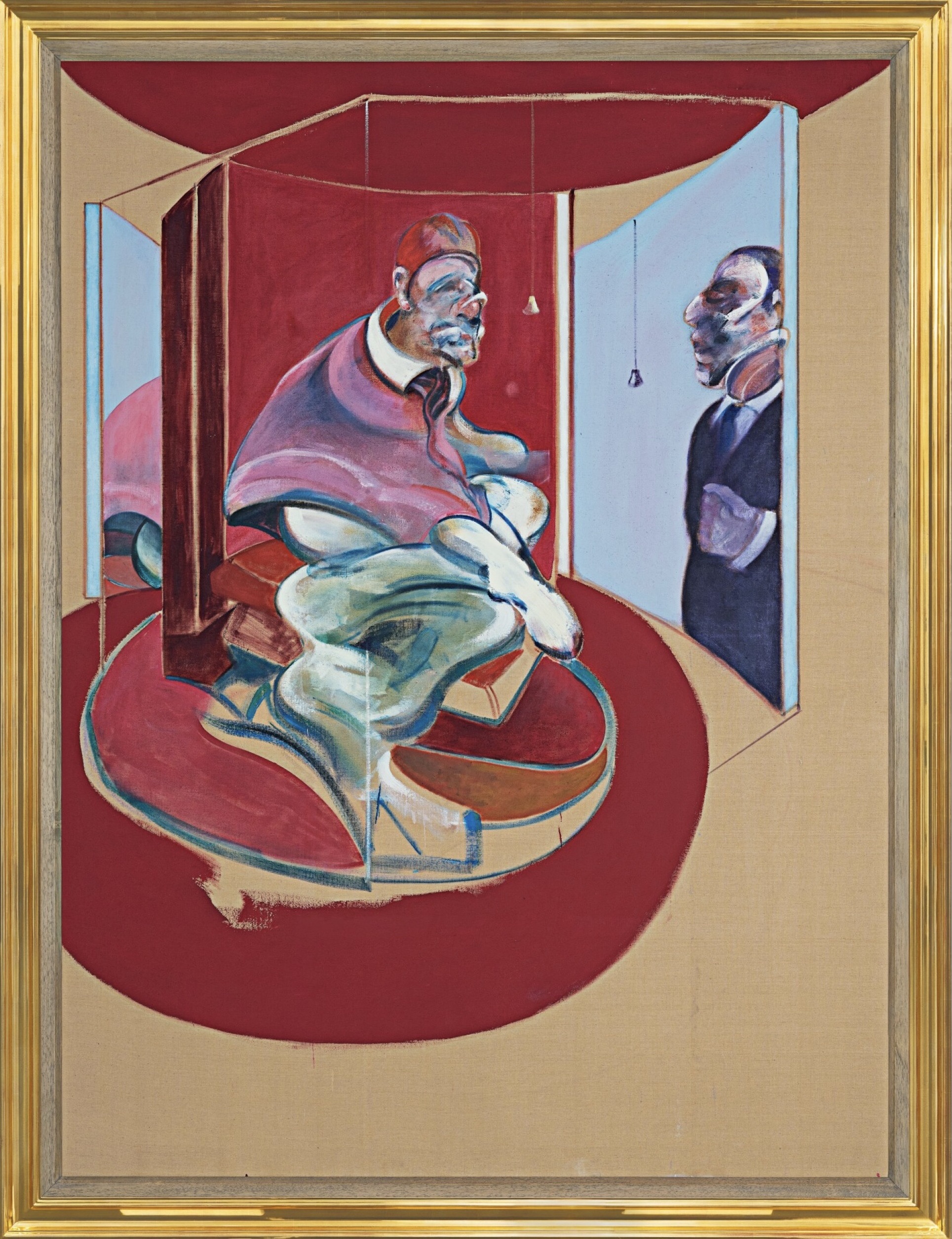
His series of paintings after the popes of Velázquez, including Pope I from 1961 and the famous variations on the Innocent X portrait, transformed a symbol of institutional power into an image of pure existential anguish. These were not illustrations of suffering. They were suffering, made material in oil on canvas. His friendship and rivalry with Lucian Freud, another towering figure of British figurative painting, produced some of his most tender and destabilising portraits, including the Study for Portrait of Lucian Freud from 1964, a work of extraordinary psychological tension that captures the complexity of two great artists seeing each other clearly.
Francis Bacon
Study of Red Pope 1962, 2nd Version 1971, 1962
Bacon's personal life fed directly into the work, in ways both nourishing and devastating. His relationship with George Dyer, a petty criminal he met in the early 1960s, became the emotional center of some of his most haunting paintings. Dyer's tragic death by overdose in a Paris hotel room in October 1971, on the eve of Bacon's major retrospective at the Grand Palais, cast a long shadow over everything that followed. The Black Triptychs painted in the years immediately after are among the most grief saturated paintings in the canon of modern art.
“We are meat, we are potential carcasses.”
David Sylvester, Interviews with Francis Bacon, 1975
Yet even here, the formal intelligence never falters. Bacon was always the painter first, marshaling grief into structure, into surface, into something that endures. For collectors, Bacon represents one of the most reliable and emotionally resonant blue chip positions in the postwar market. His major oils command extraordinary prices at auction.
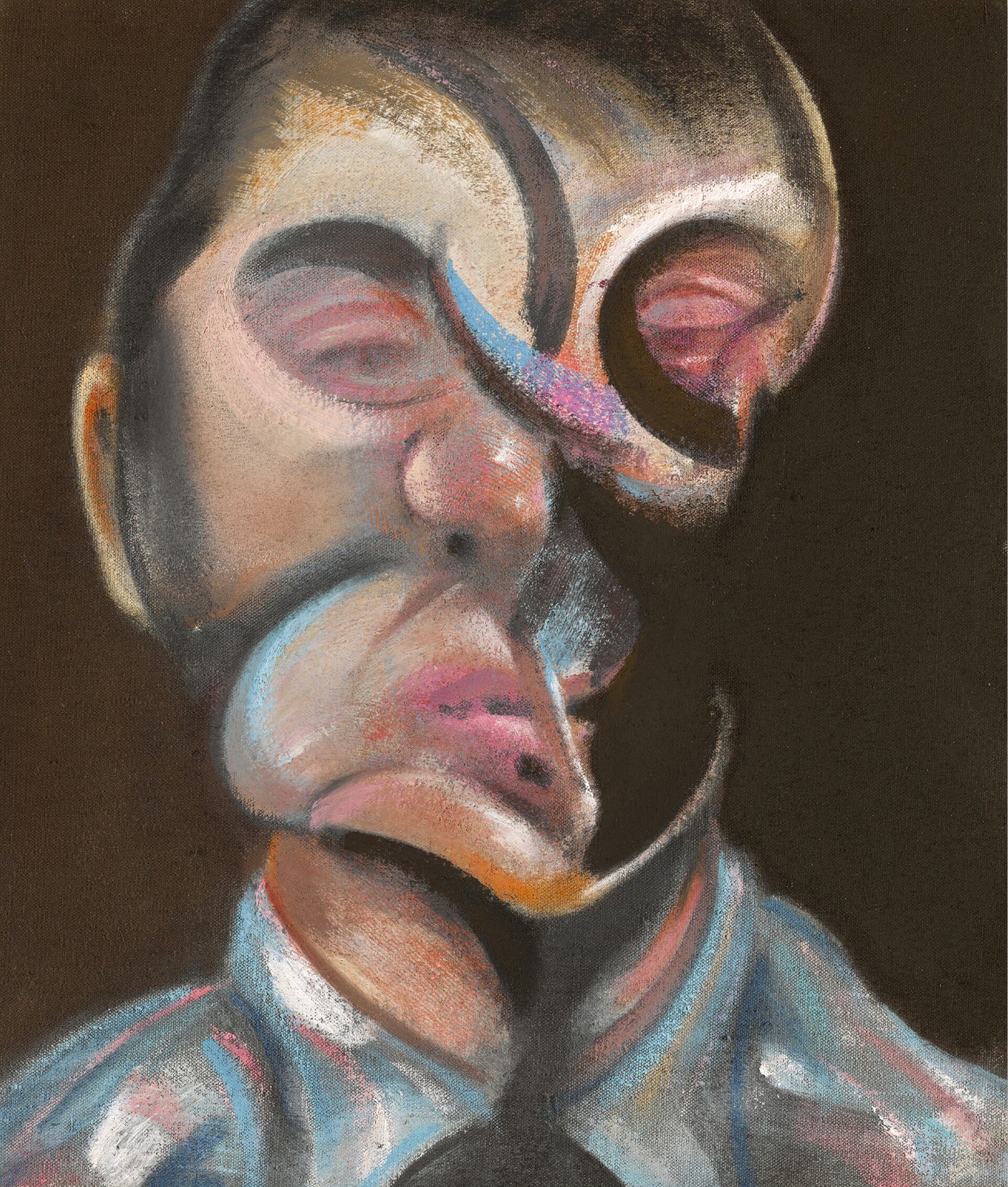
Francis Bacon
Self-Portrait, 1972
In 2013, Three Studies of Lucian Freud achieved 142.4 million dollars at Christie's New York, setting a world auction record for any work of art at that time. But the Bacon market offers meaningful entry points across formats and periods. His prints, including the lithographs published in collaboration with Librairie Séguier for IRCAM Centre Pompidou in Paris, such as the Oedipus and the Sphinx after Ingres from 1983 and the Second Version of the Triptych 1944, represent genuinely important works on paper that carry the full force of his visual thinking.
Giclée editions after iconic compositions, including the beloved Portrait of George Dyer Riding a Bicycle, offer further access to his iconography for collectors at earlier stages of their journey. What draws serious collectors to Bacon consistently is the sense that his work is always more powerful in person than in reproduction, a quality that speaks to the fundamental seriousness of his painterly practice. Placed within art history, Bacon sits at a productive crossroads. He drew on the Old Masters with genuine reverence, returning obsessively to Velázquez, Rembrandt, and Ingres.
He absorbed the lessons of Surrealism without ever fully belonging to it. His rawness and emotional directness align him with the broader current of Neo Expressionism that would surge through the 1980s in the work of Georg Baselitz, Anselm Kiefer, and Jean Michel Basquiat, though Bacon always insisted on his singularity. His friend and sometime subject Lucian Freud shared his commitment to figuration as an act of philosophical seriousness, and together they form the twin poles of postwar British painting. Like Alberto Giacometti, whose existential anxieties found form in sculptural attenuation, Bacon used the body as the site of all meaning.
What makes Bacon so essential today is precisely what made him uncomfortable in his own time. He refused consolation. He painted loneliness, desire, mortality, and the strangeness of being embodied in a world without guaranteed meaning. In an art world that frequently prizes concept over sensation, Bacon stands as an uncompromising reminder that paint on canvas can still reach the nervous system directly.
His work demands nothing from the viewer except the willingness to feel it. That is, finally, the measure of his greatness, and the reason that collectors, institutions, and audiences continue to return to him with the intensity of a reckoning.
Explore books about Francis Bacon

Francis Bacon: His Life and Violent Philosophy
Michael Peppiatt
Francis Bacon and the Loss of Self
David Sylvester
The Brutality of Fact: Interviews with Francis Bacon
David Sylvester
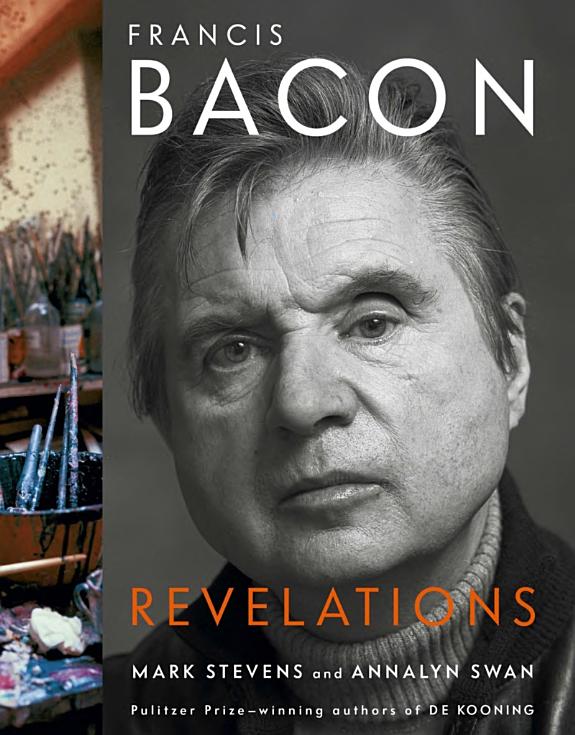
Francis Bacon: Full Catalogue Raisonné
Martin Harrison
Francis Bacon: Paintings 1945-1975
Ronald Alley
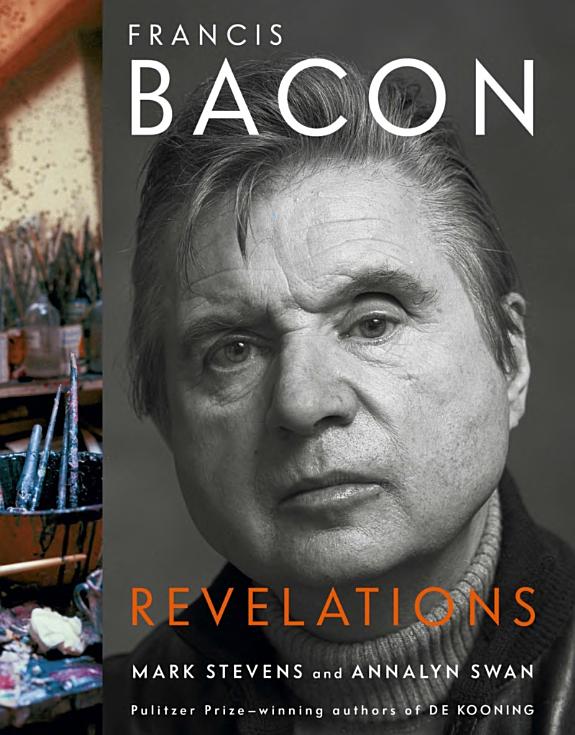
Living with Francis Bacon
George Dyer and Dan Farson
Francis Bacon: The Logic of Sensation
Gilles Deleuze