Join The Collection to save, track, and explore works like this.

Sebastián Naranjo

Spotted

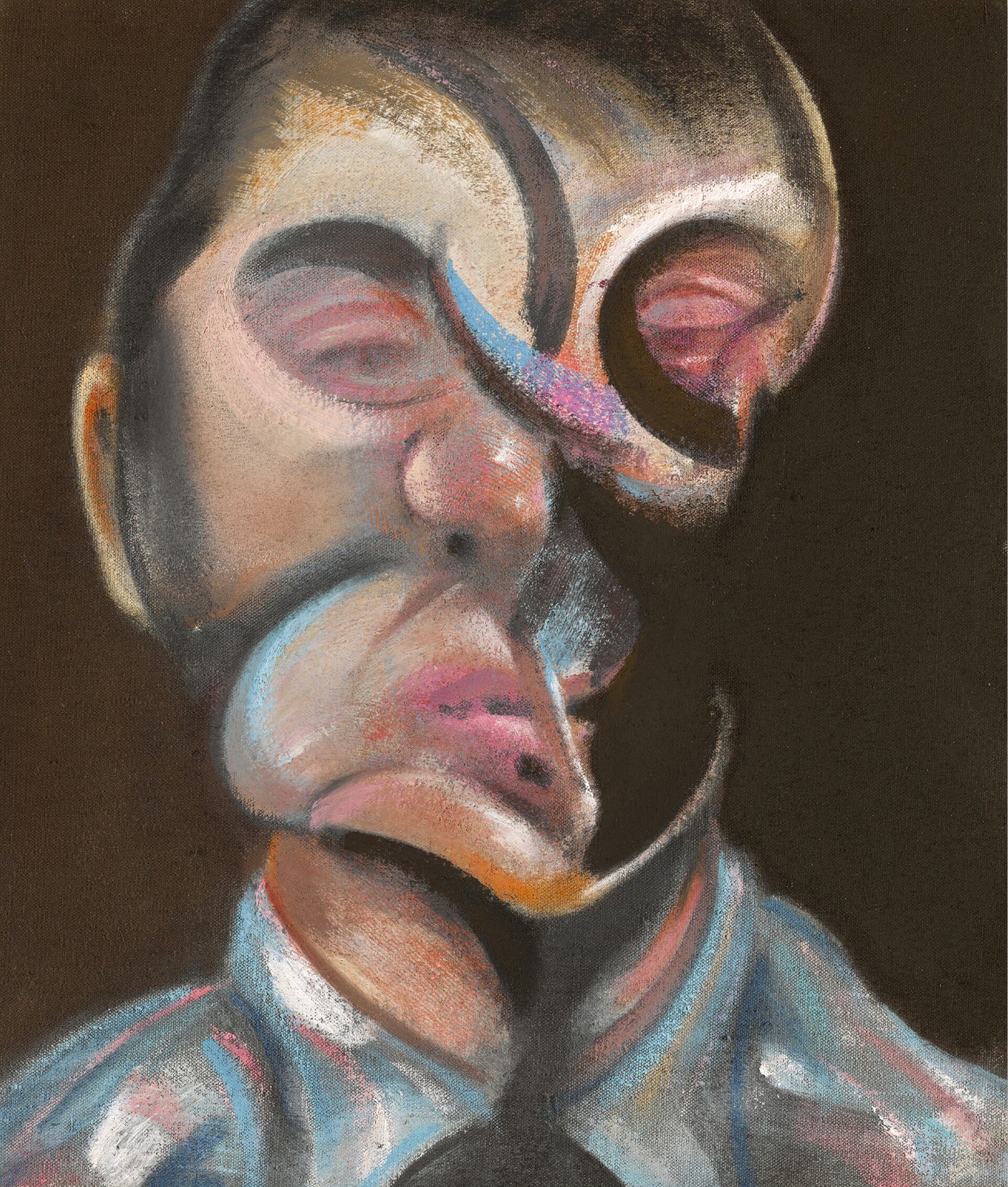
Francis Bacon — Self-Portrait
Francis Bacon

Self-Portrait

1972

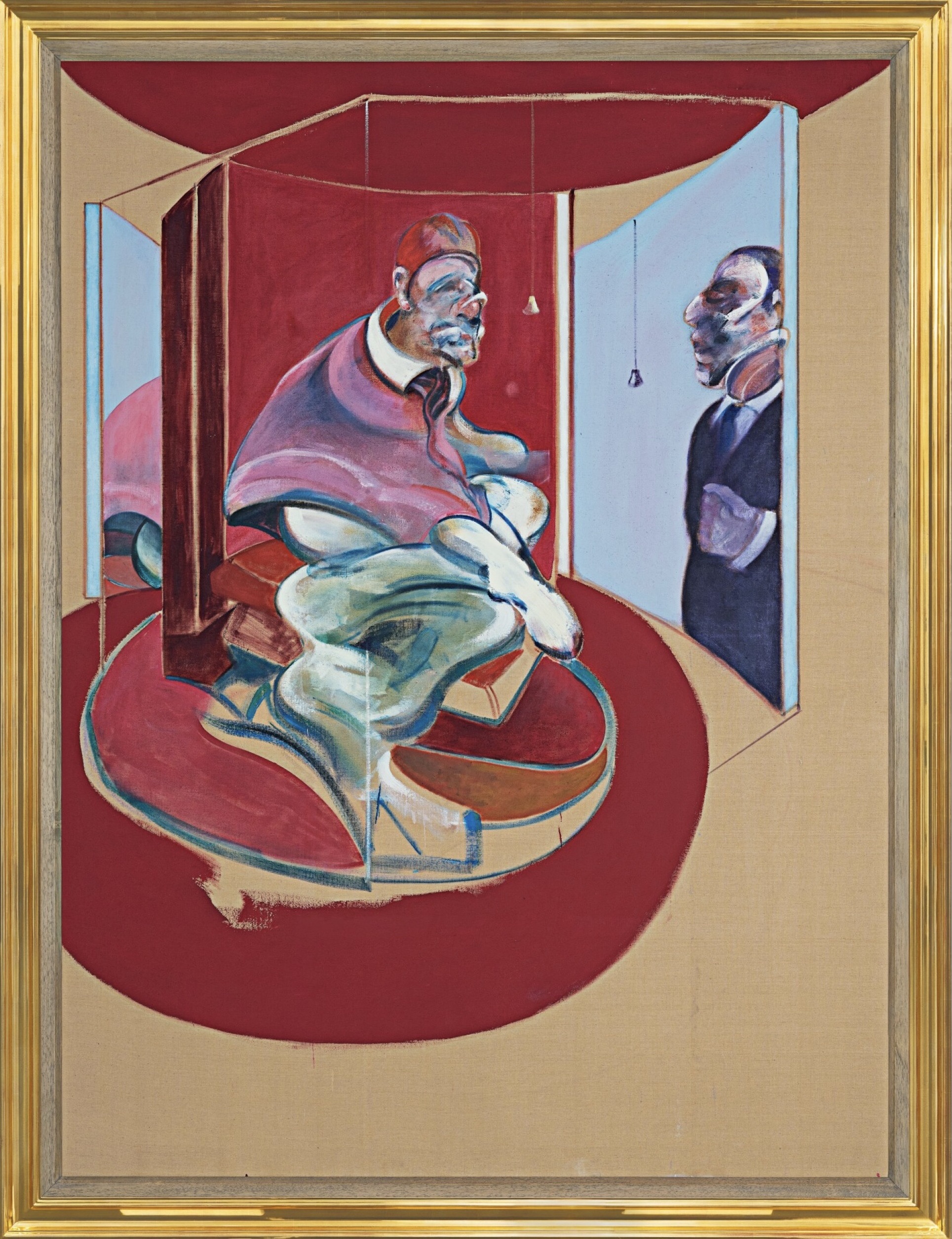
“In what was Bacon's most prolific year for small self-portraits, none is more incisively painted than this painting or more closely aligned with Degas's pastels in its predominantly blue and pink palette" MARTIN HARRISON, FRANCIS BACON, CATALOGUE RAISONNÉ, VOLUME IV, 1971–92, LONDON 2016, P. 1022 This 1972 self-portrait exemplifies Francis Bacon's unflinching interrogation of the human face, rendering his own likeness as a visceral, torqued mass of flesh caught between dissolution and formation. The characteristic Baconian distortion — the face wrenched open, features spiraling away from anatomical logic — achieves a raw psychological intensity against the dark, unmodulated ground. Executed in his signature pastel-and-oil technique on canvas, the work belongs to a critical period of self-portraiture following the 1971 suicide of his lover George Dyer, lending it an undercurrent of existential anguish. As one of art history's most compelling self-examinations, this painting represents a museum-caliber holding from the apex of Bacon's career.
Start the Discussion

Request access to join the discussion

Collectors of Francis Bacon

Also spotted by

About this work

Francis Bacon, Self-Portrait, 1972

“In what was Bacon's most prolific year for small self-portraits, none is more incisively painted than this painting or more closely aligned with Degas's pastels in its predominantly blue and pink palette" MARTIN HARRISON, FRANCIS BACON, CATALOGUE RAISONNÉ, VOLUME IV, 1971–92, LONDON 2016, P. 1022 This 1972 self-portrait exemplifies Francis Bacon's unflinching interrogation of the human face, rendering his own likeness as a visceral, torqued mass of flesh caught between dissolution and formation. The characteristic Baconian distortion — the face wrenched open, features spiraling away from anatomical logic — achieves a raw psychological intensity against the dark, unmodulated ground. Executed in his signature pastel-and-oil technique on canvas, the work belongs to a critical period of self-portraiture following the 1971 suicide of his lover George Dyer, lending it an undercurrent of existential anguish. As one of art history's most compelling self-examinations, this painting represents a museum-caliber holding from the apex of Bacon's career.
Year
1972

Related themes

Dark Palette, Psychological Portraiture, Male Artist, Expressionism, Post-War, Pastel And Oil, Unique Work, Figurative, Contemporary

More works by Francis Bacon

Collected by

Sebastián In Situ, Sebastián Naranjo