Christopher Wood
Christopher Wood: A Light That Burns Bright
Artist Spotlight · The Collection Editorial
There are artists whose entire careers feel like a single sustained act of looking, and Christopher Wood was among the most gifted of them. In recent years, major institutions on both sides of the Channel have returned to his work with fresh urgency. The Tate's holdings of his paintings draw consistent scholarly attention, and auction rooms in London have seen strong competition for his oils on board, with works regularly achieving six figure sums at Christie's and Sotheby's. For collectors who prize the intersection of emotional directness and technical originality, Wood remains one of the most compelling figures British modernism produced.
Christopher Wood
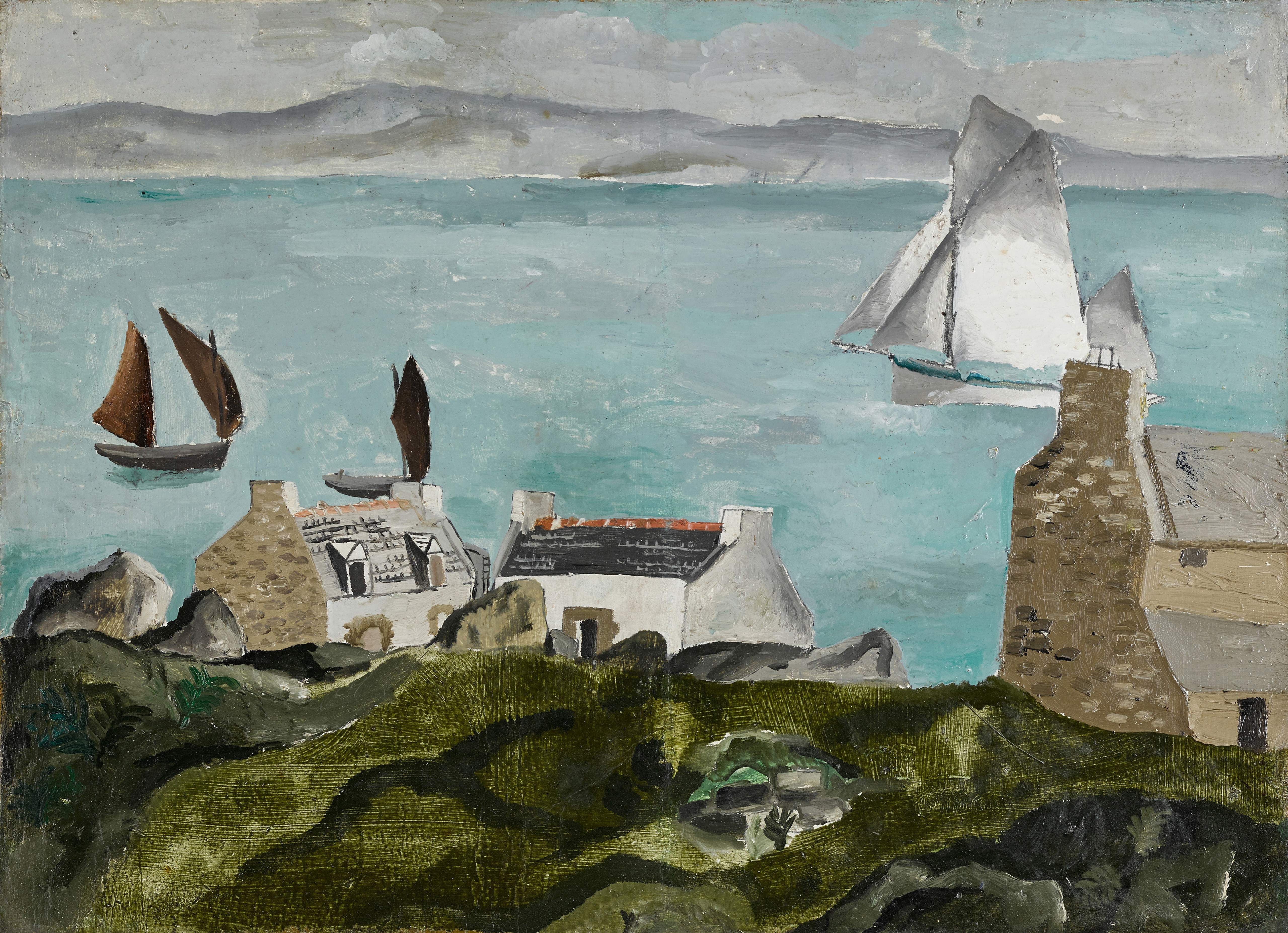
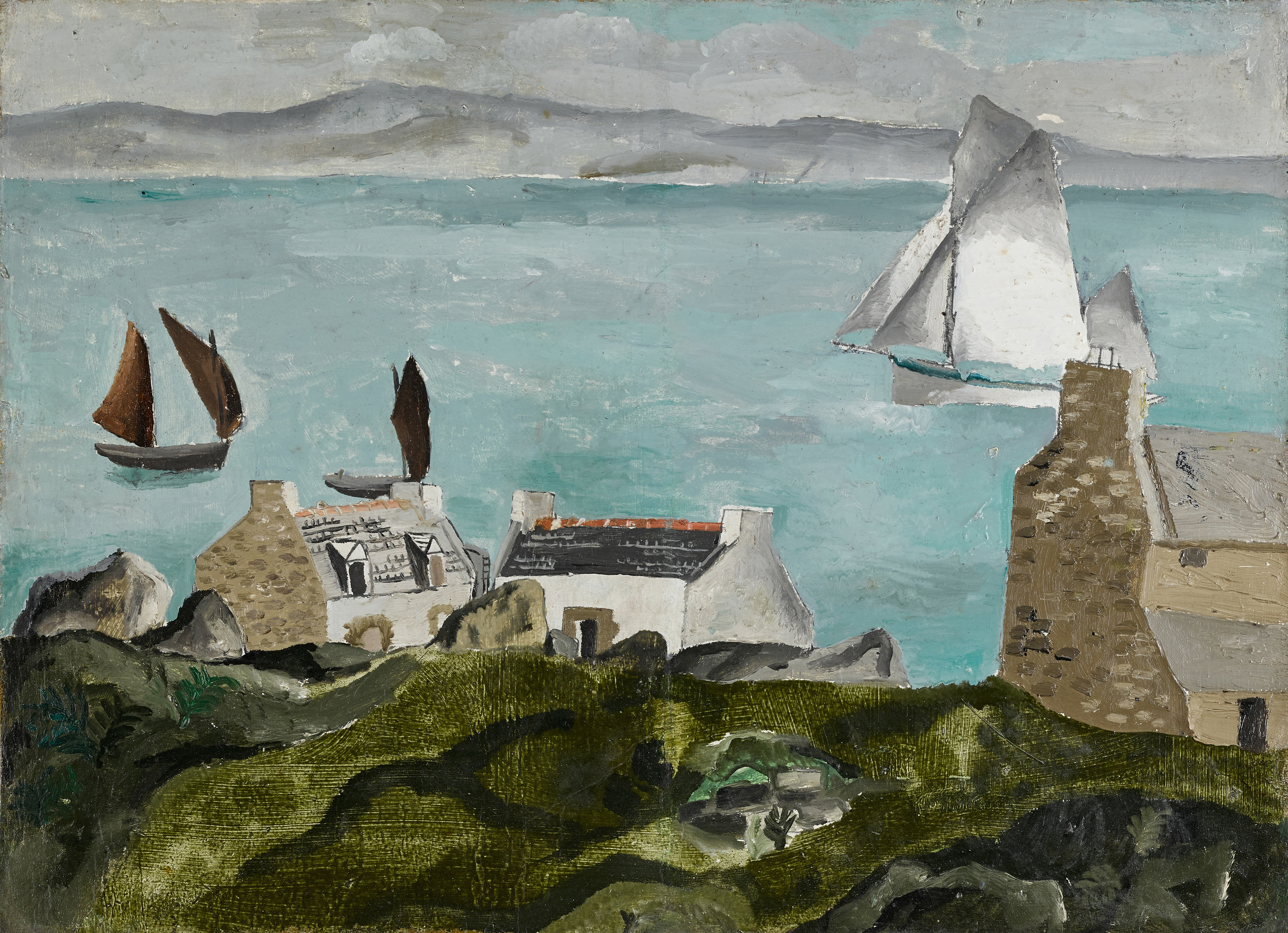
White Yacht off the Breton Coast, 1929
Christopher Wood was born in Knowsley, Lancashire, in 1901, the son of a doctor. His early years gave little obvious indication of the path he would take, though a restless intelligence and an appetite for beauty were apparent from childhood. He studied briefly at the Liverpool School of Architecture before abandoning that trajectory entirely, drawn instead toward painting and the wider world. By his early twenties he was in Paris, moving through the brilliant and sometimes dangerous social world of the city's artistic and bohemian circles, befriending Pablo Picasso, Jean Cocteau, and the Chilean patron Eugenia Errázuriz, who took him under her wing and introduced him to some of the most significant artistic minds of the era.
These connections gave Wood an unusually sophisticated visual education for a young man still forming his sensibility. The Paris years were formative in ways that went beyond social opportunity. Wood encountered Post Impressionism at close range, absorbing the lessons of Cézanne and the Fauves while remaining alert to his own instincts. He also developed a serious and at times turbulent relationship with the Chinese diplomat and opium addict Fei Chung Yi, a connection that would cast a long shadow over his personal life.
Christopher Wood
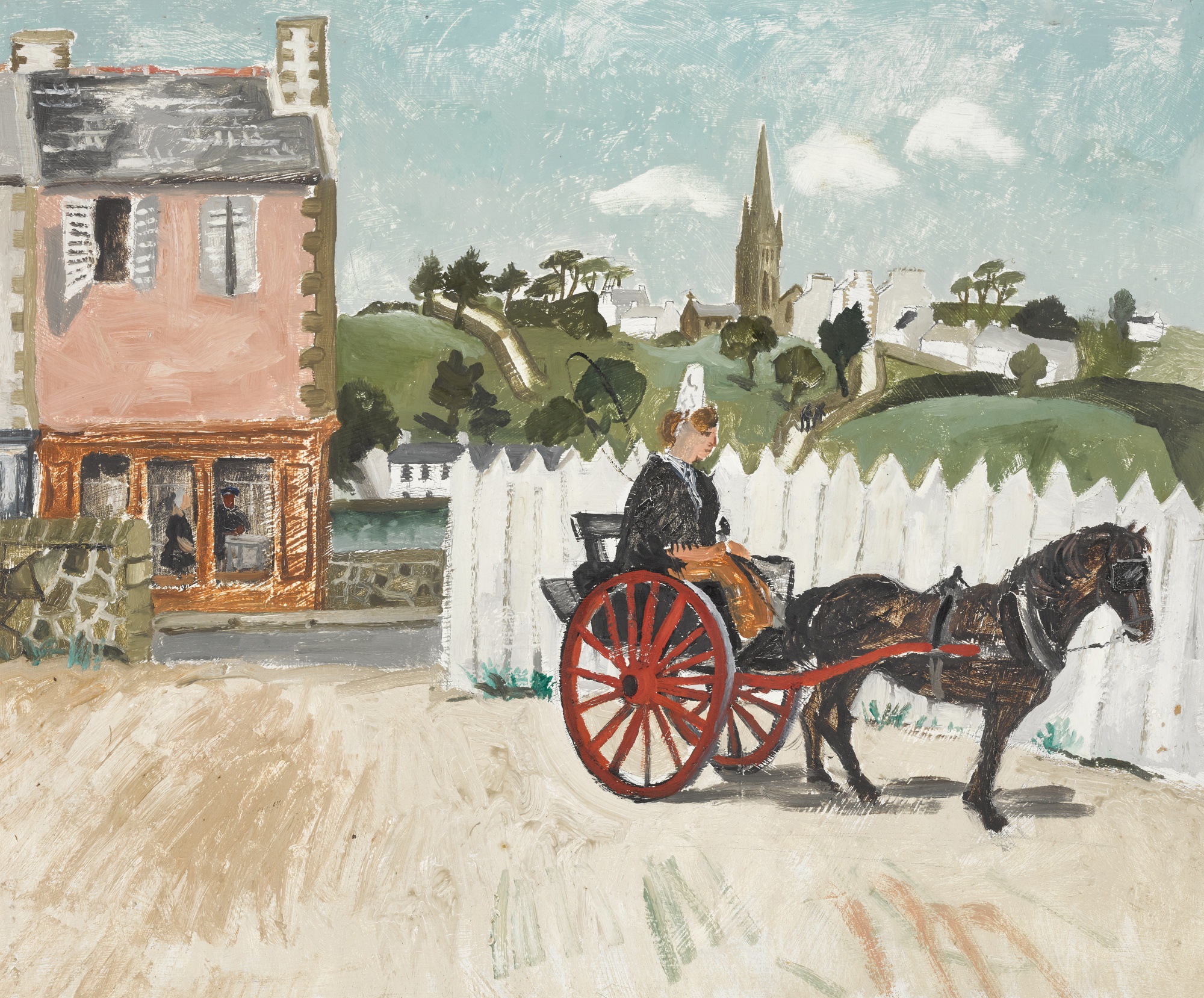
Pony and Trap, Ploaré, Brittany, 1929
Yet through this period of intensity and instability, his painting grew steadily more assured. A pivotal moment came in 1926 when he met Ben Nicholson, with whom he would travel to Cornwall and later to Brittany. It was a friendship that proved transformative for both artists, sharpening Wood's eye for the elemental qualities of landscape, light, and vernacular life. The discovery of Alfred Wallis in St Ives in 1928 was another turning point.
Wallis, a retired fisherman who painted on scraps of cardboard with boat paint, showed Wood that naivety was not a limitation but a form of freedom. Wood absorbed this lesson quickly and brilliantly. His Cornish and Breton canvases from the late 1920s have a directness of address that feels both entirely modern and rooted in something older and more instinctive. Bold outlines contain fields of singing colour.
Christopher Wood
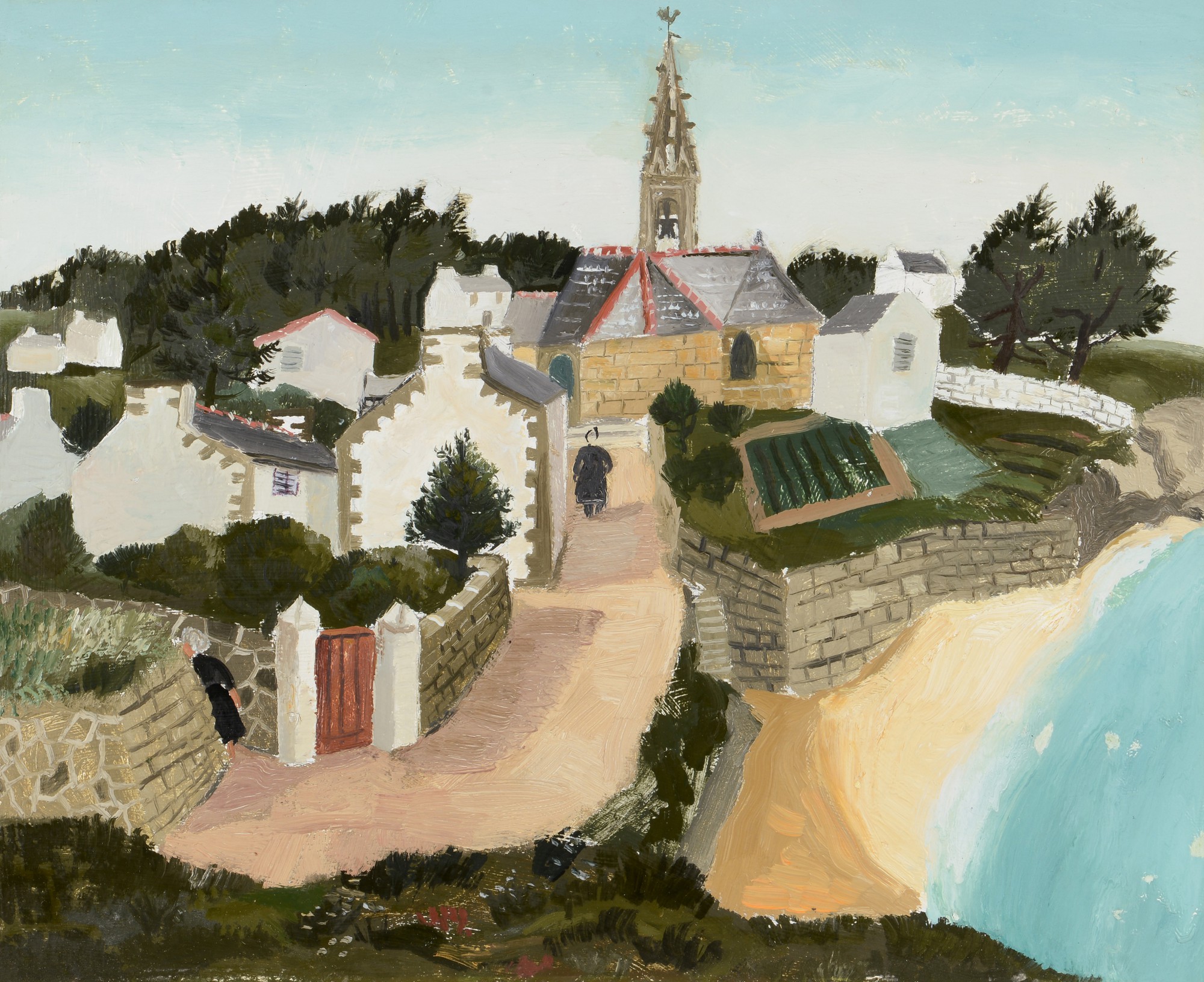
Tréboul, 1929
Boats sit solid and totemic in harbours. Figures move through coastal villages with a quiet, ritualistic presence. The influence of Wallis is detectable, but Wood's palette is warmer, his compositions more architecturally resolved, his emotional temperature distinctly his own. Among the works that best represent this achievement, White Yacht off the Breton Coast from 1929 stands as a near perfect distillation of his mature vision.
The oil on board format, which Wood returned to again and again in these years, suited his directness of touch, allowing rapid decisions and a kind of immediacy that larger canvases sometimes dissipate. Tréboul, also from 1929, captures the fishing village in Brittany where Wood spent some of his most productive final months, the scene rendered with a simplicity that is achieved rather than accidental. Pony and Trap, Ploaré, Brittany demonstrates his ability to elevate an everyday subject into something quietly monumental. Even his earlier figure paintings, including Reclining Nude and Flowers from 1928 and the Girls by the Sea from 1927, show how consistently he was able to bring warmth and compositional intelligence to bear on whatever was in front of him.
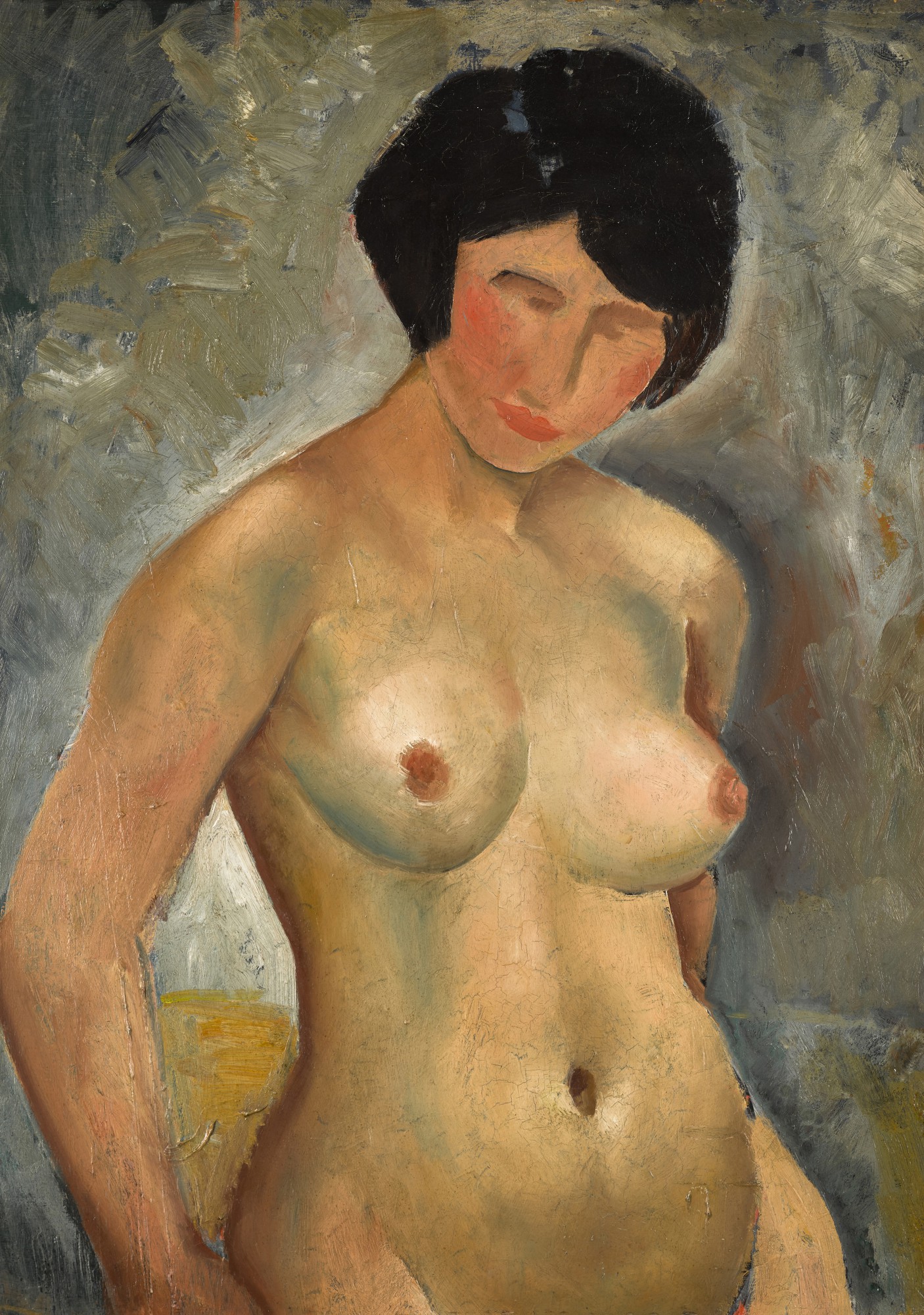
Christopher Wood
Nude, 1926
For collectors, Wood presents a particularly attractive proposition. His work is rare enough to feel significant but not so scarce as to be inaccessible. Oils on board from his Breton period represent the heart of his achievement and tend to perform most strongly at auction. Condition is worth examining carefully given the materials he often used, but well preserved examples retain their colour with remarkable freshness.
The relatively small number of works that come to market in any given year ensures that interest remains concentrated and prices continue to move in a positive direction. Collectors who already hold works by Ben Nicholson, John Tunnard, or the early St Ives painters will find that a Wood sits naturally within such company, adding both historical depth and a distinct emotional warmth. In the broader context of British modernism, Wood occupies a position that is genuinely singular. He bridges the world of the School of Paris, which he encountered firsthand, and the emerging British avant garde that would coalesce around St Ives in the decades after his death.
His friendship with Nicholson links him to the lineage that runs through abstraction and into the postwar period, while his admiration for Wallis connects him to a tradition of self taught, visionary art that has never lost its appeal. He is sometimes grouped with the Neo Romantic painters of the 1930s and 1940s, artists like John Minton and Ivon Hitchens, though his work predates that movement and in many ways anticipates it. He is perhaps best understood alongside Nicholson and Wallis as part of a small constellation of artists who looked at the British and Breton coast and found in it something universal. Christopher Wood died in August 1930 at Salisbury railway station, at the age of twenty nine.
The circumstances of his death remain a subject of careful historical discussion, but what is beyond question is the scale of what he left behind. His career spanned barely a decade of serious work, yet the body of paintings he produced in that time has continued to grow in critical and commercial esteem with each passing generation. To spend time with his canvases is to feel the presence of an artist who was fully alive to the world, who looked at harbours and figures and animals and coastlines with a love that came through in every line. That quality of attention, generous and direct and utterly unguarded, is what makes his work so enduring and so genuinely moving to live with.
Explore books about Christopher Wood
Christopher Wood: A Life
Cecily Langdale
Christopher Wood: The Complete Paintings
Cecily Langdale
Christopher Wood: The Life and Work
Margaret Mellis
Christopher Wood Paintings
Ronald Alley
The Paintings and Drawings of Christopher Wood
Denys Sutton