Charles Camoin
Charles Camoin: Color, Light, and Pure Joy
Artist Spotlight · The Collection Editorial
“Painting is a question of harmony. You must feel the relationships between tones as a musician feels the relationships between sounds.”
Charles Camoin
There is a moment in the grand narrative of early twentieth century French painting when the walls of the Grand Palais seemed to tremble with color. It was October 1905, at the Salon d'Automne in Paris, when a cluster of paintings by Henri Matisse, André Derain, Maurice de Vlaminck, Albert Marquet, and Charles Camoin struck the critic Louis Vauxcelles with such force that he famously coined the term les Fauves, the wild beasts. Camoin was twenty six years old. He had already lived several artistic lifetimes.
Charles Camoin
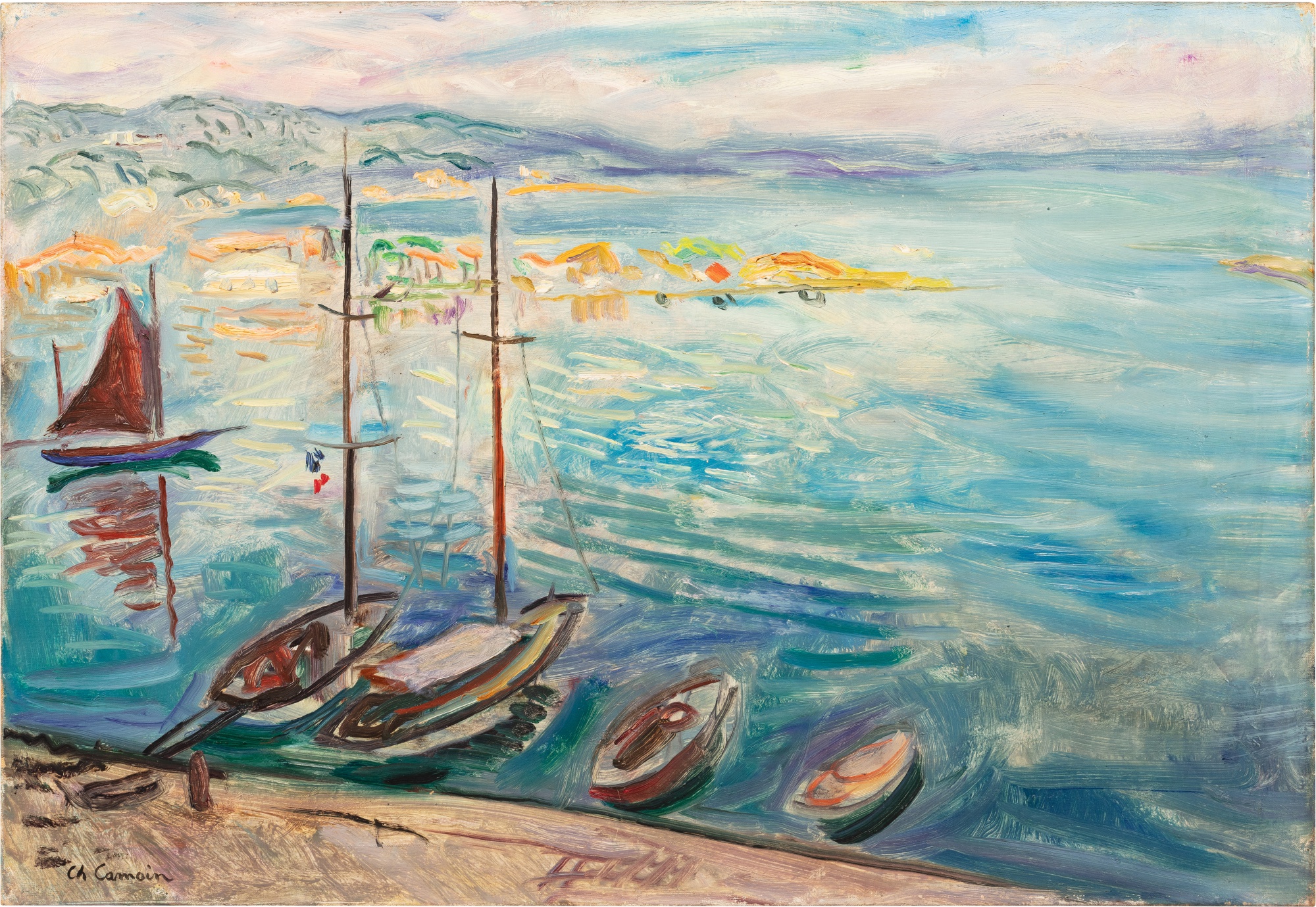
Voiliers et deux-mâts dans le port de Saint-Tropez, 1950
And the work he brought to that room announced, with absolute confidence, that a new way of seeing the world had arrived. Charles Camoin was born in Marseille in 1879, into a city shaped by sea light, Mediterranean warmth, and the constant visual drama of a working port. That southern sensibility never left him. He arrived in Paris to study at the École des Beaux Arts under Gustave Moreau, the great symbolist master whose studio functioned less like a traditional atelier and more like an incubator for radical talent.
Moreau's approach was famously open: he encouraged his students to look at everything, to trust their instincts, and to follow their individual vision wherever it led. Among Camoin's classmates in that extraordinary studio were Henri Matisse and Albert Marquet, two friendships that would shape his entire career and the course of modern art. The bond between Camoin and Matisse was particularly deep and enduring. The two men corresponded for decades, exchanging ideas about color, form, and the nature of painting with a candor that historians have found invaluable.
Charles Camoin
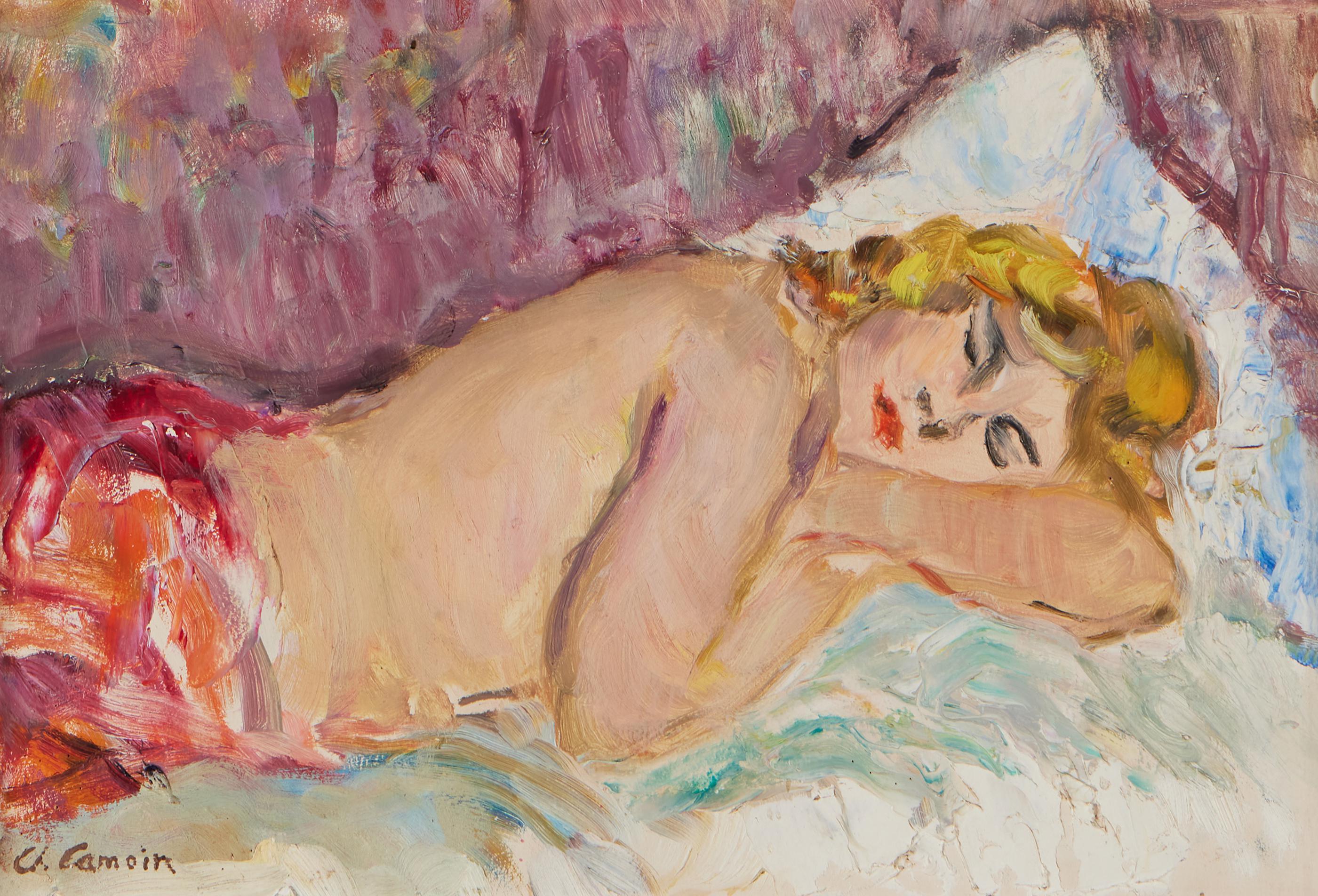
Jeune femme endormie (Mme Lalouette) , 1960
Their letters, preserved in archives, reveal Camoin as a serious and searching intellect, genuinely preoccupied with the same fundamental questions that animated the Fauvist revolution: how could color, freed from its descriptive function, carry emotion directly? How could paint on canvas capture not merely the appearance of a landscape or a figure but the feeling of being alive within it? These were not abstract concerns for Camoin. They were the animating questions of his entire practice.
His military service brought an unexpected encounter that deepened his commitment to Post Impressionist principles. Stationed in Aix en Provence around 1901, Camoin sought out Paul Cézanne, then an elderly and largely reclusive figure, and was received with unexpected warmth. Cézanne discussed his ideas about pictorial structure and the relationship between sensation and form, conversations that left a permanent mark on Camoin's understanding of what painting could achieve. This direct line of transmission from Cézanne through Camoin to the broader Fauvist circle is one of the quietly remarkable threads in the history of modernism, a passing of the torch that the official histories do not always celebrate as fully as they should.
Charles Camoin
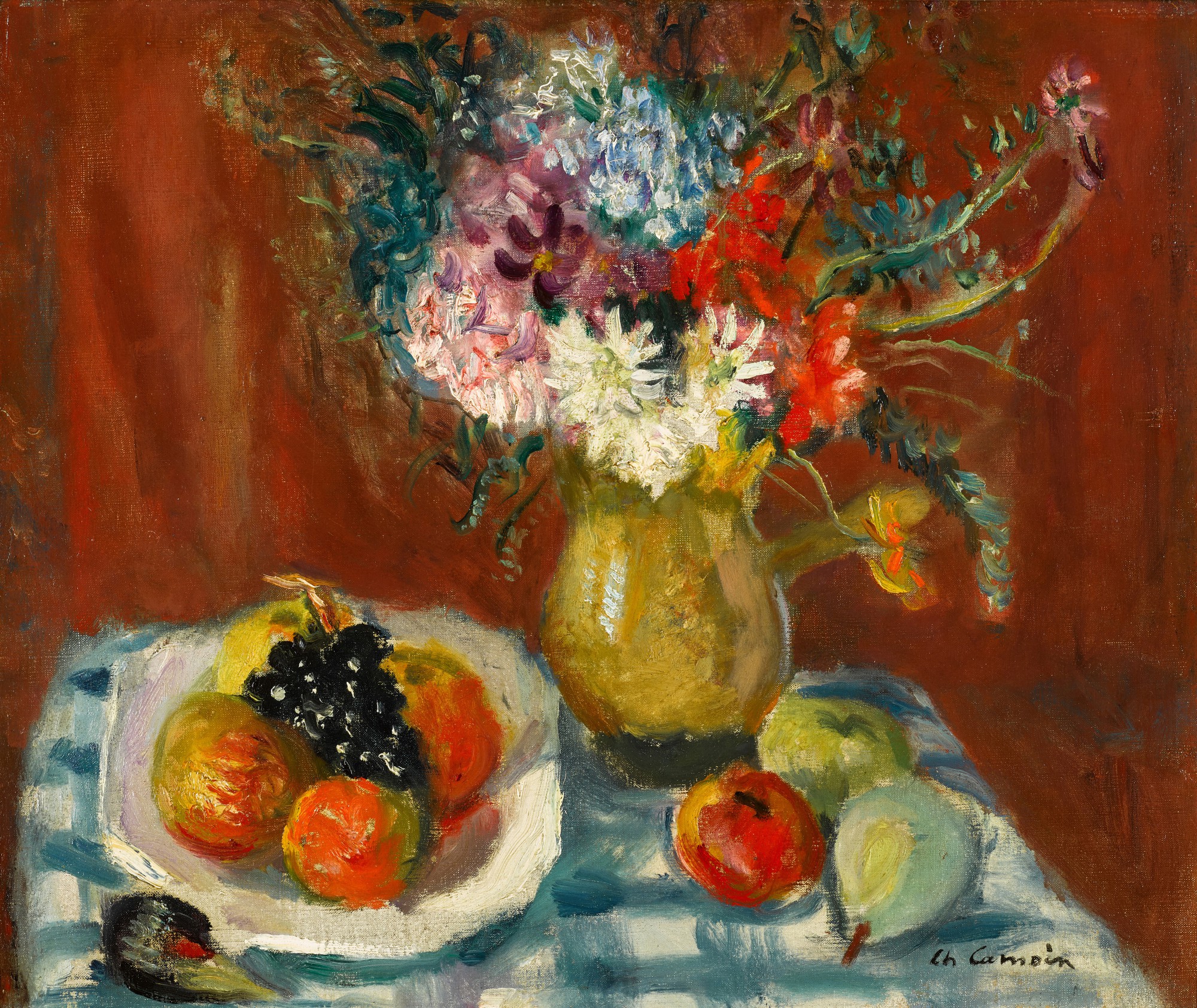
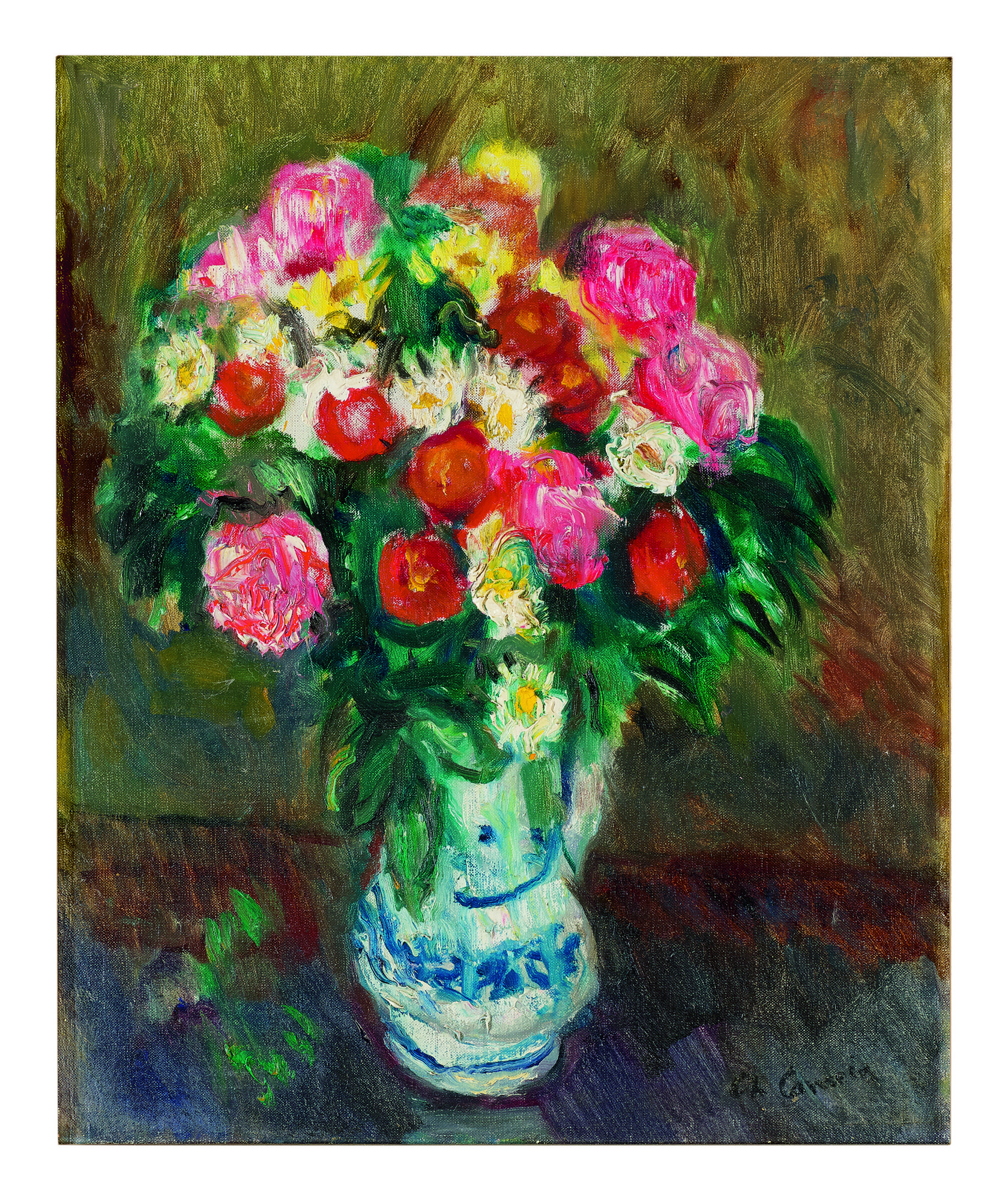
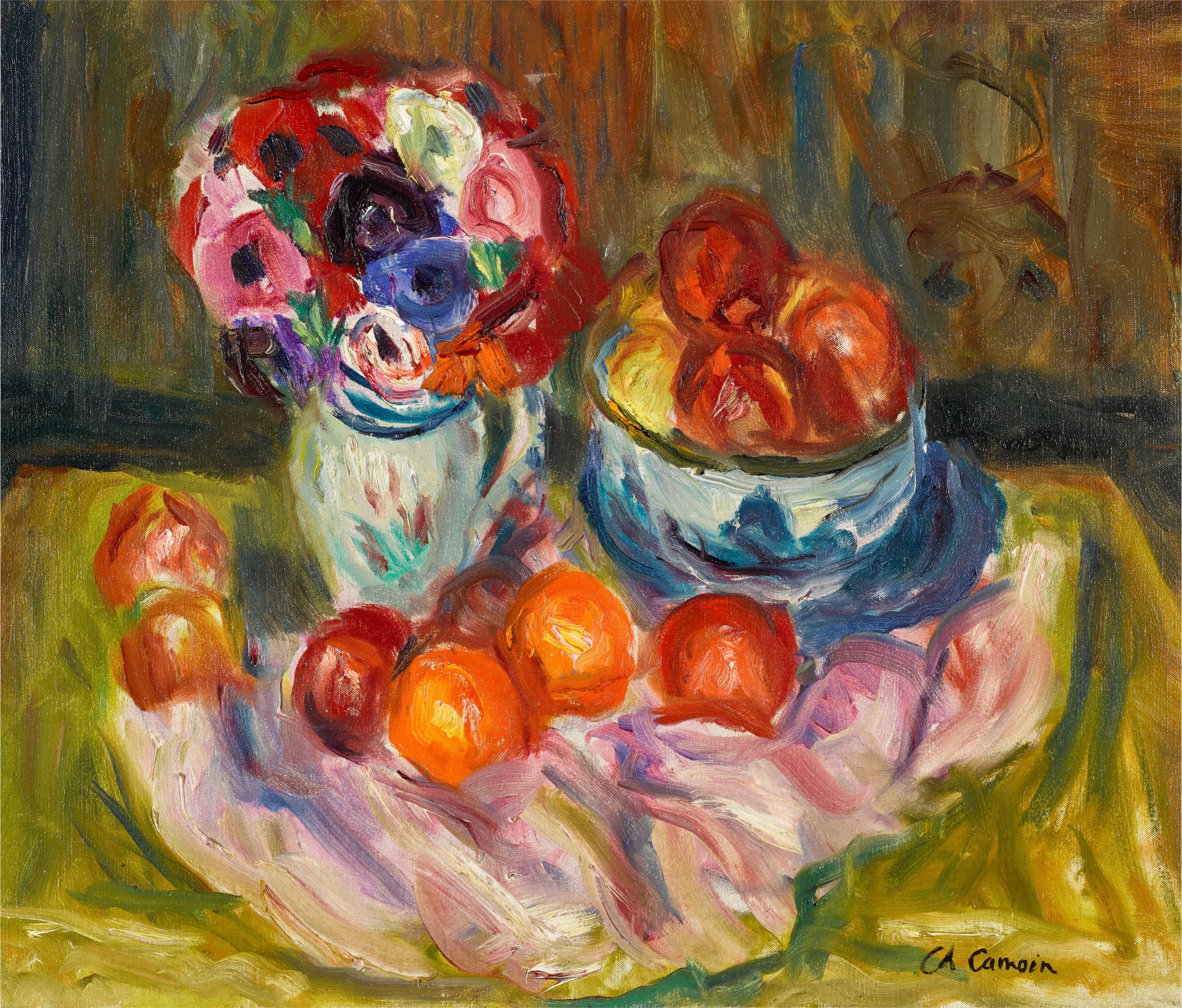
Bouquet Au Pichet Blanc Et Bleu
The years following the 1905 Salon d'Automne saw Camoin develop a body of work that balanced the expressive energy of Fauvism with a lyrical restraint entirely his own. He traveled frequently to Saint Tropez, a village that had already drawn Paul Signac and would become one of the defining landscapes of early modern French painting. His harbor views, like the luminous "Voiliers et deux mâts dans le port de Saint Tropez" from 1950, capture the quality of Mediterranean light with an economy and confidence that rewards sustained looking. The boats, the water, the architecture of the port: all are rendered with a directness that feels effortless but reflects decades of disciplined observation.
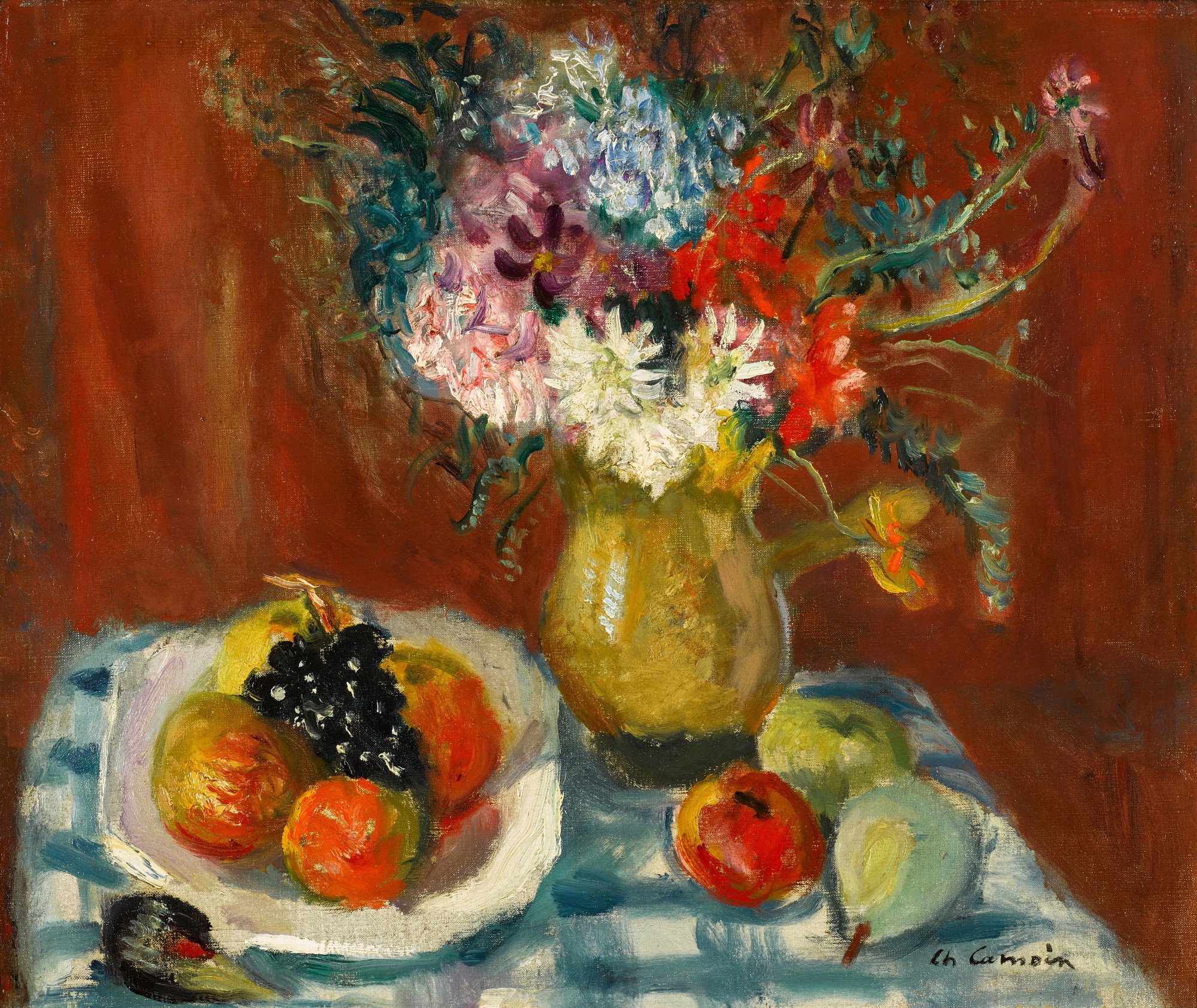
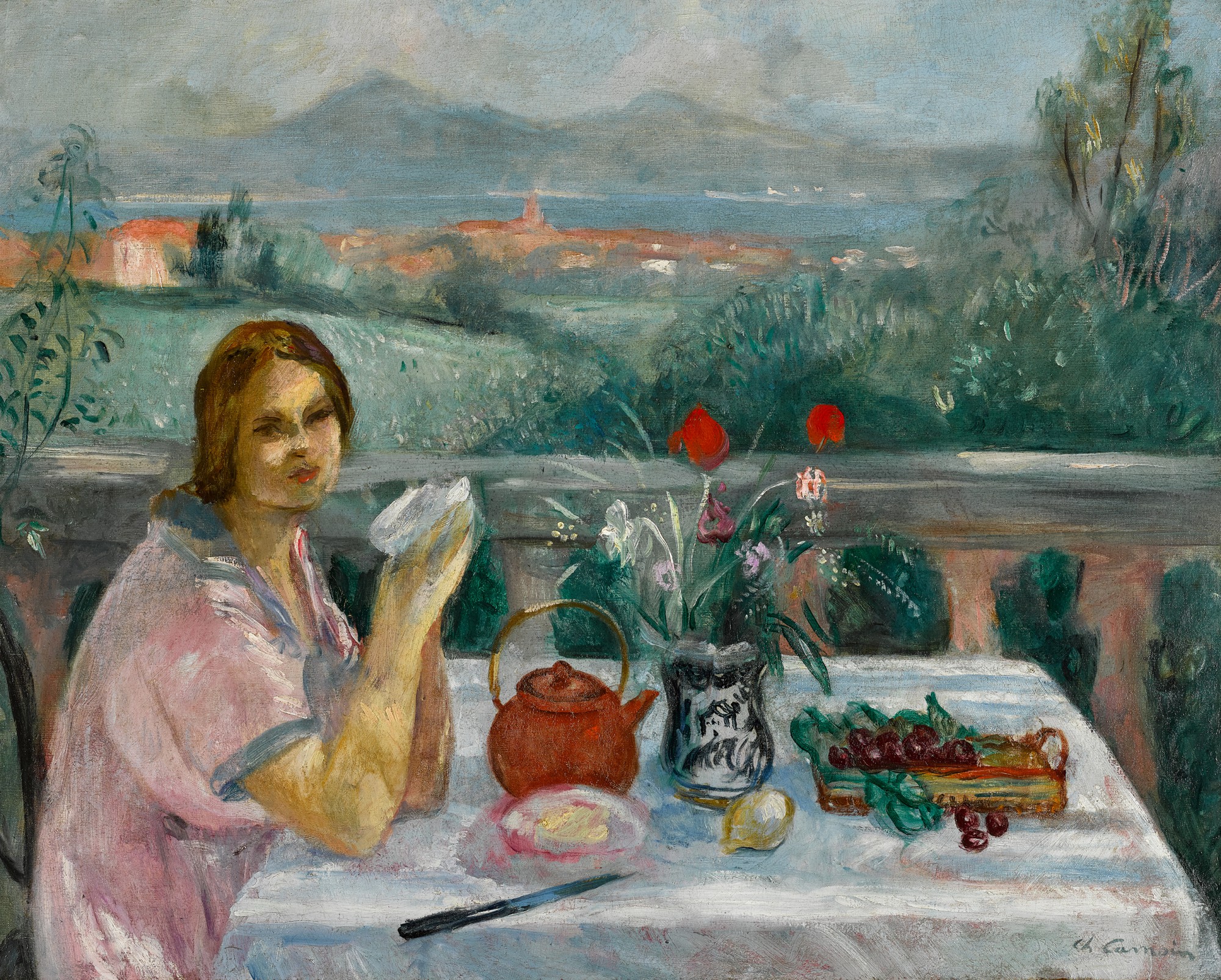
His 1907 canvas "Remorqueurs Le Port de Marseille" reaches back to his native city with similar authority, the tugboats and harbor structures transformed by his palette into something between documentation and pure sensation. Camoin's still life paintings represent perhaps his most consistently pleasurable body of work, and they are among the most compelling offerings available to collectors today. Works such as "Pichet de fleurs et assiette de fruits," "Plat de fruits et fleur dans un vase" from 1939, and "Panier de fruits et fiasque italienne" from 1964, painted in the last year of his life, demonstrate a painter who never stopped finding delight in the world immediately around him. The late date of that final canvas is itself a kind of statement: Camoin at eighty five, still at his easel, still alert to the particular way afternoon light falls across a basket of fruit or the curve of an Italian flask.
Charles Camoin
Pichet de fleurs et assiette de fruits
These are paintings about the pleasure of existence, rendered with the confidence of a master who has nothing left to prove and everything still to enjoy. From a collecting perspective, Camoin occupies a particularly rewarding position in the market for early modern French painting. His work offers genuine historical significance as a first generation Fauvist and a direct link to both Matisse and Cézanne, while remaining more accessible than the canonical figures whose prices have placed them beyond the reach of most private collectors. His paintings appear regularly at major French auction houses and at sales in London and New York, where they are sought by collectors who understand that proximity to greatness is not merely a matter of biography but of visual quality.
Works on paper and smaller oils provide entry points for newer collectors, while larger canvases and works from the key Fauvist period command serious attention. The consistency of his draftsmanship and the integrity of his color across a career spanning more than sixty years make condition and provenance the primary considerations when evaluating a work. To place Camoin within art history is to appreciate the richness of a generation that included not only Matisse and Marquet but also Raoul Dufy, whose sun filled southern scenes share Camoin's appetite for joyful color, and Henri Manguin, another Moreau student whose Mediterranean paintings offer a useful point of comparison. Camoin's work also invites dialogue with the broader Post Impressionist tradition: the influence of Cézanne is visible, the debt to Van Gogh's expressive intensity is present in the early canvases, and the decorative intelligence that Matisse would carry to its furthest conclusions finds a quieter, more intimate expression in Camoin's interiors and floral arrangements.
Charles Camoin died in Paris in 1965, having witnessed the full arc of modernism from its Fauvist origins through abstraction and beyond, remaining throughout his long life committed to the pleasures of the visible world. His legacy is that of a painter who understood that the greatest ambition available to a painter is to make someone standing before a canvas feel, for a moment, the sheer luck of being alive in a world that contains Mediterranean harbors, baskets of fruit, and the particular blue of a Provençal sky. That ambition, pursued with intelligence and grace across eight decades of work, is more than sufficient reason to look again, and to collect.
Featured Works
Explore books about Charles Camoin