Zhou Dynasty
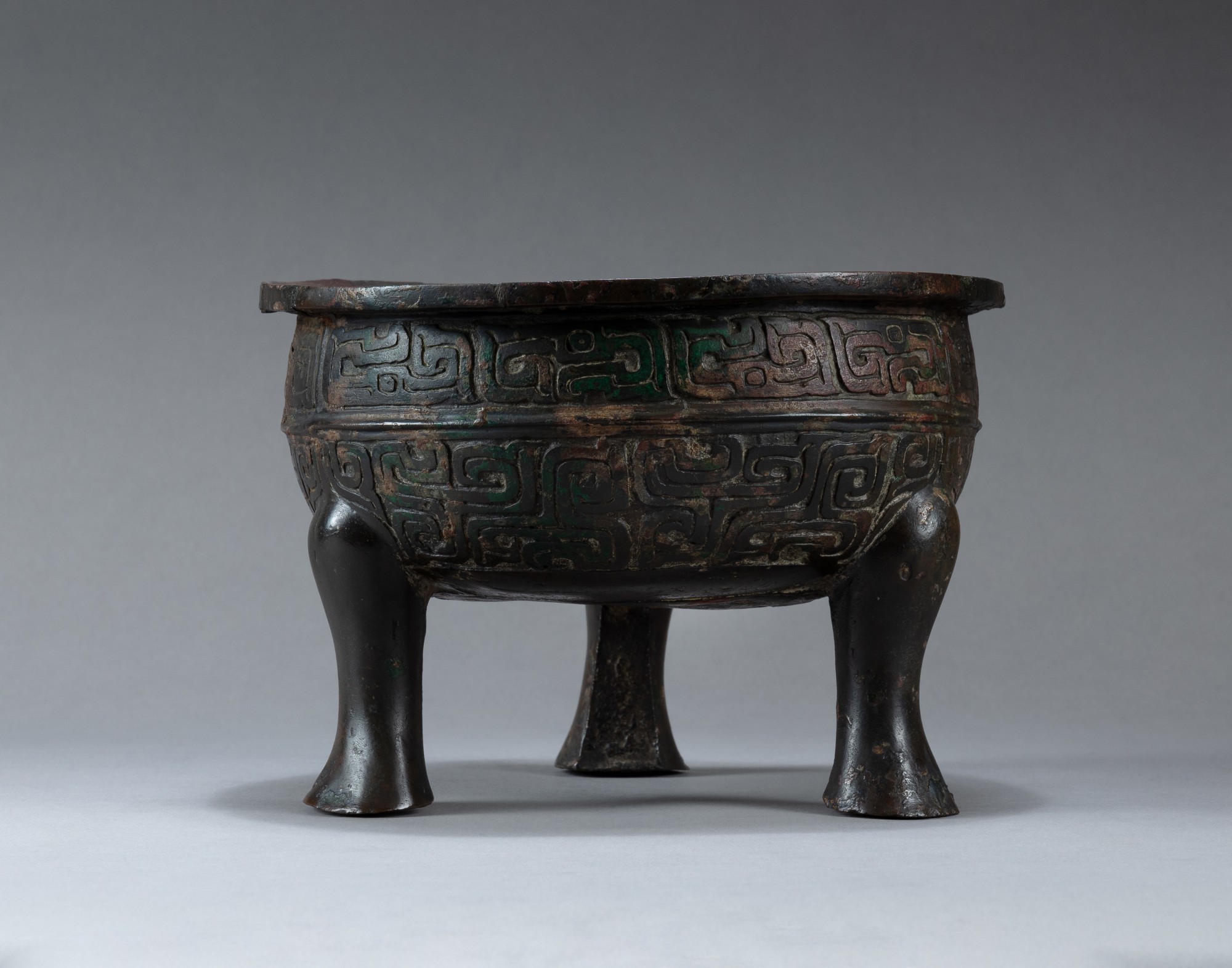
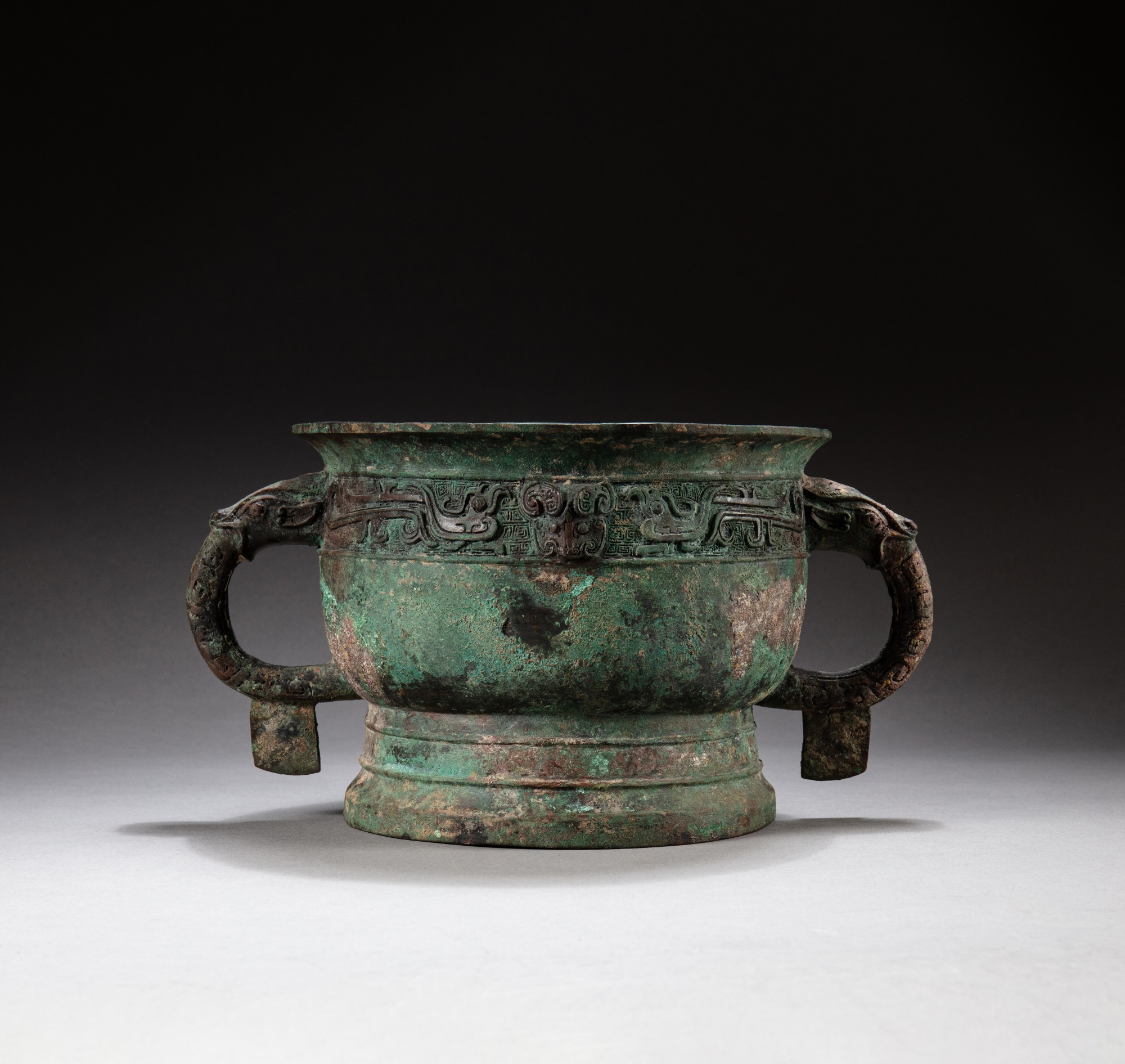
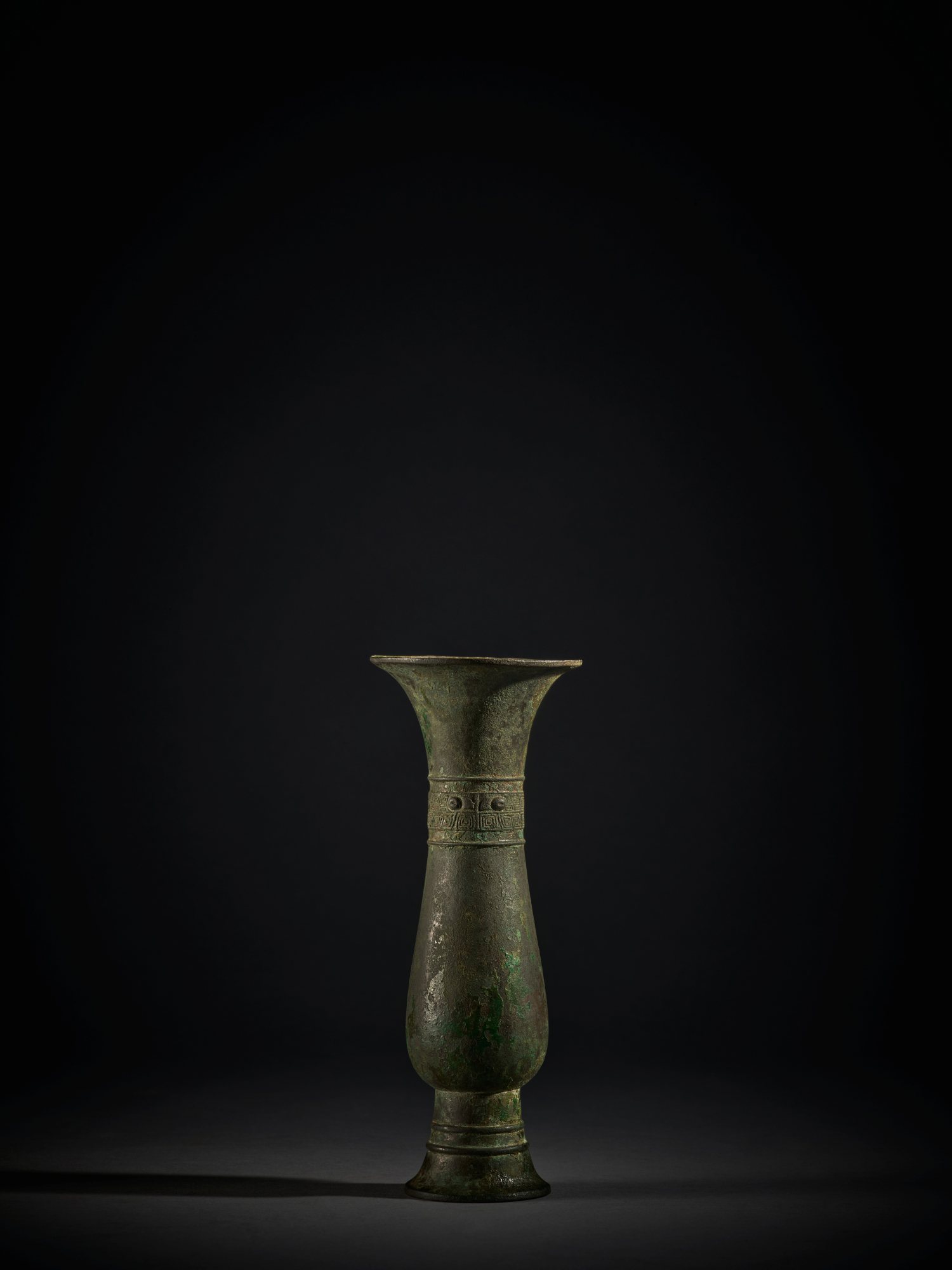
An archaic bronze tripod food vessel, li
西周 青銅三足鬲
```json
{ "headline": "Bronze, Jade, and the Weight of Heaven", "body": "There is a moment, when you stand before a Zhou dynasty bronze vessel, when the distance between three thousand years ago and right now simply collapses. The surface reads like a landscape seen from above: dense interlocking patterns, taotie masks staring back at you with an authority that has never entirely faded. These objects were not made to be beautiful, though beauty arrived anyway. They were made to speak to ancestors, to bind the living to the dead, to hold the cosmos in a manageable form.
That ambition, and that achievement, is what makes Zhou dynasty art one of the great sustained creative enterprises in human history.", "The Zhou dynasty stretched from approximately 1046 BCE to 256 BCE, a span so vast it dwarfs the entire history of European painting. It unfolded in two broad phases. The Western Zhou period, lasting until 771 BCE, saw the consolidation of a ritual culture inherited in part from the Shang dynasty that preceded it.
Unknown
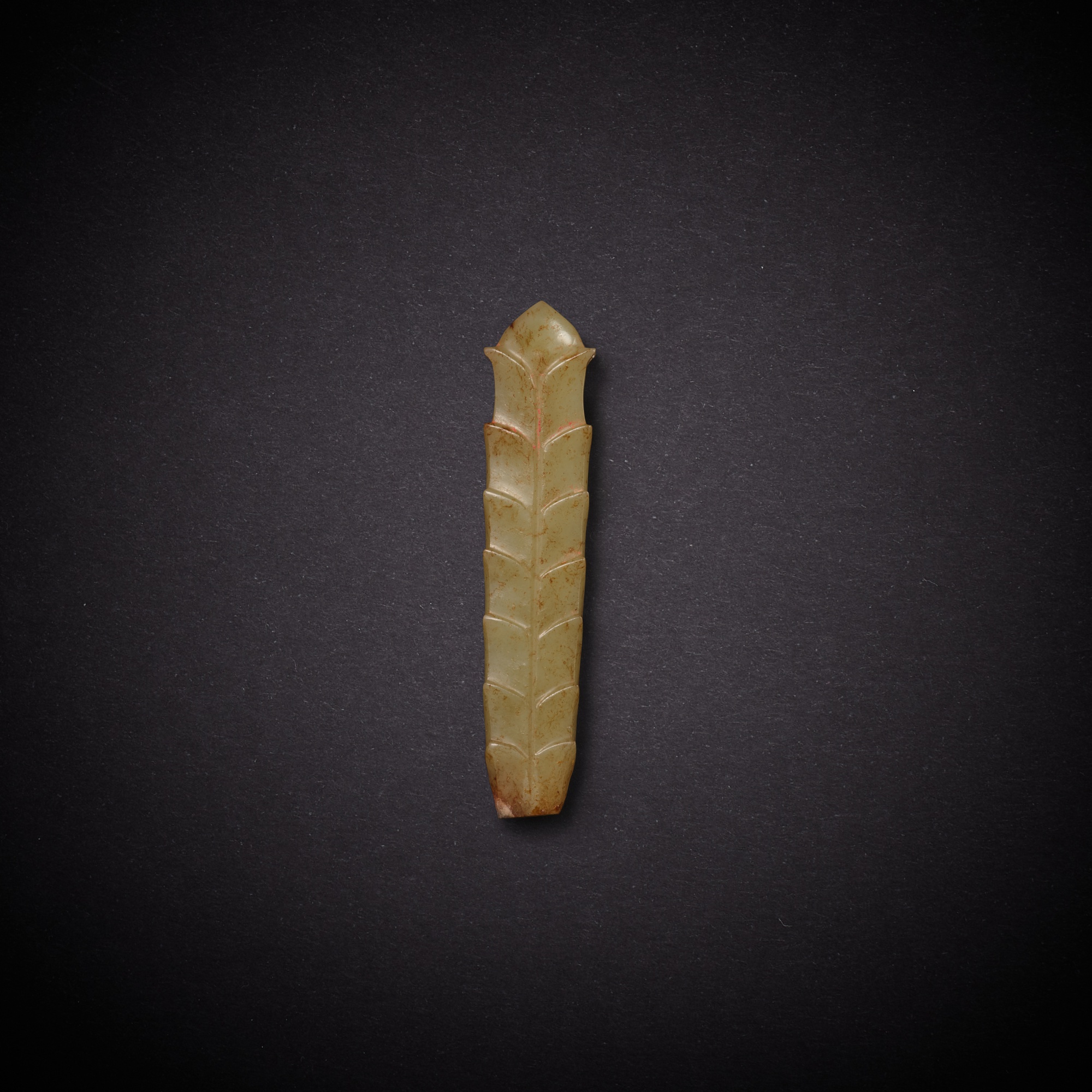
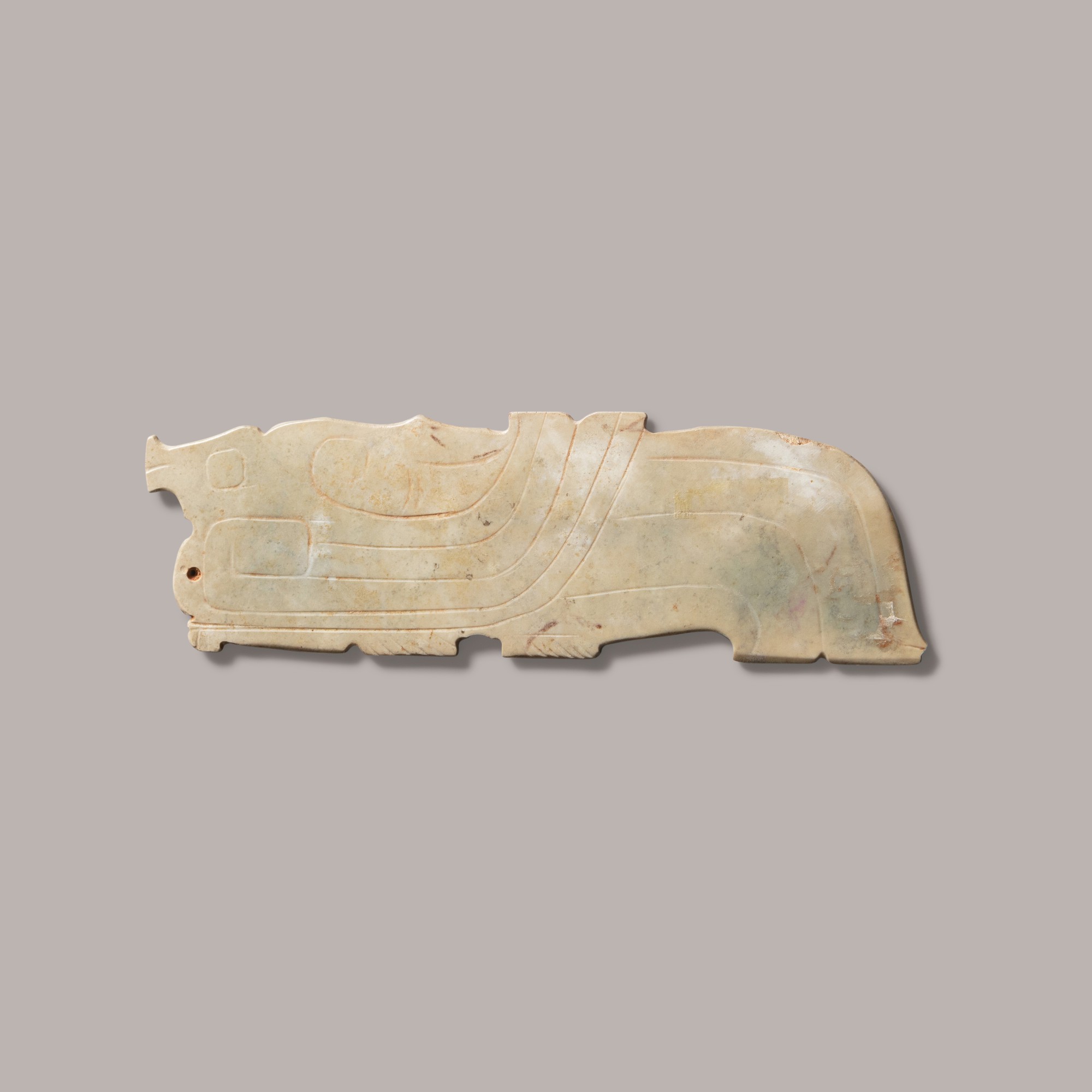
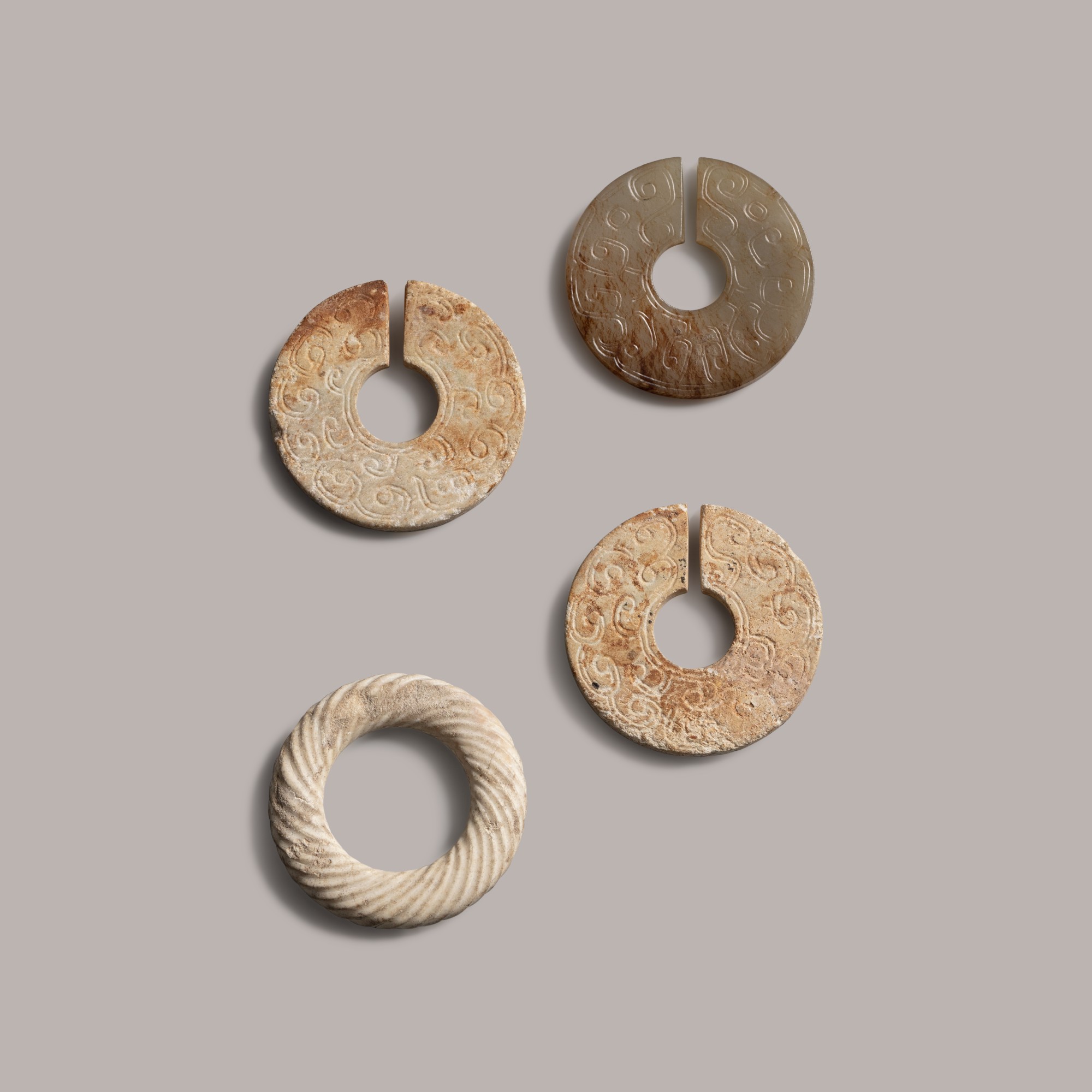
周 玉飾四件
The Eastern Zhou period, running from 770 BCE until the Qin unification, was itself divided into the Spring and Autumn period and the Warring States period, each with its own aesthetic character and social urgency. Across these centuries, the production of bronze ritual vessels, jade carvings, and ceremonial objects became the primary language through which power, piety, and identity were expressed.", "Bronze casting during the Western Zhou reached a level of technical and symbolic refinement that remains staggering. The vessels produced in this period were not luxury goods in the contemporary sense.
They were instruments of governance, gifts from kings to loyal vassals, records of military achievement, and channels of communication between the human and divine realms. Many bear lengthy inscriptions cast into their interiors, recording appointments, gifts, and oaths. The Jian Min Fang Zun and the Ju Fu Yi Zhi, both represented on The Collection, are exemplary in this regard. Their inscriptions transform what might otherwise be read as decorative objects into documents, giving them a textual authority that amplifies their visual power.
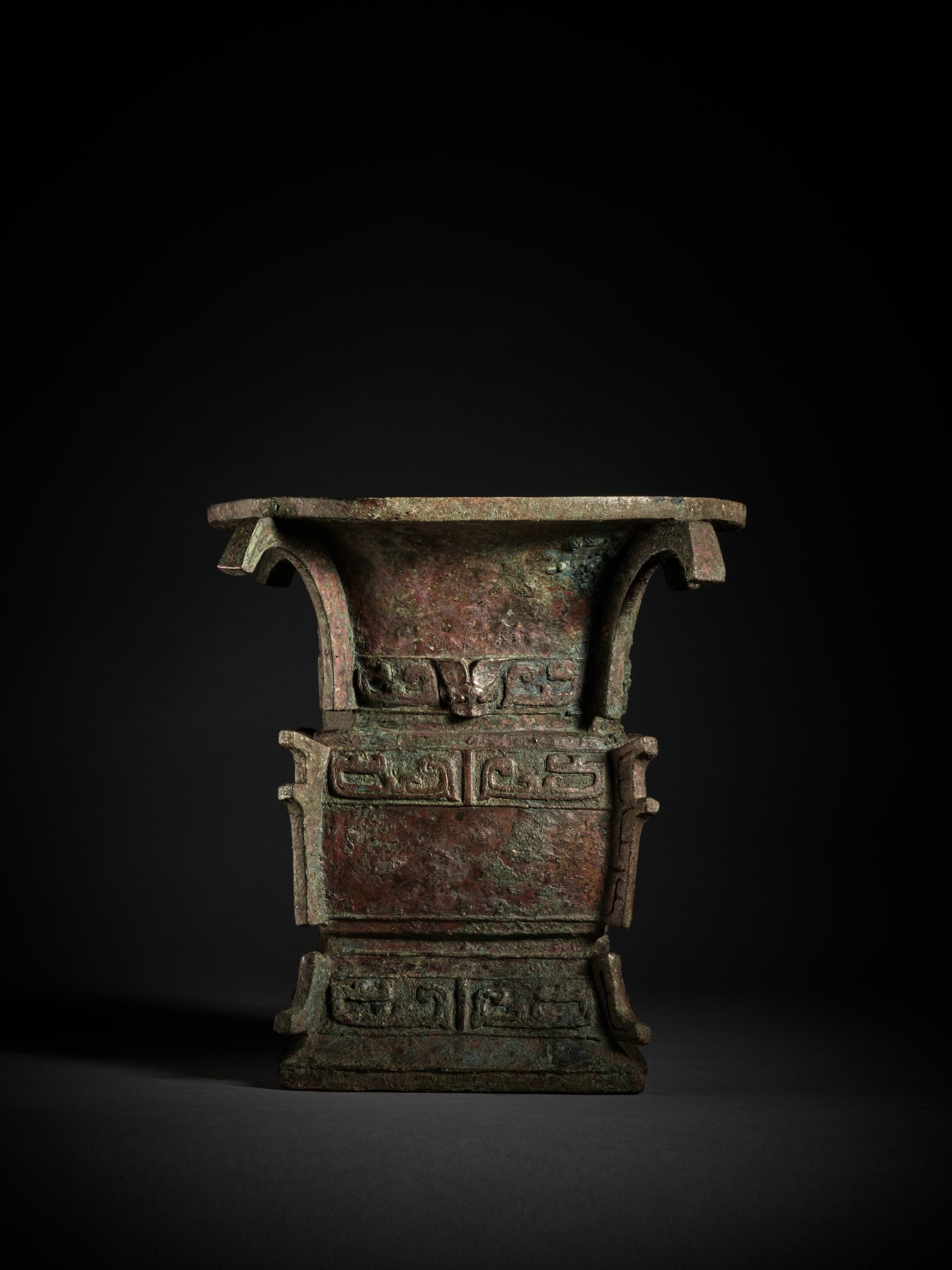
The Jian Min Fang Zun
西周 或穆王時期 柬黽方尊
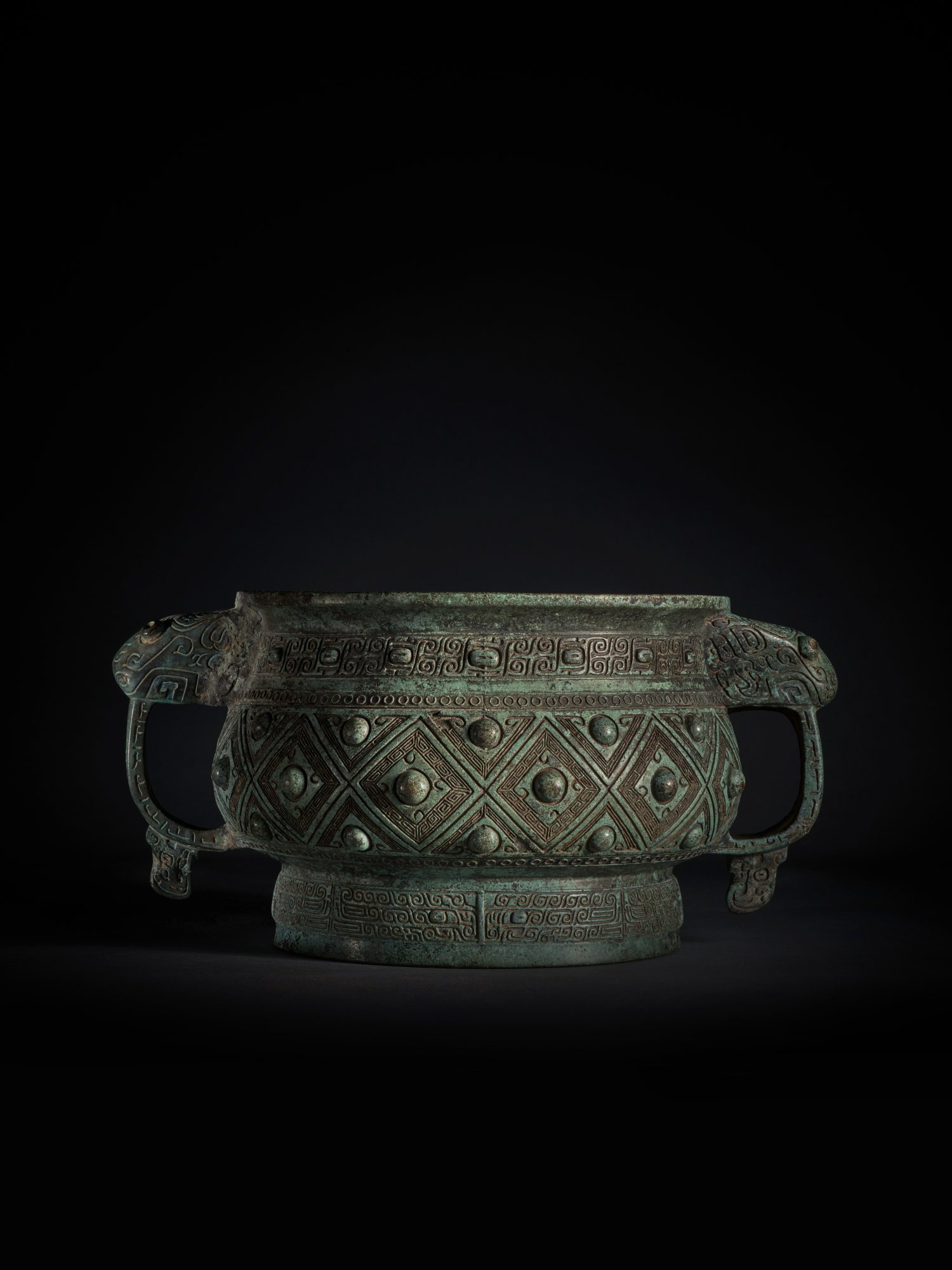
The Yi Yu Gui, another vessel on The Collection, continues this tradition of inscribed bronze as historical record and ritual object simultaneously.", "The typology of Zhou bronzes is its own complex world. The gui, a round food vessel used in ancestral offerings, and the li, a tripod vessel with legs designed to sit over a heat source, were among the most fundamental forms. An archaic bronze tripod food vessel of the li type on The Collection speaks to the central role these objects played in the mechanics of Zhou ritual life.
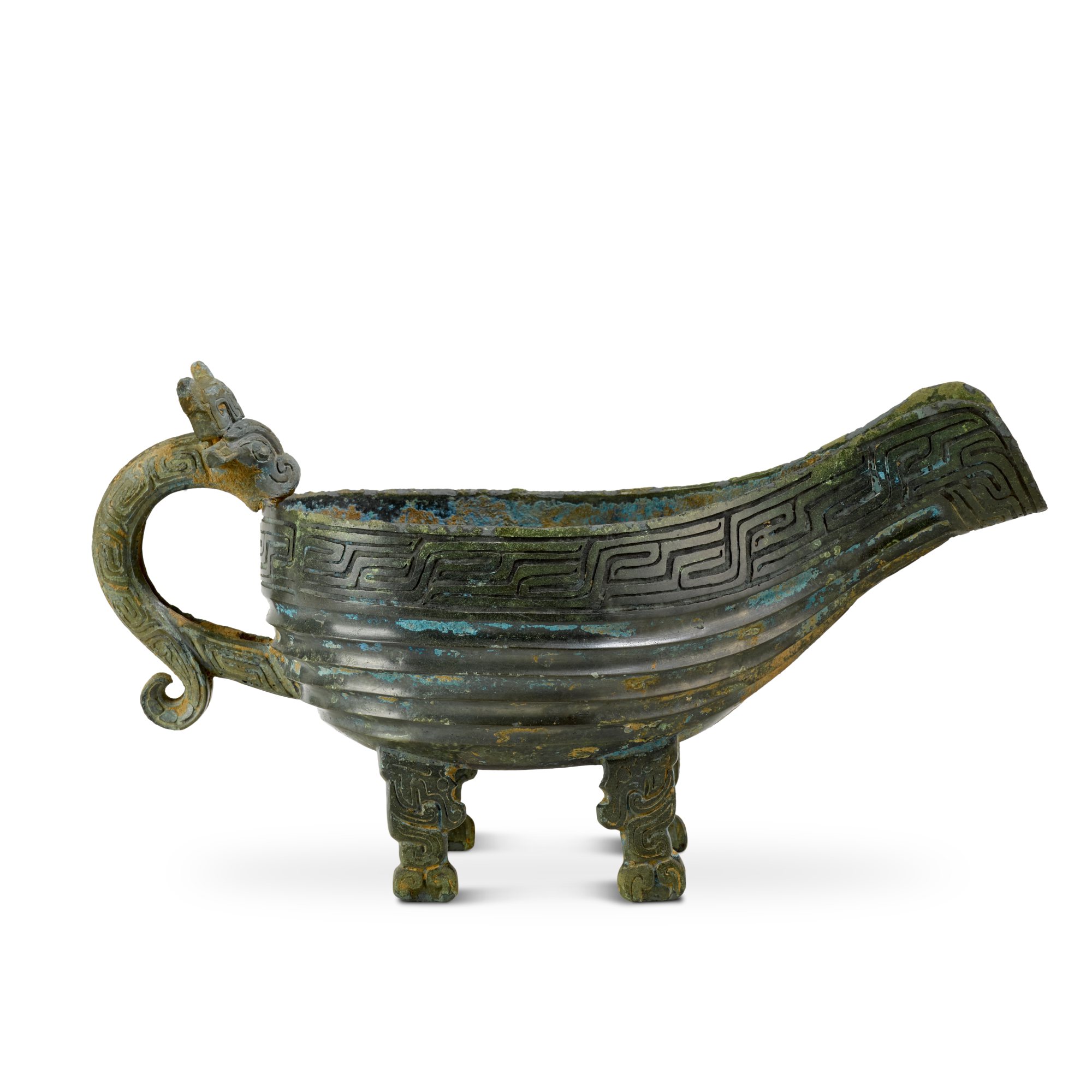
The yi, a pouring vessel used in libation ceremonies, appears in inscribed form on The Collection as well, its form suggesting the careful choreography of ceremonies that might last for days. The chariot bell, represented here too, connects to the martial and ceremonial culture of the Zhou aristocracy, in which the sounds produced by bronze percussion were understood as cosmologically significant.", "Jade occupied a parallel and equally profound place in Zhou material culture. If bronze was the medium of ceremony and governance, jade was the medium of the body and the soul.
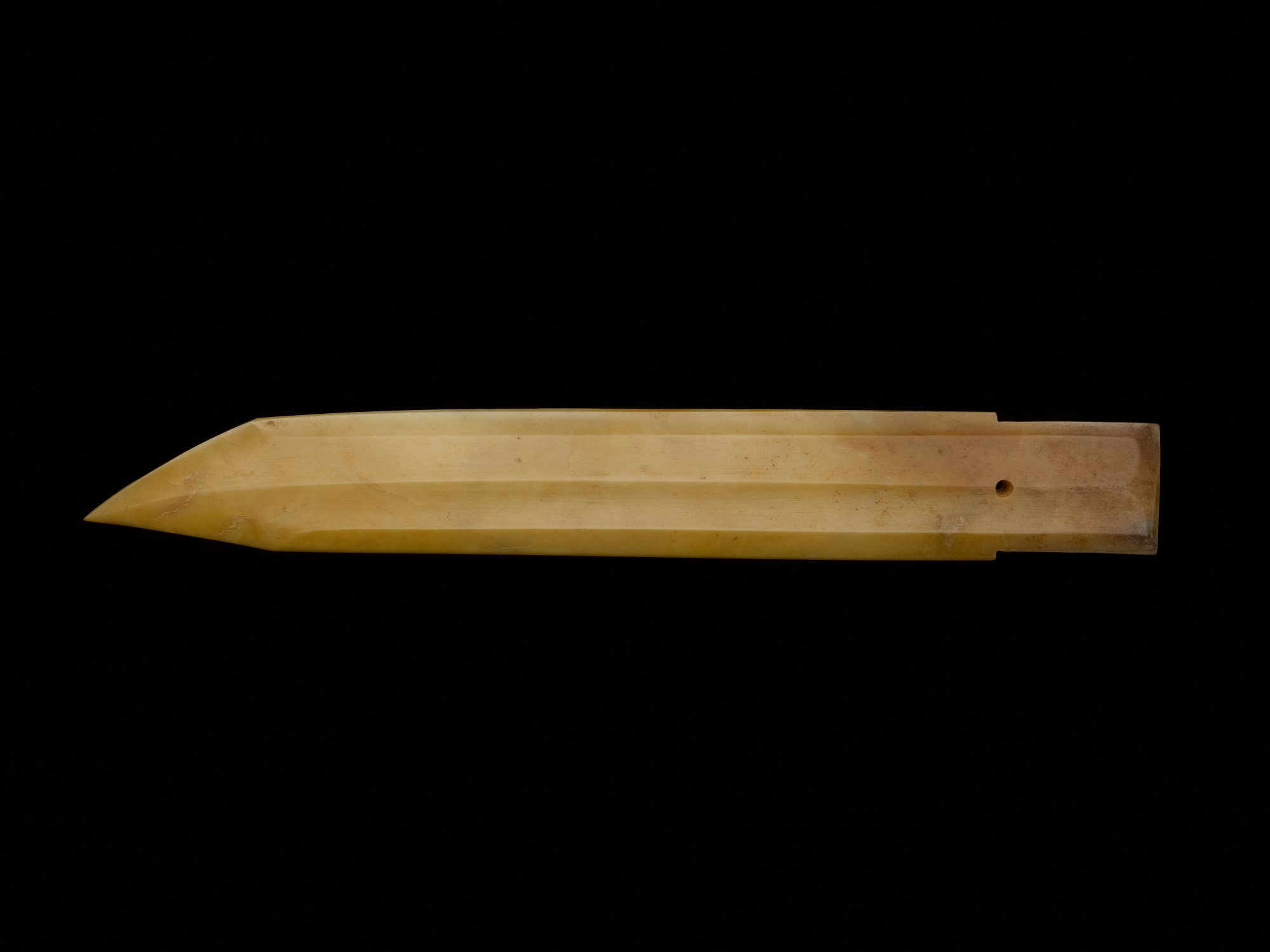
A jade ceremonial blade, ge,
商至西周 玉戈
The Zhou refined earlier Neolithic and Shang jade traditions, producing pendants, plaques, handles, and ceremonial blades of extraordinary subtlety. The jade cong, a form originating in Neolithic Liangzhu culture and continuing into the Zhou period, embodied the relationship between heaven and earth through its distinctive square outer form and circular inner channel. On The Collection, a jade cong sits alongside bird pendants, a celadon jade fish pendant, a greyish celadon jade rabbit pendant, and a yellowish celadon jade handle, collectively mapping the range of forms and animals that populated the Zhou jade imagination. These were not merely decorative objects.
They were worn on the body, placed in tombs, and exchanged as tokens of social and moral status. Confucius himself, writing in the late Zhou period, enumerated the virtues of jade, connecting its hardness to integrity and its translucence to wisdom.", "The Warring States period, roughly 475 to 221 BCE, brought a dramatic shift in aesthetic sensibility. As the old Zhou ritual order fragmented under political pressure, bronze and jade production became more regionally varied and, in many instances, more overtly sensuous.
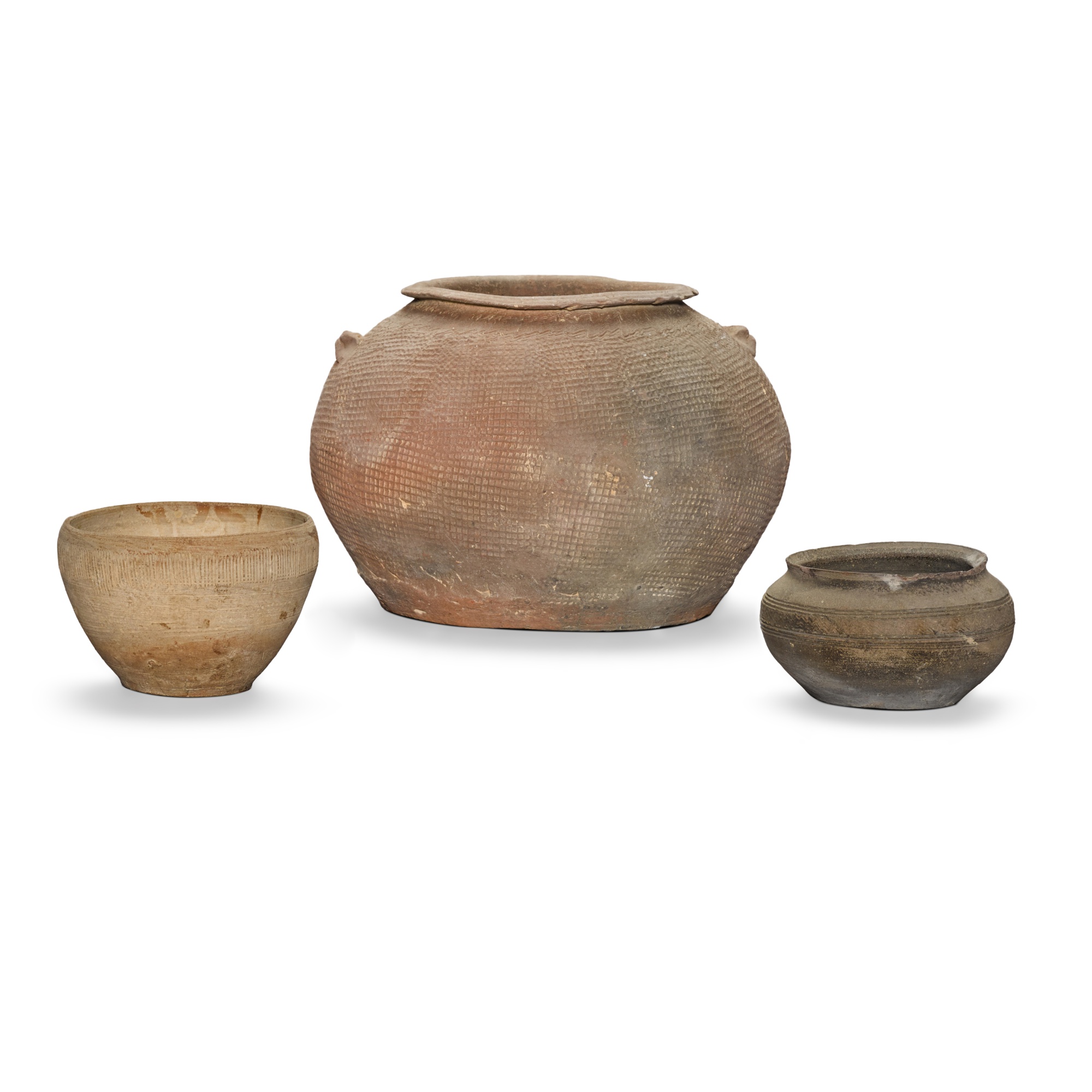
A group of three pottery vessels,
周 各式陶器 一組三件
Inlaid bronzes appeared, with gold, silver, and turquoise set into surfaces that earlier craftsmen had left in relief alone. Jade carving became more fluid, more naturalistic in some registers and more abstractly ornamental in others. A possibly unique bronze figure of a standing man on The Collection gestures toward this period of expanding figural ambition, when the human form began to assert itself more explicitly within a tradition that had long favored animal and geometric motifs. The bronze feline handle on The Collection carries a similar energy, the animal world rendered with a compressed dynamism that feels entirely modern.
", "The legacy of Zhou dynasty art extends far beyond China and far beyond antiquity. When the great twentieth century art historian Max Loehr began publishing his systematic studies of archaic Chinese bronzes in the 1950s and 1960s, Western collectors and museums began to understand these objects as works of art in the fullest sense rather than merely as archaeological curiosities. The major auction houses followed, and by the latter decades of the twentieth century Zhou bronzes and jades had become among the most seriously contested objects on the international market. Scholarly attention from institutions including the Palace Museum in Beijing, the Shanghai Museum, and the Freer Gallery in Washington deepened the field considerably, producing the kind of rigorous typological and inscriptional research that allows a collector today to situate even an unmarked piece within a web of historical meaning.
", "What makes the Zhou dynasty relevant to contemporary collecting is precisely what makes it seem so remote at first glance. These objects embody a worldview in which the aesthetic and the ethical were inseparable, in which the quality of a vessel's casting or a jade's polish was understood as a reflection of the moral seriousness of its patron. That is a challenge to the way we often think about art today, and a productive one. The works on The Collection, ranging from archaic bronzes and inscribed ritual vessels to jade pendants and ceremonial blades, offer a point of entry into that world that is both accessible and inexhaustible.
You can spend a lifetime with Zhou dynasty art and find it still asking questions you have not yet thought to ask.