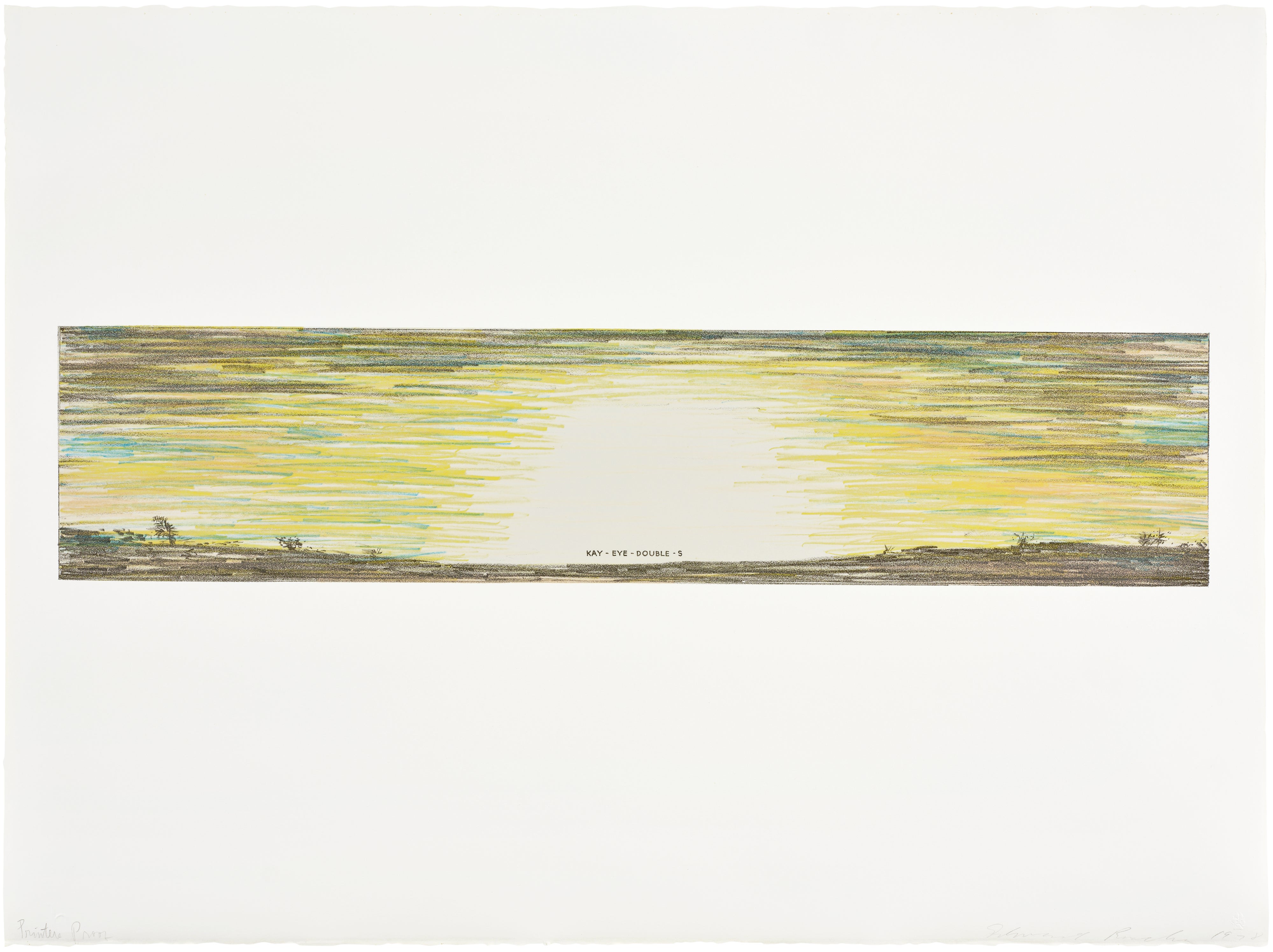
Word Painting
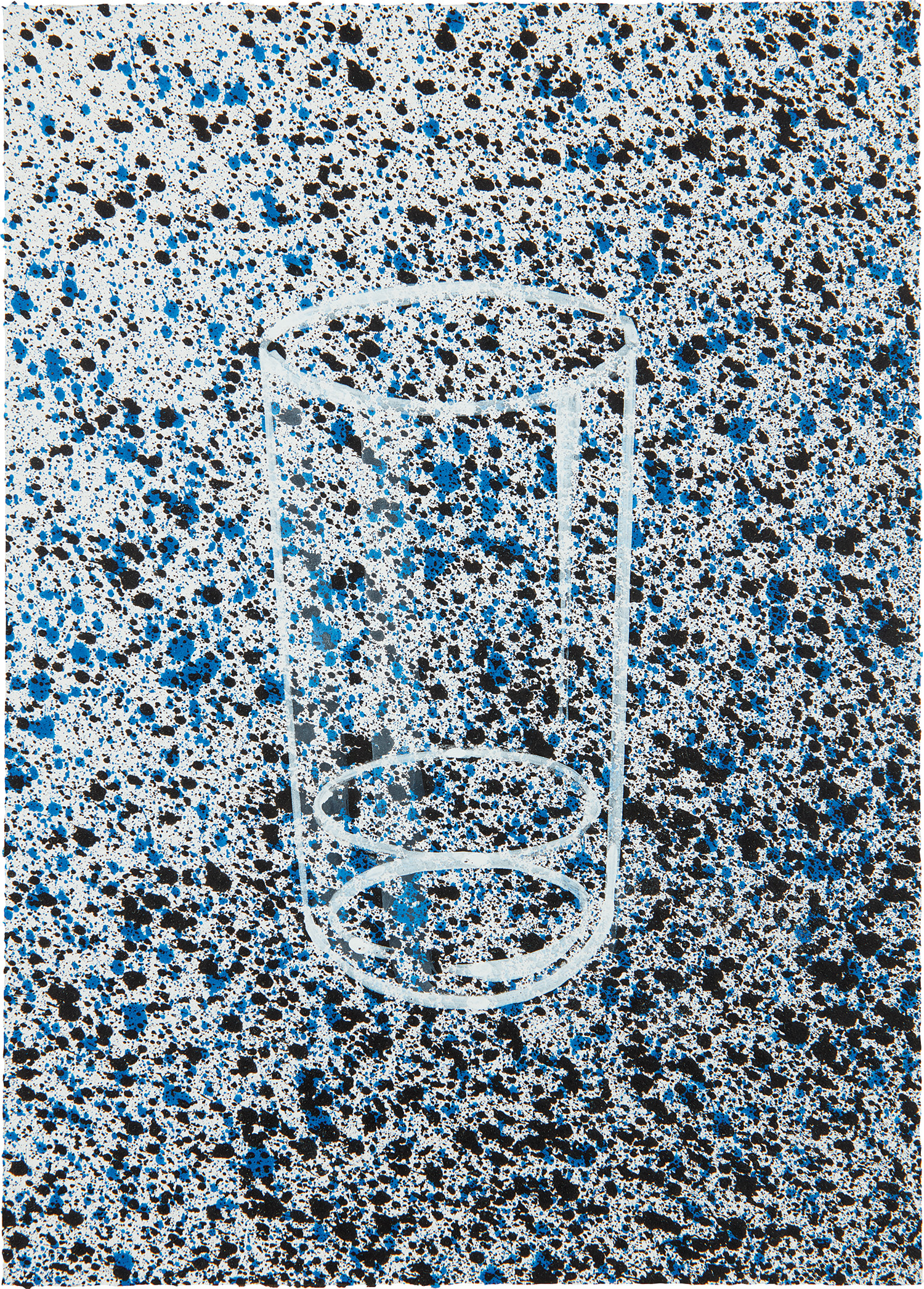
Ed Ruscha
Fleetwood, 2001
Artists
When the Word Becomes the World
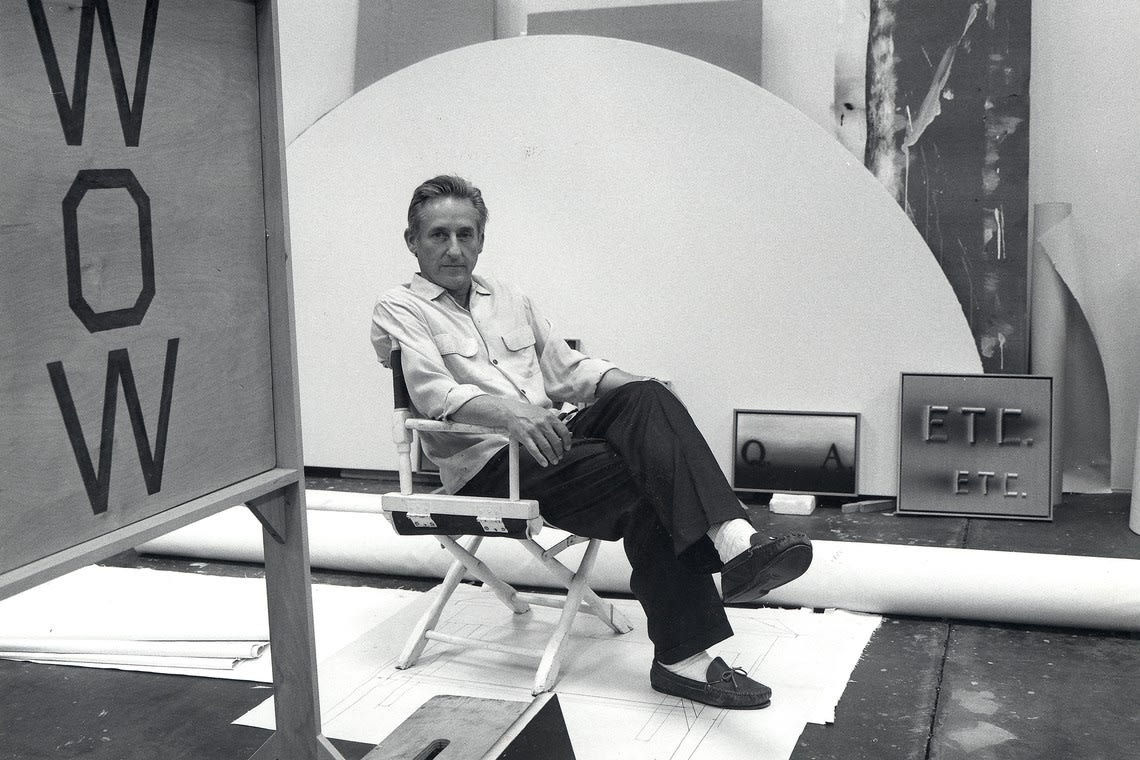
In November 2022, Christie's New York offered Ed Ruscha's 'Spam' from 1961, a work so casually devastating in its simplicity that the room went quiet before the bidding began. The final hammer price confirmed what many collectors had sensed for years: that the intersection of language and painted surface is not a niche concern but one of the defining conversations in postwar and contemporary art. Word painting, as a category, has moved from the margins of conceptual curiosity into the center of serious collecting, and the market has responded with a confidence that shows no sign of slowing. The energy around this category is inseparable from Ed Ruscha, whose works appear with remarkable consistency across The Collection.
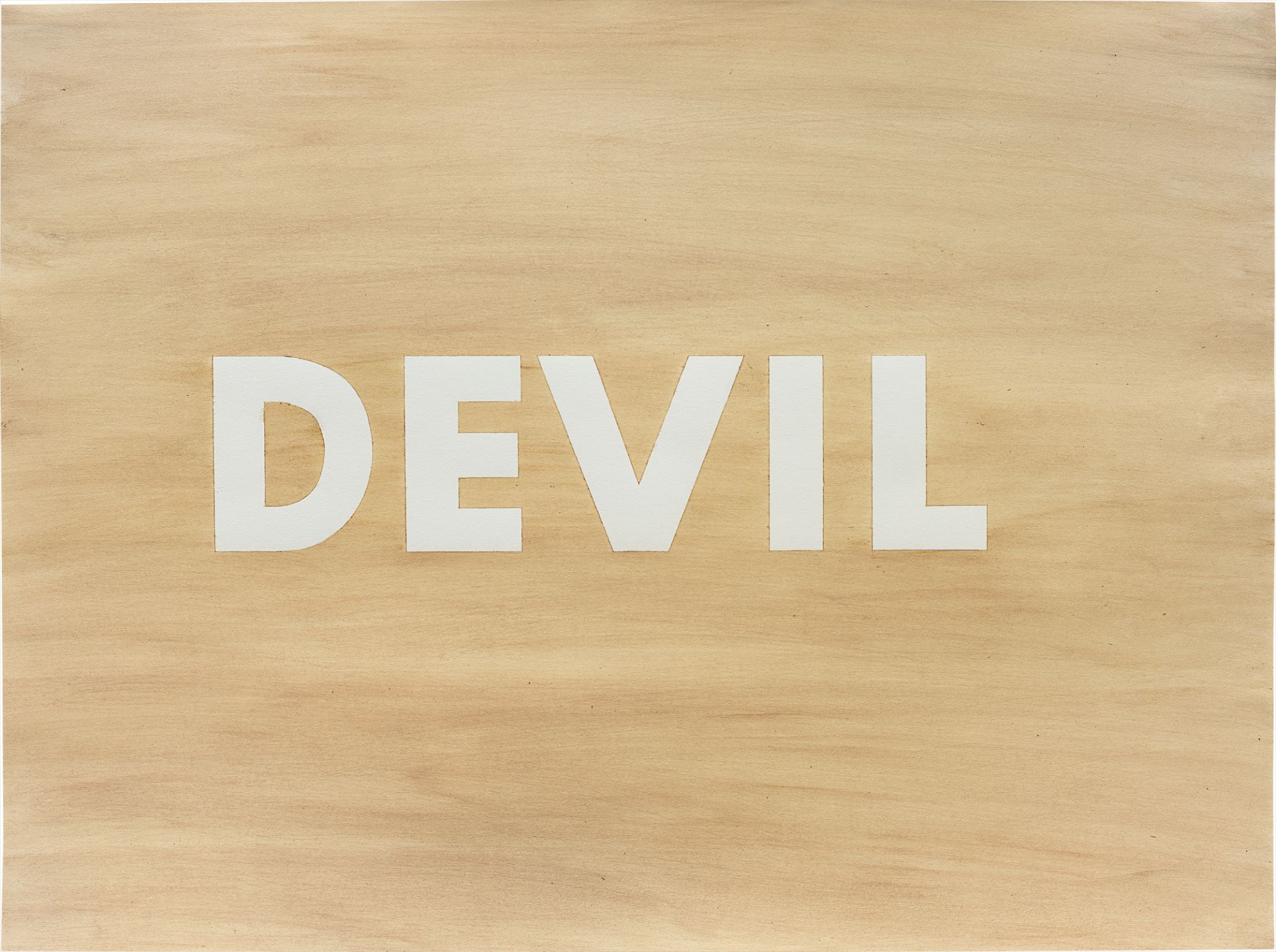
Ruscha did something that seems simple only in retrospect. He stripped language of its decorative function and asked it to perform on the same terms as form and color. His gasoline station paintings and word canvases from the 1960s and 1970s are now canonical, but what remains surprising is how contemporary they feel. When the Museum of Contemporary Art Los Angeles mounted a retrospective survey that drew record attendance, critics noted that younger visitors lingered longest at the word works, reading them with a kind of recognition that crossed generational lines.
Ed Ruscha
Fleetwood, 2001
The auction record for Ruscha reflects this sustained appetite. His word paintings regularly achieve results in the high seven figures, with certain trophy works entering eight figure territory when condition, provenance, and institutional exhibition history align. The 2021 sale of 'Oof' at Christie's, a work that had spent decades in a major private collection, became one of the most discussed results of that season precisely because it illustrated how a single word, rendered with Ruscha's particular sense of graphic weight, could function simultaneously as pop artifact, conceptual statement, and emotionally resonant object. Buyers competing for that work were not buying novelty.
They were buying a kind of visual certainty. Institutional appetite in this space has grown considerably over the past decade. The Museum of Modern Art, the Tate, and the Broad in Los Angeles have all deepened their holdings in word based painting, and their acquisition choices shape the critical framing around the category. When the Whitney Biennial included a cluster of younger artists working directly with language as image, it signaled that curators were actively thinking about who inherits the tradition that Ruscha and his contemporaries established.
The Broad's decision to make Ruscha a cornerstone of its permanent collection gives visitors in Los Angeles a sustained experience with these works that functions almost like an ongoing argument about what painting can do when it borrows from signage, commerce, and the vernacular. The critical conversation has been shaped by a handful of serious voices. Anne Rorimer's writing on conceptual art, and the broader scholarship that emerged from the catalogue essays of major retrospectives, helped establish the intellectual framework that allows collectors to see word painting as something more than clever decoration. Curators like Ann Goldstein, who worked extensively with West Coast postwar material, brought rigor to questions about how Ruscha relates to the Los Angeles scene and to Fluxus, to concrete poetry, and to the traditions of commercial lettering that surrounded him as a young artist in the city.
These connections matter because they tell you that word painting is not a single movement but a rich field with overlapping genealogies. What feels particularly alive right now is the question of how younger artists are engaging with language as material. There is a generation working today for whom Ruscha is not a contemporary but a historical figure, and that distance has produced some genuinely surprising responses. Artists who came up through social media are acutely aware of how text functions in an image saturated environment, and their word based work carries an urgency that is different in texture from the cool detachment of the 1960s.
Galleries in New York and Los Angeles are actively building programs around this younger cohort, and collectors who are paying attention are beginning to place works by these artists alongside their Ruscha holdings with a logic that feels natural rather than forced. The market also rewards historical depth in this category. Works by artists associated with the Pictures Generation and with language based conceptualism from the 1980s have appreciated steadily as museums have revisited that era with more nuanced attention. The perception that word painting is primarily a West Coast American story has also begun to shift.
European auction houses and galleries have made increasingly serious commitments to presenting artists who worked with text in painting contexts outside the American tradition, and results from sales in London and Paris suggest that international collectors are developing genuine hunger for this material. For collectors approaching this category now, the question is not whether word painting matters but where within its vast territory to focus. The canonical Ruscha works command canonical prices, and the ceiling continues to rise. But there are pockets of real opportunity in works from the 1970s and 1980s by artists who have not yet received the retrospective treatment that tends to reset market expectations.
Institutions are moving in this direction, and when a major museum announces a survey of a previously underexamined figure in language based art, prices adjust quickly. The collector who arrives before that moment carries an advantage that is both financial and deeply satisfying in the way that early recognition always is. Word painting rewards attention, and the current moment, with its obsession over how language operates in public life, may be the most fertile context this category has ever had.