Infinity Nets
Yayoi Kusama
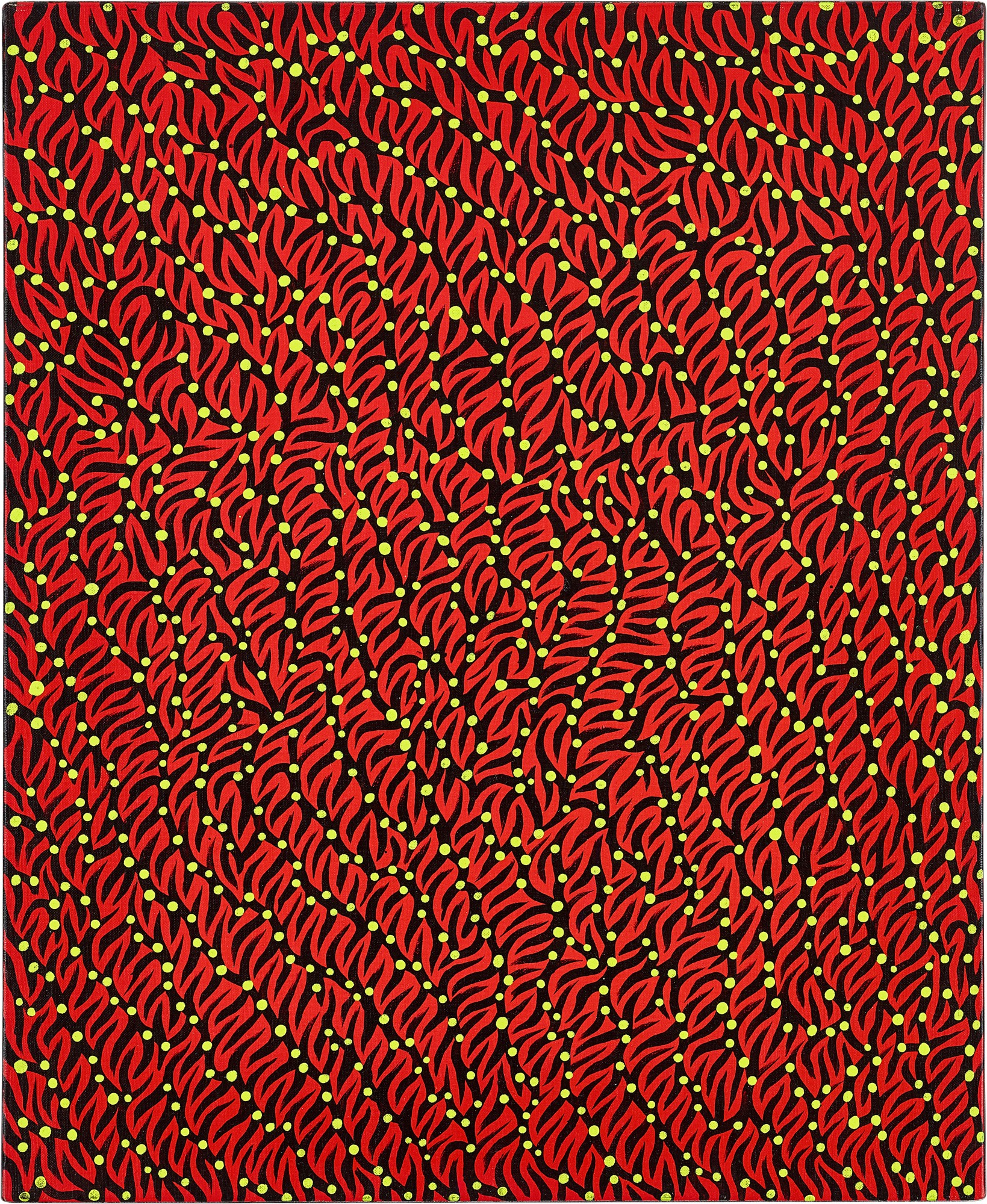
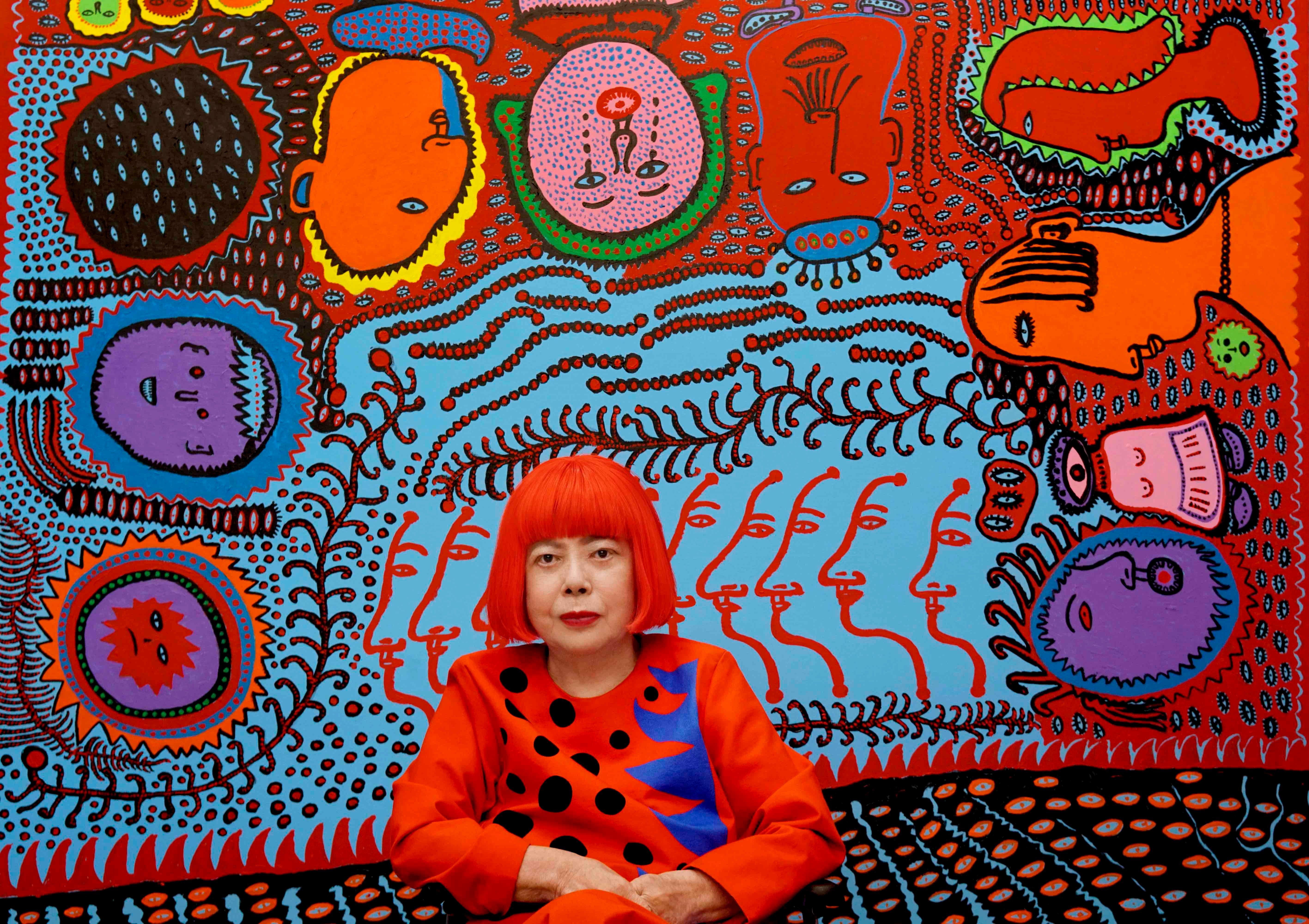
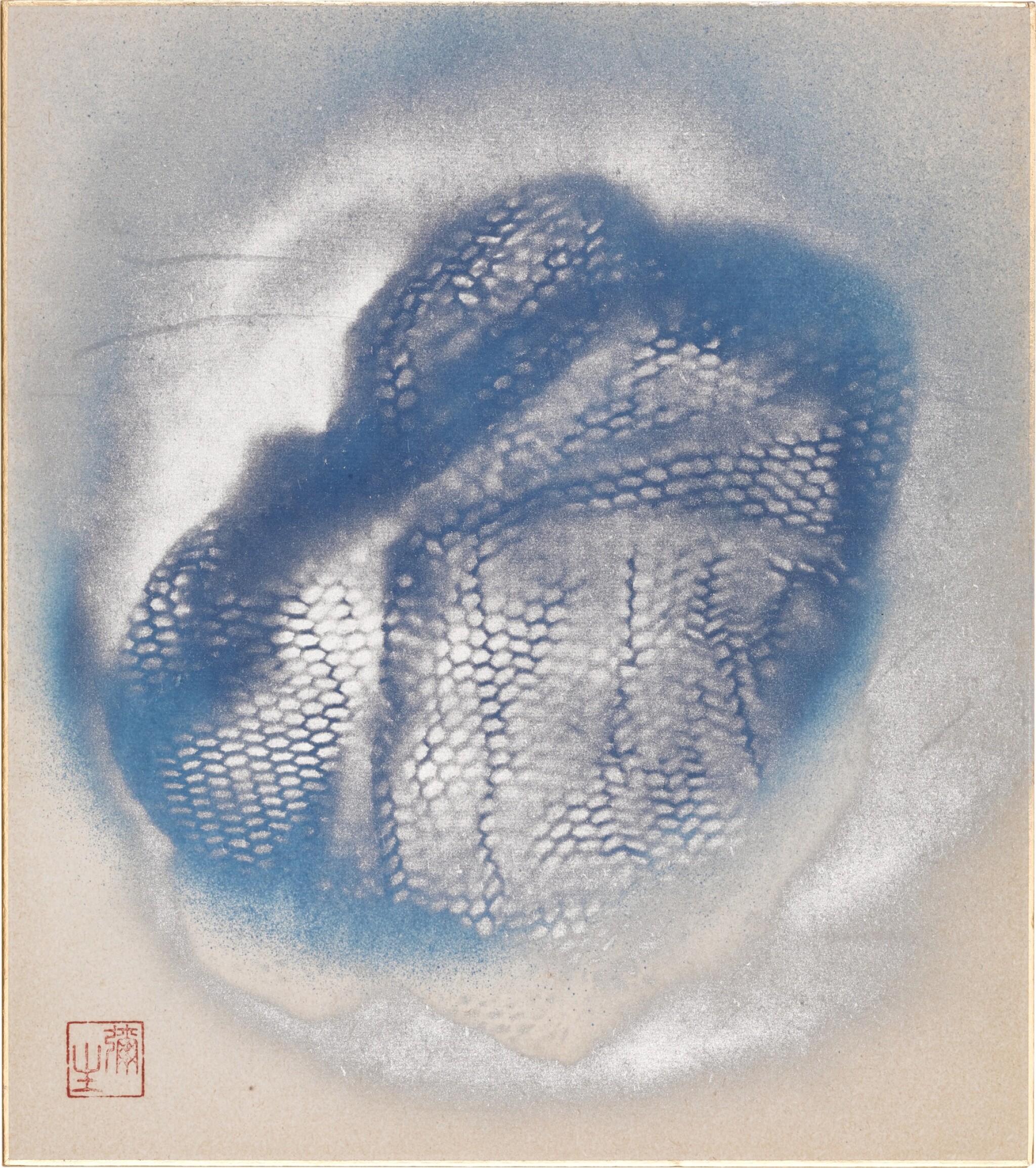
My Heart is Flying to the Universe 我心飛向宇宙, 2018
Artists
Kusama's Nets Are Still Catching Everything
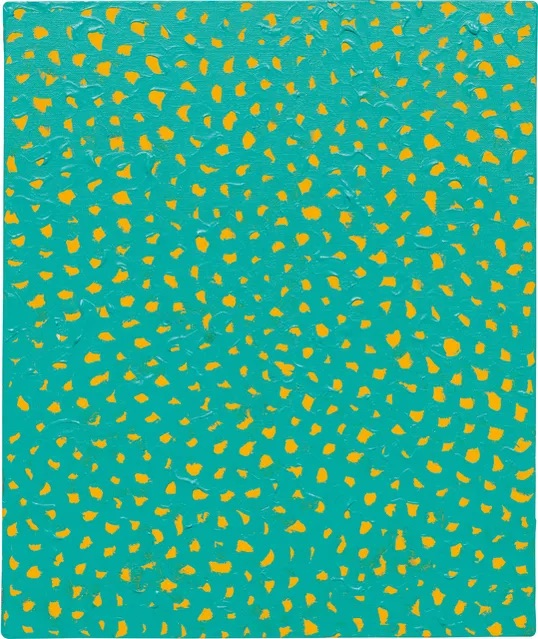
When a Yayoi Kusama Infinity Net painting crossed the block at Christie's New York in 2022 and landed above its high estimate, it confirmed something the market had been quietly saying for years: the demand for these works is not a trend. It is a conviction. The painting in question, a dense, white on white net from the late 1950s, sold for well over ten million dollars, a result that placed it firmly among the most consequential postwar works on the market. That moment crystallized what serious collectors and institutional buyers have understood for some time.
The Infinity Nets are not decorative objects, not wellness artifacts, not Instagram content. They are among the most rigorous and emotionally demanding paintings of the twentieth century. The story of how these works arrived at this level of cultural and commercial authority is inseparable from a series of landmark exhibitions that reframed Kusama not as an eccentric outsider but as a foundational figure in the development of postwar abstraction. The Tate Modern retrospective in 2012 was a turning point.
Yayoi Kusama
My Heart is Flying to the Universe 我心飛向宇宙, 2018
Organized in partnership with the Centre Pompidou and the Whitney Museum of American Art, the show traced the full arc of her practice from the Infinity Nets she began obsessively producing in New York in the late 1950s through her sculptures, environments, and performance works. For many visitors, including collectors who had lived with contemporary art for decades, it was the first time they fully understood the intellectual weight behind the repetition. The nets were not a motif. They were a philosophical position.
The Whitney's presentation of that retrospective introduced the Infinity Nets to a new generation of American collectors who had come of age after Kusama's period of greatest critical recognition in the 1990s. The show sold out, drew lines around the block, and generated the kind of sustained critical engagement that museum exhibitions rarely sustain beyond opening weekend. Reviews in Artforum, the New York Times, and Frieze all grappled with the same question: how had a body of work this significant been overlooked for so long by the mainstream institutional canon? The answer, as curators including Frances Morris at the Tate were careful to argue, had everything to do with gender, with geography, and with the particular blindnesses of the New York art world during the period when Kusama was most actively producing.
On the auction market, the results for major Infinity Net canvases have tracked steadily upward in a way that reflects genuine collector confidence rather than speculative momentum. Christie's and Sotheby's have both handled significant examples in the past decade, with the strongest results consistently going to early works from the New York period, roughly 1958 to 1965, where the application is most concentrated and the visual field most absolute. These paintings, often large in scale and executed entirely in a single neutral tone, carry a meditative intensity that photographs poorly and reads overwhelmingly in person. That gap between reproduction and reality is something experienced collectors treat as a signal of quality.
Kusama's Infinity Nets are among the clearest examples in the postwar canon of works that reward physical encounter in a way no screen can replicate. The works on The Collection represent some of the finest examples available to private buyers at this level. Institutionally, the appetite for Infinity Nets has not softened. The Museum of Modern Art holds important examples, as does the Broad in Los Angeles, whose acquisition strategy in the early 2010s positioned them as one of the most serious custodians of Kusama's work in North America.
The fact that major public collections continue to prioritize these paintings when they appear at auction or through private sale is significant. It signals that curators with long time horizons and no tolerance for market noise believe in the sustained art historical relevance of this work. When the Broad and MoMA are competing for the same canvases, private collectors are in consequential company. The critical conversation around the Infinity Nets has matured considerably since the early 2000s, when much of the writing still struggled to separate the paintings from Kusama's biography and from the sensationalist narrative of her mental health.
The more useful critical framework, developed by writers including Midori Yamamura in her careful 2015 monograph, situates the Infinity Nets within the context of Kusama's relationship to Abstract Expressionism and to the proto Minimalist tendencies that were emerging in New York during the same period. Seen alongside contemporaries like Frank Stella and Agnes Martin, the Infinity Nets look less like the product of compulsion and more like a fully formed artistic argument about the nature of the painted surface, about repetition as structure rather than ornament, and about the dissolution of the self into the work as a form of both anxiety and liberation. What feels alive in this space right now is the question of where the early works sit in relation to Kusama's later production, particularly the large scale canvases she has continued to make well into her nineties in Tokyo. There is a growing critical and collector consensus that the late paintings deserve more serious attention than they have received, particularly as the distance between the New York period and the present grows and the continuity of her project becomes clearer.
At the same time, the early Infinity Nets retain a particular authority that the market continues to recognize. They are paintings made under pressure, in a foreign city, by someone with everything to prove and no institutional support. That condition produced a rawness and a ferocity that is unmistakable. For collectors who understand what they are looking at, the Infinity Nets remain one of the most compelling propositions in the entire postwar field, not because they are fashionable, but because they are genuinely extraordinary.
![Yayoi Kusama — Fruits [EPSOB]](https://rtwaymdozgnhgluydsys.supabase.co/storage/v1/object/public/artwork-images/auction-lots/manual-204f89bd-6e92-48f6-a0d8-856b78e88bab.jpg)